When I mentioned to the owner of the studio apartment I was staying at near Great Malvern, that I was hoping to visit Cleeve Hill near Cheltenham, he said that I might be able to park at the nearby golf club for a token fee. So long as it had nothing to do with the National Trust, with its diabolically shoddy pay by phone provider, I was happy with that.
Approaching in the car from Bishop’s Cleeve, I worked up through debris-covered narrow lanes, with the wind whipping through the dense tree cover above. Whilst the sun seemed to be winning the battle in the sky, I wasn’t entirely sure it was going to win the day, and as soon as I pulled onto the B4632, instead of trying to find the golf course I parked up at a handy layby, threw on the walking boots and headed straight for a gate immediately opposite Stockwell Lane.
Ahead, numerous steep paths presented obvious options to the top. I didn’t fancy “steep” so soon into the walk, so took a more gradual route heading north, past a large old quarry to the left, and towards the golf club.
I Dig A Quarry
Despite the ominous clouds scudding relentlessly from the chilly north, plenty of people were out taking a risk. At the golf club a wide path headed south and up. I had assumed that this was another area of chalk down land, but as I passed a huge crater, evidently another old quarry (unless it was one of the dastardliest golf hazards ever created), it was becoming clear that this was an area of limestone. Brilliant! I love limestone. Sadly, up until quite recently, so did garden centres, and as a result some of the country’s most picturesque upland landscapes were denuded on an industrial scale for the sake of our rock gardens. If we do end up returning the Elgin Marbles to Greece, maybe the next restorative approach could be returning our expropriated limestone pavements to the north Pennines.
Tank trap on the 13th
Past the bunker from Hades, I continued up to a ridge where a wide valley opened out. One of the golf greens stretched out below and the path tracked just above. Leaving the main track, I diverged slightly to the right, through an area of gorse and then to higher ground. I hadn’t realised it at the time, but I was already past the high point. It didn’t matter. The views were getting more impressive by the step. I descended again, with the golf green just to my left. I stopped for a moment to get my bearings. Over to the east I could see into a valley with a small town and significant church steeple. I walked on for a short while and stopped momentarily. Looking east again, the outlook had completely changed. The town and church steeple had gone, obliterated by an ominous looking downpour.
Winchcombe no more
Despite the obvious threat from the sky, a three-hundred-and-sixty-degree scan seemed to suggest that for the moment the area was safe from attack. I continued. A single tree on the ridge above was an obvious target point. Double checking that it was still safe to proceed, a quick look east confirmed that the weather bomb had missed by a whisker.
I don’t think this sort of cloud has a name, but if it does, I expect it would be Run or Be F…….
I crossed another fairway, wondering who had the bright idea of putting a golf course on one of the most exposed points in the south of England. The single tree at the top of the hill, and the long view down to the Severn valley to the south-west, testified to how exposed to the elements the area was. You could shout “four” up here and it would be blown into the ether and beyond the intended recipient well before the ball connected with an unfortunate skull.
Lost balls under the Memorial tree
I reached the memorial tree, which was as good as its word. Cheltenham was below, but looking beyond it was just possible to make out the beginning of the Severn estuary and further to the west, the Black Mountains. Which was lovely, but then looking back in the direction of the wind and the Malvern Hills, it was obvious that the intensity of the rain raids was escalating, and that avoiding a cold soaking was becoming a priority.
Resistance is useless. Head for the trees? The Malvern’s take a battering
Following a track back I headed in the approximate direction of the high point. It wasn’t entirely obvious where that was but keeping the route I had come to my right I figured that I was on track. Two to three hundred metres on, and after a slightly steeper section, I found the trig point.
The high point looking towards Cheltenham and the Severn valley
Just beyond the trig point was the second toposcope in two days, its centre missing and the bare stainless-steel base reflecting the ominous sky above. There must have been a special toposcope funding stream in these parts at some point because every hill seemed to have one, although the centre disc for this one seemed more likely to now be a unique coffee table top in someone’s front room.
“Pass the sugar love.” Cleeve Hill toposcope missing its “scope”
A group of golfers, seemingly undeterred by what was coming our way, stood on a nearby raised tee. One was holding out his hand and showing a ball to the others.
“See this ball,” he said. “It’s impossible to lose.”
The other golfers looked on, one scratching his chin. “I don’t believe it,” he observed.
“No, straight up,” the owner of the ball replied. “You can hit this into the longest grass, hundreds of feet off the green, and you’ll always find it.”
“How does that work then?” another of the group asked.
“So, quite simple really. It’s got this tracking system linked to the phone. All I have to do is follow the signal and Bob’s your uncle.”
“Amazing! Must save you a fortune?” the other acknowledged. “Where did you get it?”
“Well, that’s the thing. I found it.”
A short distance on from the county top, on the route back down the hill towards the road, stood a small stone commemorating seven young men from Canada and Britain who died when their bomber crashed at the spot on 26th August 1944. I later read that there had been an eighty-year memorial ceremony at the site just a few days before my visit. A BBC article interviewed the daughter of one of the Canadian crew who had died when his wife (her mother) was four months pregnant. It was poignant, but it was obvious that the visit, after so many years, and across the ocean, had been a significant moment. *
Eighty years before
I sat a short distance above the memorial for a couple of minutes, but there was no getting away from the fact that the dirty big clouds to the northwest were on a direct trajectory, towards me!
The descent took me down a steep and highly pitted area of ground which suggested either another quarry or area of significant slumping. A few minutes later I was back at the layby, just as the first large spots of rain began to fall. Moments later, and in the car, the heavens truly opened.
As short walks go (just 2.5 miles) it had been entirely satisfying. I’d got lucky with the weather, but the stormy conditions had somehow elevated the views and enhanced the landscape. Whoever chose to site a golf course at over 1000 ft, on an exposed Gloucestershire heath, had been either foolish or brave. Other than flailing around on the local corporation nine-hole course in my teens and early twenties, where the motivation (to reach the bar before last orders), and objective was to complete the course without being completely crushed and humiliated, I’ve never been tempted by grown-up’s golf. Whilst many golf courses seem to possess the land, the one at Cleeve Hill integrates and complements the landscape without intruding. If I had been twenty years younger, and lived round here, well, I might just have…
A couple of weeks earlier, whilst searching for the true top of Hertfordshire, I walked adjacent to a linear section of one of the Grim’s Ditches; iron age earthworks associated with the Chilterns area that still remain a mystery. I discovered that I still owned a fifty-year-old copy of The Old Straight Track, in which the author, Alfred Watkins, claimed, in 1925, to have discovered multiple ancient lines in the landscape. These were called ley lines, based on man-made and natural features, such as burial mounds, churches, standing stones, springs, and other features, which align on the land. I wanted to find out if he had a take on the Grim’s Ditches. He didn’t. I wondered perhaps if this was because they might have undermined his theories, but it’s more likely that he had little knowledge of them, being that most of his research was conducted in the Herefordshire area where he lived, and in particular the Radnor Valley.
Having decided to rule out a late summer getaway to Greece, on the grounds it was going to be too much hassle and inflated prices that didn’t reflect the quality of the accommodation, I decided instead to book a few nights in a studio near Great Malvern, and go seek out some end of season county summits. Given that I was not going to be a million miles from Great Malvern, logic dictated that a walk in the Malvern Hills, and to the top of Worcester (or Worcestershire) Beacon, would make a good start. I packed my bags, threw in my copy of The Old Straight Track, took on a 48-hour grandparenting shift in Bedfordshire, then drove across the Midlands in torrential rain and arrived on Tuesday evening at my digs in the foothills of the Malvern Hills. It was mid-September and unseasonably cold. Wondering if I should have put a bit more effort into the Greek thing, despite the conditions, the late evening view of the hills had me smitten.
After a solid night’s sleep I drove into Great Malvern and parked up just out of the town centre. I was anxious to get on with the walk, and after about 200 metres I realised I was still wearing trainers and not my walking shoes. There’s a difference. As I turned back towards the car park, I also remembered that I hadn’t paid for that either. It’s possibly a getting old thing, but I do need to pay more attention to detail. As it happened, and unlike some other locations I have visited recently, paying at the machine with a card, and without having to type in a load of detail, was a small joy. That said, the 1-hour, 2-hour, 4-hour and 10-hours options (where was 6 and 8?) left me having to select the 10-hour option, just to be on the safe side. At £4 it seemed a fair deal.
Re-shod, I trotted up the high street and soon arrived at the grounds of the Priory. I knew I had been here before, and had done a walk in the hills, but for the life of me I couldn’t remember when, with who, or why? Maybe it would come back to me as they day progressed. (It didn’t).
Given that I had 10-hours on the meter I felt I had nothing to lose by dropping into the church for a closer inspection. In the back of my mind I had a thought that it housed the original, or at least a copy of the Mappa Mundi.
Into the Priory
I stepped inside, avoiding the curious eyes of the volunteers, eager, no doubt, to pounce. I briefly took in the ceiling tiles and the stained-glass windows that an information board informed me had somehow survived the Dissolution. Another sign said that it costs £20 every 15 minutes to maintain the church. In 1541 locals raised £20 to buy the whole thing to replace their old, dilapidated church. There was no sign of the Mappa Mundi. *
I moved towards the centre of the building. As I did so I became aware of a small gathering at the far end, and a person of the church dressed in a gown, giving a service to a group of people. He was wired up and I was able to hear the reading. I had no idea what the message was, but I did pick up on the line “O ye of little faith.” Taking it as a cue I chose to leave and head instead for a higher place.
The vicar (?) had obviously seen me coming and had slipped in what I took to be an ecclesiastic diss. Duly patronised, I left without further exploration and headed up to Bellevue Terrace, the holy cuss still ringing in my ears. I noticed that there was an abundance of greeting card shops, and as I headed north along the A449 another card shop boasted that it had been nominated in the Best Independent Greeting Card Retailer in the Midlands! Who knew?
I had no specific route in mind, but figured if I continued along this road I would be able to walk the ridge from one of its northern entry points. Here, the A449 is the Worcester Road. Occasionally, between the grand Georgian and early Victorian mansions that lined the road to the right, tantalising views opened towards the Vale of Evesham. The people who built and lived in these imposing houses had certainly picked their spot.
After half a mile or so I took a left onto West Malvern Road. The road went up here into the Cowleigh area (I knew it was the Cowleigh area because a sign pointed out that it was the Crowleigh Area), and after another half mile, on the left at North Quarry, a small car park and what was obviously a route to the hills. Starting up the path on the left I spotted a blue plaque on the wall of what appeared to be the last house in town, and dedicated to Alice Betteridge, the last donkey-woman of the Malvern’s. Rather than jumping to improbable conclusions, I figured that perhaps some more context was necessary.
The steep path headed back south, with a sheer drop to the left of what was obviously one of the huge quarries at the north end of these hills, now overgrown. After another half mile or so, the path began to level out, then a sharp right and it began to zigzag up through oak woodland. After twenty minutes or so I was suddenly out of the trees, the ridge opening out to the south, and down to the left Great Malvern and the priory, abbey, church, whatever, and where, no doubt, the faithful were still celebrating the earlier eviction of the heathen intruder.
Heaven’s Above..
I had an option on the path here. Left, or right and back on north. I sat for a while on a stone and took in the view. Nearby, three young men in modern outdoor wear were discussing the view. One appeared to be in charge and was making encouraging noises to the other two about how they were getting a grasp on what they were seeing in front of them and how that translated onto the maps they were holding. And they were beginning to get it. I figured that it must have been part of a mobile phone detox project, and frankly I’m all in favour. I could see a train heading directly towards me along a straight bit of track, and beyond, Worcester. Time to get on.
I should perhaps say something about the weather at this point. It was bright and mainly sunny, which should have been good, but very unusually for this time of year an arctic blast was brewing up and, like Napoleonic troops in column after column, banks of clouds marched relentlessly overhead from north to south. One minute I was in sunshine and down to my T-shirt, the next rapidly re-dressing. Based on the years weather to date, how it hadn’t rained so far remained a mystery.
They came on, in the same old way
Following the path around the northern flank, with the tops of a hundred hills in every direction, a route up to the top of North Hill presented itself. It was clear at this point that I had missed a trick. If I had carried on past the North Quarry car park, I would have been able to start the climb of the granite ridge at its most northern point. Too late now. I pushed straight on up the steep bank, eventually arriving on level ground with Worcester Beacon directly ahead, and the ground rising again to the left and right.
Looking south. Worcester Beacon – the main objective
Without giving it a second thought I went right, and up. At the top I looked over to the east where North Hill was obviously slightly higher. A minor detail, but for a purist it might have been important. The path then descended rapidly to a saddle where I sat for a while and watched a kestrel looking for its lunch. Already the views were of the highest quality. Far to the west I could make out the Brecon Beacons, and the unmistakable conical shape of Sugar Loaf (which my daughter, her partner and I had climbed in early May, and where the idea of scaling county tops had been kindled **).
Having chosen to approach the summit from the west, as I started on the long drag up, the wind, angling in from the north-west began to tell. Layers were going back on, but it mattered little as the views towards Herefordshire, and Wales beyond, just got better and better. The granite ridge of the Malvern Hills runs precisely north/south, and similar but slightly lower ridges on similar alignments could be picked out to the west.
Approaching the summit the wind was beginning to blow a proper hooley. Clumps of grass were being driven flat to the ground and I was beginning to flag. Spotting a cave just above, and needing some respite, I clambered up a bank and entered. It provided little or no extra protection. I took a quick photo and fled. With the broken grey, blue, pink granite beneath my feet, I made the short drag to the top as quickly as I could.
A cold hole
At the summit I might as well have been standing in a wind machine set to max. A circular plinth, erected sometime in the 19th century, and honouring some monarch or other, who I am absolutely certain never visited this spot, marked the top. I stood in the gale for five minutes, watching, through steaming eyes, a group of four middle aged men take innumerable photos of each other. Wishing them to give up the land to allow me a brief second or two at the top, eventually I butted into the party and looked at the large circular toposcope (new word) on the top of the plinth. With my eyes still streaming, and feeling like a gate crasher, I had no time to take in the details except to note that Snowdon was 99 miles away, and in the direction where the wind was thwacking in from. With my hands and whole body shaking I took a photo, figuring I would study it in more detail later. When I checked it later it failed to pass muster, so you’ll have to make do with a couple of panoramas instead.
Having made it to the top I slipped over to the calmer east side of the ridge. Heading south, and with the wind less of a factor, this was walking for the sheer joy of it. The views in every direction were phenomenal. Bit by bit the paths began to descend, and aware that I would soon be losing these astonishing vistas, I sat for a bit above another abandoned quarry. Given the amount of excavation evident, closing these quarries some decades ago was probably for the best, otherwise the chance of there being anything left of the hills now would be remote.
Looking to the south-east, something in the valley below caught my attention. I long, straight line in the landscape! Before leaving the accommodation in the morning, I spent a bit of time mugging up on Alfred’s Watkins understanding of the Malvern Hills area. Surprisingly there wasn’t a lot to go on, although he speculated on a possible ley line starting on a point on the ridge further south which aligning with a cave and a stone below, before disappearing west to an oak tree at Gospel Oak (not Camden’s), and then through two churches and ending at Aconbury Camp (you’ll just have to use your imagination unless you decide to disappear down a rabbit hole). ***
In search of ley’s
The observed long, linear ditch in the landscape, flanked by a line of trees (Watkins advocates strongly about trees and their relevance to ley lines), made me reach for the Ordnance Survey map. Had I discovered the yet to be discovered Malvern Wells/Bredon Hill ley? I immediately located the line on the map, represented by hatched marks. Incredibly, I could track back to the Hills and a starting point where a tumulus was shown on the ridge. Heading further east, beyond the avenue/ditch, the ley precisely crossed with a mediaeval bridge at Upton upon-Severn and ended (as far as I could tell) at the very top of Bredon Hill, some six or seven miles further east. The most extraordinary thing about this ley line was that between Upton upon-Severn and Bredon Hill, it exactly bisected the southbound Strensham service station on the M5 motorway! What otherworldly powers were at work when that happened? With the map flapping away in the wind, and with my mind blown even further, I took one last glance at the linear feature on the map. Huh! I looked again and sure enough I could make out some cryptic writing – dismtd rly. How could I have been so foolish? Or maybe (surely not), when the Great Western Railway built the line almost two hundred years ago, those working on the ground were more in touch with nature and……. (goes on forever).
With these thoughts dancing around like fairies in what was now left of my brain, I wandered on and eventually reached the end of the northern section of the hills at Upper Colwall (essentially there is a northern third, a central section that ends at Little Malvern, and then a southern third that starts at British Camp and tails off a few miles further south beyond Hollybush).
A road crossed my path at the saddle of the hill. I was still in the mood to explore further south, but every step in that direction would mean a longer shift getting back to Great Malvern. A sign indicating a cafe downhill to the west tempted me in that direction. On a lamppost a yellow AA sign directed travellers onwards to the National Collection of Michaelmas Daisies. I hadn’t the foggiest notion of what a Michaelmas daisy might look like, although daisies came to mind. It would either be very nice, or niche, or intriguingly maybe both. I headed on down towards a building that housed the cafe, and with nothing other than an invigorating cup of tea on my mind, reacted almost too slowly when the door of a parked car shot open. Being taken out by a stationary vehicle at this point in the journey would have been a tad disappointing, but somehow my body reacted sufficiently to avoid a painful impact. The perpetrator looked more startled than I felt, apologised profusely, and delightfully an incident of footpath rage was averted.
Reaching the building, still slightly shaken, but grateful that I hadn’t been on a bike, it was disappointing to find the cafe closed. On the flip side, a sign on the window indicated that it hosted the British Society of Dowsers. Now, that was niche! Watkins, whilst not claiming that dowsing assisted him in any way in his search to prove the existence of ley lines, does, in his introduction, indicate an affinity with the ancient craft. It helps form the narrative that humans are intrinsically more in touch with nature and the earth than we understand, and that essentially, we have lost our ability to interact with nature in ways that our ancient ancestors were.
I am not going to suggest that I completely reject that notion. Things do happen, and well, you know! When I was around 15 years old, in the early 1970’s, one afternoon after school a few of us were hanging around on a green on the estate, aimlessly doing what aimless teenagers do. Nothing. A friend, Jim, was arsing around with a Y shaped stick. Shaking his arms around he claimed to have discovered an underground water source, which on closer inspection was a metal cover to a drain owned and managed by the local Water Board. Just at the point when his antics were running out of steam (i.e. everyone had lost interest), his wrists began to gyrate frantically, and the stick pointed in the direction of a manky stray dog that was approaching across the grass. “Leave it out Jim,” someone shouted, at just the moment when the dog, now just feet from him, stopped, cocked a back leg, and did his business. It was proof enough.
With the idea of a refreshment now deeply embedded, I climbed back to the top and followed Old Wyche Road over the saddle and in the direction of the town. Not far on stood The Wyche Inn, so naturally I went in, bought a cola and a bag of crisps and sat in the warming sun. Refreshed, I set off north on the road back into town. More grand houses lined the right side of the road, and more old quarries kept appearing to the left. I hadn’t particularly relished the idea of the last leg, knowing that it must have been at least a couple or miles or more, but in what seemed to be a blink, I was at the outskirts of the town and with just a short distance to go. I looked between two large houses and across the Vale of Evesham. Whilst the sun still shone, a monster storm was tipping millions of buckets of water into the Severn valley. At such moments, and given the location, a touch of Elgar dancing in the air from one of the grand Edwardian windows might have been appropriate, but as I knew no Elgar, and all the windows were firmly closed it remained an enigma and the moment was missed. Alert to the danger I quickened my step, slid down an alley just as the edge of the storm arrived, and in the nick of time found dry sanctuary under the arch of a church door. The downpour was over within a couple of minutes. No dowsing was required.
Two hours on and I was walking across Castlemorton Common towards a local inn. I stopped and looked back towards the Malvern Hills. I’ve never been there, but something about the view reminded me of an African savanna.
Castlemorton Common – AKA The Worcester Veldt
In his quest to prove the existence of ley lines, Watkins frequently encounters rustic “locals” enjoying a pint of warm beer at country inns. In these moments they recount to him stories that he tentatively claims endorses his understanding of a nearby feature, such as some standing stones. Almost always the narrative begins with something like, “Of course, they’s do says around these ‘ere parts tha’ when a red moon rises over the Blattered Elm, the three Plastered Knights of Old Pishup do rise from the earth, climb up the walls of Cwm O’rbard Castle and there do take an ancient brew from the larst well of Uncertain Origin.” Underestimate at your peril this type of verbal history. Watkins, keen to latch onto any old tale (sorry, fact), certainly didn’t.
On the drive back from the hills I had stopped at the inn to check if it was open, and more importantly, doing food. As I approached the front door it opened and out stepped a middle-aged man holding a pint of the local ale, wearing agricultural clothing, with long curly hair and beard, a ruddy complexion and a rollie between his left earlobe and sideburns. I entered the pub, which clearly hadn’t changed one bit in decades, and was told that they would be serving food after six, and that was fine by me.
As I approached the inn on foot, just after six, I was certain, and excited by the prospect, that if I stayed there for an hour or two it would only be a matter of time before one of the old locals (possibly even my man from earlier), in true Watkins style, would enlighten me on a local myth or legend. I entered at just the moment my man was leaving for the night. The pub was now half full, and everyone, builders, buyers, businessmen and women alike, were gazing intently at their mobile phones.
After a satisfactory pint of Best and a hearty meal, it was time to head home. As I approached the door the woman behind the bar wished me goodnight, and then, as an afterthought added, “Oh, and sir, do mind the old stone on your way out.”
*
* Seems the Mappa Mundi is in Hereford Cathedral. Two days later I took a train to Hereford, found it to be a pleasing town, and spent an hour in the excellent cathedral library, where the Mappa Mundi can also be found hanging, more or less, intact.
Hereford is bottom left, just next to Crete
** Sugar Loaf is the highest peak in Monmouthshire. But Chwarel y Fan is the highest point, which means that sometime in the future I will need to revisit Monmouthshire. Mind you, worse things can happen.
Sugar Loaf in May – Not the highest point in Monmouthshire!!!
*** Two days after the walk I had time to climb up to Herefordshire Beacon (British Camp), at the start of the southern section of the Malvern Hills. Not surprisingly it’s located in Herefordshire, and despite being quite high, is not the highest point in that county so I can’t claim it. But I would have kicked myself if I had not chosen to do it. The most spectacular Iron Age hill structure I have ever been to. As it was late in the afternoon, and with the sun setting, the views were mind bending.
Beat that!
With a bit of time on my hands I walked south, and with Watkins alignments still troubling my imagination, I eventually located Clutters Cave (AKA Giants Cave). The area below the cave was heavily overgrown, with two green woodpeckers flitting between the trees. I had no desire to go rooting in the brambles for what he believed to be a sacrificial stone that formed part of the ley line.
Alfred Watkins mate, being sacrificed a hundred years ago. These days it’s called sunbathing
I entered the cave and was immediately struck by a ghostly black handprint on the back wall. Clearly evidence of neolithic cave art, and I was surprised that Watkins hadn’t noticed or mentioned it back in 1924. Or maybe it was a Banksy? Either way, and whatever the explanation, I looked out from the cave, and with the dipping sun blushing the Welsh borderlands, I could easily see how it was possible to hang a mystery around the location, and speculate on a time when our ancestors navigated astral planes rooted to points, natural and manmade, on the landscape.
It’s all in the mind, or is it?
A mile or so to the west, below the ridge, lies Eastnor Castle and park. Except it’s not a castle at all. It was built whilst Napoleon was meeting his match in Belgium. As there is no mention in any literature or works of art of Clutter’s Cave before this time, it seems pretty likely that it was dug out to form an estate folly. Sorry Alfred, but not all the leys align after all.
I’ve struggled to work out how to start this relatively short narrative. This is an account of how, in the middle of August I walked to the top of Buckinghamshire, and then Hertfordshire, in just over a couple of hours. But, for the sake of the purity of the project, do I separate these accounts or not?
Whilst I’m working on how to square that circle, here’s something to think about. Trusting, or not, in information on the internet in respect of the accuracy of heights and locations will, I’m sure, feature somewhere.
I have decided to stick to two separate accounts. This is the account of a walk from my car to the highest point in Buckinghamshire. Having reached that point I then carried on into Hertfordshire. That slightly longer tale can be found here
A couple of weeks earlier I had been contacted by an old work colleague suggesting a meet up in London. It had been some years and sounded like a good idea. I had suggested Wednesday 21st July and had made an arrangement to stay with my youngest brother in north London the night before. Unfortunately, the next day my old colleague had to cancel, and so I had an option of going straight home on Wednesday, or, oh yes, a short drive out of north London, then the M25 west and up the A41 and lo, two adjacent high points were available just west of Tring.
On the day it was a warm and sunny morning. I drove into the Tring salient on the A41, and then took a left onto the B4009 toward Wendover.* A mile or so on and a left onto St Leonard’s (a small lane heading up into the woods), and then just before Chiltern Forest Golf Club, a right onto a one way lane that, after a long and winding drive, eventually got me to the large car park at Wendover Woods (where your registration is filmed and you simply pay before leaving – nice!).
I’d opted for the T-shirt n’ shorts look for the day’s tramp, and after donning the walking boots I set off with a 1983 Ordnance Survey Landranger map, a bottle of water, sunglasses and a sun hat. I walked to the very modern and attractive restaurant/coffee shop, found my bearings and walked east and onto the exit road from the car park. Woods of mainly beech stretched away in all directions. After just a couple of minutes, and just before the barrier gates that released the cars that had paid, a break in the fence and a small track led into the forest on my left. A sign indicated that the full path was closed due to trees presenting danger, but that it was still possible to access the cairn. A cairn? Sounded impressive. I looked forward to the sweeping views across Buckinghamshire.
A well-defined path wound through the woods, and then, there it was. Four large stones, three laying down and one standing stone in the middle and surrounded in every direction by trees and heavy undergrowth.
A gathering of stones
A metal plaque informed me that the stone arrangement marked the highest spot in Buckinghamshire and that it had been erected by the Royal Air Force for the local Parish Council in 1977 to commemorate an infamous event that took place that year.** Early June if I remembered correctly. The plaque bore alarming indentations that indicated it had been used for target practice at various points in the preceding years. I wondered if I should duck, just to be on the safe side.
Deep in the east woods. Feeling lucky punk?
The sun had disappeared, and I was beginning to regret not bringing a jumper, but it was too late now. I had the highest point in Hertfordshire to conquer next. I set off back through the woods to the road.
So, that was that – 1977 and, as Polystyrene noted, we were going mad. **
Tick
* The Tring salient is an abstract concept that exists solely in my head. The problem with borders (there’s plenty of scope for further discussion but for the sake of the international order, let’s not), is that by and large they make no sense. If you were to look at a map of the Hertfordshire boundary, at its western limit with Buckinghamshire it should probably end somewhere around Berkhamsted. Instead, a finger reaches out to the northwest and ends beyond Tring in fields near, ironically, Folly Farm, just beyond Long Marston and deep in the Chiltern Hundreds (don’t ask!). Almost certainly some sort of mediaeval territorial land grab thing, but its mark remains.
** 1977 – It wasn’t all street parties. Happy days
Chilterns Two Peaks Challenge – Part 2 (in which I disappear down a worm hole of my own creation)
In part one, which is an essential read in the context of what follows, I spent at least, oh, five minutes getting from the car to the highest point in Buckinghamshire. That exhausting and definitive account can be read at
Haddington Hill – Apparently the highest point in Buckinghamshire and the start of the next journey
After leaving the path from the woods, where the highest point in Buckinghamshire is marked by four stones and a reminder of monarchy, I headed east on a road that led out from the car park at Wendover Woods visitor’s centre. After a while I got a bit bored of walking on the road and noticed a path leading onto thick woodland. I had a fair idea of where I was and wasn’t too bothered if it led me slightly astray.
As soon as I stepped into the woods, I spotted a small deer grazing in a clearing just 20 or so metres away. By its size I suspected a muntjac, but at that moment it sensed my presence, looked up and then with a couple of skips disappeared deeper into the woods. In that moment I’d noticed a small tail. I’ve subsequently looked at images of deer on Google to see if I could identify the type (which I was pretty sure wasn’t a muntjac). In the end I couldn’t, but here’s a tip. Don’t search for images of red deer unless you want to see a lot of pictures of mainly men in camouflage gear, and holding high powered rifles, gloating over their trophies. Big guys!
The path soon rejoined the exit road, which in turn met with a B road (St Leonards) at Chivery Farm. I dithered for a while, trying to get my bearings, but after consulting with my 1983 Ordnance Survey Landranger map for the Aylesbury area, I decided to turn left, and after some 400 metres came to a bridleway on the right and heading east.
This was either the Icknield Way, or the Ridgeway, or possibly both? Breaking out of a line of trees a very green, grassed covered dry valley fell away to the left, with the only expansive view along the entirety of the walk. A dozen or so swallows swooped up and down the valley feasting on whatever was on the high protein menu that day. To the northeast the scarp slope of the chalk downs at Ivinghoe Beacon (an area well worth a visit) was just visible.
Towards Ivinghoe Beacon and the Tring salient (see Buckinghamshire)
Looking back and a large manor house, which had clearly been subject to a significant facelift. Two huge timber framed glass extensions protruded south from the main body of the older building. Quite how the developers managed to slip this past the Planning Committee will remain an un-researched mystery to me, but I could see the attraction.
Life from a window
This section with the views ended at a gate that led into more beech woods. The path through the woods was flat, although at times it was possible to make out the land falling away to the left. My objective was Pavis Woods, where the sources indicated the site of the highest point in Hertfordshire, just over the Buckinghamshire border. To get to Pavis Woods, I had to walk through Black Wood and then Northill Wood. In truth, with no obvious border, change in altitude, or tree type there was nothing to tell them apart. Except, where the path spilled out onto Bottom Road, a small lane that plunged down the scarp slope to the north, it was hard to miss the Crong Radio mast, which given its location and height, almost certainly makes it, technically, the highest point in Buckinghamshire. I’d never heard of Crong Radio and presumed it to be a hangover from the days of pirate radio, specialising in a sub-sect of music only known to a sub-sect of the nation’s youth. Instead, it turned out to be the local ambulance radio transmitter.
You have been warned
I left the radio mast to its important business and then passed a derelict breeze block building that could have served a variety of purposes over many decades but was now an ever-changing open air modern art gallery, to which someone had controversially commented CRAP. I wasn’t so sure.
Where Romanticism meets Expressionism
As I have mentioned, Northill Wood was essentially the same as Black Wood, and where Pavis Wood started it was impossible to tell, but the walk was pleasant enough. Just towards the end a walker approached from the opposite direction. The only one of the day so far, and judging by the kit, was taking on a tougher challenge than me.
As I arrived at the gate exiting the woods a horse and rider appeared on the other side. Due to an ingrained inferiority complex, and the fact that the horses bearing was considerably more authoritative (big), I gave it and its rider priority. Beyond the gate was a road, and I figured that I had now left Pavis Wood. Which, given that the highest point in Hertfordshire was supposed to be in Pavis Wood, represented an issue. I went back into the woods and looked around to see if there was anything to mark the location. It was certainly the highest point at that point, but only by inches. And there was no marker.
Going back to the road, where, out of the trees it was a bit lighter, I got out the old Ordnance Survey map again. Something had been troubling me, and once I had managed to wake up the optic nerves and achieve some focus, I began to understand the issue. The perceived on-line wisdom was that the highest point in Hertfordshire was in Pavis Wood. The problem was that the Ordnance Survey map, unlike the map on the phone, showed the county boundary running along the middle of the road, which left Pavis Woods in Buckinghamshire. That said, further to the north, the boundary did bisect some of the woods. I studied the map as closely as I could. It showed a height marked at 244 metres in the field opposite, in Hertfordshire.
I was baffled and confused. On one side of the road I was in Buckinghamshire, and stepping over to the other side I was in Hertfordshire, but whether I was at the correct spot or not was entirely debatable. At least I was out of the woods, and as the weather was overcast, cool and very windy, and I was only wearing a T-shirt and shorts, I was happier out of the woods for a bit, where the possibility of an occasional ray promised.
The appropriately named Shire Road went south, and wagering on a footpath that would take me in an arc to the village of Hastoe, I set off, looking left and right to see if there was any slight deviation in the lay of the land that might have indicated a high point.
It was pleasing to be out of the gloomy woods for a while, and after ten minutes of losing altitude, a footpath appeared on the left hand side of the road. A quick consultation of the map and I took it. The path followed the line of a high hedge that, according to the map, marked the line of Grim’s Ditch. I’d noticed on the map that some forty years earlier, presumably when I purchased it, I had marked out the route of a much longer walk I had taken when young and more energised. I remembered it well. A train out of London to Amersham and then west through the country and some villages until I turned back east at Redland End, and for a mile or two along another section of Grim’s Ditch, ending the walk at Great Missenden. At the time I distinctly remember stopping for a while, taking a couple of photos, and considering what purpose these earthworks might have served. Of course there was no way of finding out in those days, unless I was prepared to invest considerable time researching the issue at a public library, and looking back now, I’m pretty certain I didn’t do that. Today, within a few moments of tapping, I find that they are probably from the Iron Age and their purpose remains a mystery. I think it’s quite reassuring to know that even now we don’t know everything, but once you know they exist, and seen them on a map, a little bit of me is inevitably curious. *
After a couple of hundred metres the path was crossed by another, which angled north-east and back up across a large wheat field directly towards the village of Hastoe. As I walked up through the field it was clear that the land to my left rose to what appeared to be a higher point.
The old straight track to Hastoe
I reached Hastoe, turned left and along a rough road towards the heart of the village. To suggest it had a heart is probably an exaggeration. Hastoe was pleasant enough, but its handful of eclectic houses, set back from the road, and with a large complex of imposing redbrick buildings at the junction with two other roads, implied perhaps that at some point it had been part of a large estate, and that what was now a large and exclusive development had once served a different purpose.
I turned left again along Gadmore Lane and back towards Pavis Woods. The road rose steeply for a bit before flattening out on the approach to the woods. To my left was the far end of the field I had crossed, and through the hedge I could see that the land appeared to rise towards a thicket of trees. If I wasn’t actually standing at the highest point in the county, I was pretty sure that I had done my level best to circumnavigated it. Before plunging back into the woods, and largely due to an irrational worry that I had missed something important, I did some more Google searches. What is the highest point in Hertfordshire? The results only seemed to confuse the situation. Pavis Woods came up repeatedly, and one even put the point two or three hundred metres to the north, which unless I really was misreading the topography, just couldn’t have been true. I concluded that I was just wasting my time, and rather hoped that the signal on the phone would stop working. Pavis Woods, or at least the part of it that I was about to enter, was firmly in Buckinghamshire. The clumps of trees at the top of the field opposite were firmly in Hertfordshire.
The highest point? Who knows, it remains an enigma.
The walk back was along the same route. The weather didn’t improve but at least it didn’t rain. By the time I passed the sign pointing to the highest point in Buckinghamshire I had walked about six miles, which was more than I had expected when I had set out. With the cackle of gunfire wafting up on the wind from the ranges down in Wendover (Storm Lilian was beginning to make its impact), I enjoyed a coffee at the back of the attractive cafe at the woodland centre, where, if I had only known, I could have gone Ape at the nearest treetop facility. Hey, next time, maybe.
Driving back south on the A41, the police had taped off the outside lane. A car had inexplicably driven straight into, and was wedged under at 90 degrees, the central barrier. It didn’t look to good, and I guessed that Crong Radio had played its part in the emergency response. Beyond the accident, and within moments, I was being overtaken by high powered vehicles hurtling on their way, nose to tail and far too fast.
*
A bit like the mystery of Grim’s Ditches (plural), I have subsequently devoted far too much time trying to pin down the exact location of Hertfordshire’s highest point. The well-known font of all on-line knowledge, Wikipedia, didn’t seem to hold the answer (it being a proponent of the Pavis Wood theory). Google maps definitely didn’t resolve it. The scale of my OS map was too small to drill into the contour detail but did at least have a clear 244 marked in the field with the clump of trees. But it still wasn’t conclusive. A tangential search, because I wanted to know for sure that I had been walking on chalk (it wasn’t obvious on the ground) took me to the British Geological Survey’s Geology Viewer. ** The viewer confirmed that the ridge was chalk (Lewes Nodular and Seaford Formations to be precise), but then I noticed, as I hovered the mouse arrow around the Pavis Wood area, that in the bottom left it showed not just the grid coordinates, but also the precise height at every point. This was a game changer. I moved the arrow slowly and in a circular motion around Pavis Wood and the field adjacent to Shire Lane. 245 metres was the maximum elevation, and indeed the map showed a height point on the road just south of the junction stating 244.9 metres.
I could still be wrong, but based on everything I have looked at, I am almost certain that the highest point is just beyond the hedge in the field on the Hertfordshire side of Shire Lane, and about 50 metres south of the junction with Gadmore Lane. And that’s a fact?
* Curiosity. I was surprised to find on my bookshelves that I still had a 1970’s copy of the seminal 1925 book “The Old Straight Track” by Alfred Watkins, in which he propounded his theory on the existence of ley lines. Given that, 99 years on and there remains a mystery surrounding the linear Grim’s ditches, I wondered if Watkins had a take on them. He didn’t. They get a brief mention, albeit meaningless and without any context, in another book I have on the subject “Lines on the Landscape – Leys and Other Linear Enigmas,” by Pennick and Devereux -1989 (what was I thinking when I joined that book club?). Enigma indeed!
** If you want to know what’s below your feet, or whether your home is built on granite (good), chalk (hmmm) or mudstone (eerrr..!), the BGS Geology Viewer is, in my mind, the greatest thing on the internet. Geology aside, what it shows in terms of on the ground detail is extraordinary. It’s a worm hole worth a visit.
When I decided to start visiting the highest points in each county, one of the reasons was to find places I had never been to before, and unless otherwise motivated, was extremely unlikely ever to do so and, with some luck, come across the unexpected.
I live in East Sussex but spent most of my life in and around central and outer London. I often used to travel out, and know many towns, cities and the wilder areas of the north, Wales, Scotland and East Anglia, but despite its proximity, with the exception of the coastal zone, West Sussex has remained largely unexplored.
Early August and the weather had been improving. I texted a couple of friends to see if they were up for a night or two’s camping the following week. Unexpectedly, almost immediately after sending the text the weather looked like it was going downhill again. Along with commitments, and cold feet (literally by all accounts), they couldn’t make it, and I put the idea out of my mind.
Friday came, and I looked again at the weather ahead. Hmmm…. seemed to be suggesting that out of nowhere something of a heatwave was in the air. Within an hour I’d booked a campsite near Midhurst and within striking distance of Blackdown Hill, for the Sunday and Monday night.
I arrived at the campsite mid-afternoon on the Sunday. The site was very basic, but the day was hot, and the situation pitch perfect. I planned on doing Blackdown Hill the following day, so in the meantime, with the South Downs just a mile or so to the south, there was, I hoped, enough time to get Beacon Hill (242 metres) at Harting Down then getting back for supper in the nearby pub.
I drove the three or four miles to the National Trust owned car park, located at the top of an interesting winding road that came up from the valley below. I had already driven through two or three good looking villages and was beginning to get a feel for the area. It was going to be a satisfactory evening.
I parked up and could see the chalk path leading away to the northeast. Before I took it on, I checked the parking restrictions. The charge of £3 applied at all times. I didn’t have a problem with that and had even had the presence of mind of bringing some petty cash to use in just such circumstances. There was no machine, just a sign with a phone number to ring to pay the charge. Some years earlier I had through necessity, mastered pay by phone, when with no options available, and an absolute need to park in a rain drenched street in north London, I spent twenty minutes negotiating the endless auto requests for numbers, letters and hash-tags.
After dropping the credit card three times, entering the wrong numbers and being cut off twice, and by now soaked through to the skin, I had eventually logged my car to the system and paid. We’ve all been through this, so you know what I’m saying. Once is quite enough!
I rang the phone number, which looked familiar, but sadly it wasn’t the more widely known pay by phone service provider which I was familiar with (think famous drummer). A monotone automated voice that tried to sound like a human female proceeded to offer up a range of options based on whether, or not, I already had an account. As I had no idea if I already had an account, and because now I had forgotten all the presented opinions, I had to hang up and start again. Eventually I decided that I didn’t have an account and pressed the relevant key. Silence. “An account has been identified with this phone. Enter your PIN number to proceed.”
This was the moment when the first indication of the life force leaving my body expressed itself with a resigned sigh. “PIN number? FF’s,” I mumbled, aware that other humans were occasionally returning to their vehicles. I forgot what to press if I had forgotten my PIN number, so I terminated the call for a second time and rang back. The day was still hot, there was very little cover, and I was beginning to think I’d made a bad decision.
Ringing back, I went through the same routine and eventually got to the key moment and pressed a button to say I needed a new PIN number. Instantaneously I was informed that a new number had been sent to me by text. I know that most people under the age of sixty can multitask on their mobile phones, and once upon a time I figured I was quite good at using new technology, but those days are long gone, and just the thought of trying to access text messages without accidentally terminating the call had me in a mild frenzy. Somehow, I managed the first step, found the text and the six digit temporary code, whilst at the same time listening to the automaton reminding me several times to enter the number. “Give us a chance,” I exclaimed, as if it was paying attention. I got back to the phone call and entered the first three digits but having forgotten the rest I had to navigate back to the text. Finally, having entered the full six digits, the monotone told me that I now had to enter a new personal number. I entered a number with a fifty percent forgettability factor. Once I had done this, I then had to start the entire process again from the point where I was now going to use my existing account. Somehow, I managed to remember the six digits I had just created and was in.
“Now enter your vehicle registration.” I suspected this was coming but had thought perhaps, given I had an existing account, it might have remembered this detail. A long, convoluted and instantly forgettable message followed which referenced the hash key several times. “Enter the first character of your registration number using the keypad.” Oh Lord, don’t ask me these questions!
I found the key for the letter C. “You have entered 2. 4 2 confirm with the hash key. 4 A press 1. 4 B press 2. 4 C press 3. 4 2 press 4.” What the f..k? I had no idea what these instructions meant and was now walking impatiently in circles. OK. So, it wants me to press a number. By process of elimination, I worked out that I needed to press 3. “You have entered the letter C. Press the has key to confirm.” Done. “So far your registration is C.”
“Yes,” I said, “It’s sodding C.” “If this is correct press the hash key.” I pressed the hash key.
“Now enter the second character of your registration from the keypad.” Having just about got my head around what I needed to do I did as I was told. Thankfully it was another letter, so I managed to move on swiftly (or as swiftly as the system allowed me to) to the next character, which was a number. But no, I had forgotten the essential update. “So far, your registration is C F. If that is correct press the hash key.” #lorks!
“Now enter the third character of your registration from the keypad.” The next character was of course number four. I pressed 4. “4 G press 1, 4 H press 2, 4 I press 3, 4 4 press 4.” My jaw dropped, I kicked some dirt, and issued forth an oath. 4 4F’sakes, what?
After some minutes had passed, during which the sun had dipped a few degrees further to the west, I had completed my task. “You have entered C..F..1..5..R..T..D. If this is correct, press the hash key.”
And of course, it wasn’t correct. Somehow the 4 had gone west, being replaced by a random 5. I was sorely tempted to just press the hash key and bugger off to Beacon Hill. But a nagging doubt. I figured it was probably around that time of day when the parking wardens pounced on late afternoon visitors who, like me, thought they could get away with it. But where was the option if it was wrong? Not there by all accounts. With a deep intake of breath and another kick of the dirt, I terminated the call and rang again, confident that despite the fact it was going to take another ten minutes, I now knew what I needed to do. At least I could still remember the PIN.
Time continued to ebb away, but eventually I got there and pressed the hash key to confirm the registration number. “You have entered C..F..1..4..R..T..D. Using the keypad, enter the location of the vehicle and then press the hash key.” I knew this bit, and very quickly entered the six-digit location printed on the sign. “Now, enter the 16-digit number on the back of your payment card etc etc.” Yup, I knew this bit too, and because I wasn’t standing in a gale force wind, soaked through to the sink, I managed this bit effortlessly.
“Enter the number of minutes you wish this session to last.” I’d forgotten this bit. It was a fixed tariff of £3 so randomly I entered 90. “Your session will cost three pounds. If you wish to proceed, press the hash key.” By now my wish to proceed was in serious doubt. I was aware that I needed to get back to the pub at some point before they stopped selling food. Given that it was a Sunday evening I rather doubted that it would be much past 7.30, and it was already half past five. I pressed the hash key.
“The session for your truck, registration C..F..1..4..R..T..D, parked at location 6..0..1..5..0..3 has started.”
“My truck?” I said it out loud several times, along with words that rhymed, and in front of a couple who, perhaps understandably, jumped into their car and made a hasty getaway. I’d had enough. The idea of going through the whole procedure again in the hope that I might be lucky enough to press the correct key establishing that my little Ford was a car and not a truck, was just too much to contemplate. I needed a bloody good walk.
I set off along the track that led to my known destination. This was intended to be a scouting expedition. I would get to the top of Beacon Hill, and beyond, somewhere to the north, I would be able to see Blackdown Hill. Like the mountaineer who sits for several hours drinking cold beer in a Schloss studying the route they intend to use the next day as they scamper up the north face of the Eiger, I would quietly contemplate the contours and ridges that would need to be traversed if I was to make a safe and successful ascent of the sandstone massive.
The walk along the chalk ridge was straightforward, and the views increasingly impressive as the land rose. Until, that is, it stopped being straightforward. Having strolled over a low summit I could make out Beacon Hill ahead. It wasn’t far, except to get there, the path dropped steeply down into a massive dry valley. It wasn’t too clear how far the path dropped as the route was surrounded by low hawthorn and brambles. No problemo! I started down. A couple of young women dressed in sporting gear approached slowly in the opposite direction. They were doing well but breathing heavily and covered in sweat. Despite the omen I continued, eventually reaching the bottom after a few minutes. The path had dropped the entire slope of the valley and now depressingly continued straight back up to Beacon Hill.
There was no point in dithering, so I engaged the lowest gear and started the long trudge up. There are times when I genuinely hate walking chalk ridges, because too often, and without any obvious explanation other than the topography, the paths make you do this rollercoaster thing. On a hot day it is no fun. And by the time I eventually staggered to the top I was pretty vacant too. The short push up to the top had registered 250ft on my app, and there was no shade.
But! What a view.
Our English Coast 2024
To the south, and maybe some twenty miles away, the sea. Portsmouth and the Isle of Wight clearly visible to the southwest, and large ships at anchor in the Solent. No sign though of either of the arguably (by me and others more in the know) wholly pointless aircraft carriers that will achieve nothing of any value, but whose cost eliminates any chance of us having a half decent defence force.
Views extended east and west for miles along the chalk ridge, but much to my disappointment, any view of Blackdown Hill was obscured by the only copse of trees in the entire area. I sat down by the trig point (nearly 800ft) and a short while later a couple joined me. We exchanged pleasantries and agreed on the excellence of the location. Before they carried on, the woman said she had heard there had been a big decline in butterflies this year, and clearly identifying me as an expert, demanded to know if I knew why. Without missing a beat, I explained that it had been a very wet Spring and early summer and that had put everything back. I said that I had noticed the huge decline in butterflies in my garden this year. I think she was happy with my answer, and they bade me farewell. I don’t know if it was true, but it was along the right lines. I had been momentarily tempted to add that, of course, the underlying issue was global warming, but the truth was it was a lovely hot and sunny Sunday evening, so why bring down the mood.
Half an hour later, and after another steep climb, this time up the west slope of the dry valley, I was back at the car park, and by seven back at the campsite and then at the pub. They served food till 8.30pm, on a Sunday night. The garden was full of customers, and with an exceptional view back towards the Downs, the low sun blushing the slopes, it was no surprise.
Beer Garden/Garden Beer
I chose to eat in. It was cooler and there was no-one else there. Customers came and went from the bar. A group came in and one of the older men seemed to have spent the day monitoring radio communications to and from the harbour master in Portsmouth. At some point in the afternoon the Prince of Wales aircraft carrier (see above) had entered the harbour to dock, no doubt after having had some essential repairs carried out, again. This had required the closure of the harbour at short notice and had come as a surprise to the Captain of a Brittany Ferries ferry, who demanded to know why he and his 133 passengers were being denied access to the harbour. The story did have some amusing elements to it, but it seemed that after two hours, and whilst other boats and ships had been allowed to enter the harbour, the Captain of the Brittany Ferries ferry was apoplectic that he and his 133 passengers (I’m guessing mostly Brits) were the last allowed in. This produced a few guffaws from the man’s group of friends, but somehow the jingoistic undertow to the story left me a bit flat. At least, in my view, the ferry had some sort of purpose. Other than being anything other than a massive inconvenience, I fundamentally fail to understand what purpose either of the “royal” carriers serve.
*
Day two. Baking by 10am. Whilst Beacon Hill was a fair height it wasn’t the highest point in West Sussex. I had looked at the map and figured that the drive to a marked car park at Blackdown Hill would take about twenty minutes. I set off and decided to grab a coffee and a bite in Midhurst. A genuinely ancient town sadly overwhelmed by endless traffic moving slowly up and down the high street. I was of course part of the problem.
I headed off on the road north towards Fernhurst, where I had factored in a right turn into deep country and onto the car park. At Fernhurst I made the turn and drove along luxurious lanes. At the junction with Highstead Lane the road south was closed for works. No worries, I was heading left, and north. All I had to do was keep going in this direction and I would soon be at my destination.
At a Y junction, with a small green, I pulled up behind a couple of stationary cars. It took a minute to work out that the road I needed to be on was closed due to “shifting” road works. Several large resurfacing vehicles were parked haphazardly and men in high viz jackets wandered around, seemingly aimlessly. A guy on a vintage motorbike at the front of the queue seemed to be trying to elicit information from two of the operatives. They didn’t give any indication that they had any intention to engage with him. Another car pulled up behind me. I wasn’t up for an argument, which seemed to be all that the motorcyclist was achieving, but the older woman who got out of the car behind was able to establish that the road would be closed for a while and that we needed to drive across the green and towards Lurgashall where, she was assured, there were diversion signs.
After driving over the green I soon arrived at Lurgashall, a very pleasant looking village with a pub on a large green. There was no diversion sign. I parked up and checked directions on the phone. All it showed me was to go back the way I had come. Obviously, Google maps hadn’t been informed of the shifting road closure. I went into the pub and asked if anyone knew how to get to Blackdown Hill. The people who knew only knew the route I had already come. I got back to the car and determined that I would turn left onto Blind Lane. Perhaps that should have been a bit of a giveaway. Just before I left, the older woman who had spoken with the guys back at the roadworks pulled up next to me. She had got to Lurgashall before me and had turned right, been taken around the lanes again and was now giving up. She had been trying to get to Blackdown Hill to meet her daughter but hadn’t a clue either, so her daughter was going to come to her. I wished her good luck and considered that her daughter would probably need it.
I don’t want to talk about the next hour because, two weeks on, I’m still experiencing PTSD. Suffice to say it was a distinctly miserable experience in which the occasional diversion signs may or may not have had any relevance but certainly misled, and Google maps was as useful as the Mappa Mundi. Quite how I managed it, and it can only have been on instinct rather than navigational aids, I eventually found myself driving south through verdant forest along Tennyson’s Lane. Suddenly to my left a small car park appeared. I knew it wasn’t the place I wanted to be, which was a mile or so further south, but I’d had more than enough of the pantomime drive and pulled in.
It was over thirty degrees Celsius but under the high canopy it felt cooler. A wide path headed south away from the car park, and without giving it any further thought, concluded that it was the way to go. I was immediately enchanted and after a couple of minutes on the hoof I had forgotten the anxiety of the previous 90 minutes.
A fine white sandy path led me gently up through woods of oak and mixed conifers. After a short while occasional views opened to the southeast and the High Weald. Breaking out of the woods the landscape changed to sumptuous heathland, criss-crossed by footpaths. There was no need to check on directions. I continued to head south, past a large pond with dark peaty black water. Beyond, the path edged down a bit and then along an escarpment which dipped away steeply, and I guessed down to the car park I had originally intended to get to. I was just slightly relieved that on such a hot day I hadn’t had to climb up to this point from there.
Close to the Edge
A few minutes later I was back on heathland, and then a thin line of tall conifers suggested I was now close to the highest point.
It was just a short distance before the path started to go down again and towards the Temple of the Winds, which I had assumed was the highest point (it wasn’t). I could hear children laughing and a dog barking just below. At the foot of the path an area opened out and I had reached my destination, clearly marked by a concrete plinth. I gravitated towards it and stopped. A small terrier type dog scampered up to me, barking furiously and just a foot away from my exposed right ankle. Having been bitten just under the eye by a similar creature when I was around eight years old, I was naturally cautious. The owner, clearly the mother of the two children enjoying their freedom, sat indifferently on the nearby bench. I was resigned to the fact that the anticipated quiet contemplative moment at the top was now illusory, but other than standing stock still had no response to the ankle menace.
“What should I do?” I pleaded, not wishing to offend, nor do the obvious, which would have involved my right foot and a high flying canine. The woman rose and started approaching, calling ineffectually to the dog to back off.
“Sorry, he’s a terribly yappy little dog,” she quipped. I was tempted to agree but you can never quite tell how dog owners will react to understated sarcasm.
After the dog was eventually under some sort of control I meandered over to the edge of the clearing and took in the impressive views towards the South Downs and beyond. It was a glorious day.
South towards the Downs
It was time to move on. Whilst the spot implied that it was the highest point, I noticed that the land rose up through some trees to the west. I picked my way through the woods and eventually concluded that if I wasn’t actually at the highest point, there was nothing nearby to indicate anything higher. I carried on through trees and then back onto open heathland where a bench presented itself and I sat for a bit and took in the enticing views west. If I was to carry on with the project, to climb to the highest points in each county, I was now going to have to take on some longer journeys, and at least ten of them were somewhere in the general direction of my line of sight.
West and towards other peaks
It was time to head back. I noticed a small track leading through the gorse and heather heading north. Walking slowly, I picked my way along the path. I felt like a child, in a mysterious environment where everything I looked at was new. Would I find anything of interest? A snake or a lizard perhaps? I didn’t but did come across a small pond where a red dragonfly zigzagged around close to the surface.
Eventually I reached a wider path that led east and back to a place I recognised from the walk up and a larger pool I had seen earlier. Just at the same moment the woman with the two children and the “yappy little dog” (not my words you’ll recall) passed by and because I was keen to avoid any further confrontation, I decided to sit by the pool for a while to allow a bit of distance.
The sun shone through the tree canopy and gently dappled the dark pool. Every so often something or other broke the surface and after a while my eyes were adjusted enough to work out that the pond was teeming with newts, some venturing just below where I sat. It was time to test the capabilities of the phone camera. Every time I pointed in a particular direction, the water would break just out of shot. I could see that they rose almost vertically and when their mouth hit the surface, they turned on their backs, revealing their golden bellies before quickly disappearing again. I once walked along a tiny stream next to a field by a housing estate just to the south of Manchester on a sunny evening, when suddenly, in a small pool at a bend in the stream, a huge rainbow trout flipped over and revealed its effervescent golden majesty. The mere fact that a trout of any size could even exist in such a small pool was stunning enough, but that it was so big was nothing short of a miracle. I have never seen anything like it since, but something in the way the newts presented themselves in a similar, albeit a significantly diminished way, was still a thrill. I wasted about ten minutes, slightly mesmerised, trying to capture one of these moments but in the end had to settle for a couple of shots that if anything at all proved their existence.
The evidence
I got up. I’d had enough excitement for one day, surely? I headed back along the path I had come up. ** Another much smaller pond appeared on my left, with an emerald-coloured dragonfly on patrol. Maybe the camera could do better here. I crouched, and each time the dragonfly approached after doing its round I took a snap, having no idea if I was getting anything useful. On at least the tenth approach I noticed a reflected movement on the surface of the pond. The shape of a huge bird that, at first, I thought was a heron. I looked up, and very slowly, disappearing towards the west and the distant tree line, was what I could only conclude to be an eagle. It could have been a buzzard, but it was far too big and slow, and it certainly wasn’t a heron or a kite. Some white-tailed eagles have been established in the south, but the idea that this was one of them seemed unrealistic. But, hey! I should have just taken a shot at the surface of the pond at the moment I noticed the movement in the sky. It might have caught the reflection. Never mind.
I carried on back across the heath, still enchanted by the terrain and the views. It felt like an environment where highwaymen may once have earned their living, but aware too that most of the area had been a private estate since the dark ages, which probably ruled that scenario out. Just before I reached the car park, I noticed a concrete structure, with a metal plaque and a coin slot. The plaque read “Please put car park charge and other donations in this collection box – Emptied Daily.” How quaint I thought, before slipping a couple of quid through the slot. Paid in a second.
It took thirty minutes to get back to the campsite. The countryside in this area is grade A plus. I passed through small villages and then back through Midhurst, where a Chinook helicopter rocked over the steeple. Back at the campsite I shivered through a much-needed bucket shower. The Chinook reappeared and impersonated a dragonfly, making several sweeps to the north, back over the campsite and then over to the Downs. It was hard to ignore the fact that a lot of dosh circulates in these parts, and if you needed any evidence of that, as far as I could tell almost every pub in every town and the smallest of villages, had survived austerity, Covid and recessions, and fortunately for me on those two amazing days were not only open Sunday’s and Monday’s but also sold food till late, both nights. At the pub that evening I watched as the Chinook either picked up or deposited troops on the ridge of the Downs. Perhaps the exercise involved transporting our entire army from one part of West Sussex to another. No worries though. We’ve got two massive vanity projects back in the harbour and the captain of the Brittany Ferries ferry is probably still waiting to get in.
Painting by numbers
With the exotic countryside and proximity to the boating coast, it seemed obvious why this was such a desirable area to live, and also why the small number of other walkers I had come across left me with the impression that for people living locally there is no great desire to advertise it. Realistically I may not get many other opportunities to spend a bit of time here, but if I do, I’m pretty sure I won’t regret it.
* I later checked out Beacon Hill in a Wild Guide to London and the South East. A very short mention, which referenced an Iron Age fort that I had completely missed. It was the same walk I had taken and merely stated “This is a tough walk with a number of steep climbs.” Stating the obvious perhaps but maybe I should have read it before I left home. It failed to mention factoring in an additional 30 minutes to pay for your stay.
** After returning home, and on the tenth attempt to establish the exact location of the summit, I concluded that it would have been deep in the woods, about 50 metres to the west of the path between the two ponds. So, I seem to have missed it by a small margin of error but given that most of the area is something of a plateau and roughly the same height, I’m not going back just to prove a point.
I finished this short ascent and descent in the garden of the Plough Inn, Coldharbour. The sun had momentarily picked a hole through the now familiar blanket of grey cloud but by the time I had reached the large back garden, juggling a pot of tea, a jug of milk, and a saucerful of sugar it had inevitably gone, and a light drizzle danced in the breeze. But that was okay.
On a handful of occasions, over many years, I had sat in this place with friends, supping warm beer after strolling to the top of Leith Hill, not just the highest point in Surrey, but the whole of England’s southeast.* Today, being a Monday, with the recent weather dialled down to “it really can’t get much worse,” the garden was empty, but to all intents and purposes, it hadn’t changed too much.
I can’t remember much about getting to the top of the hill the first-time round. It was an end of year school outing from south-east London in the early summer of 1973. The whole year dispatched to Dorking to expand the minds. The comprehensive school had only opened three years earlier. We were the top year throughout, having all of us completed our first year of secondary education in other establishments, and consequently we were small in number.
From what I know of end of year school trips these days, a visit to the nearest theme park seems to be the order of the day, but the nearest to a thrill ride back in 1973 was when a handful of the lads jumped on the back of a milk float a mile out of Dorking, on Coldharbour Lane, treating themselves to mid-morning pasteurised refreshments.
I am pretty sure that some of the accompanying teachers made small efforts to educate us about the history and geography of the area, but in truth we weren’t really an intellectually motivated bunch, and anyway Walk on the Wild Side was in the charts, and it was the summer of glam and retro rock n roll. We’d all let our hair down (even the skinheads).
Just in case you might be interested, here’s a selection of the tunes that formed the backdrop to life at that time (and be warned – it’s not as great as I remember it).
The walk along Coldharbour Lane wound up the lower slopes of the hill and then through a mile long section of high, overhanging beech trees that lined the flanks of the tight road, creating an impressive tunnel effect. I can hardly remember any of the ascent to the top of the hill, but for reasons best known to the enlightened teachers who accompanied us, we ended up (or at least some of us did), in the garden of the Plough Inn at Coldharbour.
With dedicated ambition, and some subterfuge, the bolder and perhaps more mature looking students, procured warm pints and pork pies for those interested in being educated in the art of beer drinking (I, being one). The Plough Inn at that time, was a typically rural affair, with a sprinkling of locals enjoying an afternoon pint or two, but now inundated by feral urban youths’ intent on having fun. My abiding memory is of taking a chunk out of my allocated pork pie, and possibly being a tad tipsy, watching, as if in slow motion, what remained of the pie roll gracefully out of the wrapper and bounce onto the dusty floor below my seat. Having then loudly announced that I wasn’t going to eat the rest of it, an old boy sitting opposite, and closely resembling Ted from the Fast Show, explained assertively that having served in the trenches during the First World War, I was an insult to him and humanity in general, and demanded that I pick it up and eat it. A dreadful image entered my head but there was no arguing with his logic. I ate the pie and learned an important life lesson. Don’t waste anything.
The second ascent took place just three years later, in 1976. Two mates and I (including my friend Bill from school), took the same journey by train to Dorking and then on foot up Coldharbour Lane. Having now reached our majority, the plan was to complete the walk, revisit the Plough, have a few and then sway back to Dorking and home. If only! The weather was of a completely different composition to that of 1973. Wet and cold (which, given that it was 1976, strongly suggested that this was not a summer campaign). Having completed the climb, and now soaked and freezing, it was just a question of legging it back to the pub. Which, in the best traditions of the times, and the then licensing act…. had closed two minutes before our arrival. With the rain now hammering down, no cover in sight and desperately disappointed (you can imagine), the thought of walking back to Dorking was the last thing we wanted to do. That said, there didn’t appear to be another option.
As I write this, I am very aware that I have strayed a million miles off subject. The subject of course, in case that’s already been lost to the wind, was about getting to the top of the highest points in each county. Back in the present I had driven up from home, with some time to kill before a later appointment back in southeast London. Through Dorking and up the familiar route of Coldharbour Lane. I once drove this road at a ridiculously early hour of a Spring morning, with dawn beginning to break, and after having dropped a friend off at Gatwick for a first out flight. I could have gone straight back to north London, but opportunities like this didn’t come round every day and in the weirdness of the early hour I took these narrow, high lanes. As wondrous and mystical as the Surrey Hills were in the dawn, it was hideously counterpoised by the appalling slaughter that the endless roadkill evidenced on these small backroads. And that was in the days when 4X4’s were exclusively owned by farmers!! I dread to think what dawn might be like now.
There was no evidence of mass slaughter today. Maybe the recent incessant rain had washed all the roadkill away? I reached Coldharbour and parked up in the small car park opposite the Plough. As far as I could see nothing much had changed, although a large sign on the car park gate advertised a music festival in a field somewhere in Surrey, with a range of old bands that back in the 1970’s I may or may not have seen in the Greyhound in Croydon. *
The Plough Inn and shop – Coldharbour – 2024
Whilst it wasn’t raining, it was overcast and a bit muggy. To justify parking in the pub car park, and because I quite fancied a drink, I went over to the pub, which looked a tad closed. However, just to the side, and by the arch that would have once seen coaches and horses pass through to take up stables for the night, was a small cafe, obviously associated with the pub, but thankfully open. The cafe came with a small shop which sold a range of random essentials, almost certainly a bit of a lifeline to the handful of locals.
I finished off a coffee and then set off on what I knew to be a short climb (other routes are available but don’t start and finish at an ancient pub). The route started opposite the pub and up a metalled road. Within thirty seconds I was reminded of just how steep this section is. Driving for two hours and then quaffing down a coffee was irresponsible preparation. I stopped and took some deep breaths. I couldn’t just give up. Could I? Off again and the gradient increased! Another stop. Ludicrous. Just two weeks earlier I had managed over 4000 ft. Further up I could tell that some people were coming down in the other direction. This was no time to look like an old man walking (which of course is exactly what it was), and so after a deep draw I trudged on, managing to mutter a “good morning” as the couple passed, and after a few more minutes was over the worst of the gradient. By now the road had become a track, and with it huge muddy puddles where only 4X4’s and ponies could cross. Carefully picking my way through muddy paths away from the main track I eventually broke the tree cover and there it was. The cricket pitch. I had almost completely forgotten what must be one of the most remote and eccentric pitches in the land. The fact that it was still there and clearly still in use, post Covid, was good to see.
At this point I had two options. Left or right. I took the left, and the path up through the woods. It all felt very familiar, except for the signs warning you not to stray from the path into the woods, where the evidence of storm damaged trees was scattered widely. On and up, and then the final push up a steeper section, with a new mountain bike trail close by on the right.
Over a decade earlier, and working in an inner-city concrete jungle, where youth crime and disorder was the backdrop to everyday life, and which I had some responsibility in trying to address it, I was invited by a colleague to take a group of young people, identified as being at risk of offending, on a day’s mountain biking in the Surrey hills, not a million miles from Leith Hill. I can’t think now why I agreed, but at the time it felt like saying no wasn’t an option. My colleague was very persuasive.
A minibus ride from the heart of north London with 15 or so kids who had rarely been out of their postcode, and a couple of hours later we were in paradise and being put through our paces. As a moderately keen cyclist, I was looking forward to observing, but the reality was unexpected, not least because I hadn’t expected to participate, and would have been more than happy just to watch and shout encouragement. But no. Along with everyone else I was allocated a bike and told to cycle as fast as I could towards a large log that lay across a dirt path. This felt completely mad and counterintuitive to anything I had ever done on a bike before. The problem was that so far, all the kids had fearlessly taken on the challenge and passed with literally flying colours. Now there was a small issue of kudos at stake (“kudos” being a parochial north London gang term for someone who shows a lot of front in the face of establishment, and other gangs). The front wheel of the bike hit the log with jaw juddering force and my time was surely up, but a miracle occurred, and I was over. The kids from the estates even clapped.
A few minutes later I was on my arse and plucking leaves, bark and twigs from various parts of my clothing and skin after showing too much kudos trying to take a bend that came with a hump, logs and insecure stones. Two of the lads (remember they would have been at risk of offending) immediately dropped their bikes and helped me up, concerned that as an old person I may have needed immediate medical attention. Maybe I did, but this wasn’t the time to show it. By the end of the day everyone was exhausted, and ecstatic, at the same time. It had been a great day, but it had come to an end, nonetheless. As the saying goes, you can take the boys and girls out of London, but you can’t take London out of the boys and girls. One less day in the summer holidays when otherwise they could have been getting into trouble outside their door, but it was time to go home. I am certain that that day of taking risks in the Surrey hills would have made a small impression on these great young people, but also that it alone wouldn’t have been enough to change things in the long term. Since then, our youth services and provision has been devastated by cuts and I doubt very much if these sorts of trips still happen. I strongly suspect not.
Back in the present, after the final steep ascent the tree canopy ended and directly in front was the iconic red brick tower, built in 1765 by Richard Hull, ** a Bristol based merchant philanthropist, designed to elevate the intrepid walker over 1000 feet, and open to all (until it fell into disrepair!).
Hull’s Enlightened Folly
The walk from the pub had been about 250 metres in elevation, but little over a mile in distance. I was a bit pooped, and rather than add to the effort, chose not to climb the 65 further feet to the top of the tower. I sat on a bench just back from the trig point and took in the views to the south.
Somehow this photo managed to miss all the other walkers with their dogs
The day had brightened up a bit and the South Downs were clearly visible. Whether it was my imagination or not, and given my eyesight isn’t what it was, on a couple of occasions I was sure I could make out the wind turbines off the coast beyond Worthing. And looking far to the southeast I was sure I could see the Fire Hills at Fairlight. If so, it was quite a view. I was tempted to get a drink at the small cafe at the foot of the tower, but decided instead to wait until I was back at the Plough. After a few minutes I wandered round to the north of the tower and to another bench that I thought was slightly higher than the base of the tower and the trig point. I guessed this was the highest point and took in the view of London beyond, regretting having not brought binoculars.
The South Downs towards Brighton
Setting off back down I followed part of the mountain bike trail, where to the left more signs indicated that due to storms and other weather-related activity (rain I guess), the woods were unsafe to walkers. After a short distance an option was presented to take alternative routes. I’d forgotten that there were other paths down. A sign to the left pointed to Friday Street, a route which I had done with my old school friend and another old mate when we were in our forties.
Dead ahead was the Duke’s Warren. Sadly, I didn’t have time for the romance of a diversion towards Friday Street and so headed into Duke’s Warren and its outstanding sandy heathland.
For a few years, when I was young, I lived in Woking, located a few miles to the northwest. A pretty average town with a railway station, the oldest mosque in England, and virtually in London. Except, and brilliantly, it was almost entirely surrounded by easily accessible heathland. As a child in the 1960’s, and old enough to be out of the home all day when it wasn’t school or mid-winter, I’d spend hours either on my own or with mates on the heaths. Playing war and mods and rockers, starting fires (I know, I know!!!), exploring World War 2 pill boxes, breaking bottles (I know!!!!!!!!) and catching frogs and lizards. Very fond memories and I’m not usually much for nostalgia, but the stroll through Duke’s Warren reminded me of the beauty and richness of Surrey’s heathland. I am pretty sure there’s not as much now as there was then, but what’s left must be left. I stopped for a bit to see if there were any signs of reptile life.
Whilst my trip to Leith Hill with the school in 1973 was the first official visit, I have subsequently learned that I had been here in the 1960’s with my parents, on a day trip. Whilst I had no idea at the time that it was Leith Hill I do have a very vivid memory of us arriving at a sandy point on a hill and my mum throwing down a rug, only to realise that it had landed on a huge basking snake, which offended, did some sort of slithery thing and hissed off into the bracken. Given that it was definitely an adder, we grabbed the rug and ran. I say we ran, but in truth I dawdled, fascinated and hopeful that it might reappear. It didn’t, and whilst there are certainly adders to be found in these parts, it was far too big, and was almost certainly a grass snake.
I sat alone, but nothing happened. It didn’t matter.
The path eventually emerged from the heathland back at the cricket pitch, which was now a hive of activity. A man was out in the middle with a lawn mower, and contractors were working on the roof of the small pavilion, and from what I could tell, installing solar panels. I guess if they want to play evening 20/20 matches here against Gomshall Mill or Abinger Hammer, they’re going to need flood lights too. The old pavilion, not content with providing changing facilities, is also available to hire for parties, weddings and bat watching. And why not?
One day the sun will shine above our heads, and a new energy will power the karaoke – Catch!!
Fifteen minutes later I was back at the bottom of the steep road and looking towards the Plough Inn. Emerging at this point in 1976, and more than ready for a well-earned pint or two, you’ll recall (surely!) that the pub had closed two minutes earlier, it was cold and teeming down with rain. The only cover at all was to be found in the public phone box. We squeezed in, with no hope in our hearts. I guess we were fortunate to be trapped in a phone box in a tiny settlement in the middle of nowhere. The chance of an operational public phone where we were from was almost nil, vandalism being an endemic hobby locally in the 1970’s. So, here was a phone that worked, and we had a few pence that now wasn’t going to get us a beer. I guarantee that if we are lucky, most of us only know one phone number. Our own mobile number. Before mobile phones you not only knew your own number but could usually recall the numbers of most of your friends, because you regularly had to call these numbers using your digits. And so it was that Bill took the initiative, and a bit of a punt, and called another friend back in London. This friend was slightly older and owned a Fiat 500 (I’d insert an image here, but you wouldn’t believe it and think I’d created it digitally). He agreed, quite why, to drive down and pick us up. Another hour or so passed, and maybe longer. There was no way of knowing if he was going to come through with the goods. By the time he eventually arrived the phone box was wetter, with condensation and cigarette smoke, on the inside than out.
Somehow, we squeezed into the tiny Fiat 500 (which in respect of cubic capacity was almost certainly smaller than the phone box), and an hour later we were back in suburbia and recovering from the ordeal in one of our regular inauspicious haunts.
But today I had my own car and a bit of time on my hands. I fancied a tea. I walked up to the door of the pub. Hmmm. There didn’t appear to be any lights on. And when I tested the handle there seemed to be more resistance than I had anticipated. I gazed through the window and took in all the smart tables that were set out for fine diners. I was perplexed by the notion that 48 years on it still closed at 2pm? It looked less than hopeful, and the little cafe annex had closed too. I turned away just at the moment a sound came from behind the door. A woman stepped out with an enormous dog in tow. She looked like she had just woken up. “Err …sorry, I’m guessing you’re closed?” I think the woman’s initial instinct might have been to say yes, it was, but maybe she took pity and a minute or so later I was sitting on my own in the large rear garden nursing a welcome pot of tea and a packet of crisps (unsurprisingly they don’t do pork pies anymore!). Not a lot had changed except it seemed to be a bit bigger and the quality of the furniture had improved considerably. I sat and contemplated. There were no locals or Western Front survivor’s here now. Was it nostalgia or just curiosity?
I sent a text to my old school friend Bill. “When did we go to Leith Hill with the school?” Moments later the reply. “1973.” Not even a question mark. I guess some memories are bigger than others. Minds Alive. ****
* Along, I’m sure with most people, Leith Hill has always been sold to me as the highest point in southeastern England. Except, nobody has ever mentioned Walbury Hill in Berkshire, which is nine feet higher. Another bubble burst.
** Actually, apart from seeing Hugh when he was with the Stranger’s a couple of times, I haven’t seen any of ‘em!
*** Richard Hull, to my surprise, given that he hailed from Bristol, does not seem to have had direct connections to the slave trade, but after his death the estate (Leith Hill Place) was owned by William Philip Perrin, who had inherited his wealth from his father’s five Jamaican sugar plantations, and the 135 slaves who worked them. The various links to the Leith Hill tower seem to tell different tales, but either it fell into ruin after Hull’s death and Perrin then renovated it and added to the height (by 1808 it seemed he had lost his entire fortune), or it just fell into ruin and sealed up for another 70 years, or it was sealed up and not fully reopened again until 1984. We may never know.
A week or so earlier, on a trip back from Scotland, I had strayed a mile or so from the M1 to ascend the mighty Newtonwood Lane, the highest point in Nottinghamshire. ** Today, another county high, not a million miles from the M1. The morning had started warm and sunny, but by the time I had reached the M25 in Kent, a heavy, oppressive orangey cloud base had gathered. The sort of cloud that dystopian, post atomic war films often rely on to give that sense of a sunless world. This type of weather is beginning to be the order of the day. Last year was similar and I don’t doubt the suggestion that global warming has its part to play. Happy daze.
After leaving the M1 at junction 9 and working through some completely deserted and obviously prosperous back lanes I arrived at the carpark at the top of Dunstable Downs. I had started off in a T-shirt, but three hours later, and as I got out of the car to buy the £3.50 all day parking ticket, I decided to don a jumper and light coat. These days you need to have thermal back up, even in the middle of summer. As I turned towards the visitor’s centre, looking north, a white glider was thrown up into the sky from below the chalk scarp slope, seeking out its own thermals.
Impressive, but not as impressive as the cauliflower curry pasty that the excellent visitors centre offered as a midday snack. Vegetable curries in a Cornish style pasty is the future. You heard it here first.
I spent a minute looking at the noticeboard that showed the various walks around the country park, with a hot cup of coffee in hand, and surrounded by young parents with babies and small children stoically taking on the conditions. My time was limited but given that I was at the top already I felt duty bound to make a token effort. Having visited this spot on at least a couple of occasions with family over the years, primarily to fly kites with kids, I had previously strolled to the woods to the west, so instead decided to explore along the ridge to the east and see where it took me. Despite the gloomy overcast conditions, a Red Kite drifted slowly overhead and the views across the plains stretching out to the north and west were impressive. If only the sun would push through?
I headed almost directly north along the chalk ridge. After 15 minutes or so I had reached a group of distinctive Neolithic and Bronze age burial mounds.
The Five Knolls – Picture enhanced to indicate how it might have looked on a brighter day!
Small hawthorn trees and wildflowers enhanced the sense of romance that could be attributed to the site, but whether it had any major significance historically I couldn’t say. Whenever I am at a pre-Romano British location, I try to put myself in the shoes (or whatever the footwear might have been) of people who may have stood there 2000 years earlier and attempt to visualise the landscape they were likely to have seen. From the Five Knolls burial mounds, and looking east, the urban sprawl of Dunstable and Luton spread towards the horizon. On this occasion my imagination was sadly not up to the task and the photo I took with the airport and Vauxhall works in the distance has no aesthetic value whatsoever.
Motor City and Eric Morcombe’s Saturday afternoon’s entertainment. Picture unenhanced
The views in every other direction, and despite the drab conditions, were nevertheless inspiring. After weaving up, down and through the Five Knolls, the path (a small section of the long distance Icknield Way) dropped quickly towards to the end of the country park. It was the cue to turn sharp left and then along a path with garden fences to the right and thick woodland and shrubs to the left. No more than ten minutes or so of walking at a distinct ankle turning angle, the path broke cover and the view along the scarp slope reaching out to the southwest provided perfect context to the topography of the chalk.
Intel(R) JPEG Library, version 1,5,4,36
Topography. Never use a black and white film in the SLR on a gloomy day (lesson learnt too late)
The milky white path continued southwest, hugging a contour and with the rounded forms of the chalk grassland bulwarks rising steeply to the left. The clouds had thinned too and with a hint of sun the temperature had suddenly lifted. I immediately regretted the layers I had earlier invested in.
A clearing sky and wildflower jungles
With time running away I had little time to hang around and take in the unfamiliar array of butterflies that flitted between the diversity of wildflowers, but in the distance, and in large fields about a mile on, it was impossible to ignore the impressionistic reddy, orange tones of millions of poppies.
I couldn’t possibly say if this one has been enhanced, but let’s just say the sun had gone again
The track continued to hug the fields at the foot of the slope. Chalk is the dominant bedrock in the south and east of England. 80 to 100 million years old, its thick but gentle folds appear and disappear before petering out north of York. By the time it reaches Dunstable it’s facing northwest, and beyond the clays of the Midlands and then the millstone grits, limestones and granites of the north. Compared to the 700–800-foot ramparts of the South Downs, the 300-foot scarp slopes of the Downs at Dunstable are relatively diminished but still presents an impressive feature. I had reached the field where the gliders were being prepared and launched. Throughout the time I had been walking, gliders had been catapulted into the air, or dragged up by a light aeroplane, at an astonishing frequency. Who knew that so many people seemed to have the time to take to the air on an ordinary Tuesday in June. Impressive as it was, I wasn’t tempted, but could have done with a ride back to the top.
With the time now pressing (I had grandparenting duties and a children’s concert to attend), any thoughts of a longer walk up through the woods to the west had evaporated and it was now a simple hoick straight up the slope. I say “simple” but in truth, despite being relatively fit for an old person, I had to stop a few times to regain my breath and save any wheezing embarrassment should anyone have come the other way. As you do in these moments, you turn your gaze away from the slope as if to indicate that you are simply taking in the view. As I executed this increasingly awkward move on the third occasion, in the field below another glider was being catapulted into the sky.
Chocks away….it’s dreary Tuesday
Excitement over I bent forward, took a deep breath, and struggled on up. Eventually the slope slackened off and the visitors centre came back into view, fronted some distance away by a large abstract metal structure that may have been art, or may have been functional, or may have been both. And, without wishing to cause offence to artists and engineers alike, that’s as much as I am able to say on that.
Whatever else this dominant point represents, it is popular, does great curry pasties and its dynamic thermals will fly kites, carry gliders and give birds of prey an obvious advantage for thousands of years to come; even if the rivers rise. I was happy to have experienced it all, if only for a short while.
* Amended from Bedfordshire to Central Bedfordshire 3rd May 2025 on discovery that the old county of Bedfordshire had, some years ago, been divided into a number of Unitary Authorities.
A phone call from the dentist on Wednesday the 15th of May. “We can bring the appointment for measuring your crown forward. Are you free tomorrow?” “Great, yes, thanks.”
Thursday 16th May. 8.55am – Phone rings. “Really sorry but your dentist is “detained”, and we need to reschedule your appointment. Can you do it tomorrow morning?” “Hmmm… I guess so. Thanks.”
It was not the end of the world, but Thursday would have been perfect. It poured with rain all day and I had already targeted Friday for the Ditchling Beacon ascent because it came with a very rare these days, 100% rain free forecast. The Friday morning dental intrusion was going to limit the time available.
At 9.55am at the dentist’s I walk into the room. I don’t know what I was expecting, but when he said he was going to give me a jab before working on the tooth I hesitated. “I err…had plans for today.” “It’s just a slight tingling, don’t worry it won’t affect your day.” What could I do? It had already cost an arm and a leg and needed attention.
After some drilling and grinding and with a temporary crown in place, I headed home, packed a small bag, and reached the station just in time for the Brighton train. Except, as it rolled into the platform, I was still at the machine, desperately trying to extricate the appropriate day return tickets. The train had left by the time I had mastered the technology. The next train was in thirty minutes, so just enough time to pop out of the station, gain supplies and assess the effect of the pain relief. At the cafe I picked up a soft roll with a filling (a granary option was available but given the recent dental work…) and ordered a double espresso, which, with my mouth still in full stuffed cotton wool mode, I dribbled carefully from the corner of my mouth. I made sure no-one was watching. As I wiped my chin, I decided that travelling the whole hog to Brighton and expecting to complete a circular walk to the top of the Downs was too much of a challenge and having had a quick look at the Ordnance Survey map decided to alight at Falmer, a couple of miles to the northeast of the town centre.
Arriving at Falmer an hour later, I left the station, with the Amex Stadium (not as impressive as I expected) framing the background, went under the A27 and then headed east along this very busy road to a roundabout. Just up to the left, and on the opposite side of the road, with the University of East Sussex beyond, I walked up Mill Lane, and then left onto Ridge Road. I knew I’d made a good decision as instead of a long hike out of Brighton I was already in the countryside. And it was going to be straight up from there.
The road headed north and up through overhanging trees, their leaves still showing the fresh lime colours of late Spring. After half a mile or so a signed footpath to the right indicated a route to the top, heading north-east and away from the objective. It was already late, so I kept to the road, and then an annoyingly long descent that ended at St Mary’s farm. Here another signed footpath headed north-west and directly up through fields and to the Beacon. As much as I was tempted, I had a feeling this might come with some challenging inclines and instead chose to continue on the road, which here gave way to a stoney track. With woods to the right, and a large dry valley to my left I made reasonable progress. Every few minutes peacock butterflies rose in front of me, startled by my presence and interrupting their rest stops on the warming flint track.
Towards the top of this stretch I noticed four buzzards rising on the currents just to my right. I stopped and watched for a while and looked east and along the line of the Downs towards Newhaven and Seaford. Given my relative height against these hills it felt like I had a way to go. I carried on, but stopped again when for a moment I perceived the first signs of a migraine. A slight anomaly in my vision. I get migraines occasionally. Not the full-blown debilitating headaches that can knock people out for days, but a fifteen-minute slow motion psychedelic visual display that can leave me flat for up to twenty-four hours. If it was going to happen I’d soon know, but despite the expectation (the fact that I hadn’t been able to eat at all, and that I was still quite significantly impacted by the anaesthetic were possible cause, but equally it could have been as a result of reflected light from the thousands of flints embedded in the track), somehow the full immersive experience failed to materialise, and for the moment at least I was able to carry on and not blinking for a few minutes (just occasionally I have been able to avert the crisis by not closing my eyes – don’t ask me how this works, but as on this occasion I think it did).
The track ended past some rape fields and at a highly elevated farm complex, which looked like it may have been repurposed. A footpath continued to the east of the farm and eventually met with the South Downs Way, the primary walking and cycling route from west to east along the top of the chalk escarpment. I started west and immediately a car crossed my path! A small road disappeared steeply down the north scarp face but ended here at a car park which was home to a drink and snacks van. As it was hot, and I’d been on the hoof for some time, a nice cup of tea here would have been perfect, but having assessed that this would present a very public opportunity to dribble more liquid down my chin, I wised up and carried on.
The route slowly rose and with it the views to the north, west and east became more and more impressive. What appeared to be my target lay directly to the west and seemed to be half a mile or so away. Given that it was the highest point in East Sussex, and the second highest point in the south-east (Leith Hill in Surrey is the parent summit), looking around at the vast array of ridges and hills of Sussex and Surrey I felt that I still had some elevation to go before I would be above the rest.
In Graham Greene’s early and underrated novel, The Man Within, the central character, Andrew’s, makes a journey across this ridge on his way from Shoreham (to the west of Brighton) to the Assizes at Lewes. Unlike me, he’s not having a casual midweek stroll to liven up the senses. It’s in the heady days of smuggling and he’s being hunted. I have read this book two or three times. It’s not typical Greene. His later books deal very specifically with introspection and awkward relationships. Here you are in Andrew’s shoes from the first page, and you don’t have to have been to Ditchling Beacon and this area to know and feel it. It’s cold and wet. Not like today. He spends a fraught night in a farm high on the Downs before continuing his journey. Two hundred years ago, around the time the story is told, and not on such a glorious day, this area would have been bleak, and regardless of your condition, possibly enough to terrify. As Andrew’s crest Ditchling Beacon he sees a man crossing in a horse drawn cart, people in the fields below working, and other travellers along what at the time must have been a major route on higher ground. But it’s not the people he can see that troubles him, it’s the people he knows are out there but can’t be seen. His pursuers. Maybe The Man Within was a test run for The Power and the Glory (one of the great novels about a priest on the run in an intolerant Mexican state), but as I head on towards the Beacon all I see are people out enjoying the moment. That’s not to say these hills no longer hold a threat, or a darker side (tragic and sad things still happen up here), but on this day, and in hope, a long hot summer is in the air.
Looking west towards the top
Another road crossed my path, a larger one than the previous, and I suspect the final heave ho on the route for the determined riders who do the London to Brighton cycle ride (I’m pretty certain the A23 is not an option). Crossing the road another car park and a refreshments van, but I needed to press on. A short climb and there was the triangulation point that marked the spot. I walked over to it, took in the view and a couple of photos, and then collapsed down onto a random slab of concrete. There’s an ancient hill fort here somewhere, but it is impossible to make it out. A steady stream of walkers of all ages, including groups of teenagers experiencing the great outdoors, but mainly having a giggle and moaning about the weight of their packs, passed along the main track but only one older couple recognise the significance of the triangulation point and come towards it, and me. At exactly the moment when I had plucked up enough courage to start squeezing the contents of the soft roll between my lips on the right side of my face; mayonnaise slowly dripping down my cheeks. The man apologised for interrupting my solitude. I mumbled something incoherent along the lines that I was having difficulty speaking, and after a quick photo op, perhaps concerned for their personal safety, they unsurprisingly left. After three more attempts at the soft roll I gave up and instead took the opportunity to dribble some water down my left cheek and chin.
Time to take a moment, with a soft roll.
Taking in the panoramic view to the north I could see as far as Leith Hill, though trying to pick it out was not obvious. I could also see Box Hill and the ridges towards Guildford, Newlands Corner and the Hogs Back. Further west and the chalk uplands twisted far into the distance. Looking south and there was Brighton, with the observation tower thing and beyond, through a heat haze, the magnificent rows and rows of wind turbines (that I understand many people detest, which I don’t get). To the east the view was less impressive, but there, thirty odd miles away, and to my surprise and through ageing eyes, I picked out the four residential tower blocks that landmark my neighbourhood.
Looking east towards Eastbourne and Hastings.
Had one stood here over 600,000 years ago, and just before the ice-age, the landscape would have been entirely different. I’m not sure what the view south would have been like, but to the east, west and north the chalk would have continued rising a further two thousand feet before descending back to the Thames basin and what now remains of the North Downs. Ditchling Beacon is not a high peak, but now that the monolithic chalk uplands have gone and the clays and sandstones of the Weald are left to slowly wash away into the North Sea, on a clear and pleasant day the view is hard to beat.
I moved on west. Almost immediately there was an option to descend but I wanted to keep to the top for a bit longer and then head down the Sussex Border path and a more direct route into Brighton. I passed a small dew pond to the left. It looked relatively new, lined with concrete and featureless. A quarter of a mile on and a second dew pond, again on the left. Dew ponds are man-made, and this one had almost certainly been here for at least a century or more. This one was exceptionally beautiful, even though the sun had gone for the moment. Two small hawthorn trees, bent and battered to the east by the prevailing wind, hugged the edge, and several sheep, including lambs, wandered around their watering hole, undisturbed by my presence. I took a photograph that I knew was going to be good, but I later found this wonderful site which contains some stunning shots of this surreal spot: https://suxxesphoto.com/ditchling-beacon-dew-pond/
Pond Life
Another couple of hundred yards and a third dew pond to the right, surrounded by low shrubs, and hanging on the ridge. This one must have been at least as old as the second, with copper coloured water. A fence prevented access, but it was possible to stand a few feet from the edge. Movements in the water indicated a plethora of wildlife. In this blog’s introduction page, I indicate that Cresting the County has nothing to do with the geographical distribution of crested or great crested newts across the United Kingdom. And as I stood gazing into the shallows, it occurred to me that I may have got this wrong. Very quickly I was able to pick out three or four newts moving slowly across the silty floor. I looked back down towards Brighton. There are no rivers or other major water sources anywhere near this point. The nearest stream would be four to five hundred feet immediately downhill at the foot of the scarp slope. There is no point in speculating on the how’s and motivations of these newts to take on the heroic task of moving from a safe area with a regular source of water, to the highest point in the county, where the frequent risk of water scarcity would be inevitable but seeing them on this occasion was the last thing I had expected.
Just beyond the newt pond it was time to head on down the dip slope and once over a stile on the left I was walking directly towards town and with the elevation tower i360 straight ahead. How could I go wrong from here? Well, unintentionally, and perhaps fixated on keeping a lay line focus on the tower, I must have diverged from the Sussex Boundary path. This only became apparent sometime later. The path I was on took me down towards a farm. As I reached another stile just to my left, there was a thrashing in the undergrowth that rose up below the structure, and just feet away a female pheasant leapt clear and flew with difficulty directly away from me. I reached a modern barn structure, and noted the pheasant again, looking a bit sheepish and paddling around in puddles. I had noted on the map earlier that at some point on this walk I would come across a war memorial. There was an option here to go left and down a track towards the farm. Mindful that this was unlikely to take me to the memorial and noting a footpath sign just to the right of the barn, I chose the latter route which took me immediately up a short but very steep climb and then across another field to another stile which I crossed over. At this point I decided to stop and take a break.
The numb jaw was easing, and without hesitation I whipped the rest of the soft roll from my bag and despatched it straight into my mouth, without any spillage. I gazed across the landscape and noticed a footpath crossed my tracks, but my attention was diverted by the sight of a kestrel that swooped smoothly out of a hawthorn tree and hovered over a small field just fifty metres from my position. As the bird was below me the stunning plumage, set against the late Spring greens, was mesmerising. The bird almost immediately flew back to the tree, but then seconds later it was back and attacking something on the ground. I couldn’t tell if its strike had been effective as it rose and headed off down the dry valley and beyond sight. Along with this spectacular moment, and perhaps high on the pseudo narcotic fallout from the soft roll, I hesitated no longer, and set off directly south and onto what I assumed was a path that hugged a field of wheat, having completely overlooked the other, more dominant path that I had noticed a few minutes earlier.
Within a few minutes I was regretting this decision. The field had clearly been ploughed to oblivion over the years, and whatever my previous understanding of chalk had been prior to this moment, the concept that it was entirely made of large chunks of split, splintered and ankle twisting flint had eluded me. Negotiating what turned out to be two or three hundred metres of this body shuddering terrain was miserable, although I noticed and then pocketed an elusive but almost perfect flint nodule, about the size of a small cannonball. It was covered in chalky mud, so I popped it into the soft roll wrapper (never leave a trace).
An almost perfect flint nodule. Note precision measuring tool.
At the end of this hideous field, a gate and a pasture field trailing on down the valley. I could see a gate at the bottom of the field that led to a small road, and without consulting my map I concluded it was my objective. Every year, around this time, you’ll see or hear features on the radio or on television, about the number of people injured or worse by cows. I never gave walking across a field of cows a second thought until about twenty years ago when in the very act in a field somewhere forgotten, a herd of cows decided to start tracking me with what I considered to be deadly intent. Fortunately, I was slightly livelier and nibble on my feet then (and hadn’t just walked across an ankle sapping flintscape) and was able to track along the edge of the field, making sure that there were escape points to leap. After which, annually and without fail, I have heard or watched one of these articles about the dangers of cows, and whilst still not paranoid about outcomes, I treat any field full of them with some caution and respect. And, yes, here I was faced with a field of cows, walking slowly from south to north and directly across the path that would take me to the gate. With the prospect of now having to safely navigate a herd of killer cows, and with the effect of the dental inoculation now easing rapidly (I was beginning to feel a nagging pain at the back of my jaw), and still mindful of the possibility of a migraine at any moment, I was beginning to conclude that perhaps I should have delayed the trip. Too late now buddy.
I chose my moment carefully and set off across the field at precisely the moment three of the cattle (almost certainly bulls) had made their way as far from the bottom gate as they could get. All good then, but just at the point when I was halfway across the large field three or four more cows appeared from nowhere and were on a similar trajectory. All I could do was up my pace and hope. As the lead cow plodded on and gazed at me in a manner that strongly suggested attack, but was more than likely indifference, I ignored the possible outcomes and made it to the gate and escaped. Now on a small road I noticed a sign pointing back into the field and towards the elusive war memorial. I wasn’t going back, but as I continued south along the road I looked back for a moment, and about a quarter of a mile back up the slope a small white structure, like a stunted minaret, stood impressively alone.
The aim now was to get into Brighton as quickly as possible, but another hill, and then a lengthy stretch of road followed before coming to an end where it butted up against the enormous embankments of the A27. Another footpath sign here indicated the track I had hoped to have taken, but had missed, but also named the war memorial. I had missed the Chattri memorial.* Too late now.
At the huge A27 embankment and junction complex it was a simple left or right choice down uninspiring narrow roads. With no way of knowing the correct way to cross the man-made barrier (that said if I could have been bothered to use the phone map at this point it may have helped), I chose left and set on down the lane, which spoke of multiple fly tipping events and opportunities. Half a mile on and a footbridge took me over the flow of vehicles and beyond through some woods and then a recreation and cricket ground. I sat down here for a few minutes to get my bearings, and to catch my breath. After I had made a partial recovery, I headed up the road to the west and entered the St Mary’s neighbourhood. A cluster of early and mid-Victorian cottages, an attractive church (St Mary’s Barnes) and at the foot of the side road and 1930’s pub. This small street heading down to the main A23 was a completely unexpected gem of an area, and like nothing else I’d ever associated with Brighton, and probably completely unaffordable.
By now I was beginning to wonder if a bus into town might represent a compromising option, but as there were none in sight I trudged on. Large interwar houses, set back from the A23 on both sides, some lining small roads leading away and distinguished by large modernist brick gate posts with lights on top (quite a statement at the time I guess).
Onwards and past a sign pointing up to the Withdean stadium and sports facilities, the most unlikely of places that Brighton and Hove Albion AFC used as a temporary home during their sojourn years. A shoelace comes undone. I hardly have the resolve to sit on a low wall to bend down and retie it, and if someone had come up to me at that moment and offered to exchange my walking boots for a pair of trainers, I’d have snapped their legs off. But more work to do.
Re-tied, and by now realising that gaining the seafront and dipping my toes in the ocean was now an impossibility, I carried on with Preston Park to my left, and the first of the old Victorian Brighton streets huddled around the Crown and Anchor to my right. Preston Park looked delightful, but it was on the wrong side of the road, and I couldn’t find the strength to cross over and explore.
Eventually, under the magnificent Victorian railway viaduct that takes the trains east, I was in Brighton proper. Busy, busy, Brighton, on a Friday evening. I worked my way up the streets with new and unfamiliar residential developments on all sides, and eventually the open east side of Brighton Station came into sight. A train, looking very similar to the one I had set out on, stood on the nearest platform. As I neared the adjacent railings a digital departure board confirmed that it was my intended train, and that it was leaving in one minute. Tough, there was no possible way that I was going to manage a sprint to the barrier, and now that my mouth was returning to full working order, a hot, strong coffee called. The train left. I paused the walking app. 12.24 miles and over 1000ft of elevation!!! I was a broken man.
* The Chattri Memorial, the one I missed. A first world war memorial to Sikh and Hindu Indian troops who died after ending up in a local Brighton hospital. So, not a minaret then but a reminder of Brighton’s architectural heritage and the idiocy of war. https://www.chattri.org/
Growing up in the 1960’s and 1970’s in the south of England, it’s likely that my early preconceptions of the “North” were formed through watching films like Friday Night, Saturday Morning, The Loneliness of the Long-Distance Runner, amongst other classics.
The northernmost point of Nottinghamshire is just to the east of Doncaster, further north than Sheffield, and it seems that the highest point in the county is nearer to Chesterfield than the city of Nottingham. Sometimes it is hard to distinguish the East Midlands from the North, but one thing was for sure. I’d started the day very far to the north, after spending nearly two weeks touring around Scotland and finishing with a short stay with a cousin in Falkirk.
Three days earlier, and in something of a hurry, I had made an abortive attempt to get to West Cairn Hill, the highest point in West Lothian. The day had started early; a drive across the Cairngorms on the A9 with the objective of dropping off a very close family member at Edinburgh airport mid-morning, for an early afternoon flight to New York. The background to this is too complex to explain, but safe to say it was at very short notice. After an hour or so, and in half reasonable weather (for a change), it became apparent that the very close family member had woken up to the rather tricky detail that even a short stay in the States required an ESTA. After an understandable display of disbelief and invective (hey, I was just the driver), the next half hour was a study in concentration (aided and abetted by me saying nothing), as the on-line application was submitted on a mobile phone and the long wait followed. The first message back alluded to a 72-hour turnaround. Pretty good I thought, but by 9.30am they only had four hours before the flight. My other thought was that this occurrence must happen every day and that hope was not lost. I chose not to mention it (or maybe I did). As we headed further south, and towards Perth, another message gave a sort of mixed message, that the small payment required had been accepted but that this was no guarantee of a speedy resolution. The tension in the car hung as heavily as the dirty grey clouds that had pursued me over the previous ten days north of the border.
Less than an hour from the airport, and there was nothing to report. We had agreed to get to the airport as soon as possible (thereby losing the leisurely coffee stop moment) to confront reality, and maybe a solution, head on. I noticed a sign to the left – Welcome to Fife. A chance for my mind to wander for a second or two. The county of Fife, where my maternal grandfather’s family had their roots. He had died in the early 1930’s, over twenty years before I was born, but I wondered if at that moment he might have been smiling down on his great-unidentified close family member. What was the chance of that? Well, obviously none at all, but just ten seconds after my unsaid thought, a whoop and a punch in the air and the United States of America’s Electric System for Travel Authorisation had come up with the goods (I was going to use the term “trumps” but it’s already a critically divided world).
Crisis over and by 11am the close family member was on their way to the entrance to the airport, and I was on my way out of the car park. I had no intention of taking my time (I was going to use the term “biding” but it’s probably just as contentious as “trump”). I was going to be staying for three nights with my cousin in Falkirk (the one who I had climbed Goat Fell in 2001 with), but I had previously indicated that I was going to be arriving mid-afternoon, and it was far too early to cold call. I parked up soon after leaving the airport and made use of my mobile phone (something I try to avoid). I appeared to be in West Lothian, and a quick search indicated that the highest point in the county was West Cairn Hill. I went to Google maps and hey, jolly good show, it was just a thirty-five-minute drive away and showed a direct route to the hilltop. Well, I’m not proud and it would be a quick win after a highly strung morning. After all, a low hung berry is a low hung berry fae aw that (to quote the lyrics of a well-known Scottish jam maker’s song).
I don’t own a Satnav. I can normally take a quick look at a road map and get a fairly good understanding of what I need to do. As a backup I occasionally resort to the phone, but for reasons best known to everyone else but me, I have yet to master the audio that tells you which turn to take next, which means whenever I think I’m off piste I have to pull over and reorientate. I had made it to Livingstone, but by the time I had reached Mid Calder and its unknown environs I had pulled over at least eight times and felt as if I was in a never-ending loop of car insanity misery. With the time ebbing away I eventually managed to break out of the urban jungle and was heading towards West Cairn Hill, which I occasionally glimpsed beyond trees and hedgerows, and looking a tad higher than I had expected.
Eventually I reached the A70 and was now heading back east, towards Edinburgh, but that was okay. I felt that now I was in with a chance. At a fork in the road, and to the right, a road that I felt sure was the one that the phone map had highlighted well over an hour earlier, and which would get me to the top of the hill, now clearly visible and bathed in a hazy hint of sunlight. I headed down the lane. A large lake appeared on the left, and then a car park on the right. I stopped. A road headed off to the right, but there was a large red sign making it clear that it was private. The road I was on continued straight ahead, though it wasn’t shouting “take me.” Nevertheless, and with nothing particularly to lose, I proceeded a few yards, and then pulled over to allow a bearded man on a quad bike, with his dog in tow, to pass. As he drew adjacent to my open window he stopped; I assumed to thank me. “Can I help you?” It was delivered in a pleasant enough manner, but I was already pretty sure my goose was cooked. “I err.. is it possible to drive to the top of the hill along this road?” “No.”
And that was that. I parked up in the small car park, stepped out of the car to stretch my legs, and took a photo of West Cairn Hill. I could tell it was West Cairn Hill because it was the low peak to the west end of a ridge, and East Cairn Hill, which looked of equal height, lay, unsurprisingly, about a kilometre to the east on the same ridge of the Pentland Hills. Any thought of walking to the top was dashed by the sheer distance from the car park. A couple of miles at least. So, because I missed out on West Cairn Hill (for the moment at least), here are some brief facts. West Cairn Hill is 562 metres high (1844 ft) and is the highest point in West Lothian, but East Cairn Hill (that’s the one to the east) is marginally higher at 567 metres (1860 ft) and is the highest point in the City of Edinburgh area. * And another fact. Being denied two possible conquests on the one day, and all because Google maps led me to believe that it was possible to drive to the very top, was galling to say the least. Yeah, well, you live and learn.
One or two more for another day, perhaps. East and West Cairn Hills
Research is everything and Google maps can very actually lead you, or your articulated lorry, up the pretty garden path.
I abandoned ship, and car park, and spent the next couple of days in Falkirk, visiting the National Railway Museum at Bo’ness and then Edinburgh for a day when it didn’t rain, the sun came out and the wind wasn’t driving in from Iceland. Both excellent days, but on the 27th of June it was time to call it a day north of the border and head back south. I was due at my sons in Bedfordshire to look after my grandson on Friday afternoon, but I knew my driving limits and decided to camp out somewhere in the Midlands, where the weather over the previous week had been mind bendingly hot (so I gathered, pah!). I did a bit of research the night before leaving Falkirk and plumped on a campsite just outside the village of Higham in Derbyshire, and just a mile or two to the west of the M1
I won’t bother describing the journey south, save to say it was a week before the General election and all parties were desperately trying to avoid any cataclysmic cockups. But that wasn’t stopping the Conservatives self-imploding with a gambling scandal which seemed to sum up the previous fourteen years. I came off the M1 at junction 29 and drove west and south, through small towns and communities, quite picturesque in places and some obviously showing signs of a coal mining heritage.
Without having to resort to the phone mapper, I reached the small campsite at 5pm. Despite the allegations of hot weather in the south, it was heavily overcast and with light drizzle in the air. I quickly erected the tent and then headed off towards my objective (I can sense the excitement now).
I passed through the village of Morton and then Tibshelf (which up until that moment I genuinely believed was nothing more than quite a good motorway service station), over the M1 and then east, turning right on Chesterfield Road. The road curved up a hill and suddenly a small road, again to the right, and I was on Newtonwood Lane. A couple of hundred metres and I was at the brow of a hill, with a small area of off-road gravel to the left and I was there. I parked up, a bit disorientated by the sheer lack of grandeur. I got out of the car. On the north side of the road, a perimeter fence and beyond a network of small buildings and the concrete flattop of what was self-evidently a reservoir (reservoirs may feature at some of the other top of the county locations).
Newtonwood Lane – The Reservoir (note endangered blue sky)
I looked around for something. In my research it had been evident that the top point in the county was highly disputed. Fortunately, I didn’t discover the bogus (hey, you erect a sign and make a claim you gotta back it up) claims of nearby Strawberry Bank until after my visit, otherwise I might have been driving around all night, but the old SiIverhill colliery,** which I had assumed was where I was standing at, did make the claim and had erected a powerful statue of a kneeling miner at the summit.
Where I stood bore no resemblance to what I had imagined the Silverhill nature reserve to look like. This was a scrappy area (similar to many scrappy areas of countryside just outside our cities the length and breadth of the land) with none of the proclaimed woodland walks and commanding views. Just over a hedge, by my parked car, a field fell away gently, and a huge electricity pylon reared up just a few metres in. If the miner’s statue was hiding anywhere around here it was doing a good job and I had little or no intention of making further enquiries. Despite some minor reservations I was pretty sure I was at the right spot and had indeed crested the county of Nottinghamshire. And if there was any doubt at all, I concluded that the top of the adjacent pylon was a slam dunk.
Newtonwood Lane looking south. The highest point?
I drove on back and as I entered the village of Morton there was a sign. Morton – The Heart of England. Could this be true? Not only had I crested the highest point in Nottinghamshire, but moments later I had reached the very beating heart of England. And just a bit further into the village hey presto, the Sitwell Arms, to my right, which spoke to me and said “son, you’ve had a busy day, come on in.” How could I refuse?
After a slow pint and some further Googling I discovered that the Silverhill site was about half a mile further to the east, but no worries, after some locals had brought into question its claim to be the highest point, and in 2010 the various high points had been remeasured and there was now no doubt that Newtonwood Lane was the top dog and Strawberry Bank wasn’t even in the running. Strawberry Banks claims may have been a sham, but Morton’s claim to be the most central point in England by north, south, east and westerly coordinates seemed to be entirely genuine, and it seems much underplayed.
Back at the campsite, just a short distance from middle England, I huddled over the radio to listen to England play India in the T20 cricket World Cup semi-finals. It was cool and overcast, but not as wet as in the West Indies. Seems I had brought the Scottish weather with me. As England stumbled towards an emphatic defeat (they were probably very lucky to have been in the semi-final in the first place), I considered that one of the unintended consequences of this rather bizarre project, to go to the top points in each county, was exactly what I had hoped. Reaching places I would never have considered going to. The small, tightly knit towns and villages of this county borderlands area of England have long histories and untold stories but I, and I suspect most others, have never heard of them, and whether or not I was in the East Midlands, or the North, it didn’t seem to matter. The background to those gritty 1950’s and 1960’s films is still there, but the subject matter has changed for good.
Nb The States allowed the close family member in. Phew!
*If you search on Google for the highest point in West Lothian the answer is conclusively West Cairn Hill. So, when I was reading up on East Cairn Hill, which is slightly higher, it said that three counties, including West Lothian, meet at the top. Doubts!
**The Silverhill Colliery closed in 1993, just nine years after the end of the miners’ strike. The statue of the kneeling miner at the top of the artificial hill is called Testing for Gas. The view is supposed to be impressive and on a good day takes in five counties.
The good news is that this is one I crested many moons ago. At the time I didn’t possess a camera on my phone (although I did have a mobile phone). I do have a photograph of me posing at the top, and whilst I would love to share the full glory of the moment, I am slightly embarrassed by the jeans.
Irrefutable evidence 2001
I have deduced that this photograph was taken in 2001, and I am pretty sure it was taken on a hot (obs!) day sometime in April or May of that year. A short break staying with relatives near Glasgow (it helps to have friends and relatives scattered around the land in order to save on costs if you’re keen on outdoor activities outside your immediate area). I’d flown up from Stansted and had made a promise to be back in time to take on my child caring responsibilities.
My cousin and I made the ferry journey from Ardrossan to Brodick on the Isle of Arran, got to the top, acknowledged the fine view, then returned down and home. A straight 2867-foot ascent from sea level, which is always quite satisfying if achievable. No goats were to be seen on the fells, but not too far from the summit, and about a hundred metres across the heather, in a slight dip in the land, we observed a large, antlered red deer, who watched us back, and when satisfied that we represented a threat, bolted off and was gone in a flash.
A beautiful day and a beautiful location, but that’s not my strongest memory of the mountain. A late February in either 1984 or 1985, and my partner and I spent a few days with family in Paisley, near Glasgow. The weather was atrocious, and most of the British Isles was under several inches of snow after some wild winter storms. Nonetheless, and regardless of my consideration for others (or possibly lack of), I urged my partner to take a day trip to Arran. To her credit, but perhaps out of ignorance, she agreed, and off went to catch a train to Ardrossan, and then over the sea to Arran. The mainland retreated, shrouded as far as the eyes could see by a blanket of thick white snow. Our stay in Brodick was going to be a brief one.
Except, on arriving and disembarking, a meteorological phenomenon. The sun shone, no evidence of winter to be seen, and we were in an alternative reality. The Gulf Stream had served us well. We wandered around Brodick, slightly overdressed for the Spring like weather, found some tea and cake, and, as the fancy took us and as we had a few hours to kill, strolled north along the coast road towards Brodick Castle.
We entered the gardens, rhododendrons blooming and with tracks going up through trees and glades. With no intentions in mind after a while we had unwittingly gained some elevation and were now at a stone wall with a gate which opened onto open moorland. A natural point to stop, take a look around, and then head on back to town. Except, and quite unexpectedly, we didn’t stop. Maybe the intention was to get a bit further up and above the tree line to gain a better view, but half an hour on and we were still snaking up what was obviously the path to the summit.
I would like to say that with a spring in our step, companionship and a shared ambition we strode on and found the peak. Well, we didn’t. As we continued to climb the weather began to close in, and with increasing evidence of ice and snow patches on either side of the path, I was conscious that a breakdown in the entendre cordial was a distinct possibility. We reached a fork in the path. To the left a track that continued heading up, and to the right, and a path which headed off back towards the coast; somewhere. We had a conflab, and to my surprise it was agreed to carry on. I wasn’t sure this was a good idea, but would there ever be another chance? At times I can be a tad selfish, and I must have rationalised that I was prepared to lose some emotional credits to satisfy my curiosity. Just as we set off, out of the mist ahead a couple of walkers emerged. After proper acknowledgements and fishing for information about how far it was to the summit, based on the feedback and rather miserable presentation, I took an executive decision. I needed to save my skin before it was too late. The couple headed on down the slope, the smell of hot cock-a-leakie soup wafting up from the buts and bens of Brodick and encouraging their descent.
So, as they took off to the low road, I offered up defeat and surrendered the high road. It was also getting on and it had already been a long day. It was only early afternoon, but the nights come quickly to the north in February. We looked back towards Brodick, which suddenly looked a million miles away and now lying solemnly under the same cloud we were hovering on the edge of. By the look on my partner’s face maybe I had surrendered too late. Back at the fork in the path we could see the coast road just to our east. It looked to be far closer than Brodick and the map indicated a hotel, a post office and a public toilet, just a bit further north in the village of Corrie. Sod it.
I have a very clear memory of this moment, but writing this triggered a thought. Did I possess a map of Arran? As it happened, I sure did. 1980 Ordnance Survey Landranger 1:50,000 (or 1 and a quarter inch to 1 mile for the benefit of the Jacob Rees-Imperial-Mob). And sure enough, sometime after the event I must have tracked the route we had taken with a yellow highlighter pen. As fresh now as the day I drew it. In retrospect we really had been close to the summit. No more than a third of an inch (or 8 millimetres).
Setting off down the ridge, Meall Breac, the mode brightened. Just a couple of miles and we would be relieved, refreshed and snug as bugs at the Hotel bar, killing time until the bus took us back to Brodick. Compared to the path up from the castle, the rocky track we now found ourselves on required careful navigation and once it had petered out we were slipping and sliding down steep and boggy moorland. Frozen, and getting wetter by each step, the clear highland air was beginning to turn a sharper and fouler state of blue. Apparently, it was no one’s fault but my own, and I wasn’t going to argue.
Meall Breac and the view towards Corrie on a sunny day in 2001
It was well over an hour before we eventually pitched out onto the coast road just south of Corrie. We had navigated down the hill and along the north edge of the Corrie Burn. For at least half that time we had had sight of the hotel and a red phone box that screamed our destination. With a final half mile push along the road, we now stood outside the hotel. The door was firmly closed, and the lights were out. Closing time was still 2pm in these parts. Even the public convenience was out of season. Whose big idea had that been then? Well, to be honest she didn’t say it quite like that, but I am sure there are rules and guidelines on what you can say and publish on the internet.
Fortunately, the phone box allowed entry. By now the rain was lashing down and the next bus was sometime the following week. We called for a taxi and twenty minutes later we were relieved from our misery and were speeding back to Brodick. I have no recollection of the ferry back to the mainland, but I suspect I spent most of it hiding below deck or under a car.
Seventeen years or so on, in 2001, and a couple of days after cresting Goat Fell, I was dropped off at Prestwick airport to catch a late morning flight back to Stansted. I would have more than enough time to get home, tidy up, and then pick the kids (our kids) up from school. It was my turn, and I would have them for the next three days. I was looking forward to it.
The gates opened and we boarded the plane. I was last on (I don’t understand that rush to the seats) and took my seat. Twenty minutes or so passed before the engines kicked into life. And then, a bang, and the stationary plane juddered. Hmmmm?
Another twenty minutes passed, none the wiser and with the temperature in the plane beginning to reach an unacceptable level. Cabin crew passed up and down, unable to furnish any information. More time passed before some of the customers started to unbelt and unleash their inner frustrations. An hour had passed before an announcement came across the intercom that there was a technical problem with the plane, and we all had to disembark. Frustrating of course, but a welcome relief that we could at least get back into the terminal and get some refreshments.
Another hour passed. No information of any substance was being offered up by the ground staff, and although it was still relatively early, the first doubts were entering my mind about the possibility of having to abandon my parenting responsibilities. By now the Elvis Presley bar (Prestwick airport is where he spent two hours, and his one and only time on British soil, on returning from army service in Germany in March 1960) was seeing the benefits of this forced grounding. Eventually an update. An engineer was on his way to check the aircraft. They weren’t being clear on the specifics of the problem, but the general consensus was that the aeroplane towing vehicle had made a rather too robust connection with the front landing gear.
Another hour on. Had the engineer made his inspection, the people asked? Ah, not exactly. He was in the air himself, on a flight up from Stansted! Huh!
More time passed. Other planes had arrived, presumably some of them from Stansted, and others gone. Has the engineer arrived, more people asked? Ah, not exactly. The plane took him to Glasgow airport and he’s now on his way to Prestwick in a car. Huh! I made a call to London. It’s getting a bit sticky here. I might struggle to make the cut, but I’m sure it will be fine, I explained.
The afternoon passed into early evening. Another call to London. I’ll pick them up from yours if that’s ok. No problem.
The all clear came at around 8.00pm. I’d called again and said I would pick them up in the car as soon as I got back. OK!
An hour later the plane landed at Stansted. They’ll rush us through, I rationalised, and with luck I could be back in London and picking the kids up from their mother’s around 11pm. Not ideal but at least I’d have kept to the informal commitment.
The plane taxied towards the terminal, and then carried straight on past, eventually stopping in the middle of nowhere half a mile from freedom. An announcement. Due to the late arrival (the use of the word “late” having never been so mishandled), the plane was now so out of sync with terminal roster that we would now be the last in. And so it was, sometime around 11.30pm, that we were finally off the plane and scrambling to get to the last train into London. I didn’t have time to call again. It was, by now, patently obvious that I had failed as a father.
I have strayed a million miles off the relatively straight and narrow path that takes you to the top of Goat Fell, but to achieve your ambitions, sometimes you have to make sacrifices. As it happens, no damage was done to the post-relationship relationship. Fair play. I picked the kids up the next day without any fuss, but on reflection I can now accept that in 1984/5, choosing to evacuate the mountain by the Maell Breac and Corrie Burn route, instead of a straight push on back to Brodick, may well have been in the top twenty grievances against me when the time came, thirteen or fourteen years later, to part. Uh-huh!

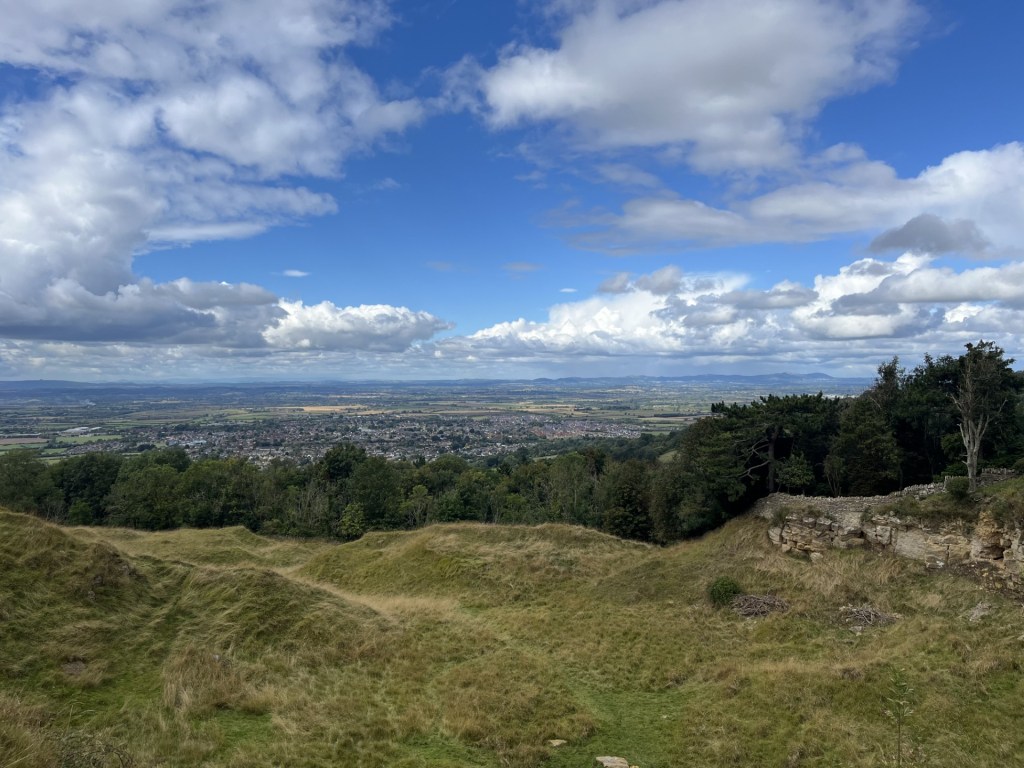
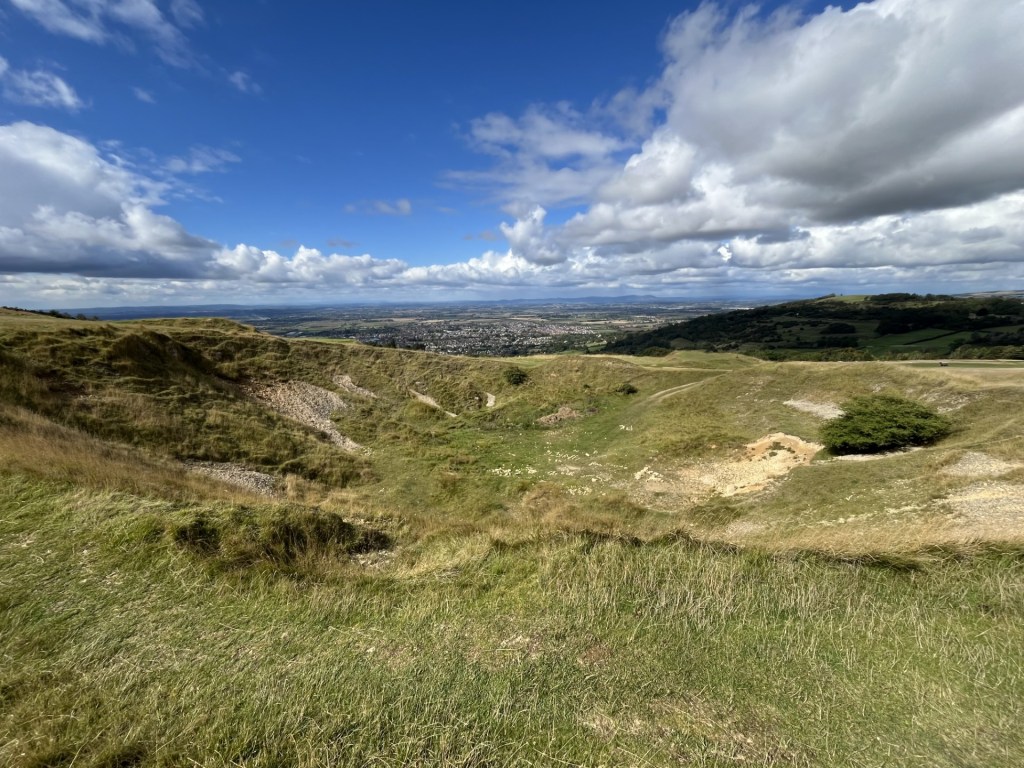
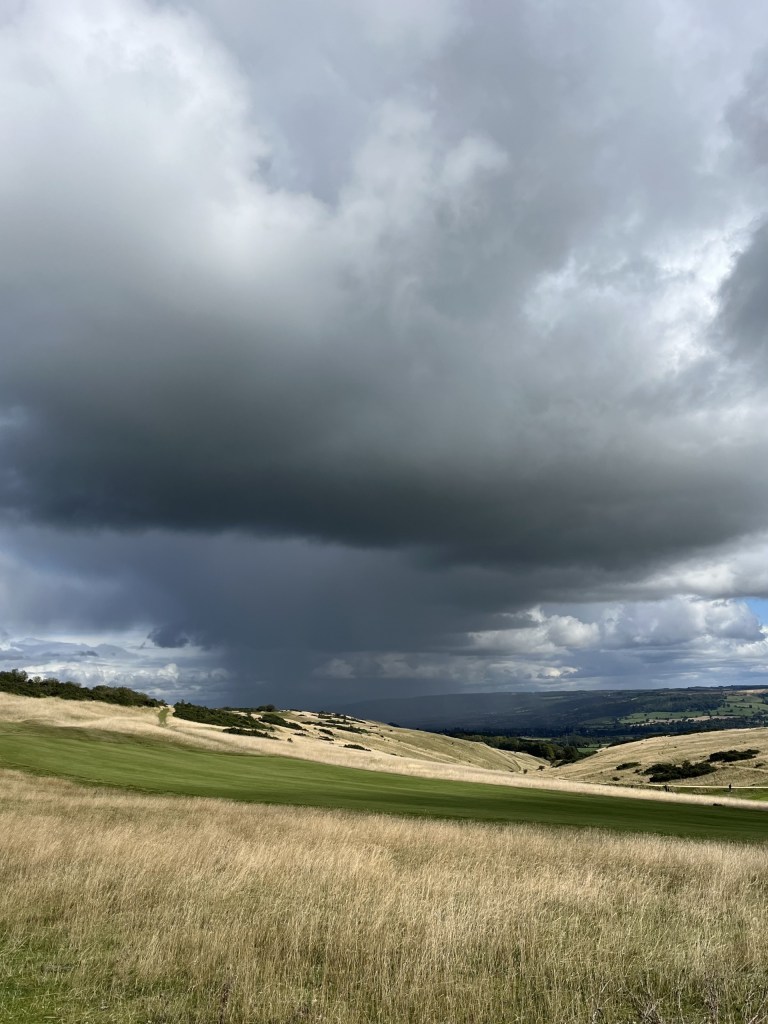

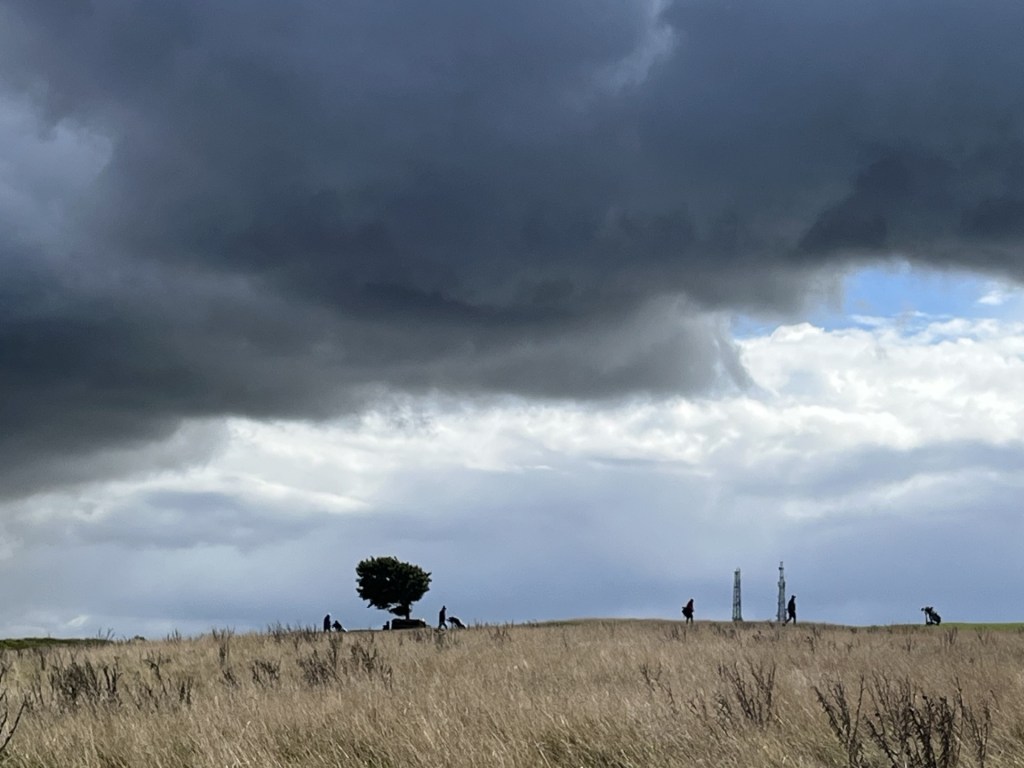

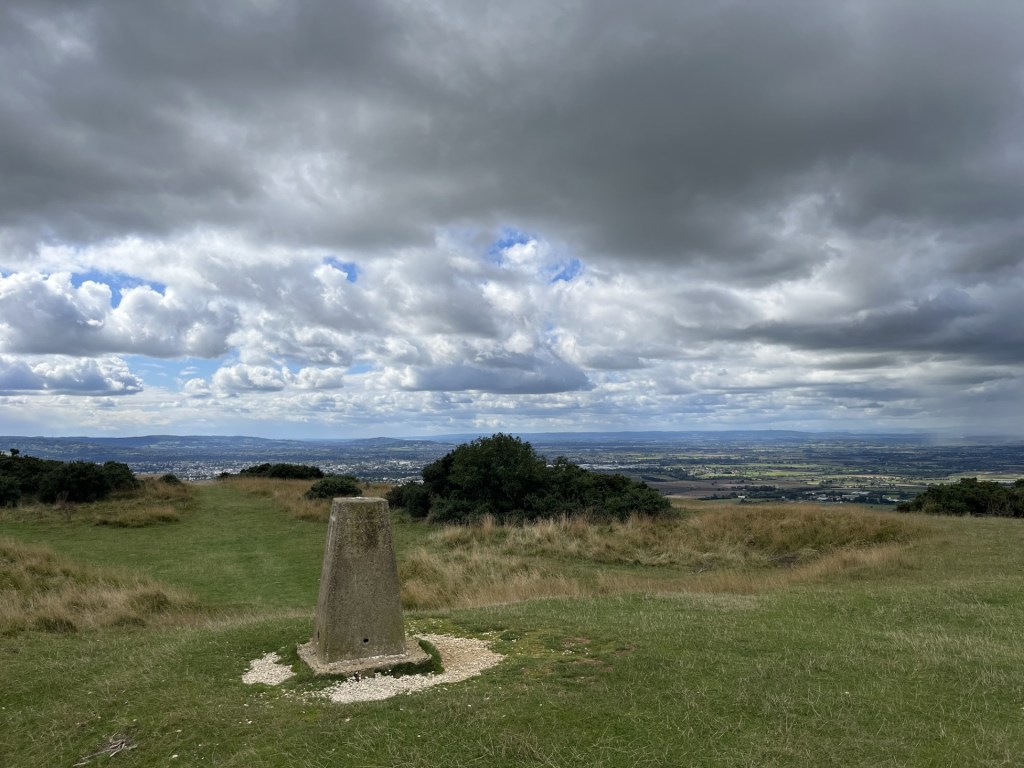
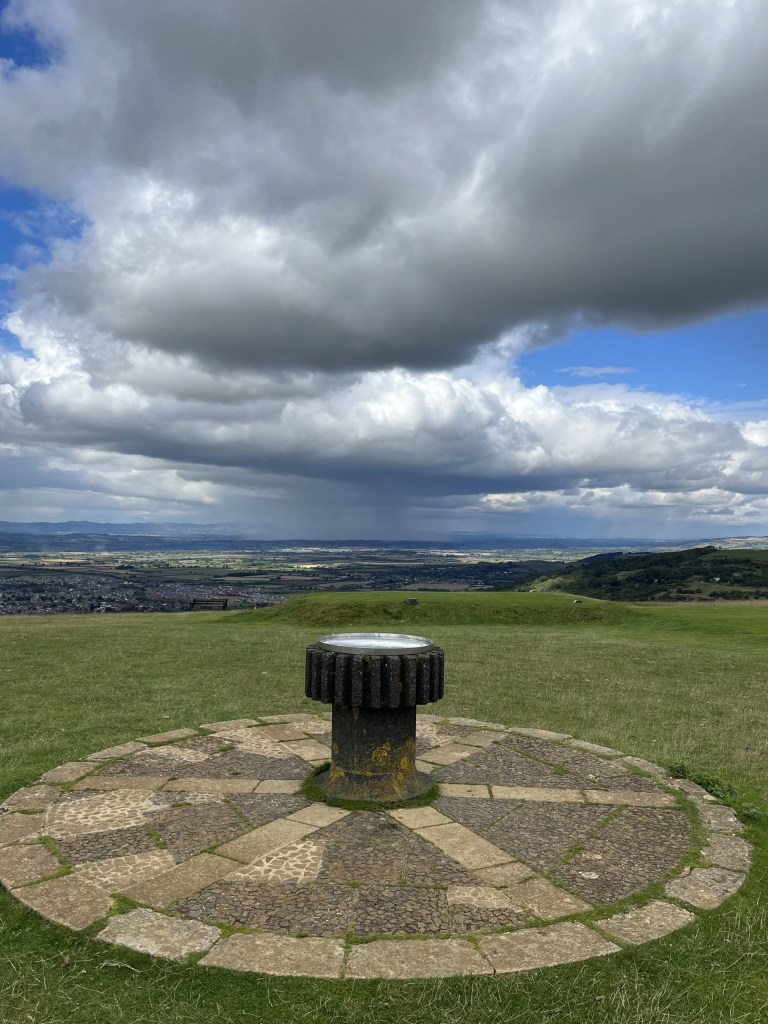
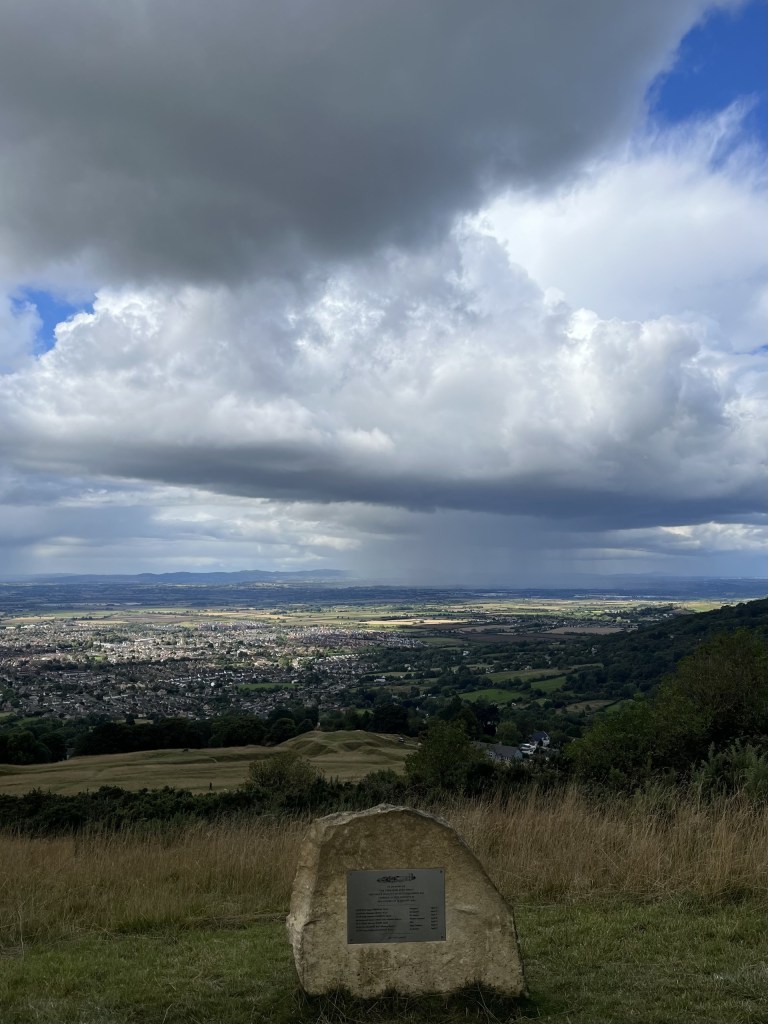
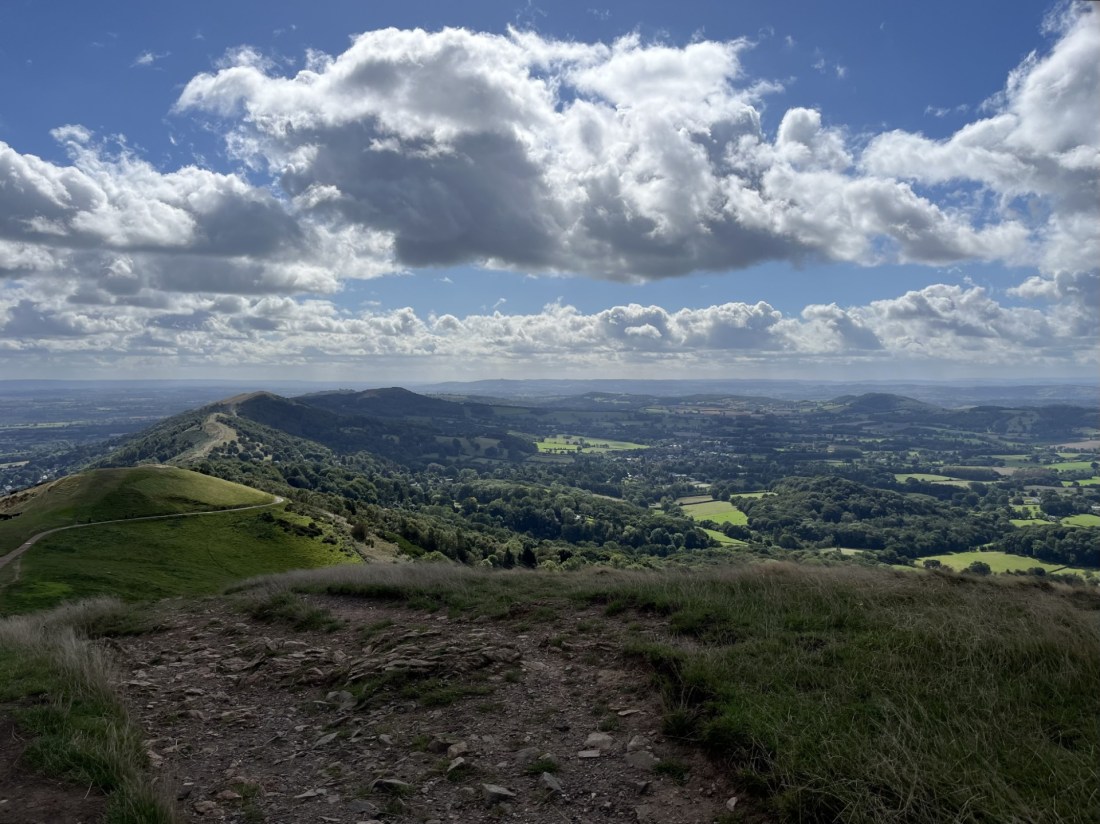
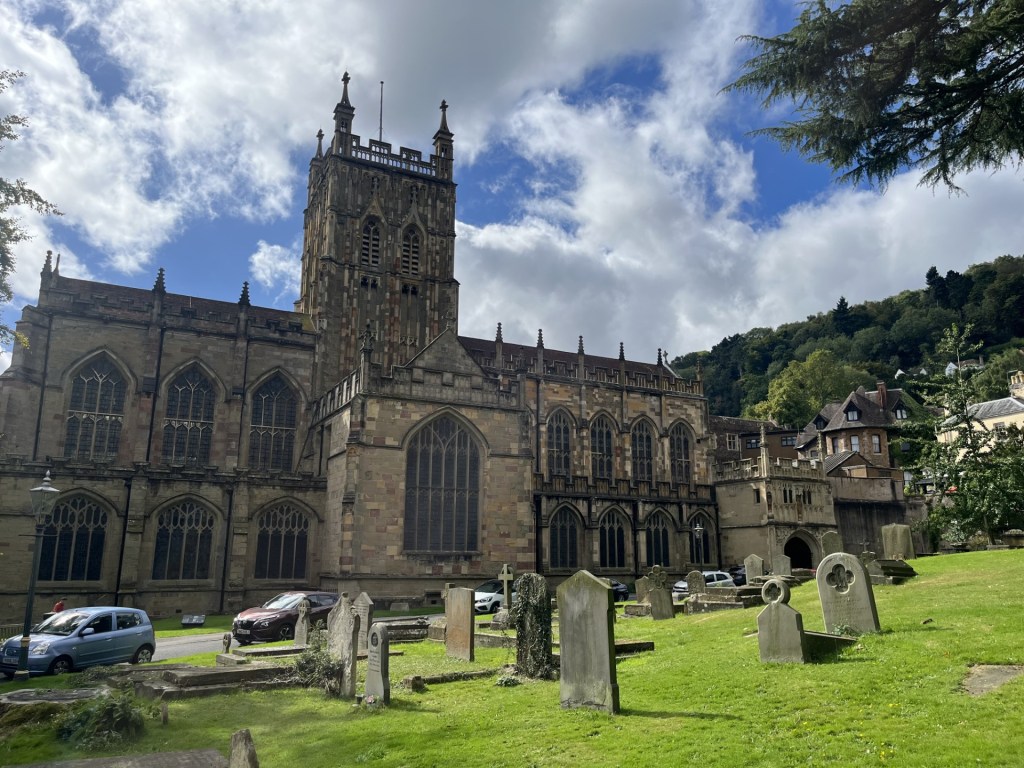


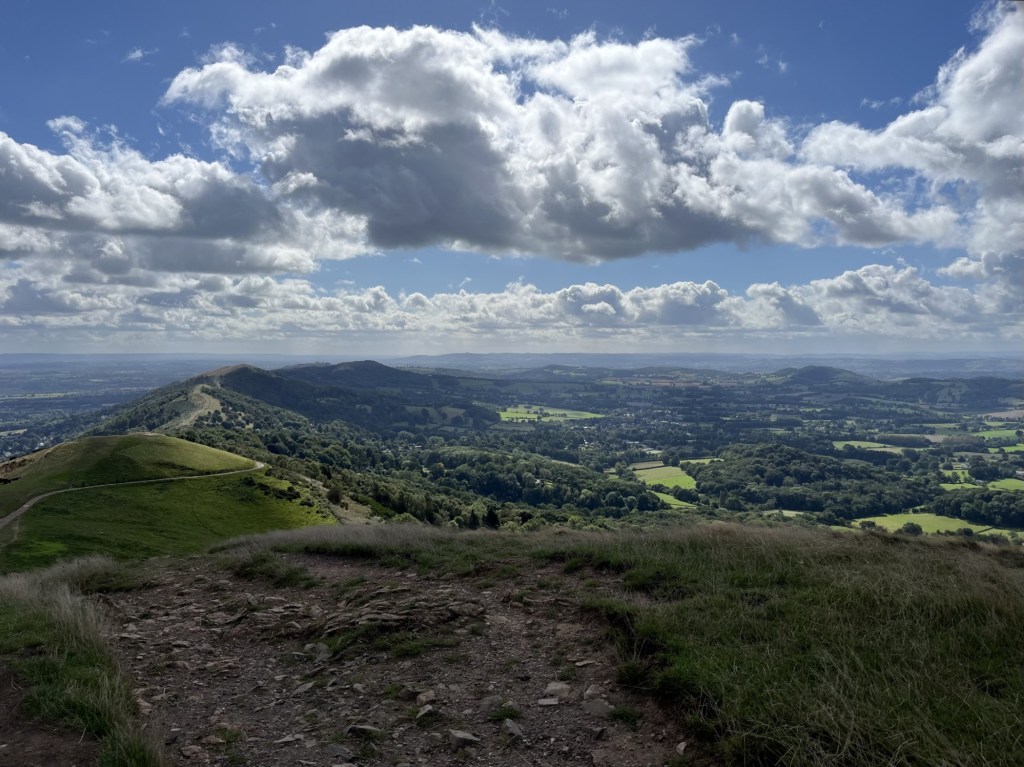

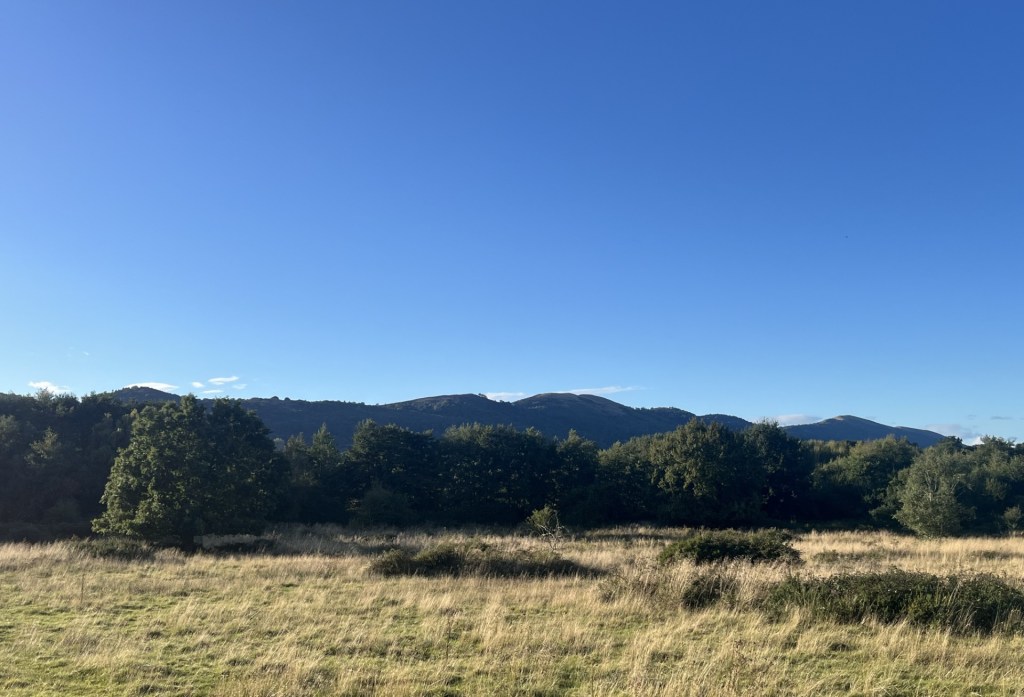
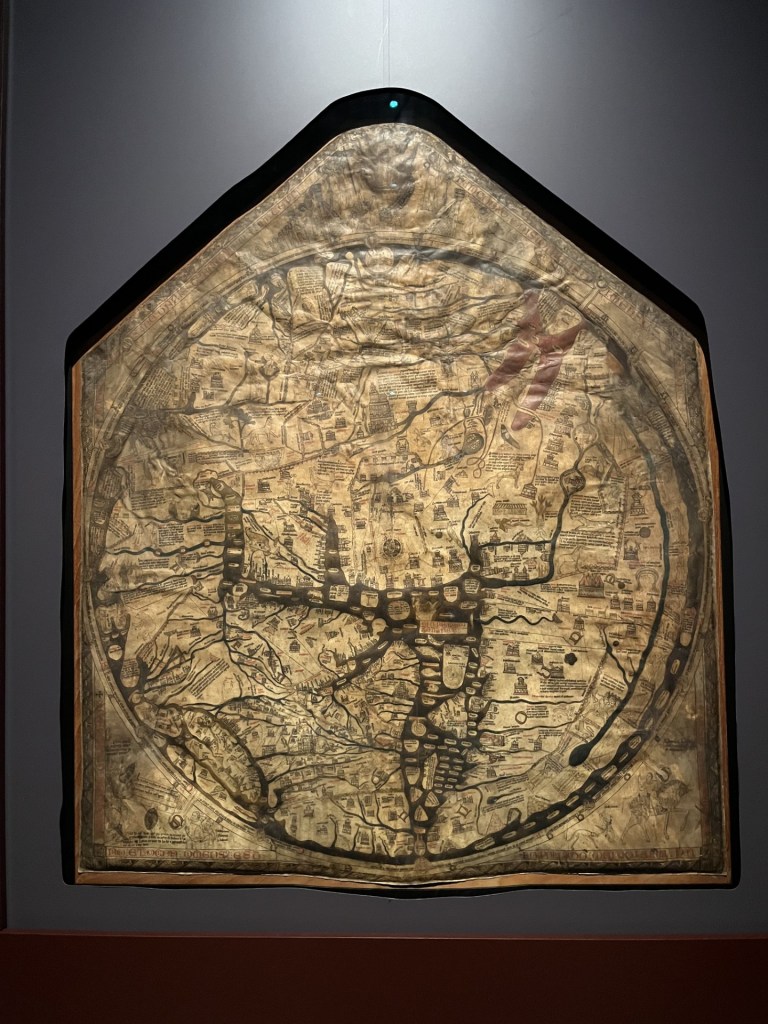


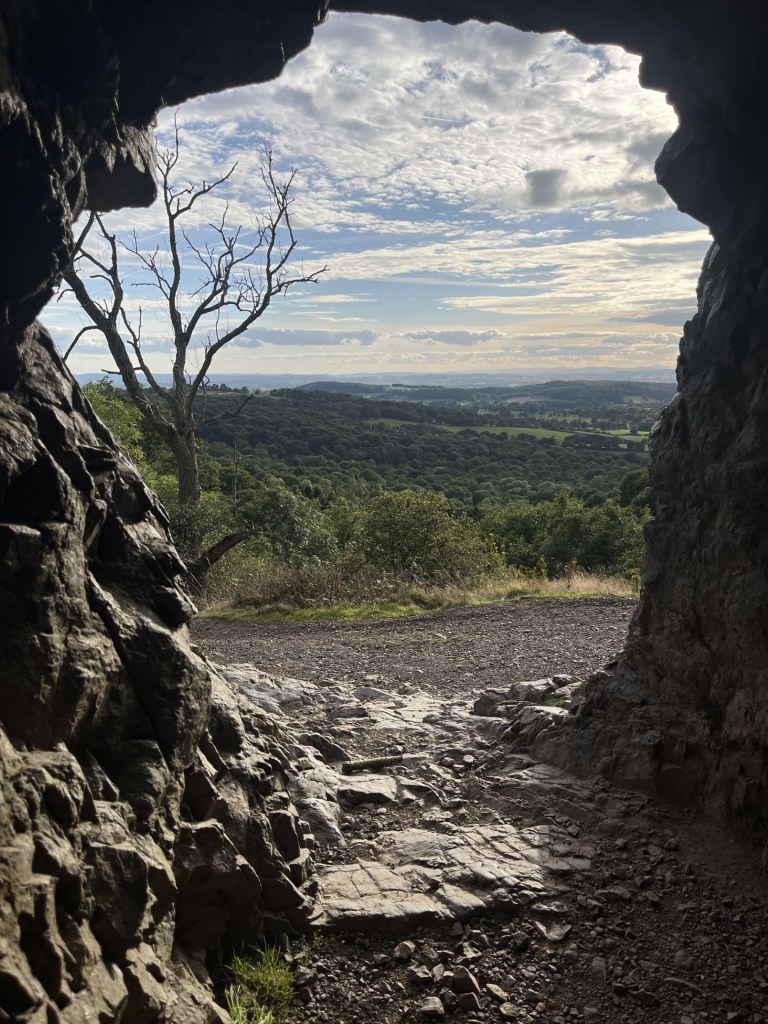

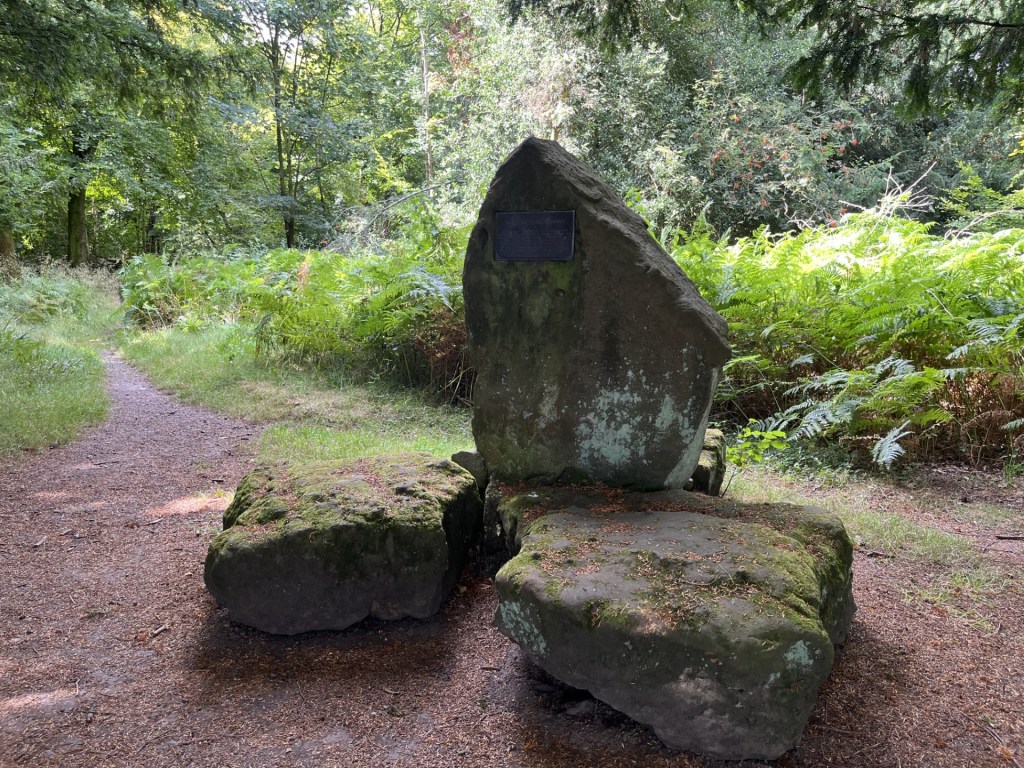

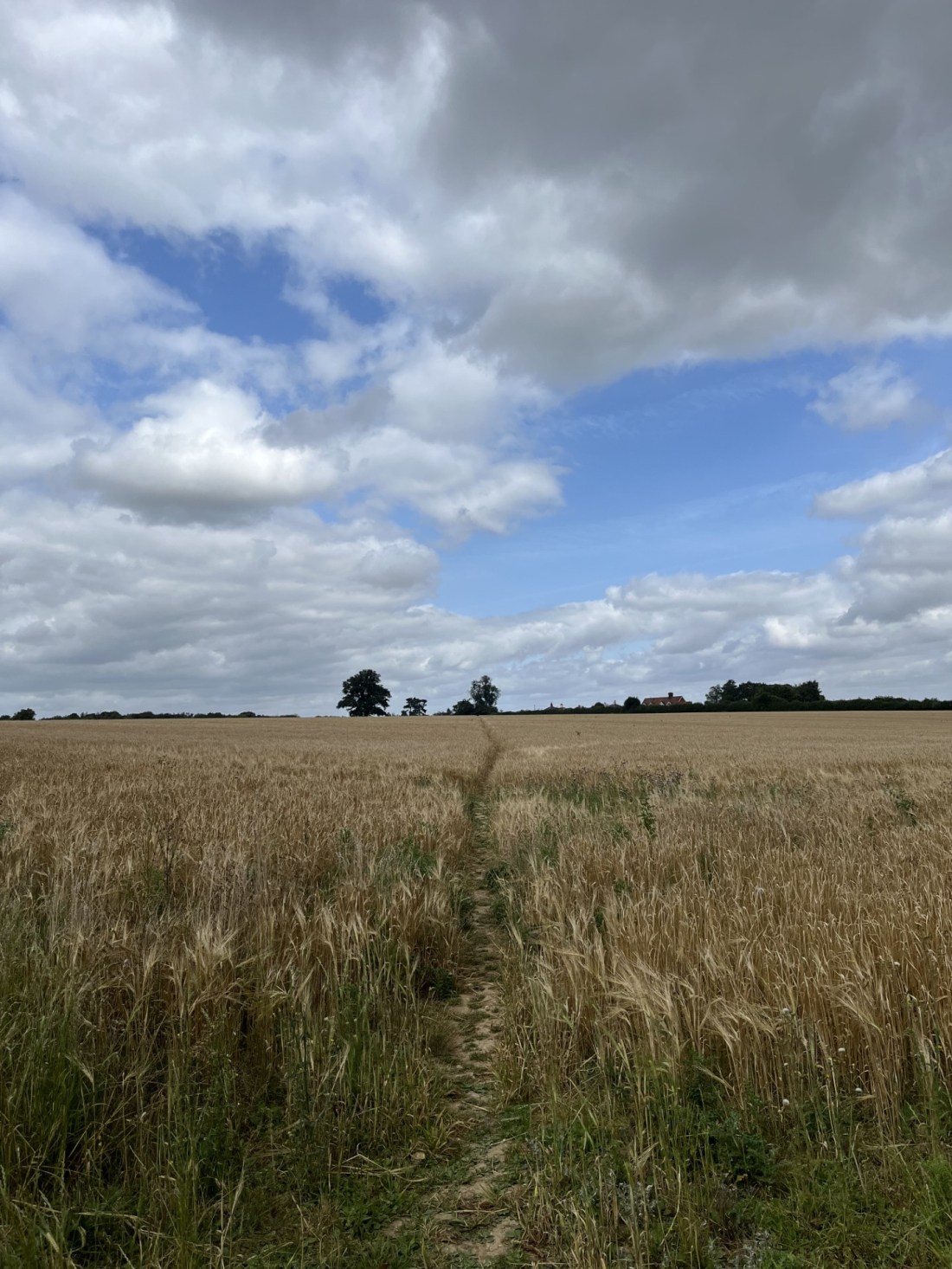


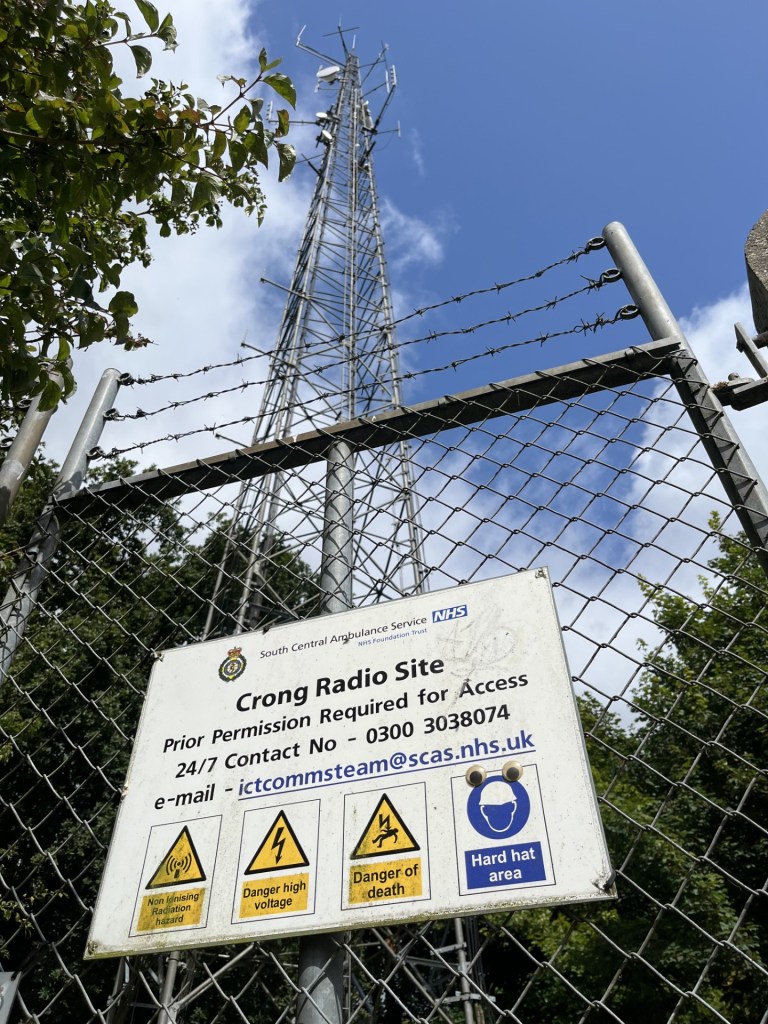


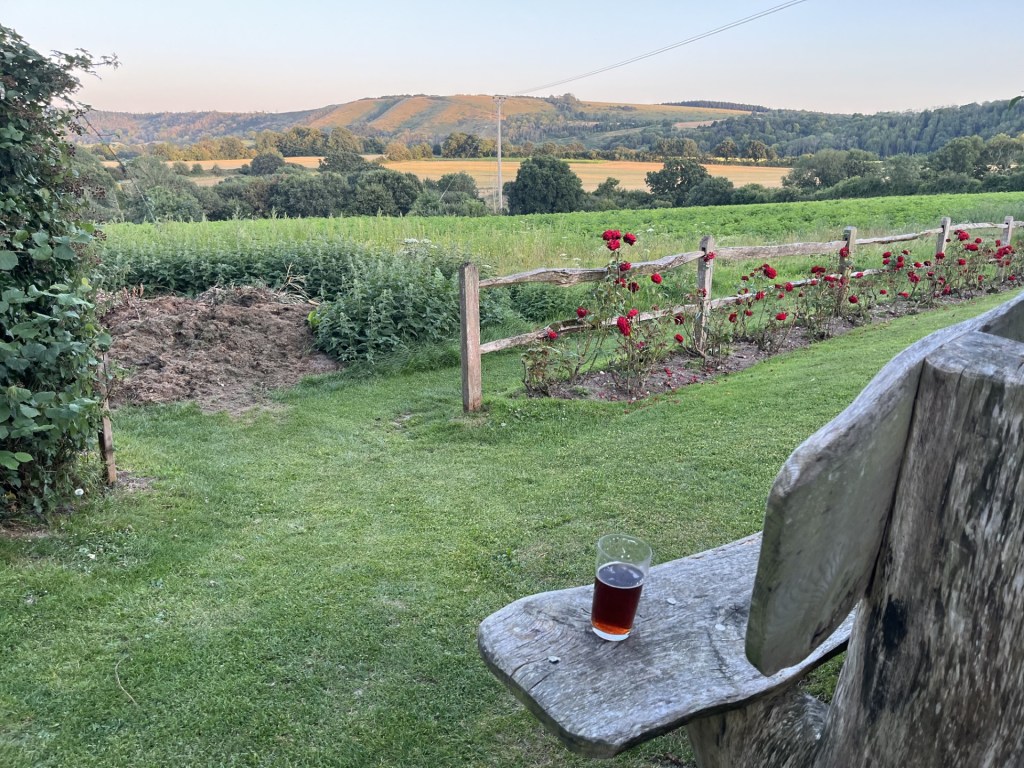


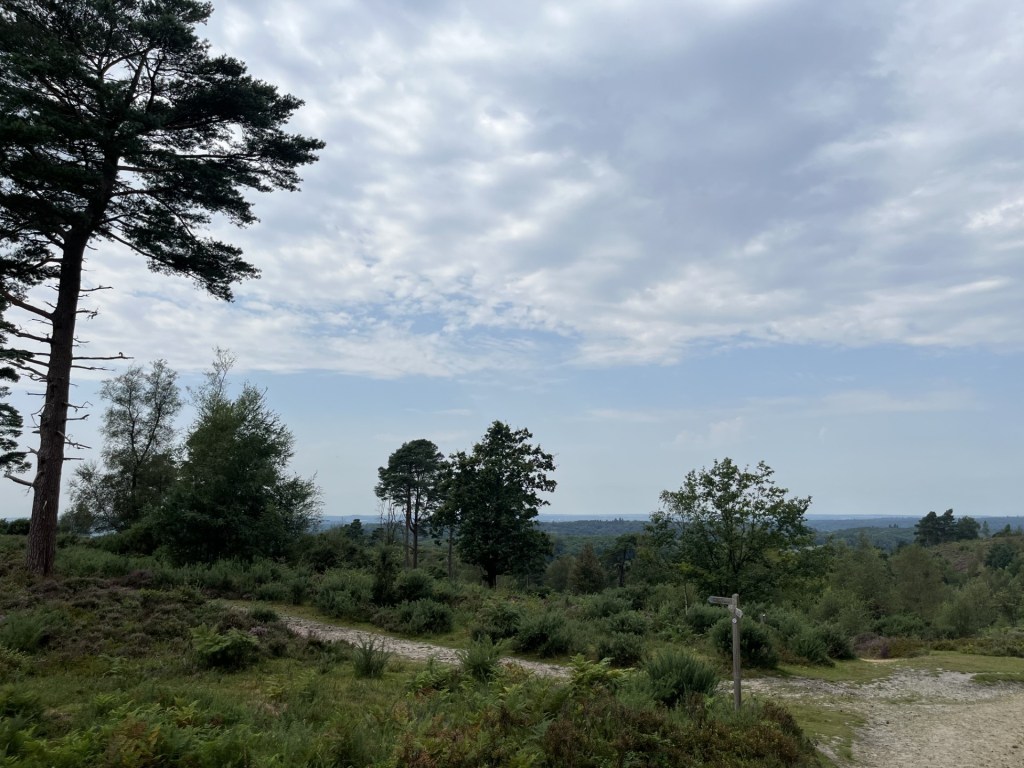
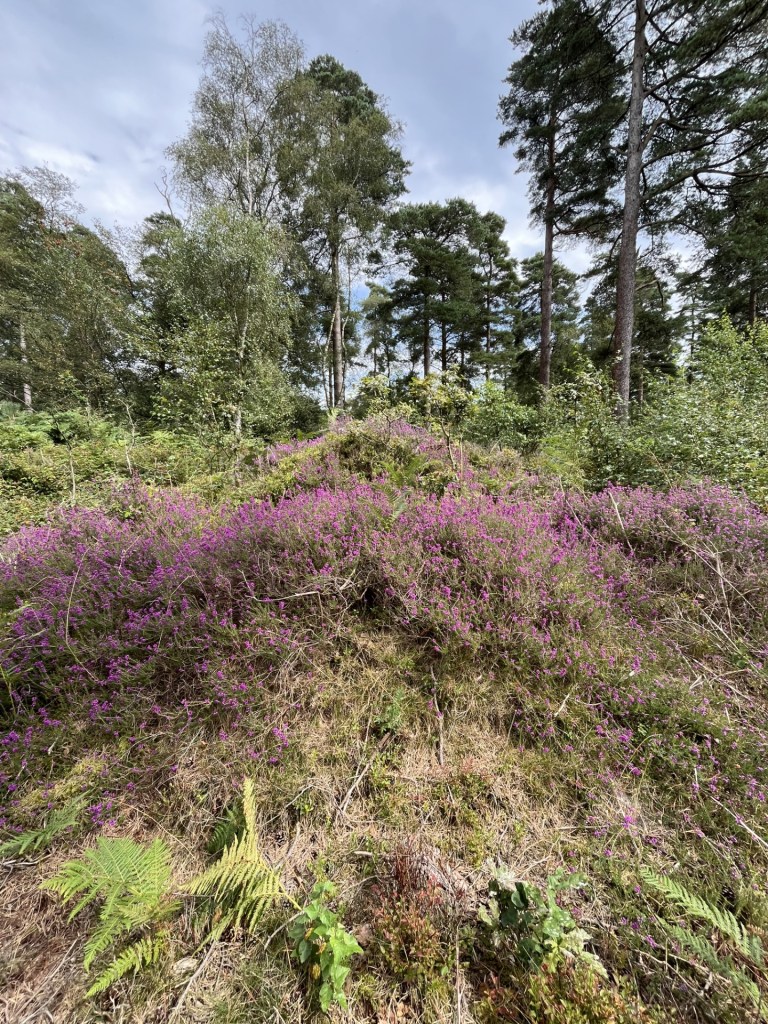


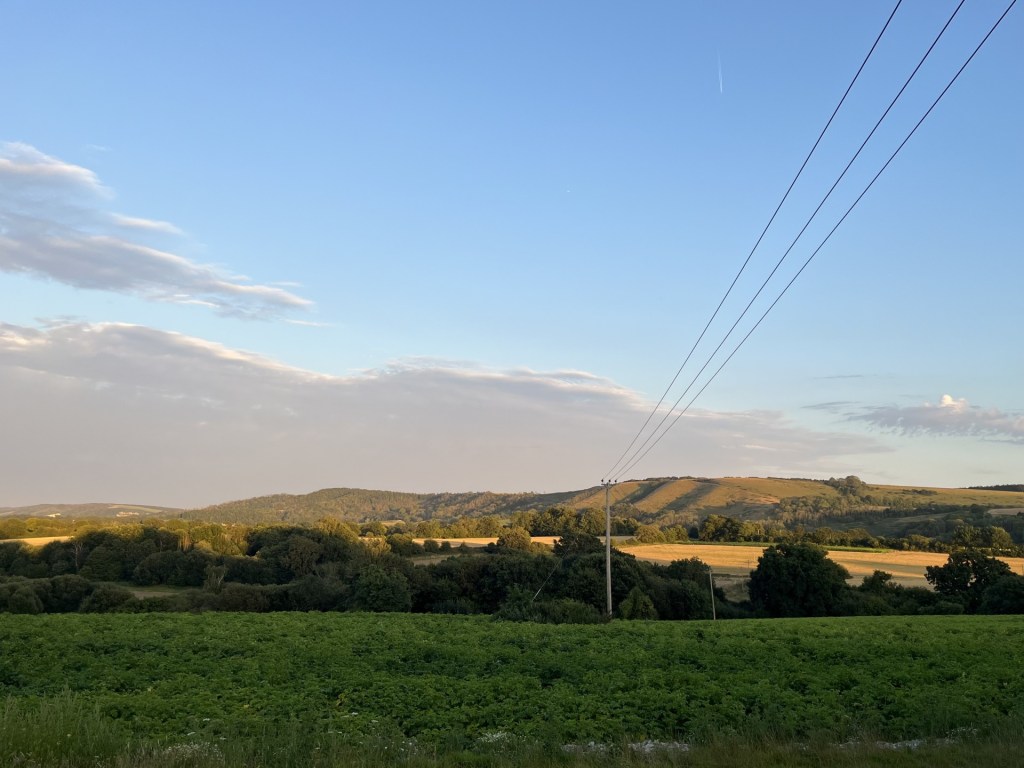
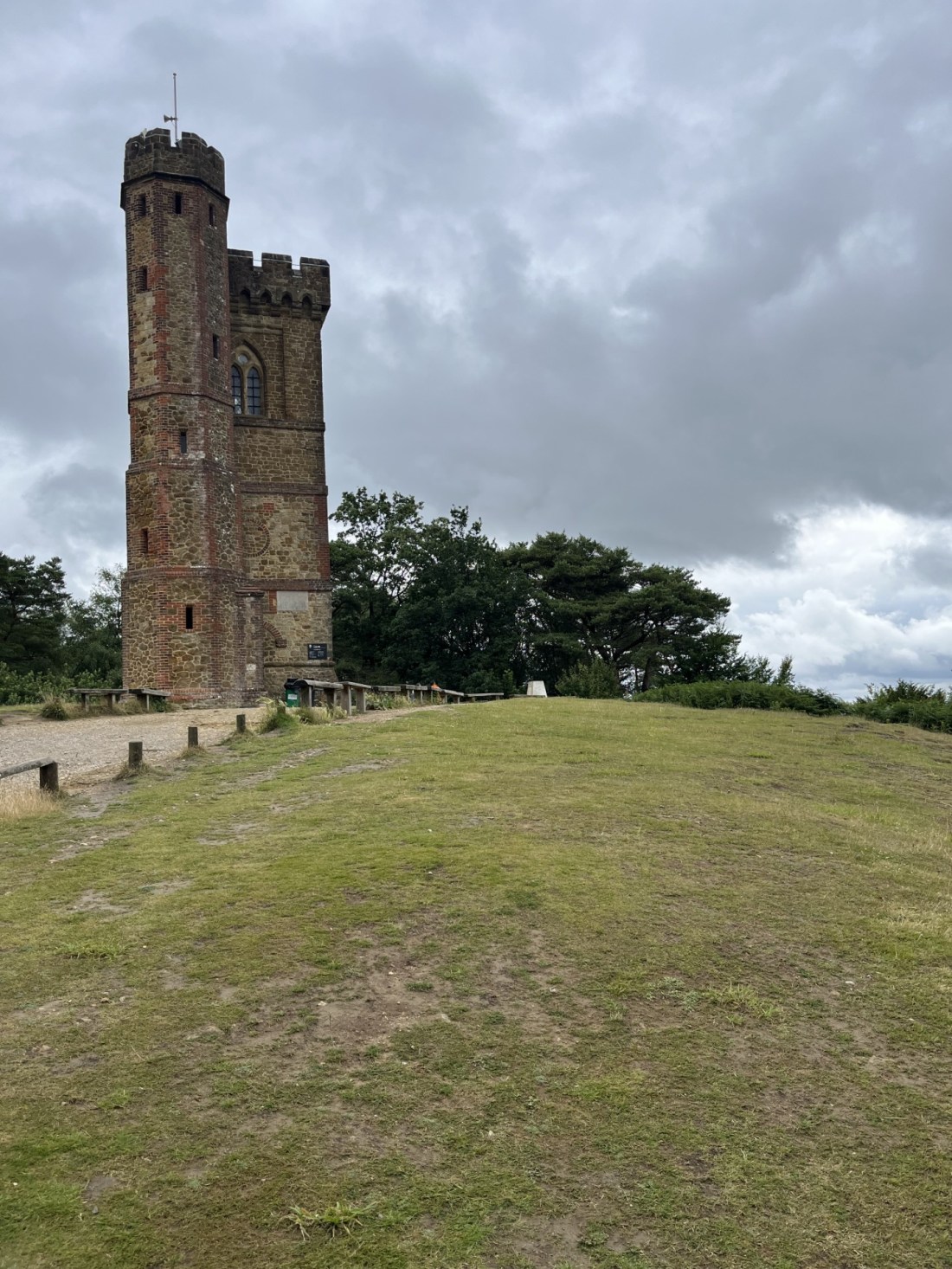
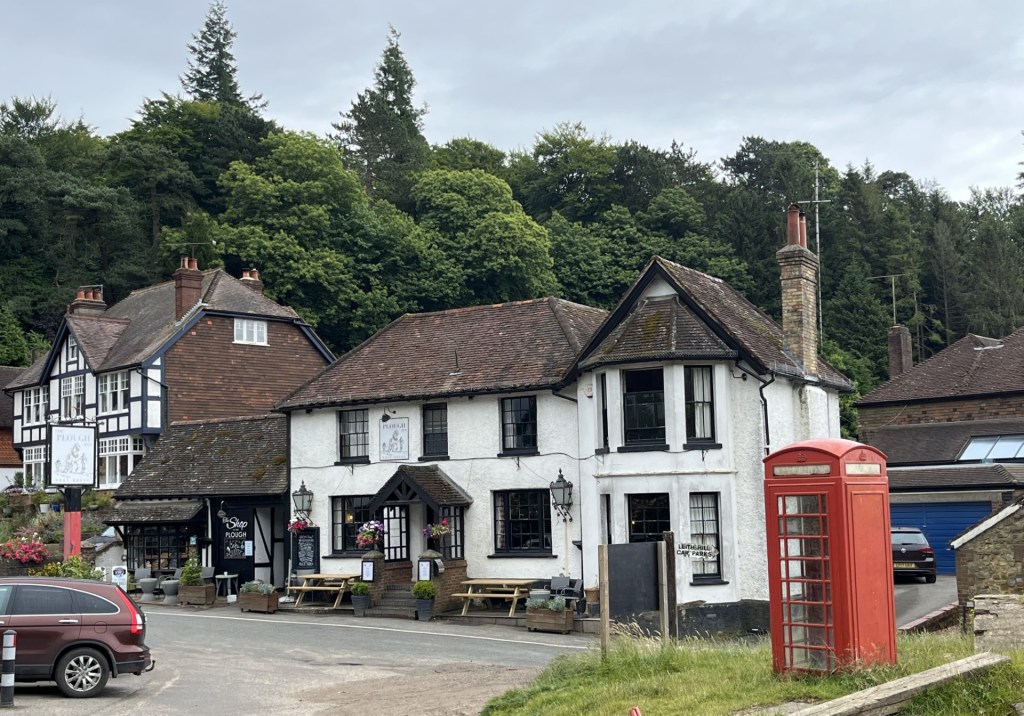


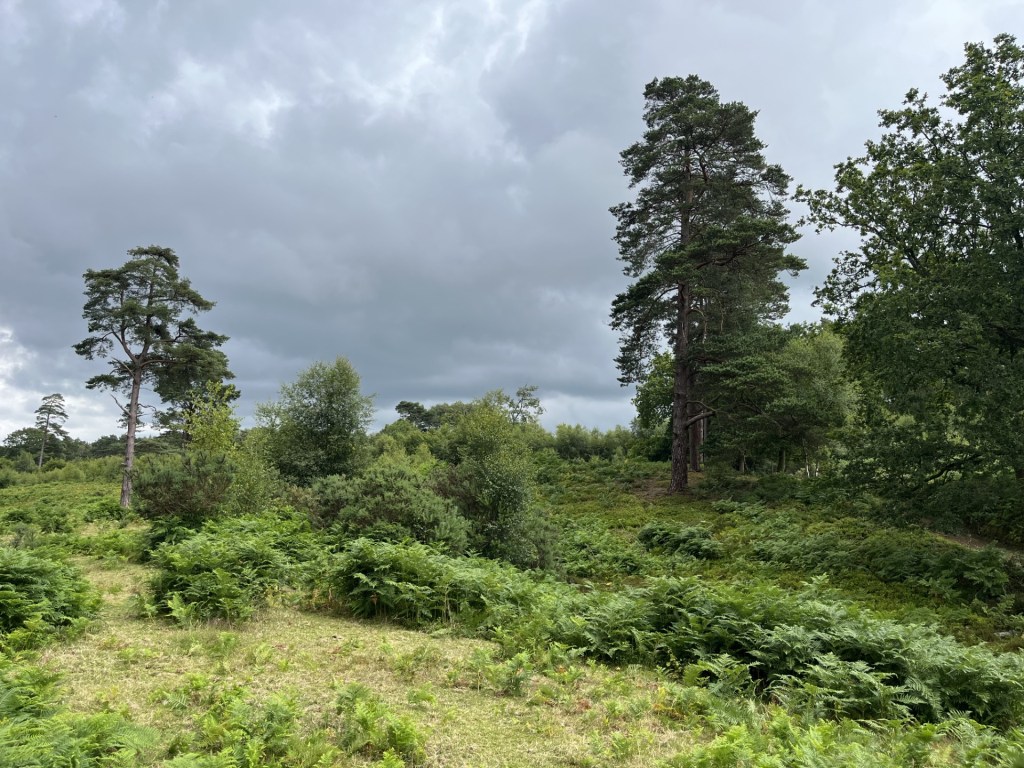
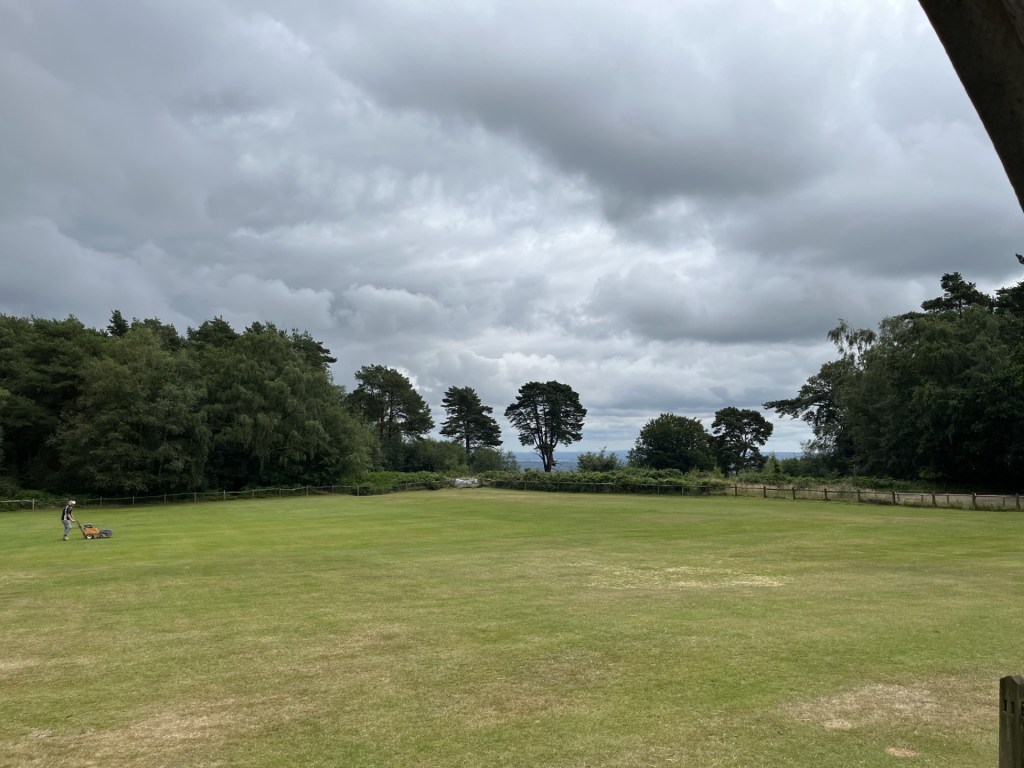




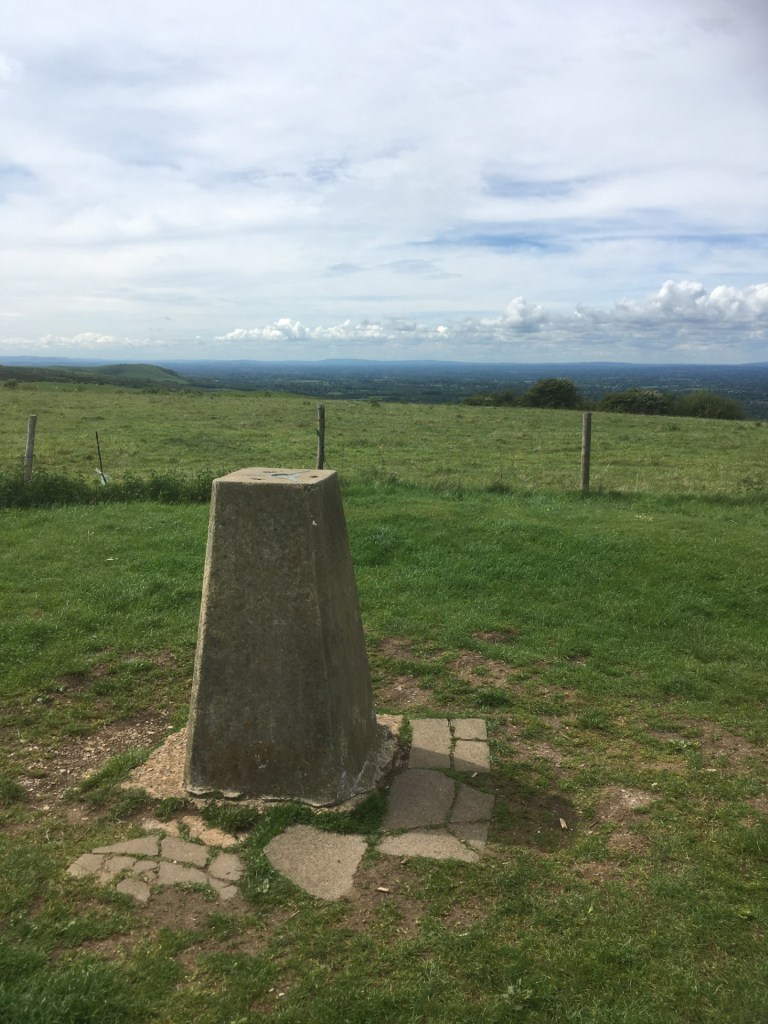
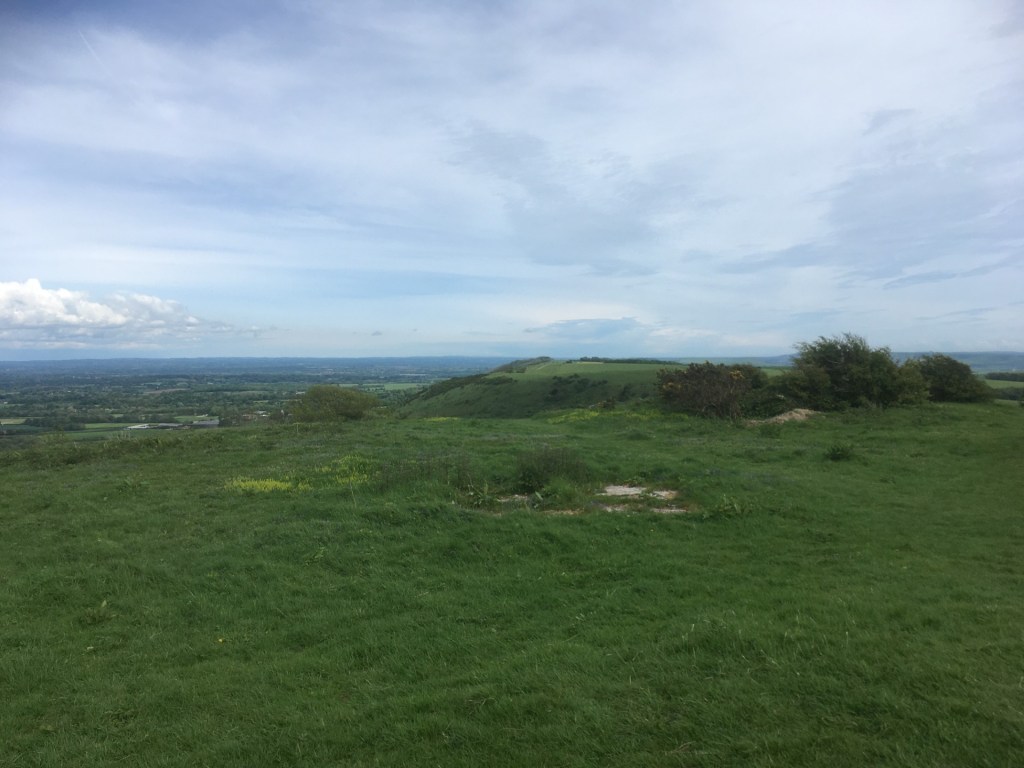


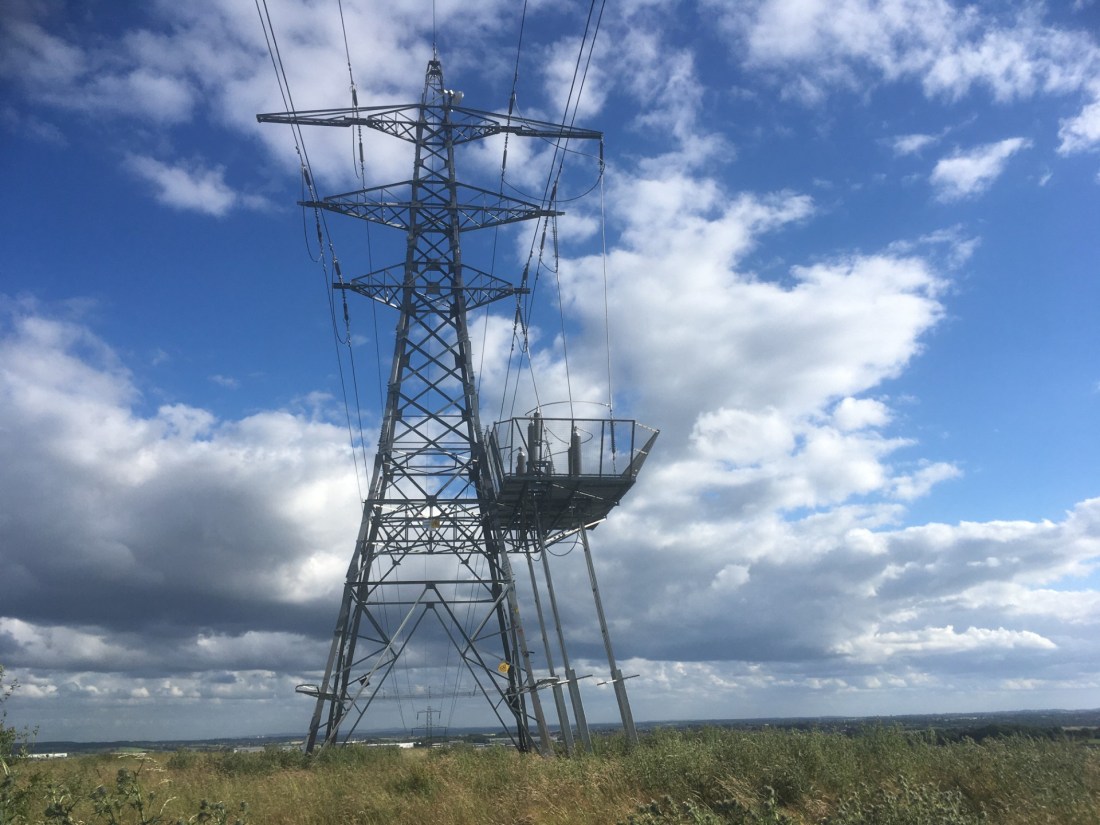
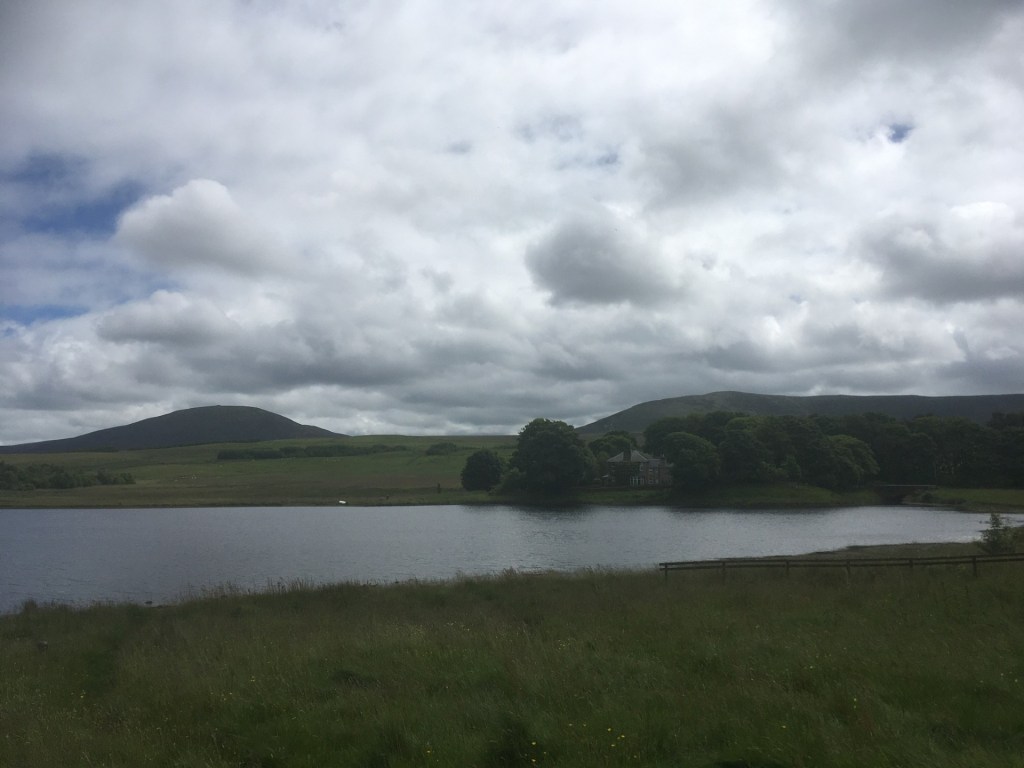
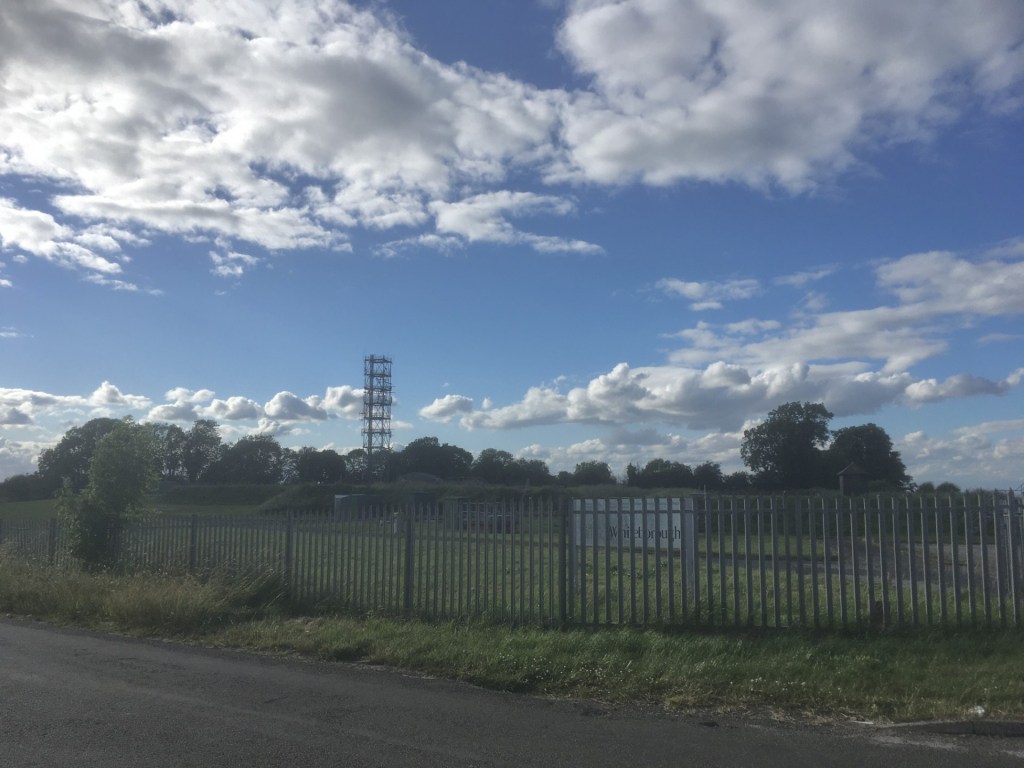

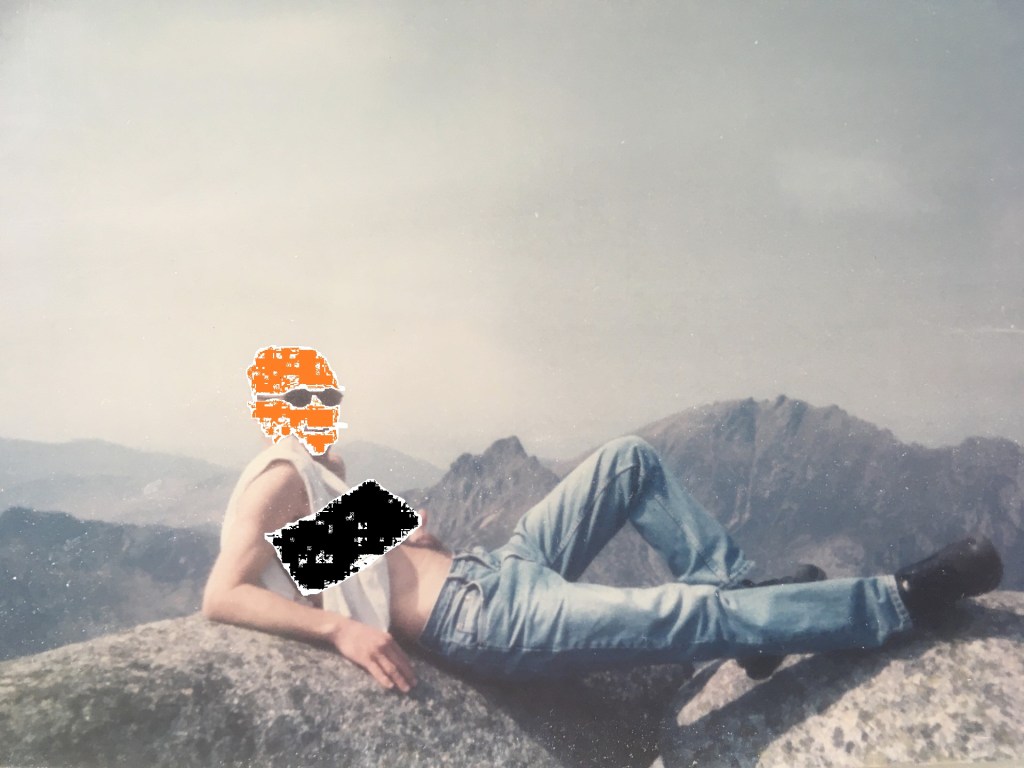
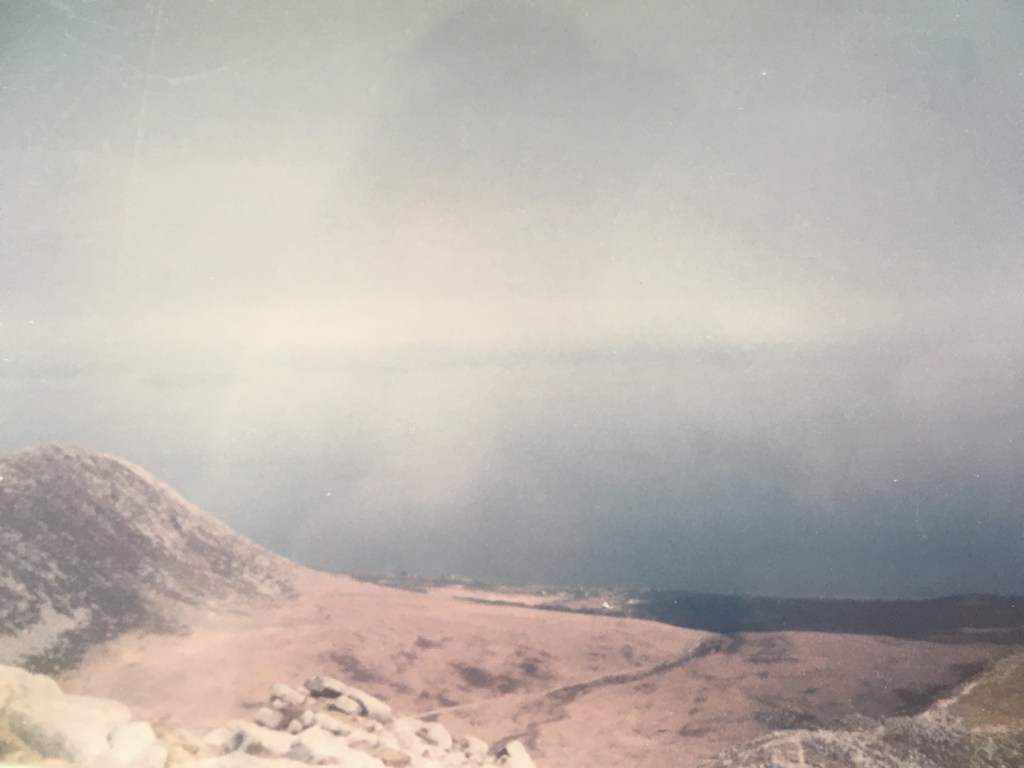
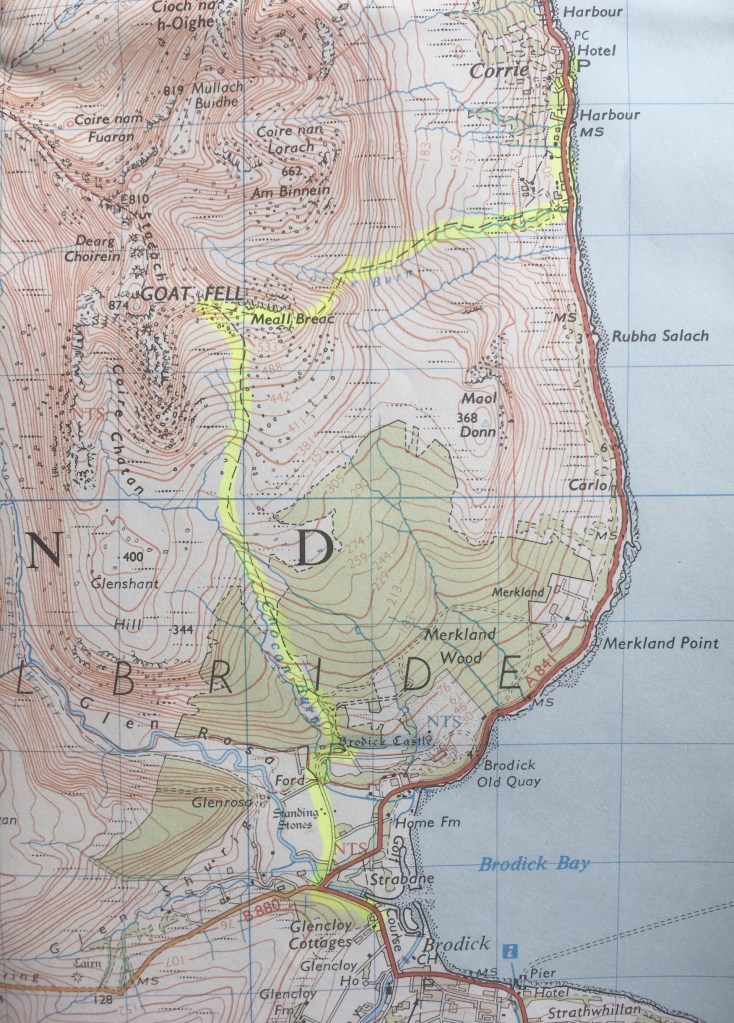
 El Colmado 57