6 Stonegate to Wadhurst
14th September 2026
OS Explorer 136
7 Miles
Upstream meandering
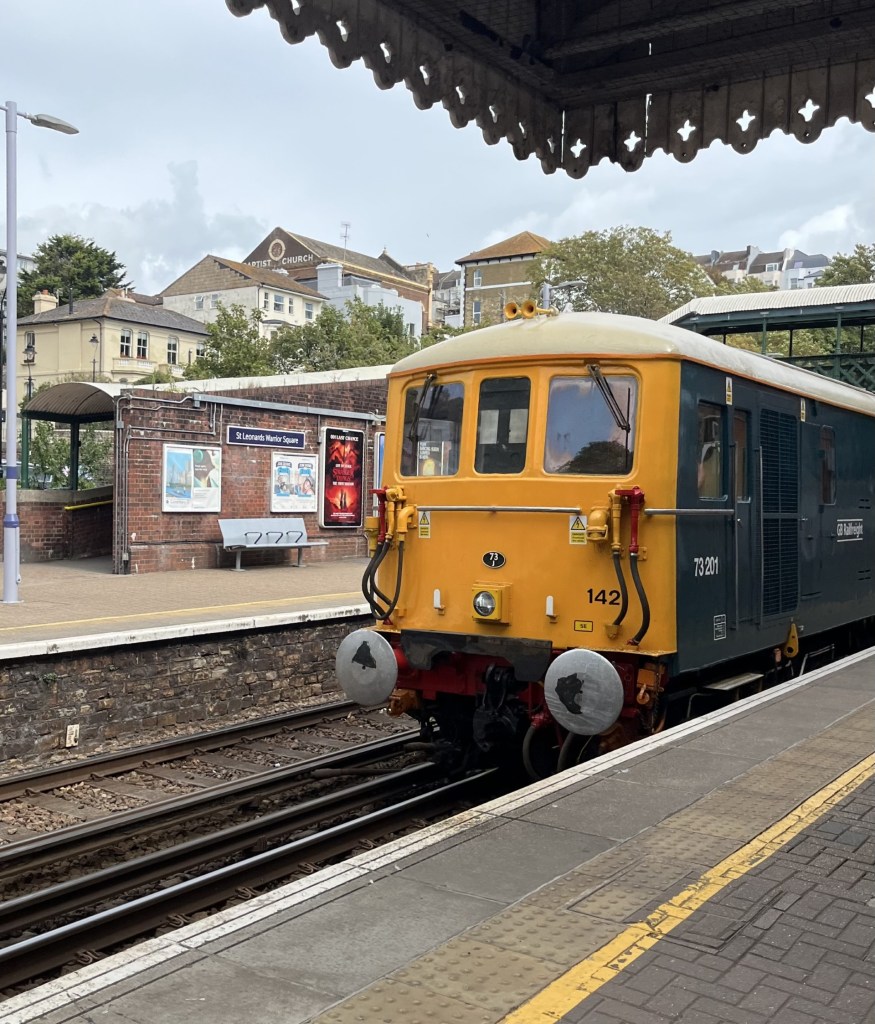
A grey day with mist and light rain drifting in from the sea. It was a day to head inland and seek out the hot weather promised in the forecast. Outside Warrior Square station a man holding a clear plastic bag and wearing clothes that told the story, stood outside looking forlornly at the departures screen. Two men, looking slightly worse for wear approached him. “You’re out?” He too seemed surprised by the event, not least that he was at Hastings station and clearly needed to be elsewhere. “Irish is out too,” one of them noted. I’d seen “Irish” with the pair a few minutes earlier, he too unable to understand how it had happened. There were no histrionics and no suggestion that the man was desperate to leap on a bender. The early release scheme seemed to be in motion, even if the trains weren’t.
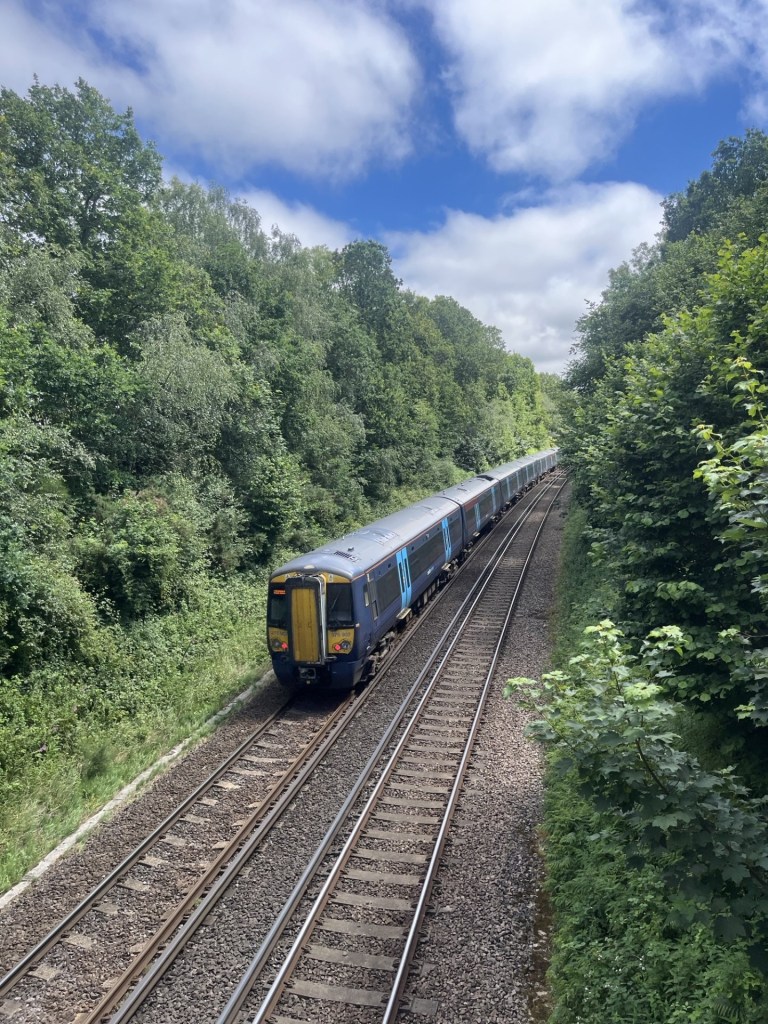
Whether this was what distracted me I can’t say, but I hopped on the first train to Charing Cross (delayed) and settled down at a window seat. A few minutes in and an announcement over the Tannoy. The next stop was Wadhurst. Cool, I thought, I’d landed on the fast train. But then, the realisation. I didn’t want to go to Wadhurst on the train. To start the walk at Stonegate I needed the slow train. The walk was supposed to be Stonegate to Wadhurst, not the other way round, this being the “up” walk after all.
There was nothing I could do about it. I had to go to Wadhurst (and try to remember to get off), then get the next southbound train back to Stonegate, where I’d walk back to Wadhurst, and then get a train back through Stonegate to Hastings. Simple.
As the train passed through Stonegate the conductor (I’m sure that’s not what they are called now), came through and asked to see my ticket. It was my chance to pose the question. I explained the position. I was going to get off at Wadhurst, go back to Stonegate, then go back to Wadhurst and then back through Stonegate. The problem was I didn’t know what the question was? I think it should have been, “do I need to buy a single ticket from Wadhurst to Stonegate?” But for whatever reason I couldn’t locate it in my brain. The conductor was doing his best to keep up, but with a station approaching and other potential fare dodgers to find, I think he would have rather been listening to Vogon poetry. Eventually he surrendered and simply said, “yeah mate, you’ve got the ticket, you’re fine.”
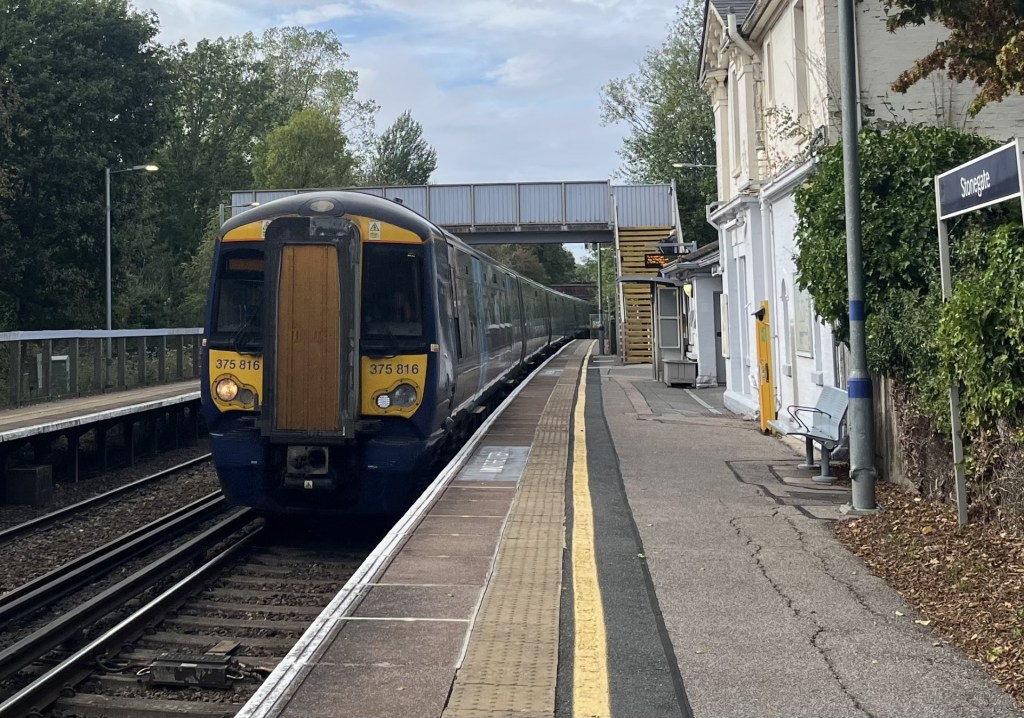
Reassured, but not quite, I got off at Wadhurst and walked over the bridge to the down platform, only to see that I had just missed the next train. Except, due to a signalling problem in the Sevenoaks area, it had been delayed, and literally a minute later it arrived, and five minutes later I was back at Stonegate.
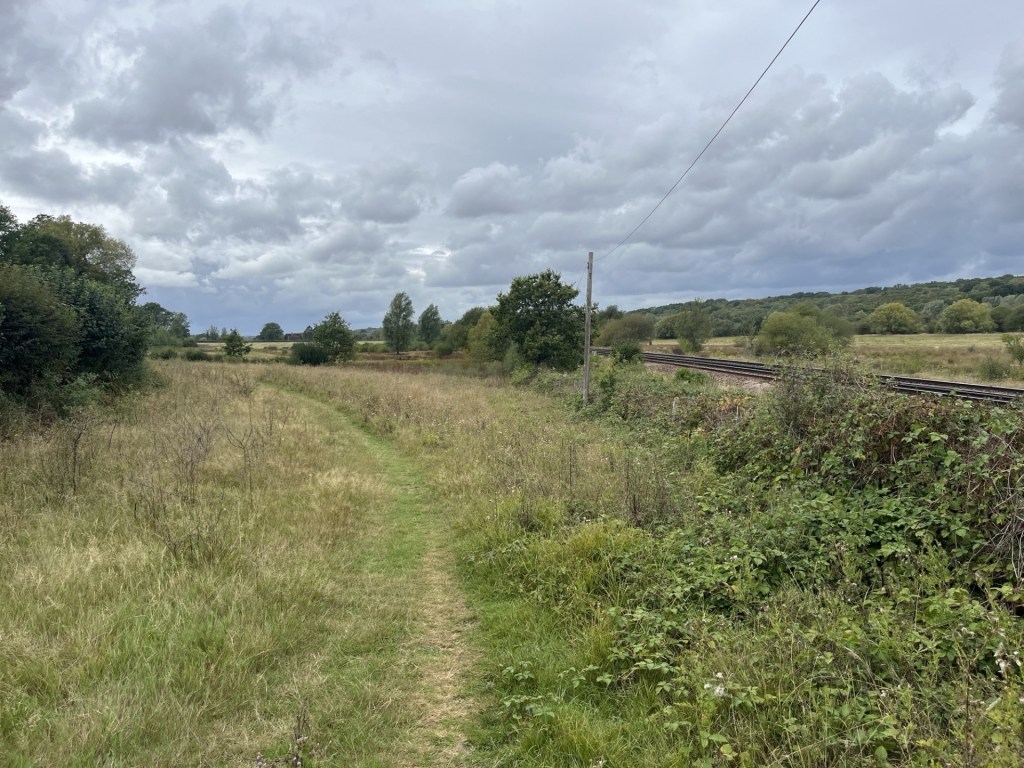
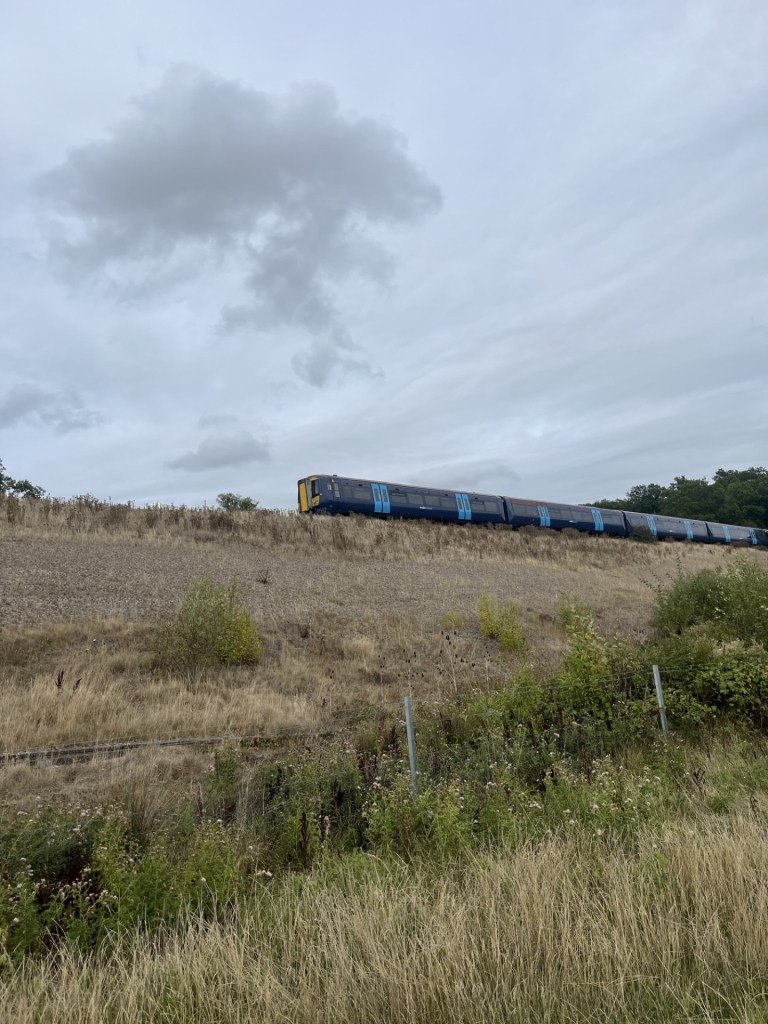
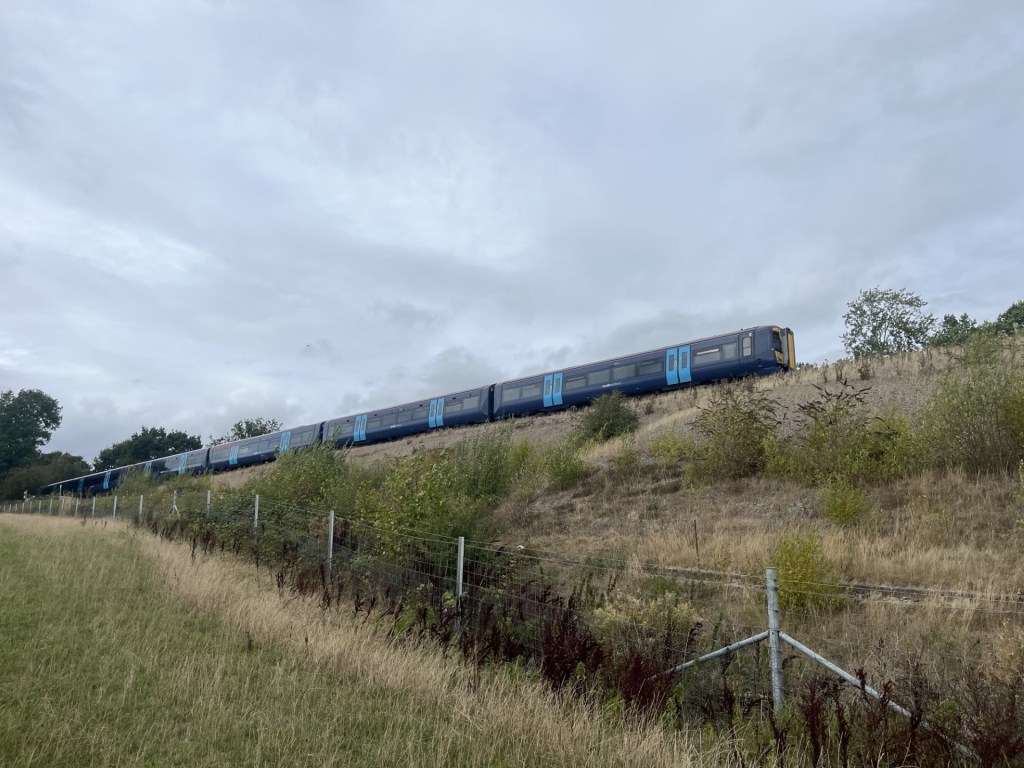
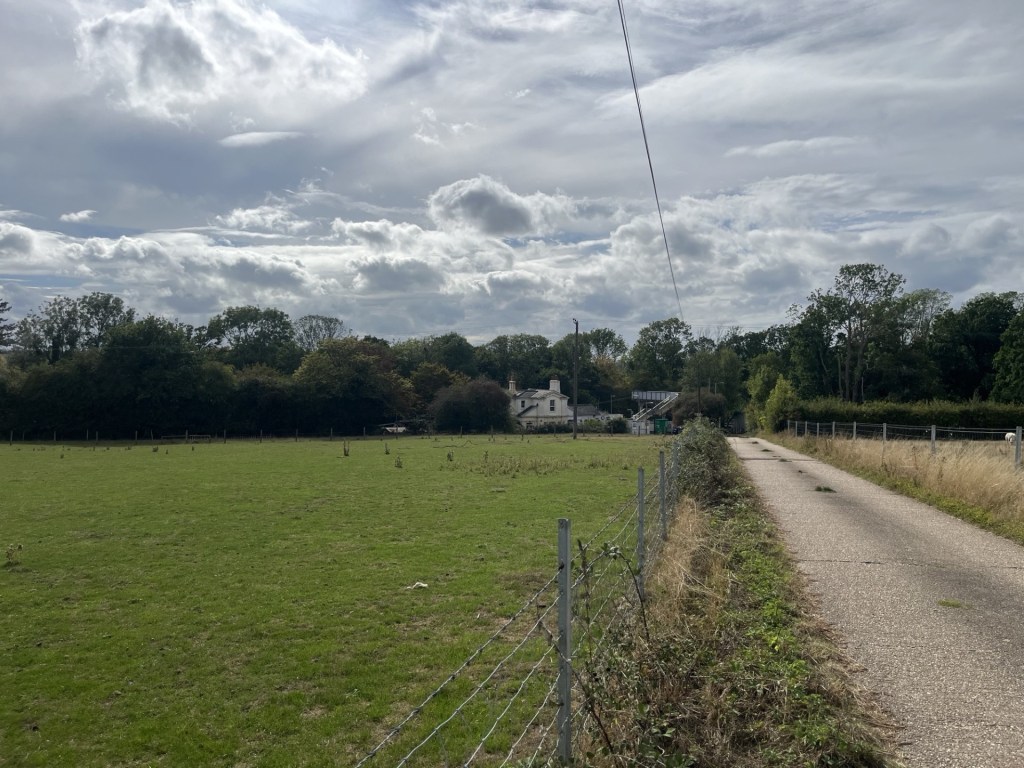
Stonegate station is in the middle of nowhere. Literally. If there is a Stonegate community, it’s nowhere near the station. Not a hamlet nor any evidence of a stone gate, which makes it hard to explain why it has the biggest car park east of Gatwick Airport, and just as full. Ours is not to reason why, so I walked the long walk to the nearby Station Road. Turning left and over the railway bridge a footpath running alongside the railway presented itself. I’d already decided not to take this path as I wanted to extend the journey a bit by heading downhill and use the paths up the river valleys. In any event, the area was something of a building site, with extensive engineering works being carried out to one of the many embankments along this section of the line. A few weeks earlier a train had derailed near Lewes, almost certainly due to extreme heat damage to the track. With long dry summers, and excessively wet winters, the maintenance of railway embankments has become an increasing priority. Just one of the many extra costs and impacts of global warming to come.
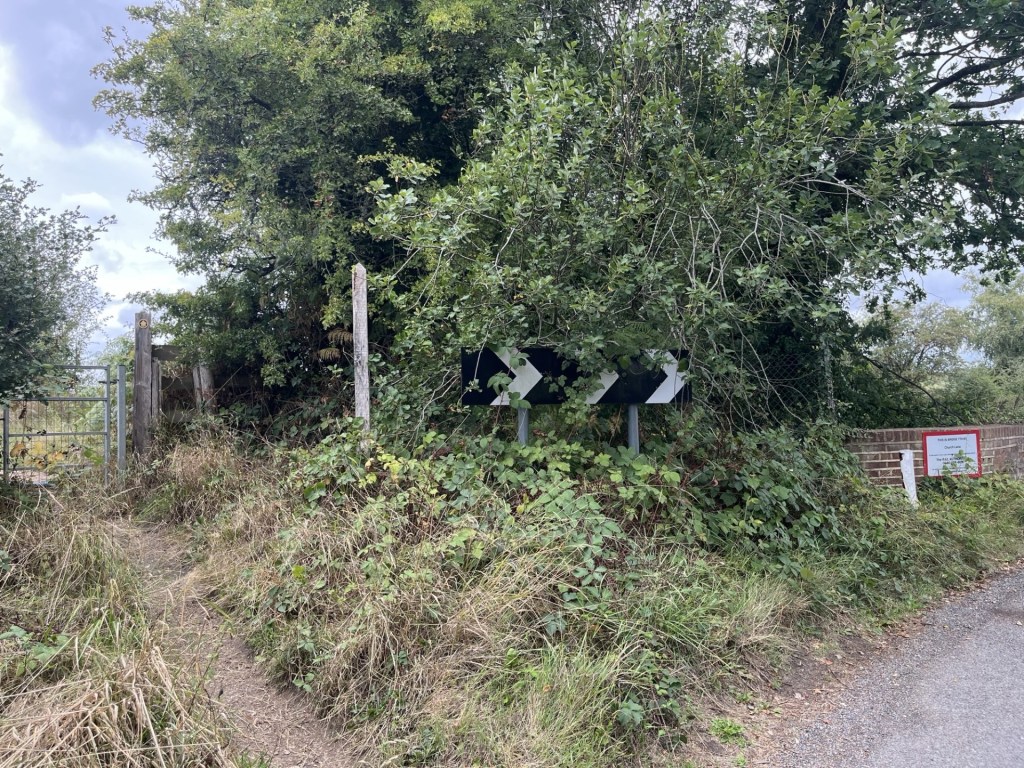
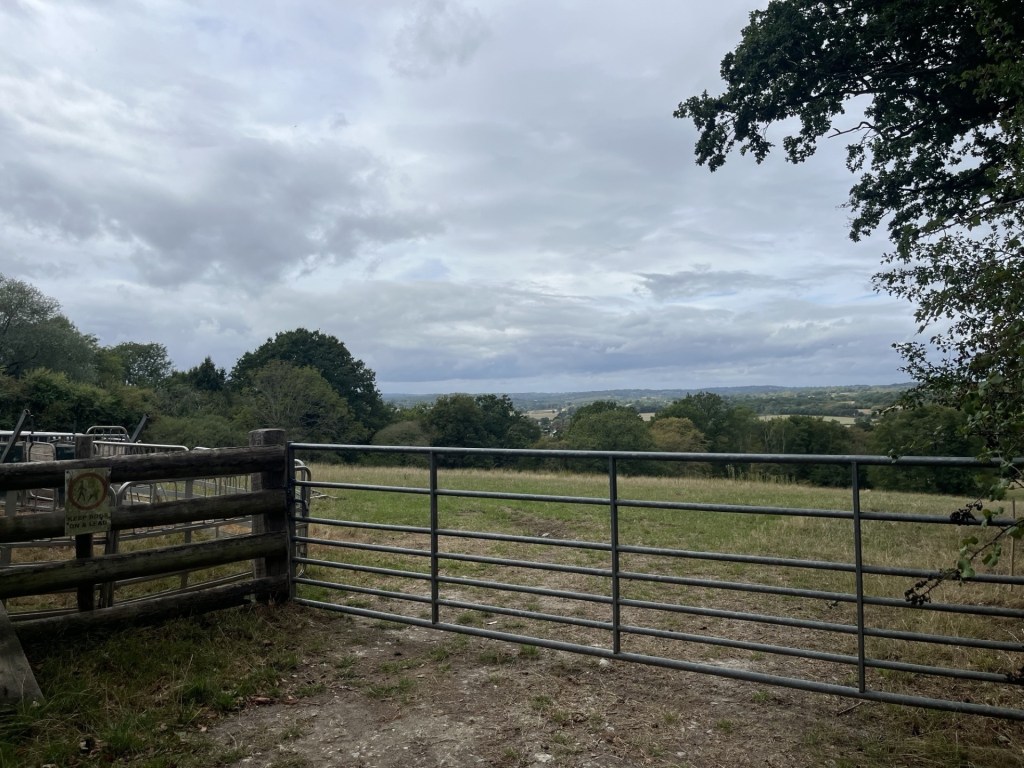
I wandered down the road, turning right at the long approach to Witherenden Farm. Before reaching the farm there was a kink in the road, and a large, printed sign pointing left, and from what was left of the lettering, an instruction that the footpath was just to the left and into a field. Passing into the field a sweeping view of the valley opened up, and at its lowest point the confluence of the where the river Rother and the Tide Brook met.
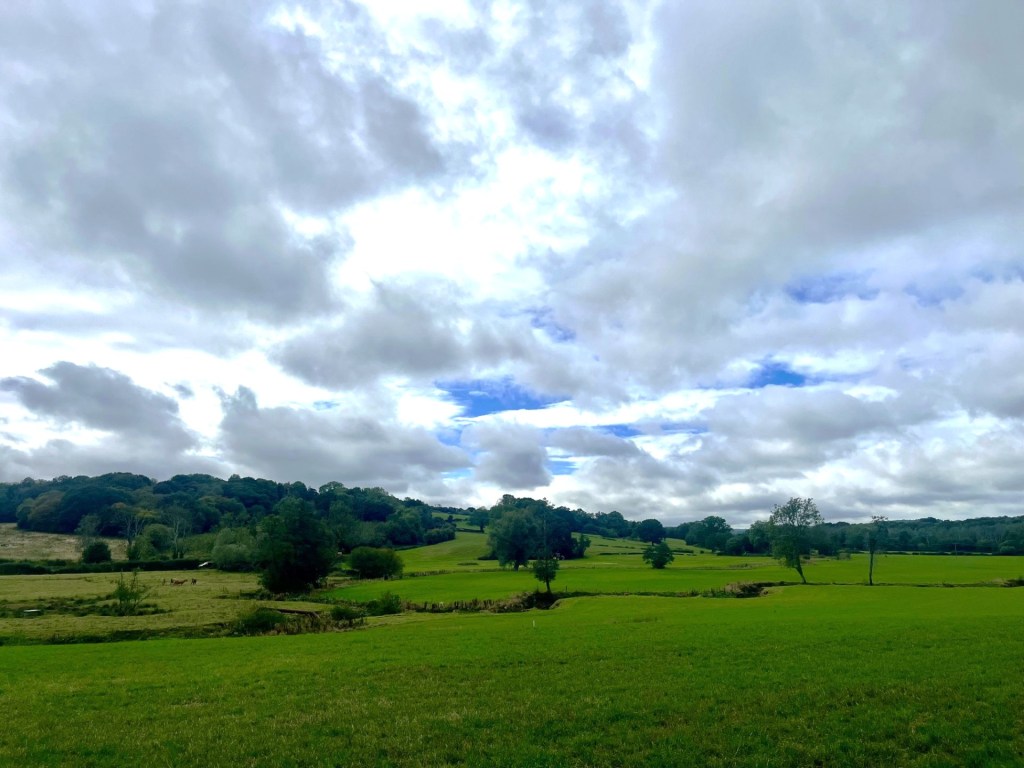
A confluence of meanders
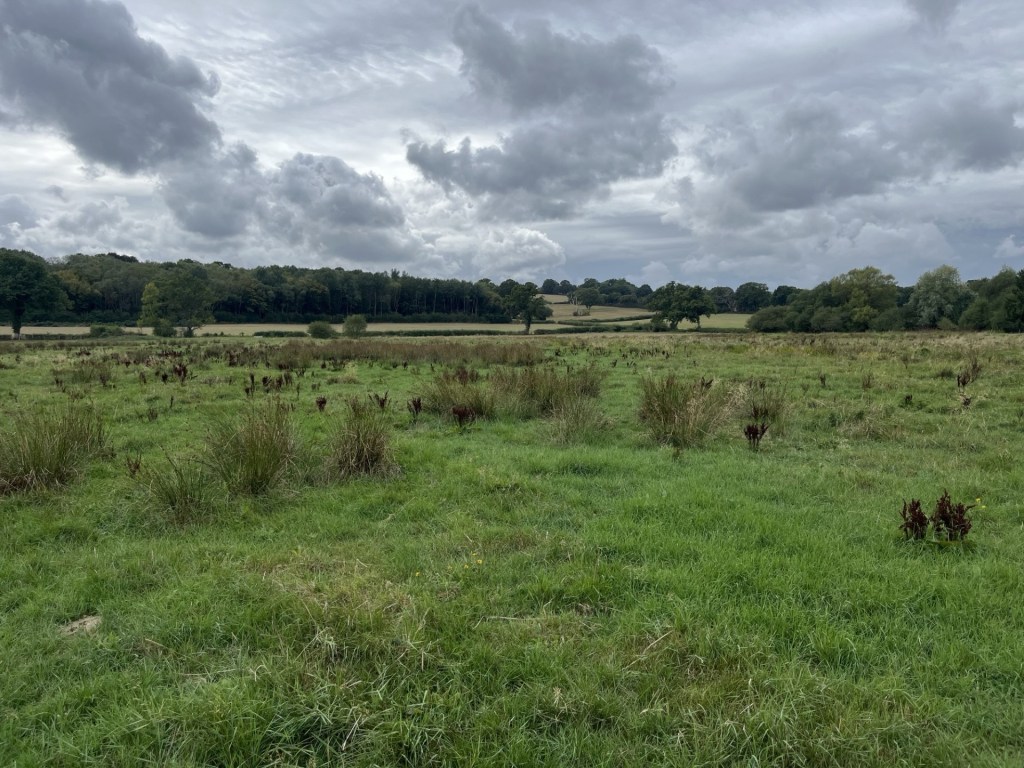
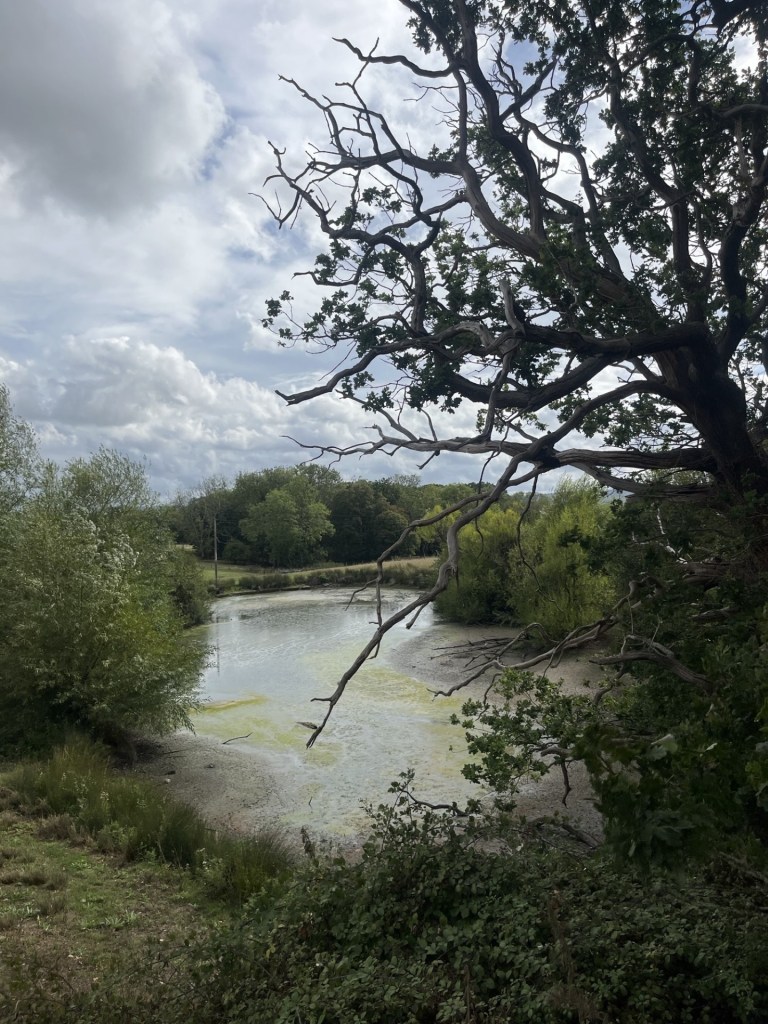
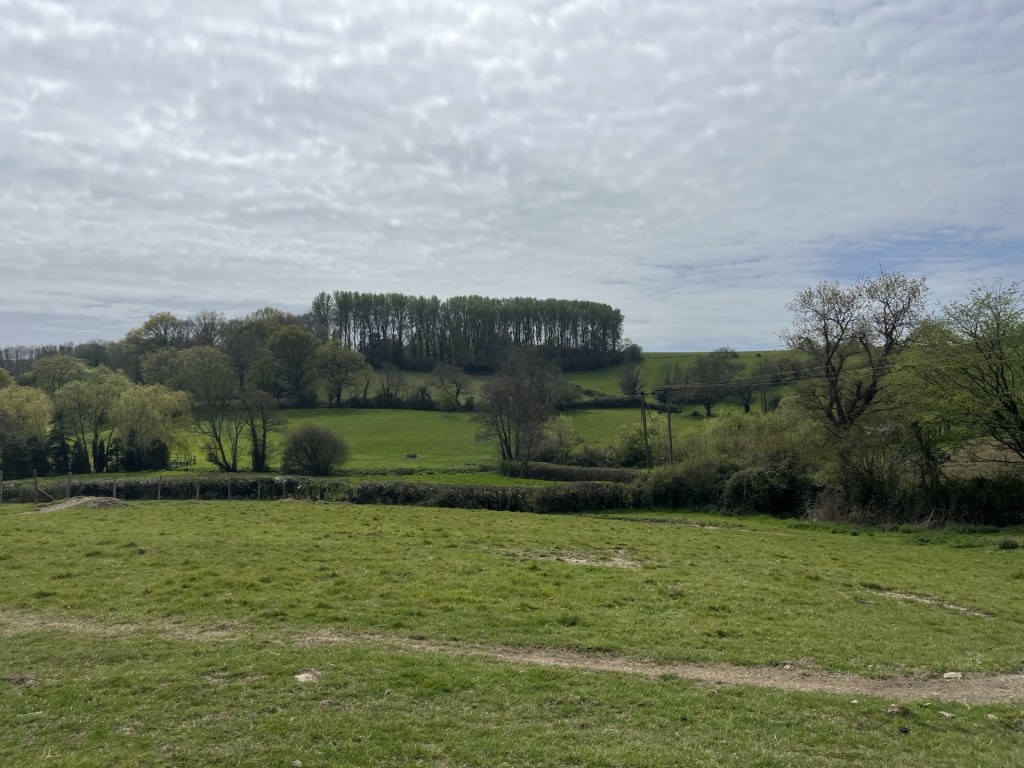
The photo, enhanced due to the dull weather, shows the Rother heading off to the west and the Tide Brook continuing north to the right. What struck me at this point was how clear and compact were the meanders, snaking off in both directions. An earlier look at satellite images of the area shows it riddled with the remains of oxbow lakes. I was at least twenty miles from the coast and yet just 30 metres above mean sea level. Thirty metres is no more than two thirds of the way up Nelson’s column, or just six double decker London buses. With the south of England sinking by a millimetre or two every year, due to the bounce back effect following the melting of the ice after the last Ice Age, the rivers here are effectively backing up, and compensating by extending out through the meanders. It’s a theory anyway.
I followed the top of the field around to a gate that took me into the next field. On entering I noticed a huge ditch that had been excavated, or reclaimed, lining the edge of the field, presumably to capture and utilise the extra water supply it could provide. Naturally, it was as dry as the surrounding land.
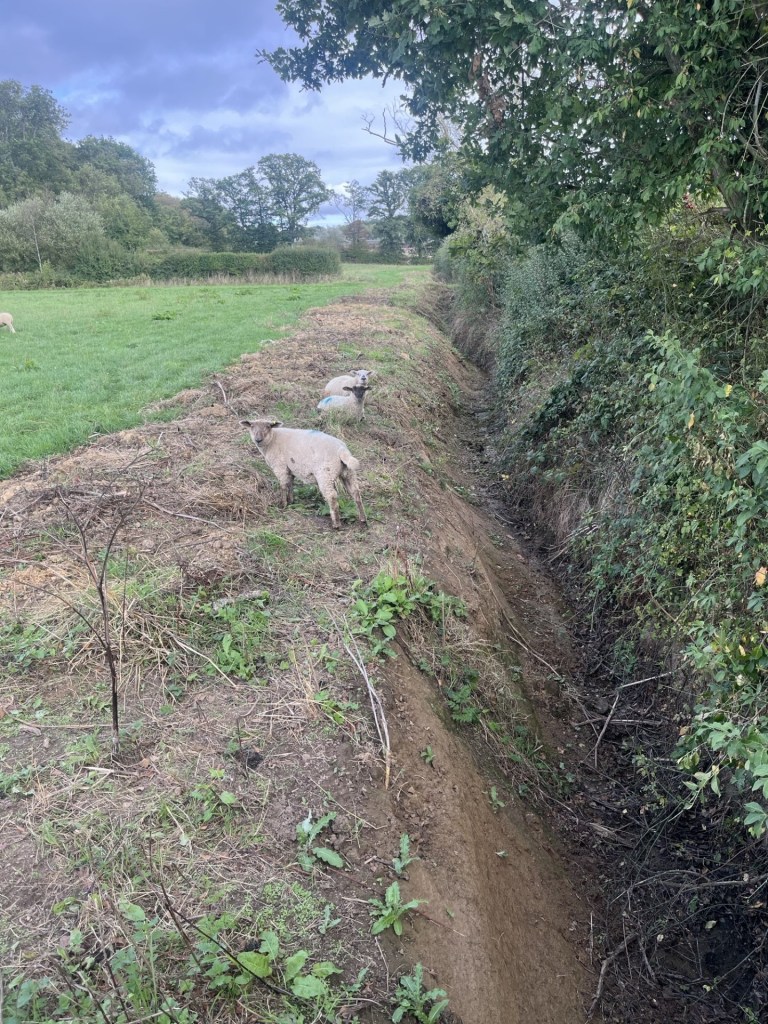
Nowt but drought
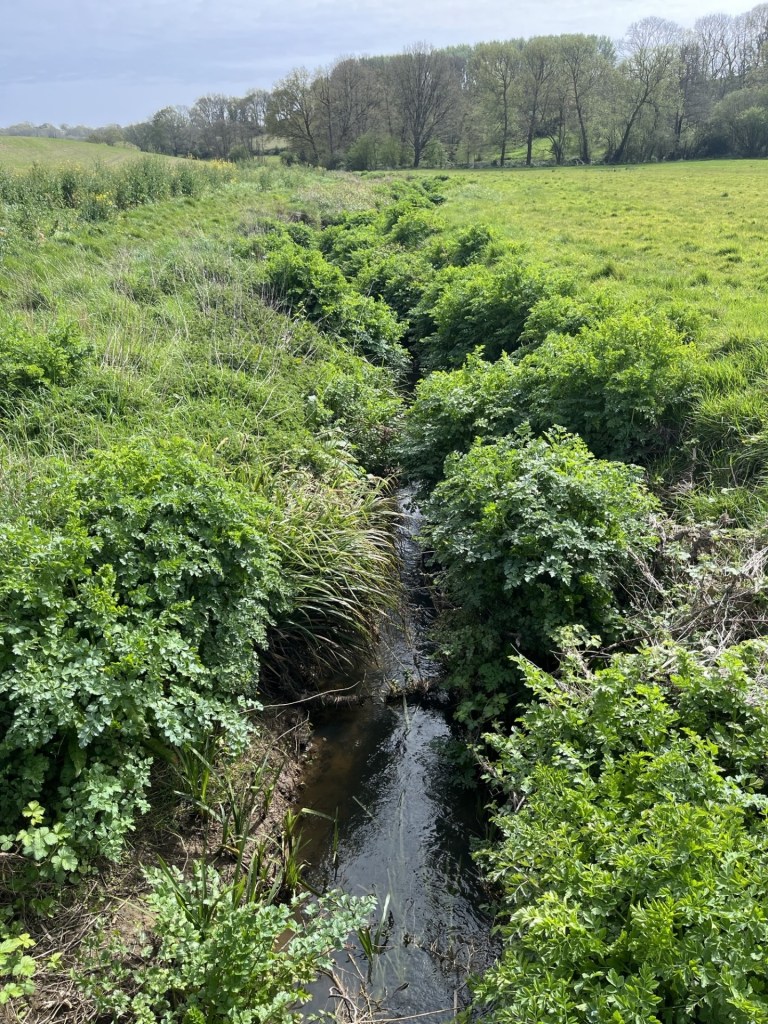
I crossed the field to another gate, and then another wide, flat field, with the Tide Brook winding away to the left and the Rother now gone for good.
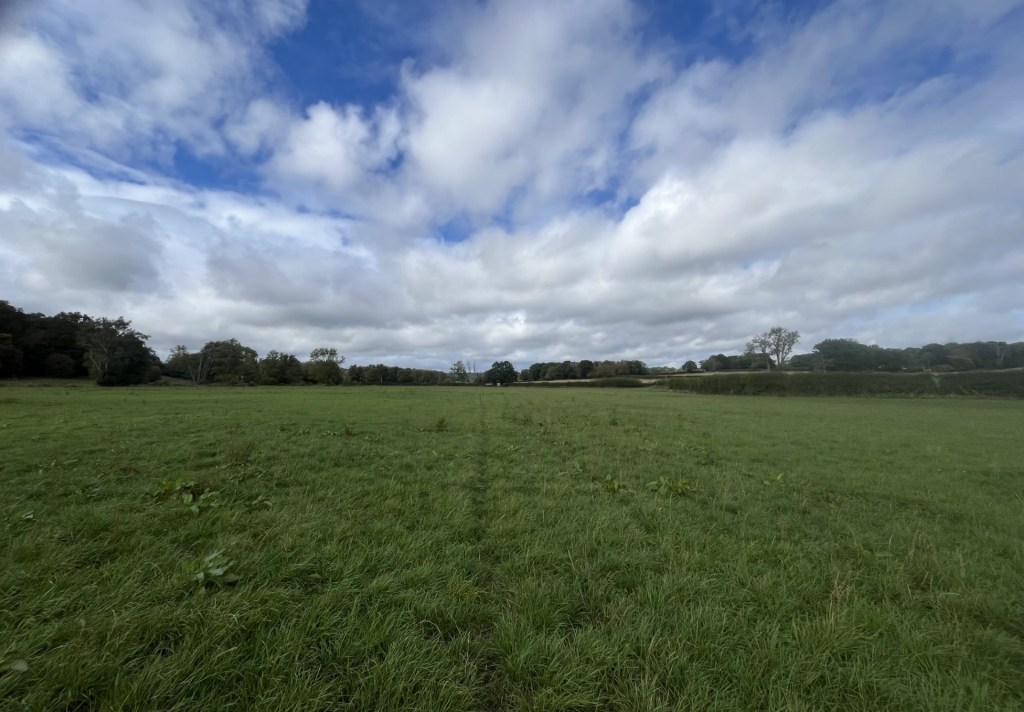
One direction
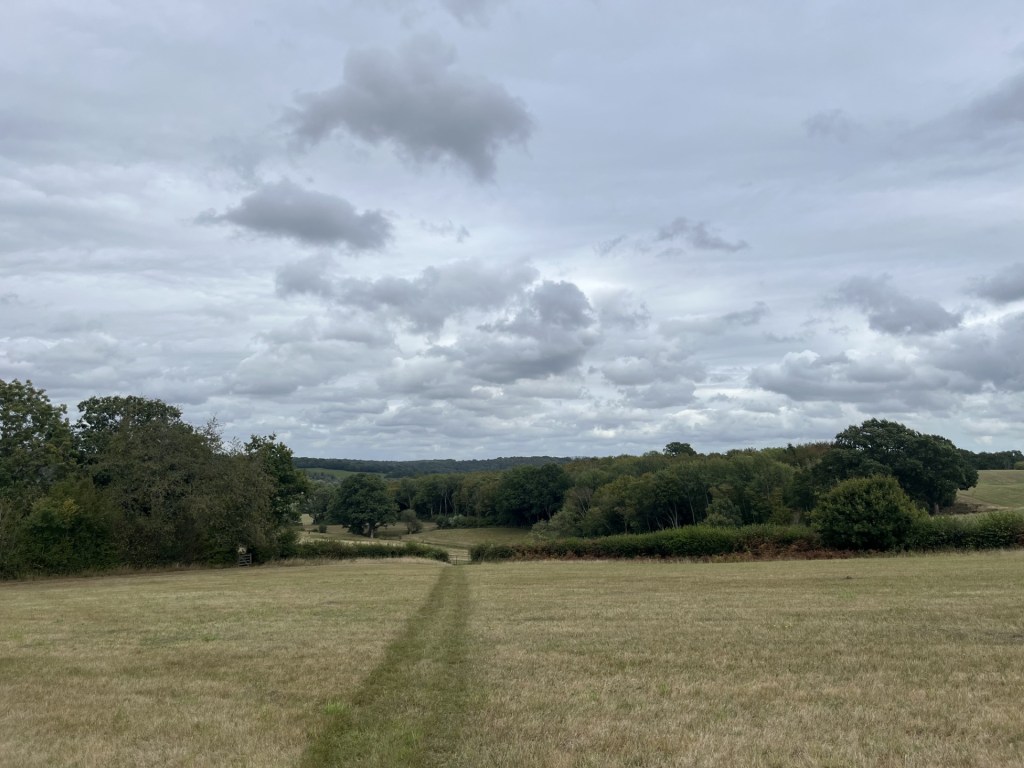
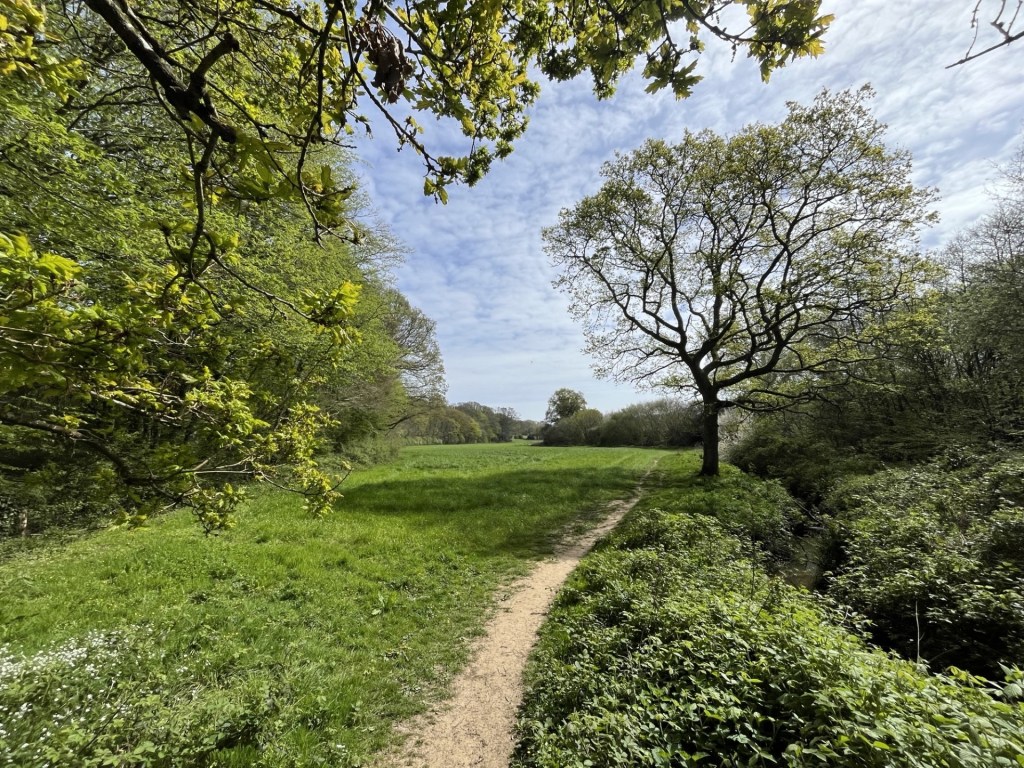
The track, almost invisible after a recent harvest. then crossed the biggest field yet, leading gently up to a line of trees with good views back down the valley.
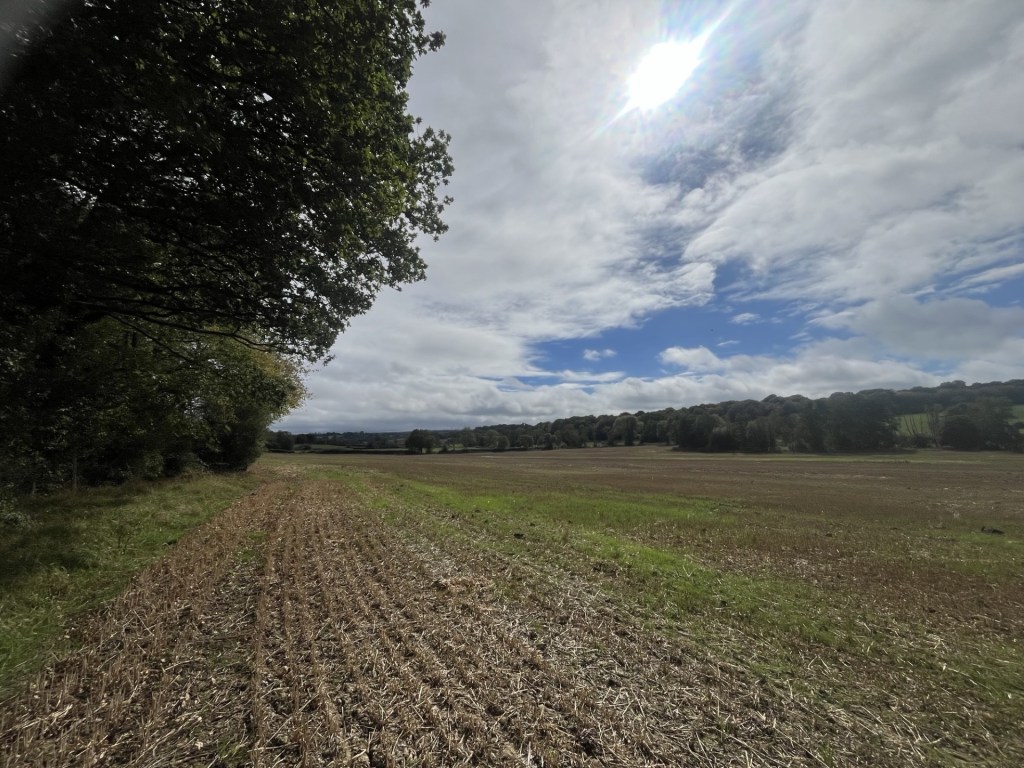
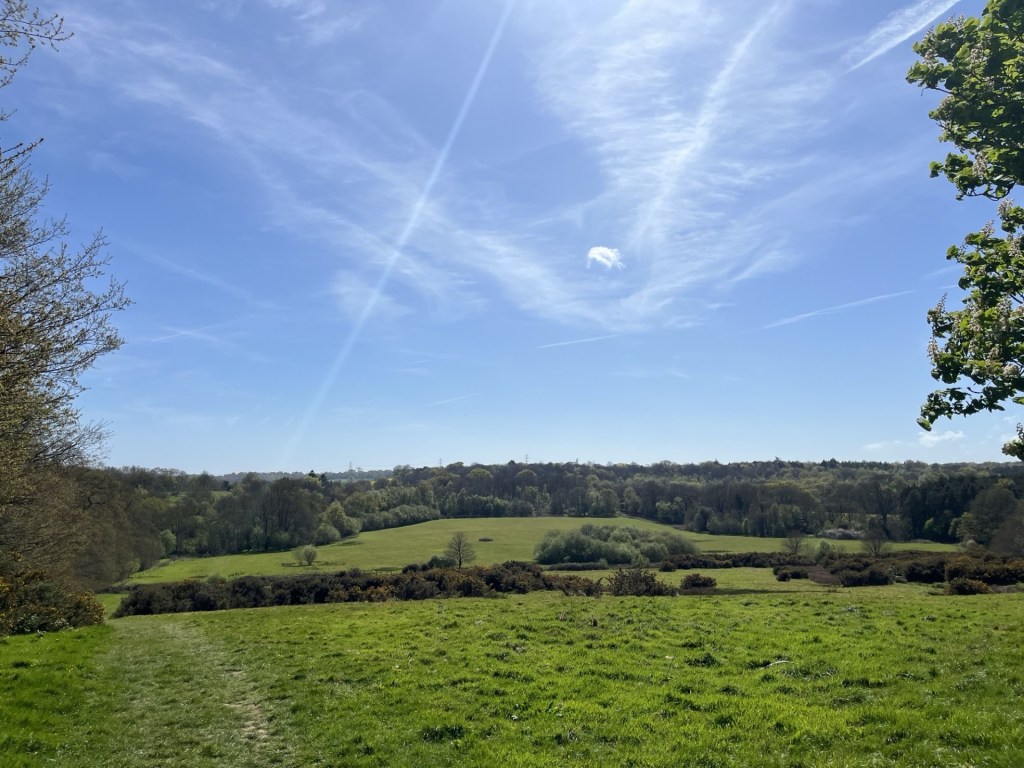
A brief look back
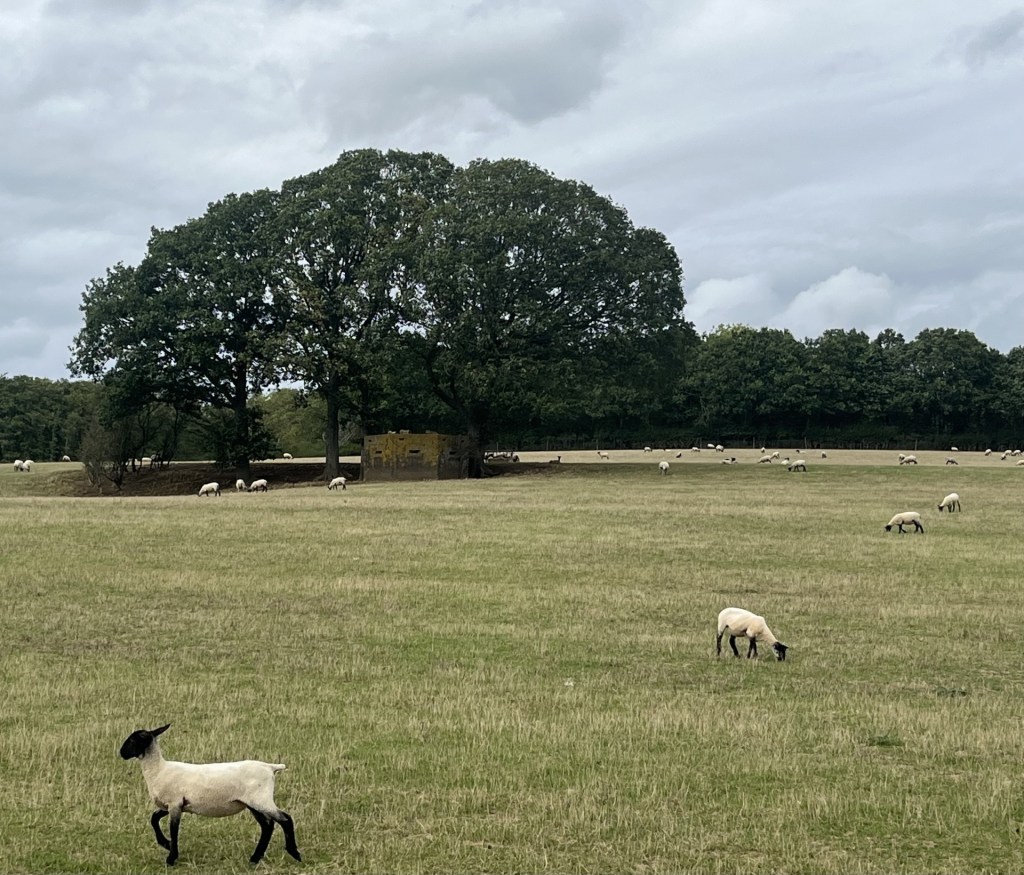
With another gate negotiated, another field opened up, the path heading down rough land to a footbridge over a stream, and then rising again, and with a large railway embankment some distance away to the north, and past a field full of various creatures which included a lama. Extensive works were being undertaken to the embankment. Reassuring to see, especially in the knowledge I would be travelling over it in an hour or two.
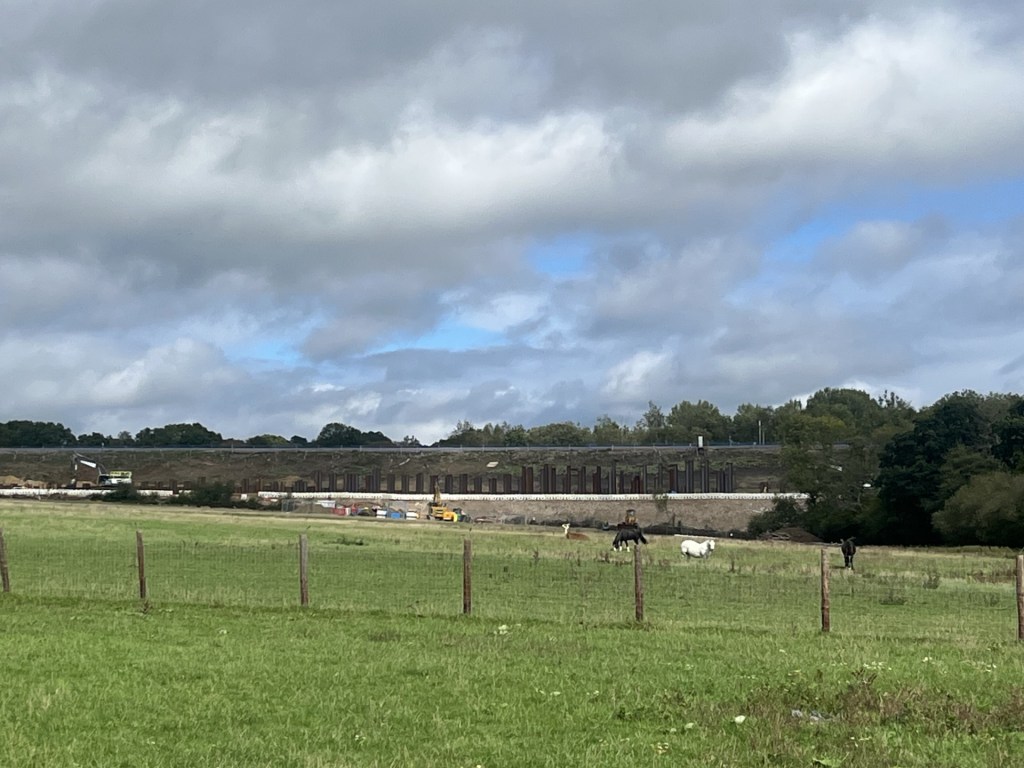
Essential maintenance – spot the lama
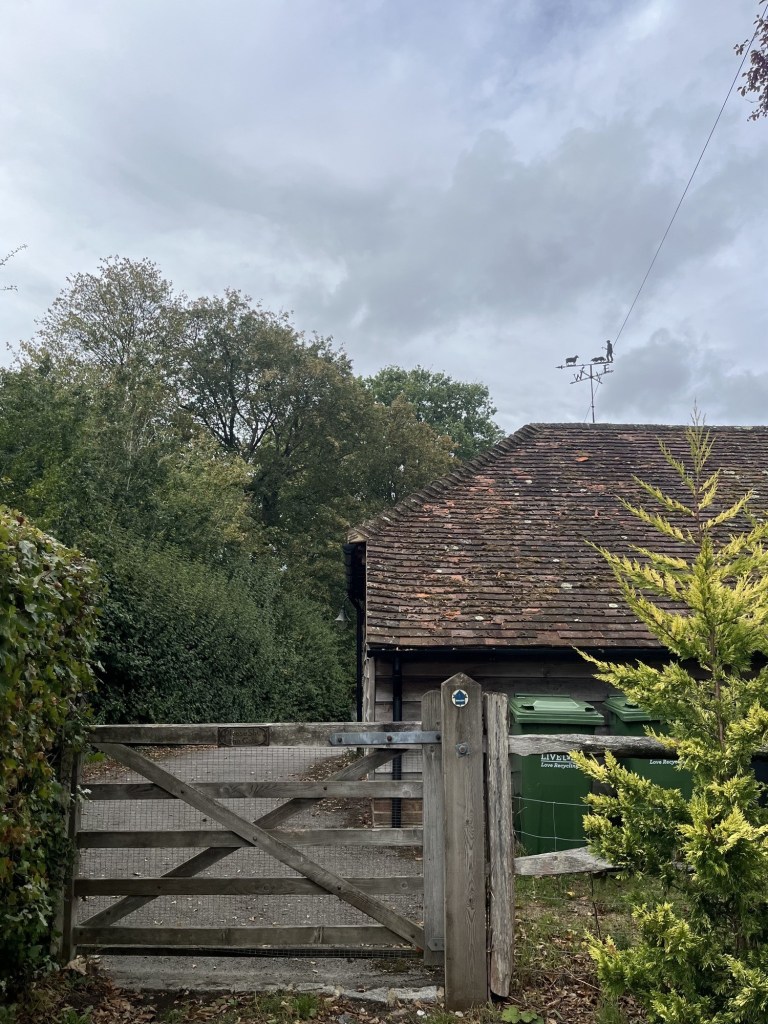
Another gate in the hedge at the side of this field and an option to turn right towards Dens Farm or continue on over a lane and then over a stile.
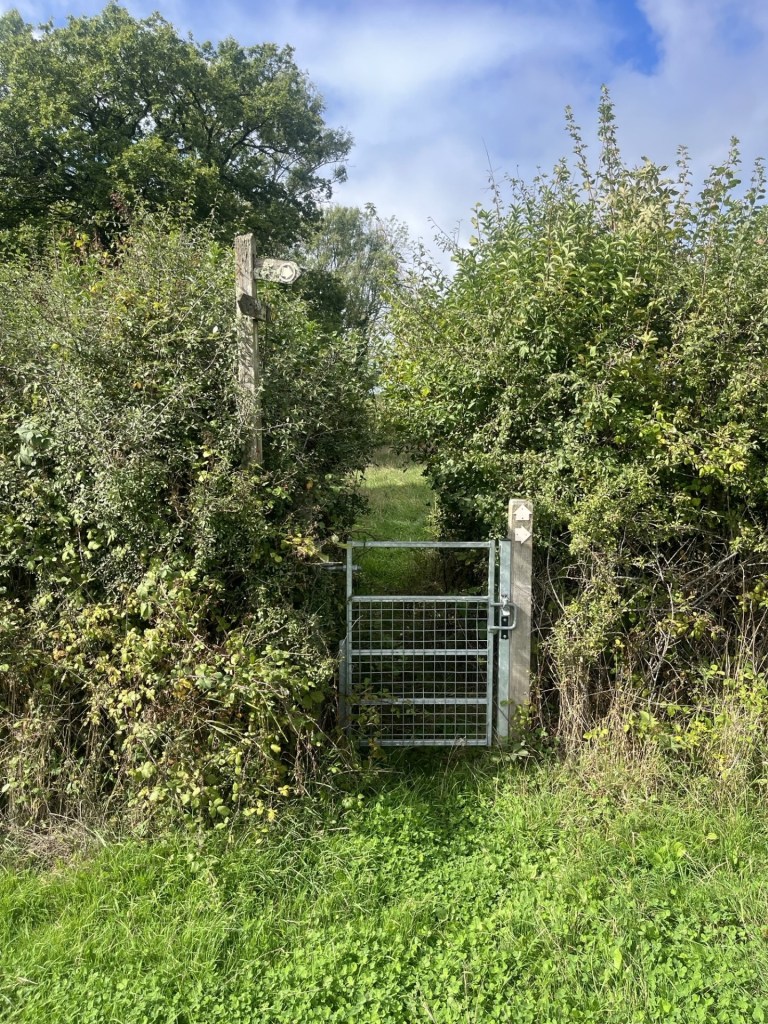
The gate before the stile at Dens gaff
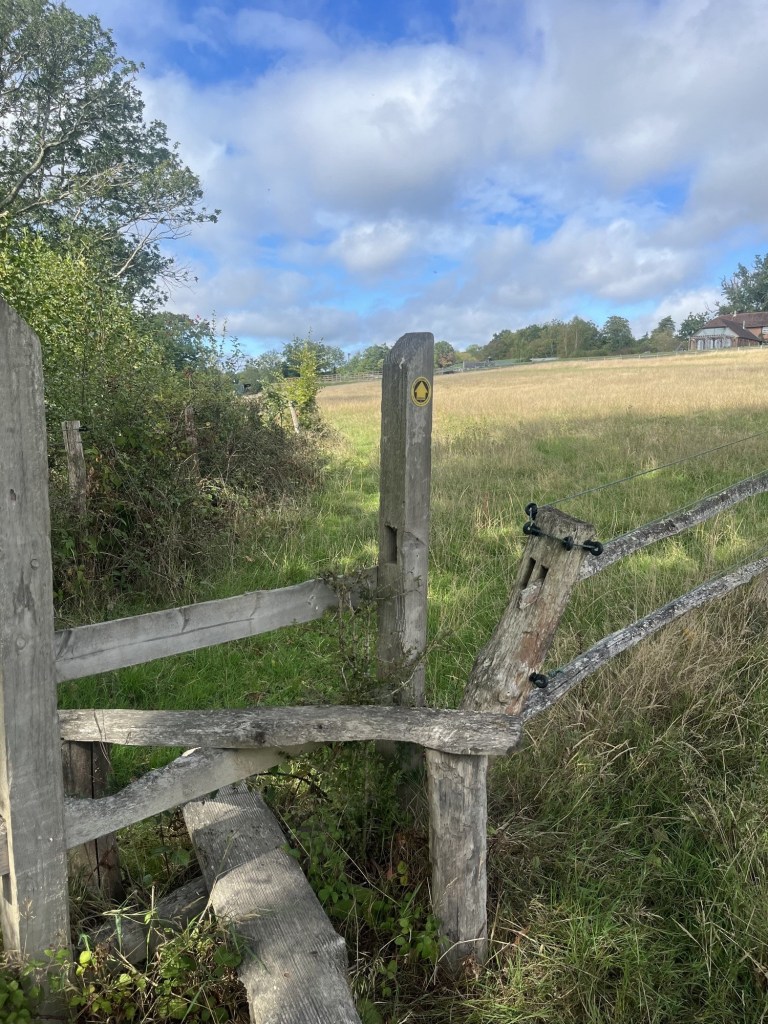
The Stile after the gate at Dens gaff (top right)
On the ridge to the right extensive, modern outbuildings marked Dens Farm. The Tide Brook ran about 100 metres to the left. The path ended at a farm track, barred to me by a locked gate that had to be scaled. Directly ahead lay the part of the farm dedicated to abandoned vehicles, which included a jeep.
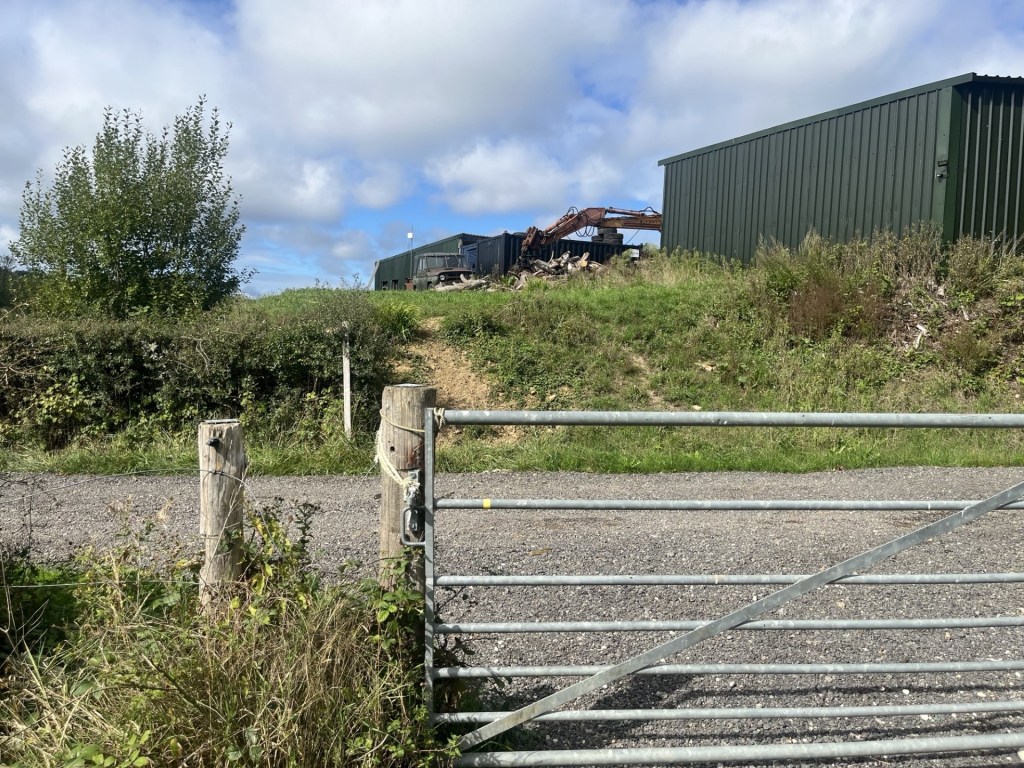
Up and over here
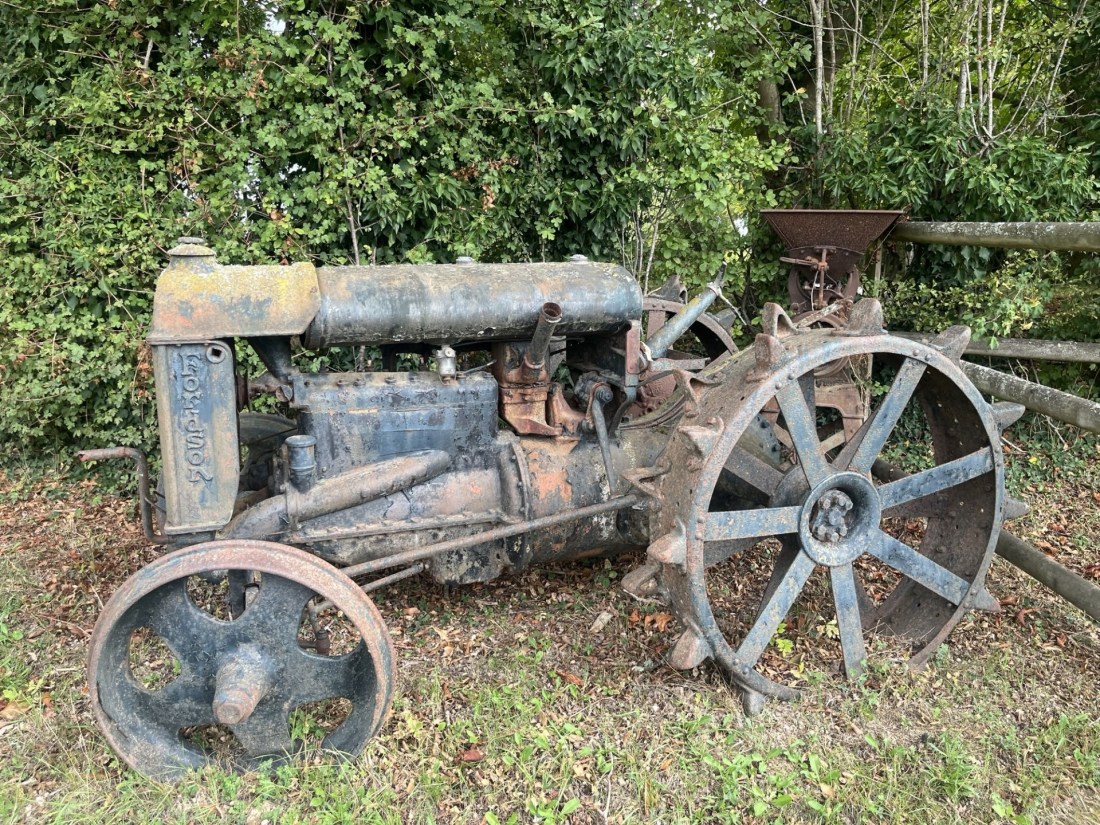
The signage here was a bit lacking in permissive detail. The map showed a path leading to the right and up through the farm buildings, but there was nothing on what remained of the public footpath sign below the Jeep that would have given the casual walker a clue. Along with the locked gate I was left with a suspicion that old Den wasn’t that keen on accessibility. That said I went through the farm and reached the entrance where the reasonably well-preserved remains of a Fordson tractor marked the spot. I guess I make that sound like I had some intimate knowledge of the Fordson brand, but in truth I hadn’t got a clue.
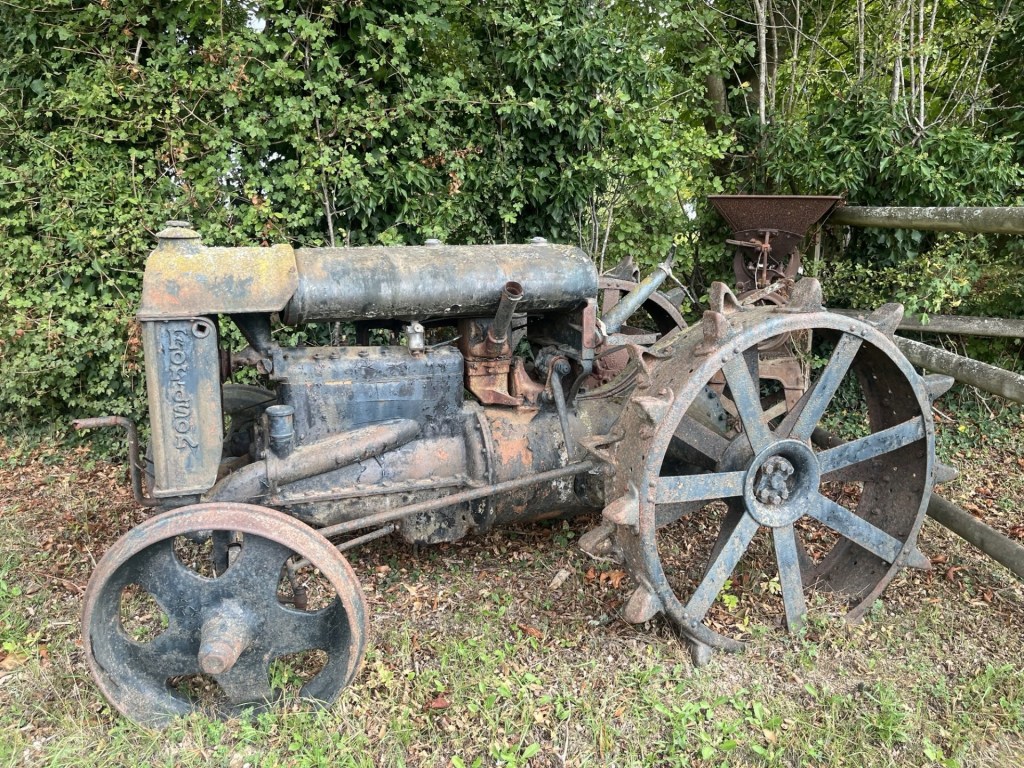
A quick search of tractors online and perhaps no surprise, it’s a Ford
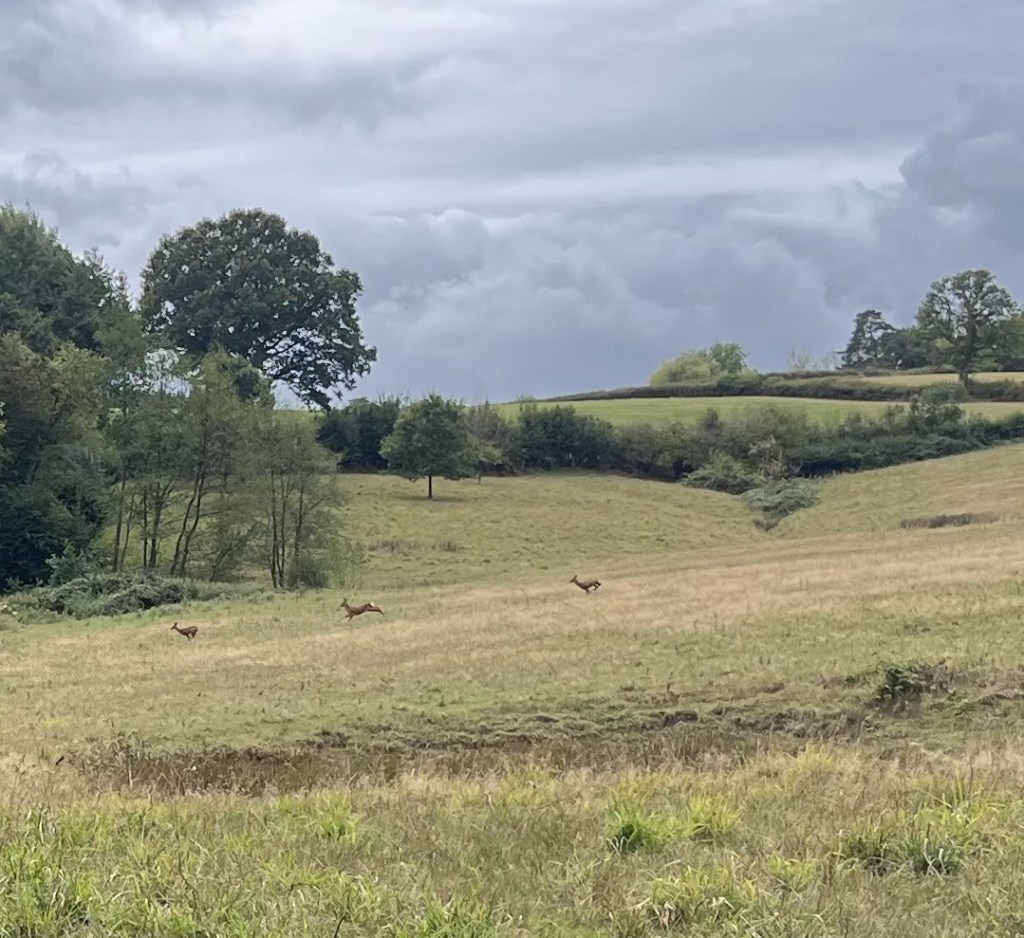
A metalled road led north and away from the farm with fields to the left and woodland on the right. Across the last large field, I noticed some movement at the far side. Three deer just at the edge retreating into woodland, and then at the far end of the field another group of three.
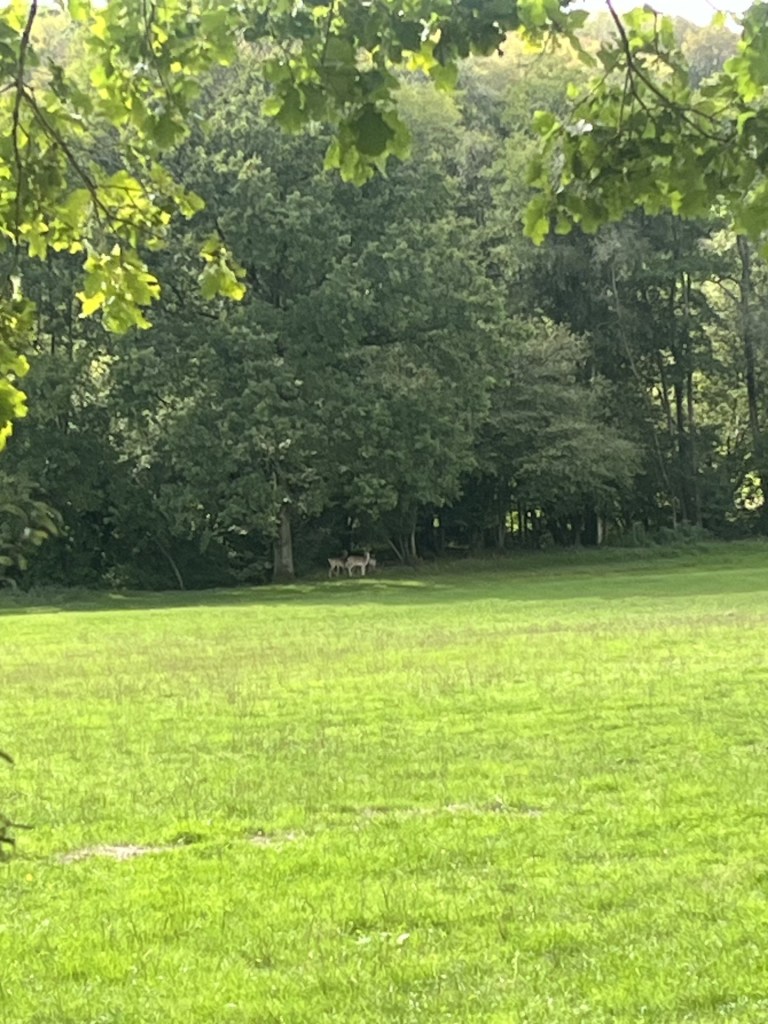
Spot the first group of three deer.
Beyond the field the road wound uphill for a while with woodland to the left before eventually breaking out at a small settlement on Buttons Lane.
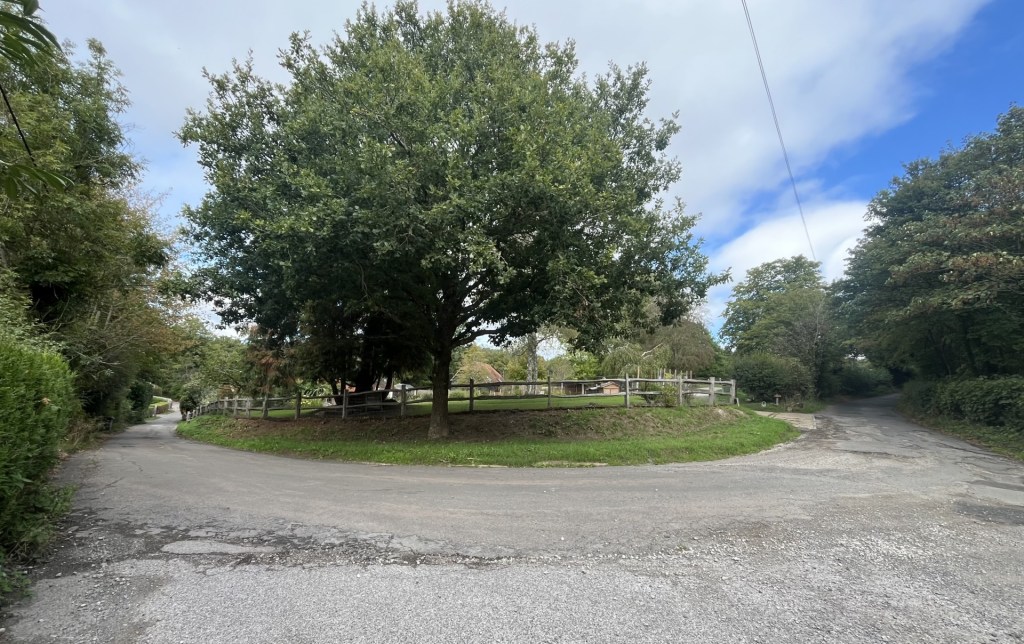
Buttons, I believe
I bore left at the bend in the road and continued for some minutes before reaching a field with a footpath sign indicating an option from the road.
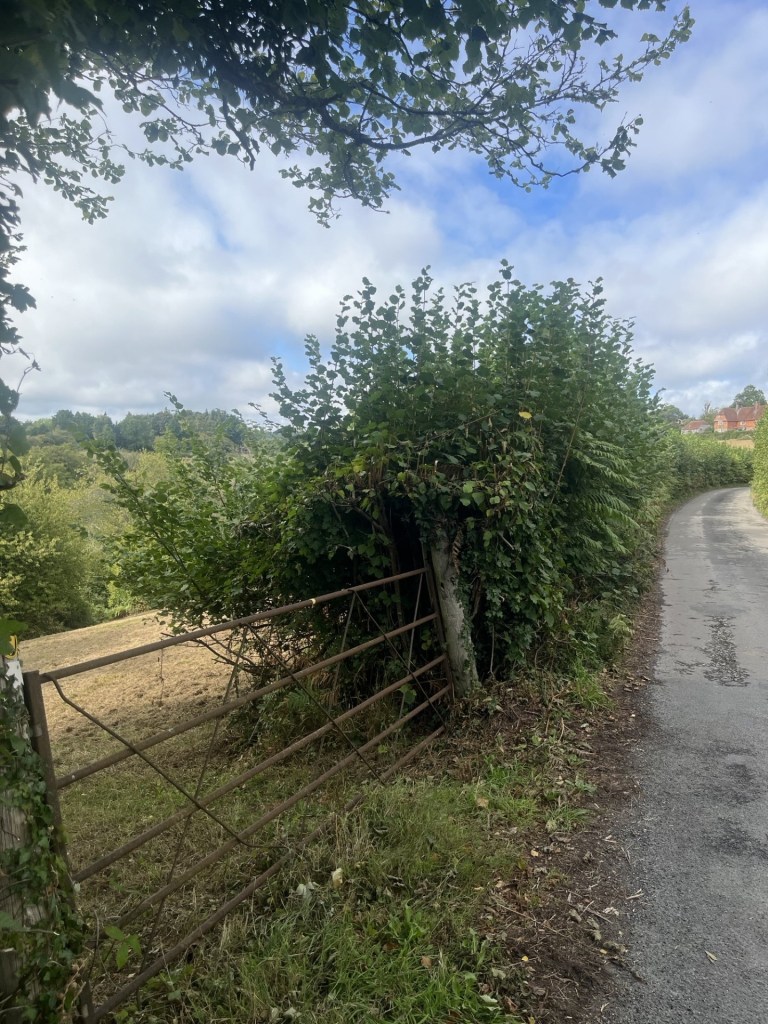
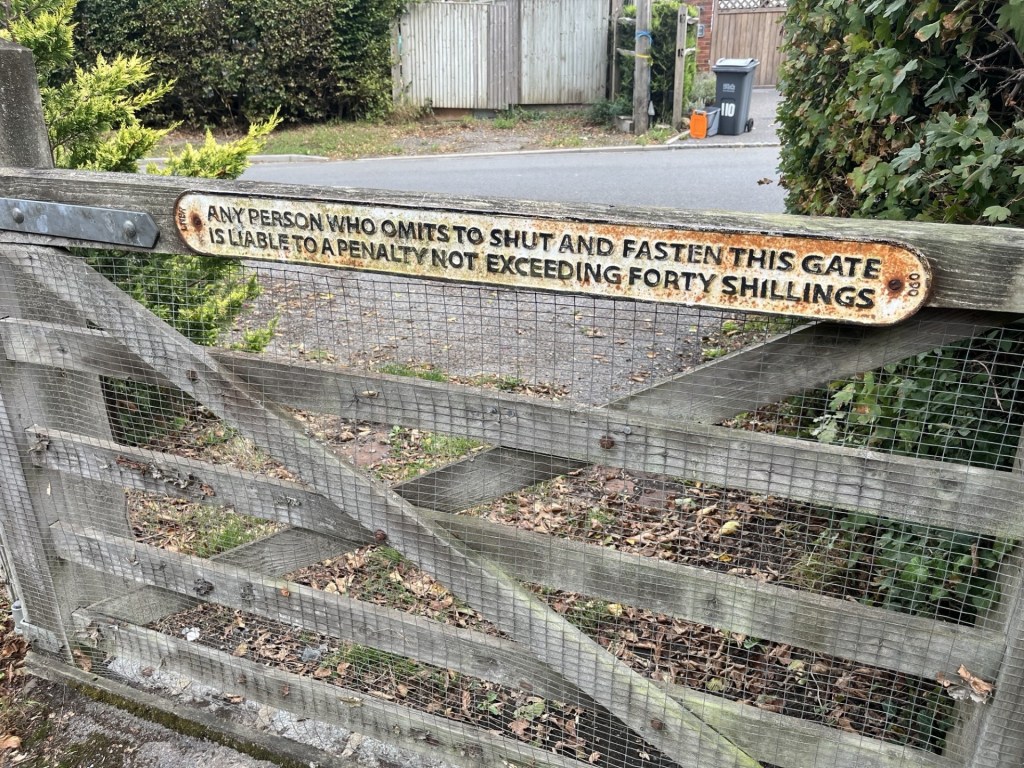
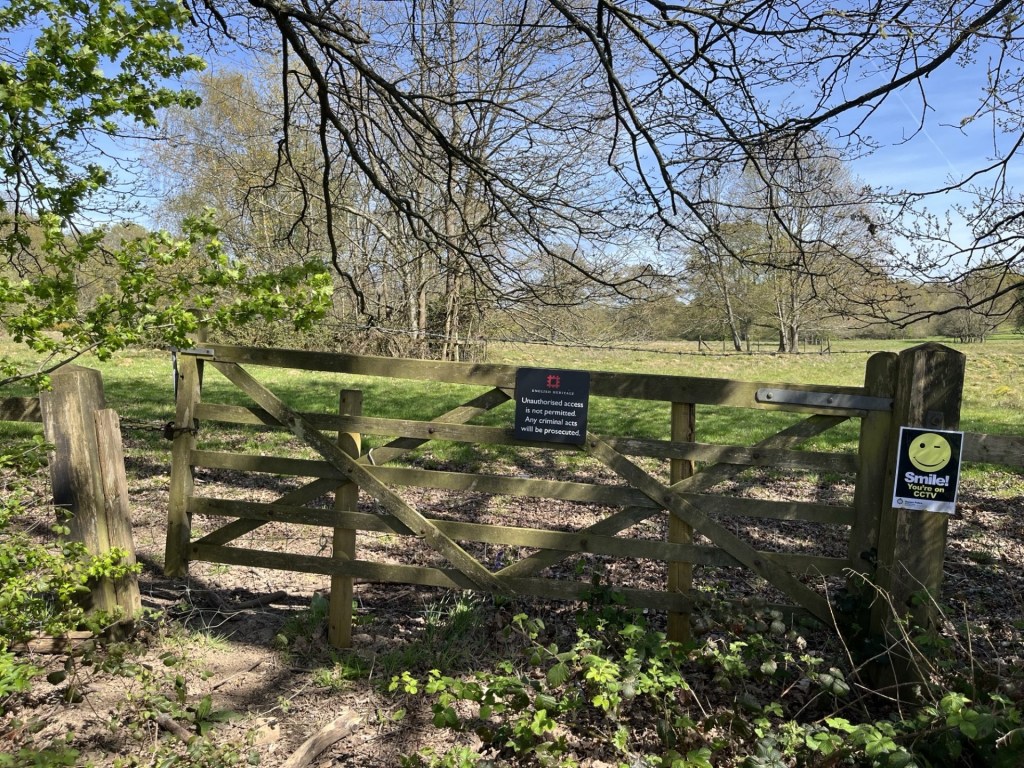
Despite appearances, this gate actually opened! Scrag Oak top right.
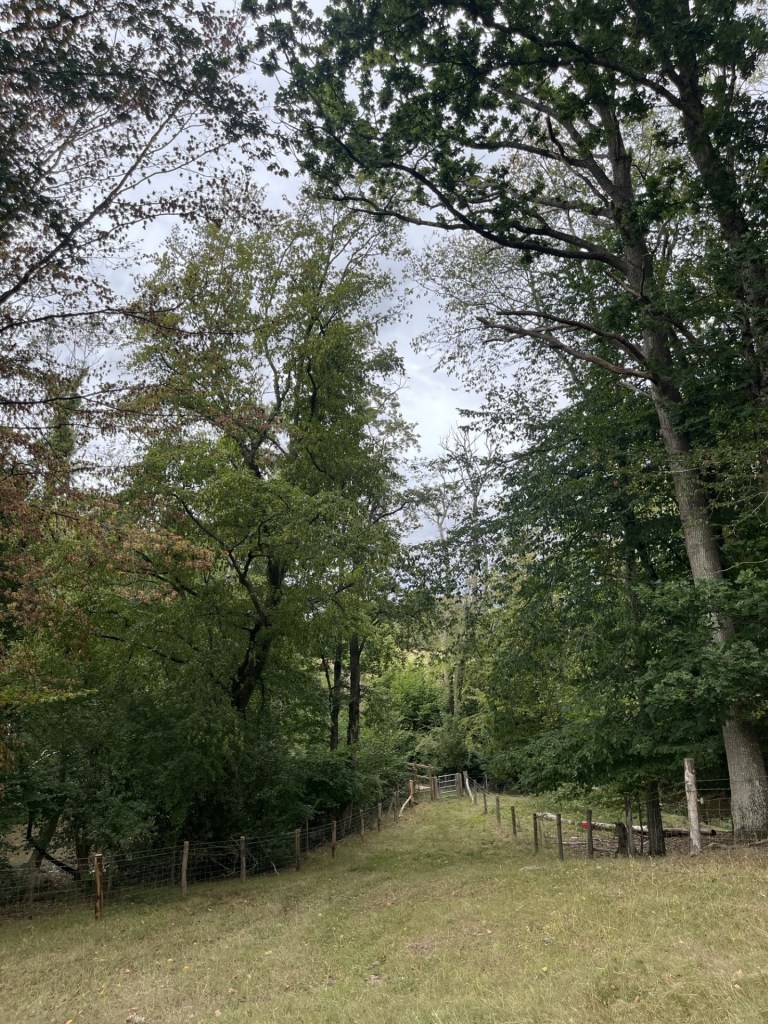
Through the gate I crossed the undulating field and then down to the northwestern edge where the path led through a glade before heading north again, with another farmhouse on the hill.
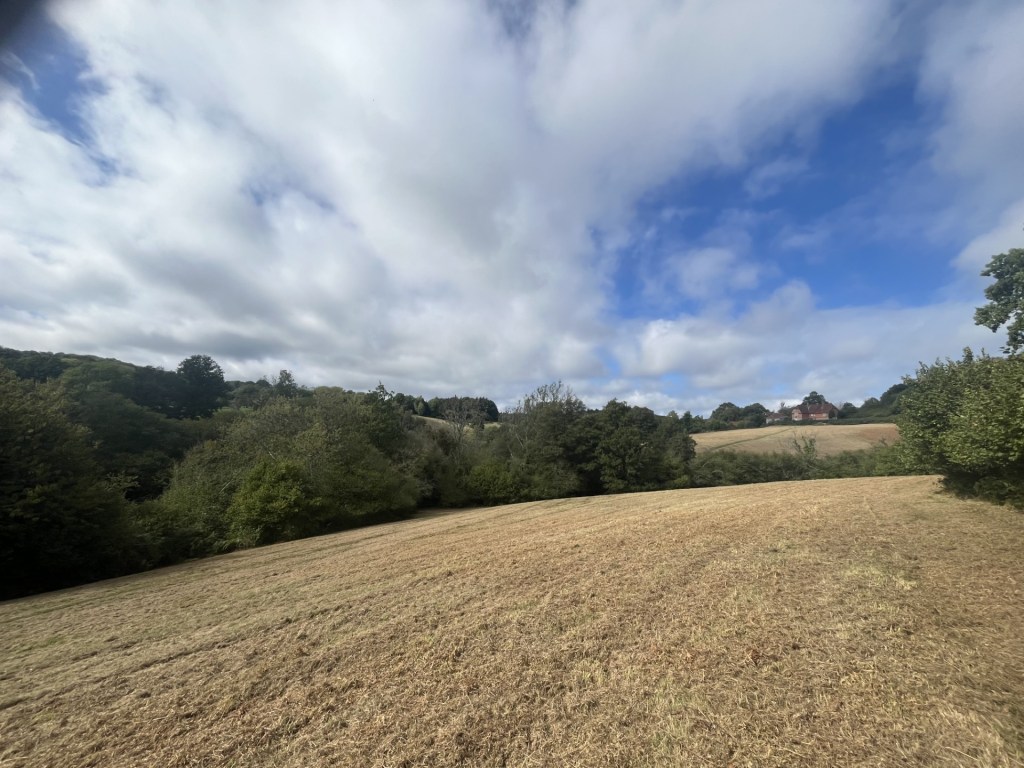
Undulations coming up
Two buzzards circled above. The mainline lay just beyond the house but remained out of sight. I started up the hill and towards the house. Another footpath sign suggested that the path led through some woods (as did the map).
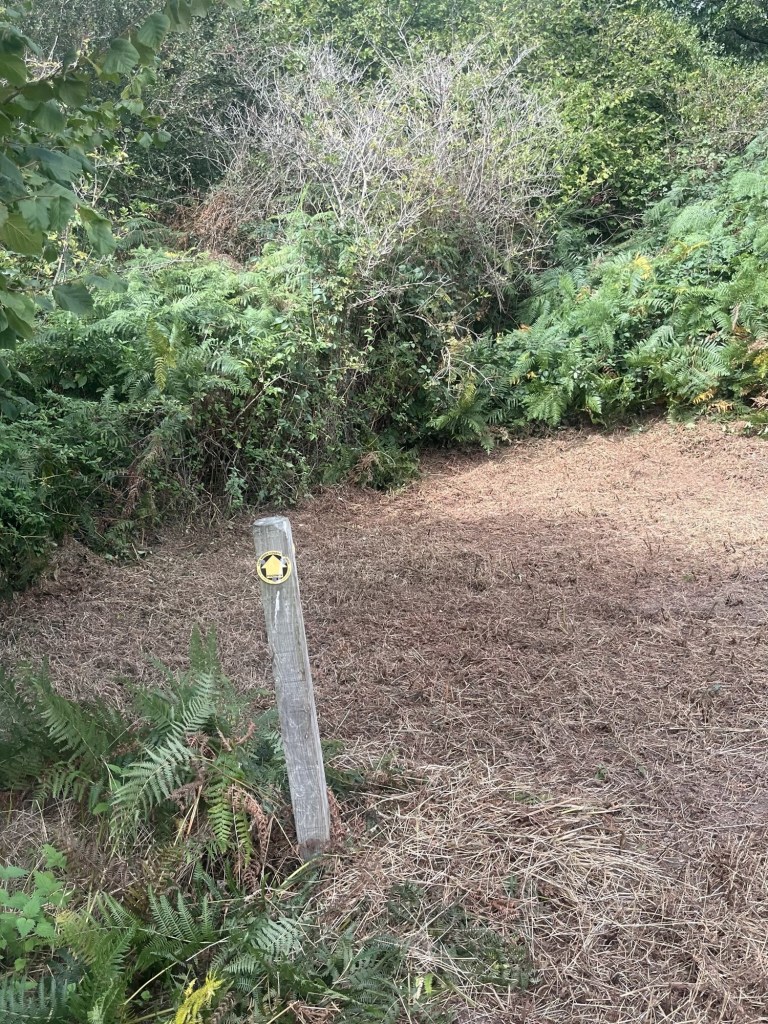
This sign points nowhere.
It was impossible to make out where the path might have been and so I carried on up to Scrag Oak Lane, where the road began to descend and ended at a junction. To the right a road passed under the railway going towards Wadhurst.
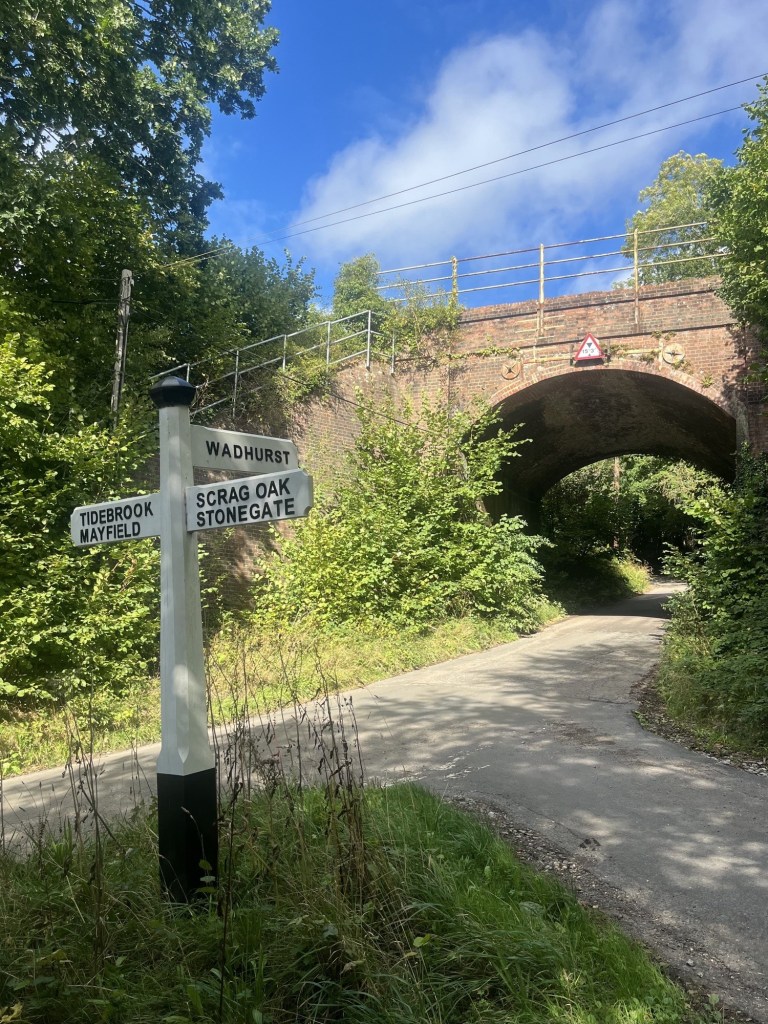
More helpful signage – on track
Whilst Wadhurst was the destination my preferred route took me towards Tidebrook and Mayfield. A small collection of old and interesting buildings lay in a dell at the bottom of the road, which then carried on uphill for a while on Wenbans Lane. At the top of the hill a stile on the right was my gateway into extensive woodland. It was an opportunity to rest up for a few minutes.
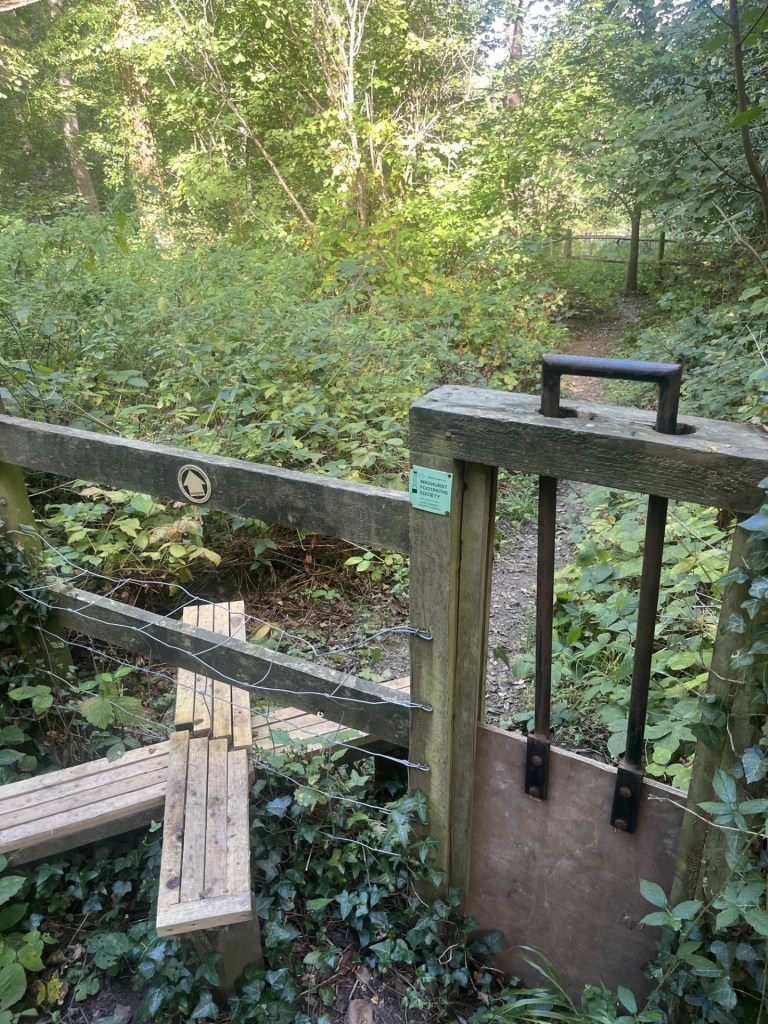
Any seat will do
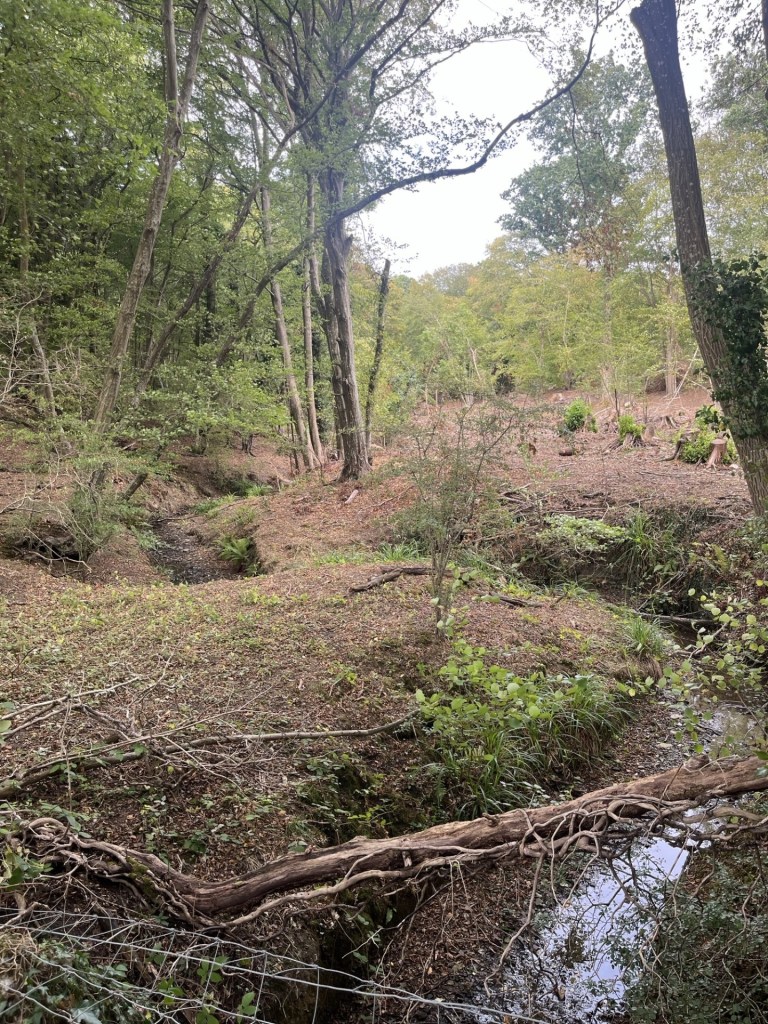
One thing I have discovered about this journey is that if a seating opportunity arises, take it. Apart from this stile, sitting down had so far not been an option. I took on some food before following the path through the woods, heading downhill to a bridge over a stream (possibly the Tide Brook or a tributary of), then across a small field before reaching Snape Lane.
I ought to add that on crossing the wooden bridge over the stream I stopped and gazed down at the water flowing gently towards the sea. I pondered briefly on how many molecules of water I was looking at (it’s a number so big not even Donald Trump could imagine it), and how many, if any, might make the entire twenty-five-mile journey to the sea at Rye. I have subsequently written a rather long analysis of my findings, but rest assured I have self-censored and it will not appear here!
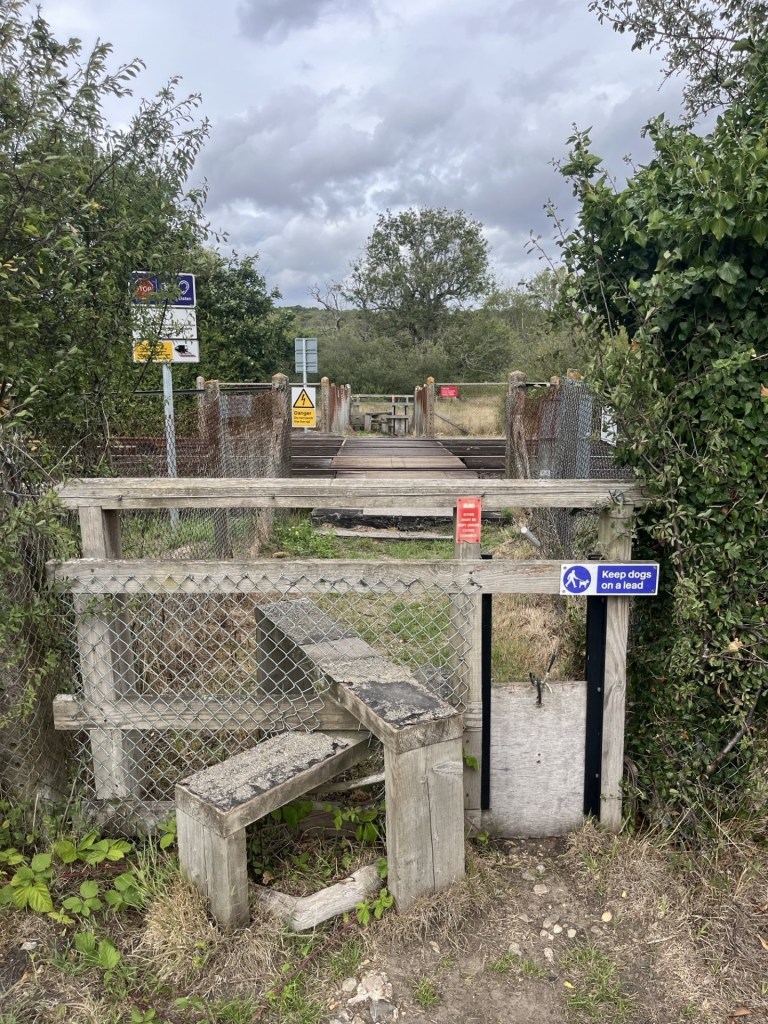
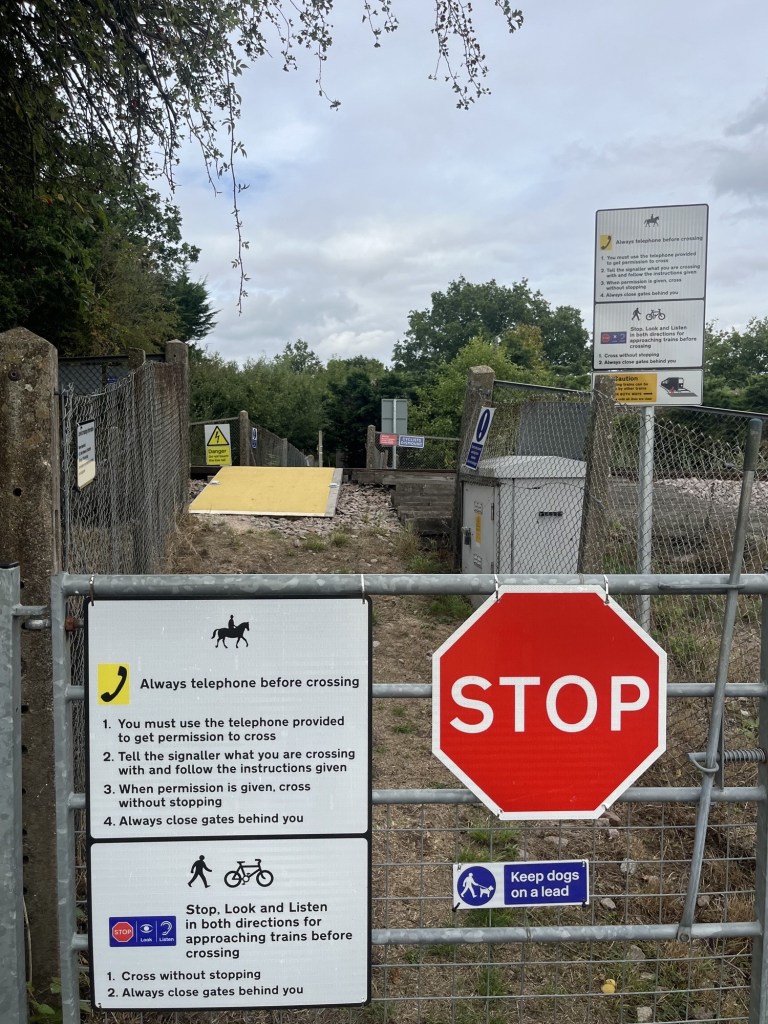
The footpath continued over Snape Lane and through some woods before reaching the Shant level crossing, just at the moment a Hastings bound train shot by.
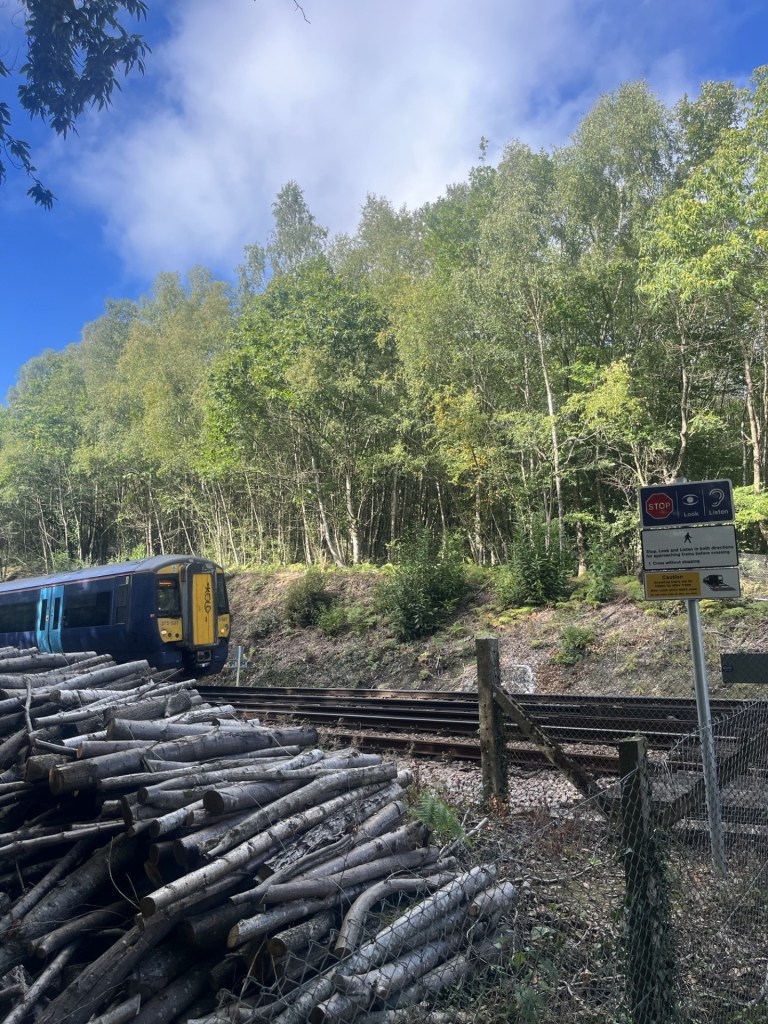
Heading south at Shant
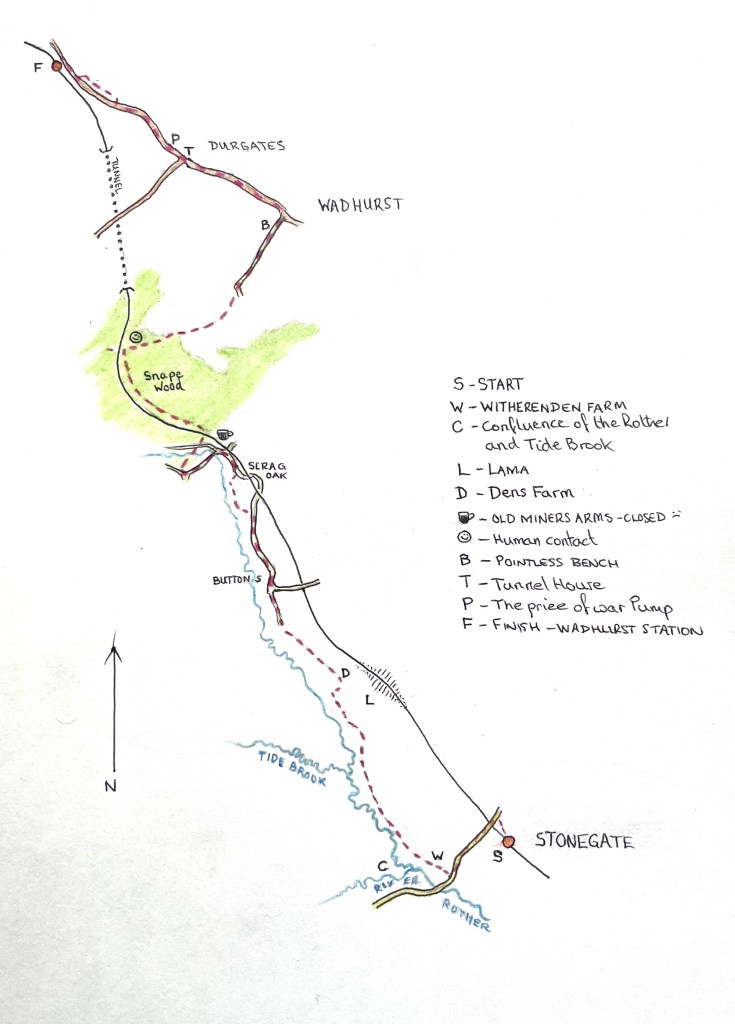
The origin of the word Shant is somewhat obscure, but from what I have read, it simply means an alcoholic drink. I may be putting too many two’s together, but I have noticed that there was once a pub called the Old Miner’s Arms, just back down Stile Lane. I can imagine that back in the day the needs of the working railwaymen were met in the knowledge that if they were near the Shant crossing, they were within touching distance of a pint or two of fine Sussex ale. Pure speculation and irrelevant now that the pub is now a house. *
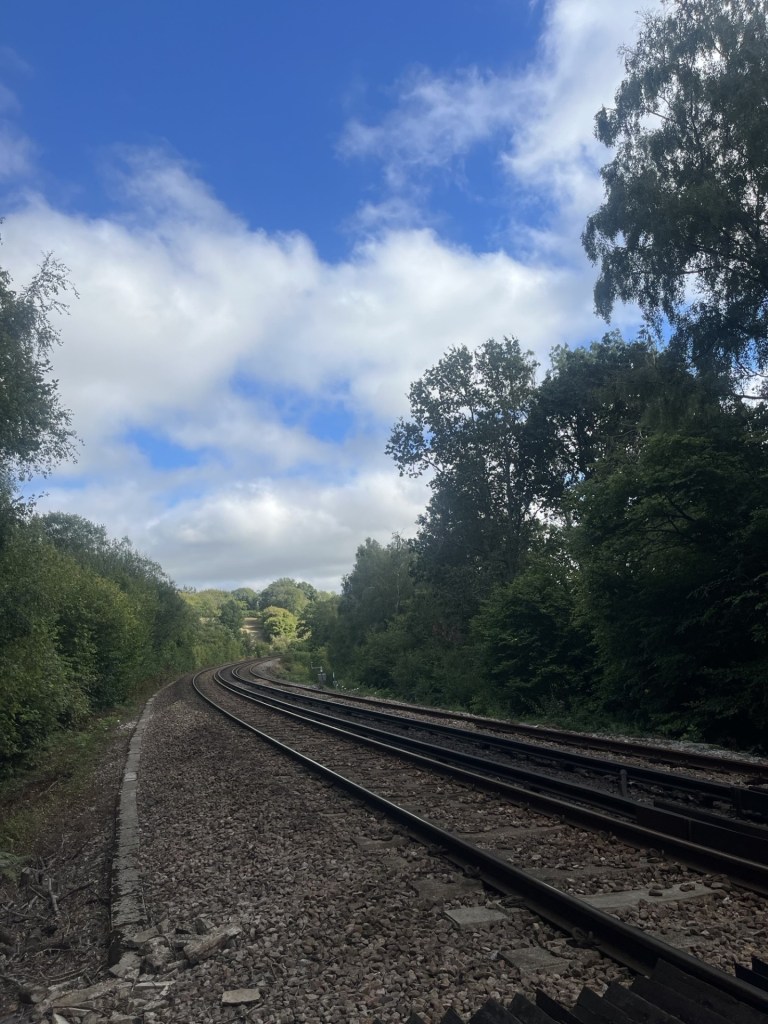
Looking south at Shant
Beyond the crossing the path led into dense woodland (Snape Wood). A path directly ahead appeared to be the quickest route to Wadhurst, but keeping to the script I hedged to the left and took the wide path that ran parallel to the railway line. The sandy lane wound up and down (some of the ups being quite steep). On reflection this account has involved rather a lot of winding up, down and around for which I apologise, but that’s how it was and perhaps indicates the nature of the land as it departs from the rivers.
This section ran for a while, sometimes with the railway line in view, and at others with it beyond the trees and deep below in cuttings. Towards the end the land rose again and the trees thinned out, letting in more light.
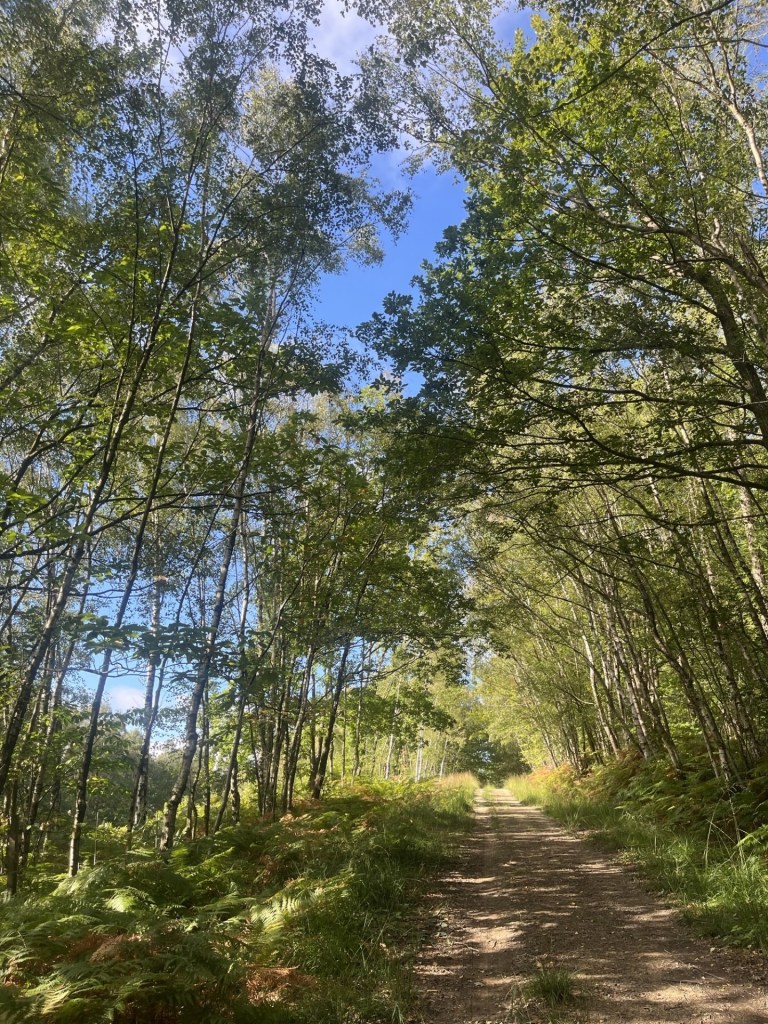
Letting in the light
As the sound of a train came up from the cutting to the left, to my right I noticed movement in the air just above a sandy bank. I’d seen something similar next to a stile back in the settlement at Buttons Lane. Indeed, a couple of years earlier, whilst walking with my grandson across a field in Bedfordshire, suddenly I became aware of what was happening underfoot and nearly had a panic attack. In the end nothing of note happened, but back then I didn’t know that Ivy bees rarely stung. Here, hundreds of them hovered around individual holes in the earth. Solitary in nature, the essentially safe spectacle proved fascinating. I took a short video on the phone……
Video of Ivy Bees invading the sandbank – Well, it would be but to include a video would cost me another £90 a year. Sorry
Having observed the bees for a minute or two I walked on and down to the foot of the cutting, where a path from the west crossed the tracks and entered the woods. I turned right and started back up a slope on a wide track. I’d noticed a footpath sign and had assumed I was following its direction, but after a couple of hundred metres, and with it arching back in the direction I came from, I hesitated. A second later I heard voices back to my left and noticed movement on what I assumed was the actual path. I walked back down to the sign just as a well-dressed and slightly frazzled young couple emerged from undergrowth. The first people I had met since alighting the train at Stonegate. They were enthusiastic to confirm that the path they had navigated led to Wadhurst but were keen to add that it was a bit rough and overgrown.
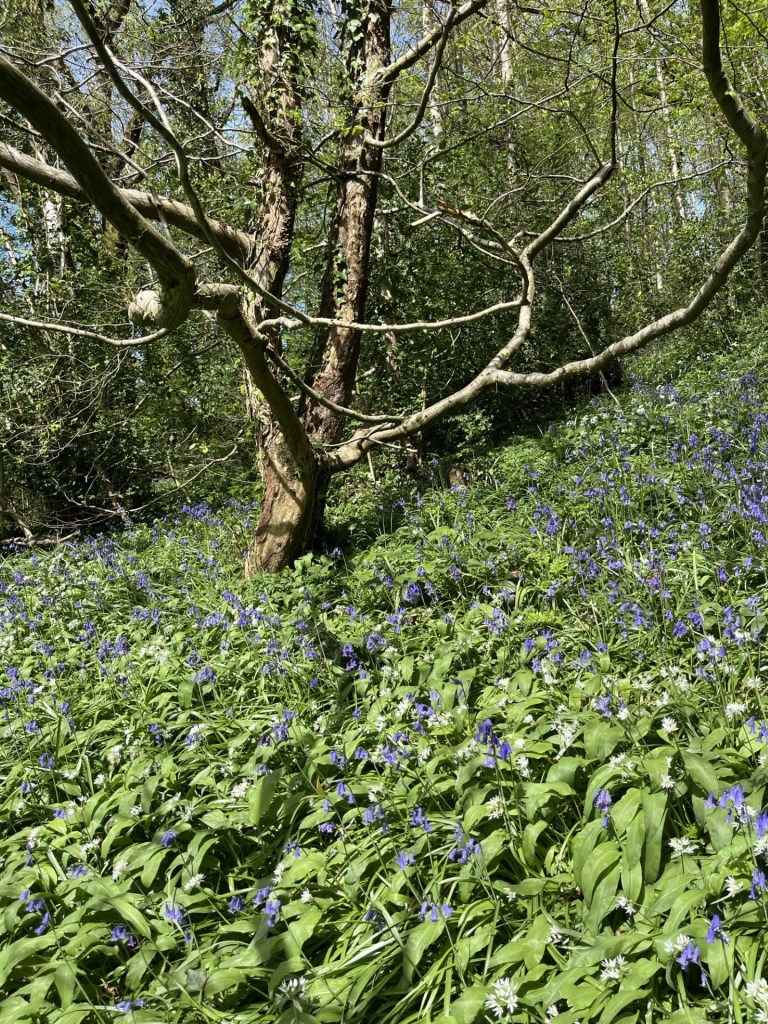
They were right. The path snaked upwards and through overgrowth that was in part heathland vegetation but also aggressive brambles. After maybe ten minutes it emerged onto a more significant track that continued through the trees before an opening on the left led to fields and the first view to the northeast of Wadhurst.
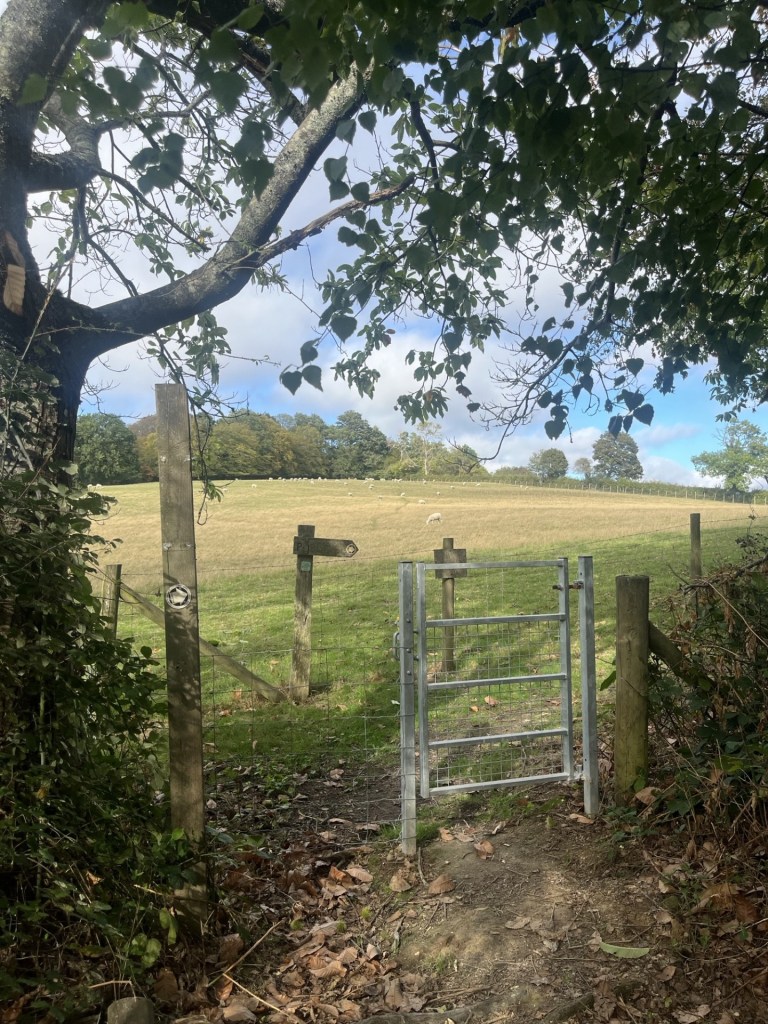
Break out from the woods
I think at some point a footpath (just visible) had headed directly up and across the large field, which would have been handy, but it now ran for quite a distance along the side of the field and with the remnants of the woods to the right.
At the bottom of this section the path then took a deviation to the left and up through another field and directly towards the spire of the town church. Unfortunately, for me, the land dipped down again before reaching a gate onto Washwell Lane. Well, I have no idea what the derivation of Washwell is, but you can guess. Halfway up, and with the weather still warm, I was well and truly washed up, and grateful not to be carrying a huge bag of laundry.
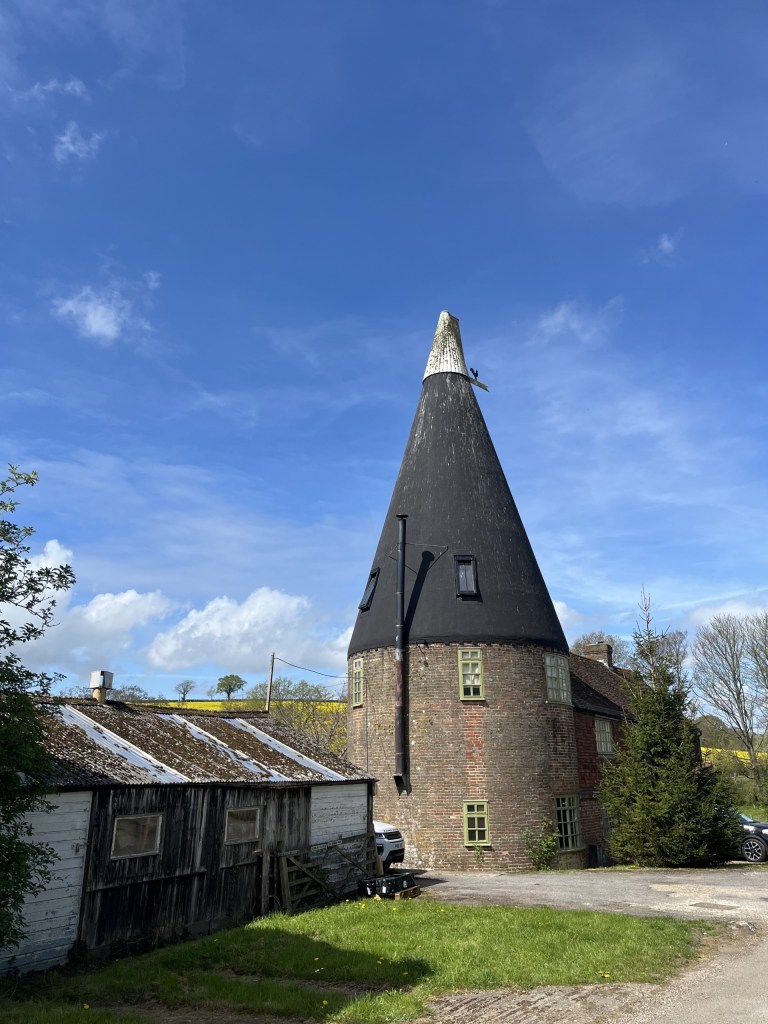
Grinding my old body up the relentless tarmac I eventually pulled myself over the line and into the outskirts of Wadhurst, with a cricket pitch to my right. Looking up, which wasn’t so easy, I could see a couple of old and converted oast houses, and a bench. I’ve already mentioned the lack of sitting opportunities on these walks, so having reached the top of the long Washwell drag, plonking myself down on a bench for a couple of minutes would have been welcome. But!
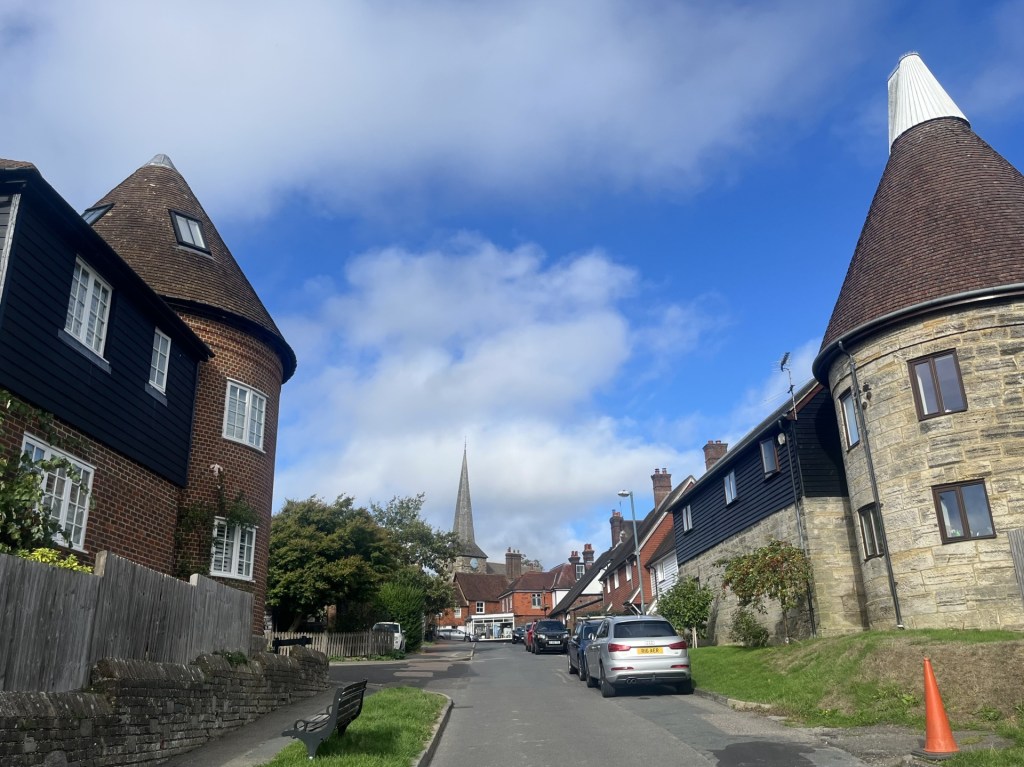
Surrealist bench art?
The photo hopefully tells it all but the idea of sitting down to stare at a six-foot fence seemed entirely absurd. I trudged on past, scratching my head and wondering what had caused the bench to be positioned so strangely and then entered the small town. Sadly, minutes too late for a tea or coffee. The High Street, a narrow affair with a traffic pinch point, now headed north-west and out of the old town.
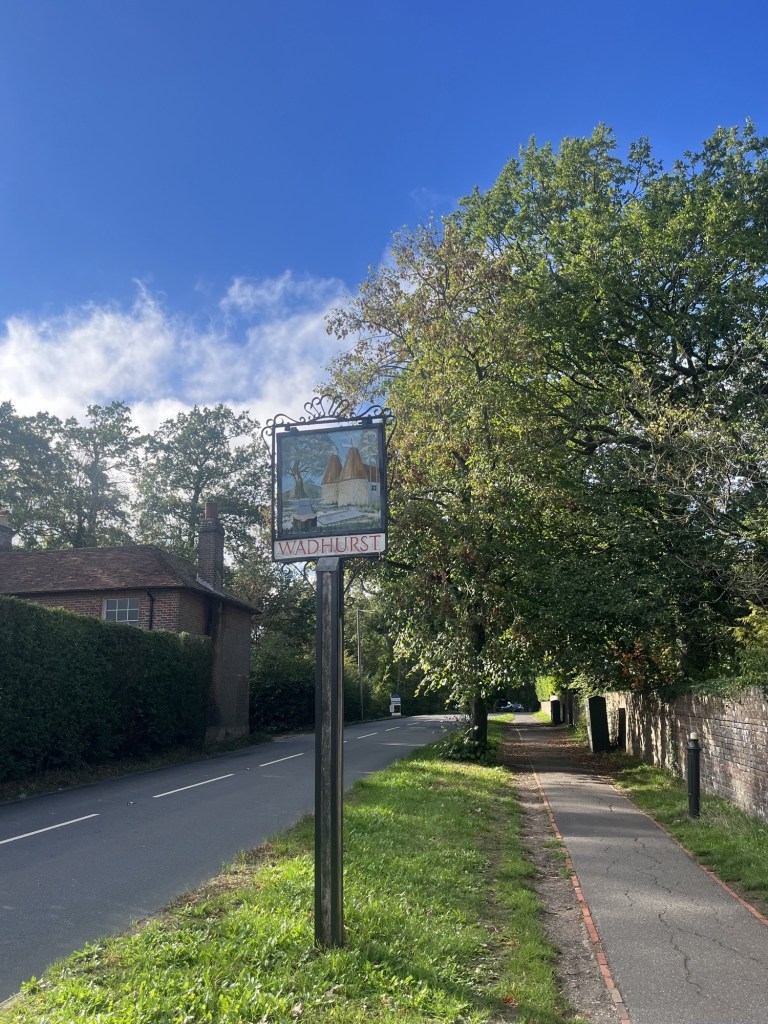
In case of any doubt – heading towards Durgate
Half a klick on I was walking along Station Road and into the new town which may or may not have been called Durgate.
As I edged into the town, I noticed that a couple of terraced houses on the right (I wasn’t sure if new or restored) bore the name Tunnel House. Opposite a road, Mayfield Lane to be precise, led west and out of town. It may or may not have been entirely coincidental but the reason I was now trekking through Wadhurst, and not clinging to the railway was because at a point just past where I had met the lost couple in the woods, the line entered a kilometre long tunnel. I haven’t been able to find any direct link but a short walk down Mayfield Lane and the road crosses over the tunnel at roughly the midpoint. The tunnel was constructed in the 1850’s and in 1862, befell the same fate as the Mountfield tunnel (see Battle to Robertsbridge), by collapsing. Whether or not the small Tunnel houses had anything to do with the construction, or possibly reconstruction of the Wadhurst tunnel remains unclear, but their location and name suggest something surely.
Beyond the Tunnel House I passed a garage which advertised petrol prices so staggeringly high I had to look away quickly (a few weeks on and I dread to think what the advertised price of diesel is now!).
I carried on along Station Road, assuming that it (the station) would appear at any moment, but disappointingly it didn’t. Despite its location in the High Weald, what I saw of Wadhurst was oddly below average. As I headed out of town a stream of traffic gunned in towards it on the 30-mph road where it seemed 50 mph was the unofficial limit. Fortunately, halfway down the hill a footpath sign indicated a short alternative (a sign pointed to something called Fox in the Wood which meant nothing, but I was prepared to follow the arrow to escape the relentless traffic).
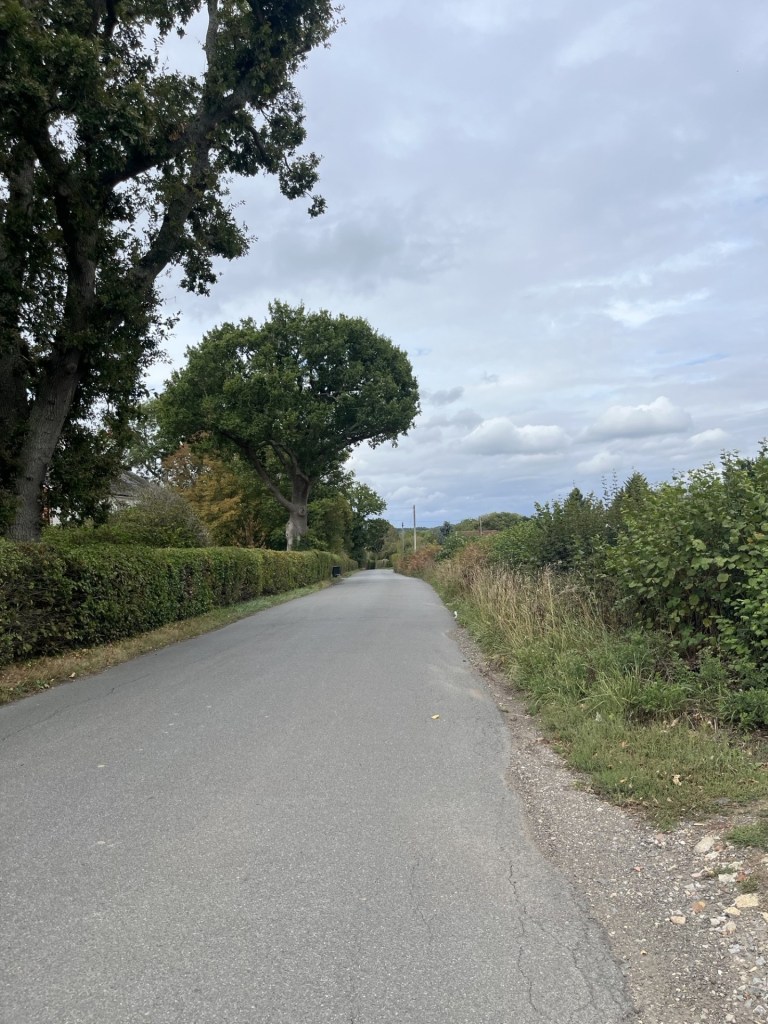
The unadopted road ran parallel to the main road and eventually spilled back out onto Station Road at the foot of the hill, after passing a number of quirky homes squirrelled away from the main drag.
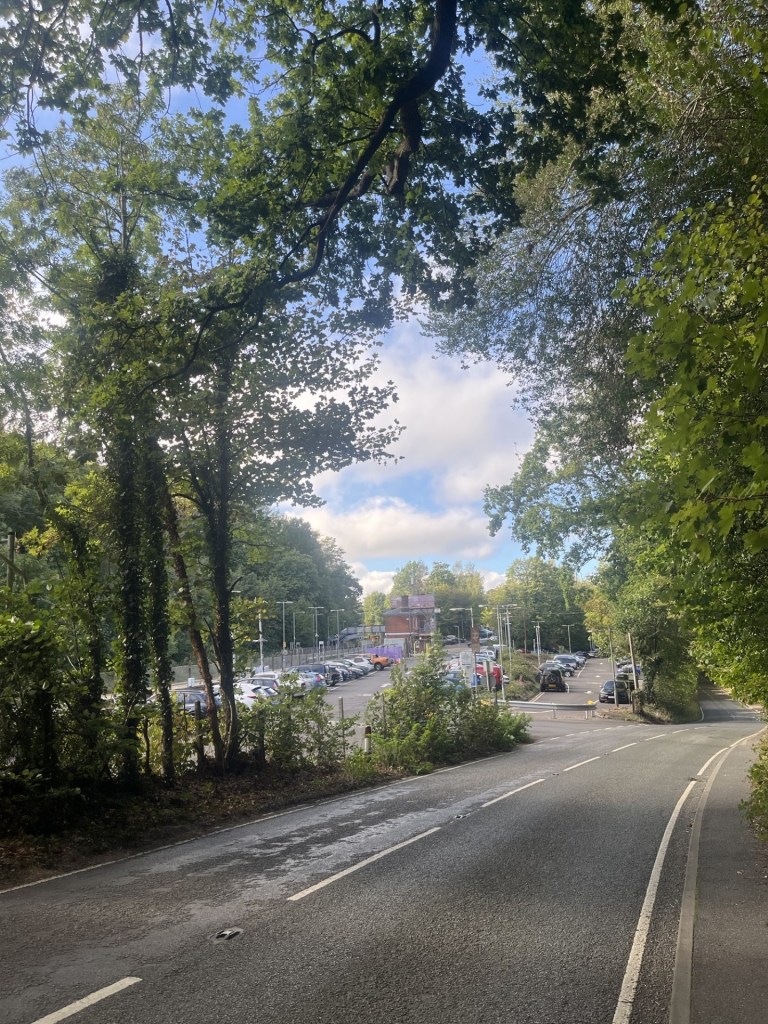
The finish line – Wadhurst station
And that was that. I was back at Wadhurst station for the second time in less than three hours – job done.
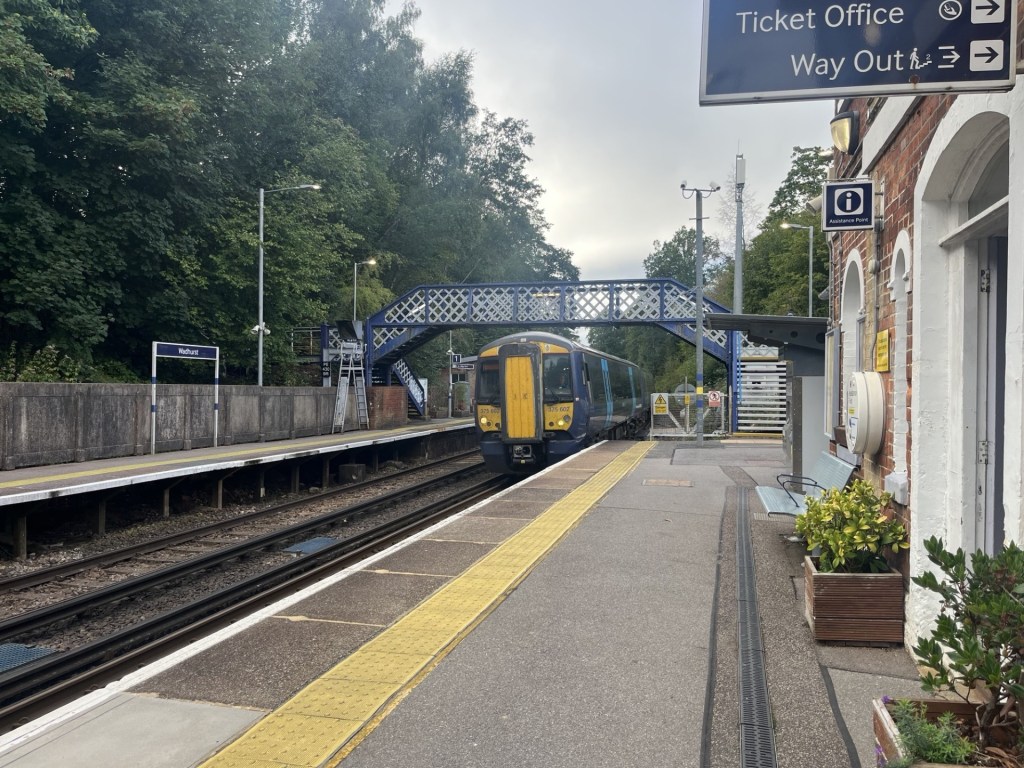
Deja vu
* I discovered that the Old Miners Arms was originally called the Locomotive, and had in fact been opened to cater for railway workers before it was renamed the Old Miners when a nearby iron quarry opened a year or two later. It failed and closed after a year, but the miners legacy remains
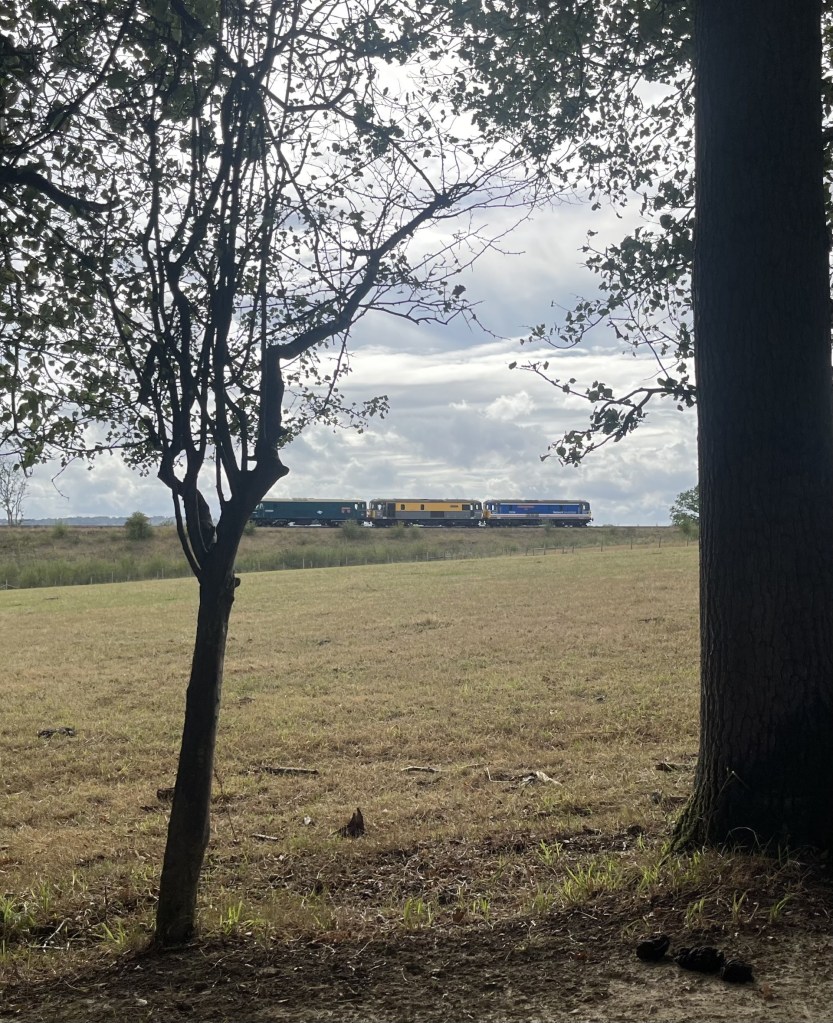
Here’s one for the road