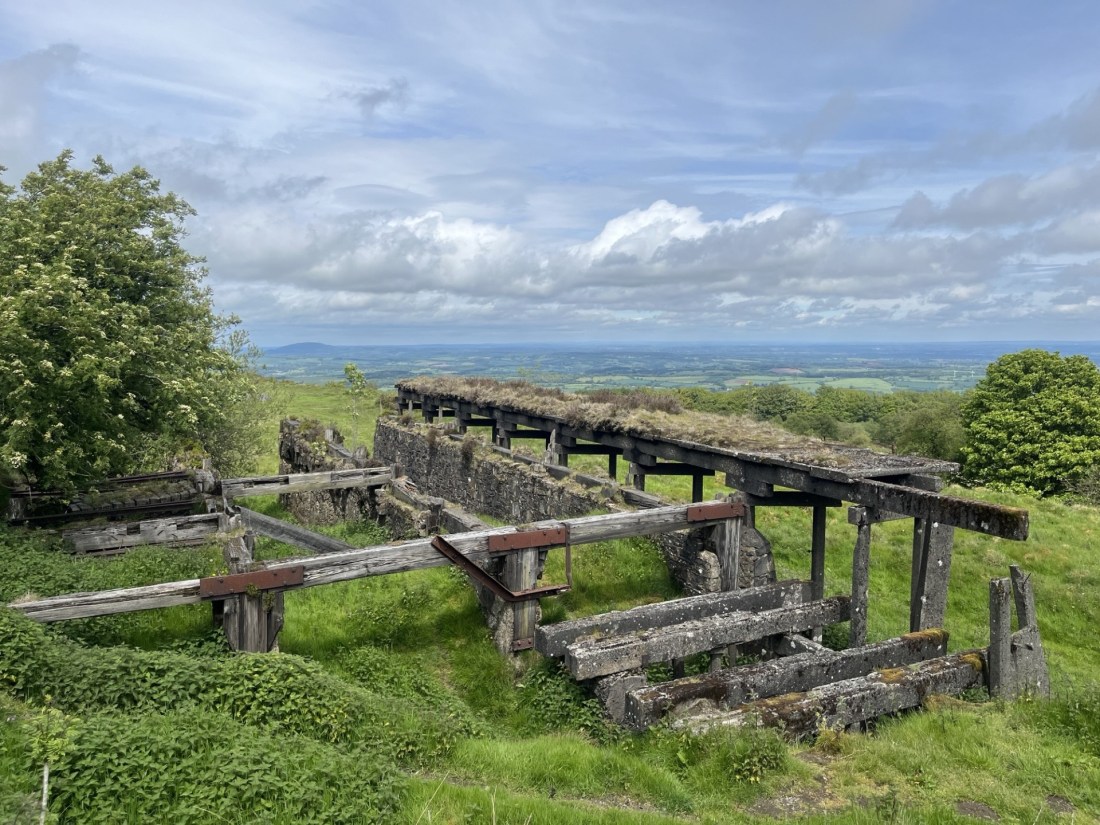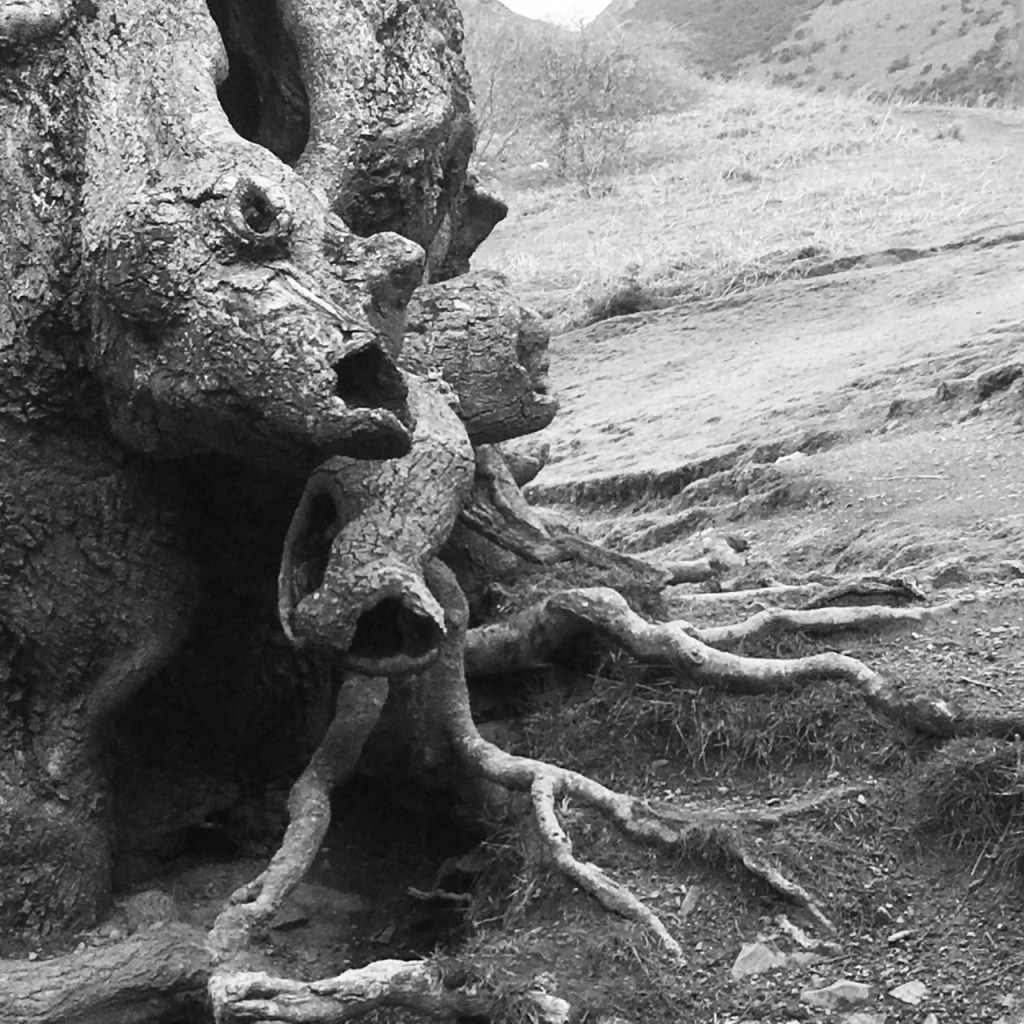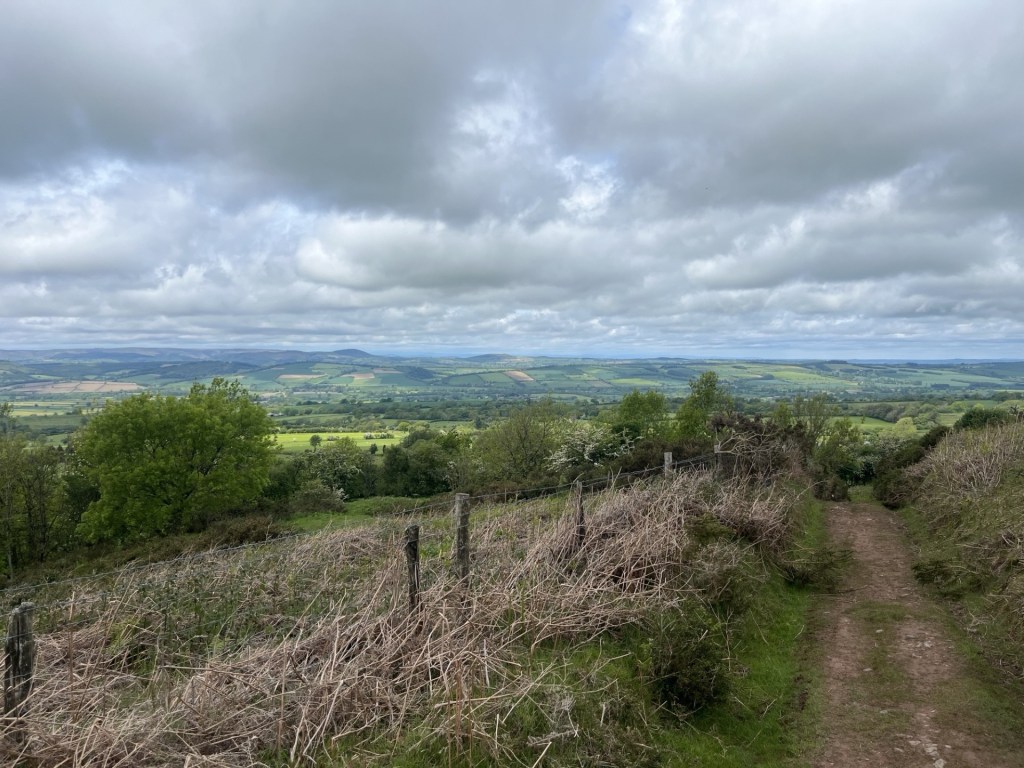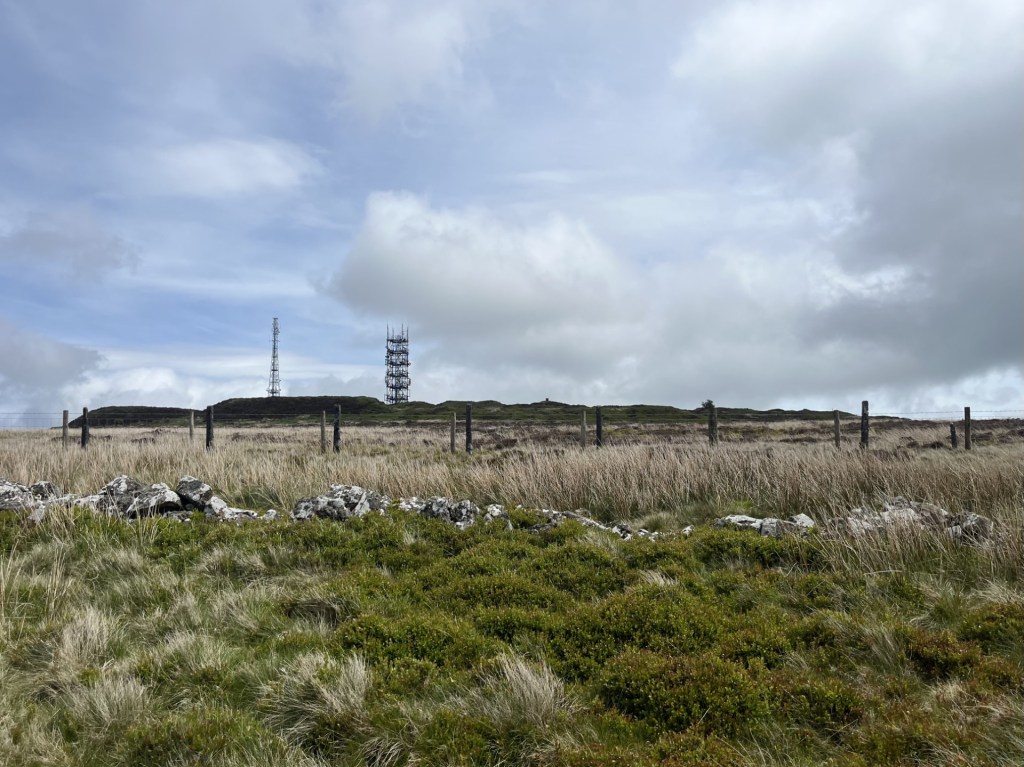
Station to Station – Up Walk to London Crowhurst to Battle

2. Crowhurst to Battle

17th April 2026

OS Explorer 124

Up Around the Bend

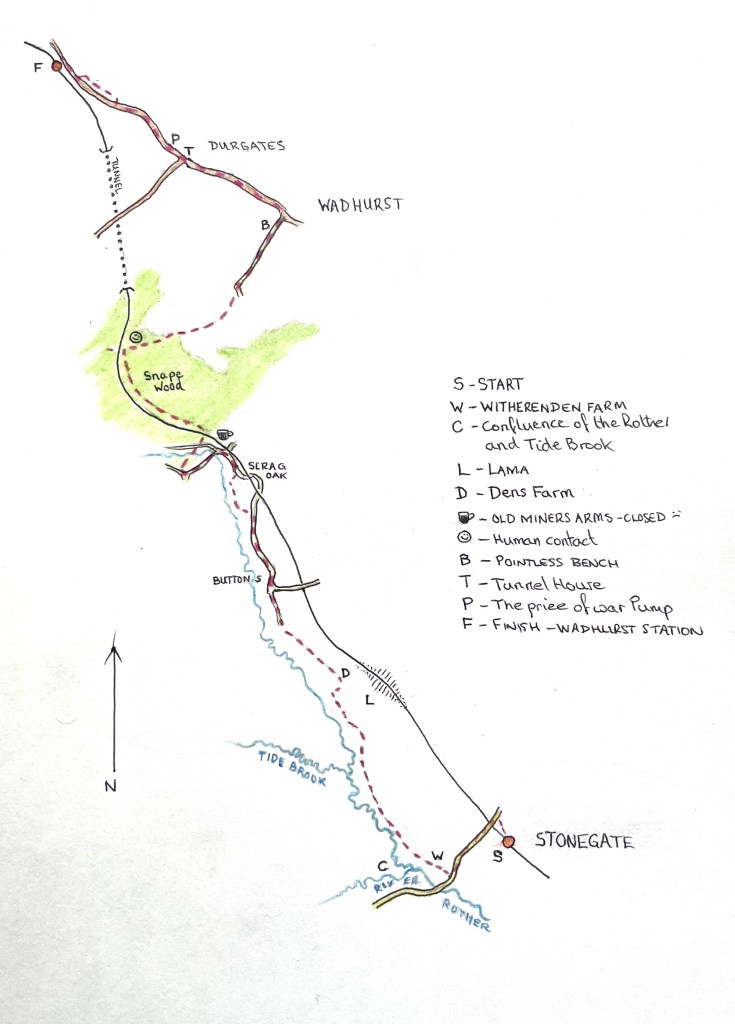
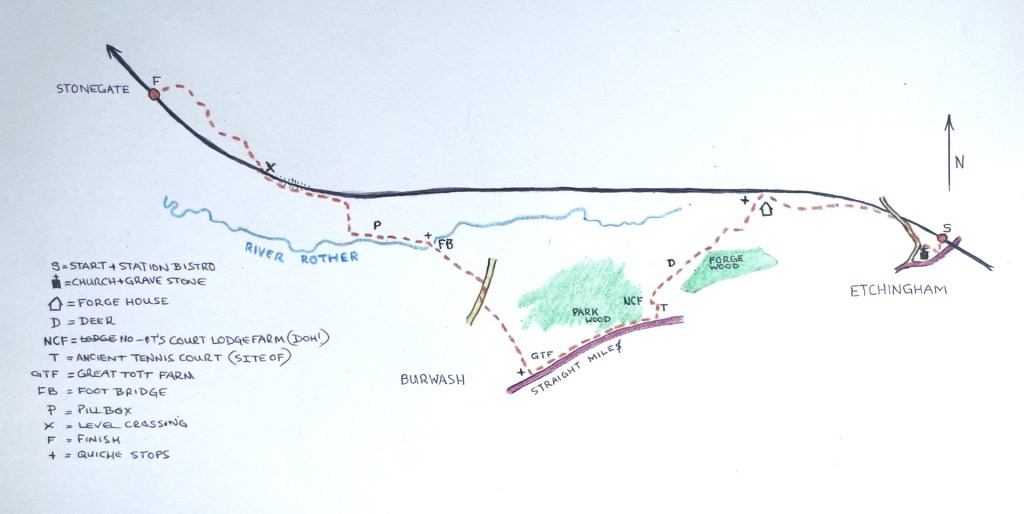
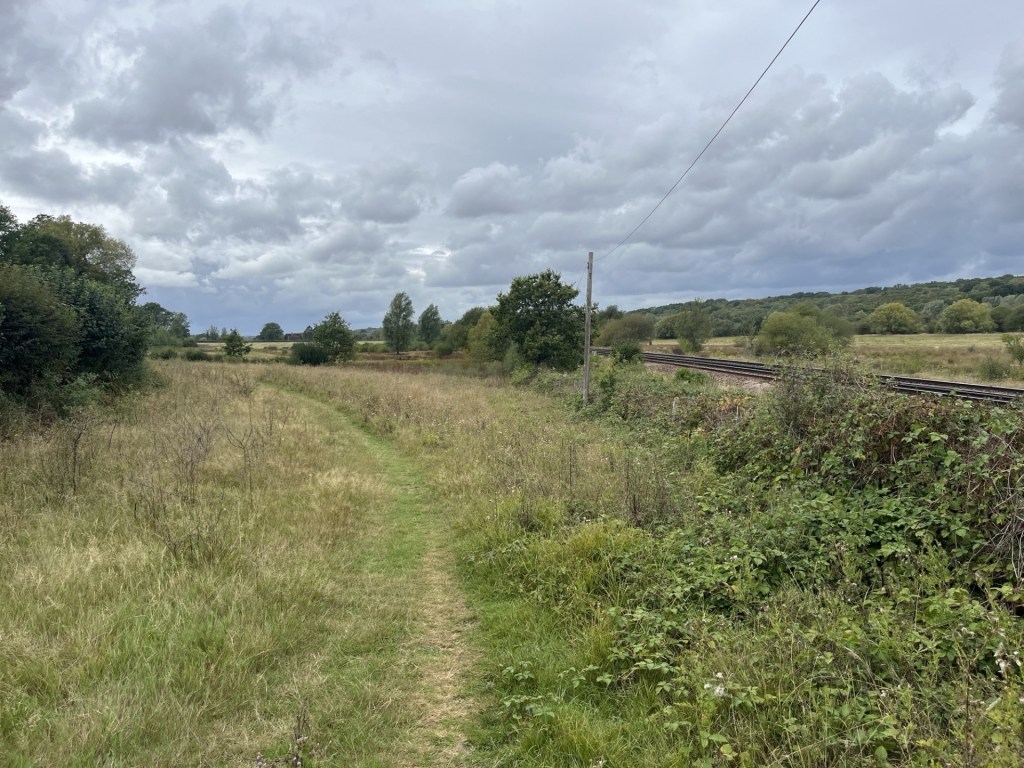
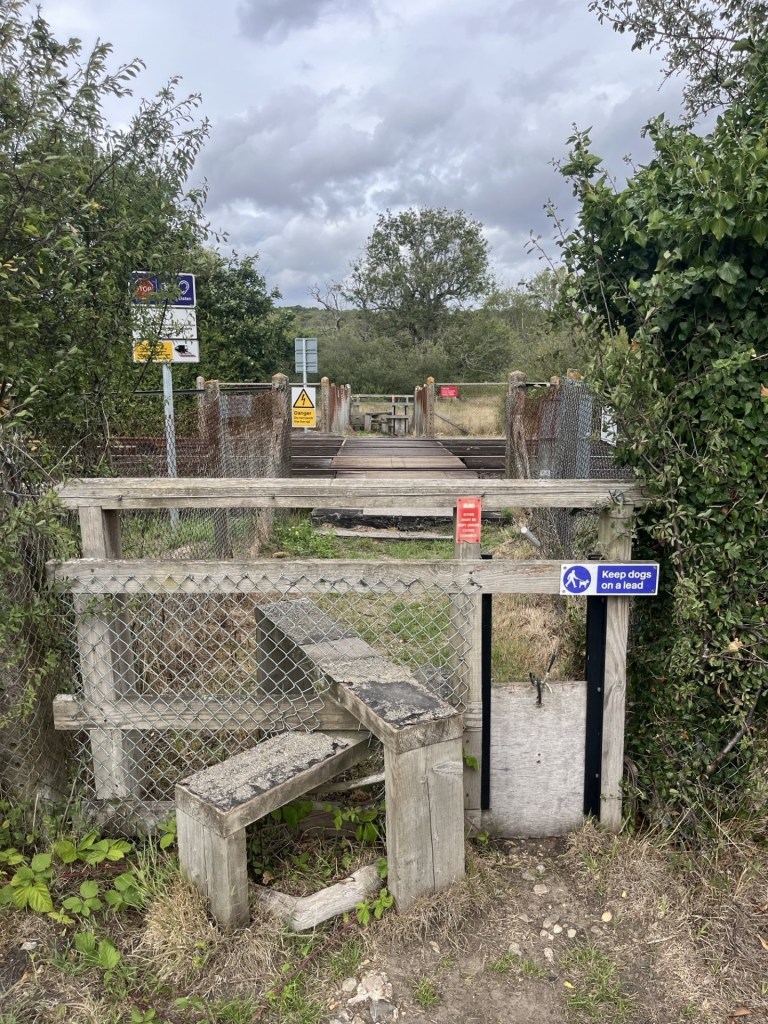
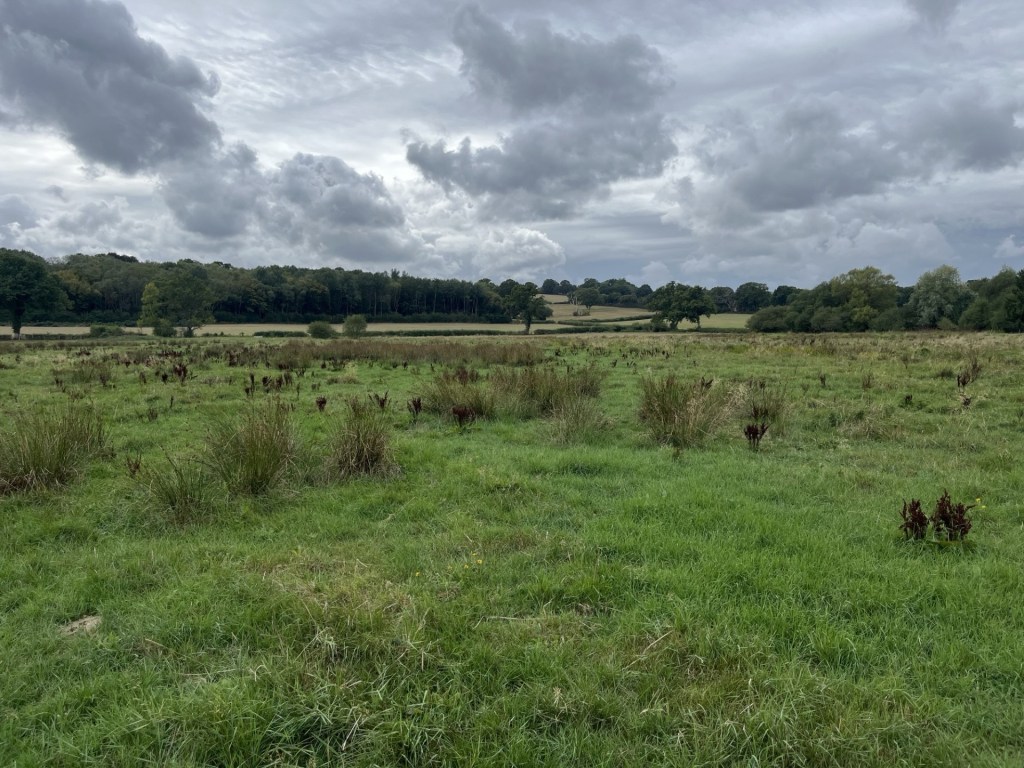
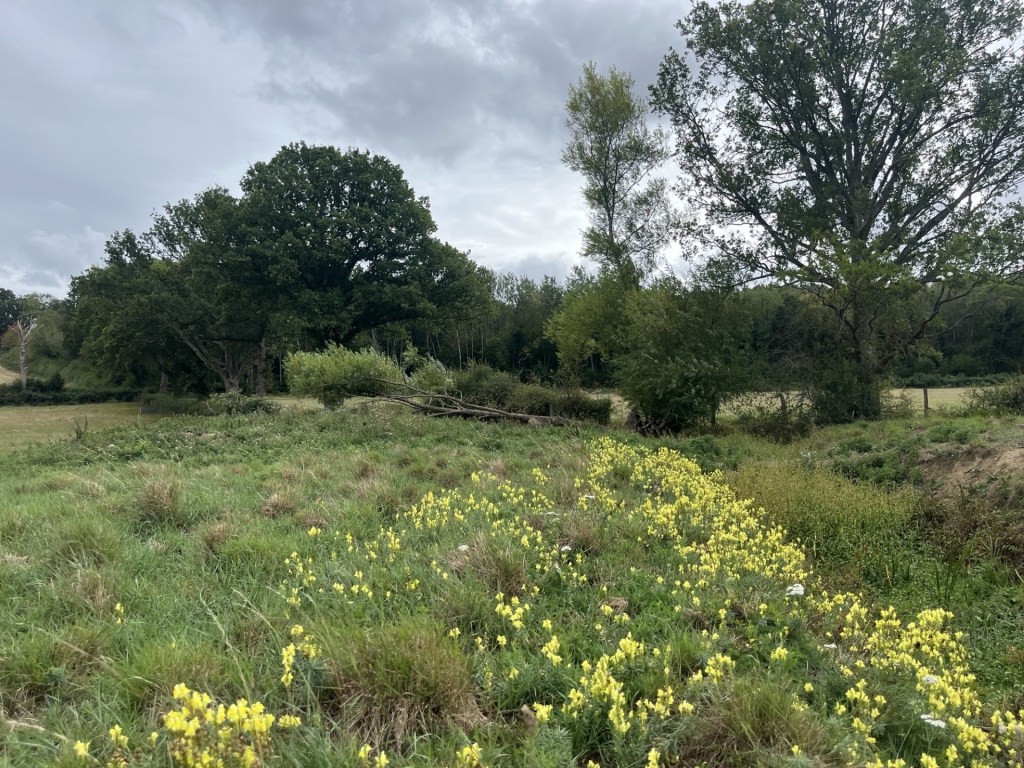
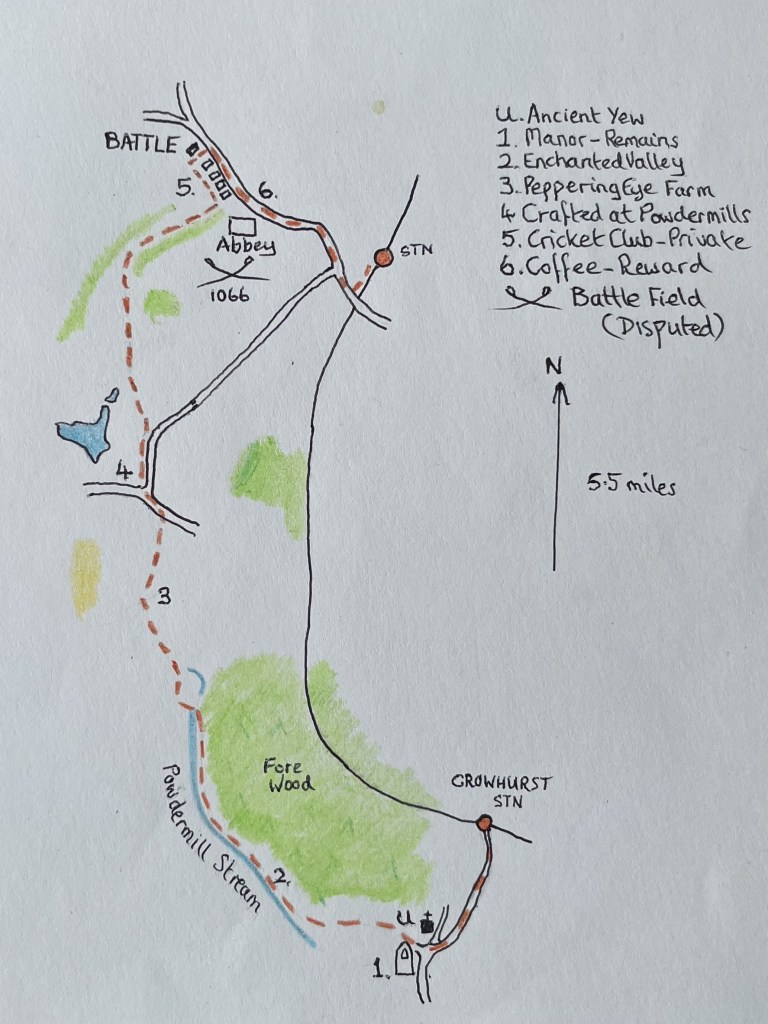
This was the second leg of my attempt to walk the line from Hastings to London (or at least the suburbs). Having walked the six miles from West St Leonard’s Station to Crowhurst the week before, this leg would be shorter, arcing from the station at Crowhurst, west, and then north and east back into Battle, and to some extent mirroring the path of the mainline running half a mile or so to the east. A view from above shows its Charles carton ear-like characteristics.

The Battle map

I parked up near Crowhurst station. Thinking ahead, as these locations get further from Hastings, I don’t fancy driving long distances for the sake of what is essentially a narcissistic leisure activity. Too many petrol miles to justify, but for the moment I can live with a few miles for a quick start.

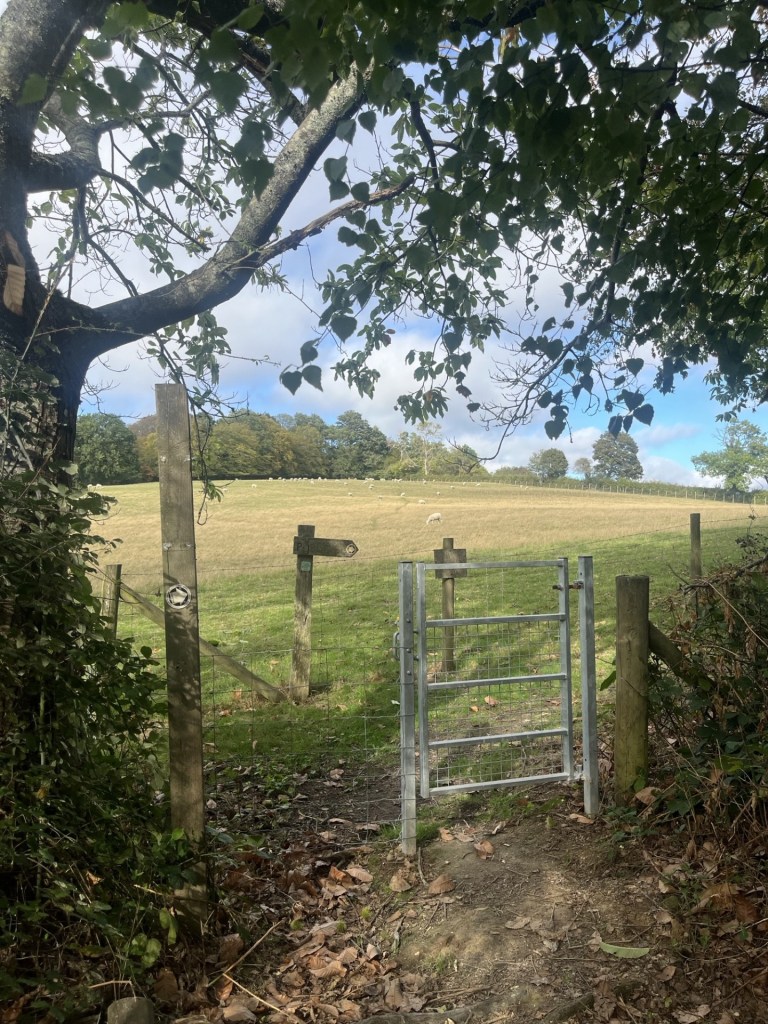
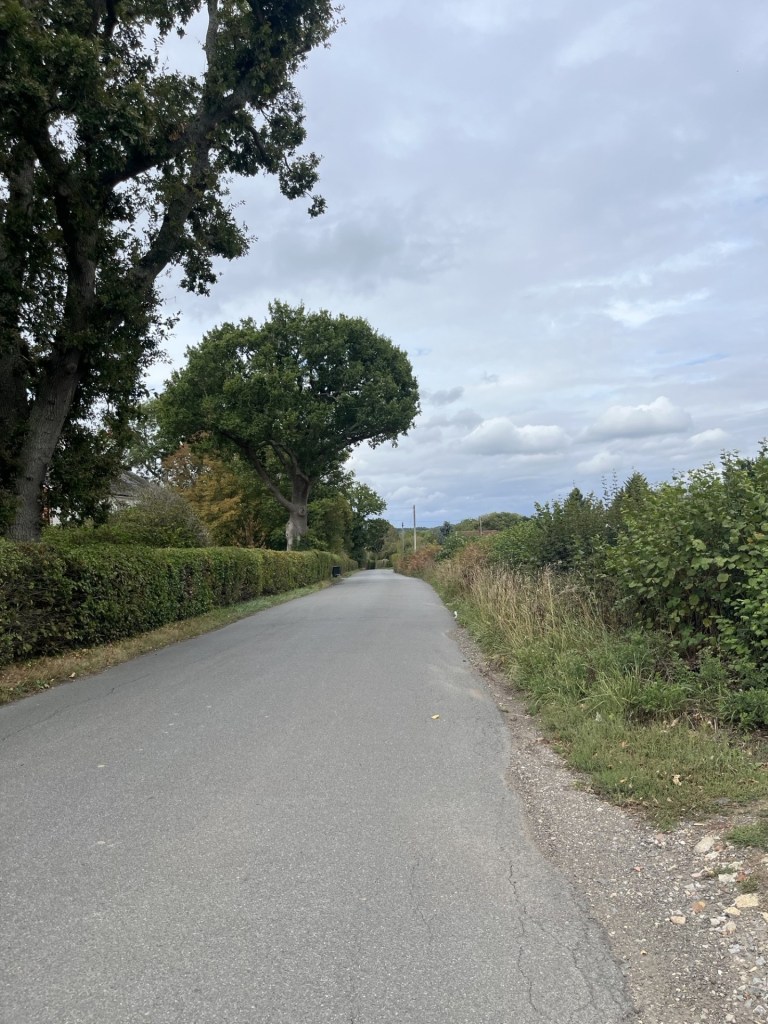
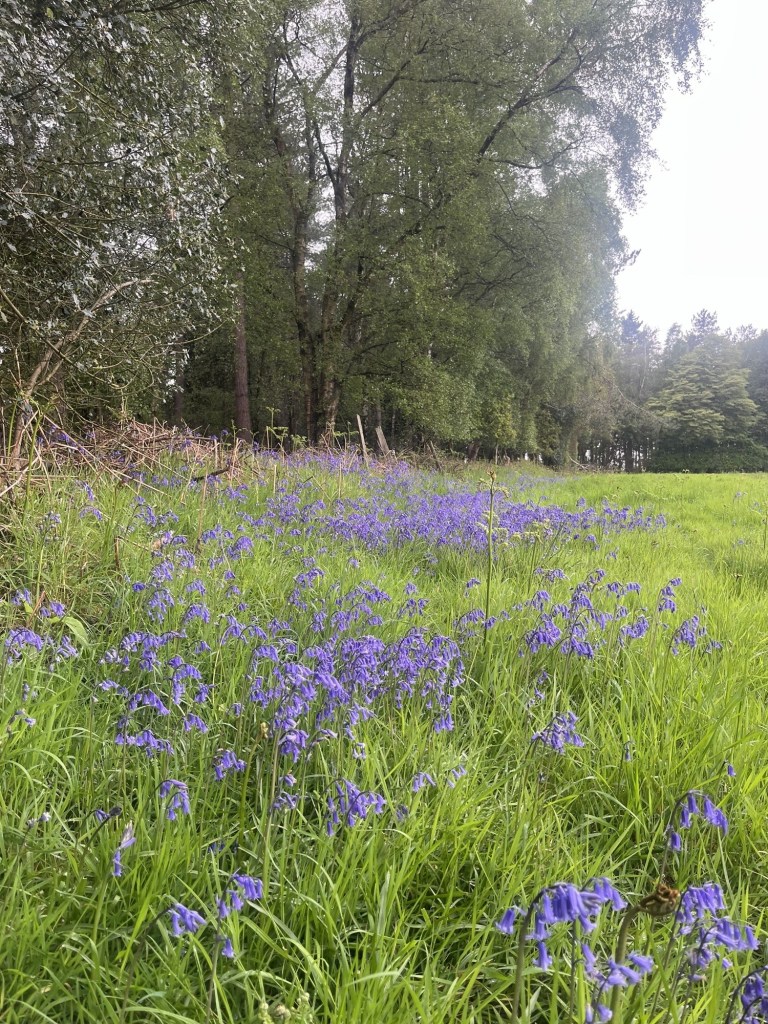
An option at the station could have been to go directly north and approach Battle from the southeast, but it looked a bit short on the map and as it was a glorious day I was up for a prolonged wander. Starting downhill along Station Road and passing an eclectic range of mid-20th century houses, the verge splattered with bluebells and primroses, I was full of positivity, which I can report from the outset, lasted for the next two hours.

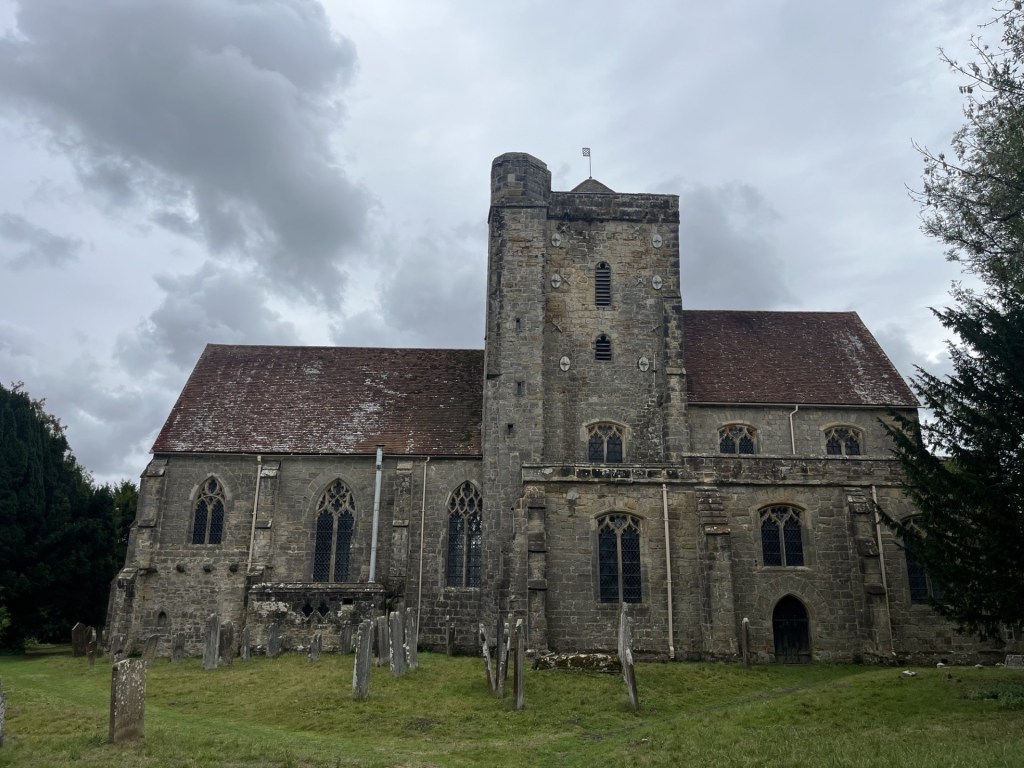
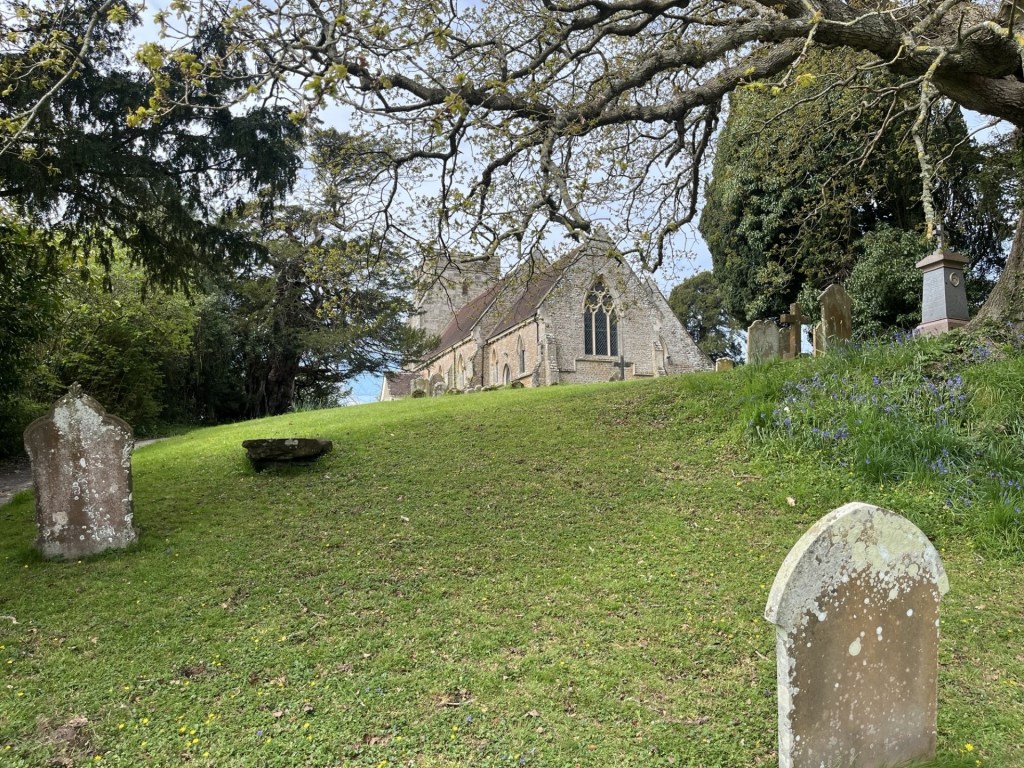
St George’s Church – from Forewood Lane.

And one of the reasons was because of this.

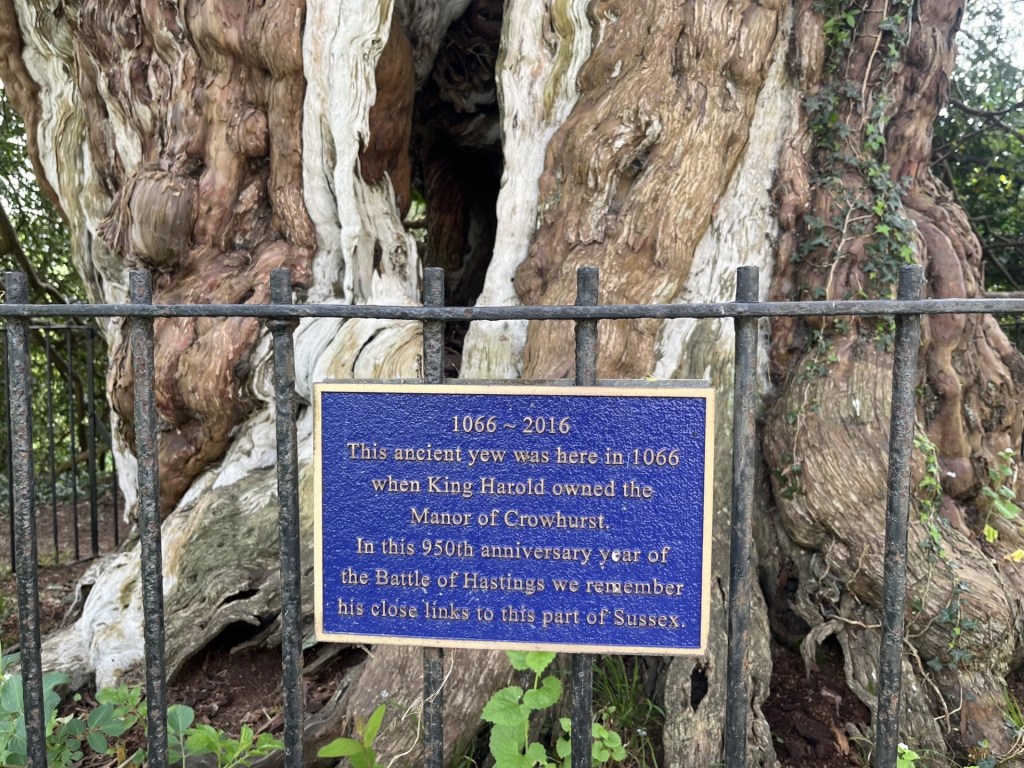
Ancient U

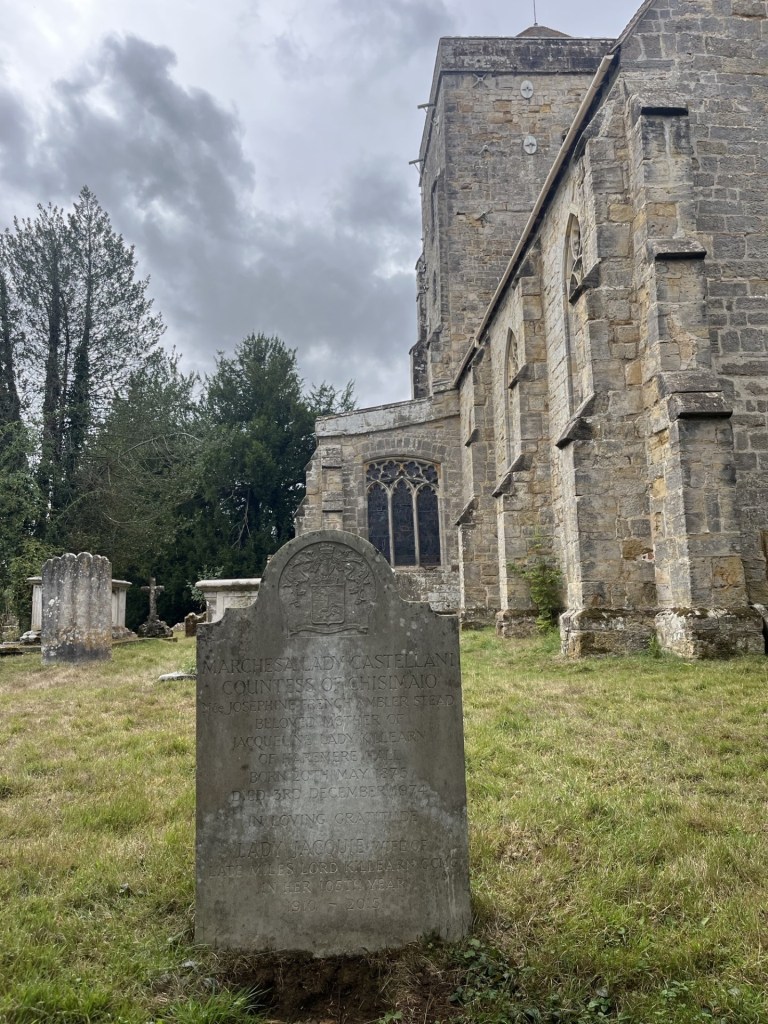
In the previous report (that would be number 1), I briefly mentioned that a hard core group of activists have, some might say heretically, argued that the Battle of Hastings in September 1066 did not happen at the official English Heritage site located in Battle (clues in the name I guess), but somewhere near Crowhurst (other “conspiracy” theories are available). I have an open mind on the subject, but in any case, the main point of interest in the graveyard of St George’s Church is its ancient yew tree (pictured above). Estimated to be 1300 years old it would have been a mere sapling at the time William marched his troops from Pevensey Bay (or Bulverhythe, or Hastings – take your theory pick), and up this, or maybe the next or previous valley. Whatever, it was there then and perhaps people then already marvelled that it was 300 years old.

Now this would be impressive (well it is but there’s a spoiler coming). Thirty odd miles to the north, in Surrey, there is a village called err… Crowhurst, just down the road from South Godstone. It has a church too. It too is called St George’s. I’ve never been there, but it has a yew tree that is thought to be 4000 years old. That’s 2000 years before the Romans arrived! I just don’t believe it but if true then our East Sussex St George’s church in Crowhurst yew tree is frankly embarrassing and unworthy of the blue plaque it sports. It is also important to be aware that if anyone happens to read this and feels the burning need to follow this walk, not to make the cardinal mistake of starting in the wrong Crowhurst. The following account will instantaneously become redundant and could lead to unintended consequences. (I just have to say this to cover myself and avoid potential litigation).

A yew trees view of Harold’s Manor house 

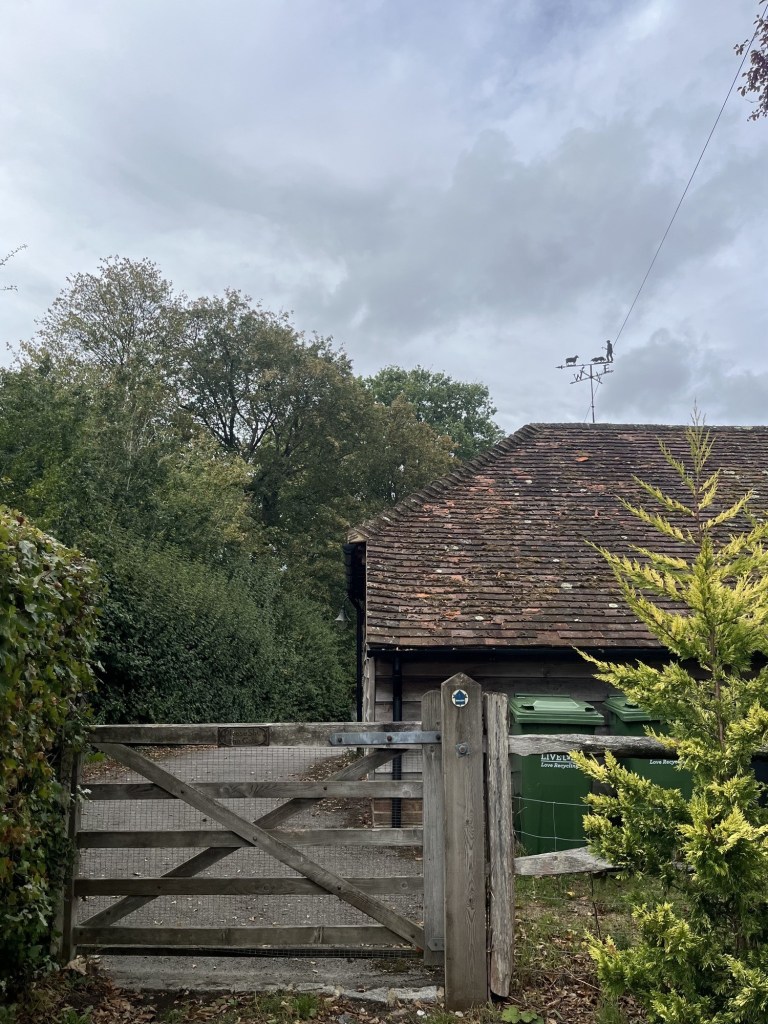
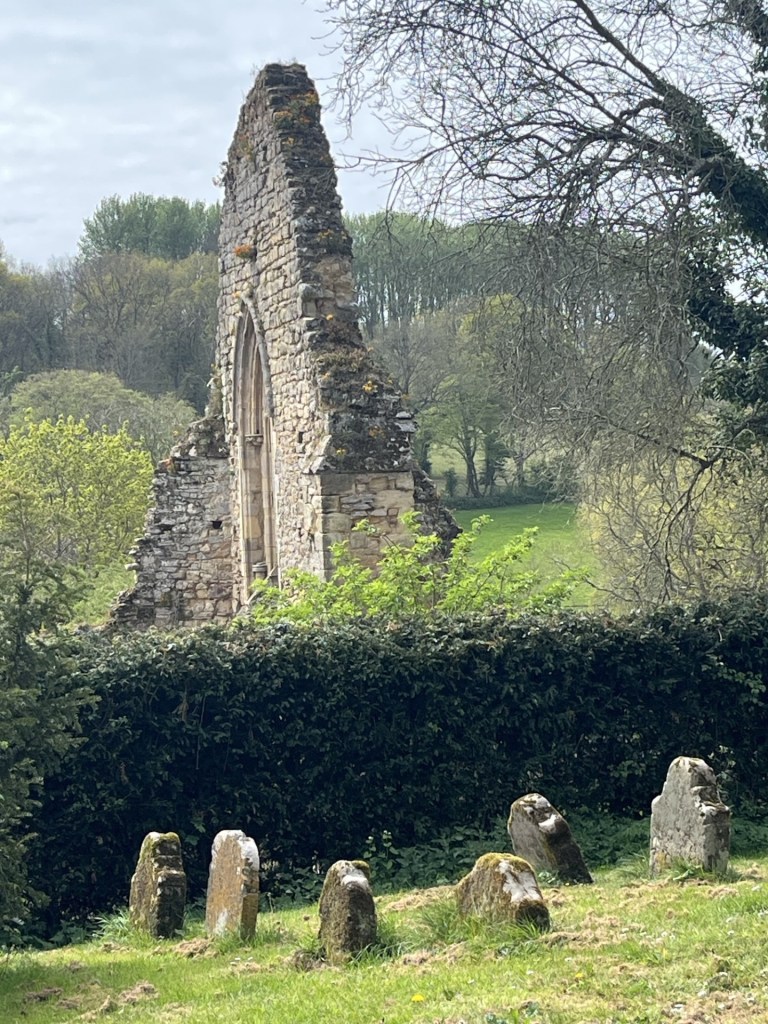
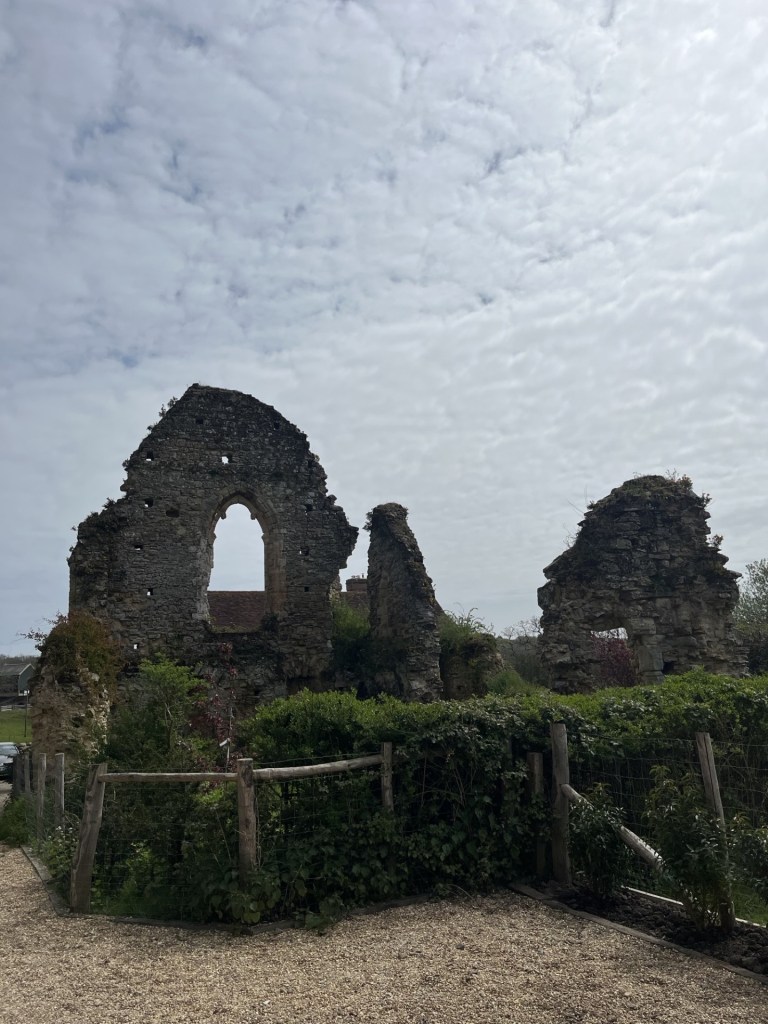
Having viewed the old log I returned to the road and turned right at the church gate, pursued by a black cat which shooed me off the premises. A few metres along I turned right up a signed footpath and onto a track between a handful of old buildings. About 100 metres and on the left the gutted remains of the old manor house, now incorporated by the surrounding buildings and making a pleasant walled garden.

The remains of Harold’s manor house, probably a later rebuild fashioned by a Norman baron.

The origins of this structure are a bit hazy. The “official” narrative is that it was built by a Norman in around 1250. And there is no reason to believe otherwise. Except, in the YouTube video about the disputed site of the Battle of Hastings, it gets a mention. How so? The suggestion is (and it does seem to be the case) that the then Earl, Harold Godwinson, later to be King Harold the second, had his own manor in the area, and that it might have stood on this very spot. Well, who’s to say, and I don’t know, but there is very little online information to be found.  Surprisingly, about the only small entry on the Historic England Missing Pieces Project is a photograph taken by the one and only Nick Austin, who, if you have read the previous account, will know, is one of the main heretical Battle of Hastings site sceptics!! And again, who am I to say? Just saying.

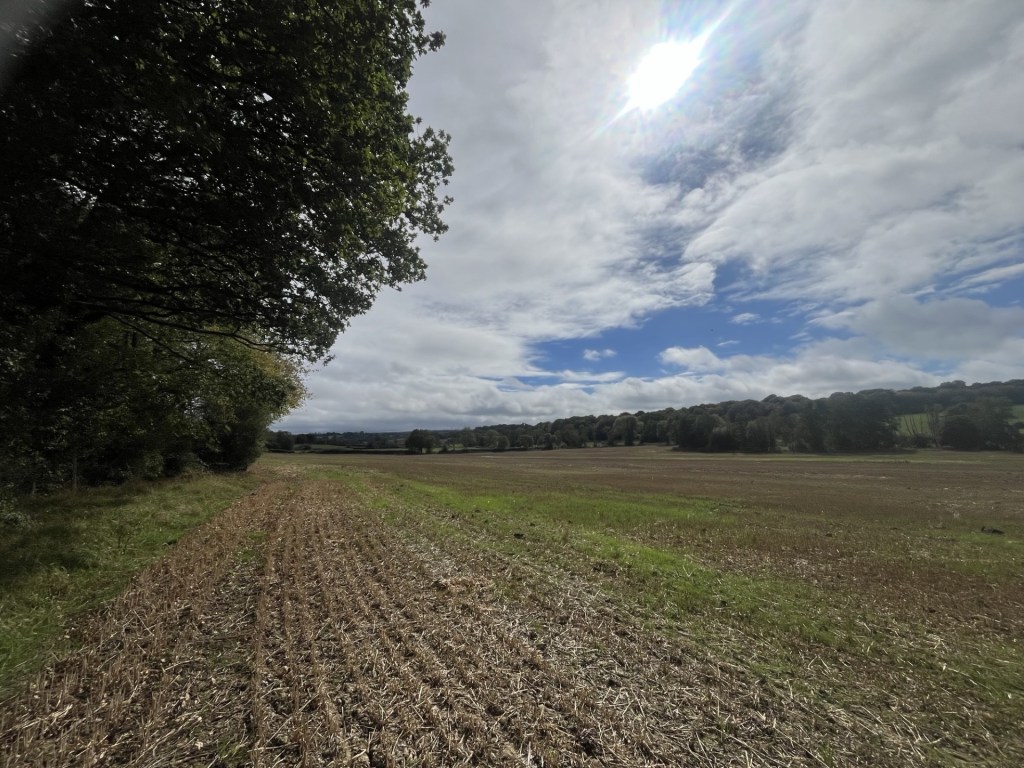
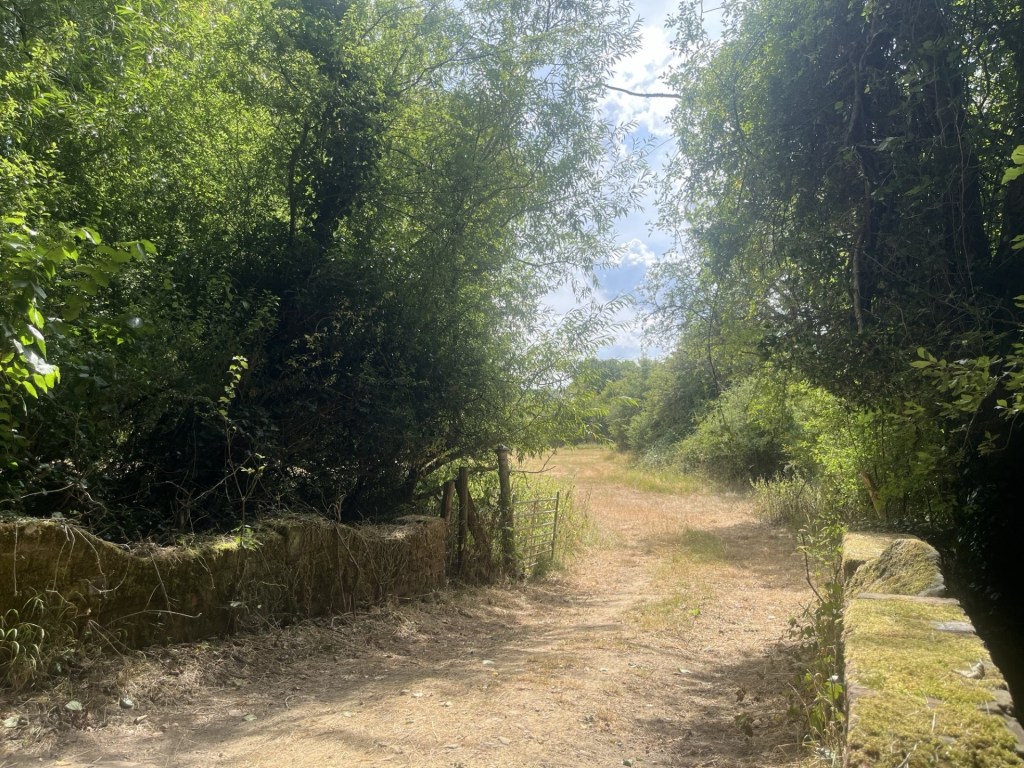
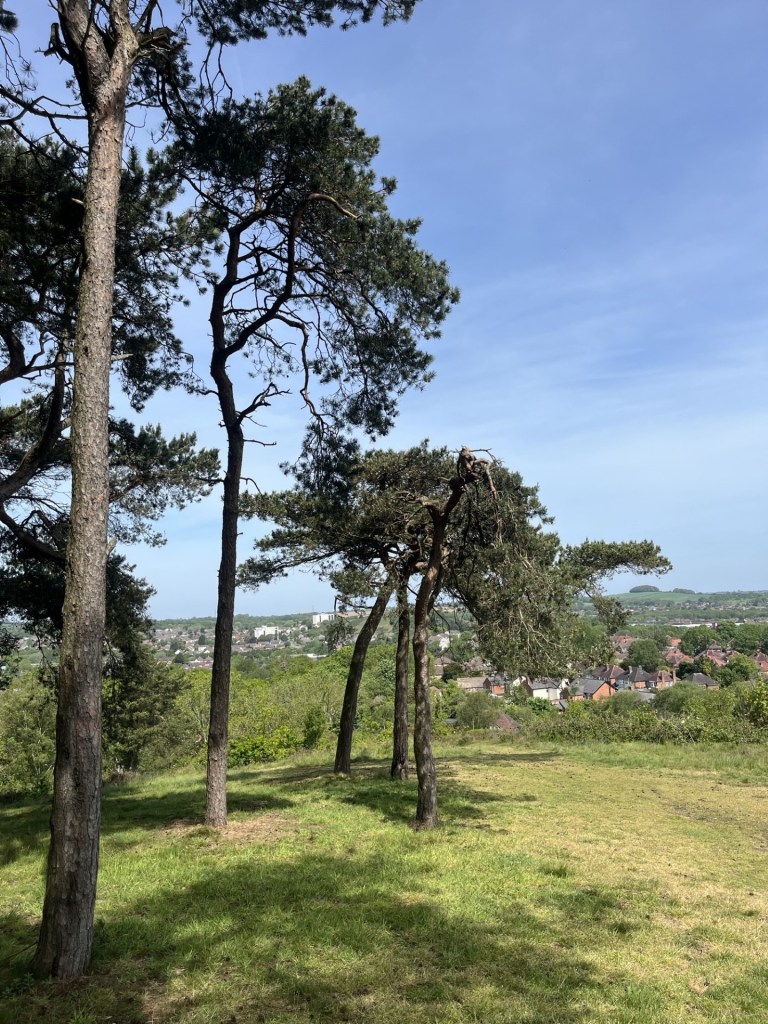
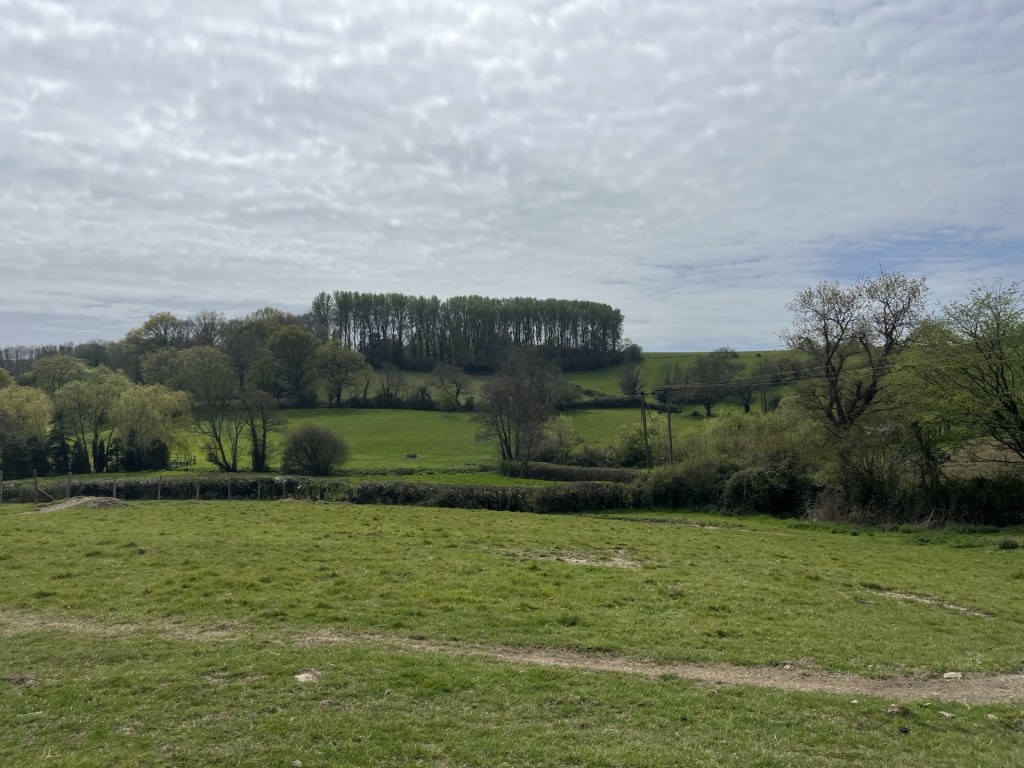
The track continued on through fields and directly north. The valley to my left looked impressive, with a very orderly group of trees at the top of the hills to the south.

A regiment of trees crest the hilltop

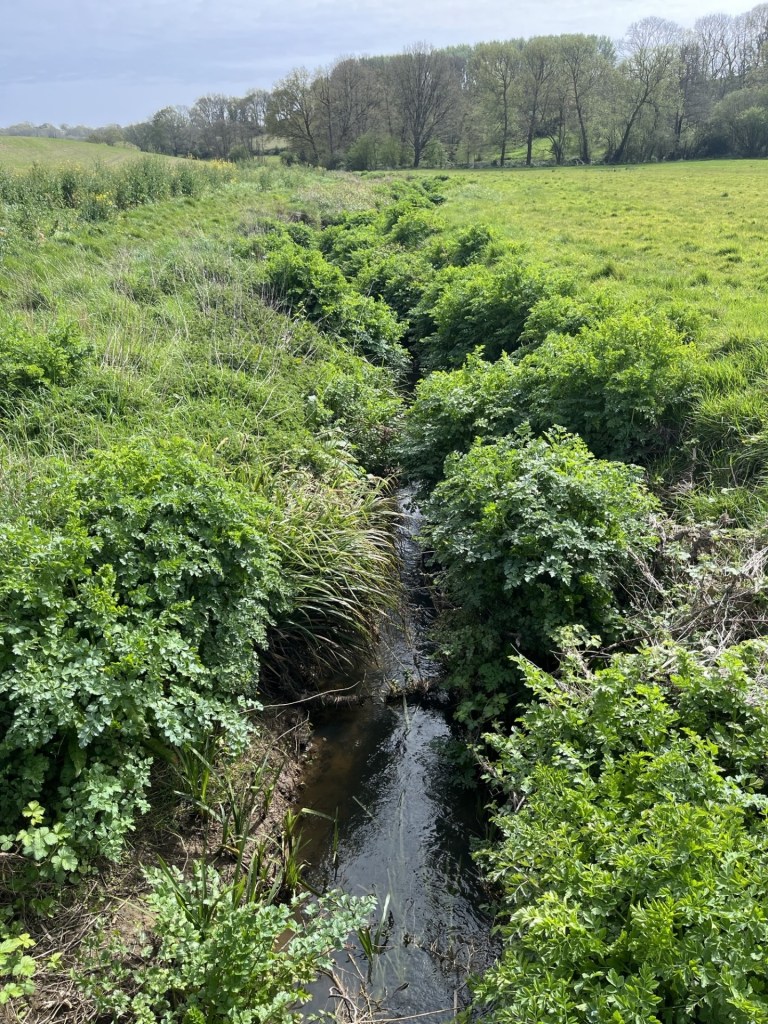
Passing through a gap in a hedge the track headed straight across a large undulating field and then down to a small bridge that passed over the western arm of the Powdermill Stream (western arm).

Powdermill Stream

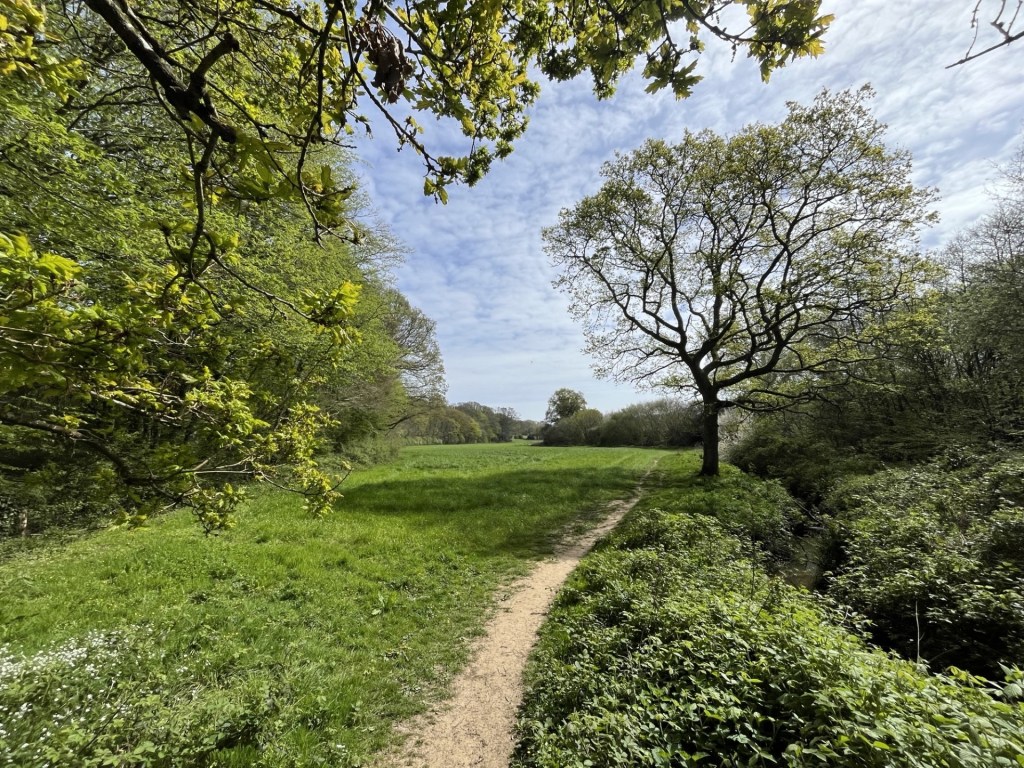
Footpaths carried on north on both banks. I chose the eastern bank and then over a style and into a wide, long meadow with the Fore Wood nature reserve to the north, looking spectacular with new growth peeking through and with the stream to my left.

The end of the meadow – an enchanted vale

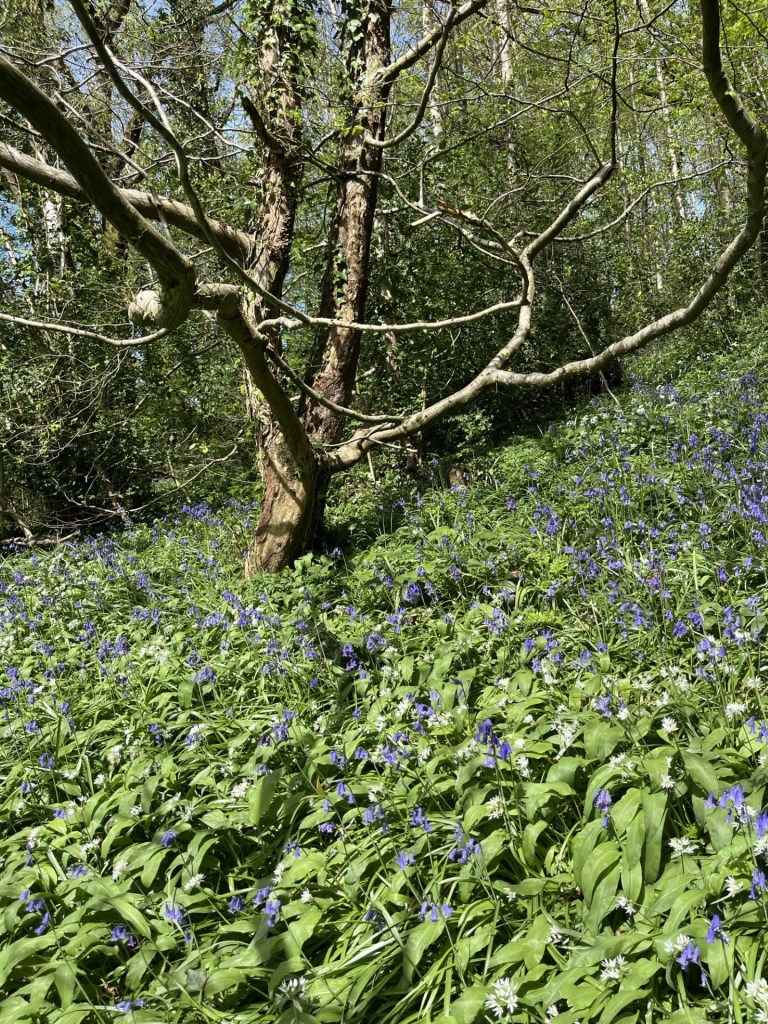
It felt like a small piece of paradise, and I was in no rush to reach the far side. Naturally, too soon I reached the end and now headed into the woods. A man with two large but passive dogs approached and we agreed that it was a beautiful spot. Bluebells and wild garlic disappeared up through the undergrowth in all directions.

You’ll need to imagine the pungent smell from the wild garlic

Continuing on a winding and undulating path through the woods and just to the right of the stream, surprisingly wide at this point, the idea that I was within a mile of Battle’s suburbs seemed absurd.

The path eventually spilled out at a bridge back over the stream, which I crossed and started up a bank that led to a small road. I should say that by joining the path in Fore Woods I had stumbled onto the 1066 Country Walk – Bexhill Link, and by turning right onto the road I was going to continue on this route for the rest of the journey (I think). A short walk up through more woods and I arrived at a large old manor house affair. I took the road to the right, moving north and headed back down into a glade which crossed back over the Powerdermill Stream, much wider at this point and where it felt like a mill might have once stood.

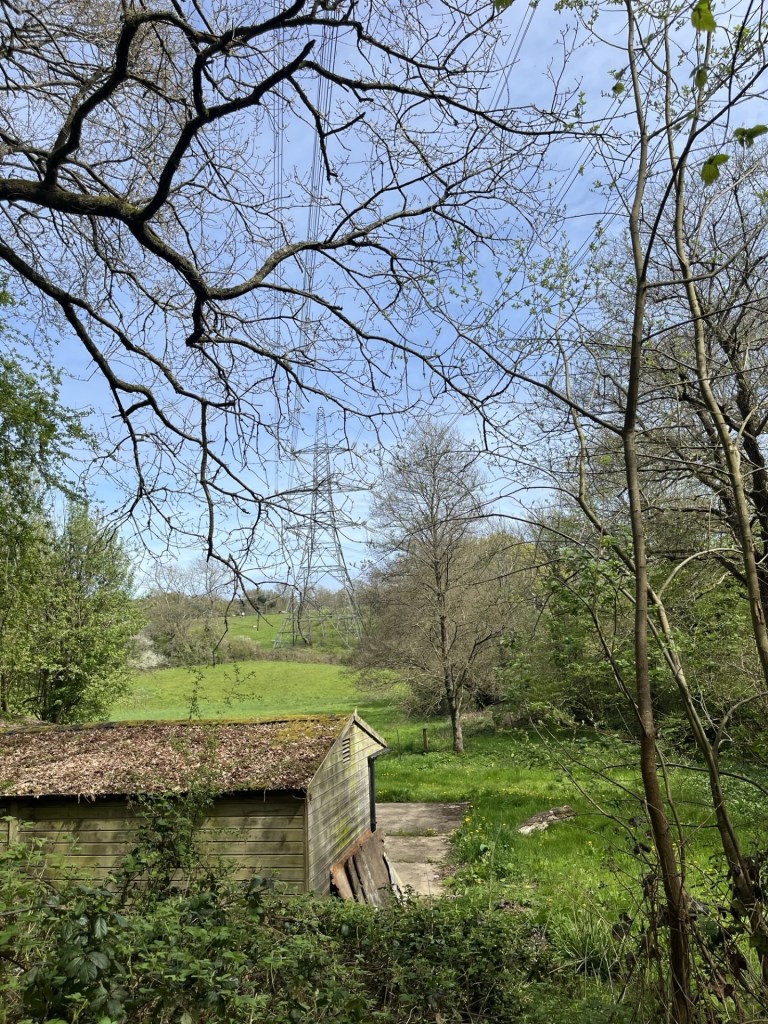
If you are ever lost, but presented with pylons and possess a map, you are found

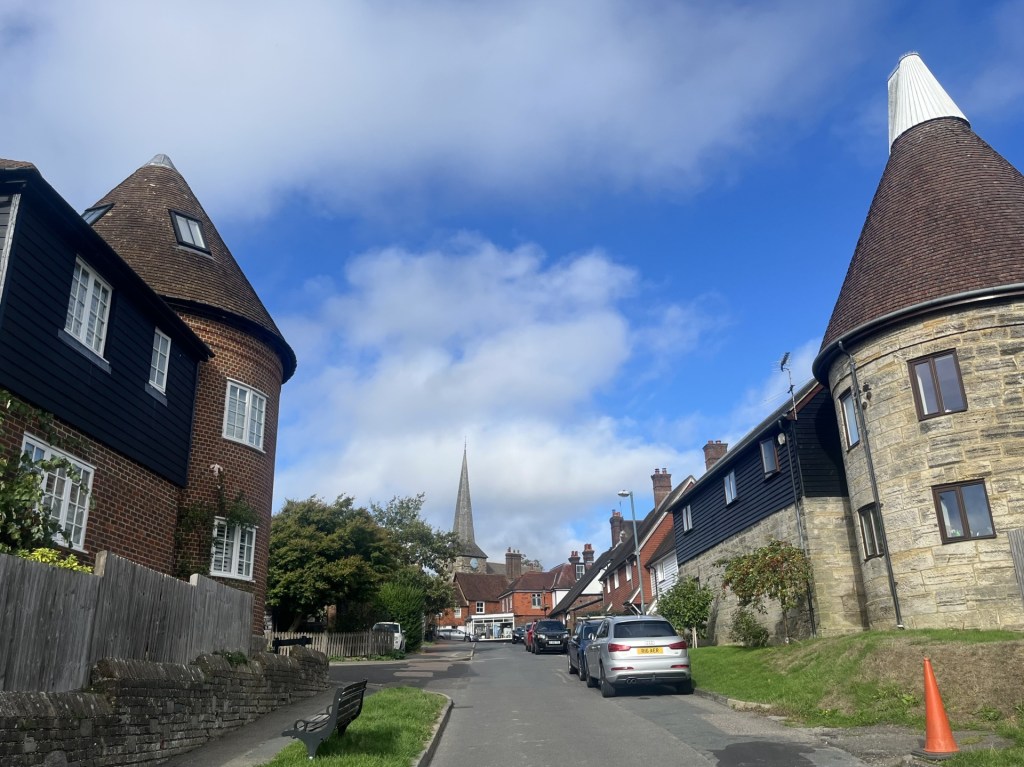
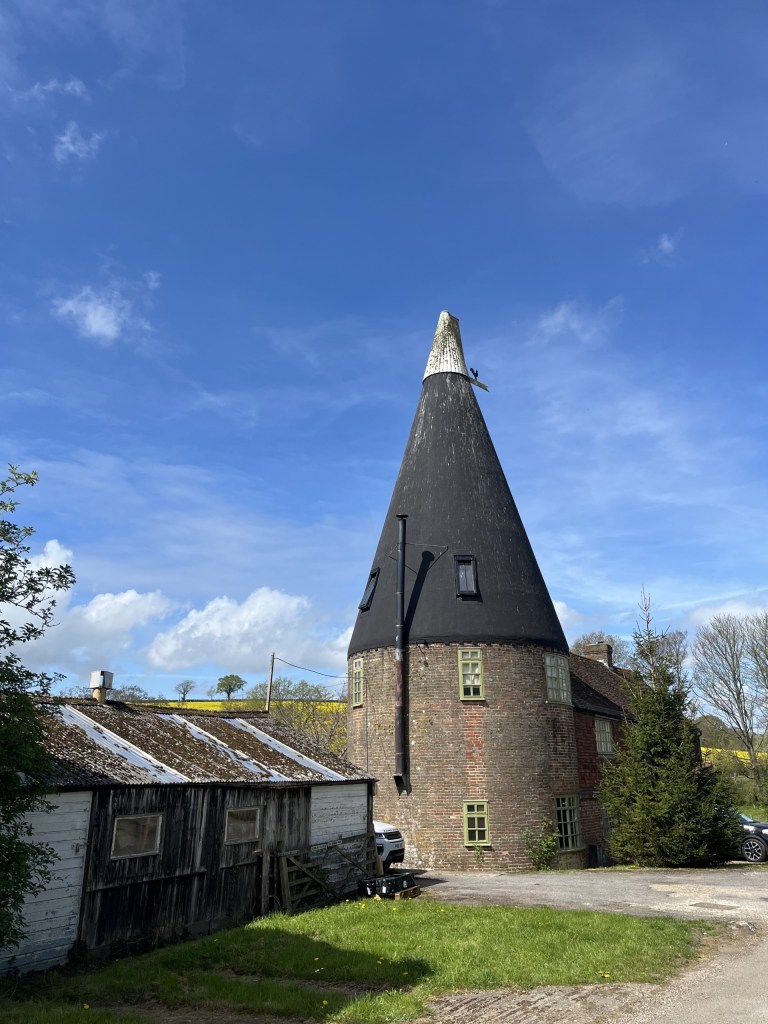
The road headed uphill again, with occasional large houses to the right. By now I was expecting to encounter urban sprawl at any moment, but instead the road wound down again and then through a cluster of old and new buildings that seemed to go under the collective identity of Peppering Eye. The background was to this nomenclature was unclear, but of course somewhere in the neighbourhood, nearly 1000 years ago, being peppered in the eye was definitely something to be avoided. This was a very chic location, with all the hallmarks of past and present affluence. Several buildings stood out but I was quite taken by the old oast house (or was it a windmill?).

Interesting! Word, is trying to autocorrect oast to “oust!” So much for regional AI nuance.

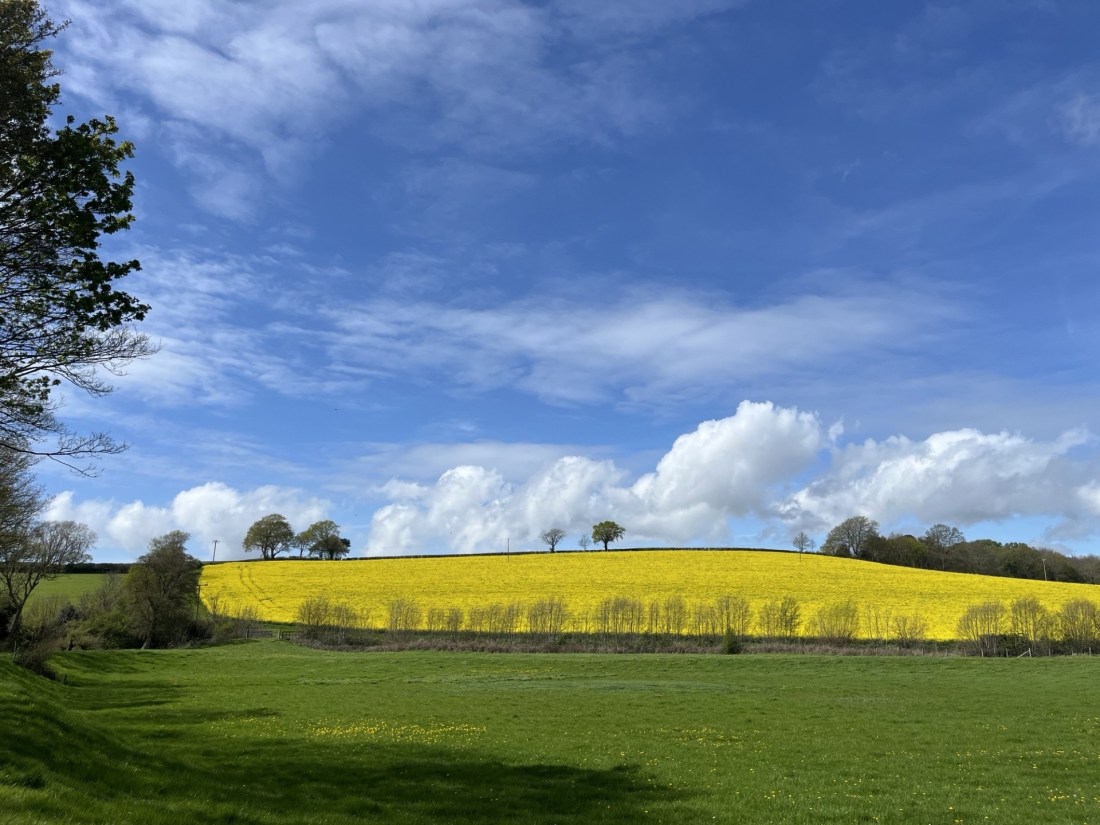
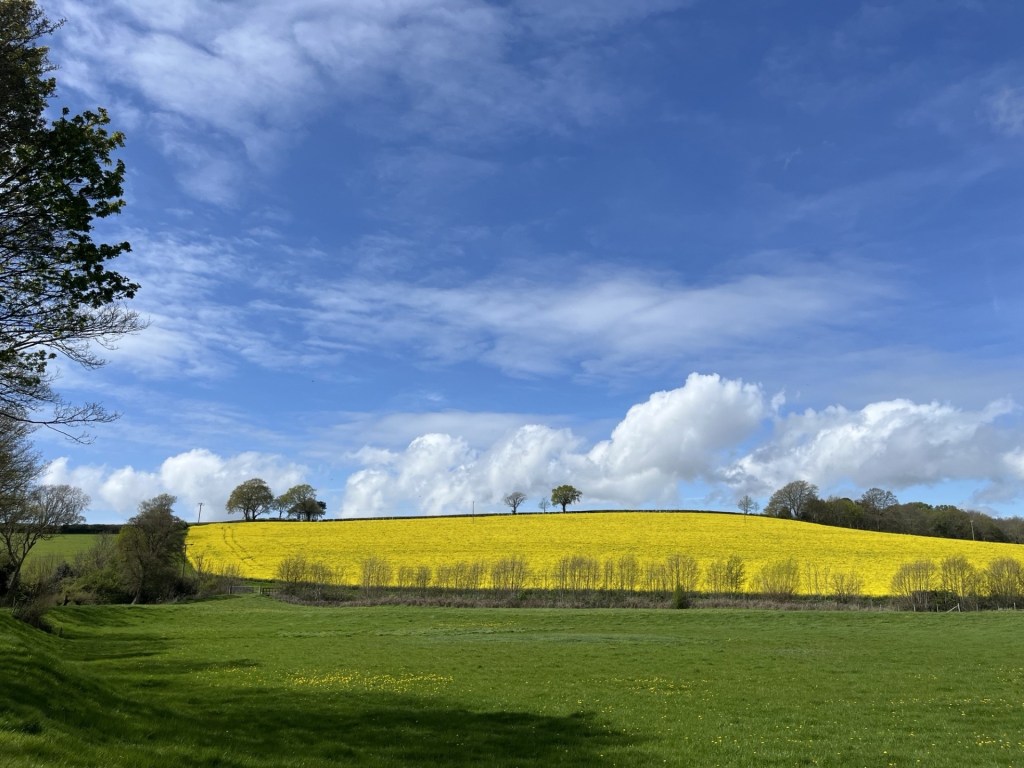
Beyond the buildings the road continued with heath type land rising to the right but across the valley to the left, fields of rape gloriously shining effervescent up the western slopes.

The definition of perfection

Guess what? It was now hot and I was down to my t-shirt, the first time this year and it felt joyous. I was in a place where, for just a while, I wasn’t thinking of or being troubled by my own difficulties (just life things) but more significantly, Donald Trump and his warmonger minions. I suppose for balance I should add the Iranians, Israelis, Hezbollah and the rest, but one way or another the recently self-released image of the Donald as Christ (no, sorry, as a “doctor”) had inflicted a new low point on humanity. 

Anyway, I wasn’t thinking about any of that when I reached the junction with Telham Lane and turned left. Just past the Telham Lane Borehole (I made a mental note to remember this place for when the tap water runs out later in the summer) I crossed over Powdermill Lane (B2095) and up onto a footpath above the road to the right and the expanse of the Powdermills Hotel on my left. Only I had been under the impression that it had closed some time last year. Seems it had but has reopened as Crafted at Powdermills. A massive new carpark and high-end sporting facilities, but also allotments and a slightly alternative feel amongst the 4 by 4’s and SUVs. Good luck to it.

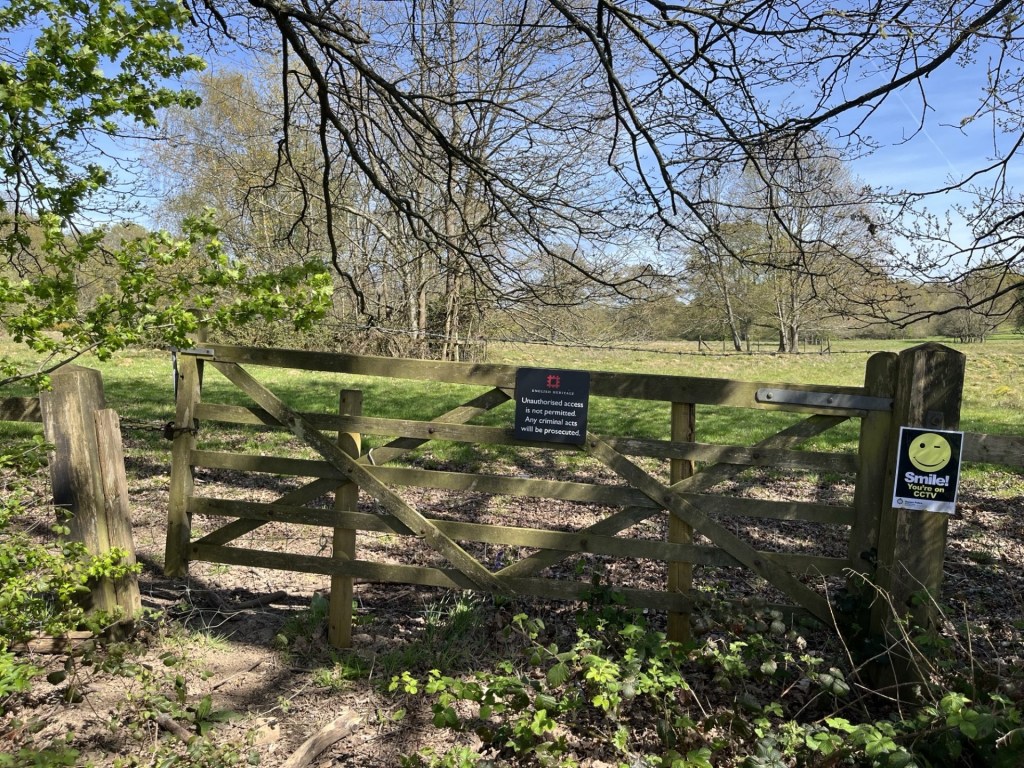
At the top of the path, I crossed the back road into the facility and back onto the path that led through some modern barns and then into fields. To my right a fence indicated private property, and as the path led back up another hill the landowner’s details emerged.

Smile…you’re on English Heritage CCTV

English Heritage! Holders of the flame. 1066 and all that. I stopped a moment and looked around for the CCTV camera. I wasn’t going to enter (I’d been before) but it did strike me as all being a bit absurd. If we take it as read that the land beyond the gate and fence was where the Battle of Hastings took place, why have we put a fee-paying barrier around it? Whilst the battle itself was a relatively small-scale affair compared with other medieval wars, and those beyond in the East, it can be argued that the result itself was one of the most pivotal in world history. The immediate impact of the Norman conquest completely changed the British Isles (England up to that point was considered a model of administrative modernity in Europe at the time), by imposing an entirely new and ruthless political and landowning class. As the centuries passed the spirit of Norman expansionism and its internal disputes between the landowning class and the monarchy slowly shaped the legislature and colonial ambition that was ultimately exported around the world, for good or bad. Had Harold’s army won the day it would have all been very different.

And so, this most important of sites, essentially a field with some impressive, but not valuable old ruins, can only be seen by shelling out £15 if you’re an adult and £7 for a child. I’d make it free. Magna Carta and all that (except that’s somewhere else).

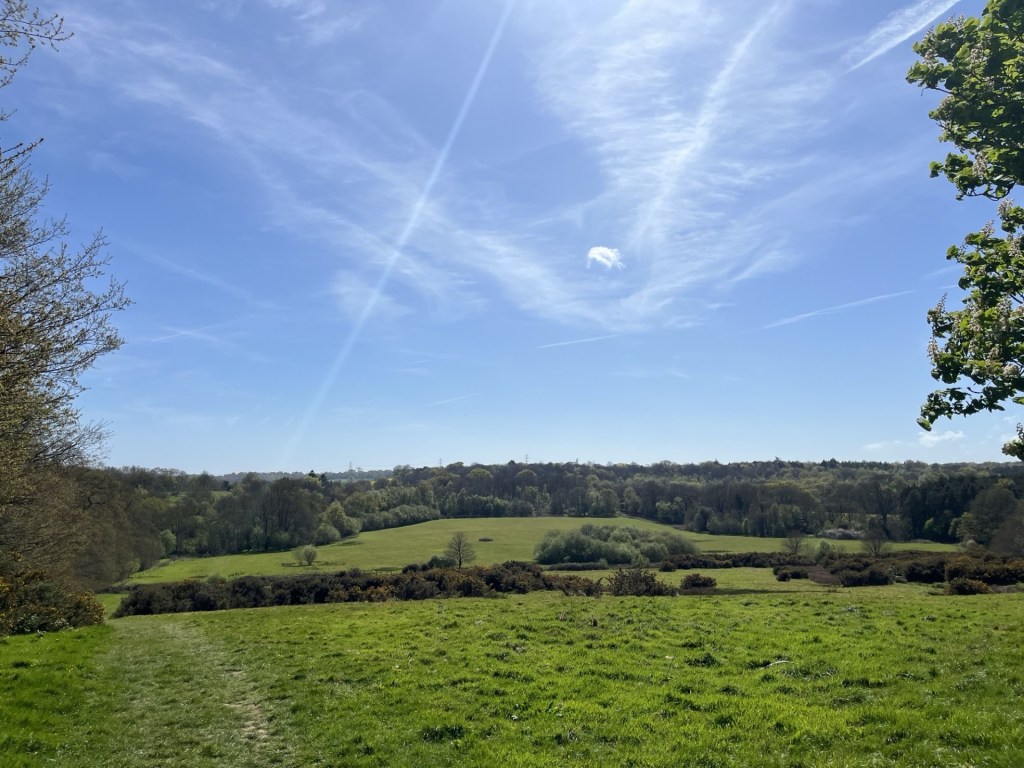
At the top of the hill a solitary Chestnut tree crowned the crown and framed by a blue sky with scudding clouds.

A look back on where I’d been

The track continued around the side of the Battle Abbey site and towards the end a small path edged around the backs of the High Street buildings with a cricket pitch on the left and warning signs that anyone not a member, but found using the nets, was trespassing. The message was clear.

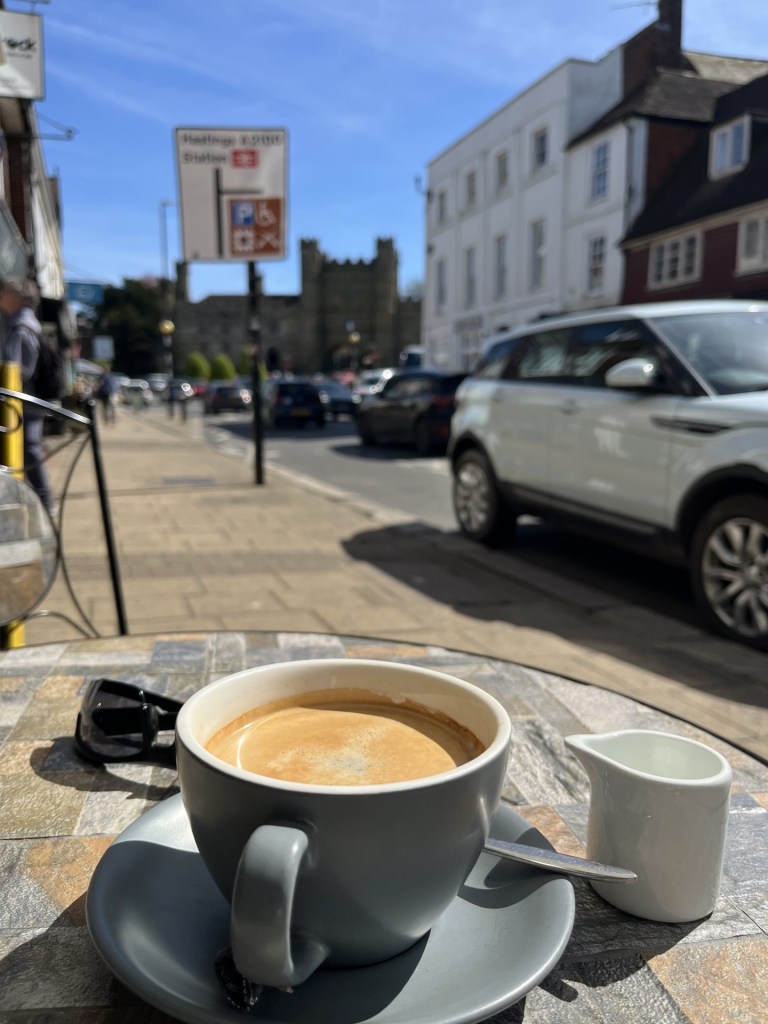
I followed a lane through to the High Street and with enough time to spare I stopped for a coffee at Bonnie’s Bistro. Sitting outside in the heeling sun, and with an endless stream of traffic for entertainment, I played a game of “spot the normal car”. It was only as I took the last sip that eventually an old-style Fiat 500 slipped by without having to slow down or navigate awkwardly to avoid lateral damage.

Within striking distance

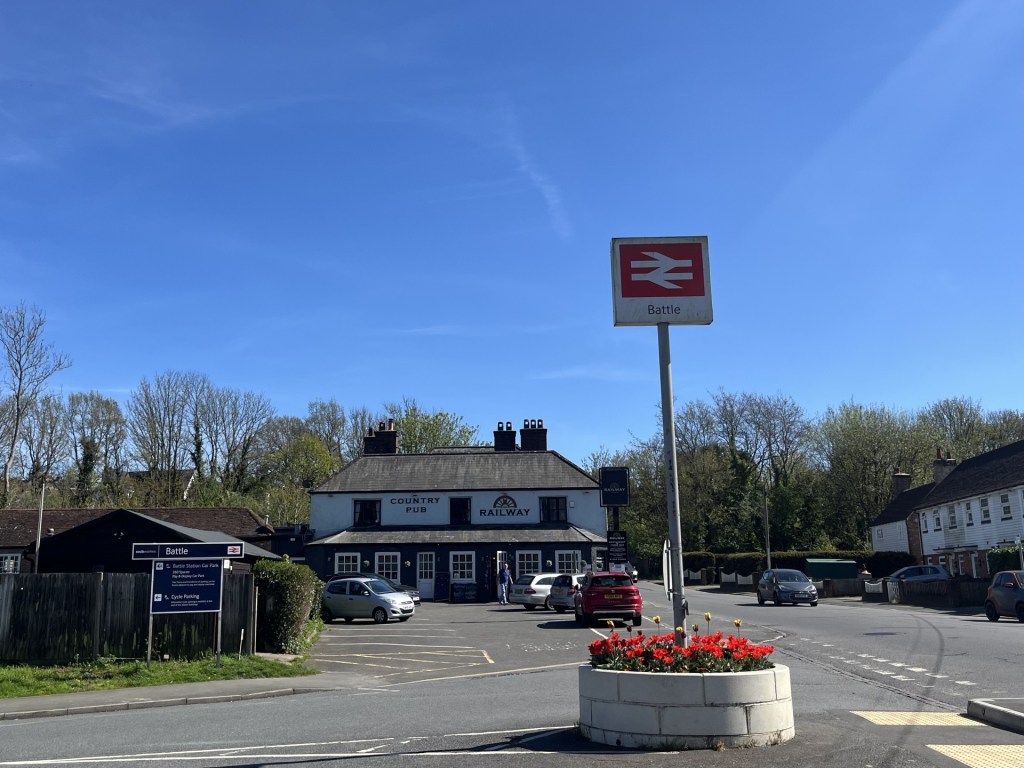
Having dispatched the caffeine, I rounded the high walls of the Abbey, then down Upper Lake and right onto Lower Lake and to the slip road for the station.

Turn left before the Railway Inn

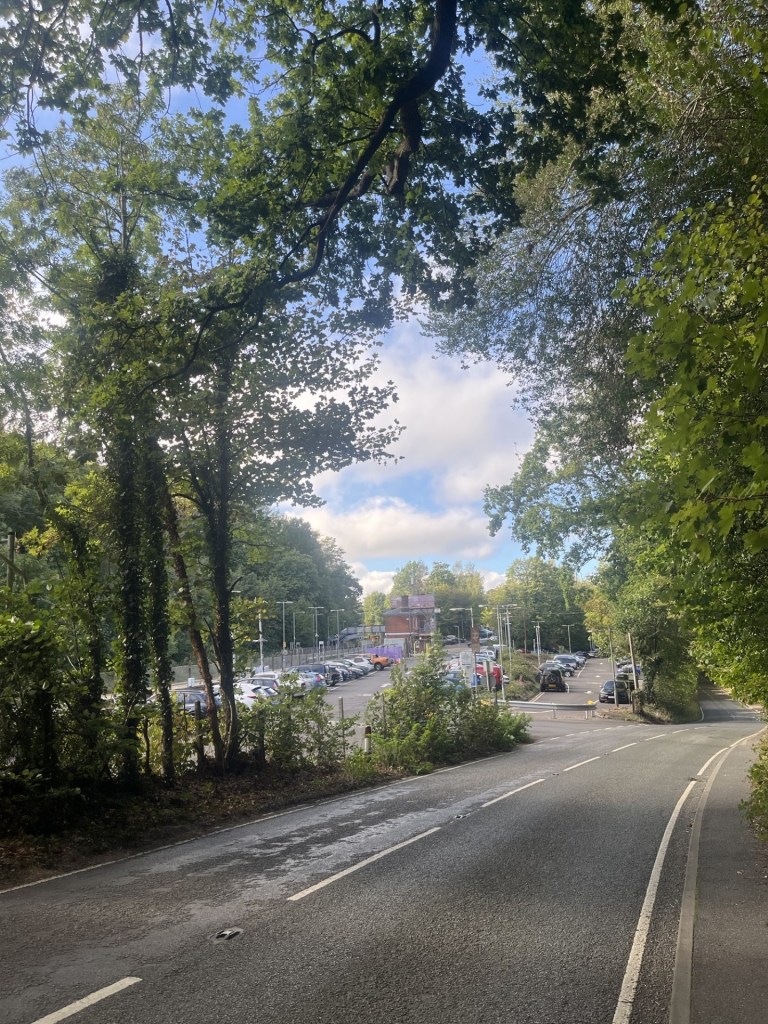
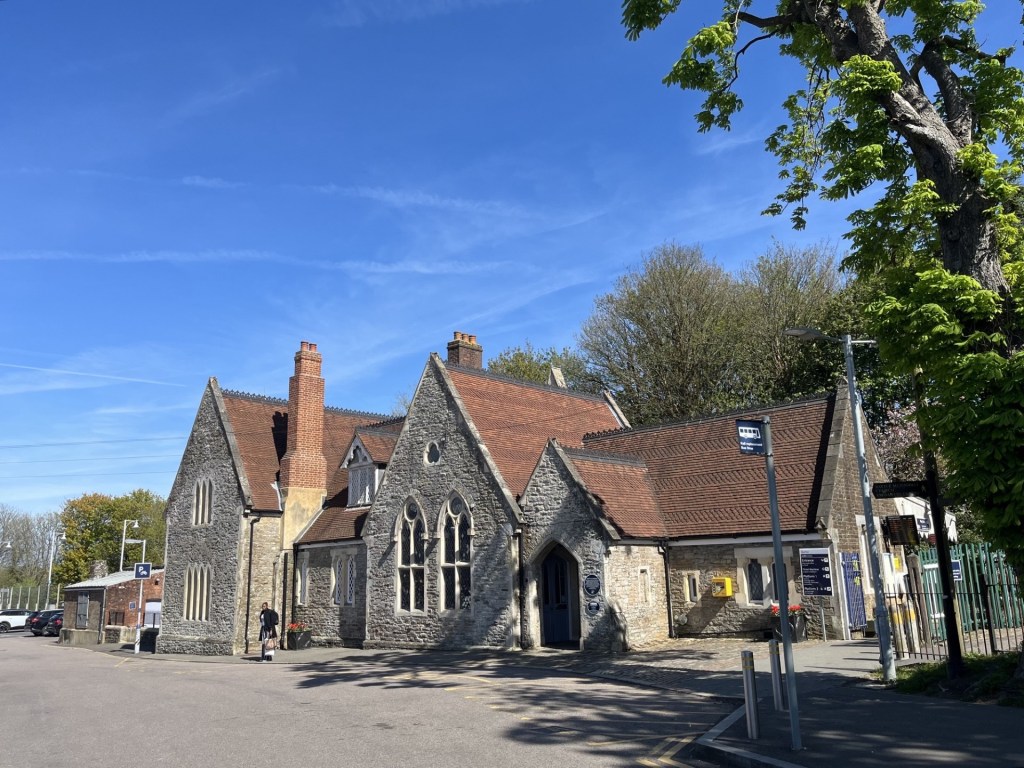
A short walk along the approach and the station presented overlooking a large carpark.

The station building

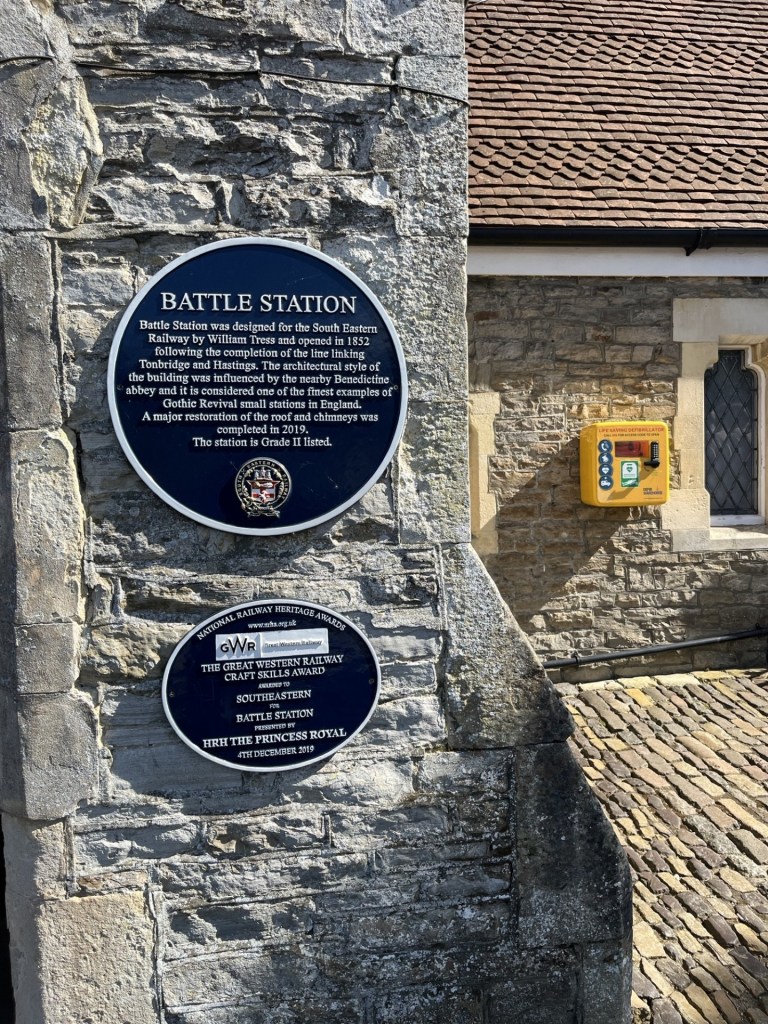
The plaque

A fine building with a plaque that confirmed it, but its fine rustic detail diminished by the sprawling car park laid waste in front.

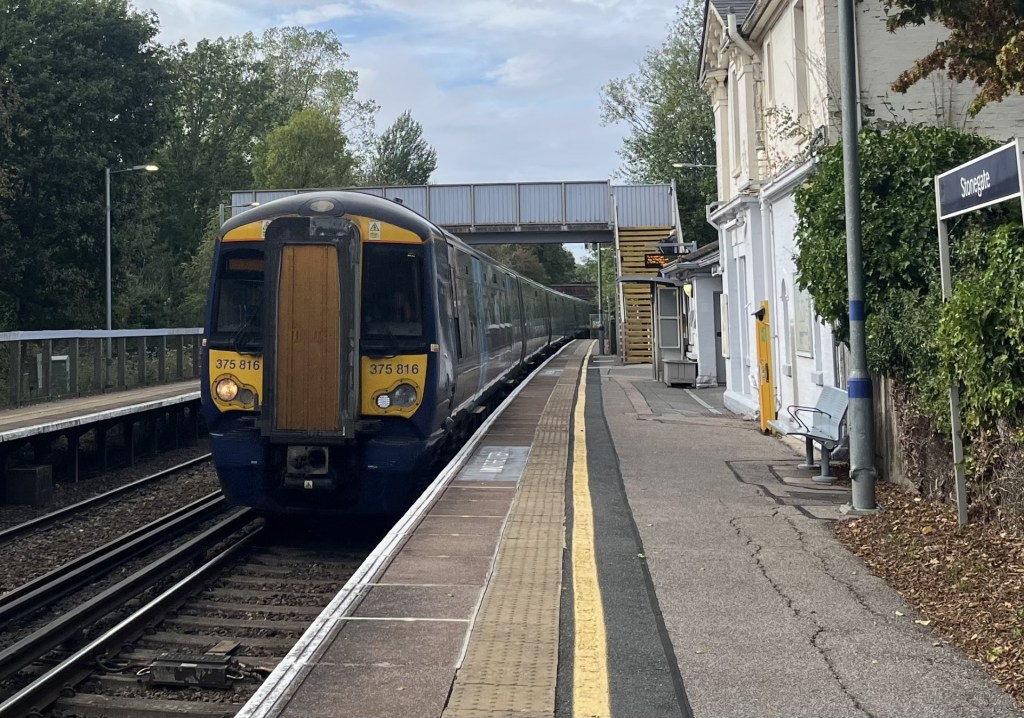
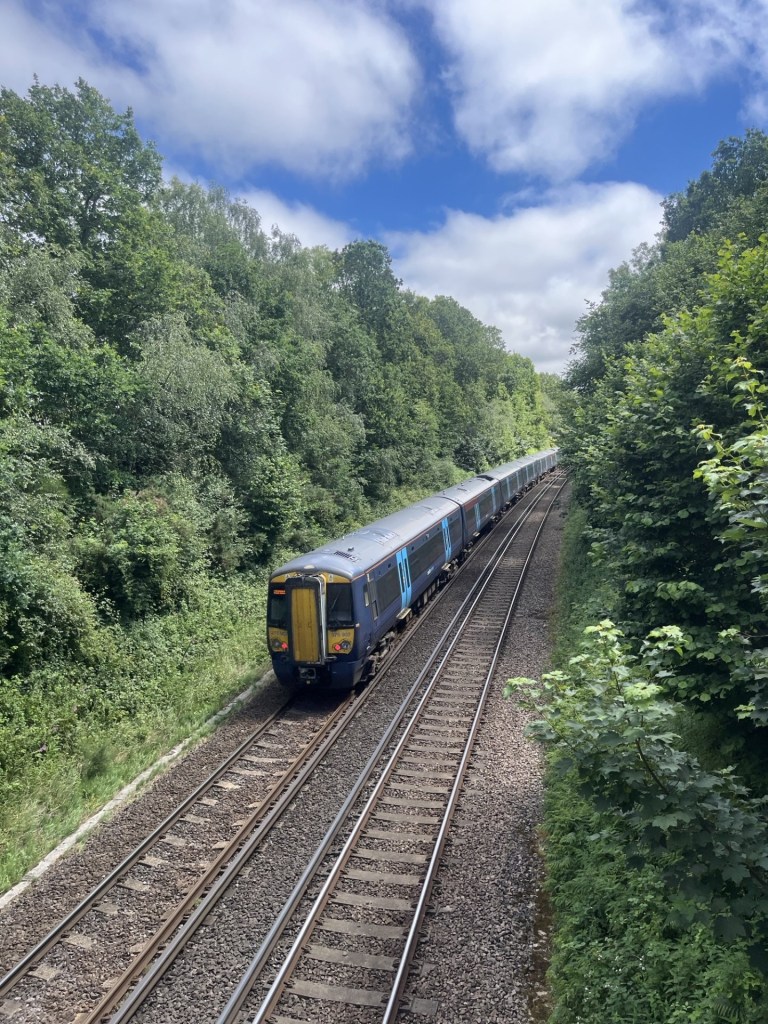
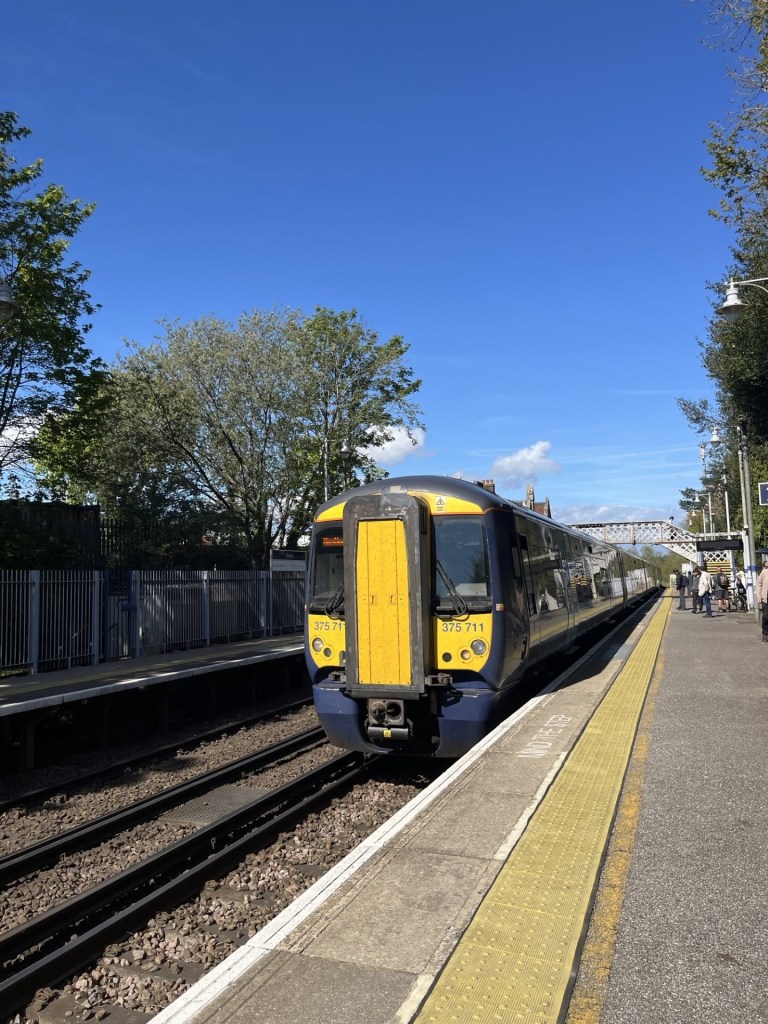
With a bit of time, I bought a single to Crowhurst, popped over the footbridge to the down platform, sat without peeking at my phone for ten minutes and looking down the line and at the trees instead, reflecting on what an excellent walk it had been.

Crowhurst bound

Back in the car, the tune that accompanied me home seemed very appropriate. A top day.

https://www.youtube.com/watch?v=AB-2XnsRDhs&list=RDAB-2XnsRDhs&start_radio=1

Cresting the County – Telford and Wrekin Unitary Authority

The Wrekin

407 Meters

1335 Feet

20th May 2026

Heaven’s Gate, the National Trust and Groundhog Day

I had spent the night in Much Wenlock, a small Tudoresque town a few miles south of Telford. I had driven up and, on the way, knocked off the tops of Coventry and Solihull Metropolitan Boroughs. I had arrived in town with enough time to slip out and watch Tottenham lose at Chelsea. Nothing new in that, but with relegation just two points away, they needed to win. You can get a bit down about this sort of stuff, but it was a new day and with the last gasp game a few more days away there was no point in ruminating.

The weather was clement. The aim was to climb to the top of The Wrekin (pronounced Ree-kin) but I had all day so chose to visit Telford and Coalbrookdale first to have a quick look at our industrial heritage and enjoy a coffee. On the way I spotted a National Trust sign pointing to a place called Benthall Manor. My daughter had procured me a year’s NT membership at Christmas, and so far, I hadn’t had an opportunity to enjoy the benefits. Excited, I drove down a long tree lined lane and found myself in a small carpark. If you have read any of my other accounts, you may know that on more than one occasion I have had midsummer meltdowns whilst trying to pay money to the National Trust at their carpark payment machines – the worst anywhere. Here, all I had to do was swipe my membership card and hey presto I had two hours free parking.

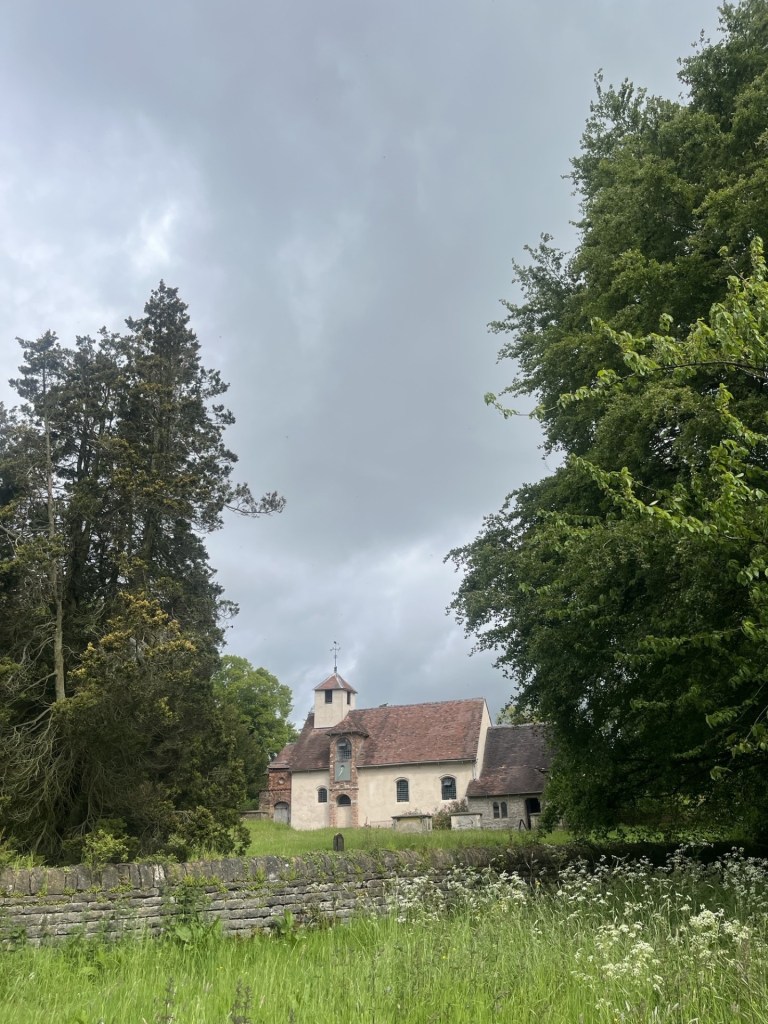
I toddled over towards what I assumed was the entrance to the estate, fronted out by unique looking church.

St Bartholomew’s Church from the meadow

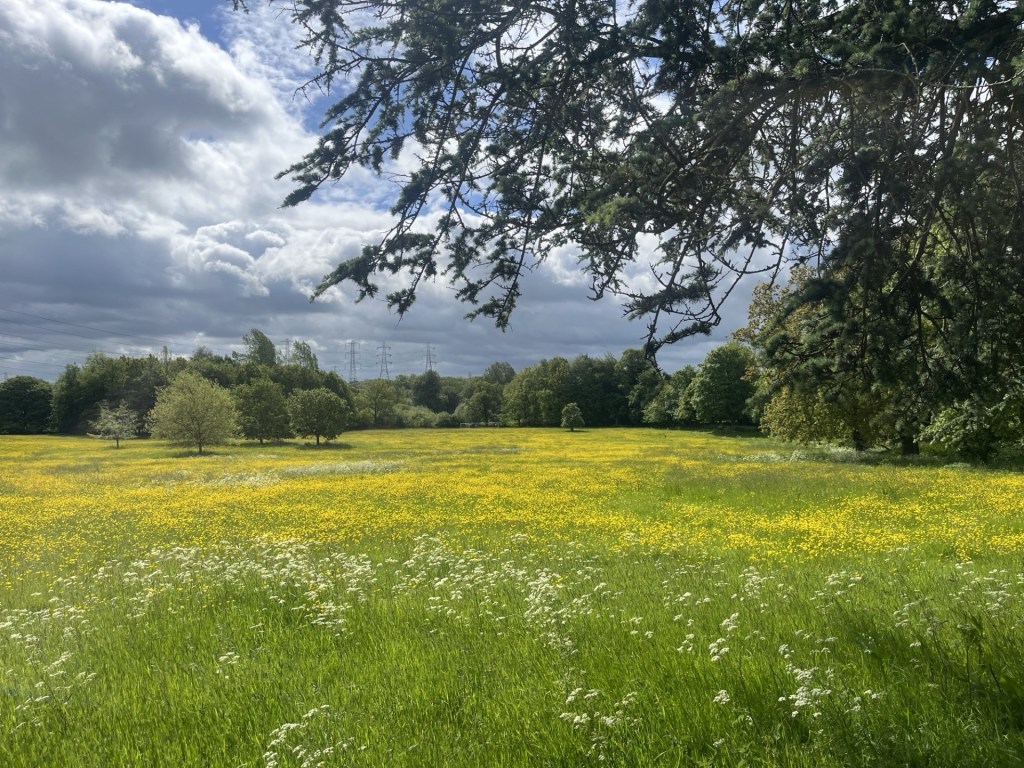
I passed through a gate. A middle-aged couple, the woman on hands and knees and apparently weeding, looked up and smiled. “Are you hoping to visit?” asked the man. “Only, unfortunately we’re closed today.” Of course, of course it was going to be closed – during half term! He apologised of course and explained that there had been a change to the opening days, which sounded so limited I wondered why they bothered opening at all. Never mind, it was a pleasant conversation, and the man informed me I was allowed to have a wander around in the meadows just to the south of the house. “Have you come far?” asked the woman. I could have said Much Wenlock, but where’s the fun in that? “Hastings,” I replied, hoping to infuse a guilt trip. It failed to register. “You’re welcome to look in the shop.” I thanked them and said I would take the meadow wander trip instead. As I turned to go the man added that the carpark was also free today. So, that was all good! Bah humbug!

The meadow – overwhelming colour and birdsong

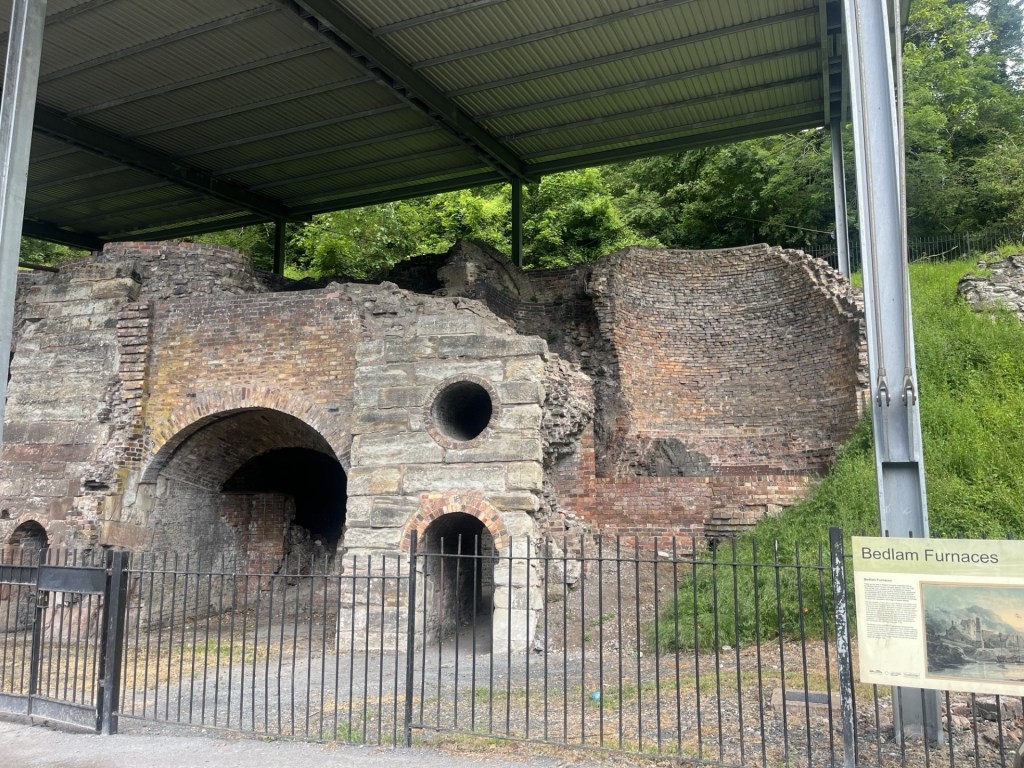
Having singularly failed to benefit in any way from the National Trust membership card, I drove away, quietly cursing the aristocracy (maybe unfairly) for every bad thing that had ever happened in the world. Twenty minutes later I was standing in front of the Bedlam Furnaces in the Severn gorge. The modern age, it all pretty much started here and here abouts.

The remains of the Bedlam Furnaces

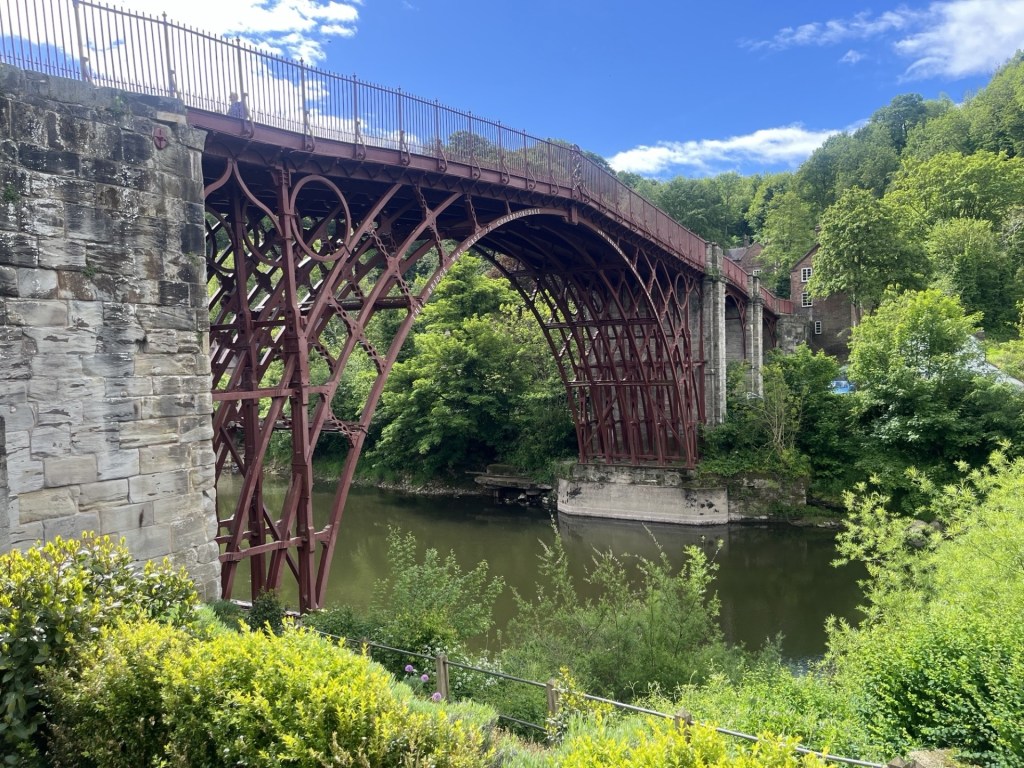
A few minutes later I was quaffing a coffee and overlooking the original Iron Bridge in Ironbridge, or course. 40 minutes free parking immediately next to the bridge made up for the disappointment of the free parking back at Benthall Manor.

This is the modern world

I drove up through Coalbrookdale, glancing here and there at the old industrial heritage, which I later found out had just been acquired by the National Trust and was reopening after some months of closure that day. I wouldn’t have been able to get in if I had wanted to as it had been fully booked for months (there was a feature that evening on the local BBC news).

Before I set off for The Wrekin, I had one more historical site to visit, and it lay just to the north of the M54 in Wellington. On my way I pulled up at a set of traffic lights where opposite I recognised the Swan Hotel. That had been unexpected, but the memories instantly returned.

The 9th of December 2017, and pretty much on a whim, an old friend and I drove north from London to spend the night at the Swan in Wellington. There was a good reason, which I will eventually come to. On the radio was live commentary on the Crystal Palace v Bournemouth Premier League match. My friend, a solid Palace supporter and I (a follower but not a supporter as such – see all previous references to Spurs) listened excitedly as Palace went in at halftime 2-1 up. We were on the M6 and heading through Birmingham as the second half kicked off and at precisely the moment when an unexpected weather bomb kicked off too.

Reaching the M54 the snow was falling so hard it occurred to us that we might not make it to the Swan Hotel. That would have been a disaster, but an even bigger disaster was that Bournemouth had equalised, and my friend’s mood had taken a turn for the worse. We made it into the outskirts of Wellington, already under a couple of inches of snow, when Palace, with just a couple of minutes to go, were awarded a penalty. Jubilation! Except when the commentator announced that the penalty taker was going to be Christian Benteke the gasp of despair from my friend was visceral. Benteke had been a powerhouse success at Liverpool, scoring goals for fun, before moving to Palace where whatever skills he had previously possessed immediately vanished. Crystal Palace can have that effect on people. And of course, when he inevitably missed the match winning penalty we both went into meltdown, although me less so as I tried to maintain contact between the tyres and the road.

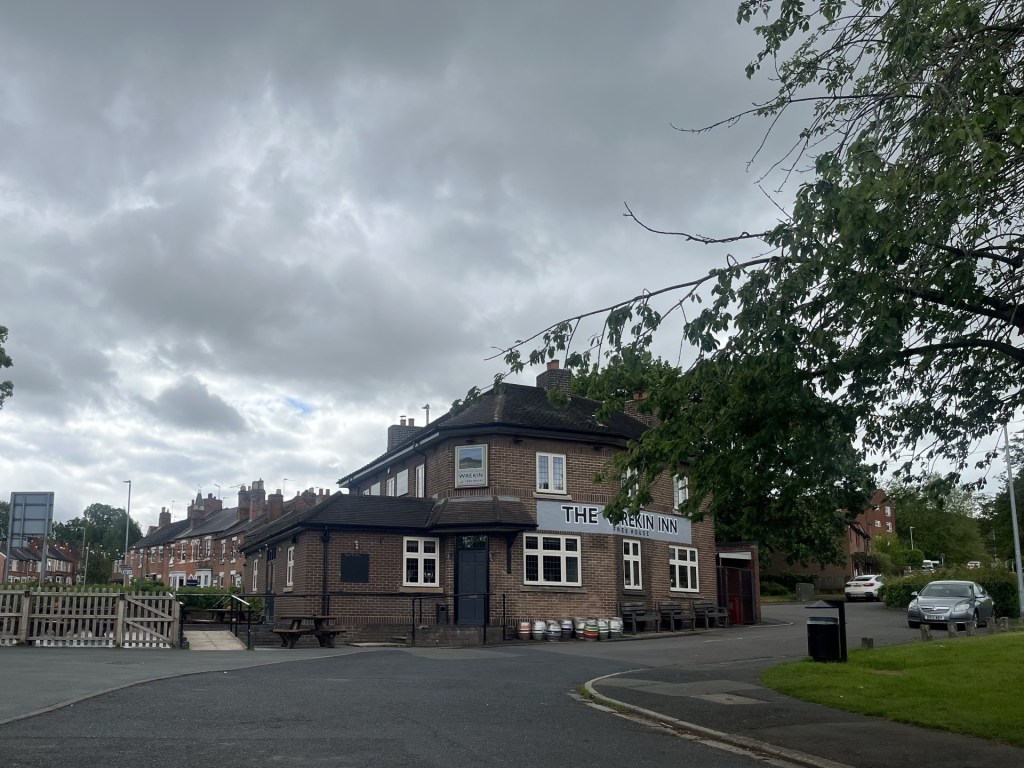
Arriving at the Swan Hotel, where we had booked rooms just for the night, my friend was in a deeply foul mood. Nothing of course that a good pint couldn’t fix before setting off to the main destination, The Wrekin Inn, where we were going to be royally entertained. Except, in the hour or so since our arrival, the snow had continued to fall, and now, several inches deep, the prospect of walking the mile or so to the Wrekin was obviously unrealistic. No worries. My friend had the answer. Uber. Uber was quite new on the scene at the time, but my friend who resided in the heart of busy London now swore by it. As I never used taxis, I barely understood the technology, but I had made some observations on our way into Wellington, and something about it struck me as perhaps being slightly behind the curve, so to speak. My friend gazed at his mobile phone and tapped away, getting increasingly frustrated. I noticed a card to my right advertising a local taxi company. I went outside into the storm and called the number. No problem I was told, a cab would be on its way soon. I went back in. “We’re not going to make it mate,” my friend cried. “Says here that the nearest Uber is in Manchester!!! Where’s that?” At that moment my phone pinged. I looked at the screen and a text message popped up. “No worries,” I said, “I prefer to shop local. Taxis arrived.”

Five minutes later the taxi slipped, quite literally, into the carpark of the Wrekin Inn. It was dark, with six inches of snow piled high on the benches in the garden. What on earth were we doing here? The answer presented itself just a moment after getting out of the cab. Another car entered the car park and pulled up just past us. The doors opened and out climbed an elderly man, with long straggly hair. And it wasn’t Jesus in his dotage either. It was better than that. It was….

We nodded and smiled and let the man and his partner go ahead of us, praying they’d make it to the door without accident. 

There were about fifty similarly aged males and females in the pub. We settled down and waited for the big event.

On a Sunday night in April 1974, just sixteen years old, my friend and I and three others from school stood in a long queue in an alley that ran down the side of the Nestle’s UK offices in Croydon. At the front of the queue a locked door marked the entrance to the Fox Club, a music venue more commonly called the Greyhound. Bands playing the Greyhound were either on the way up or were on the way out. It was a venue that we had frequented on many Sunday evenings in the early 1970s, but whereas the groups we had seen to date had been known to us from the radio and TV, the act we were about to see was a complete unknown. Except to Jon. Jon was different. We were all into folk rock, heavy metal, Bowie and the blues, but Jon somehow had access to a wider source of inspiration. Jon was soft and thoughtful, which betrayed a loose association with some Hell’s Angels. In a world of random violence, and emerging from an overwhelmingly skinhead culture, perhaps that was his survival technique. 

For some weeks Jon had been banging on about this band he had been listening to. From his description there was nothing about the band’s style that appealed, but when he begged us to go with him to see them at the Greyhound, we couldn’t refuse. It was Jon after all.

That evening in the alley, there was a different look to other evenings. The adults (almost everyone was always older than us) appeared to be a bit older than the usual crowd, and the denim and leather was worn more like a skin. It was nearly 7pm when a battered old white Rolls Royce slipped down the service road, stopped and then moments later the band jumped out and disappeared through the double doors. Jon, sitting on a metal dustbin, had gone into a catatonic state but managed to mumble something about God, man, before falling off his perch!

In the club we bought our drinks and watched the support band – Charlie – of whom I have no memory. Around nine the excitement was building. Well, Jon’s excitement was rising. The rest of us were still wondering why we were there. Then the lights went down, and seconds later the three piece were on stage emitting a thunderous, feedback induced wall of distortion that nailed us all to the spot. It was our introduction to the mighty Groundhogs, with the leader of the pack, Tony (TS) McPhee, diminutive and with receding hairline, centre stage, hitting the pedals and twisting notes and grooves out of his cherry red Gibson SG guitar and tearing our eardrums to shreds.

By the time I had saved up enough money for my next album, it was a no brainer. Split by the Groundhogs was already a few years old (needless to say, sadly by the time we saw them they were on the slow lane out of the scene), but it remains one of the few albums I can still put on now and be blown away each time by its dynamism, contortions, freshness and authenticity.

Sometime in 2017 my friend emailed me and asked me what I reckoned. There was a link to Facebook, and details of a gig at the Wrekin Inn. The band were the Undergoundhogs. The idea that anyone, anywhere in the world would have the balls to form a “tribute” band to the Groundhogs seemed ridiculous. But there it was. Now the Wrekin Inn is located about 150 miles from London, and it was in the middle of winter. Interesting, but that’s quite a commitment if we were going to make that journey. But there was an additional hook (and just for the record, the Groundhogs were John Lee Hooker’s backing band when he toured the UK in the 60s). The Wrekin Inn happened to be Tony’s local, and the rumour was that he would be there too! It had to be done.

We’d had a couple of beers by the time the Undergroundhogs, four middle aged men from Portsmouth, came on stage, plugged in their gear and then launched into one of the classics. They weren’t just good, they were outstanding. Perhaps having a second guitarist helped keep it all together (sometimes the complexity of McPhee’s chords and licks could undermine some of the live performances), and they ripped through tune after tune with confidence. All the time Tony McPhee, who by then had acquired multiple ill health issues, sat at the front smiling contentedly and listening to his own legacy. The night wore on and eventually, after a lot of encouragement, Tony strapped on a guitar and joined the crew in a largely discordant but ultimately life affirming solo. Whatever track they were playing, McPhee, to his credit, was playing something entirely different.

It was the last time Tony played on a stage, and he died six years later. No mention on the main news channels, but effusive tributes in the Guardian and other “serious” papers. Trying to define the Groundhogs would be impossible, and there is no point trying. They are not the sort of band that history will rediscover and then find themselves having 100 million streaming downloads, but Tony McPhee was one of the most talented and original British blues guitarists the world has never heard of. And there I go. Whilst the music was based in the Blues, what the Groundhogs did was almost everything else but. McPhee was as far from being a rock star as you could imagine. Yeah, he had long hair (mainly down the sides) and a Zapata moustache, but he wore baseball boots, ancient black jeans and no logo black vests. In the 1980s he stopped being a rock god and for some years worked as a BT engineer in south London. In the 90s and 2000s he toured small venues with a range of musicians, and my friend and I saw them a few times in pubs around north London. Some of these gigs were better than the ones we had seen at the Greyhound in the 70s, but eventually he suffered a stroke and that was the end of that, until of course, when some geezers from Portsmouth decided to recreate the music, then get in a van and drive from Portsmouth to Telford in a snowstorm to pay tribute.*

Back at the Swan Hotel, after a local taxi firm had enabled a return, it seems we had missed the big wedding fight. Who cared?

The Wrekin Inn – May 2026. One day a blue plaque will record that this was where Tony McPhee plucked his last chords. The Wrekin Inn now hosts the Groundhog Blues Club

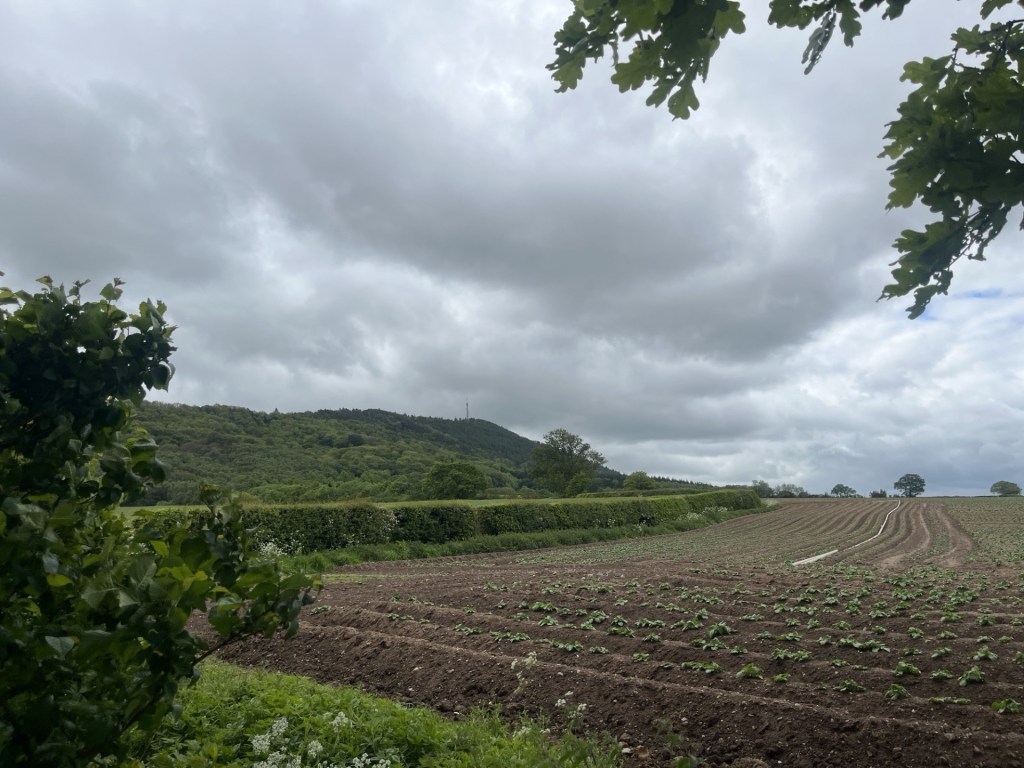
I couldn’t wallow in nostalgia forever so drove out of the pub’s carpark and then went west. I passed under the M54, and it occurred to me that on the few occasions over many years that I had driven towards north Wales I had always noticed a strange looking hill to the south, often enveloped in mist, and wondered if it could be The Wrekin. I’d never bothered to investigate further, but as I came around a bend in Holyhead Road (which seemed a bit unlikely) I was no longer in any doubt.

The Wrekin from the north, rising like the rear end of a humpback whale in an ocean of fields.

A line of cars on the left-hand side of the road suggested I was in the right place, and very fortunately, almost certainly in deference to the elderly, a space materialised directly opposite the start of the Wrekin Trail. Struggling with a heavy cold I looked across the road at the start of the trail and momentarily had some doubts. It was busy, with a steady flow of healthy-looking young people dressed in sporting wear entering and leaving the trail. After a few minutes dawdling around the car, checking for deflated tyres, or some hitherto unidentified defect, I donned the boots and set off, knowing that if it was too much there was a tearoom halfway up.

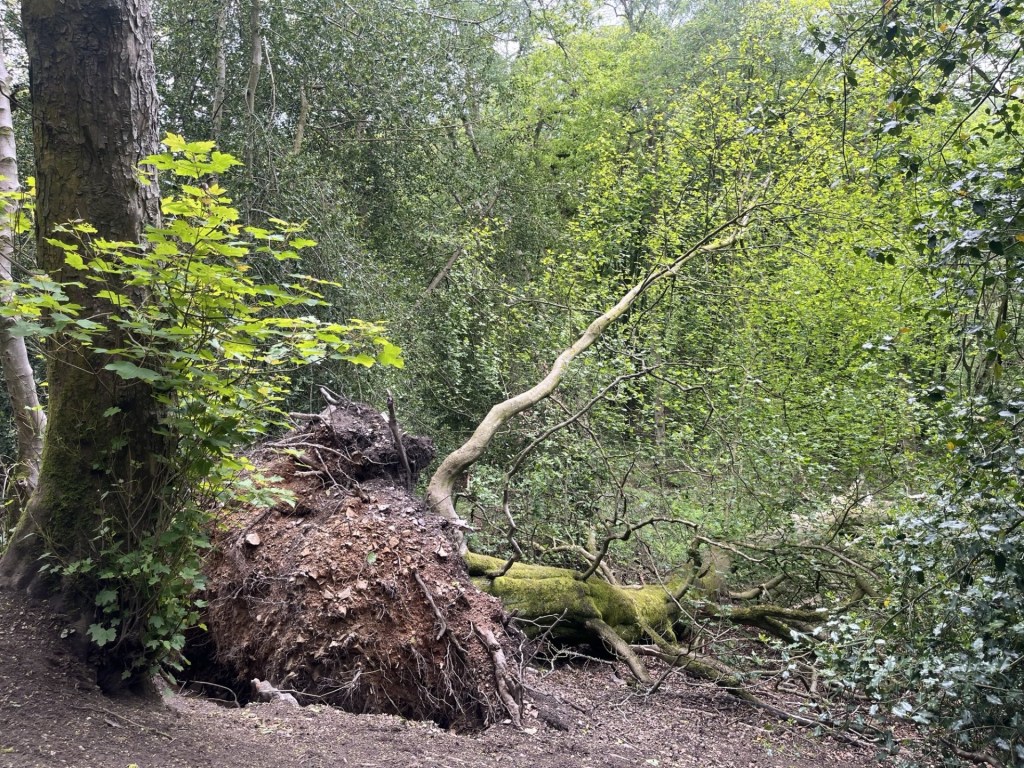
As soon as I stepped onto the wooded trail, I was enveloped in the pungent waft of sweat. People were running up and down the trail, but this was the intoxicating smell from a swathe of wild garlic that covered the lower slopes. It was obvious that it was only ever going to be an upward struggle and concentrating on my breathing I started slowly. It didn’t take long before I was peering through the trees and seeing the parked cars far below. A large young man in just a pair of shorts and trainers, whooping and hollering, appeared above, hurling down the path at such a speed that had he made one small mistake he was going to be seriously regretting his lack of clothing. Shortly afterwards a couple of women jogged past me on the way up. A collapsed tree to my left gave me a good excuse to stop for a minute and pretend to show an interest whilst I refilled my lungs.

At a point that I was already prepared to lay down and exfoliate slowly

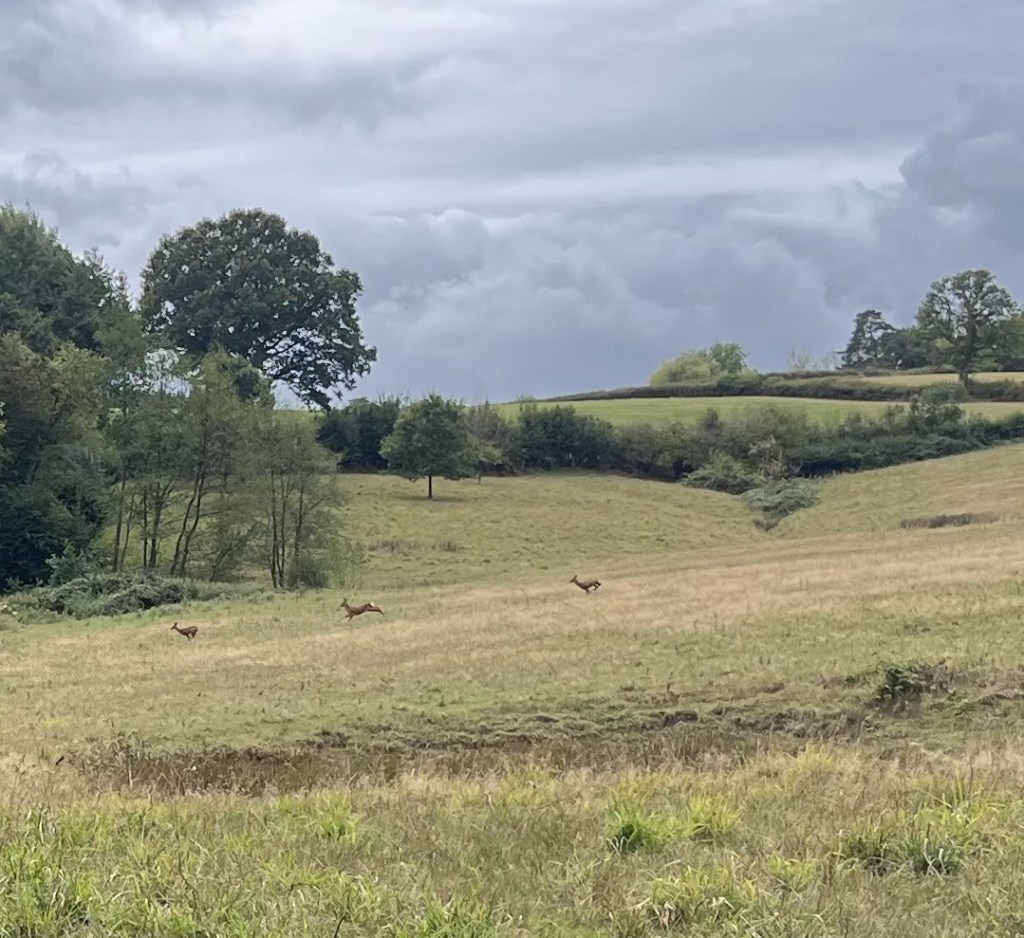
I continued the trail. The cafe had to be nearby. A sharp bend in the path to the right increased the gradient (great!) and after putting in the effort I was outside the Halfway House cafe. As welcome as that was, it felt slightly premature. I couldn’t have been walking for more than twenty minutes or so. Anyway, a cup of tea would have been welcome. Except, it was closed! The knowledge that there would be a refreshment stop on route had been one of the motivating factors that had got me to put on the boots. And now there wasn’t. I walked on a few paces and stopped to look down a trail. At exactly that moment a female roe deer walked nonchalantly into a glade twenty meters away, stopped, stood stock still then looked directly at me. It took about five seconds to conclude I might be a threat and was suddenly on its toes and way, followed by a second smaller female that didn’t stick around to reach a second opinion. I would have happily called it a day at that moment, but I still had an objective.

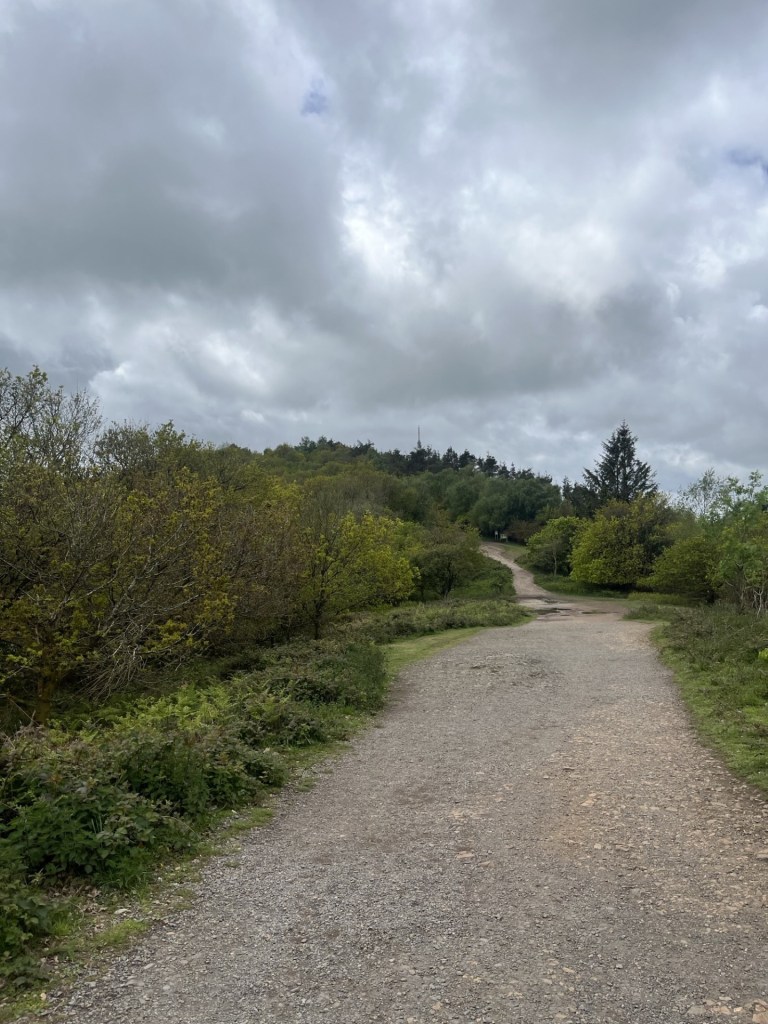
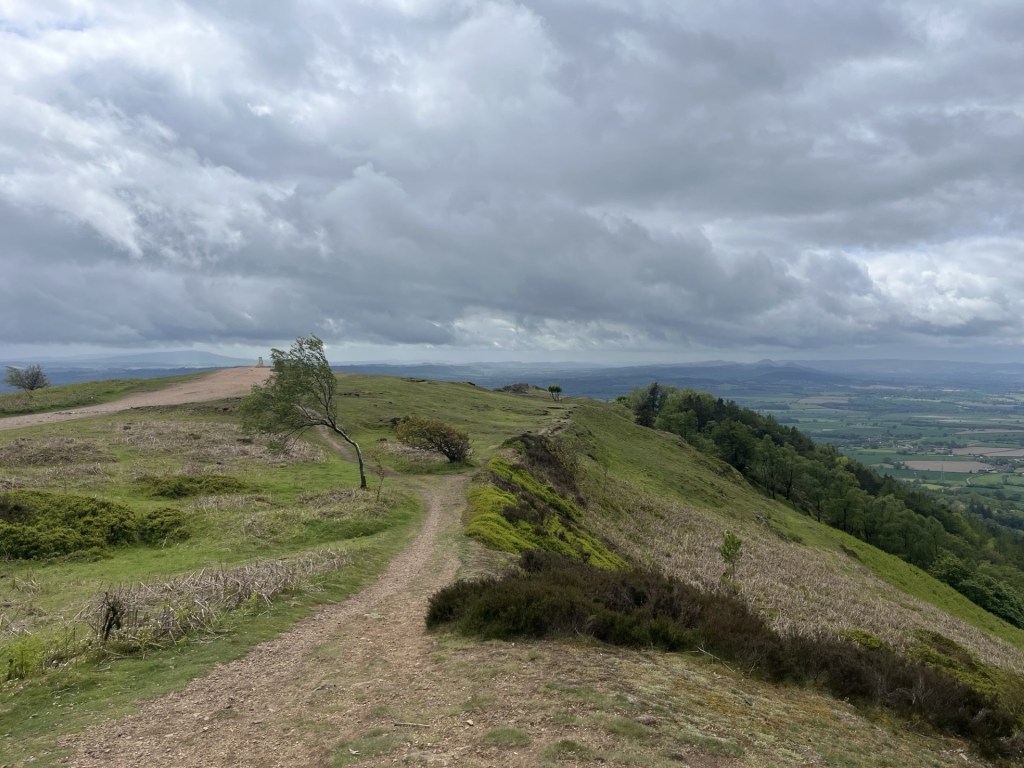
Around another sharp bend, this time to the left, the path carried on in a relentlessly upward trajectory. I was still having problems with my breathing, but with the continued steady flow of joggers and seriously fit runners passing each way, I felt obligated to carry that weight and plough on. Here the trees began to thin out, with views opening to the west and north. It was getting impressive.

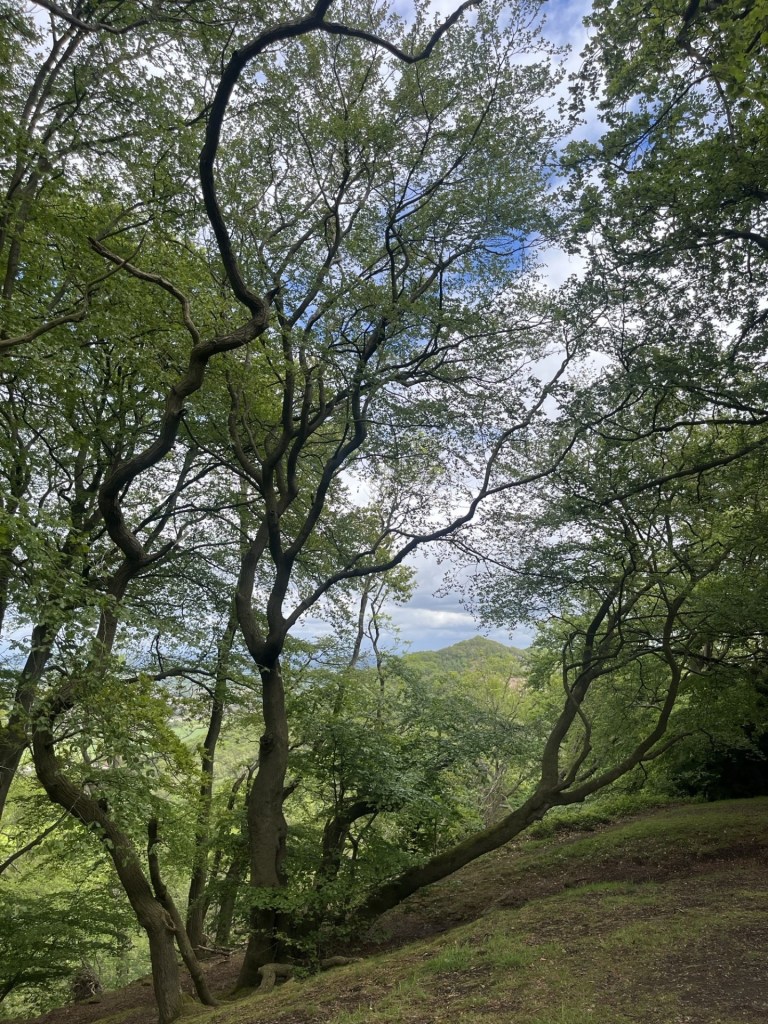
Looking north through the woods

The wide track again decided to up the ante but increasing in degrees. Lorks! Plod, plod on. At the top of this challenging stretch, it began to flatten out, and the next two hundred meters was the first opportunity to relax a bit and generate a bit of movement. I should say, for balance, that under normal circumstances this would not have been such an arduous affair, but I do want to emphasise that I was suffering a severe case of man flu (not that I am after any sympathy, but…).

The easy bit

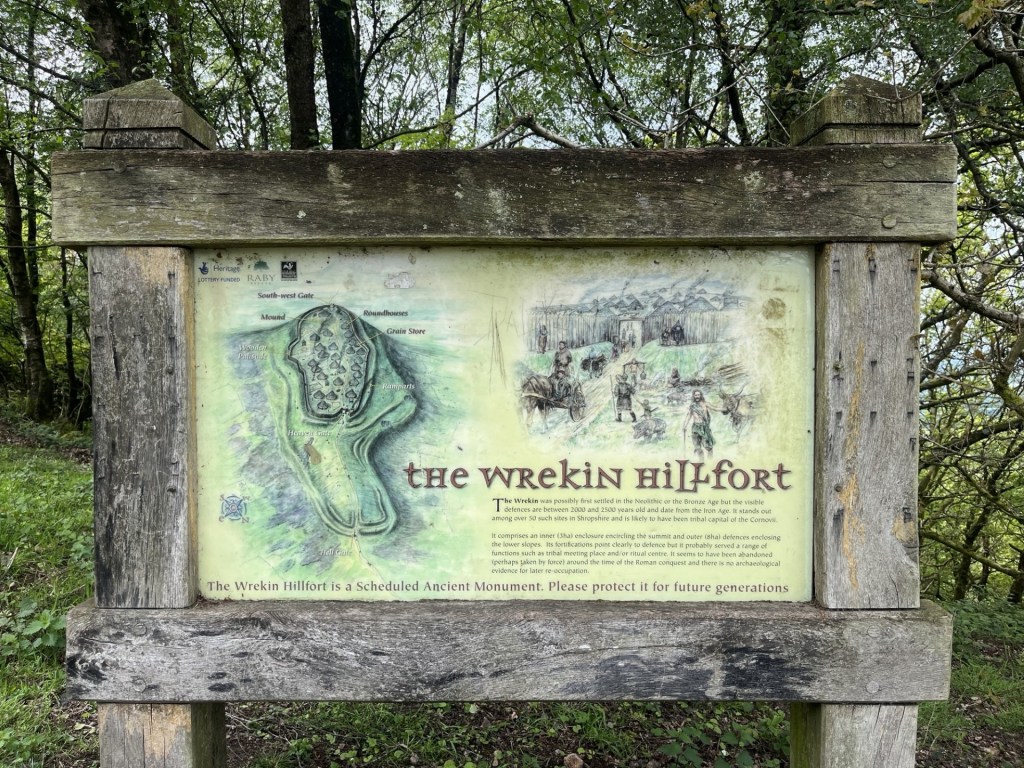
It was hard to know if I was getting near the top, but at the end of this benign stretch a notice board appeared and demanded some attention.

Surprise, surprise, an Iron Age fort

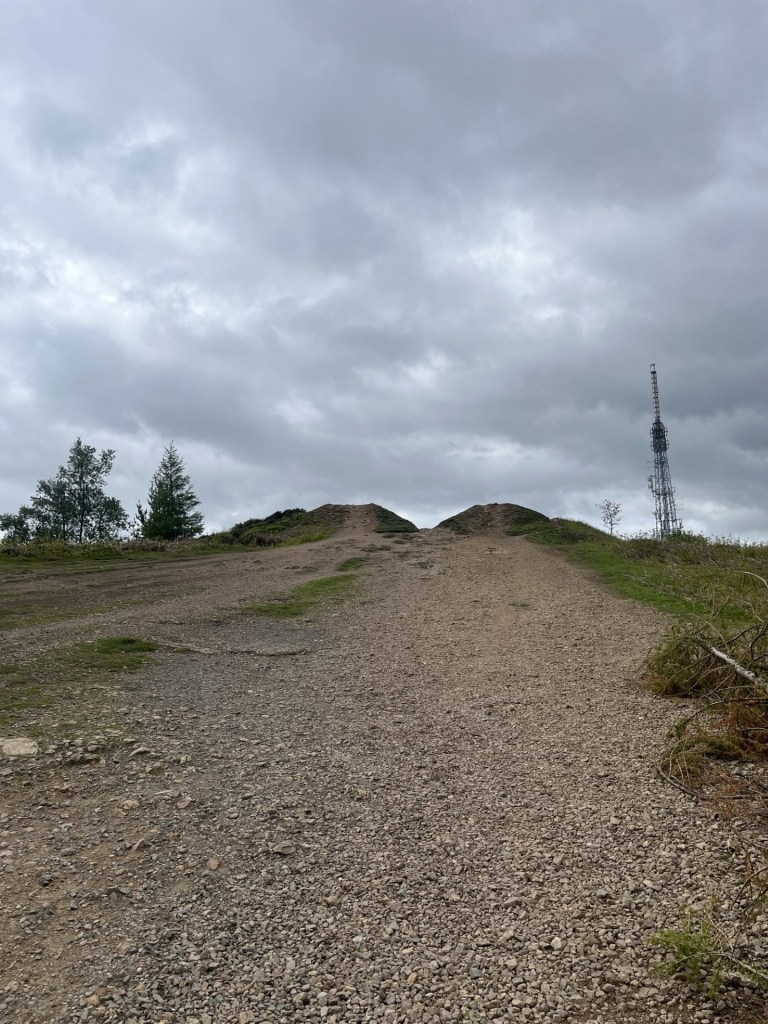
There was no immediate evidence of any earth works that supported the argument that an Iron Age fort had existed here, but it didn’t surprise me. The wide and well-worn path continued to snake up through the trees and then beyond onto something more like a plateau. Directly ahead and up I could see the easily identifiable feature called Heaven’s Gate, as advertised on the information board.

Looking up at Heaven’s gate. Almost certainly named by a man.

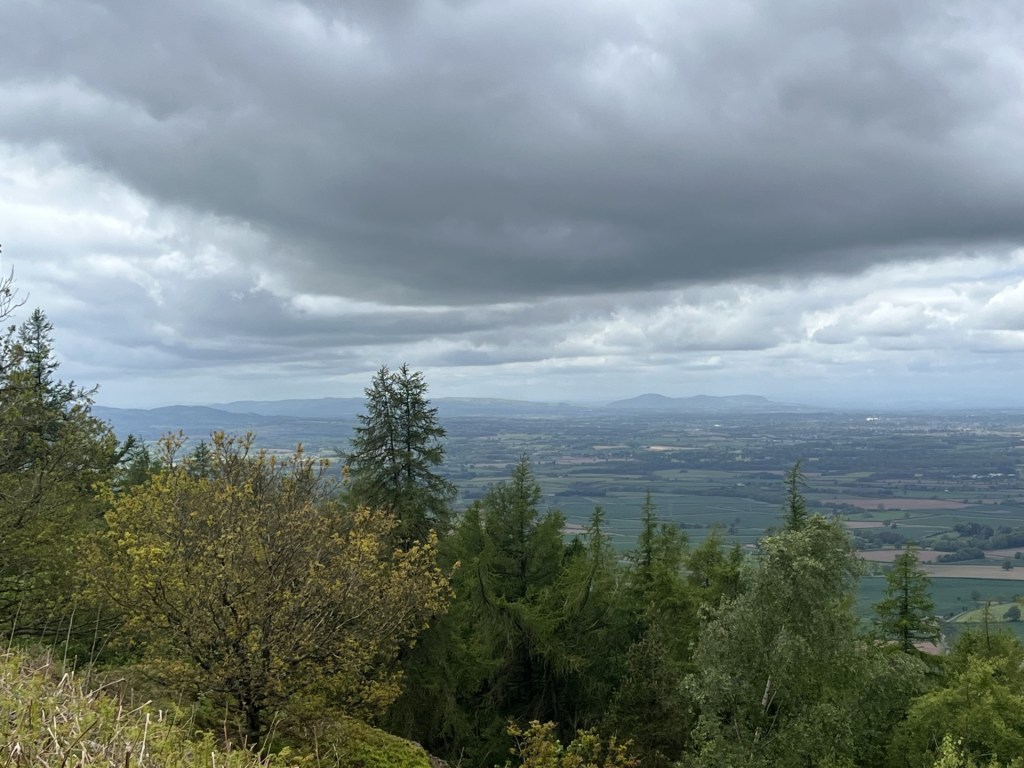
It was the obvious route up, but frankly I was a tad fagged by this point and so wound a gentler approach to the top by flanking to the right, and above the scattered buildings associated with the telecommunication towers. Now above the tree line the view was expansive.

Looking southwest towards the Long Mynd

Having reached the top of the plateau the landscape had almost completely lost the trees, except one sturdy survivor, and the shape of the hill now clearly defined.

How to spot the direction of the prevailing wind – just in case you need to know.

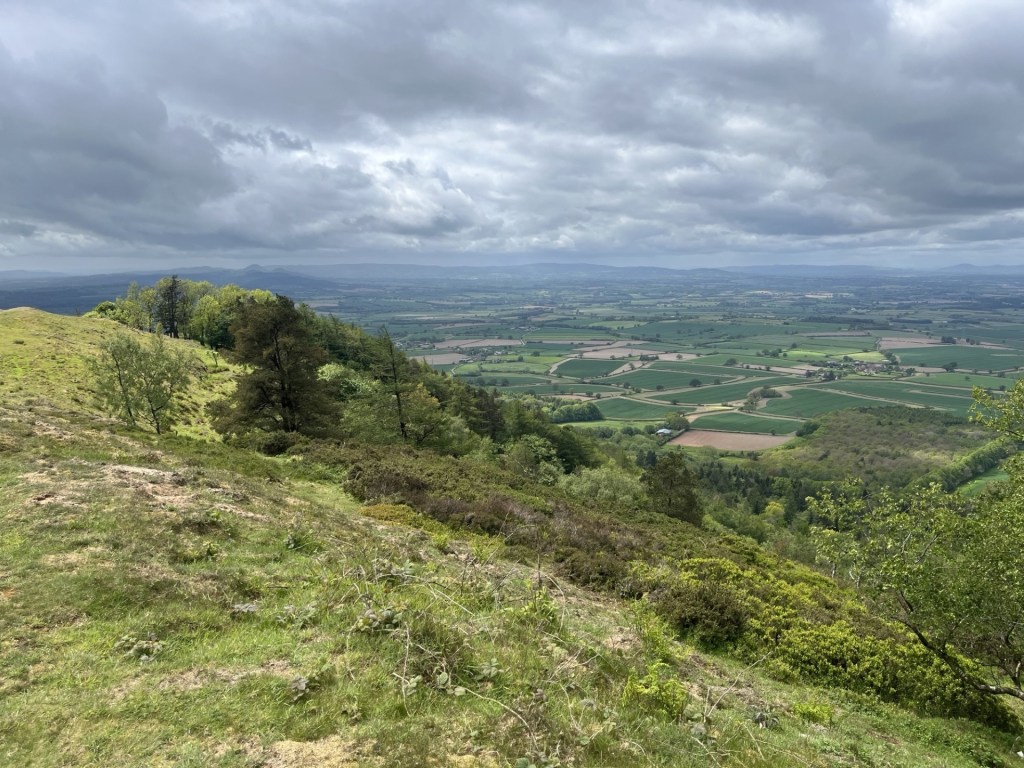
Looking west the view was sublime. A quilted landscape of fields rolled away towards the horizon. Many of the fields were in full arable mode, but it was quite easy to see, by the lighter perimeters, that at least one farmer was applying the “arable field margin” principle of setting aside sections of land for wildlife (I had seen this for the first time the day before when I conquered the top of Solihull). Regardless of whether this approach genuinely benefits natural diversity (I’m certain it does but of course there is an argument that it therefore reduces agricultural yield), the new pattern of farming that I could see before me appealed. The familiar view of an industrialised landscape of maximum growth, hedge, repeat, was broken by the extra layer of wild texture at the fringes. I liked it.

Evidence of the “arable field margin” approach in the fields just below the slope

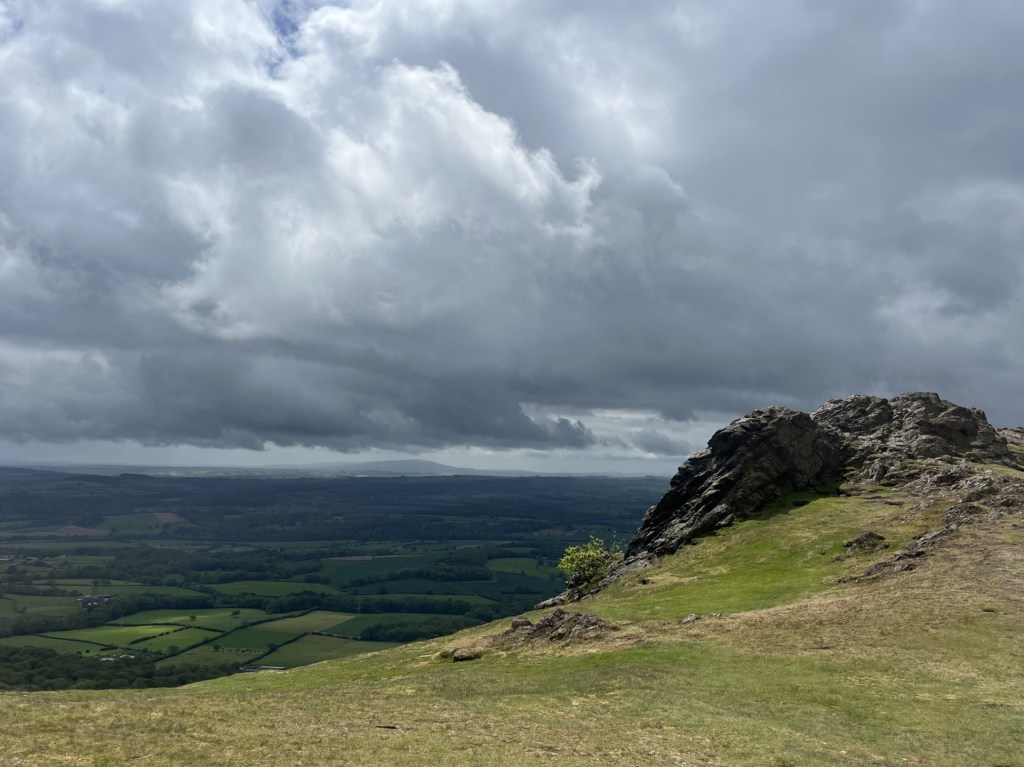
For the moment I flanked around the top heading along the ridge to the south and an enticing rock outcrop, which I clambered up and then, finding a comfortable niche in the stone, squatted down to survey the land.

The rocky knoll

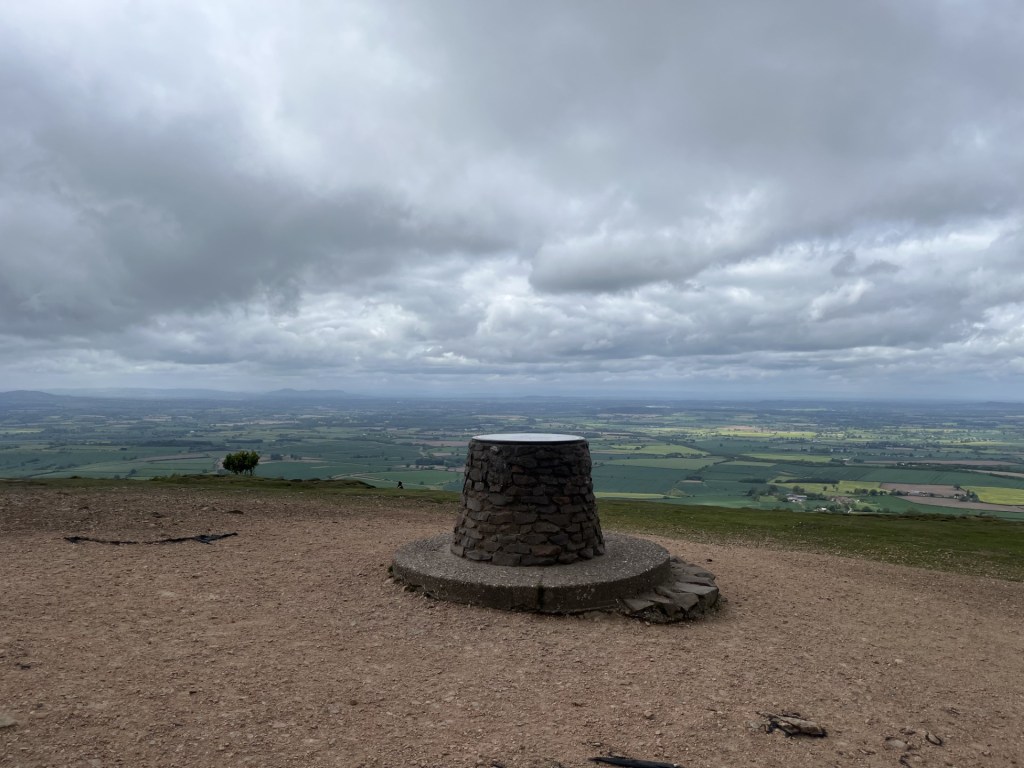
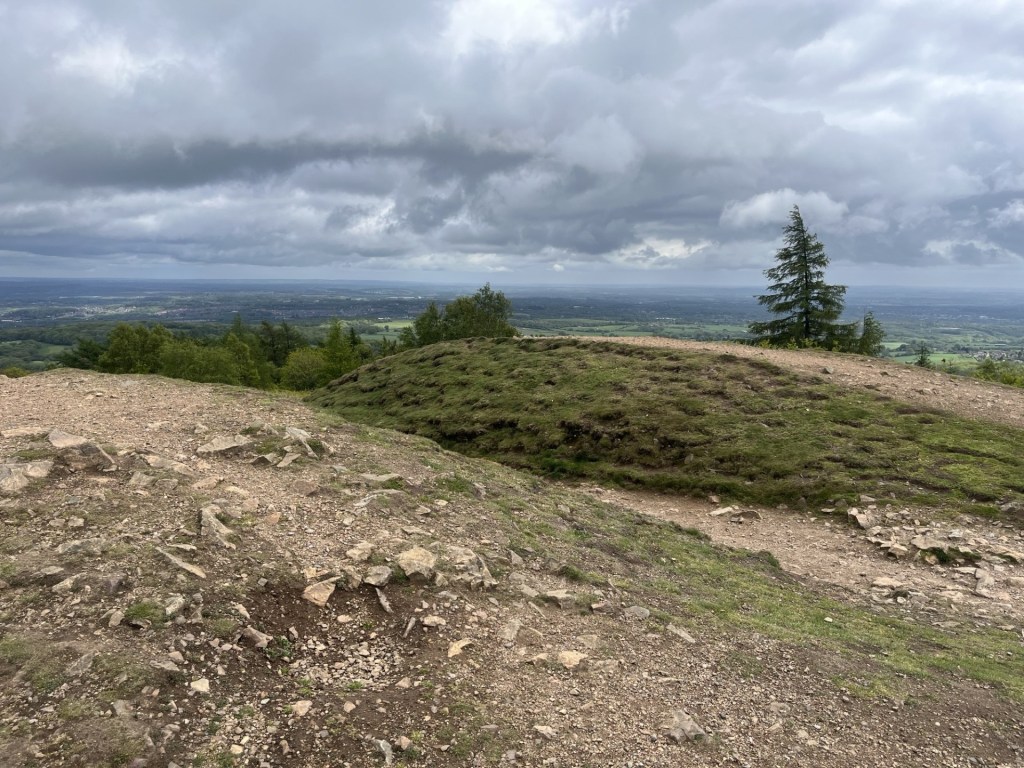
I could see for miles and what I saw pleased me. Hills disappeared east, south and west. After fifteen minutes of peace and awe, I set off back, and this time up to the highest point. I would have taken a photo of the trig point, but a woman with a large dog, and talking loudly on her phone, occupied the plinth so I made do with a shot of the toposcope instead.

Barren view with toposcope

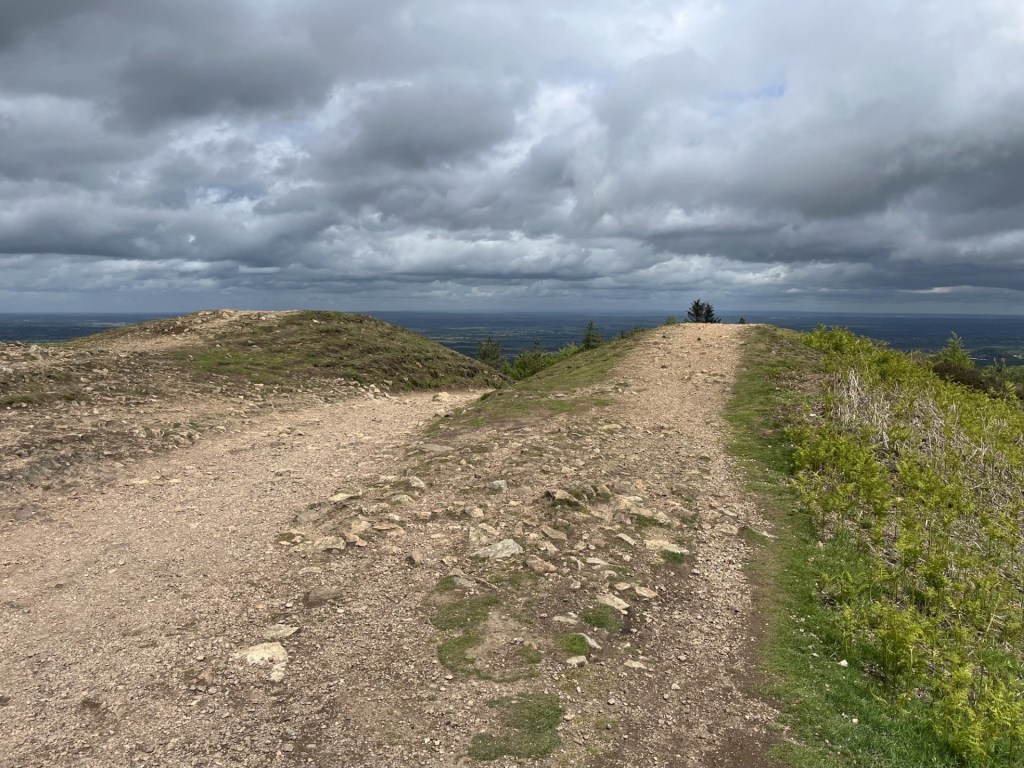
The track led on back to Heaven’s Gate. There was no avoiding the obvious reference, and something about its form, presumably shaped by over two thousand years of human contact, caused me to avoid walking directly between the two mounds.

The approach to Heaven’s Gate – named almost certainly by a woman.

The great avoidance 

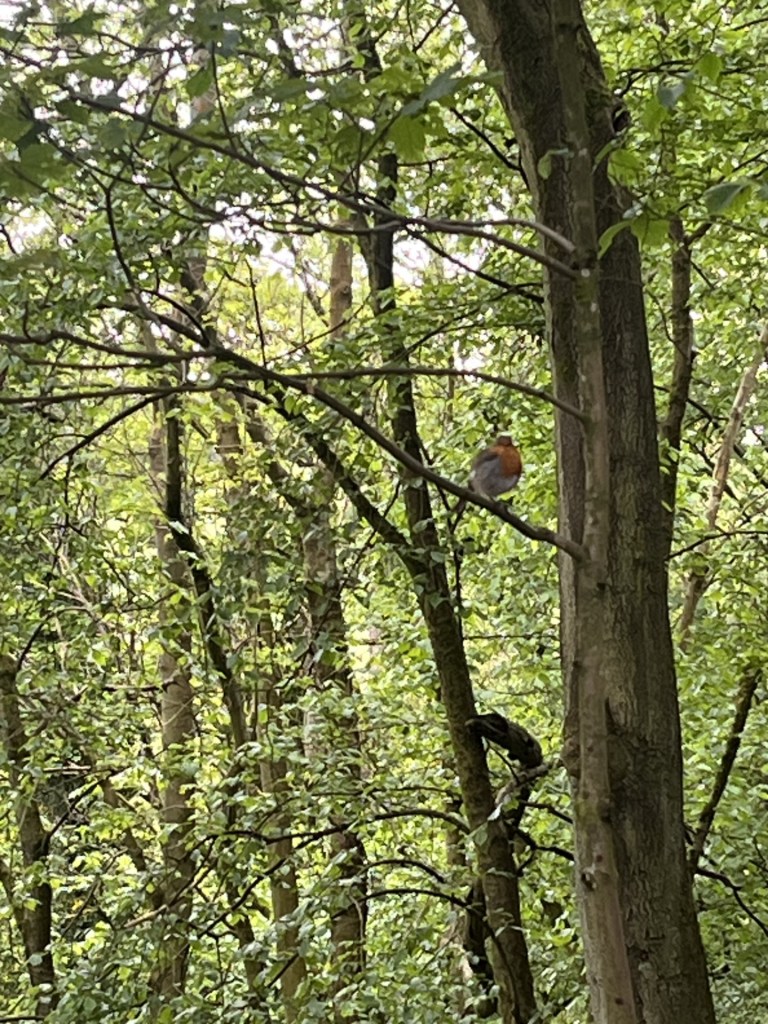
Curiously, the walk down was much easier than the walk up. Near the Halfway Cafe (still closed) a robin alerted me to its presence in a nearby tree. The high intensity birdsong had been evident throughout the walk, but here was some close-up evidence.

Today’s bird of the day was a robin.

It was all downhill after that, and after thirty minutes the now familiar smell of wild garlic welcomed me back to the start line. Despite wheeze bagging it to the top the Wrekin was a small gem. Very popular, even midweek, but that’s what it’s there for. Over 700 feet of elevation. There’s more to the Midlands than meets the eye. 

I wonder if Uber has reached Telford yet?

*A few weeks back my daughter’s partner sent me a text to say she had just been talking to a woman in their street who told her that she was married to the drummer from the Groundhogs! Huh?? A little bit of research and I worked out it was Ken Pustelnik – the drummer who played on the early albums, but also the classics, Thank Christ for the Bomb, Split and Who Will Save the World. 80 years old and still occasionally performing his version of the band. It’s true, the world is smaller than we think.

A last word on Tony McPhee (yes, sorry for the major digression above). He was down to earth, totally unassuming, a humanist and despite the hard rock appeal, wrote intelligently on the instinct of mankind to desecrate everything it touches. He wasn’t a hippy, but he was a visionary. This is from Who Will Save the World – 1972. Someone brave should play it on Radio One. Thanks Jon (RIP).

Cresting the County – Solihull Metropolitan Borough

Meighs Wood

185 Meters

606 Feet

19th May 2026

Bluebells, leaks and Laybys.

From Corley Moor, the highest point in Coventry Metro Borough, it was just a short drive to Chapel Green, then a left down Fillongly Road and at a point in the road that bore a resemblance to my mind map of the area, a muddy layby appeared on the left and I pulled over.

A hundred meters ahead, on the other side of the road and beyond a hedge, a line of trees marked where dense woods met a large field. I climbed out of the car. This wasn’t going to take long. As I started down the road, a car pulled round the bend in the road to the south and abruptly stopped at a layby on the opposite side of the road. The driver’s door opened and out jumped a man who, without further ado, marched beyond the car and up to the hedge, where quite obviously he proceeded to have a leak. It might have been just at that moment that he saw me approaching on the other side of the road.

To protect his modesty, I naturally slowed my pace and pretended to look at something that might have been interesting beyond the trees on my side of the road. Whatever it was that I was interested in failed to hold my attention for too long and by necessity I continued in his direction. By now he had finished his essentials (at least I assumed he had, but I’m sure most of us – men – have been in that unsatisfying position of being desperate, only to be denied for some unaccountable reason), and had skipped back into his car. He drove on and I crossed over.

Just past the layby a gap in a fence gave access to the woodland, and just to the right another gap in a fence gave access to the north facing field. The field was cultivated, but a wide strip of land adjacent to the woods suggested some form of set aside, which I now understand to be a “cereal field margin”, land that is left uncultivated to encourage wildlife diversity. I’d heard of it but as far as I could remember, never actually seen it before. It looked great. I’m sure that there are arguments against such wokery, but it makes sense to me.

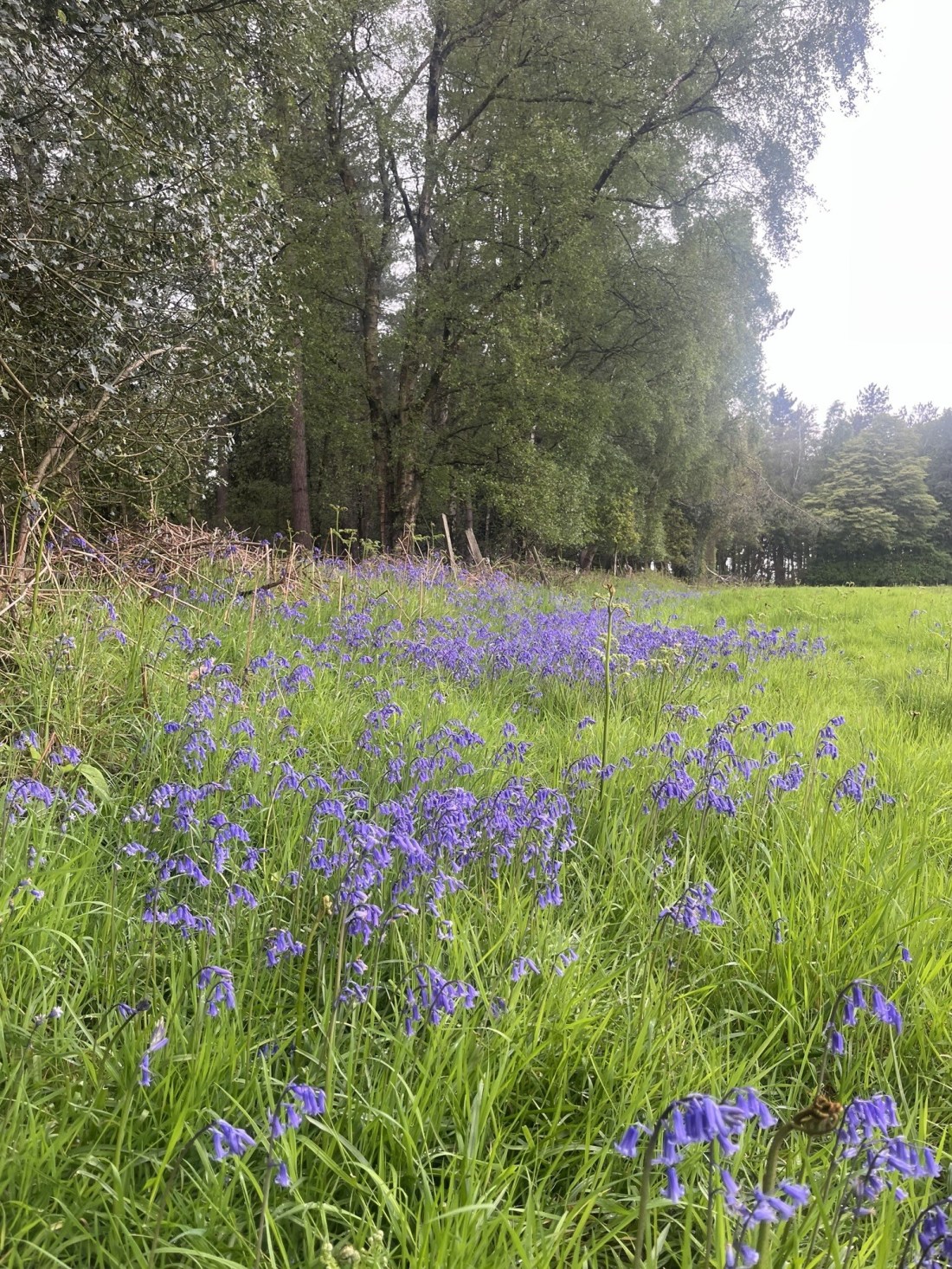
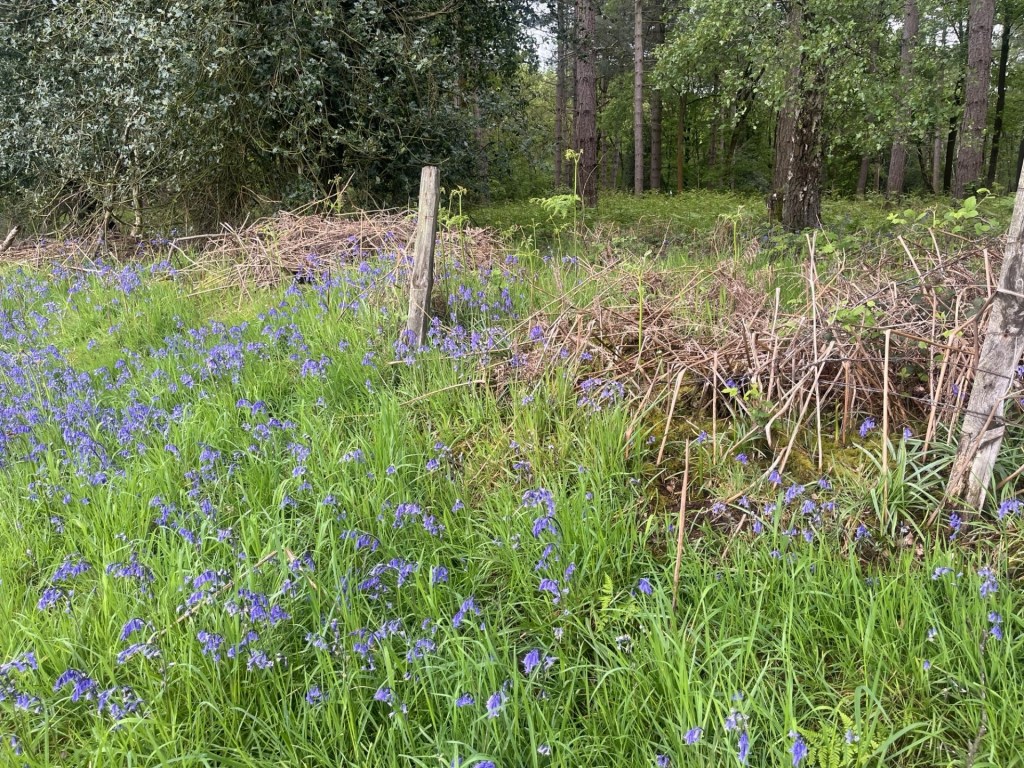
I walked towards the top of the field and along the edge of the woods. Ahead, spilling out of the woods and into the margin, a wave of bluebells in their prime. Quite a surprise given that all around me down south had come and gone already.

On the crest of a wave

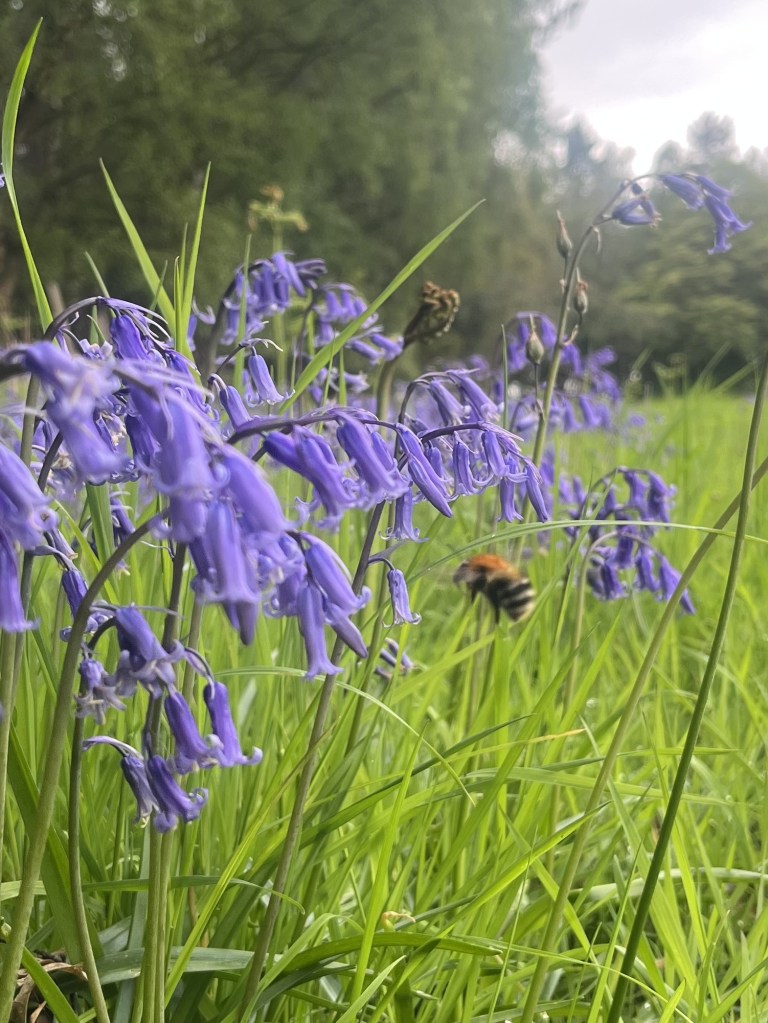
I stopped and noticed a humble bee dancing between the flowers coronets and got down close to observe. Despite my close proximity, it had zero interest in me. Too fixated on task and outcome. I recently heard that a worker bee only lives a few weeks and, in that time, makes, creates, generates, just a fraction of a teaspoon of honey. No retirement, no pension, just a grinding few weeks contributing to the greater good before it’s all over. I can’t predict the future but with AI and the ever-continuing concentration of the world’s wealth by a small few, maybe there was some sort of metaphor evolving in front of me.

Inspecting the larder

I carried on a short distance. There was a gap into the woods. I entered, but only just. Somewhere around this point was Solihull’s highest elevation. Although Peak Bagger names the highest point as Meighs Woods, their own map seems to suggest the woods I was at were called Stocked Woods, and Meighs Wood was over the road where I had parked up. I looked back out and across the field. A leaden sky, but the forecast was for something different. Up until a day or so before the nights had been cold, and the days cool and stormy. By Friday that was all going to change.

The high point – Stocked Woods

I drove away from the layby. The destination was Much Wenlock for three nights. Whilst I had reached the highest point in Solihull, the road I took to get me back onto the M6 somehow managed to avoid contact with any of the town’s urban sprawl. Oh well, so it goes.

Cresting the County – Coventry City Metropolitan Borough Council

Corley Moor

167 Meters

547 Feet

19th April 2026

From the Cradle to how long have I got?

Some years ago I had to take some personal papers across London and meet with a man to go through a few things and then sign some forms. We met at Wandsworth Town Hall and the man, probably mid to late thirties, showed me down some corridors and to an office where, after about thirty minutes, everything had been sorted. I went to leave and he said he would show me back to the entrance. I said I thought I could find it, but he was insistent.

As we walked back along the old municipal corridors, making small talk, he quietly muttered something. I didn’t quick catch what he said so I said, “sorry, what was that?”

He muttered again. I still hadn’t caught his drift. He seemed to be talking about a well-known trade comparison site, and I hadn’t a clue why. “I’m really sorry, but I don’t really understand.” And I surely didn’t.

“Checkatrade,” he replied, and as if that was in someway helpful. It must have been the look of complete bewilderment on my face that convinced him I really didn’t have a clue what he was taking about.

“I saw you’re birth certificate,” he continued, still unhelpfully.

Hmmm…

“I was born in the same hospital as you,” he clarified.

“Blimey,” I replied. “What a coincidence. Many years after me I assume.”

“Yes,” he replied. “Checkatrade.” I wondered if he had a mild form of Tourette’s before surrendering, pleading for an explanation and doing so in a way that avoided offence.

“Coventry. Checkatrade Trophy!”

“Right!”

Of course, it all made total sense. Why was I dim enough not to have known that Coventry had just won this prestigious, but otherwise unknown competition.

The last time I had been to Coventry I had just turned fifty, and that was nearly two decades ago. The time before that had been my first few months on earth in 1957/8, and being a baby living in a flat on Wappenbury Road in the northeast area of the city.

So, given that I was on my way to the highest point in the Metropolitan Borough (a first on this mission), at Corley Moor, I left the M6 at junction 2, headed south into the suburbs and then became gridlocked in traffic around a large secondary school where one in three students were being picked up by extended family. This mayhem obviously happened every day. It’s not for me to comment on this phenomenon, but from memory I don’t recall anyone at the schools I went to being picked up in a car.

Having eventually escaped the carnage I wound through the estates and finally made it to my street.

Wappenbury Road – the flats have gone, and there’s still no blue plaque!

Having reached my first destination, I wondered why I had bothered. There was nothing to be nostalgic about, given I had left before my first birthday, but I guessed it was about a sense of place and just plain curiosity.

I carried on weaving my way along streets in the northern suburbs of the city. I think I did catch a brief glimpse of the old cathedral spire, but there was no time to explore further and eventually I was out of the city and heading through largely agricultural countryside.

Reaching Wall Hill Road I headed northwest and a short time later passed over what I knew to be Coventry’s highest spot on the same road. I pulled over a couple of hundred meters on at the carpark of the Bull and Butcher Pub.

The Bull and Butcher – Nothing more to add on that.

Getting out of the car I wandered back down the road on a pavement that terminated outside the last house on the left. I could see the highest point on the road that I had driven along. I wasn’t tempted to get any closer, largely on the basis that there was absolutely no point, and also because it looked decidedly dangerous.

That’s it – the highest point in Coventry, just up the road.

And with that I got back in the car and drove out of the small village, which boasted another pub just a stones throw from the Bull and Butcher! Nothing particularly special about the place but it would be remiss not to add that by the end of today (the 24th May 2026) Tottenham Hotspurs could be relegated from the Premier League. Two weeks ago, Coventry City were promoted to the Premier League after an absence of twenty-five years. Well, if the Spurs do go down today, at least I’ll have someone else to support. It’s a jungle out there.

Station to Station – Up Walk to London West St Leonards to Crowhurst

Introduction and first leg.

1. West St Leonard’s to Crowhurst

4th April 2026

OS Explorer 124

I had been thinking about this for a while. I live in Hastings. The direct railway to London runs north by northwest up through the countryside of East Sussex, Kent and then Greater London. Apart from seeing it all through the windows of a train on the occasional trip up to London and back, many of the areas are remote, and not obviously places to visit unless you have good reason to. In a moment of enlightenment, I realised that I could investigate these places by starting out at a station en-route, walking a few miles to the next station, and then jumping on a train back to the start point.

That moment was about two years ago, and with lots of life issues occupying my time, it was filed in the “maybe sometime” folder. Until the 4th of April 2026, when I woke to see a fine mizzle varnishing the street outside, after a forecast that had promised fair weather. The opportunity to procrastinate was tempting, but I had been bogged down in a blizzard of family issues since the start of the year, and with only a small window to stretch my legs and shake off the moribund (in more senses than one), I grabbed a coat and set off for West St Leonard’s station, intent on starting the task by walking as close as I could to the main line towards the small village of Crowhurst, the next stop on the line.

Start to Finish – Follow the spine of the seahorse. Made with ancient recently rediscovered paper

The fine mizzle remained. I stood on the nearby road bridge that spans the Eastbourne and Victoria station line to the south.

The Bo Peep signal box and entrance to Bo Peep tunnel. Mizzleable

But first, a minor digression. This exercise should, if being a purist, start at Hastings station. Hastings and St Leonard’s (they used to be separate identities but are now joined at the hip and for the purpose of local government administration are known collectively as Hastings), are blessed by four stations. There used to be two more, one to the west at Bulverhythe called Glyne Gap Halt, which is long gone and now houses a retail park, the other, just to the west of the bridge I was standing on, and very first, was Hastings and St Leonard’s station, opened in 1846 (later renamed West Marina station). The remains of this important railway feature now rests peacefully under a huge TK Max.  

The four remaining stations are, from east to west, Ore, Hastings, St Leonard’s Warrior Square (my start point). Ore is situated high in the eastern suburbs and falls outside the orbit of this exercise, mainly because it serves a different route. The line out of Hastings to Ore heads off through a long tunnel dug into the sandstone and then delightfully across the marshes to Rye before terminating at Ashford. In recent years there have been calls for this single-track line to be upgraded to a High-Speed line from London. Whilst it would be great to have a fast train from Hastings to London, I think we can say that there’s more chance of the International Eurostar station reopening at Ashford before that becomes a thing. Ore has one distinction. Many confused travellers will have stood at Charing Cross or London Bridge stations searching in vain and then missing their train to Hastings because many of the Hasting’s trains don’t actually terminate at Hastings, but at Ore, a place almost everyone on the planet who isn’t from Ore, will never have heard of.

For anyone desperate or daft enough to follow in my weary footsteps, the correct place to start this sojourn would be at Hastings station. My first encounter with Hasting station (before it was modernised) was in 1980. After a Friday night session at a pub near to the bookshop I was working at the time, I boarded a train bound for East Croydon (or was it?) and sometime later was woken by a British Rail employee and asked to leave the train. Clearly it wasn’t one of the trains that went onto Ore. Somewhat befuddled, I dismounted the train to find myself on the platform at Hastings! Asking the group of attendants when the next train to London might be, they proceeded to crease up like the Cadbury’s Smash aliens (if you don’t know what I mean check them out online) and then told me it would be six in the morning. Exhausted, I looked across the platforms and could see the sign of a nearby hotel. Being after midnight, I rationalised that I’d missed my window of opportunity, and so instead tried to get some kip in the platform waiting room. Good idea? It should have been. Instead, for the next few hours a solitary gull perched on the adjacent bench and proceeded to squawk and screech its hideous call for the rest of my time. I caught the first train back to London and was the first in work that Saturday morning, but the gull had got to my central nervous system, and I swore never to return.

From Hastings station the options are to walk along the hilly and relatively indifferent back roads, or head straight to the seafront and then along the front for a mile to St Leonard’s Warrior Square station, set back a few hundred metres from the sea, and the locally popular Goat Ledge cafe. There’s no point trying to follow the line between the two stations because it’s buried deep down in a mile long tunnel. More on tunnels at another time perhaps – they matter here. 

St Leonard’s Warrior Square (originally Gensing station, opened in 1847) sits at the top of the bohemian Kings Road. Small independent shops are stuffed to the gunnels with miscellaneous everything ever made before 1980. The station itself nestles snugly between the Hastings tunnel heading east, and the equally impressive Bo Peep tunnel, that heads nearly a mile to the west, and under the old colonial affluence of St Leonard’s, with its Georgian, Victorian and Edwardian piles (some in the Scottish baronial style) chaotically scattered across the high ground above the seafront. Hilly roads take you up and down quirky streets where independent shops, some art galleries and more outlets selling junk and second-hand stuff (called brocantes here abouts), through to antiques, and a range of hospitable pubs and eateries can swallow an hour or two. If that’s not your bag, and you just want to get walking from Warrior Square to West St Leonard’s, head south to the coast and then west past the impressively art-deco (debate) Marina Court, along the front with the very early Georgian facade, The Marina Fountain public house (good music) and then right and up the hill on West Hill Road and a final left into St Vincents Road.

Anyway, I’ve done those legs many times, so let’s start. And yes, I must have forgotten that terrible night with the gull, because decades later I moved here.

Digression over. From the station I set off west on St Vincents Road, and to the junction with Filsham Road. To the right is a bridge over the tracks and good views back into the station and on the other side an arc in the track looping away to the northwest and London. I crossed over at the zebra crossing and joined the public footpath that heads down and then along the south of the line. To the left lies the large Filsham Valley school and its grounds. To avoid congestion, stay clear of this area mid-afternoon and chucking out time. 

At the bottom of the rise a became aware of a stream running between the track and the path. I smelt it before I saw it. From the stench I concluded that an unauthorised release may have taken place, and I quickly diverted from the path into the adjacent grass field, with woods climbing up to a ridge beyond. *

Beyond the field the path rose into the woods, and slowly back above the tracks. An elaborate footbridge allowed access over the line and to houses on the other side. Again, almost certainly a place to be avoided when the kids get out of school.

Vape Central before and after school

Another two or three hundred meters on and the path emerged onto the Harley Chute Road, and the second road bridge over the lines.

I promise the pictures get better – Harley Chute Road

The footpath continued on the other side of the road, but the view was instantly, and surprisingly, all country. 

Goodbye to the suburbs

Within minutes the sound from the streets had receded, replaced by the chirps and cheeps of Blue Tits and Robins, which occasionally darted in front and above. Wild garlic, occasional primroses, delicate white but unidentified white flowers and clumps of bluebells coloured the quickly awakening birch and hawthorn woodland. The path fell back down and gradually away from the railway before heading back up and to a foot crossing.

Sensible Instruction number 1: Cross without stopping

I didn’t cross but continued to the south where the path diverged quickly from the line and down. At a junction in a dell, I bore right and back up through the woods. With the railway some distance away, the path continued through delightful woods. The rain had finally stopped, and occasional patches of blue sky appeared.

The buffer zone – Marsh Woods

With the path heading on up and into a field, and then another, views opened to the south. A glimpse of the sea and the higher ground above Bulverhythe, which, I believe only exists because it was once the area’s landfill site, now being blended back into nature, and an area I ought to explore a bit further on my next visit to the nearby recycling centre.

Manmade

At the end of the second field, I emerged onto the Crowhurst Road (so I knew I must have been on the right track, although the actually track was back and passing under the adjacent road bridge).

A gull and a buzzard were fronting it up above the tracks. You’ll have to take my word for it

Taking the Crowhurst Road northwest past Upper Wilting Farm and then under Combe Valley Way, a wide direct new link road running between the north of Hastings and Bexhill but shamefully lacking a bike lane (there’s just no excuse). Crowhurst Road continued downhill, with the odd passing car, over a stream, before climbing again past Lower Wilting Farm to the right and then to the top of the valley before heading directly north and down.

Just at the point, where the road veers to the north, I crossed the old bridge and high above the long disused Crowhurst, Sidley and Bexhill railway. Below, through the trees and undergrowth, the evidence of a well-used footpath.

The old track

Past the sign to Adam’s Farm, and through the trees the view extended to the southwest and over the filter beds that can be seen for miles, and from day to day, depending on the weather, are either flooded or bone dry.

Adams Farm and the filter beds beyond

Continuing down the Crowhurst Road, and to the right, an entrance to the Crowhurst Nature Reserve took me back into nature and eventually to the bottom of the disused railway, which at this point was clearly never going to operate again.

Water and leaves on the lines

Keeping on through the heavily wooded reserve, any evidence of the old line had clearly gone. After a few minutes and a large tree ahead sported a sign suggesting that further progress was unwelcome.

Private property – Keep Out

A tad annoying, but with evidence of a well-trod footpath continuing beyond the old oak I quickly forgot that I had seen any sign at all and here the bluebells and primroses flourished.

Blooming Spring

Eventually my luck ran out. I had assumed that it would be possible to walk the entire length of the old line, but a large fence cut straight across the path. I tacked to the right, hoping that this was just a temporary glitch, but it wasn’t to be. Heading back down to the bottom of the cutting a much larger sign on the fence emphasising the private property angle and that CCTV cameras were deployed convinced me that there was no point continuing. Not least because although some vague tracks led on, the dense undergrowth was enough to dissuade me.

You shall not pass

I headed back along the fence and then spilled out onto a rough vehicle track. Unsure exactly where I was, I decided to go right, and towards a path marked on the map that hinted at an old bridge over the cutting. The noise from some sort of mechanical equipment became louder as I plodded up the track, and then just around a corner a small digger came into view, scrapping away at the track. Reaching the mini digger the operator in the cab switched off the engine and opened the door. I had expected to be given short shrift and be advised to retreat but I was wielding my Ordnance Survey map and led from the front. “Am I lost?”

The man smiled and we started a conversation. He had just moved into the amazing looking Tudoresque white cottage just beyond and was flattening the track so that the family car could negotiate the hazardous central hump. It seemed that they owned most of the surrounding land and I asked if that included the railway cutting. He confirmed they did, adding that I may have seen some warning signs. I wasn’t quite sure how to answer, but before I did, he immediately became my favourite person on the planet by proclaiming that he was going to take them all down!!! Liberating his own land for the rest of us being about the most enlightened thinking in an age when walls are going back up. He was a good guy, and I moved on towards the public footpath with a spring in my step. By the way, the digger was called Ken.

The foot path was to the right of the track and headed uphill, crossing the old line on a heavily vegetated brick bridge.

Looking down at the old line through the ivy

The path was something of a muddy stream and to make progress I grabbed the branch of a shrub, instantly feeling pain on the inside of one of my fingers. I didn’t think much of it until I took a quick look, and the red stuff was expressing freely down between my two middle fingers. Whilst slipping slowly back down the muddy path I somehow managed to manipulate a tissue from my pocket and squeeze it to the wound and realising in the moment that whatever the shrub was, it had managed to pierce the fleshy bit on both fingers.

At the top of the climb the path bled out onto another farm track. Taking a right the public footpath reappeared to the left heading up through more woods. This old track, presumably once a vital rural highway serving the small community of Green Street above, was also the conduit for a running stream, which made the whole track something of a quagmire. With my bleeding fingers, reaching out for additional support was not an option, so I tiptoed on up trying my best to avoid my boots being overwhelmed. 

Eventually I reached the top and over a stile leading to the small road through Green Street.

Narnia beyond the stile

The small cluster of traditional Sussex buildings felt like a lost community, hidden away from the nearby urban sprawl of Hastings. Neat.

Evidence of a past industry

With the flow of blood now mainly checked my focus was now on reaching Crowhurst Station and the next hourly train. I knew I was quite close, but also that the route headed away from the destination before tracking back.

The narrow road headed northeast and gradually downhill. At the foot of the descent the road crossed over the mainline, last encountered at Upper Wilting Farm only a kilometre or so to the south. At the far side a fine old building, built from large stones and more reminiscent of the North rather than old Sussex.

Unsurprisingly perhaps the bridge is called Stonehouse Bridge.

Looking north on the Stonehouse Bridge

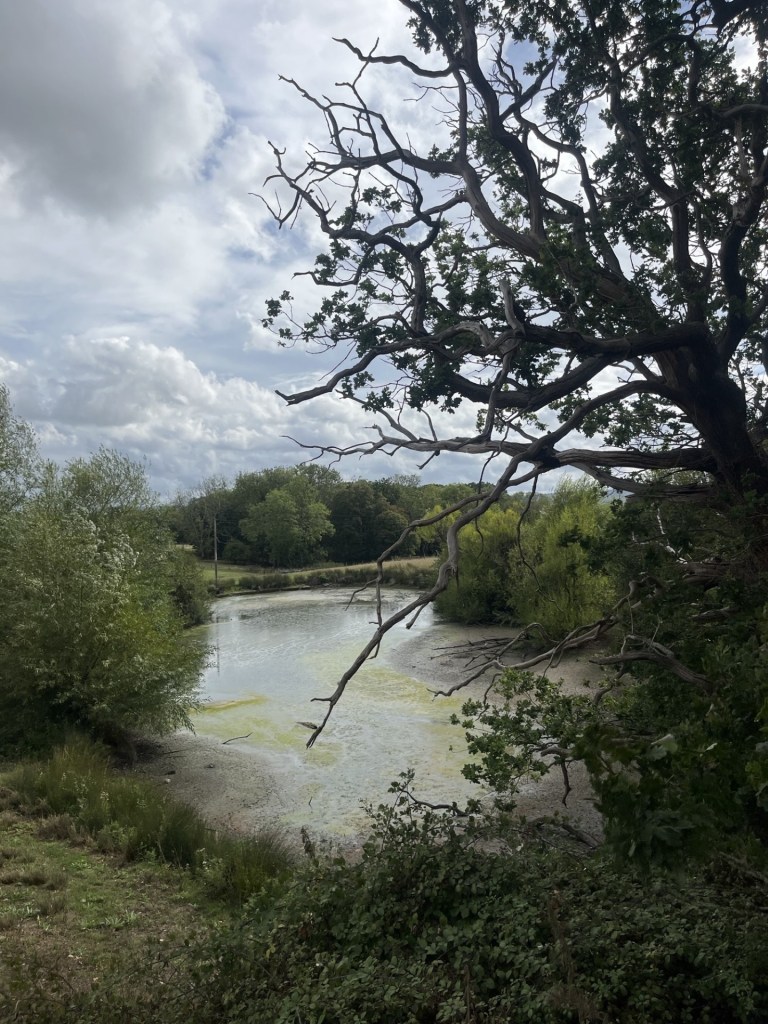
The road lurched to the left and then began to climb back out to the northeast, but another track heading directly north and between two large fields full of yellow rape was what I plumped on. Within a minute I heard the sound of yapping dogs, quickly came into sight with their owner. Not only the first dog walker so far, but apart from the man operating Ken the digger, the only person I had met at all! The dogs were so small I think my modest size was intimidating enough and they behaved. A brief word with the owner, agreeing that it had turned out to be a lovely day, and I carried on up. After 2 to 300 metres the track was crossed by another. Beyond, to the right, the entrance to a small abode with land. I wasn’t entirely certain about my whereabouts in the field and decided to turn left and follow the track heading west. Another 200 metres across the field of rape and on the left a large pond surrounded by trees that brought a slightly continental feel to the land.

The view from the pond (which for some reason I didn’t record)

Carrying on down and eventually back into some woods, crossing over another stream. The path wound around and suddenly, ahead, the gaping mouth of a corrugated tunnel driven under the mainline. I was back on track, almost literally, but had to overcome the slight nervousness of the tunnel challenge.

Oh well, it had to be done

I’d missed the guided tour

Emerging back into the light I knew where I was. Some months earlier I had been here with a couple of friends (more shortly) where we had pondered on whether the derelict railway bridge that now rose in front of me, went over, or under the old Crowhurst to Bexhill railway. It took almost fifteen minutes for the three cleverest brains in the land to conclude that it must have passed over, or maybe under?

The correct answer is – over.

A large field opened to the right and towards some woods before heading down and with luxury yurts to rent in a field on the left. At the foot of the incline a small bridge over the eastern arm of Powdermill Stream, and then the path began another gradual climb, with a hill rising across a field to the right and a line of trees at the top.

Try to use your imagination here

Months earlier, with my two friends, we had ambled along this track, looking repeatedly across this field, pointing out relevant features and satisfying ourselves that we were in the right place. The right place being the alternative site of the Battle of Hastings in 1066. Some months earlier, one of my friends had mentioned to me that he had been watching a YouTube programme about a local activist group, led by Nick Austin, who passionately explained why the official site, at Battle, could not have been the site, and that the custodians, English Heritage, knew this but were too heavily invested in their asset to acknowledge any notion of an alternative site. Incredibly, given that I rarely watch anything on YouTube, I immediately knew what he was talking about because only the day before I too had watched the same programme (which for the life of me I can’t now locate). We agreed that at some point in the future we would visit the identified alternative location and see for ourselves. And that led to three of us standing in this field and satisfying ourselves that the evidence, based on the topography, was compelling.

But, since that short battlefield amble, I had delved further into the subject. There is indeed a wide-ranging debate amongst enthusiasts and historians about where the battle may have taken place. I have no intention of examining them here (it’s all on the Net) but the problem for the official site in Battle is, apart from the Abbey built by William some years after 1066, there has never been any physical evidence of a battle in Battle. The race is on to find some evidence, anywhere. There are at least two main alternatives. Where we had stood was one of them. Except that my further research, which included Nick Austin and his crew, seemed to suggest that their proposed site, err… lay about a mile to the north and on the other side of the mainline. How we had collectively managed to go to a completely different, random location, suddenly struck me as hilarious, but also astonished by the realisation that we had discovered a third possible site. If only we had found a medieval stirrup! The search continues.

The track headed on down into Bucklebridge Farm. Beyond I was just able to make out the ancient church and remains of an old manor house, thought to have once been owned by King Harold (though obviously not for long).

The old manor house and the church tower to the right

I emerged onto Station Road, quickly checked my watch and saw that I had nine minutes to get up the steep hill and to the station itself. I was surprised that I had managed to get to this point with a chance of the train, but as John Cleese once said it’s not the despair, but the hope. Legging it up the road, it occurred to me that it was much longer than I had remembered, but against the odds I made the ticket machine, was able to work out how to buy a single ticket back to West St Leonard’s on my first attempt, and then popped over the bridge to the down platform.

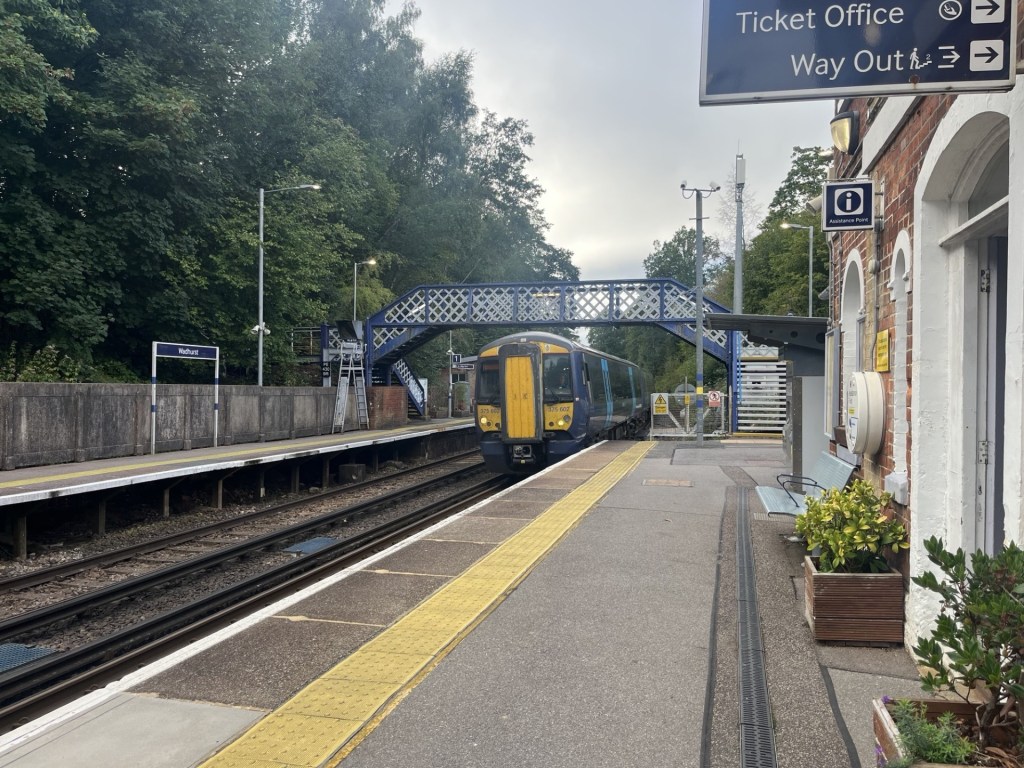
Looking north at Crowhurst station

Four minutes passed before the train rolled in and I, and the one other customer, left town.

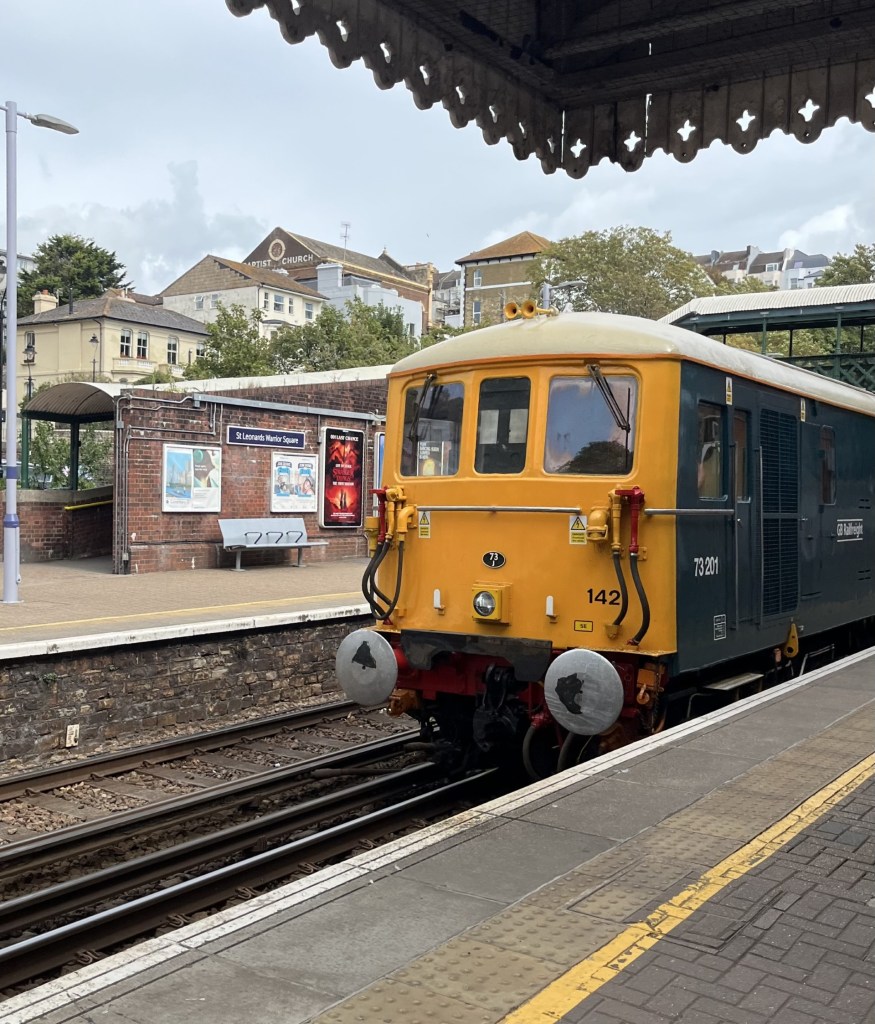
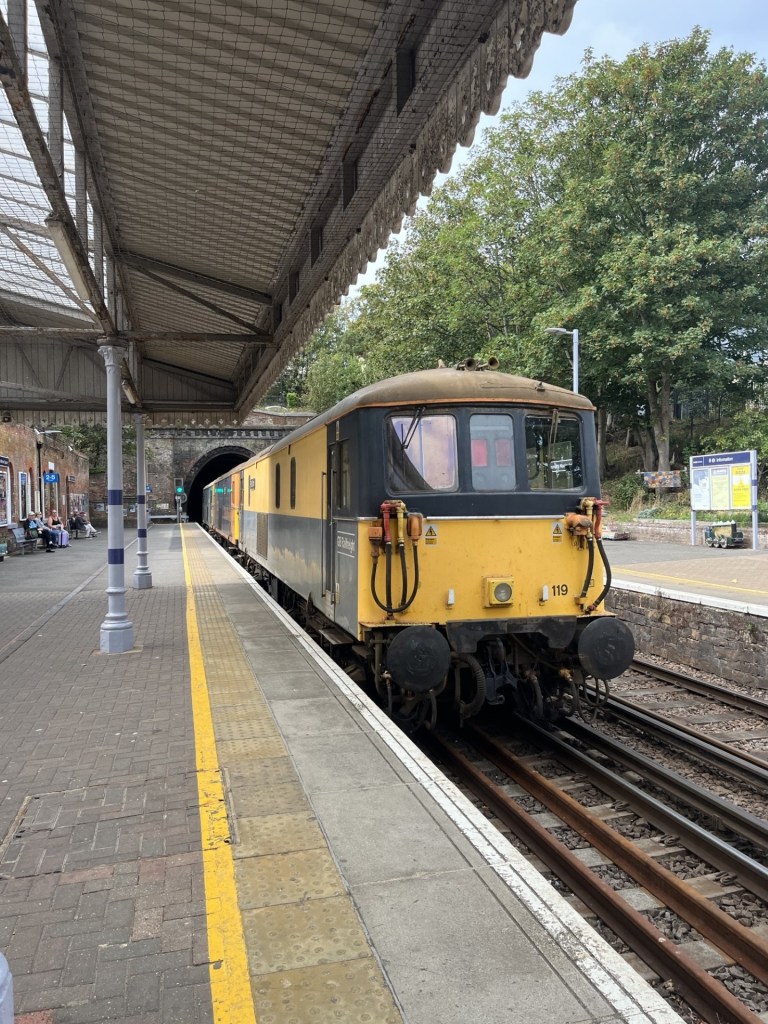
One for the buffs 375 825

Minutes later and I was back at West St Leonard’s – with the train heading off towards the Bo Peep tunnel and the last leg to Hastings.

And away – to Hastings

Outside West St Leonard’s station and the mizzle had gone

A short drive back home but with the iPod on random, the sound of Weller seemed to encapsulate the day. I hadn’t heard it in years. Using all the tricks in his book the main man at his finest.

*A few days ago, and before I posted this, a reel popped up on my phone. I don’t look at reels, but from what I could see it was my local MP reporting a sewage outage into the Hollington Stream and posted on the 18th of April. In hindsight perhaps I should have reported my concerns after the walk, but clearly my nose hadn’t lied.

Cresting the County – Second Year Review – May 2025 – April 2026

I was listening to the radio recently and a woman was being interviewed about her project. The project, an original idea (if such a thing exists), was to try and eat the food of every country on earth, in London. That’s just short of 200 nights out, take-aways or gatecrashing cultural events. She seemed confident that she was going to be able to achieve her ambition.

From the Peak Bagger list of county and unitary authority high points in the UK there are, in total, 186. As the months have gone by it has become increasingly obvious to me that far from being the niche activity I thought it might have been when I started in May 2024, bagging these locations appears to be a mass participation hobby/sport/pastime/mission, whatever you want to call it.

Nothing confirmed this more than, whilst flicking through December 2025’s edition of TRAIL*, there was a two-page feature on bagging county tops!!! It featured ten very different types of locations, of which remarkably I had done four (if you include High Holborn in London which was on my original list but doesn’t feature in the Peak Bagger list – something I will need to explore further).

What was all this information telling me? Well, when I started off, I had no notion whatsoever that loads of people were already trailblazing the territory, some writing up their experiences (including at least one book) and others just doing it for the sake of doing it. I’m certainly not hung up about it, and in fact it has been useful to find out that others have already been before, but as I listened to the young woman explain how she was going about sampling all of the world’s cuisine without leaving London, I wondered if I had perhaps missed a trick.

It’s too late now, but I realised, in hindsight, that if I was going to start this all again, I would have done it differently. Instead of trying to get to the highest point in every county (and then with the compilations thrown up last year, unitary authorities as well), I should have targeted instead the county and unitary authorities second highest points. Try and find that on Google?

Overall, I think it’s fair to say that good progress was made. No big trips to the north, which just delays the prospect of me ever managing to chalk off the remaining big ones, but two excursions into South Wales proved fruitful and fulfilling, and in the process discovering the magnificent Head of the Valleys (the clue is in the name) dual carriageway, and eventually reaching the top of one of my now favourite spots anywhere; Pen-y-Fan. During the hottest of hot summers, I smashed East Anglia and was reminded how big an area of the world it is. Sadly, in March 2026 my father experienced life’s last great event and my focus naturally turned elsewhere. It may be a while before I get back into a rhythm, but just to keep my head above water I recently managed to visit two spots in the north Somerset area.

It would be remiss of me not to mention the huge elephant in the room, or on the moor, or in the suburbs. Local government reorganisation. In the last few months, details of potential frameworks for the reorganisation of counties and Unitary Authorities have slowly emerged. One such example is Essex. In 2025 I conquered the county top of Essex, and the Unitary Authorities of Southend-on-Sea and Thurrock. Job done. Not if these proposals go through. Essex will be entirely governed by five new Unitary Authorities. Suffolk, which was also ticked off in 2025 on a single outing, will now become three. My own county of East Sussex, along with Brighton and Hove and West Sussex, could become four or five new authorities. Whatever the outcome there will be at least one more top to visit in the historic Sussex area alone! I’m not sure I have the puff for that, but challenges change. The biggest challenge will not be for me, but for all the online sites, documents, maps, guides and books that will have to be amended, updated or just given up on.

And finally, there’s Bristol. I chalked off the top of Bristol last year, by visiting the Cossham Hospital site and surrounding area, the traditional high point of Bristol. Except, out of the blue, on my phone a link to a local press article appeared that explained new research had discovered that the true high point was East Dundry Hill, far to the south of the city. Given that the boundary change that created this scenario had occurred some decades before why had it taken so long for it to be recognised? To that end, Bristol remains outstanding, but at least I can say that I’ve reached its second highest point.

*In a sad twist of fate, having read TRAIL in full for the first time, and deciding that I would like to subscribe, days later I was told that the December edition was its last! These are difficult times but the demise of the written press can only make it worse (he says as he posts again online).

Cresting the County – Bath and North East Somerset

Niver Hill

264 Meters

866 feet

24th April 2026

An Afternoon in the Mendips part 2: In Amongst the Lamas

Having ticked off the top of North Somerset I drove a few miles east (with the ever-present radio transmission of endless and forever Mandelson and Trump news updates vomiting from the speakers) and parked up at the Forestry Commission East Harptree carpark just off the Smitham Hill road. The next objective was Niver Hill, the top of Bath and North East Somerset Unitary Authority. North Somerset had been a brief drive by, and so I needed to stretch my legs.

Two or three cars were parked up but it was a tranquil spot, and if I had paid attention to the information board might have taken a stroll over to the nearby historical Smitham Chimney that apparently lurked in the trees to the west. Hindsight and Google maps.

Instead, unaware of the chimney’s towering brick presence, I walked the track back to Smitham Hill road, turned left and ambled down heading north.

Depending on the map you look at the tiled roof is either Springfield Farm or Pit Farm!!

Just before Springfield Farm I turned right and then southeast up Nettwood Lane, with fields to the left and bluebell enhanced woods to the right.

Pretty in blue

At the end of the wooded section a footpath headed directly east but I bore to the right and on the straight track up towards Nettwood farm at the top of the hill. At the entrance to the farm, I stopped and looked directly east towards a cluster of trees on the ridge about 300 meters away. Having looked at various maps months earlier I knew that the high point was located just by the last most northern tree, but there was no obvious route across the field from the farm.

The high point, just at the last tree on the left

It wasn’t to be and sometimes you just have to accept it. From the position I was in I felt as if I was at a similar height and decided I had done enough. Heading back down a couple of space aged yurts appeared in the first field. I enjoy camping, but this looked a bit too artificial (maybe I need to get over these prejudices).

A pod of yurts with a view

A bit further down and another field presented a gathering of curious lamas. As I walked on by, they stood stock still and gave me the unwavering eyeballs until I had passed. I guess they thought I might have been a food bringer.

Maintaining their gaze

Back at the car I felt that I had enough time to do part three of the Mendip challenge and get to Dundury Hill East, just to the south of Bristol, and what has recently emerged as the top of Bristol Unitary Authority after previously being reported as Cossham Hospital which I had ticked off last year.

I drove north, first through East and then West Harptree and then on the A368 towards Bishop Sutton. By now, unless I was to get very lucky, my time was probably up, and so when a lay-by appeared next to Chew Valley Lake, I pitched up and bought an ice cream from the van that was doing good business. Unfortunately, the ice cream (that came in at just under £4) was an overwhelming disappointment (Mr Whixxy) and I fought a desperate battle with the heat to lick as much of the abysmal product down whilst simultaneously looking out at the birds on the water, the buzzards in the air, and the view across the lake and back towards the trees on the hills beyond that marked Niver Hill and the point I hadn’t quite achieved.

The view back to Niver Hill (try taking a photo at the same time as preventing a total ice-cream disaster)

Dundry Hill East would have to wait another day, but as I drove towards Bristol city centre, the Peter and the Donald stories continued to remorselessly dribble out from the speakers. I figure that what we need more of is Jonathan Richman and the Modern Lovers and a little less Mr Whippy’s.

In February 1999 (it says it on the internet!) I managed to see Johathan Richman at the Jazz Cafe in Camden Town. I can’t remember if he played Ice Cream Man, but that didn’t matter – he was simply magnificent.

Cresting the County – North Somerset Unitary Authority

Blagdon Hill Farm

242 Meters

793 Feet

24th April 2026

An Afternoon in the Mendips part 1: At the End of the Lane

The day had got off to an expensive start. I had spent the night in London at a friends and was aiming to be in Bristol to see my daughter by the end of the day. Time was on my side, and I figured that unless the roads were trouble I could knock off the three Unitary Authority tops south of Bristol and west of Bath.

High pressure had been sitting over the country. The sun beat down on London stone and streets as I headed south towards the Marylebone Road, and the slightly complicated junction at Baker Street that takes you west and away. With the intense light and the glare pinging off anything metal it took me a minute or so to work out that instead of heading south on Baker Street, I was instead heading south on Gloucester Place. No worries.

Except, as the lights changed at the Gloucester Place junction with Marylebone Road, I suddenly caught sight of the big red C sign, and instantly knew there was no escape. I’d tripped the congestion charge trap and there was no avoiding it. To be honest it wasn’t so much the fact that I was now foolishly out of pocket (and I didn’t know what the damage would be), but that at some point before the end of the day I was going to have to engage with my phone, and all the torture that might entail, in order to pay the fee.

On the Westway heading west, I noticed that most of Grenfell Tower was gone. Not all of it, but its demolition had escaped my attention, and it was obvious that the skyline had changed. It was nine years on, but it felt like it had happened yesterday.

Whilst the congestion charge was still in my mind, I stopped at Heston Service station on the M4 and set about trying to pay my penalty. After nearly creating an account to pay the charge for a large city in the United States, I eventually got to creating an account for the London charge. It should have been easy, but needless to say it wasn’t, and after fifteen minutes of having to come up with passwords, memorable dates, locations and maiden names, whilst the coffee got tepid and my hot pie went cold, my multiple attempts to register were eventually rejected and I was told to phone a number.

I phoned the number, desperate to speak to a human. That state of nirvana remained elusive as I sat in the sun clearly and loudly giving my verbal staccato answers to the AI machine asking me all the questions. Remarkably, after just five minutes, and with very few repetitions, I was told that I had succeeded in paying the charge and had learnt a very important lesson.

I was beyond Bristol by 2pm and heading south on the M5. At the familiar junction 21 for Weston Super Mare, instead of heading for the coast I went inland to Congresbury and then south, eventually making it onto the A368 Bath Road.

Here the road began to rise out of the Somerset Levels and east into the Mendip Hills. The village of Rickford and surrounding countryside looked magnificent and somewhere worth returning to in the future if the chance arose. A mile or two further on and I was in Blagdon, with its curious mixture of architectural styles, including a number of buildings, clearly old but not that old, sporting a cross between Tudor and Swiss chalet. Somehow it all worked though you could be confused into thinking you were anywhere other than the Mendips.

I stopped in the free carpark next to the Community Fire Station to get my bearings. Once that had been achieved, I set off and was about to turn right at the exit when I noticed an overdressed middle-aged man jogging up the hill and towards the car. I paused. Instead of running past me he slipped round the car and into the carpark. I looked right, with the intention of setting off, and another middle-aged man, overdressed of course, was jogging, this time down the hill. Strange activity anywhere, until it dawned on me that with the Community Fire Station just behind me, they were volunteer firefighters on a “shout”. If the weather keeps on like this, they’re going to be in for a busy summer.

Back on the road I headed up into the village and then south and up the multi-potholed Street End, that wasn’t an end, but which became Rhodyate (?) as it headed out into the county and hills above. After a few wiggles in the road, it straightened out and headed on up with a fine line of trees lining the side to the left. The road was called Two Trees, but something had clearly happened since it was named.

Turning left onto Leaze Lane I was close to the top. I drove on to the end, with fine views extending down to the Bristol Channel and Blagdon Lake. At the end of the road, I pulled up. There was no obvious parking space, and a woman, presumably from the nearby farm complex, was going through the recycling bins. I got out of the car to have a gander.

The view towards Wales and Sugarloaf (north by northwest) where this whole madness began

A lane headed south and continued up to the top of a rise. Whilst I understood that the top of North Somerset was at the edge of the field immediately in front of me, I wasn’t entirely sure where the county boundary ran, and whether perhaps I ought to go up the lane, just to be on the safe side. In the end, with nowhere to safely park for a few minutes (a Waitrose delivery could arrive at any time), and without wishing to worry the woman further (albeit she was probably used to strangers turning up to tick off the county top), I decided to turn around and leave. As it happened, and double checking later, I was in the right place, with the high point of 242 meters just to the right of the hedge 30 odd meters on from the telegraph pole in the photo below

Job done.

Cresting the County – Slough Unitary Authority

East Burnham Park

51 Meters

167 feet

24th February 2026

A Short Diversion and another Low High

The highest point in the Unitary Authority of Slough, at 51 meters is, along with the Isles of Scilly, the fifth lowest high point in the County Top challenge (Peakbagger). Which implies that as a group of islands, the Scilly’s must be much lower than I had assumed and at serious risk. If I ever get there, I’ll double check.

I’d spent the night in an hotel room in Newbury (having reached the top of Walbury Hill in West Berkshire the day before) and was heading back to South London to recommence duties. Sleep had been illusive after the phenomenally annoying drunken behaviour of the guys staying in the rooms either side of mine, which only finally tailed off around 3am. Once upon a time I might have made a fuss but frankly I chose to avoid confrontation.

Reaching East Burnham Park, the highest point in Slough (and being frank again, don’t get excited), would complete the County Tops in the Thames Valley. I drove east on the M4 and turned left towards Sloughs suburbs at junction 7. Turning left again at the first roundabout and onto the Bath Road I caught a glimpse of a road sign directing motorists towards Dorney, Taplow and Dorney, named, obviously after three of the four stand out twenty storey tower blocks on Adelaide Road in north London. The one missing from the sign, which would have completed the set, was Bray, where our son was born in 1986 (on the 14th floor to be precise!).

North through Burnham and onto the Farnham Lane, which seemed to define where the surrounding country met urban Slough. I pulled over on a slip road of Farnham Lane opposite Crown Lane, a small road heading north towards Burnham Beeches. *

From what I had read the highest point was just beyond a hedge and fence where Crown Lane met Farnham Lane. I stepped out of the car and walked across an open area of grass, planted in places with young trees. A small sign explained that the land formed part of the Slough Digital Urban Forest. Some of what followed made a lot of sense, “biodiversity”, “Carbon Capture” etc, but it had been the use of the word “digital” that immediately closed my brain functions and left me scratching my head in disinterest.

A digital forest?!

What did catch my eye was a lonely litter bin sited near the road (see photo), but without any connection, from what I could see, to any potential meaningful interaction with intended clients. Maybe it was part of Slough’s Digital Waste Space initiative.

I looked across the road and to the junction with Crown Lane. The high point marked on the Peakbagger map sat just back from the road and in the trees. I don’t know why I didn’t bother to cross over the road for completion’s sake, maybe there was a low fence or something, but I concluded I had seen enough, and indeed a later check suggested that where I stood was the same height (51 meters).

The big tree on the left probably marked the spot

County Top number 50. Tick.

I drove back towards the M4 the way I had come, until I realised, I was somewhere I hadn’t been before. Ten minutes later and I was slap bang in the midst of a huge industrial/retail park sitting to the west of the town centre. It all appeared to be modernistic and high tech. Back in 1937 John Betjeman (who at the time lived in the rather quaint village of Uffington some miles to the west) wrote poetic lines on Slough, famously starting with “Come, friendly bombs, and fall on Slough..”

I had always known this opening line but wasn’t sure I had ever read the entire poem. Whoa! It’s excruciating. He must have been going through his Morrissey phase. Just as well he was never on social media. Between the wars a vast new trading/factory estate had been constructed in Slough. His poem railed against these developments. From what I could see there were no mid-Century buildings left or dirty smoke billowing up. All very clean and tidy now, though it’s still called Slough Trading Estate. It can only be a matter of time before a “Digital” finds its way into the name, “Trading” is replaced by “Enterprise” and “Estate” by “Park”. But will they keep “Slough”? I wonder!

* Burnham Beeches rang a bell for me. Famous for something, but only later did I discover that a whole slew of famous films had been shot there (not least Goldfinger). Perhaps I should have crossed the road.

If you know your history of Slough, you’ll appreciate the musical choice. Before Rod went in another direction! Other artists are available

(2) handbags and gladrags rod stewart – YouTube

Cresting the County – West Berkshire Unitary Authority

Walbury Hill

297 Meters

974 Feet

23rd February 2026

A Little Trespass Never Hurt

Since my last outing (a long weekend in late October when I managed to chalk off five tops) a lot of “stuff” has been going on, and it is a long list. Greenland, Epstein fallout (on repeat), Tariffs misunderstood, Ukraine (US inertia continues), Andrew (see above – on repeat loop) and so much more. On a personal note, getting opportunities to travel have been severely limited. The weather for one thing (I wonder if we’ll look back in years to come and remember the incessant rain, cold and absence of sun), but also an elderly family member’s slow decline and on-going care requirements. Which prompted this very short getaway.

With a very small window of opportunity I made a last minute, value for money, two-night booking at a pub come hotel in Newbury. I won’t name it because it was pretty good to be fair, but my need for sleep was rudely interrupted on both nights, and I came away less equipped for my on-going commitments than I had been at the start. Shucks!

I chose Newbury, a small town just south of the M4 corridor between Reading and Swindon because it was near to Walbury Hill (and Slough – but that’s a future post), sufficiently close to where I had come from and where I needed to be on the Tuesday, and because, surprisingly I had never been there before. Going to somewhere I have never been before has been one of the secondary objectives of the County tops endeavour.

Arriving in Newbury early evening I had time to grab some food and relax over a couple of beers in local pubs. The first, The Lock, Stock and Barrel, located by the side of the river Kennett, was great, and the riverside terrace would be a must do in warmer weather. As it was, the river (a tributary of the Thames, and probably not much to look at most of the time) was a raging torrent, just inches from breaching the pubs defences. I asked a local couple if they had seen it so high before. The answer was a definite NO. The second pub, which will remain nameless, was shocking. Arsenal had beaten Spurs at the Lane 4 – 1. I expected Spurs to lose, and don’t begrudge Arsenal, but the boys were still pretty hopeless. 

I slept like a log, until at around 5am, when, with a monumental crashing sound, the bottle recycling team turned up to remove the pubs Friday and Saturday empties. Wide awake for a while until asleep again. At 6.30am an almost identical noise announced someone from the pub emptying Sunday’s empties into the recycling bin that had just been emptied a couple of hours earlier. Again, wide awake until sometime on. I know this for sure because I woke again an hour later when the sound of beer kegs being dropped from the back of the dray (a lorry that carries barrels of beer), was pretty much the final straw. I think I counted about 20 metal on padded concrete interactions before it eventually buggered off. 

Having been up with the larks, metaphorically, on three occasions, I gave up the fight. I had a task to complete after all. Before that I strolled into the town centre and then along the Kennet and associated canal. And very pleasant it was too, although for people living nearby, they must live in a state of high anxiety for half the year.

Where does all the water go?

I drove out towards the southwest, noticing that many of the dense hedges were well over two meters wide – something I haven’t noticed elsewhere.* Not a long journey but made longer by taking a wrong turn and inadvertently arriving at Ashmansworth, where a year or so ago I had stopped briefly to get my bearings before finding Pilot Hill, the highest point in Hampshire (see https://elcolmado57.co.uk/2025/04/12/cresting-the-county-hampshire/). I took some bearings and then made my way along the narrow but traffic free lanes to Faccombe, where I stopped to take some bearings. Faccombe boasted a handful of very large houses, a church and a big pub called the Jack Russell, which for some reason looked a bit out of place. I stopped in the carpark of the Jack Russell (to get bearings) and considered calling in for a coffee. However, being surrounded by an array of high spec 4 by 4’s and SUV’s (are these the same things?), all of them looming over my little Ford, I chose to pass on through, aware that if anyone were to ask me my views on fox hunting I’d probably be lucky to get away with just a slashed tyre. Instead, I took a short stroll to the village pond, then took a photo of a swath of snowdrops, with daffodils above.

The lanes were awash with snowdrops, and I am pretty sure the daffodils were out far too soon

The road continued north. I noticed to my right a view across a valley towards Pilot Hill.

Pilot Hill – a new perspective.

I took some more bearings and shortly afterwards arrived at a small unmarked muddy carpark where I put on my boots and stepped forth.

A rutted chalk track took me northwest. It felt like it would rain at any minute, but it didn’t, which was a relief. The hill boasts an Iron Age camp, but the evidence on the ground was limited, with just a few mounds indicating the structure. After half a mile, with a field to my left that contained the summit of Walbury Hill, I came to a large metal gate. I had read that access to the summit, which was on private land, could be gained at this point. Judging by the padlock and a sign that emphasised the private property, no public access angle, I figured there must be another access point further along.

Towards the summit, and a hint at the top of the trig point.

I carried on along the track, now losing elevation. Another 200 meters or so on another large gate, but sitting next to it a pedestrian gate, with all the hallmarks of hiking legitimacy. Except, again the private property sign and a rusty padlock that said it all.

The rusty padlock, an assertion of power and ownership? Combe Gibbet on the horizon

I was getting the message. At some point, maybe even still, the land was/is owned by the Astor Family. I couldn’t be bothered to do the research, but I knew that they had/still are, very, very rich. Original oligarch templates, I guess. Oh well, not much I could do about that, but to block access to the highest point in the whole of the southeast of England felt mean and petty. Maybe I had just missed a trick and somewhere, somewhere, there was a legitimate route (I later re-read the on-line blurb about Walbury Hill and realised that I had misread the bit about access from the main track – there was none).

The walk had been short and in a desperate need to keep stretching my legs (the last few weeks having largely consisted of sitting behind a steering wheel and watching the rain whilst stuck in traffic) I carried on along the track, across a minor road that fell away down the scarp slope of the chalk and towards the settlement of Inkpen. The track, part of the Wayfarers Way, an old drover’s route, headed up the ridge and to another high point. I couldn’t miss it. It had an enormous gibbet to mark the spot.

Combe Gibbet. Just so you get the message.

In 1676 George Broomham and Dorothy Newman had the unfortunate experience of having their mercifully dead bodies hoisted up and left to hang from the cross beam so that everyone could see what happened to murderers. So far, fair enough, given the nature of crime and justice at that time, except the only witness was “Mad Thomas” (no further details available). I make no further comment other than I’m pretty sure evidential rules have changed over time, and probably for the best (even though there are some people now emerging into the light who would be quite happy to turn the clock back).

I set off back the way I came, crossing over the road and passing between more substantial Iron Age ditches, workings, ramparts, whatever they may have been. The extent of the camp/fort must have been enormous, and given it was subsequently bisected by the later drover’s route, presumably served as a large enclosure for cattle and sheep – although that’s just a hunch.

Back past the padlocked pedestrian gate and eventually the larger locked gate, situated within striking distance of the summit. I’d already pretty much made up my mind, and having a quick look around to see that the coast was clear, I clambered over the gate and walked directly south across the pasture field. The clear outlines of foot traffic indicated that others had passed this way before. The topography was plateau-like, and I figured that I wasn’t going to be attracting attention.
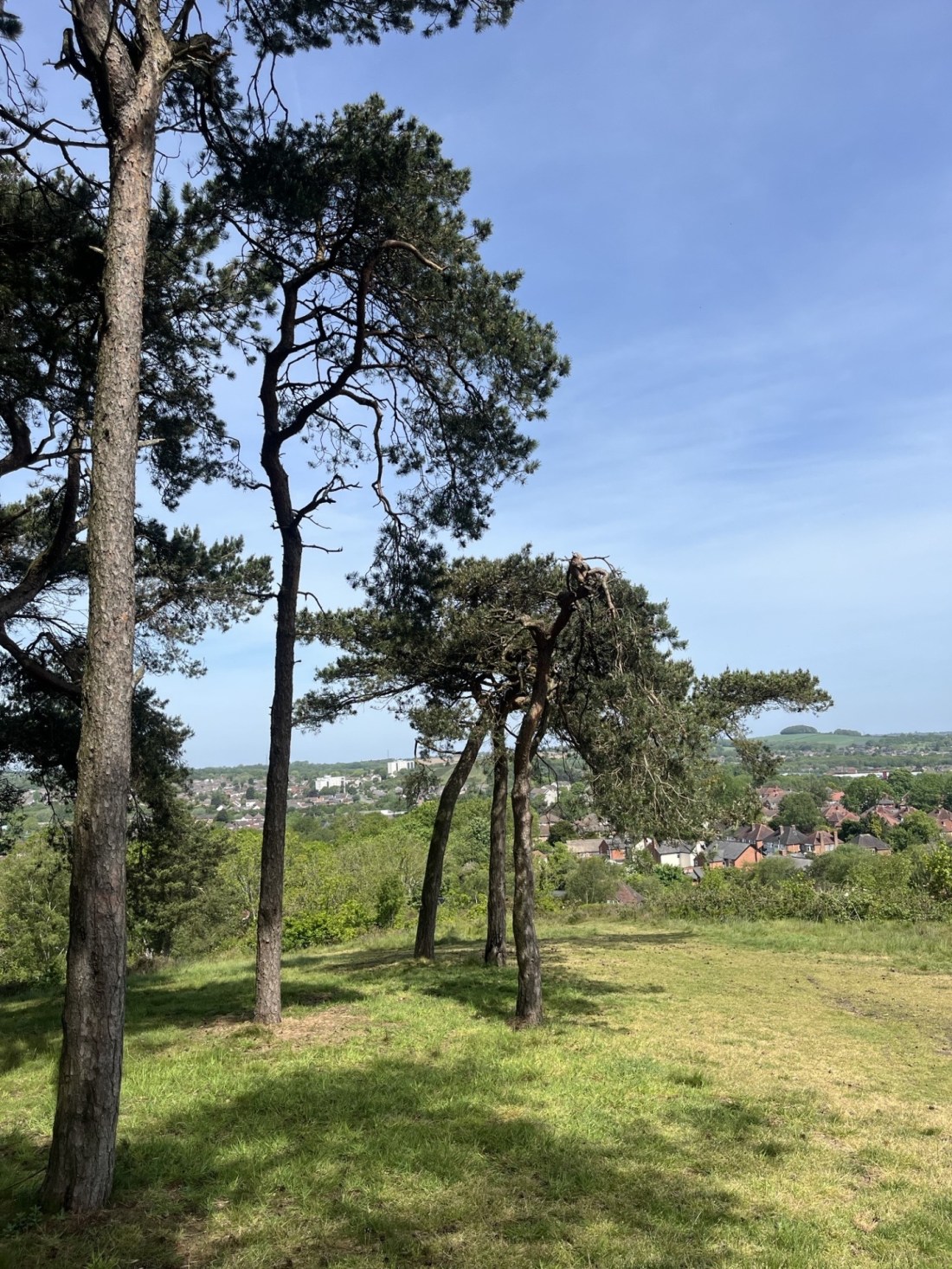
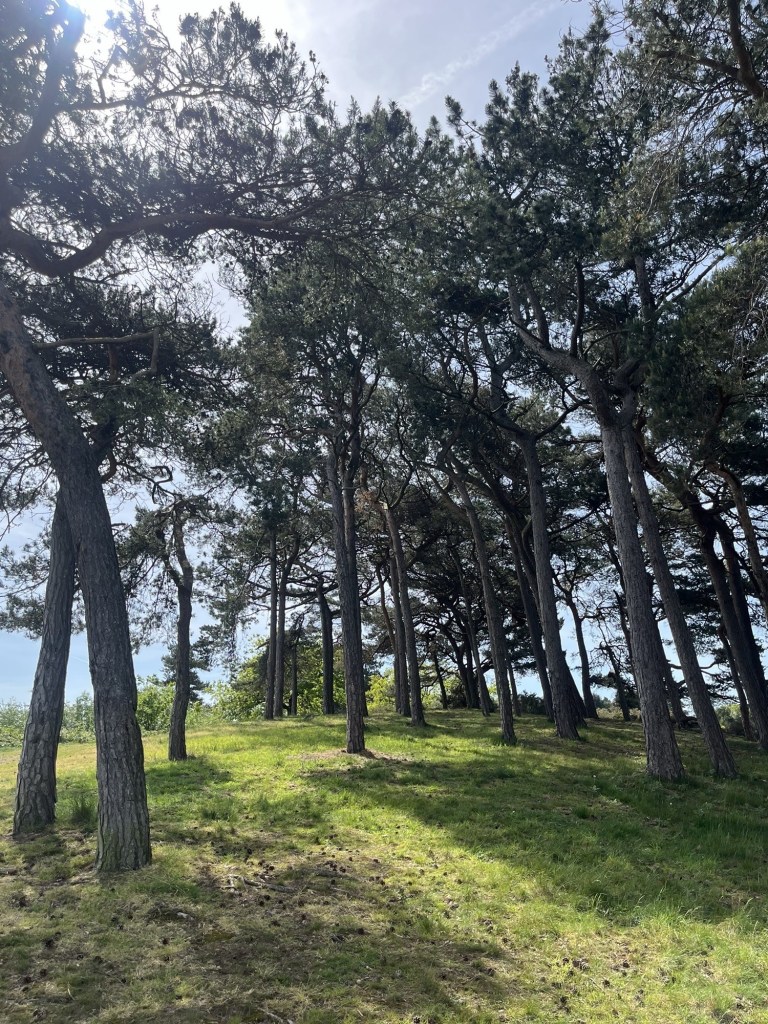
The day before, in the now febrile atmosphere that is the Divided States of America, a young man, carrying a shotgun and some canisters, and one assumes not in his right mind (I have no idea), somehow managed to get into the grounds of Mar-a-Lago. With sad inevitability he was shot and killed by security. It all feels relentless and unsolvable.

I tried to keep a low profile as I approached the top

After about 200 meters I was at the trig point. Someone had placed a plastic wreath on top. I struggled to understand how it hadn’t blown away in the wind, but the spot had obviously meant something to someone. A metal plaque attached to the concrete structure (not seen on trig points I have previously visited) informed that the monument formed part of the Ordnance Survey National GPS Network and that it was an offence to damage it. Which seemed to suggest that there was some sort of signalling gadget embedded in the structure. Surely not! In any event the number 11798 is listed as Inkpen on my latest on-line find – the Trig Pillar Map. Life just continues to get better.

Please don’t vandalise this gift from a bygone age. It’s older than me!!

Next to the trip point was a small flat area of old concrete that served no obvious purpose. Except, on reading up on the site a bit later, back when there were only a handful of satellites (about two years ago I think, given the hundreds that Elon now fires up there every other day), live broadcasting of the horse racing at Newbury was made possible by men (I’m just guessing) in mustard coloured coats, pipe smoking and wearing heavy rimmed glasses driving an enormous signal mast to this point in order to transmit black and white, and then colour, images of the action to daytime television viewers and the punters in the bookies. On a windy wet day in winter, they must have been over the moon to have got the gig. There’s no need for it now, and from what I can see racing on daytime TV is not such a big thing. Anyway, it was a nice image to take away with me.

Further to the south was another interesting looking structure. I should say that it was probably only interesting to a niche audience, but I’m happy to count myself as part of it. On the basis that so far, no pellets had whizzed past my ears, I cautiously walked on. A low circular red brick building, capped off by concrete and with a pipe for ventilation peeking out the top. It could only have been a reservoir but had all the attributes of a WW2 pill box, except it lacked slit loopholes.

Note the traditional running pattern in the brickwork. No fancy Flemish bond needed here.

Back at the trig point I took a quick look around. To the east I could make out Pilot Hill. It’s said that Walbury Hill is the furthest point to be seen from the top of the Shard in central London (approximately 50 miles).** That seems highly improbable to me, although to be fair on the only occasion I went to the top of the Shard, the snowstorm was so bad that the furthest point seen was the roof of London Bridge station directly below.

2013 – I know, the Shardenfreude is not lost on me. The further point observed was the conning tower on the Belfast

It was time to hop back over the gate and make my getaway to the car. The carpark was still as muddy as it had been an hour earlier. A couple of guys with a farm dog on a quad bike, entering the nearby field, eyed me suspiciously. Maybe they’d had a call to intercept a trespasser. Ah well. On the subject of trespass, or more precisely, why it is that so much of England is inaccessible, The Book of Trespass – Crossing the Lines that Divide Us, by Nick Hayes, is an essential read.

I can’t tell you about how I slept that night back in the room. That’s because, thanks to the two drunken, off their cup’s young men in the adjacent room, I didn’t get any. 

The quest continues.

* In answer to the Google search “Why are hedges in Berkshire so wide?” There is none.

** On a related note, my daughters partner J, recently passed me a copy of the December 2025 edition of TRAIL – (The UK’s best-selling hillwalking magazine). Initially I flicked through it but then stopped and went back to the start. The articles were well written and interesting. An article titled the Long Shot, by Philip Thomas, really grabbed my attention. He explained that hypothetically, at 144 miles, the longest view in the UK was from the summit of Merrick, the highest point in Dumfries and Galloway, and the top of Yr Wyddfa (Snowdon), which we know is the highest point in Gwynedd (and Wales). It’s technically the longest view but for all sorts of atmospheric and technical reasons, it’s never actually been seen or more importantly photographed. The longest view that has been photographed is between a point in the Pyrenees and a point in the French Alps (275 miles).

A few pages on from this fascinating article (believe me), was another feature called Top of the World (mistitled I fear) which extoled the virtues of the County Tops challenge and listed 10 varied examples, some of which I had done.

Having immersed myself in the publication I decided that come the New Year I would start subscribing. When I mentioned this to J, he frowned and then told me that I was holding in my hand the last edition – ever! What a blow.

In the Long Shot article mentioned above, the author starts by referencing the Who’s 1960’s hit, I Can See for Miles. Nice touch, so why not?