I woke up in an hotel room in Cambridge, having chosen to break my journey home from North Yorkshire the day before. In the 16 hours I had been in the city not one person had tried to recruit me into the Communist Party, the Workers Revolutionary Party or the Russian secret service. I had, for once, to agree with all those doomsters who post on social media that the country really had gone to s..t.
Great Chishill, the highest point in Cambridgeshire, stands at 146 metres, and just so happens to be 146 on the list of County and Unitary Authority tops. Up until I researched this, I had assumed that the county with the lowest average land above sea-level was Norfolk, but several sites (including the Lord Lieutenant of Cambridgeshire’s own website) claim Cambridgeshire. Cambridgeshire (according to my sources) is the flattest and lowest county in the UK, with an average height above sea level of not a lot and has the lowest point in the UK at a place caled Holme Fen, lying 9 feet below sea-level (about 40 miles from King’s Lynn, and the sea at the Wash). Just to complete the picture I was almost about to reveal that whilst Norfolk was not the county with the lowest average land height in the UK, its men were in fact the shortest, at an average of 5ft 6inches. This was revealed in 2016 by the Suffolk Gazette, apparently following “research”. Fortunately, I bothered to read beyond the first few paragraphs, which were convincing enough, until, in the fourth paragraph it stated the following:
“Researchers found the average man in Norfolk was only five feet six – while Norfolk women were also five feet six… wide.”
Call me old fashioned but at the time of writing I have refused (knowingly) to engage with any information provided by Artificial Intelligence. So, it was with some delight that when I checked back on this article, I noted that at the top of the feeds, the depressingly omnipresent AI Overview showed its “true” colours.
Nothing more needs to be said
But hey, I hear all one reader shout. What has any of this to do with the highest point in Cambridgeshire. Fair point. Let’s get back on track, literally.
Until 1895 Great Chishill was in Essex. The highest point in modern day Essex is a few miles away at a place called Chrishall Common. Standing one metre higher than its nearby, nearly namesake, Chrishall Common manages to come in at 145 on the tops hit parade. Judging by these statistics, when the inter-administrative prisoner exchange took place in 1895, Essex was clearly determined to hold onto its higher status. *
I left Cambridge mid-morning, drove south, and without too much difficulty drove into the small car park opposite the impressive St Swithin’s Church, Great Chishill; a large village with some impressive, thatched buildings on the approach.
The task was simple. Leave the car, walk south on Haydon Road, turn left onto Hall Lane and walk east until the highest point. There’s not a lot to say. I passed some houses on either side of the road until a well-resourced recreation ground and cricket pitch on the left. At approximately 300 metres into the walk, and again on the left, a field opened out. If you look on Google maps a pin drop titled Highest Point in Cambridgeshire, marks the spot. All of one person has rated it and left a review. Christian Goss – get a grip. This is not a 5-star site although I assume that the comment “Great spot, remember to take an oxygen mask though” was tongue in cheek.
The highest point is somewhere in this photo
After a quick look over the field and being satisfied that I had reached the top of the county, I walked back to the crossroads and took a peek into the church grounds.
At the north side of the church, it was just possible, looking to the west, to get a view and a slight sense of height above other land, but to be fair it was marginal.
The sweeping vista to the north-west
The WW1 grave to Private Frank F Rogers of the Suffolk Regiment, who died aged 20 on 20th August 1916 carried the added poignancy of the additional gravestone to his older brother William, born in 1891 and who survived his younger brother by an incomprehensible sixty-nine years.
Brothers reunited
Just as I was leaving the grounds I heard a low drone coming from the west. Looking up, what appeared to be a Tiger Moth type biplane was slowly coming into view and began to circulate above the village before slowly turning back in the direction it had come from. On the way to Great Chishill I had passed Duxford Airfield. Duxford is part of the Imperial War Museum and sure enough (I checked later), for £209.00 (at the time of writing), you can go up in one of these WW2 training planes for 15 minutes. It’s impossible to escape the reminders of war.
Across the road and just before the car park a brick bus shelter offered shelter from the rain to the users of public transport, and a canvas for the imaginative. Most notably a remark, chalked into the brick – Chishill for Life. Several possibilities sprung to mind:
A local stonemasons motto promoting the health benefits of his or her trade
An errant resident whose crime resulted in a tag for life, limiting his or her movement beyond the village
A supporter of the local football team who, in a misplaced sense of place and aspiration, had attached their flag to the mast and won’t be turned – for ever!
The musings of an aspiring Steven Morrissey type, who’s seen the future and has accepted the brutal reality.
The last will and testament of a traveller who passed away waiting for the non-existent last bus out of town. I had noted a grave to the unknown traveller moments earlier.
Despite the damp but warm morning, I shivered at the thought of all the options above. There was nothing particularly exceptional about Great Chishill, nor was there anything particularly awful. It was entirely average, and I guess it was the thought of the very average for life that chilled me most. I drove out of town on Hall Lane as quickly as the speed limit allowed. Within a mile I was in Essex.
Chishill For Life – Be careful what you wish for
* None of the facts contained in this section can be verified 100% so take on board at your own risk.
I was travelling from the Rosedale Valley in North Yorkshire, with the intention of spending the night in Cambridge. Five days earlier, on my journey north, and aiming for Nottingham, I had hoped to make an attempt on Bardon Hill in Leicestershire, but time was against me, so it had to be postponed. Earlier in the day, after eventually finding Stock Hill (the highest point in the City of York Unitary Authority area) I crawled south on the A1(M) and then the M1. It was a Bank Holiday Monday, and it was depressingly obvious.
When, over a year ago now, I started out on my quest to reach the tops of our counties, I was fairly confident that having climbed up to Old John in Bradgate Park (on at least two or three occasions over the years), Leicestershire was already in the bag. Bradgate Park lies to the north of Leicester and has a feel of a slice of lowland Scotland. I had first visited and climbed to the highest point (where the Old John folly adds a few more metres) in 1978, with my girlfriend. It had been a warm and sunny day when we caught a bus out of Leicester. Aww… a perfect picture, except, as we approached the summit, clouds rapidly began to gather. Within minutes the rain started to hammer down and all we had for cover was the small lintel of a door set into the tower facing away from the wind. The fun of the day quickly evaporated as the precipitation enveloped every nook and cranny, and as we slowly drowned in our light clothing, I was overcome by regret in my choice of activity in what was quickly becoming a seriously misguided attempt to impress (I was studying for a Geography degree – what can I say!). How did I feel? Inadequate. No worse. I could now empathise with King Lear:
Blow, winds, and crack your cheeks! rage! blow!
You cataracts and hurricanoes, spout
Till you have drench’d our steeples, drown’d the cocks!
You sulphurous and thought-executing fires,
Vaunt-couriers to oak-cleaving thunderbolts,
Singe my white head! And thou, all-shaking thunder,
Smite flat the thick rotundity o’ the world!
Crack nature’s moulds, an germens spill at once,
That make ingrateful man!
After the rain had passed so had the laughs. We traipsed off down the open slopes and back to the park entrance, where, to compound my juvenile insecurity, the last bus to Leicester had departed. There was nothing else to do but walk. On a road that may or may not have been heading back into Leicester a van pulled over, the occupants clearly having taken pity on us. My memory of exactly what happened next is hazy, but I do recall that by the time we got out we were nothing but relieved. Whilst the two men in the van may well have been acting out of charity; there had been an unsettling sub-text to their conversation that perhaps suggested another agenda. We eventually made it back into town and still wet through found sanctuary in a small pub where we dried out over a couple of wet ones.
But of course, for this account that story would have to be abandoned, because on double checking on the highest point in Leicestershire I discovered that Old John, whilst a significant and delightful high point, was overshadowed by the nearby Bardon Hill, just to the south of Coalville.
Leaving the M1 at junction 23, I navigated south and eventually parked up on Romans Crescent, a road passing through a pleasant newish estate on the edge of Coalville. I had previously researched the location on Google Maps and had taken a screen shot for reference. Despite the recent heatwaves, from what I could tell Coalville came with a rather troubling weather pattern of its own, where permafrost meets the temperate zone.
Fortunately, on the day I visited only warm drizzle filled the air. A short walk south and to an opening into a wooded area. The path extended further south with trees on the left and a wide field to the right extending slowly upwards. I had no idea what to expect on this walk. Despite having lived in Leicester for some years it had never registered that there was significant high ground to the north-west. I had read that from the top of Brandon Hill it was possible on a clear day to see the Malvern Hills, all the way to the south-west in Worcestershire. This seemed to me to be inconceivable, not just because Bardon Hill wasn’t exactly a mountain but because of the distance (around 70 miles at a guess). The other thing I knew was that at some point there was a quarry of some sort, but its extent remained unknown.
Just beyond the field – the boulders may have been a sign
With the field ending the path led into mature woodland, and just a short distance in a sign made it clear that something of interest probably lay ahead.
Oh! No, this is a sign. Well, you get the gist
The track continued and then an obvious upward path to the right indicated a steeper ascent. Continuing up through the woodland the gradient increased significantly, and after four or five minutes I was beginning to pant. The occasional dog walker passed by, going down. I was envious.
After maybe ten minutes the woodland began to retreat from the edge of the path, and slowly the land eased in its gravitas. The surroundings were now more heathland than woodland, with minor tracks leading away towards the quarry. I wasn’t too curious. There would be a view at the top I was certain. A large wooden bench and some smooth rocks presented a rest opportunity. For some reason I chose the rocks.
Resting point
After a few minutes I carried on up a short way to the top of the rise. A concrete structure sat to the right in some woods and the land beyond fell away. I had clearly reached the top.
The top?Obs…
Mission accomplished, I retreated to the bench and stone combo. A short distance to the left provided a partial view of the quarry looking north-west. I had expected to see something quite significant, but the size of the hole in the ground was far bigger than I had expected. Largely overgrown on its higher slopes I wondered if there were any items of a policeman’s uniform hidden in the undergrowth. If you are wondering why I was thinking this you’d be right to ask.
The view from near the bench
At the time of my visit there had been a national news story about a Leicestershire policeman whose helmet had been lost some twenty years earlier but had recently been found and recovered from a local quarry. He was delighted with the discovery but had no memory of how it was lost, or how it had ended up in the quarry. Quite why this was a national news story was bewildering. Perhaps Trump had lost his phone, or the Russian army was on a day off. Well, I reckon if you had lost your helmet on duty, you’d know about it and remember the moment. And if you couldn’t remember it, your colleagues would and would never let you forget. My best guess was that after a long shift on a Friday night, the squad had some down time where alcohol may have been consumed, and in a moment of abandon the helmet was disconnected from its appointed owner and hurled randomly in an unfortunate direction. Was I now looking down into the quarry in question, and at the scene of the crime? We will probably never know.
Back at the bench I concluded that I had fulfilled my obligation and so started my descent. About one hundred metres on, and another small path appeared to the left. Well, one more look wouldn’t harm. I reached the fence where the view to the west and south was more expansive than before. I looked up to the highest point. Hmmm…. It looked much higher than I had expected, and what was that feature near the edge? Ah! A trig point, and with that realisation an instantaneous sense of mission failure. The journey from York south had been painfully slow and I was keen to press on to Cambridge and some time to rest. But… and it was an important but, whilst I have contented myself with the notion that for various reasons I wasn’t always going to get to the very top of each county, falling a long way short, without adequate excuse, was inherently lame. Reluctantly, I was going to have to address the situation.
Trig warning – top left ☹
Back at the main path I trudged up to the bench and stone location, and then on to the point which I had previously considered the top of the hill. *
I noted that the path carried on, descending away to the right. I dutifully followed and after a short distance it began to rise again. About 100 metres on a large abandoned, graffiti covered building brightened up the overcast day.
The art of installation
The track meandered onwards, up and down, over rocks and through thickets. Not the easiest terrain. Emerging out of some woods, at last, I had reached the end of the journey. The trig point stood proudly ahead.
That’ll do
Clambering to the very top the view of the quarry was fully exposed, and despite its devastating impact on the hill, bleakly impressive. There was no sign of the Malvern Hills seventy miles to the south-west, but there was a battered information board, that by deduction must have been installed around thirty years earlier, given a reference (top left) to the “recent eruption at Montserrat, West Indies”. 1995 for the record.
An information board struggling to survive.
I moved over to the railings at the edge of the quarry. Looking down it was very obvious that it was still an on-going operation. The rock was volcanic, and the excavated material aggregate, something, when you think about it, we can’t do without. Once upon a time (570 million years ago by what I have read), a volcano had erupted and created the conditions which, an incomprehensible number of years later, allow us to extract the rock to build roads, support railway lines, and in more inhospitable parts of the country form the basis of paths and tracks that allow walkers and ramblers the opportunity to reach wild summits. No doubt soon after the eruptions stopped it would have been possible to stand on a lip of ground, much higher than today, and look down into the volcano’s caldera. Now I stood slightly aghast and looked down on a man-made caldera. It was overcast and grey, but on a sunny day, with its azure, blue lagoon, I suspected it would be of some strange beauty.
A large chunk of Leicestershire, now missing
I knew from an earlier check that this was not the only large quarry in the area. There were at least another two nearby. The Bardon Hill quarry produces 15% of the county’s aggregates. Whilst larger country’s boast much larger holes in the ground, by the UK’s standards, this is a big one and had been bolstering the nations infrastructure for around 400 years. Well, I’d found out a bit more about my land. I’d enjoyed the climb and what I’d found. If I lived locally I would be clambering up as often as possible (in the hope that on one very clear day I might just see the top of the Malvern Hills). Thirty minutes on and I was back at the car and soon after back on the M1.
An hour or two later, I was driving slowly into Cambridge from the north-west. No dreaming spires on show, but as I approached on Castle Street and looking directly ahead into the heart of the city, I conjured up images of Burgess and MacLean, Philby and Blunt (in no particular order). I turned left into Chesterton Lane, running along the north bank of the river Cam, arriving at the Arundel Hotel shortly afterwards. Parking up at the back and trying to fathom how I had managed to wangle a room here for £70 I soon found my way through to reception, passing a tall, lean fellow wearing a tweed jacket and carrying The Times, which carelessly enfolded a copy of the Morning Star. A woman was working in the office at the back, no doubt sending encrypted messages to Russia, Romania or the USA. She noticed my presence, smiled and approached the counter.
“Good evening,” she said. I smiled and thanked her. “Are you with the party sir?”
Momentarily taken aback I considered the question carefully. “No,” I replied, “just on my own.”
She handed me the keys, but as no further contact was made during my stay it can’t have been the correct response.
* “Top of the Hill” from the superlative album “Bandstand” by Leicestershire’s finest Family.
It took me three days longer than I had intended to reach the highest point in the Unitary Authority of York.
I had been heading north, with the intention of reaching the small village of Rosedale East, hidden in the seemingly forgotten but extraordinary Rosedale Valley in the North Yorks Moors National Park.
I had stopped for a couple of nights with my brother in Nottingham where, the day after Tottenham Hotspur had defeated Manchester United in the UEFA Europa League final, I had popped up to the highest point of the city at Mapperley. That night I explained what I was hoping to achieve over the coming days. It included what seems to have become an annual trip with my daughter and her partner J to a heritage railway. In this case it was to be the North Yorks Moor Railway. If there was time, we would also have a trip into York and take in the National Railway Museum (2025 is the 200th anniversary of the railways in Britain).
My brother piped up. “Do you remember when you took me there?” A vague memory began to form. I did, but only just. He reminded me that we had taken a train from Kings Cross, went to the museum, and returned to London the same day. He thought he was about ten years old, which meant that I would have been just fifteen! Well, I’ve checked and given that the museum only opened in September 1975 (50 years ago as it happens), I would have been at least seventeen and he, twelve. Nevertheless, it still surprised me that I had taken on the responsibility at the time.
I left Nottingham, and at Pontefract I dropped in to see my two Yorkshire based cousins where over two hours we caught up on a year’s worth of news, books and aches and pains. Suitably fed and watered I carried on up the A1(M). All I had to do was take a right at junction 44, and then by keeping to the A46 I would be able to tick off the top of York.
In the short time it took me to get to junction 44 I had seemingly forgotten the junction number and sailing merrily past it. Incomprehensible, but it wasn’t until signs for Thirsk and Ripon started appearing that it began to dawn on me something was amiss. I appeared to have been in a state of denial. Instinct eventually told me that I had shot my bolt, York was too many miles behind me now, and executive action was required. Leaving the A1(M) at last, I took towards Thirsk and then stuck to the A170, climbing up an improbably steep slope to the high ridge at Sutton Bank, before stopping at the excellent little town of Helmsley for some provisions. A text informed me that my comrades had reached the farm we were staying in. Good timing. According to the phone thing I was only 27 minutes away, and so texted back to say I would be there in a jiffy.
Past Kirkbymoorside I found the road that would take me as straight as an arrow to East Rosedale. At a place called Hutton-le-Hole I should have turned right (if only I had known!). Maybe I had been expecting to see a sign or something, or maybe I was just overwhelmed by the rough beauty of my surroundings, or maybe just at that moment a 4X4 had been trying to mate with the boot of my car, but for whatever reason before long I was driving along a barren moorland ridge with stunning views in all directions. Down to my right I could make out the Rosedale valley and I knew that at some point a road would appear that would take me down into the top of the valley and then the village.
Just past the Lion Inn on Blakey Ridge and sure enough the turning appeared. To my consternation a red sign stuck in the middle of the road stated that it was closed. A diversion sign pointed back the way I had come. Surely not!
When in doubt, “keep on going” is not my go to motto, but for whatever incomprehensible reason, on this occasion that is exactly what I did. Fifteen minutes later and I was doing a U-turn in the small town of Castleton (not to be confused with the pearl in the Peak District) and defeated, started to retrace my route.
Eventually, back at the closed road, I pulled over. My phone had been ringing. Despite every effort to understand how to execute a hands-off call in my car it remains a mystery to me. I suspect it must be broken. I called my daughter back. “Hmmm… no I wasn’t okay really. This road is closed, and I feel like a total dolt.” (Dolt is a medieval word now rarely used, so in truth that’s not the word I used, the actual being more Anglo-Saxon than polite Tudor). Don’t worry, she said, the road wasn’t really closed. They had used it.
Against my better judgement but now realising that to find another route was going to take at least another thirty minutes, I slipped past the sign as if I was under surveillance and headed along and then down the east side of the valley. And there it was. The road works! Fortunately, the boys from the black stuff had gone for the weekend, and there was just enough room to squeeze around the barriers. Against all the odds I had made it to the accommodation at just the moment the BBQ had started, and the bulk of the preparation had been completed. My lucky day!
The following day we took the slow train from Pickering to Whitby on the North Yorks Moors Railway. A spectacular route, but there were no steam trains were on duty. A month earlier one of them had sparked off a wildfire high on the moors, and the mile or so of destructive fire power was plain to see. Judging by the long-range weather forecast the chances of steam trains hauling passengers on the line will probably have to wait until the seasons end. A big shame for the heritage industry, but hey, for a while at least the kids would just have to get used to some diesel action instead.
Heritage Brush Type 2 at Whitby (built c1957 – we share the same birth year, which presumably puts me in the heritage category too).
Whitby was heaving, bright and breezy and perfect.
A nod to Martin Parr – Glorious Whitby
On the train back we agreed to head into York the following day.
We drove in and towards the National Railway Museum. Despite the early hour, we’d missed the chance to park nearby, having to settle instead for a more central location that charged Air Prk n Prk prices. In for a penny, in for £20 as they say, it looked like we were gonna spend the day. After an hour or two at the train museum, which naturally met expectations and which didn’t seem to have changed at all since 1975, we wandered into town. Busy, busy, busy, but looking good on an unexpectedly bright and squally day.
After passing the cathedral we slipped into the famous Shambles, and what must be something of a bull run for parents with pre-teen children. Every second shop was either an identikit sweet and fudge emporium or a Harry Potter merch crap shop (as I write the BBC are doing a York day on the radio, and by all accounts there are five!!). In horror we slipped out as quickly as we had slipped in. The last time I had been through the Shambles, sometime around 1981, it was certainly commercial but retained something of its mediaeval essence. I recall a quaint shop under which ran a Roman road, and the story was that from time to time the ghost of a Roman soldier could be seen walking through, at waist height! At waist height because the old road was a couple of feet below the current floor level. I was thinking about some fancy words to explain my position on ghostly spirits, but I’ll get on with it. I don’t believe in ghosts, but if I was to ever place credence on any ghost story at all, I’d have to give it to the torso of the Roman soldier, simply because of that quirky detail. Seriously folks, I’d rather see five Roman ghost shops than the H Potter exploitation outlets that have killed the vibe.
We carried on down to the Norman castle and back along the riverbank. Just before the Ouse Bridge crowds of drinkers and diners lined the embankment at Kings Staith. We stood outside the Kings Arms. The last time I had been here, in 1981, it would have been impossible to stand where we were now. Up from London with a friend who had no interest whatsoever in trains, but a keen interest in historic pubs (let’s be honest, all pubs), the only way to access the Kings Arms was from the adjacent street via the upper side door and clambering over sandbags. We ordered a couple of pints and went and sat at a table by one of the river fronted windows (see picture) where we gazed out as the Ouse gushed past us, just a foot or so under the window ledge. How exciting! Looking round one of us spotted a series of marks on the brick wall. They showed the levels the river had reached within the pub on previous flood occasions. We looked out at the raging torrent. Hmmm… it was still raining! It was down the hatch and away.
The Old Uninsurable – York
Given the Sahara-like conditions in Yorkshire since February, the chances of the Ouse flooding any time before this winter appeared remote but, on this occasion, we passed the Kings Arms and started to head back towards the car. At Museum Gardens we popped in for an ice-cream to find a Romano-British re-enactment taking place. We watched as nails were forged, leather studded, and wood worked. At the “how many different ways did the ancients invent to kill and main each other” three men dressed in full armourer’s garb demonstrated that the number of ways invented to kill an opponent appeared to be limitless. Slingers were in particular hideously murderous. A cohort of legionaries began to assemble. Twenty odd older men, dressed in combat wear and possibly slightly worse the wear from the mead, started to line up. It all seemed a bit amateurish, which of course it was, but the finely honed drill was observably messy and after some pushing and shoving tempers began to flare amongst the ranks. Voices were raised and one of Rome’s finest re-enactors came in for some rough tongue lashing from a couple of his colleagues. The air began to turn a different hue as some clearly audible Anglo-Saxon words were exchanged. Ironic I thought, given the circumstances. “Mummy, what did that man say?”
It took a few minutes to get themselves sorted out (I figured that it might have been a good opportunity for the Iceni re-enactors to have grabbed some of the abandoned weaponry and have seized the moment, but they too just looked on perplexed, cowed no doubt by a latent inferiority complex). Eventually, having calmed down, the troop marched off, a tad unsteadily, towards their starting point. The fun now over we too marched off in the opposite direction and across Lendal Bridge and back to the car.
Back at East Rosedale I had a short walk out from the farm complex we were staying at, up a low hill and to the abandoned site of the railway yards that served the nearby quarries. In the apartment a brilliant little book (Rosedale Mines and Railways by H R Hayes and J G Rutter) gave a fantastic account of the ironstone industry that had once dominated the entire valley. The signs of industry were still evident but unless you knew it was there, or that the railway had snaked north up to the head of the valley, and then back along the contour on the western flank, you would never have known that thousands of people had once lived and worked this remote valley.
The old quarry and sidings above East Rosedale – the very accessible trail extends around the entire valley
Monday morning had arrived and so had an annoying band of low cloud and slashing rain (we’d hoped for a walk before leaving). No point complaining, even a thimbleful of the wet stuff would have been welcomed by the farmers. I finished off a quick sketch of the view towards the west slopes (a faint line hints at the old railway).
After breakfast in the pretty village of Rosedale we bade our farewells. My daughter and J were taking on the daunting journey back to Bristol and I was heading back towards York, and then onto Cambridge where I had secured an unfathomably cheap room in an hotel to break my journey back to the south coast. I was in no rush.
To get to York, all I had to do was retrace the route we had taken the previous afternoon on our return from our visit. I passed through Pickering and then Thornton Dale. As I passed out of Thornton Dale it occurred to me that it wasn’t a place I recognised. I pulled over and checked the map and discovered that for the third time at least on this short break, I had missed my turning. Up until quite recently I have had an almost unswerving confidence in my navigating abilities, to the extent that I have no satnav and am untroubled by the fact that my phone refuses to speak to me on the odd occasions I do try and set a route on Google.
Having worked out the revised route I set off along delightful country roads and mulling over whether I had at last reached the tipping point of short-term memory malfunction, before eventually meeting up with the A64 and heading south. Within five minutes the traffic ground to a depressing halt, it being a bank holiday Monday every second vehicle dragging a caravan. Every so often, when an opportunity presented itself, a car would peel off and head into a side road, clearly being assisted by their in-vehicle device. On the way back to East Rosedale the day before, J, who was driving, inexplicably pulled off the A64 and all of a sudden we were on a tiny track running between wheat fields. I suggested quietly that this departure from the main road felt wrong, but apparently the phone always found the quickest way. After a couple of minutes, and with no obvious sign of a major road in sight J pulled over. Seems that at the petrol station a mile or two back J, who had previously programmed the petrol station into the phone, had failed to reprogramme the route on filling up. Now the phone was desperately trying to take us back to the petrol station. The notion of AI leading us all a merry dance in a frantic attempt to assist had tickled me pink, and now, as the jam began thinning out, I was just content to wait it out. There was no obvious cause for the congestion other than the sheer numbers of people returning from the east coast to all other points north. It was only past York that the traffic began to move with a bit more purpose. I was getting close (oh, in case you’ve got this far, but had forgotten why you were here at all, I was still seeking out Stock Hill, the highest point in the City of York Unitary Authority).
I pulled off at the Askham Bryan junction and before long was driving along random lanes in what I considered to be a westerly direction. When I had planned to do this three days earlier, on my way up (you’ll have probably forgotten by now that I had missed junction 44), the approach to the high point would have been straight forward. A left turn off the A64 at The Buckles Inn and Bob would have been my uncle. Unfortunately, as the A64 is a dual carriage way, and there is no right turn from the east at The Buckles Inn, I’d had to come off a mile or so beforehand. Of course, I didn’t possess the necessary in-car tech to get me out of this labyrinthine pickle, but I knew that if I just kept driving with a left, left, left attitude I’d get to where I belonged. *
Sometime after leaving Askham Bryan I found myself driving through (from the west – eek!) Askham Richard. I was lost, and I swear that if anyone at all had been out on the streets, whether they were called Bryan, Richard or Louise, I’d have stopped and ask’d ‘em for directions. * *
In hindsight I believe the problem I had was that my destination was on an unnamed road, which meant that I was in a perpetual state of confusion. Somehow or other (luck I guess) eventually I was driving south on a small road that from what I could recall of earlier on-line research felt familiar. A small row of whitewashed cottages appeared on the left with fields in all directions. Fifty metres on and again on the left a side track and a large metal gate. I pulled over, knowing I had arrived. The gate was locked. I knew it would be. The track headed east and rose slightly to a higher point about a hundred metres beyond. A CCTV sign on the gate made it clear that whatever lay beyond was private property.
The Stock Hill access prevention scheme
I had been driving for what felt like hours so took a few minutes to stretch and take in the views. Despite the relatively flat vista to the west, the road heading south and back towards the A64, dipped away. Beyond low ridges, on the far horizon and on an almost ley line alignment with the white dotted lines running down the centre of the road, cooling towers and an enormous chimney, maybe ten miles away. I looked at the map on my phone (the one that seems incapable of talking to me when I try to set a route – or is it me?). Oh! There was no doubt about it. I had read loads about this place in Private Eye and seen documentaries about it too. Possibly one of the most controversial industrial sites in the country, Drax Power Station near Selby once burnt coal but now burns something called biomass. This “biomass”, from what I understand, consists largely (or possibly entirely) of imported wood pellets. In a BBC documentary two or three years ago, evidence was found that some of this wood was being sourced from irreplaceable primary (i.e. ancient) forests in Canada. The company receives huge state subsidies (billions of pounds) and generates a significant amount of our “renewable” energy. Mind you, that depends on whether burning wood is a form of renewable energy. Many claim that it is not, and that it would even be cleaner to burn coal instead. I don’t know, I’m not a scientist, but if I had to decide on whether to continue funding it, or letting it go for good (I don’t have to; it’s currently Ed Miliband at the time of writing), I’d probably let it go, and instead use the billions set aside for future funding to invest in genuine “green” industries for the Selby area. There… it’s out now, I’m a hippy.
The white lines point to Drax
In unrelated Drax news, in 2022 I stopped at the village of Corfe Castle in Dorset. A sign by the village hall had a picture of a vigorous looking young man, who purported to be the area’s local Member of Parliament.
Richard Drax was 64 when this photo was on show. I too was 64, and like most men of that age certainly didn’t command the same youthful visage
Until 2024, Richard Grosvenor Plunkett-Ernle-Erle-Drax was not only the Conservative MP for South Dorset (when remarkably he lost his seat to Labour), he is also the biggest landowner in Dorset and owns a large pad surrounded by the biggest wall in the county. He is the so and so in line of a very old aristocratic family that cemented their fortune through slavery, and are the last of the old slavers to still own large plantations in Barbados (having almost certainly also received huge sums in compensation after the abolition of slavery, of which we – that is the nation – have only just finished paying off the debt). Anyway, I digress. Richard Drax (as he likes to be known, and some say after David Cameron asked colleagues with posh names that might identify their privileged class, to shorten them), to the best of my knowledge, has nothing whatsoever to do with Drax Power Station, but if you were to imagine a science fiction, post-apocalypse, super polluting industrial conglomerate it would almost certainly be called Drax and owned by a dark lord of the same name. I have mused too far (to the left you might complain).
Back to reality. If you are keen to visit this location and wish to share the view of Drax power station, my advice is simple. Approach from the west on the A64. On reaching The Buckles Inn (a mid-20th century brick building that at the time of writing was temporarily closed) turn left, carry on with fields on either side and then stop at the first track on the right.
In order to keep up my newly found interest in the Civil War I was half tempted to seek out the nearby site of the Battle of Marston Moor but instead I drove off back towards the A64. Free… at last.
After the night before (when Spurs had beaten Manchester United in the UEFA Europa League Trophy final, and after I had chalked off Rutland and the City of Leicester), I had one more day in Nottingham and felt the need to visit its highest point. I say I felt the need, but that’s not strictly true. To be honest I was just slightly hungover. Nothing that I was regretting, but just that slightly off feeling that thankfully I hadn’t felt in some years. Either way my brother was working from home, and it was important that I got out of his hair (of which he is still blessed, and I am not).
I’ve been to Nottingham many times; on a couple of occasions in the 1970’s on day trips from Leicester to the Old Trip to Jerusalem and other hostelries, but many more times after my brother moved there in the late 1980’s. I have to say it never occurred to me that it had any land higher than the site of the castle (which remains one of the world’s biggest disappointments, especially if you’ve ever seen any Robin Hood films). For everything else you’ll ever need to know about Nottingham, and the engineering beauty (!) of Maid Marion Way, I can’t recommend enough Mark Steel’s – In Town – Nottingham on BBC. *
I had discovered that the highest point in town was a place called Mapperley located vaguely somewhere in the north-east. Dosed up on coffee I drove directly towards the city centre, which involved passing the Trent Bridge cricket ground. There were a lot of people mingling around but I didn’t put two and two together (probably a county match I mused), and carried on over the bridge, with the Forest ground to my right. I should say a couple of things about Nottingham Forest’s City ground (just to string this relatively brief account out a tad more).
I’ve been there a few times with my brother and sister-in-law over the years, but mainly during Forest’s leaner years. The first time I went was with a die-hard Brighton fan called Trevor. From memory it was the second leg of the League cup quarter final, on a freezing winter night in December 1978, and for the life of me I can’t remember what convinced me to go or (being that I was from Croydon), why he had invited me in the first place. This was about the time when Forest were about to make history and had the classic Brian Clough line-up. We took a bus up from Leicester and by kick-off we were in with thousands of Brighton away fans.
It was an exciting game. The Brighton fans were boisterous throughout, but in the end Forest were triumphant, and eventually we set off back to the station (the surroundings of which have changed out of all recognition in the intervening years: the delightful Victorian Bentinck Hotel pub, now a desultory Starbucks) with the thousands of others who had made the long journey from the south coast. And that of course is where they left us, and we had to make our way to the bus station, on our own, in the rain, and with Trevor refusing to zip up his coat and cover his blue and white Brighton and Hove Albion scarf, despite my whimpered pleas to his conscience. With the streets still crammed with celebrating Forest fans, I had never felt more exposed. Dirty, threatening looks, abuse and the possibility of violent intervention at any time convinced me that if we survived the night and escaped Nottingham unharmed, I would definitely not travel with Trev to a Brighton away game again. We eventually made it out of town on the late bus to Leicester, and I kept my promise.
The other significant moment, just outside the City ground, was some years later when walking along the river Trent footpath with my brother and their dog. We were the only people about until ahead of us a group of male athletes on a powerful jog headed towards us. As they closed in my brother speculated that it was the current Forest team, and sure enough, as they passed, I recognised one or two. “Morning lads,” came the heavily Glasgow accented greeting from the older man at the rear. On the 11th of June 1978, Archie Gemmill had scored the greatest Scottish goal of all time against Holland in the World Cup in Argentina. As a Scottish family living in the diaspora we had watched the game, more in hope than expectation. When Archie scored his wonder goal the roof nearly came off the house, and in many Scottish towns and cities there are still buildings with structural damage from the resultant seismic aftershocks. Scotland won the game, but it wasn’t enough to qualify for the knockout phase, but it didn’t matter. Archie was God, and he had just spoken to us.
I drove further into the town centre and, without incident, managed to find myself heading north-east on St Anne’s Wells Road. I turned left at Ransom Road, simply on the basis that it headed upwards, often a useful clue in these situations. To my surprise the road rose steeply with interesting parks to the left and right. At the top I turned right onto Woodborough Road and eventually pulled up in the carpark of an Aldi to get my bearings. I was in Mapperley, and a quick check informed me that the highest point was just a short walk further to the north-east. The sign said I had two free hours, so long as I shopped in the store. It was going to be a risk, but I figured that the chance of parking up, not making a purchase and being caught, was low.
It was just a three-minute walk. The highest point seems to be at the rear of a bleak looking Victorian block of flats set behind some grim railings and gloomy woodland just opposite the busy and confusing junction with Porchester Road.
There was no helpful instruction for Right turners.
I passed on by. The oppressive heavy-duty railings continued to line the left-hand side of the road, behind which was what appeared to be a grass covered reservoir.
The grassy uplands of Mapperley
The highest point appears to be the back garden of this indeterminate bleak house
Walking back to the car I looked around at the most eclectic collection of buildings you could find in any place in the country. Mainly Victorian and early 20th century not one of them looked like the next, and without exception, other than a strange quirkiness, none had any architectural interest or value. It seems that high ground to the east of an industrial city does not a garden suburb make.
I’d chalked Mapperley off the list but still had a few hours to continue my Nottingham investigations. I had an objective. Something I had been aware of for some years but had not had the opportunity. I drove back into the centre, navigating tricky road layouts, past the castle and then west, eventually reaching the area of Toton an hour or so later. I parked up on a new estate and then headed into the Toton Fields Nature Reserve. After twenty minutes or so the rising land took me to a point I had hoped existed. I knew I was there because there were a few other people with cameras and binoculars looking down the slope to the west, and the noise below was distinctive.
I was overlooking the Toton marshalling and freight yards. A hive of railway activity with locomotives slowly moving north and south, vying for position. Every so often a long freight train pulling through. Immediately below two peripheral sidings were the final resting places for scores of redundant diesels, just waiting to be scrapped. In a way quite a moving sight but somewhat inevitable given our rejection of railways as a means of tackling our multitude of problems. But beyond, the activity suggested that whilst the rail freight business might be down, it wasn’t quite out. And the only reason I am talking about this at all is that the site contained the largest selection of Class 66 diesel locomotives in one place that I have ever seen (and they weren’t all red) **
A colouration of Class 66s.
The end of the line at Toton
I could have sat and watched the activity at the Toton yards for hours more, but it was time to go back to West Bridgeford.
I walked back south on the low ridge (which I guessed was artificial) and just as the yard was coming to an end, with my route out of the reserve to the left, I looked up. On the horizon, perhaps a mile or two to the south, the huge cooling towers of the old Ratcliffe on Soar power station reared above the low Nottinghamshire plain. It occurred to me that it might be the last time I would ever see it, it having been in my line of sight on hundreds of occasions since the mid 1960’s. Coal powered and out of date, it nevertheless always had an uplifting, cathedral like and overwhelming appeal. But, despite the unaccountable nostalgia, it must go and for the last time I took a photo.
Fair ye well Ratcliffe on Soar.
After navigating through the usual late afternoon urban congestion, I found myself driving back past the cricket ground. It was heaving, which was a surprise. The radio had been on and suddenly they had gone over to Trent Bridge for an update on the cricket! England v Zimbabwe one off test match. And at that moment I was there, but not. How could I have missed this opportunity? I reflected that I could have spent the day in the sun watching the great game, but then, just think what I would have missed if I had.
Part of the appeal of visiting the highest points of Britain’s counties (and subsequently Unitary Authorities) was the possibility of finding new places of interest, whether historic, aesthetic or geographic. Before I say more on this, I need to be clear that Nether Hall, the highest point in the City of Leicester, is none of these.
I was on my way to Nottingham for a very important engagement. Having left the A1 and then got as close as a field away from the highest point in the county of Rutland (Cold Overton Park) I was back on the road and heading towards Leicester’s north-eastern suburbs. After crossing into Leicestershire, the Cold Overton Road became the Oakham Road. I passed through the small village of Knossington, and then driving by instinct over intelligence, sometime later I was on a narrow road just past Marefield and in a rural landscape that was reminiscent of a time before the invention of the car.
The road traversed a grassy field with long horned cattle nonchalantly observing my progress. Just half an hour earlier I’d bottled out of crossing a field (on foot) to reach the top of Rutland, due to the presence of a herd of modern industrialised cows, but this lot looked so benign I would have been happy to have got out of the car and stroked them.
At the end of the field I passed under a magnificent old red brick railway bridge, clearly abandoned. I pulled up just past the bridge and spent a few minutes scouting round the structure and taking another look at the recumbent cattle. There was no obviously legal route up the bank and onto the old track, although breaks in the fencing indicated that to get there might not be impossible. I returned to the car and made a mental note to check the location’s heritage at a later time.*
Bridge to nowhere – Marefield
The narrow lane continued through an equally appealing rural landscape. At a junction I headed south (I was aiming for the A47) but my precise location was indeterminate. I passed through Tilton on the Hill and then did a right onto Tilton Lane. Why, you might ask, am I banging on about the route, when I ought to cut to the chase and just post a picture of Nether Hall. Well, it’s because, having thought I knew Leicester and Leicestershire well, I genuinely wasn’t expecting to find myself on a gradually rising road which, halfway along, suddenly broke cover onto a ridge with unexpectedly delightful views to the south and north. It felt more like being in parts of the Yorkshire Dales than the East Midlands.
The reason for this topographical anomaly is a layer of Dyrham formation sedimentary rock that projects like a Cornwall shaped peninsular into and above a lower layer of Charmouth mudstone (another sedimentary rock). Everything ultimately boils down to geology (why are there wars?), and in this case it has produced a small nugget of essentially English countryside. Not having enough time to stop and explore a little I filed it in my memory bank (or as Christopher Plummer, playing the part of Wellington, said in the film Waterloo, “It may surprise you to know that I saw this ground a year ago. And I kept it in my pocket.”). I may return.
Eventually gaining the A47 I drove directly west and reaching the suburb of Bushby, turned right onto Station Lane and then left onto Scraptoft Lane. At an imposing and impressive looking Georgian pub (the White House – now a Wetherspoon’s!!) I took an immediate right and passed through Scraptoft. I still wasn’t yet within the Leicester City boundary, but this name took me back nearly five decades.
Between 1976 and 1979 I studied Geography at Leicester University, and Scraptoft, despite never visiting at that time, was a place that I had heard of. On looking this up a while later I discovered that in 1976 it became one of the campuses for the then Leicester Polytechnic. Now, there are only two reasons why I would have known about it then. Either some of my pals, the footballing lot, had played the Poly’s footballing lot, or possibly, and sadly more likely, some of my other acquaintances at the time, who grew up on the Stretford End terrace at Manchester United, had gone to a disco there and enjoyed a Saturday night ruck. That was a very long time ago, and another life. In 2003 the hall was sold for development. What’s new?
I was close and a short drive north on Hamilton Lane and then left onto Keyham Lane West, where I pulled over. I was back in Leicester…. just!
A small “green” occupied the south side of Keyham Lane West, beyond which lay some modest but reasonably attractive housing. The border (for want of a better word) between Leicester City and Leicestershire lay on the east side of Hamilton Lane, and thus the objective had been achieved. **
The sign could do with a wash. The high point is just a few metres to the left
Another sign in distress. Just over the border in Leicestershire – Hamilton Lane
Time was getting on. Any thoughts of reaching the highest point in Leicestershire (Bardon Hill), evaporated as the traffic moved at a snail’s pace around the northern ring road. But the names were coming back to me. Humberstone, Thurmaston, Glen Parva and Anstey. I’m not particularly nostalgic, but I loved Leicester in the 1970’s, and having visited it again two years ago, I still do. It has a positive buzz and an attractive town centre. And, hey… I saw some of the best bands there back in the day (The Jam, The Clash and the Live Stiffs tour, to name check just a few).
As I say, no scope for nostalgia here from me (ha!). I had an appointment with my brother and sister-in-law in the Test Match pub in West Bridgford. Back in December 2024 I had sat in the Copper Pot in Leamington Spa and watched one of the most exciting games of football I’d seen in ages. Spurs had ripped Manchester United to shreds in the first half, but only just managed to survive after their goalie (Fraser Foster) made two howling errors and clung onto a 4-3 win in the quarter final of the League Cup. The next day I visited the highest point in Warwickshire. Well, a few weeks later Liverpool thrashed Spurs at the Lane in the semi-final, and after Spurs were knocked ingloriously out of the FA Cup, all that was left was the Europa League Trophy. Despite an atrocious second half of the season for both teams, Spurs and Manchester United somehow managed to get to the final in Portugal. And joy oh joy…. Spurs won!
I’d topped Rutland (nearly) and the City of Leicester, found a bit of countryside just east of Leicester that might call me back one day, and seen my team win a cup for the first time in 17 years. What more could an old man wish for? Oh, did I mention that my home team, Crystal Palace, had also just won the FA Cup? ***
*The old railway tracks at Marefield converge just to the west of Manor Farm. Unbelievably three stations lay within the area. A joint venture undertaken by the Great Northern and the London and North West railway companies in the late 19th century, it was primarily a goods line (Iron Ore, Coal and agricultural products) and several trains a day made journeys to all points south, north, east and west. By the 1960’s it had closed (like so many other lines). Today, with the exception of some old stranded redbrick bridges, you’d never know what a hive of industrial activity had once dominated the landscape.
Screenshot
The ghost of Marefield Junction
**Don’t be fooled. Peak Visor, which is a decent enough site, names Birstall Hill, further to the west as being the highest point. I think I can say with some certainty that it is not.
After the City of London, Rutland is the smallest county in England and sits pretty much in the middle. Which was handy for me, as it was just a slight diversion on my route to spend a night with my brother and sister-in-law in Nottingham.
It was mid-afternoon as I turned left off the A1 and started heading west across the county on the A606. The last time I had done this journey would have been decades ago, but other than a few sympathetically designed newbuild properties in the small town of Empingham, nothing much had changed.
Between Empingham and the county town of Oakham, the mass of Rutland Water flanked the road to the left. Until its creation in the 1970’s, by flooding a large part of the county, it’s probably fair to say that nothing much had changed in Rutland since the Roman occupation.
The objective was beyond Oakham to the west. I drove straight into the town and then came to a halt just short of the station. The level crossing gates had come down, and for the second time in a couple of weeks, in a completely different part of the country (Snodland), a red Class 66 diesel locomotive powered north with empty freight wagons dragging gracefully behind. *
After the excitement of the train moment (I already suspected that the rest of the day would now be a disappointment), I crossed over the tracks and carried west on Cold Overton Road. Leaving Oakham, the road continued up a shallow gradient for over a mile and until I turned left at Glebe Farm. Whilst it felt a little bit like a private road there didn’t appear to be anyone around, so I continued past a telecommunication aerial (always a good sign) to the end. I knew it was the end because there was a big farm gate dead ahead, and to the left another bigger gate preventing access to a concrete water storage facility. I parked up, looked around and went through the farm gate. A footpath sign gave hope.
Past the First Gate (I had hidden the car behind the fence)
The road continued onwards for a short distance beyond the gate, before opening out into fields on all sides. The first field, to the right, was unfortified, and I knew that if I just walked southwest across it, I would at get close to the top, but no further. For reasons I can’t quite pin down now, something about the field suggested private property, which it probably was, but in a rare moment of self-doubt I decided to reject the opportunity.
Looking south-west towards the top (my right to roam instincts let me down)
Instead, I tracked back along the line of the field to the south to where a footpath sign confirmed I was entitled to carry on, and at least to the point in the field just to the east of the trig point at the top. It was only going to be a three-minute walk but as I passed into the field, and on looking ahead, a rash of cows suddenly appeared (brown if I recall). Up until about twenty years ago I had never given a second thought to cows in fields. Around that time, and perhaps due to the deluge of news through new technology, stories were beginning to crop up about people being injured and killed by cows (whilst the numbers are relatively small, on average four people a year are killed). At around that time, and whilst on a short stroll through a field somewhere in the south, a herd of cows started moving towards me. At first, I gave it no thought, but their pace picked up and without trying to show panic, so did mine. At around 20 paces, the twenty or so brown heifers, or whatever they may have been, seemed to be getting very excitable, and I was beginning to fear the worst. By now I had reached the edge of the field, and whilst still not entirely sure of my fate, I chose the undignified plunge into the bramble thicket and trees that hid a small stream, rather than taking my chance on the open ground. Fording the stream didn’t appear to be an option, so I waited it out until the herd, no doubt disgruntled by their failure, slowly retreated back across the field, giving me enough distance to trot back to the entrance to the field and a liberating sense of relief.
And, with this historical encounter in mind, with just a hundred or so metres to the top of Cold Overton, I bottled it and slipped back to the car.
Cattle deterrent on the horizon.
So, I didn’t quite get to Rutland’s summit, but it was as much as I could do under the circumstances. Cowardice, or perhaps just sensible pragmatism, had got the better of me.
Apart from getting to Nottingham for six, I had one more objective for the day. Reaching the top of Leicester Unitary Authority. I turned left onto Cold Overton Road and continued west through what was left of Rutland (a small matter of about 200 metres), and then over the border into Leicestershire.
*A red Class 66. Hereford Station – Oct 2024 – Other colours are available
I arrived at Ashford International station on a small train. On leaving the carriage, the intention being to catch an onward train to Paddock Wood, the early warmth of the day had dissipated. As I waited on the desolate platform, a cold wind from the north knocked the stuffing out of me. Poor old Ashford. Battered by Brexit and then Covid, the last of the Eurostar’s left from here some years ago, and they ain’t coming back anytime soon.
After twenty minutes, by which time my fingers had gone an unhealthy yellowy white, and I was pondering on the wisdom of the decision to do this journey, my onward train arrived. As it sped west through Kent, I read that today was the day that Reform UK succeeded the Tories by taking control of Kent County Council. Well, good luck with that, I thought, before reassuring myself that I was, at least, going to spend part of the rest of the day in the Unitary Authority of Medway, a chunk of the world on the south bank of the Thames that had once formed part of the wider Kent (the summit of which – Betsom’s Hill – I had reached on my very first outing nearly a year to the day before, and also before I had decided to include Unitary Authorities within the scope of these investigation). *
At Paddock Wood I changed trains again, and shortly I was heading north, with the river Medway to the right. This route was entirely new to me. Despite having lived in the South-East for much of my life, somehow this area had eluded me. And very pleasant it was too! The short train stopped frequently, and it struck me that at some point in the future a walk along the banks of the river from station to station would make for a productive afternoon.
I was excited at the prospect of passing through Maidstone, a town I knew nothing about other than last year their football team had made impressive progress in the FA Cup. On arrival, the prospect on show was pitifully disappointing. No sign of the town beyond the tatty old warehouses and poorly designed modern flats.
Heading north out of Maidstone and towards Snodland (my destination for the start of my walk), heavy industry flanked the line, although at a distance the ridge of the North Downs stretched away to the east.
Snodland, for reasons I can’t account for, seems to crop up on the news, and on the sort of programmes made by middle aged male “has-beens” professing their love for our railways (I’m just jealous really). I had no idea what to expect as I left the quaint Victorian station and headed up a road leading west and towards the town. I had an Ordnance Survey map (OS Landranger 178) and had an idea of my route to Holly Hill, but I hadn’t expected to be taken over a depressing road bridge that spanned the miserably busy A228 road below.
Having made it across the bridge, an even less inviting pedestrian path to the right (not a place you’d want to hang around in the dark) took me down to the start of the town, and a dead end which would, at one time, have continued to the station had it not been for its amputation by the A228. A few Victorian terrace houses, one having been a long-closed pub, lined the road on the left. A very impressive Tudoresque house stood to the right, with a very expensive car, covered to protect its identity, parked outside.
It was all downhill (or was it up) from here
These few buildings aside, I’m afraid to report that the rest of Snodland offered up nothing of interest. I walked up the High Road into the town, crossing another main road, and then after a few minutes had reached the end of Snodland and was onto Paddlesworth Road. Almost immediately this narrow and very rural lane took me out of the urban sprawl. I knew from my map that at some point soon I would find a footpath on the right-hand side and momentarily got excited when I came across a fairly new and robust looking metal kissing gate, obviously intended for public access. Disappointing then to find it strapped up with heavy duty padlocks, and thoroughly overgrown. What had been the intention? I’ll never know.
Best laid plans
Further up the road, which, when a vehicle appeared, required one to back carefully into the hedgerow, a footpath sign to the right, and I was now off the road and following a straight chalk path up through the middle of a large field. Halfway up I noticed increasing evidence of broken pottery and other bits and bobs that indicated that at some time in the fairly distant past this area had been used as an early fly tipping site. Very Kent – now the beating heartland of rural desecration by organised crime.
The old straight tip track
At the top of the field a wide track to the left, flanked on both sides by enormous, recently trimmed hedges, pointed me in the direction of my destination. The land ahead rose towards thick woodland and somewhere beyond that was Holly Hill. The track took a while to navigate, and the recently trimmed branches proved surprisingly awkward to traverse. To my right I could see a very solid green metal fence with pointy bits on top, clearly intended to protect people like me from the unknown danger that lay beyond.
Beware of recently cut hedgerow because it’s sure to get you
Eventually I was free of the hedge track, and now on a more traditional country path with fields to my right. I stopped to take a look over the more traditional barbed wire fence. Beyond, and stretching for hundreds of metres, was evidence of what must have been a huge chalk quarry (or pit). I have a certain thing for chalk pits. My second year Geography degree dissertation in 1978 had been about the chalk quarries of south Croydon. I mean, you know, someone had to do it. And at times, whilst also trying to earn a few bob working in the electrical department of a now long-gone department store, it was quite enjoyable cycling up and down the steep terrain, with a camera and notebook, trying to figure out what was what and trying to formulate a suitable narrative. I even ended up being invited into a Coca Cola bottling factory on an industrial estate which occupied one of the old quarries, and being told about the danger to life and limb of their employees from the kids on the estate above who specialised in throwing rocks down into the quarry after school. This of course was a very long time before the internet and PCs. Academic research was confined to whatever the main Croydon library had to offer, which was probably more than I could have expected. Once I had written up my opus magna it had to be professionally typed up (and blooming well bound), at a cost that left me in debt for some years to come. Once submitted, that was the last I saw of it. It became the property of the University!! Huh! And there was no feedback, or indication on whether it had any merit.
Many years later I came across a small exhibition somewhere in Croydon, which seemed to me to cover some very familiar territory (if not the copyright of the University). It piqued my curiosity. Where had my dissertation ended up? I wrote to the University and asked if I could be sent a copy or at least have access to it. The reply came – they no longer had a copy! Huh – again! Along with all the effort, expenses and the £20 for the typing, I felt slightly robbed. Am I straying a thousand miles from the subject matter here? I’m over it now though. In 1980, and not to be caught out again by the typing scam, I obtained a cheap typewriter and taught myself to type. Never very proficient, and for many years I felt that all the effort had been a complete waste of time – until, well, until the modern world intruded and the keyboard was now the only thing on earth of any value. Bingo! Unintended consequences. **
Towards the Quarries
But none of the quarries on the scarp face of the North Downs in Surrey were on anything like the same scale I now saw before me. As I contemplated this scene I could hear the sound of excited dogs somewhere ahead. A kennel I suspected. A little ominous too. Carrying on up the path, I became aware of movement quite a distance ahead. A young woman was coming in my direction, being, from what I could tell, dragged along by a dog the size of an adult pig, and with the appearance of a Baskerville hound. It had already been the driest Spring on record, but the amount of slobber sloshing from this abomination’s mouth would have been enough to rejuvenate the driest of streams. There certainly wasn’t room for the both of us to pass and so; to give myself a chance, I climbed high up the embankment to my left and uttered a cheery “afternoon” as they passed. I assumed that the dog was a temporary inmate at the nearby kennels which were at the end of the path, but to the person, somewhere, who has created this breed, whatever it was, and to the people who purchase similar, please stop!
At the top of the path (just to confirm I survived the dog moment unscathed), a track led left and right, but I chose the gate directly ahead and a path that started to ascend up through some woods. To the right, an old derelict house sat in amongst the trees. A sign attached to a fence said Keep Out – Property of the Blue Circle Cement Company, which explained a lot. The path continued through beech and birch trees in the first flush of new growth. A teapot, naturally, sat wedged in the cleft of one of these trees. Art, a tiny house that tiny things lived in, or just fly tipping, it was hard to tell, but in truth it looked quite at home in the tree.
Brewing Up
At this point the path began to head downhill. Welcome to a degree, but with the caveat that all height lost meant more pain later. I emerged into a large glade, surrounded by pines and other varieties. A dirt road passed east to west, and a solitary dead tree stood in the middle of the glade sporting a large sign explaining that something was private property. Given that there was no sign of any fencing it was hard to determine what this instruction referred to, other than it might have been the dead tree. I had no plan to climb it.
I didn’t get the message
I chose to follow the track that ran westwards, and a while on did indeed come across a fence to my left, and a large field of scrubland that stretched up to the north. In places the last primroses of Spring clung to the edge of the track. Consulting the map, I could see that somewhere at the top of this open ground there was a footpath that led into some woods that emerged into bigger fields which would lead up to the top of Holly Hill, and so it was onwards and up.
Up the scrub and looking towards the Medway
It was a fair old hike to the top of the scrubland (for an old person anyway). Having reached the top, I worked around the dilapidated fencing and came across a similarly dilapidated stile. Anyone who does a bit of recreational walking in the country will know that slightly deflating feeling when coming across an unmaintained stile or gate. It was patently obvious that this location was rarely ever troubled by the public and had not been interfered with for some weeks, or months. Chest high nettles had grown with vigour on both sides. I considered going back down to find a better route, but that felt slightly defeatist so instead I took some minutes preparing to climb over; grateful that I wasn’t wearing short trousers. With a brave heart and hands held high I progressed purposefully and made it without incident.
Travelling in stile
Now I was in a small glade. The remnants of a path took me so far before evaporating in a jungle of more nettles and enthusiastic young brambles. The land ahead rose sharply up through dense woodland. Somewhere within this tangle of nature there was a legitimate route, but it was no use. I began to pick my way up as carefully as possible, trying not to brush skin on anything that represented a threat, which was everything. This was hard going and I’m not the nimble gazelle I once was. Trying to pick the least worst route took ages, and even the least worse routes involved repeated trouser snagging. This was a very short climb, but it took me about twenty minutes.
Don’t be deceived – These bluebells were lethal
At last, and to my great relief, I was out of the morass and standing at the edge of a large agricultural field. Disorientated, I had no idea where at the edge of the field I was and the map couldn’t help me, but I knew that heading north and keeping to the edge of the field would get me there eventually. A while on and to the right, another less than useless stile indicated where I ought to have emerged.
Somewhere in a field, somewhere still in Kent
Keeping to the edge of the field eventually I headed directly across rough ground and to a hedge line that I hoped was the top. It wasn’t. A settlement a short distance away confirmed I had another large field to go. By now I was certain of the objective. A large old tree stood on its own in the field beyond. I aimed directly at it, despite a minor uncertainty as to whether I was trespassing or not. Near the tree a large area of the field, about the size of two football pitches, had been turned over, for no obvious reason I could think of. I guessed that some sort of greening subsidy was being used to make something of this otherwise neglected field.
A few steps into Medway
To my north the field was lined with dense woodland, where, if I was to believe some of the literature online, the highest point in Medway lay just beyond the hedge line. The thing to note about this endeavour was that whilst almost the entire field area, stretching to the south, was in Kent, for reasons that simply can’t be explained, expect by the officer who plotted the boundary, the county line (not to be confused with County Lines – which is a completely different pursuit), makes a triangular shaped intrusion into the field. This Medway intrusion must be very confusing for the landowner and must lead to inter authority bureaucratic squabbling over incidents of fly tipping.
The Medway Unitary Authority salient (in orange). Kent/Medway boundary marked by dash/dot black line
I sniffed a bit along the hedge line at approximately the location that PeakBagger had indicated was the “top”, to see if there was any sign of higher land within the woods, but it didn’t seem as if there was, and looking back at the field I had crossed, despite being something of a plateau, I was fairly convinced that the land past the tree, and where the field had been turned over, was marginally higher than anywhere else. ***
Somewhere, just to the right of the tree, the top
Having, one way or another, crested Medway UA, I certainly wasn’t going to battle back down the way I had come and already had an alternative route in mind. Back down the field a bit, and to the east, a decent enough gate led the walker into dense woodland, and as I passed into its embrace, I was back in Kent.
A short walk into the woods and the path split in two directions. One carrying on with the contour and the other falling away down a slope. At the junction I beheld a quintessential English country landmark. None other than a plastic litter bin overflowing with plastic bottles and dog shit bags. There was obviously a good reason for it being there i.e. the compulsion of a large minority of people to drop their drinks containers and dog shit bags on the ground, rather than the inconvenience of taking them home. So, cause and effect, some kind heart/s had installed the bin to limit the impact. Bless them, but poor sods too, having to come out here probably every day to empty, rinse and repeat cycle. Depressing really.
Where the path diverges. Dog shit marks the spot.
I opted on the downhill route, on the basis that it was downhill and I rather desired to get down sooner than later. Not as easy as it looked. Quite a lot of branches blocked the way. Not enough to prevent further progress, but I hadn’t done my stretching exercises in the morning. I was now.
And then the trail took a much steeper dive. The ground was bone dry, but I was going to need to take some care. At this point I noticed what appeared to be lumps of iron sticking out of the ground, and they spoke of instant disaster. I also noticed to my left a rope that fell away along the side of the path. What was I getting myself into? It slowly began to make sense. The foot wide lumps of metal, hammered into the ground every couple of feet, were there, along with the rope, to aid the walker, or in this case, climber. In wet conditions I am certain that the metal steps would be extremely useful but covered in dry dirt and a lot of vegetation, they now made for an almost inevitable trip feature. I took the greatest care of going down, and it continued down for some minutes. Eventually, uninjured, the path exited the woods at a small road.
Believe me, every one of those steps hides a trip hazard
Walking up the road it soon bore to the right. It felt logical to follow it, but just to my left a footpath sign and a sturdy kissing gate invited more interesting countryside exploration.
The gate took some negotiating. It clearly hadn’t been used in a very long time, but once in the field, and having looked at my map, a footpath could just be discerned heading across the large, tatty field. Overgrown, largely with thistle type plants, this part of the stroll was particularly unpleasant, and I now regretted not having stuck to the road. Eventually this annoying part of the journey ended, with the path dropping back to the road through a thicket so thick that a machete would have come in handy.
I followed the road for a while and occasionally looked at the views towards the north and east. Across the river Medway to the east and more evidence of vast chalk quarries hacked out of the North Downs.
Into the Medway
The road became more of a dirt track as it entered the top of the large field with dense woodland to the left. The track then turned downhill, heading southeast until reaching Ladd’s farm at the junction with the Pilgrims Way. The farm buildings, apart from long ago extensions here and there, remained remarkably, and you could say charmingly, unaltered since the 19th Century.
Ladd’s Farm
A small road (Ladd’s Lane) ran roughly south, almost directly opposite the farm, but a small sign pinned to a lump of wood at the side of the field opposite caught my attention. Another sad memorial to the dead of previous wars. This time, Denis Page, Pilot Number 127990, killed when his Mustang fighter crashed into the nearby field. He was just twenty!
This poignant story was counterpoised by the huge field opposite, where a yellow swathe of rape flowers lay like a carpet over the chalk, and where beyond a long low chalk cliff formed the base to a small community above.
The artificial chalk cliffs of Halling
With the field to my right the lane started to head east and back towards Snodland. In the late afternoon, and apart from the odd vehicle coming out of Snodland, it made for a pleasant end to the walk. Eventually the fields gave way to the heavy-duty green metal fencing with pointy tips that I had encountered earlier in the walk. Clearly intended to prevent access to the huge old quarries and pits lurking beyond.
The road eventually reached an area called Holborough where, before reaching the A228, a large newish estate with pond features created on land reclaimed from the old quarries. As modern estates go it looked pretty good. A path headed south along the backs of older housing, which at least meant avoiding contact with the dual carriageway, and I was soon back in Snodland and then the station, just as a freight train pulled by a class 66 locomotive thundered northwards (sorry, it’s a niche sideline).
I had twenty minutes to wait for my train back to Paddock Wood, but that was okay. My son rang to touch base. When I explained the day he expressed some interest, which was kind! It had been an unexpectedly excellent seven mile walk in an area I knew absolutely nothing about, but which I now felt I knew a lot more.
Snodland Station – next stop Paddock Wood
* Medway Unitary Authority covers the area of Rochester, Chatham, Gillingham and the Hoo Peninsula. Some years ago, when I was a tad younger and fitter, I wasted some time on my bike sticking as far as I could to the coast, and if you are desperate for more of where this comes from these links will take you to the north.
** In a moment of extraordinary serendipity, as I was coming to the end of writing this account, I was also multitasking, having decided to reorganise my clothes draws. I started on the bottom draw, having completely forgotten what it contained, and having not opened it in some years. No clothes, but instead random “stuff” that included a plastic bag. I felt in the bag and the first thing out was a cardboard envelope, in which, and to my amazement, a draft copy of my dissertation. For the next hour I sat and re-read it. In parts it was naive, and in truth (I had had a very Comprehensive education) at times the spelling and grammar left a lot to be desired. I suppose I was only 20 years old at the time, yet despite these minor self-criticisms, it made for an interesting and informative read. At the end I considered that one day it ought to be possible to rejuvenate one of these old chalk quarries as a leisure water park. And so, when looking on Google maps and at the area to the north of Ladd’s Lane – St Andrew’s Lakes. A deep water “aqua” leisure park, built into an old chalk quarry some years ago. I had missed a trick!
Kenley Chalk Pit 1978 – Car free adolescence
*** This is the point that Peak Bagger claims as the top, and I believe they are correct. On the other hand, Peak Visor, which is another clever looking site, places the top of Medway a bit further to the north at a place called Round Hill, which, according to the BGS App, falls short by 10 metres.
The day after reaching the top of Bournemouth, Christchurch and Poole (UA), and a debatable claim to the highest point of Southampton, I awoke in Southsea, and to another sparkling but breezy day. I had some hours to kill before shifting back home, and so, with the couple I had been staying with, took a long and invigorating stroll along the seafront to Southsea Castle. With small, middling and large boats, vessels and ships slipping in and out of the channel, and across to the Isle of Wight – like a south coast version of the Bosphorus – there was so much going on it never crossed my mind to take a photo.
Over a coffee in the attractive Southsea Castle cafe, I tediously blabbed on about recent adventures and reaching the highest points of counties, but that it had now come with the additional complication of the Unitary Authorities. I think it was just about then that they started getting twitchy about when I was actually going to leave. “So,” I asked, “how do I get to Portsdown Hill?” At which point I noticed the life force leaving them both. Almost without thinking they told me it was above the main hospital and gave me what they claimed to be easy and accurate directions.
After bidding them farewell I headed out of Southsea, the same way I had come the evening before, this time without any major traffic jams. I reached the M27 which I crossed, and despite confidence in my directional skills almost immediately ended up on an industrial estate that had me befuddled for over twenty minutes. I eventually discovered the tiny road out and up, more by luck than design. I was relieved to have escaped the labyrinth of small roads, not least because I suspected that the more observant bystanders in the area were concluding that I might have been casing one or two of the units in the pursuit of criminal endeavour.
I knew my way now. Continuing uphill I came to a roundabout and turned left. Almost immediately I suspected an error, and at the first opportunity turned right into a housing estate. Actually, I thought, if I continued up, I might get to the hospital (one of the primary reference points suggested by my friends). Despite the grid pattern estate roads, one way and no entry system had me in another pickle. I surrendered, pulled up and consulted the phone. No, there was no way to get to the hospital without going back down and out. The road I wanted was just above me. I could see it. Vehicles were heading up and down the road cut into the chalk.
Eventually the estate spat me out and I was, at last, on track, passing the hospital and heading up the steep chalk incline on Southwick Hill Road (which judging by its appearance must have once been a long cliff butting up to the sea), and to the top. I crossed over a roundabout heading west and then followed the road (the brilliantly named James Callaghan Drive), for a mile or so before it started to lose elevation. The day before I had stayed in the Nags Head in Lyme Regis, which in 1964 had entertained Harold Wilson. For younger readers, and any wider audience, most will have heard of Harold Wilson, but not so many perhaps of his successor as Labour leader, and then Prime Minister, James Callaghan (Uncle Jim). Two socialist PMs in two days. Maybe this could be a new hobby – seeking out places honouring socialist Prime Ministers (it probably wouldn’t take too long). Callaghan had been born in Pompy. He lost the 1979 election to the Tories. I had voted Labour but to no avail (I was just 21 and it was my first time). I graduated the same year, and (I won’t mince my words) along with millions of others, spent the next three years either out of work or in temporary employment, primarily due to the slash and burn policies that were subsequently implemented. Nice to have a road named after him, I thought, but I had to press on. I was at Fort Southwick, but that wasn’t where I wanted to be. My friends had been quite specific. The highest point was surely Fort Widley, just above Queen Alexandra Hospital. Who was I to argue with the locals? I turned the car round and then set off back the way I had come, and at the roundabout continued over and, soon enough, came to a turning into a small road that I knew was going to get me to Fort Widley.
It was a busy spot. I left the car and walked past the burger van and into some overgrowth where a path hinted at further progress towards the top. The huge 19th century fort came into view, but despite a scout around to left and right, further progress seemed impossible as the entire massive fortification was protected by a modern metal fence with pointy bits on top.
I strolled back to the car, satisfied that as far as I could, I had reached the top of Portsmouth. Buying a coffee (a very good one as it happens) from the Route 66 Burger van, I sat and contemplated the view for the first time. It was entirely familiar to me. Last summer I had camped in West Sussex in the pursuit of Blackdown Hill, the highest point in that county. On the evening of my arrival, I had climbed Beacon Hill a few miles to the south. At the summit I had taken a photo looking southwest towards Portsmouth.
Looking towards Portsmouth and Portsdown Hill from Beacon Hill – August 2024
Now I seemed to be looking at the same view, but just a lot closer. Magnificent. The Solent, picture blue, with the Isle of Wight basking offshore. There was no sign of either of the royal white elephant aircraft carriers in the harbour, which was just as well as on the occasions I have seen them in the past I have just got upset at their sheer expense and lack of justification.
The infamous, In My Imagination Incident
Time to head off, but not before a photo to record the moment
A closer view of Pompy – From Widley Fort
I was out of town and onto the M27 quick time. Heading east the road began to take a slow sweep to the right. I recognised it immediately. The last time I had driven this way the radio was on and, at this point, up popped the then Prime Minister Liz Truss, giving one of the most baleful resignation speeches ever (beaten only by her predecessor Boris Johnson in its lack of sincerity). She had indeed resigned!! I had laughed for at least the next five miles. What on earth would Uncle Jim have made of it all?
The story should end now, but there is a final twist. At home, and with the benefit of technology, it became clear that Fort Widley was less of a height than I had thought. It seemed that my friends may have sent me on a fool’s errand. Where then was the highest point? My luck was in. Getting somewhat lost on the Portsdown Hill ridge I had, as mentioned above, inadvertently arrived at Fort Southwick, which, by a few metres only, turns out to be the highest point. Phew! I hadn’t stepped out of the car and attempted the short walk to the actual highest point, which seems to be to the east of the fort, but I think a drive was enough to make do, and the photo I would have taken, was likely to have been very similar to the one from Fort Widley. It would have to do, for the moment. If I return to Portsmouth, which is probable, I’ll get it right.
Available options. So, you can either read this relatively short tale, or, if it’s entertainment you’re after, just skip to the bottom and watch the entirely unrelated 3-minute YouTube video.
On my way to Portsmouth, and a couple of hours earlier I had pulled into a layby at the top of Corfe Hills, the highest point in Bournemouth, Christchurch and Poole Unitary Authority.
I was now heading east on the M27 having joined it after a pleasant drive through the New Forest, an area I hadn’t been to in decades. I knew my objective. Bassett Avenue, just to the south of Junction 4 on the M27, and according to the internet, the highest point in the Unitary Authority of Southampton. It would be an easy drive-by that wouldn’t trouble my progress for the estimated 5.30pm arrival at friends in Southsea.
The traffic was beginning to increase. I guessed that the rush hour was starting. I know almost nothing about Southampton, other than the old football stadium was the eclectically shaped The Dell, on which the mercurial Matthew Le Tissier plied his trade, and regularly tonked them in from miles out of the box. I had a vague memory of passing through the centre of town sometime in the early 1980’s, but that’s as far as it went.
The old Dell stadium. I did not take this shot!!
And I was about to not find anything more about the city on this day either.
The traffic slowly but inevitably began to slow and then grind to a virtual halt. Road work signs began to appear at around junction 2. It wasn’t time to panic; yet. I’d noticed that traffic in the inside lane was moving with a bit more fluidity than mine (the middle), but it was too soon to be thinking about pulling over. I stayed in the middle lane but then noticed that the outside lane was doing a lot better, and so did the logical thing and pulled to the right. I didn’t need to be fouling up the middle lane for the locals after all.
When the traffic in the middle lane started to pick up speed, and the traffic in mine began to slow down, signs began to instruct all to stay in lane. Oh boy, this was going to make it more complicated, but there was still over a junction to go, and the road works couldn’t go on forever. Even if they did, I’d just have to pretend I hadn’t seen the instructions and do a bit of lane dancing (just like everyone else!).
Approaching junction 3 and it all went Pete Tong. A solid barrier suddenly appeared between my lane and the two inside lanes (I can’t recall if it was a “smart” motorway, in which case make that three). The lane diverted to the right and now I was moving at less than snail’s pace in the outside lane of the westbound carriageway. Quite disconcerting in itself and made worse by the barrier that made any prospect of a lane change to the left impossible.
The stop start momentum was beginning to take its toll on both my Achilles. I’d already been driving for some hours, and this wasn’t conducive to maintaining the positive vibes. And then, bit by bit, the signs for Junction 4 began to appear. I began to think that my goose was cooked, and of course, by the time I had edged past the slip road, it surely had. And that’s when the traffic stopped. A minute went by. I’d been in a similar situation a couple of years earlier, on the M25, and recognised the modus operandi. I switched the engine off.
When I had stopped on the M25 around 7pm a couple of years earlier, somewhere to the west of Potters Bar, I switched off the engine, recognising that it was going to be a while before we all moved again. After an hour I got out of the car and spoke to other entrapped road users. There had been a major crash a mile down the way. It was going to be another hour or so. Fair enough.
Another hour or so, and it was now going to be 11pm. Not great news. I still had another two and a half hours’ worth of driving after we eventually got clear. I tried to sleep. Impossible given that all I was thinking about was getting home, and the constant noise of traffic in the opposite direction. I may have eventually nodded off for a bit but was woken by the increasing cold, and chatter from just outside the car. A couple of mechanics from a nearby van were trying to get the huge gas guzzler next to mine started after its battery had gone flat from keeping the lights on, and no doubt the heating and a multitude of gadgets. A lesson learned perhaps, but the lesson I was learning was that from now on I was going to always keep a sleeping bag in the car.
At just before midnight, the helpful informants in the nearby car (they had been on a lovely long weekend in Liverpool, and were just two miles short of home, which made me feel worse for them than me), bore the very depressing news that the latest estimated release time was now going to be 6am! I can say in all honesty that up until that point I had retained some sympathy for whoever had been involved in the incident ahead, but now my shallower side surfaced. I said nothing but got back into my car and started to mull over what sort of irresponsible driving had contributed to my entrapment. Lane dodging at speed, tailgating, using a mobile phone, drink or drugs – they all met the threshold, with the lane dodging and tailgating in particular being rampant on the M25. I settled for a combination of all the above, plus a random other, but it wasn’t going to get me to sleep. Even if I did get any sleep, I wasn’t going to be in great condition to drive on if woken in the hazy dawn.
Unexpectedly, twenty minutes later, police officers and highway operatives were walking towards us. Maybe they were bringing water and some biscuits. Instead, and to everyone’s relief, the good news was that we were being turned around, from the back, and heading west to the previous junction. It took a while, and another vehicle in front was going nowhere, having also drained the juice. Once pointing in the opposite direction, we were each instructed to drive at no more than twenty miles an hour, which seemed eminently sensible given how disorientating the situation was. But guess what? If I said that one in three of the returnees ignored this instruction, and bolted off at fifty plus, would you believe me?
Once I eventually rejoined the M25, an hour and a half later and south of the river (this will only make sense if you know east London, but the Blackwall tunnel was also closed due to an accident, with a consequential diversion further towards central London and then back out again), I was a frazzled bunny. An hour on, and within ten miles of home, the ultimate kick in the bollocks. My road was closed, with a diversion to the east and through miles of deer strewn country lanes being lashed by wind and rain. It almost finished me off.
Fortunately, because by now I was totally wired and knew that sleep was a million miles away, when I eventually arrived home, sometime around 3am, there was a large glass of red wine calling out to be quaffed. It was, and minutes later I was gone. I learned a lot that night. The next day a news item mentioned the closure on the M25, with some out of focus images. Multiple vehicles involved. No-one seriously injured (I was relieved). Multiple tailgating most obviously. There was no mention of the emotional carnage for the hundreds of others. If something similar had been on the railways it would have been a major incident and would have received national coverage and scrutiny. But it’s okay. It’s just the roads. It happens every day and we don’t care.
Back on the M27 and forty minutes had passed by. At least I had the sleeping bag in the back. All the traffic in the two inside lanes was moving relatively smoothly but I’d long since given up any ambitions on reaching Bassett Avenue (ha!). Eventually, bit by bit we started moving again. Any movement was now a relief. Soon I passed a stationary vehicle squeezed tight to the left barrier. I already knew I was going to see something like this. The car had just broken down, nothing more. No-one to blame but another hour of life lost to the roads.
And so I missed out on the highest point in Southampton and have since rationalised that it will be quite a while, if ever, before I come this way again. It had gone unnoticed by me, but later, upon inspecting the map, the A33 on which Bassett Avenue lies, then becomes the A27 northbound and runs over the M27 on an overpass. If the M27 had passed over the A27, technically I would have been above the highest point, and may even have been able to see it to my right. However, there is one last twist. My claim to Bassett Avenue is obviously highly tenuous, but the trusty BSG Geology Viewer, when scrutinised closely, shows an anomaly. Online sources tell you that Bassett Avenue is the highest point at 82 metres. And indeed, on checking the map viewer, and at the junction of Bassett Avenue and Bassett Heath Avenue the land is indeed 82 metres. But move the mouse just to the north of the M27, and between the first and second junctions on the first roundabout at Chilworth, the land shows as standing at 83 metres! Well, fancy that. If there is an anomaly at all, (Bassett Avenue is the highest point as claimed by Wikipedia and other sources such as Peak Bagger), I think it may be due to an assumption that the council boundary ends at the M27. But it doesn’t. It goes just beyond the motorway and literally ends at the northern point of the Chilworth roundabout. It’s just my hunch but I feel I may have made a very important discovery which I will do nothing about (unless at some point in the future I literally run out of other things to do). Does driving between the two highest points count? Debate (or don’t).
Eventually I was travelling on one of only two roads into Portsmouth. If there is any value at all in this bloated account, it’s the advice I am about to give. DO NOT enter Portsmouth in the rush hour. I’ll say no more. I was a monstrously late guest, but it was a lovely evening. Bassett Avenue. I never saw you, and I probably never will (cos I’ll go to Chilworth roundabout instead, if….).
This one ought to be brief, but unashamedly I’ll draw it out for dramatic effect. Now that Unitary Authorities (UA’s) had entered the equation and given that I was travelling from Lyme Regis to stay the night with a couple of old work colleagues in Portsmouth, I felt obliged to seek out the highest points in Poole, Bournemouth and Christchurch, which according to my enormous map of the UK were three separate UA’s. Given that each lay approximately on the route, I considered that locating and cresting each would be fairly straight forward.
In my room at the Nags Head Inn the previous evening I had spent some time on the laptop typing in search variations for the highest points, and to be honest it was tying me in knots. I had confidence in the location for Poole – Corfe Hills – but searches for Bournemouth and Christchurch threw up various options, which often seemed to find their way back to the Corfe Hills. Surely it couldn’t be the highest point for all three authorities. I couldn’t fathom it out, so in the end gave up, went out for something to eat and a couple of beers before the slow trudge back up the hill for a whiskey nightcap, and a nod and a wink to the framed photo of Harold Wilson that hung on the wall of the bar. Whatever else, he’d see me right.
I drove out of Lyme Regis, took to the A35 and stopped for a while in West Bay, where I sat on the cob for an hour contemplating the rapidly retreating Jurassic cliffs to the east and west. Given that West Bay is definitely not in the oldie woldie West Country tradition (apart from a small cluster of older buildings by the harbour) there was something about it I really liked.
The cliffs in retreat – West Bay
Back on the A35, and taking the high road above Chesil Beach, with not a cloud in the sky, the views towards Portland demanded a couple of mandatory photo stops; which in the end singularly failed to capture the mood, but here you go.
Chesil Beach to Portland
It took another ninety minutes to get from Abbotsbury to the outskirts of Poole (navigating the English south coast by road is, if you’ll allow me to dabble in metaphor – no small walk in the park). Even though it was only a few weeks ago now, I couldn’t tell you a thing about the drive into Poole, and nor do you need to know either, but from my map research I had a fair idea of where I was going. Naturally, trusting in my outstanding memory and recklessly not having a sat nav system, I did get into a bit of a pickle at a point where the A35 encountered multiple roundabouts. Thus, after some pottering about in a carpark between an Aldi and a B&Q, I was heading north on Broadstone Way, and then at Broadstone itself turned left at another roundabout onto Higher Blandford Road. I was now within touching distance of my objective.
Higher Blandford Road headed steadily up for about a mile, then levelled out with a large school to the left before starting to show signs of descent, at which point I pulled over, turned the car around, and back near the school pulled over at a handy layby. I wasn’t sure if I needed to get out of the car, given that I was 100% certain I had arrived at the correct spot, but I had been driving for what seemed like hours and so stretched my legs for five minutes, taking in the impressive view of a modern school and a communications aerial opposite. Judging by the moans and groans of two men hidden behind the tree flanked heathland next to the layby, their search for a lost ball or two indicated a golf course.
This should put most people off – the top of Corfe Hills with the golf course beyond
Yup ☹
It was now just past 2pm. My ETA in Portsmouth was around 5.30pm, so despite not being in a rush I was going to have to get my skates on if I was going to get to grips with the highest points in both Bournemouth and Christchurch, neither of which locations I was sure of. Back in the car I did another search for Bournemouth and again it threw up Corfe Hills. It was patently a lie, given that where I sat was clearly in Poole and the border with Bournemouth was miles away. Another option was offered up. Hengistbury Head. Well, a nod is as good as a wink as “they” say, so off I went.
Another 30 minutes on and eventually I pulled up at the side of a long road near the seafront, with rough grassland either side, and in the distance the low hump of Hengistbury Head. A pleasant enough looking spot, but I was slightly doubtful about the “highest point” claim. In any case, I’d been driving for hours and needed to properly stretch my legs.
A brisk wind but a crystal-clear day, I walked the tracks to the gradually rising land and after no more than a mile was standing at the top of Hengistbury Head, looking out across the Solent towards the Needles at the western tip of the Isle of Wight.
Towards the Needles and beyond
The wind came from the east (a constant trend in recent weeks; increasingly becoming the prevailing direction) scuffing up thousands of white horses on the crest of the waves. Looking to the northeast a sandbar almost, but not quite, connected the Head to the mainland; lined its entire length with what appeared to be beach huts. I realised that I didn’t know this area at all but was in no doubt that each one of those small holiday boltholes probably had a land value higher than anywhere else in the country.
The most expensive real estate – not long for disappearing I suspect
I was standing at 36 metres, yet despite a very tangible sense of elevation, looking back towards Bournemouth, and with the exception of the nearest mile, most of what I was looking at appeared to be higher. Maybe not by much, but certainly enough to convince me that this wasn’t the highest point in the borough.
West to Bournemouth and higher ground
I appeared to have been duped, but didn’t regret having found this spot. If you happened to live nearby It is a magnificent asset to have on your doorstep. Walking back to the car I passed the visitors centre, a small enclosure that boasted what appeared to be a replica Iron Age roundhouse; apparently built to ancient beach hut style and standards.
An insight into the beach life of our ancestors
A quick coffee at the nearby Hiker Cafe and then back to the car for the onward journey to Portsmouth. Time was pushing on and I was no longer enthusiastic about hunting down Bournemouth’s highest point, let alone any further investigations in Christchurch. These UAs were proving to be trickier than I had expected.
So, here’s the thing. In 2019 (five years after the publication of my very big wall map), the three separate Unitary Authorities of Poole, Bournemouth and Christchurch were combined into one single UA. And that, I can tell you, is a blessed relief, because, let’s face it, life really is too short. Delightfully, Corfe Hills were all I had needed to do.

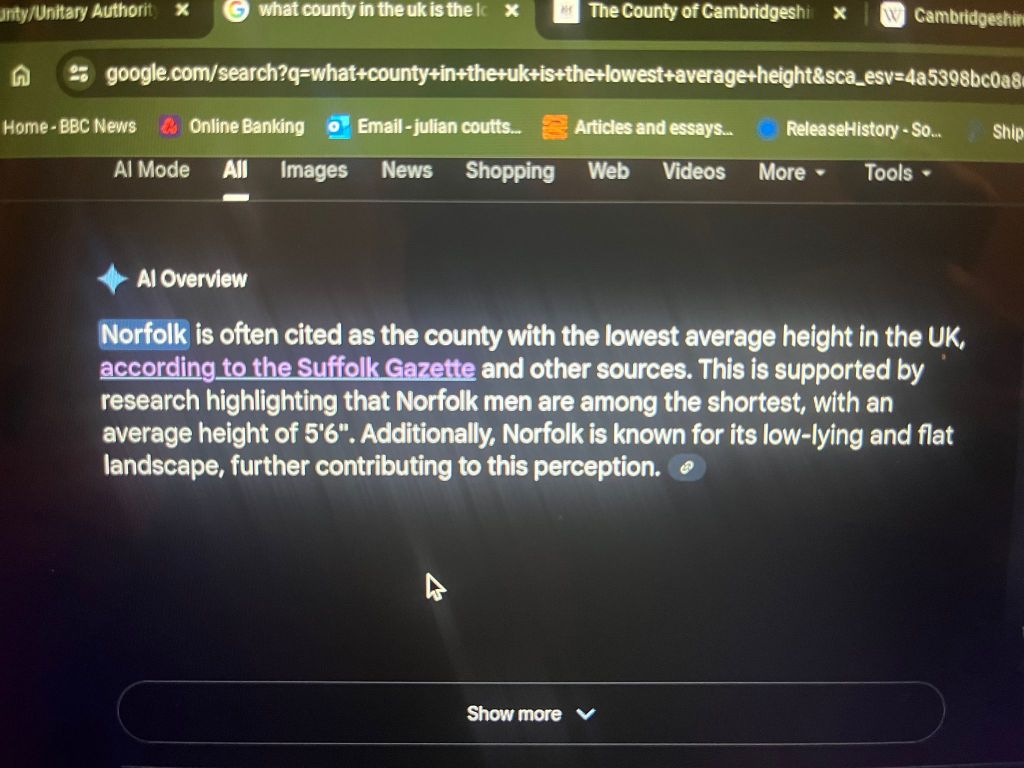

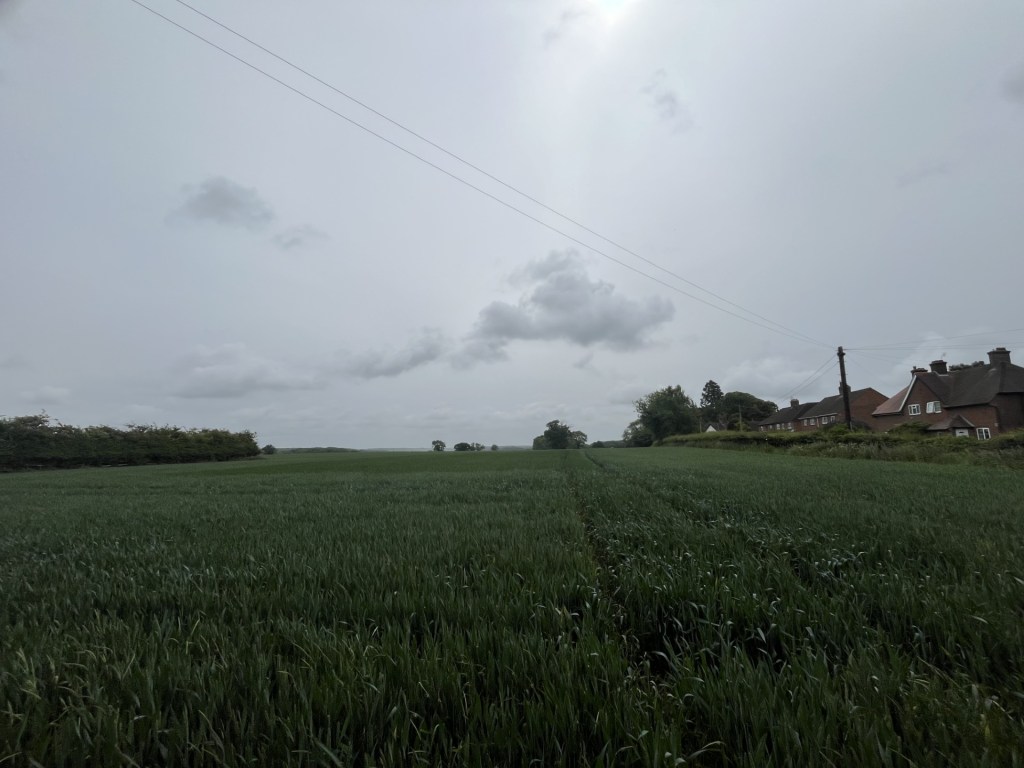

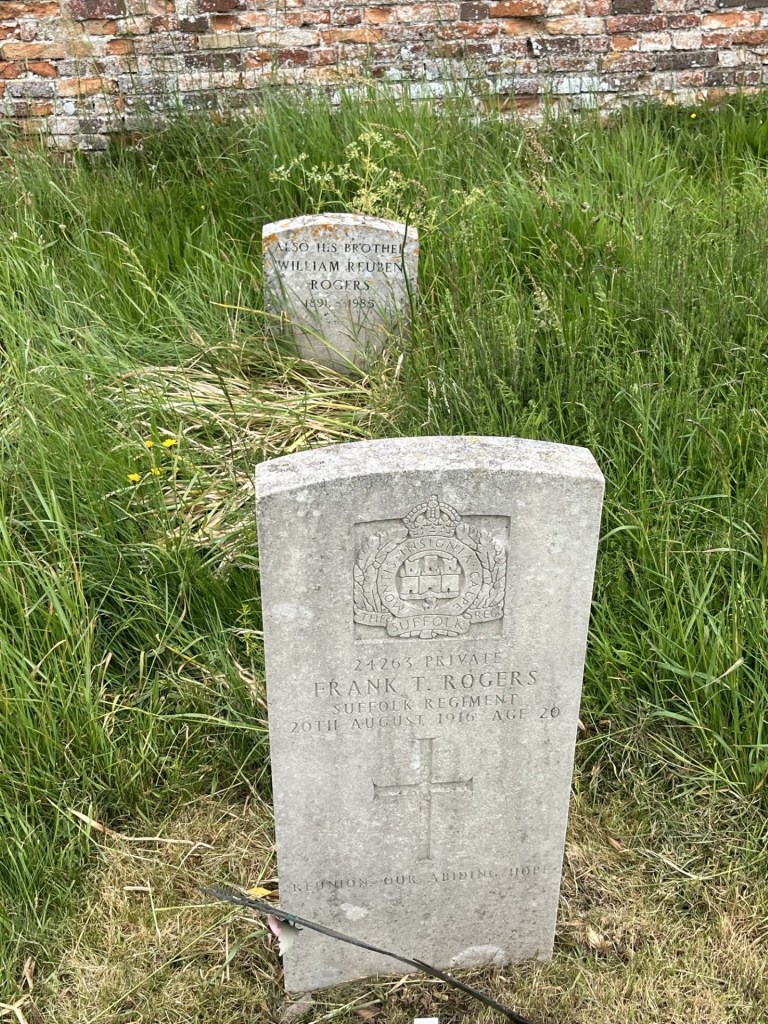
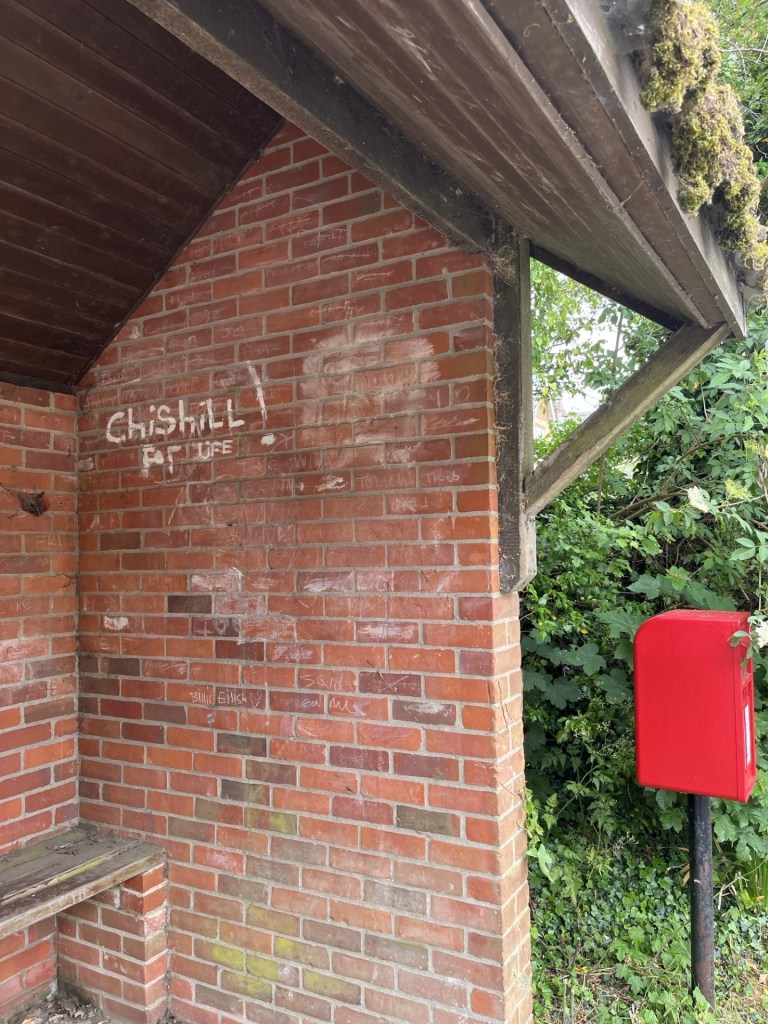
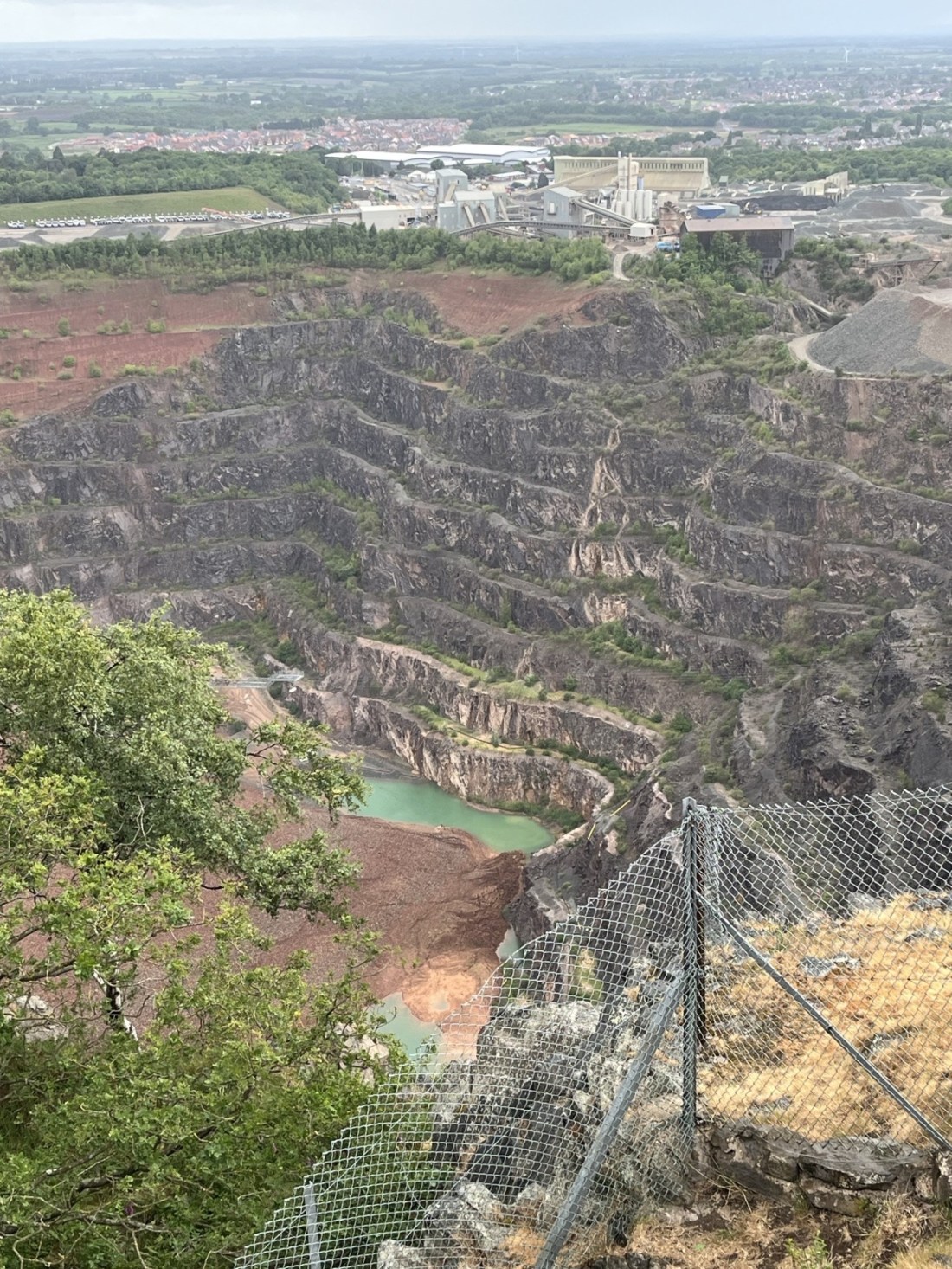


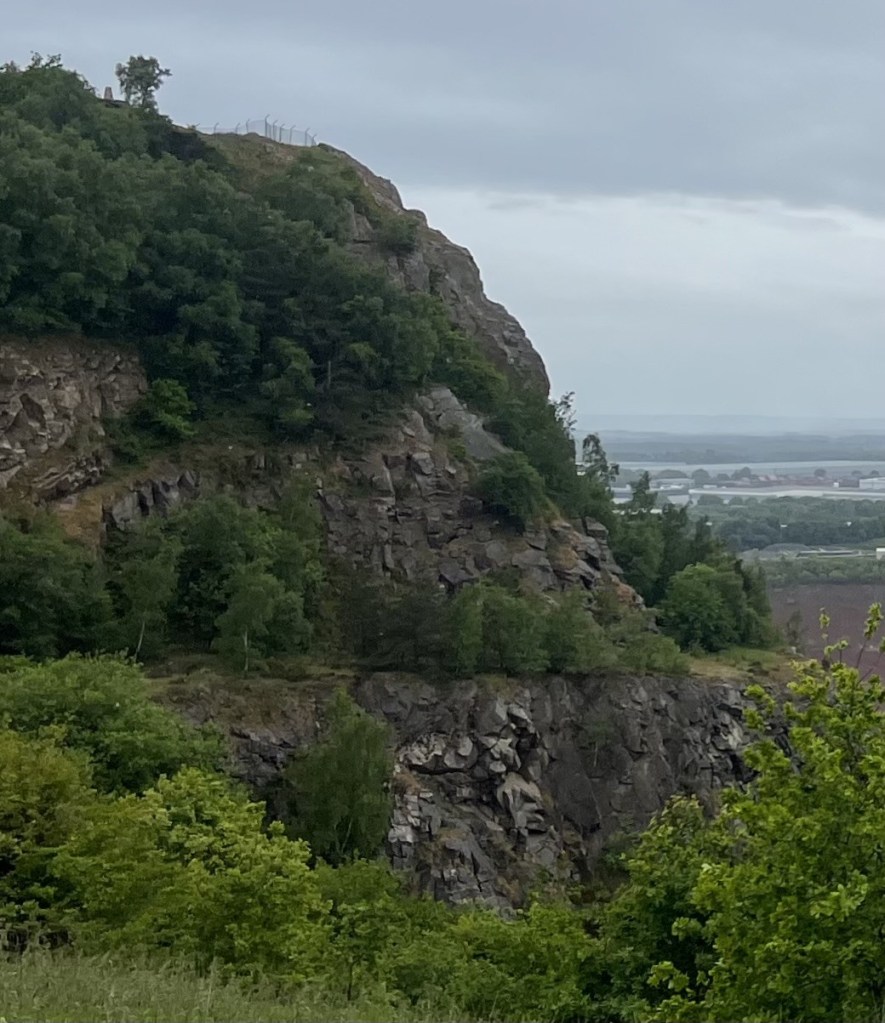
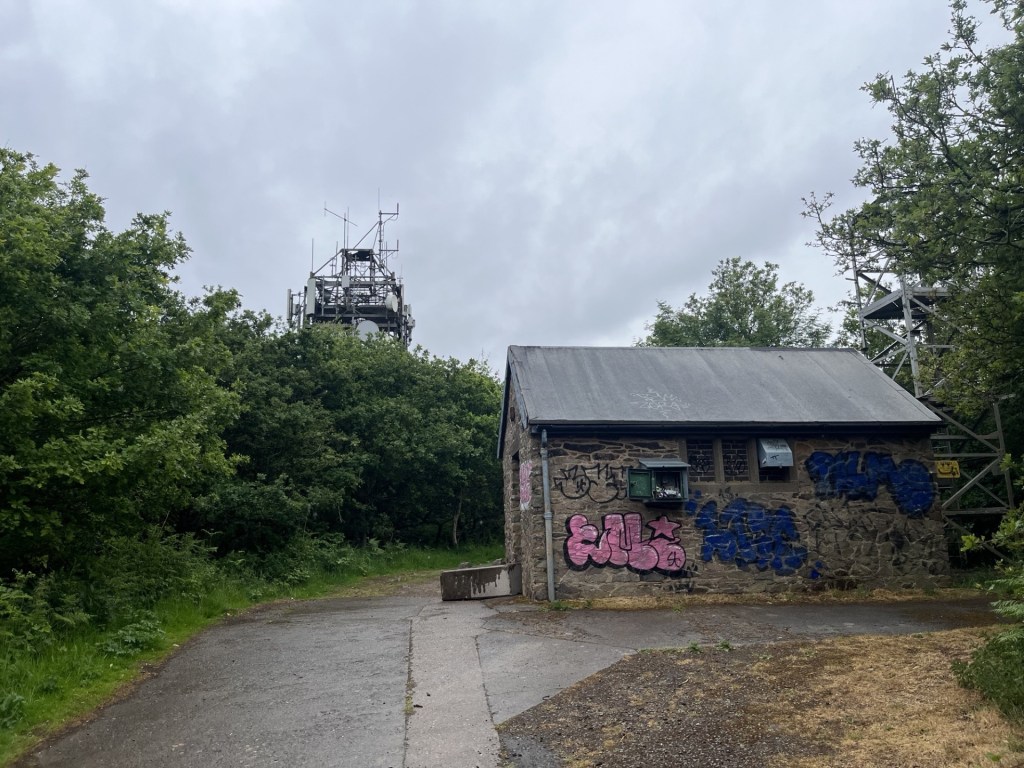

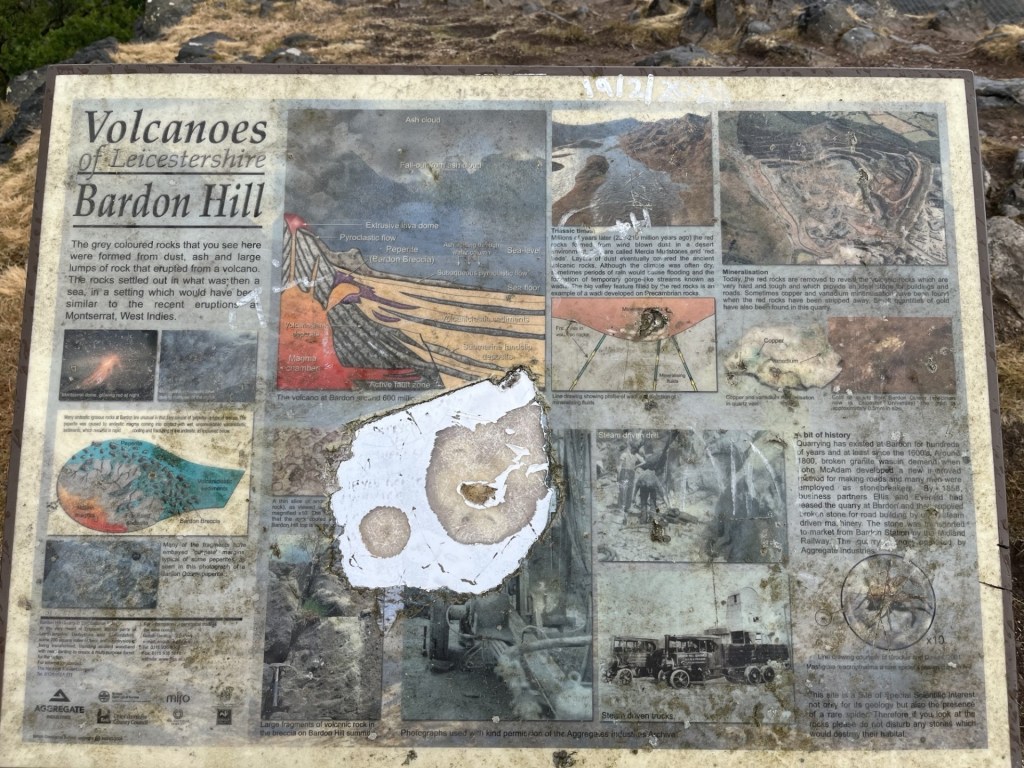


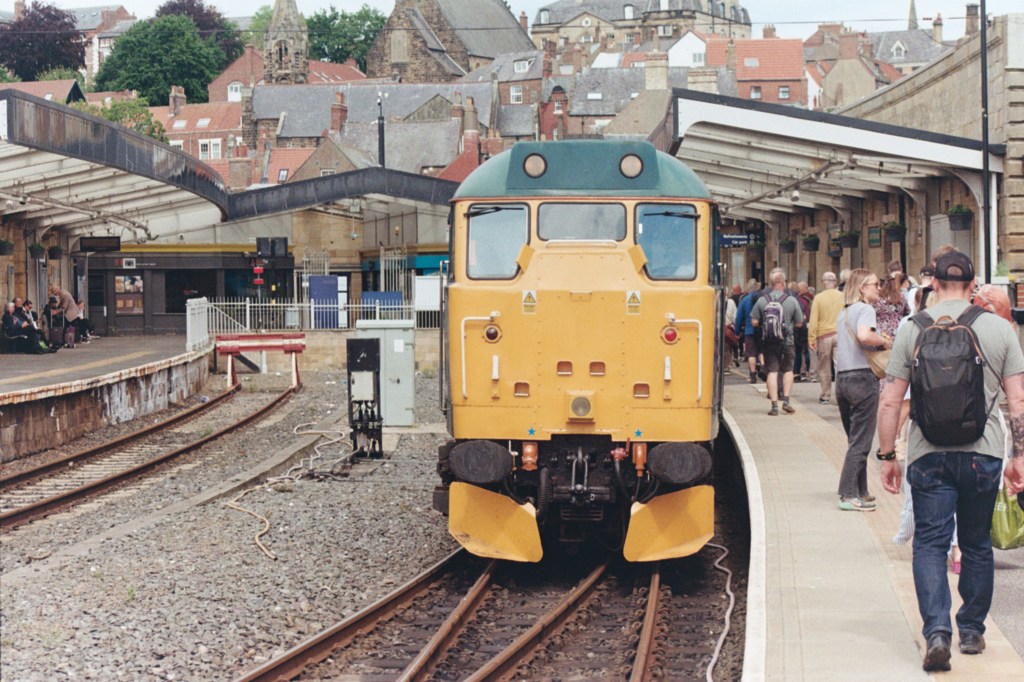
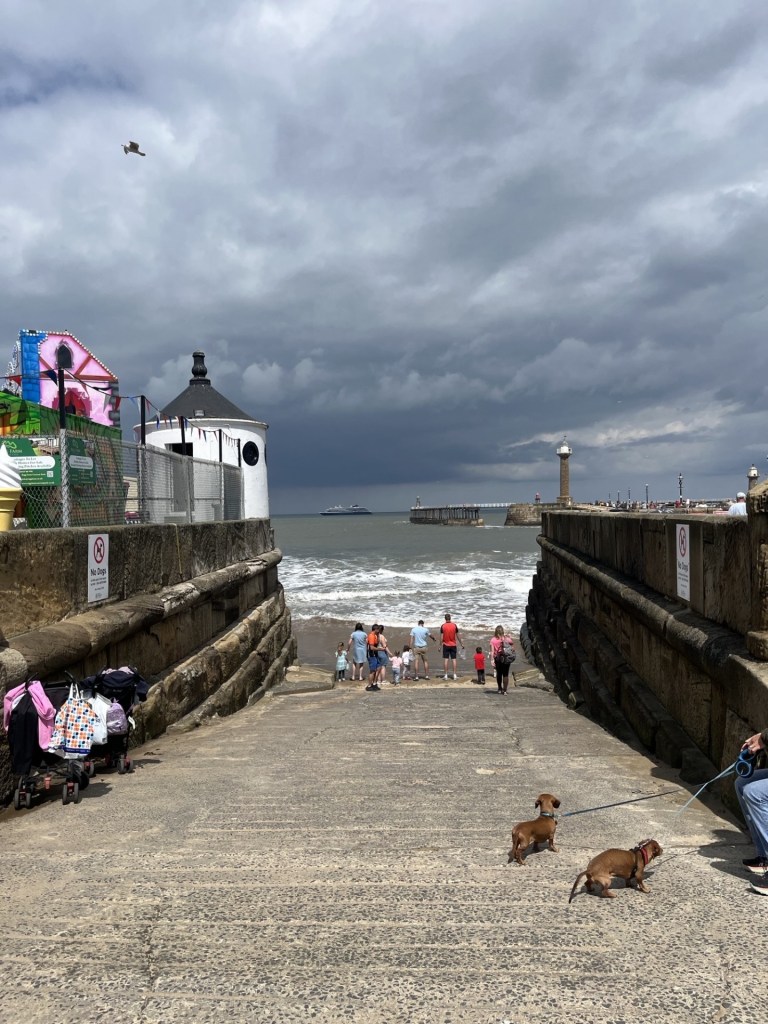

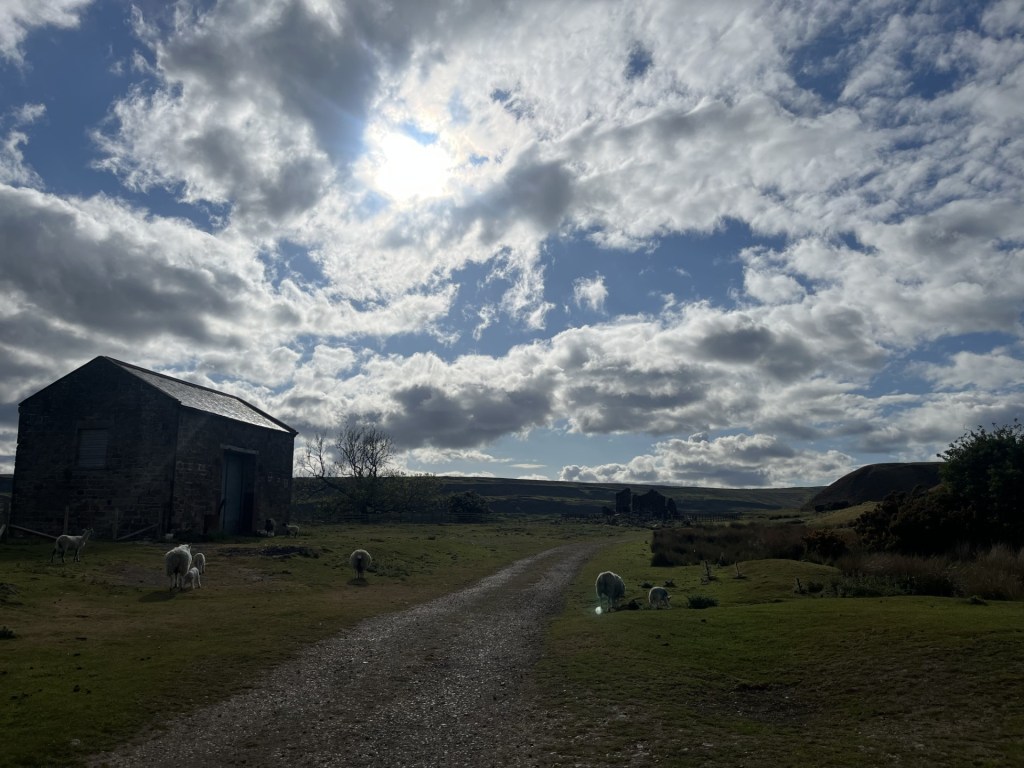
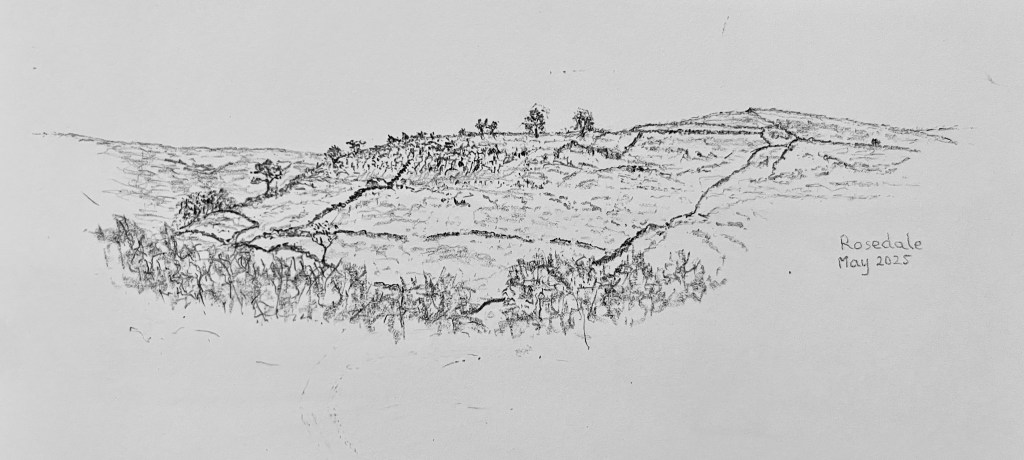
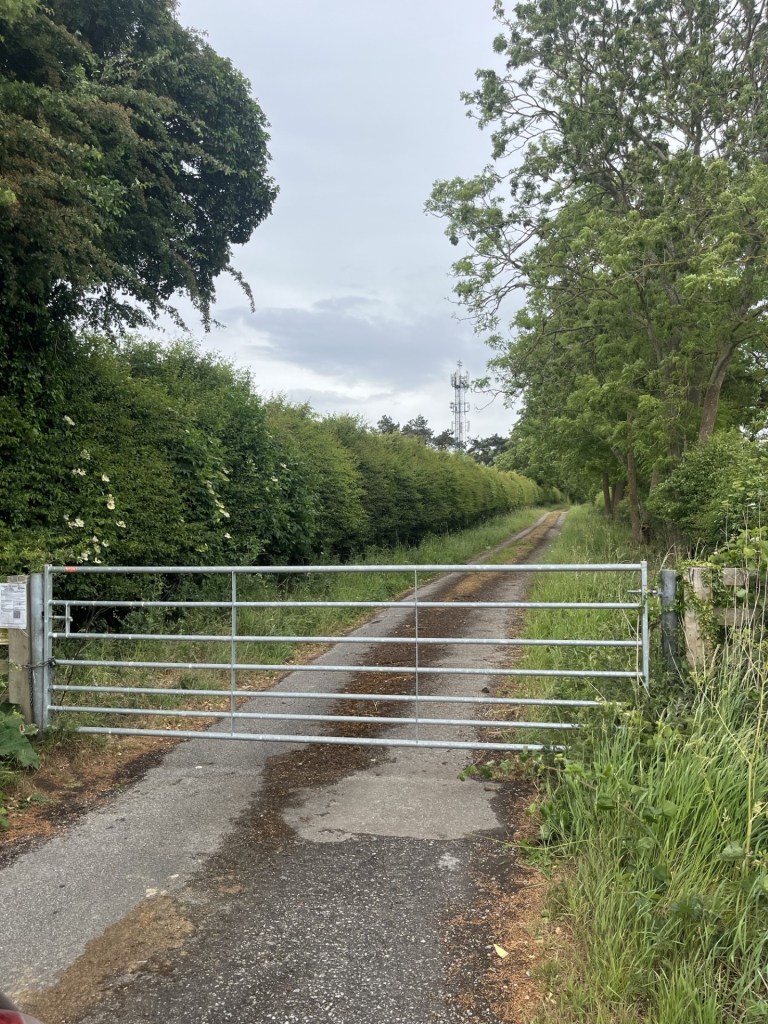
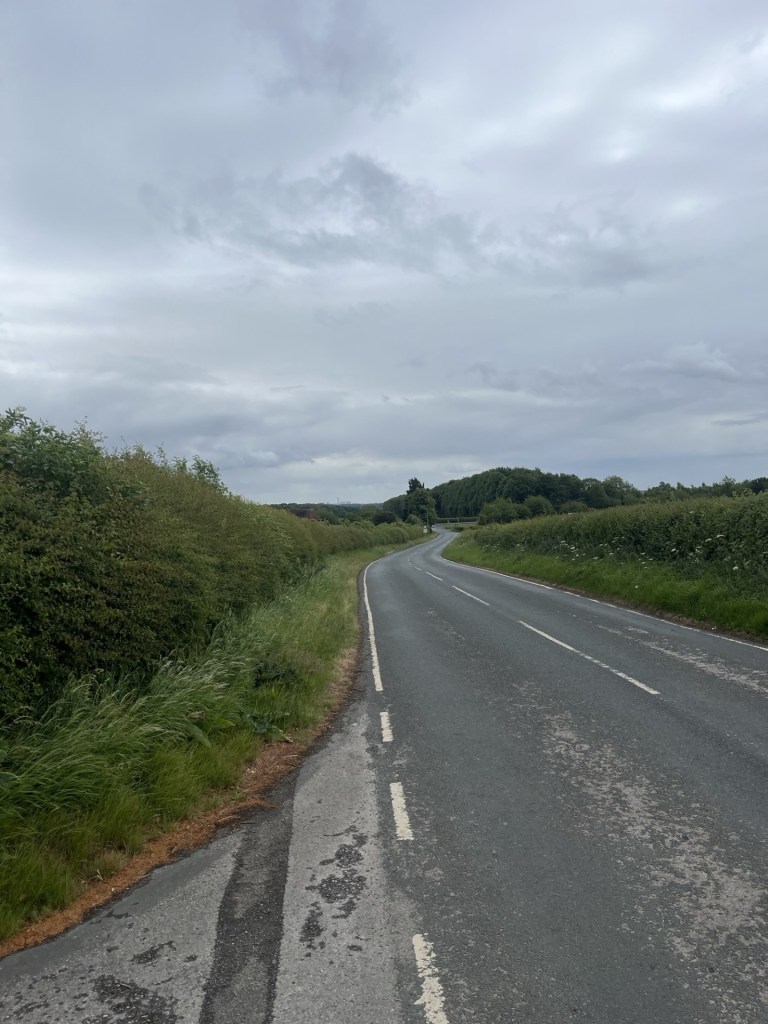

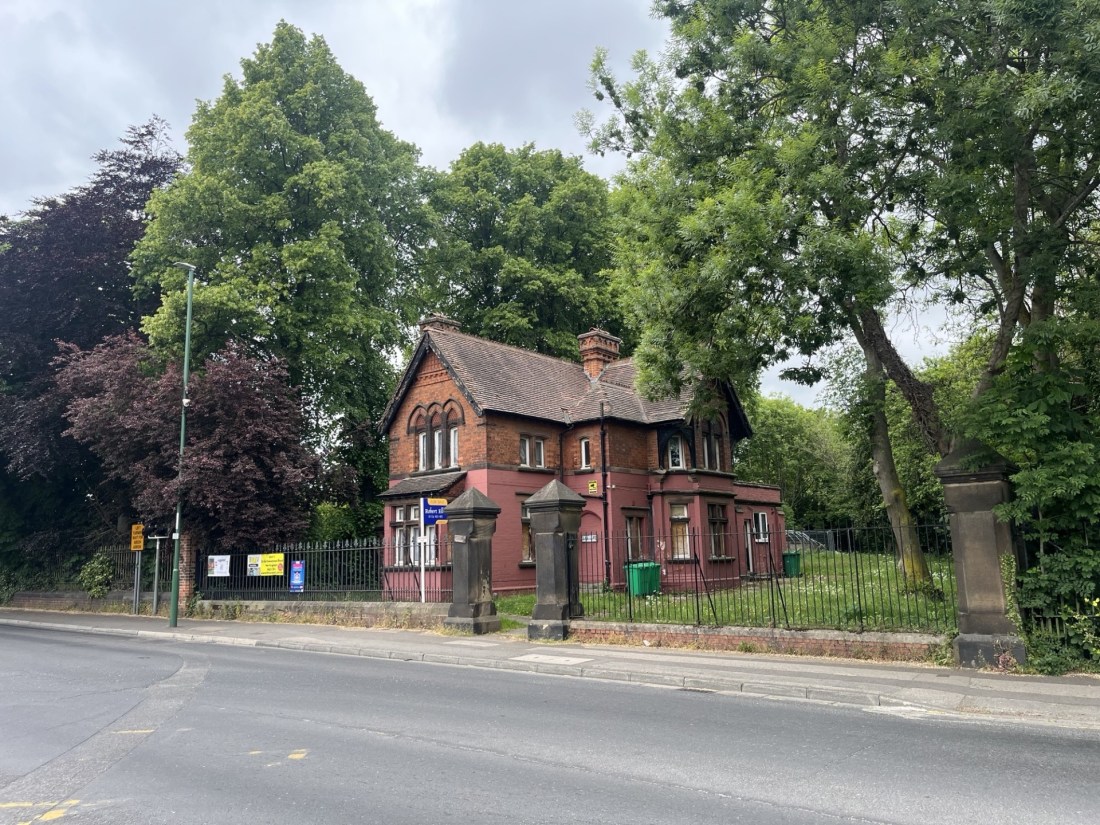
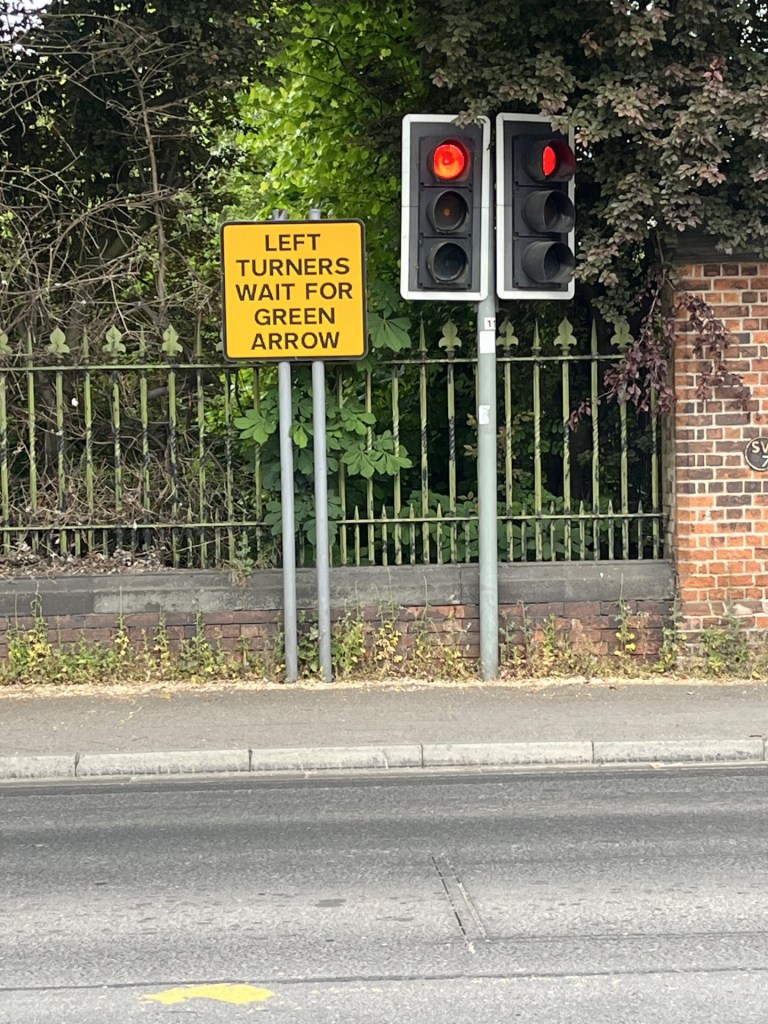


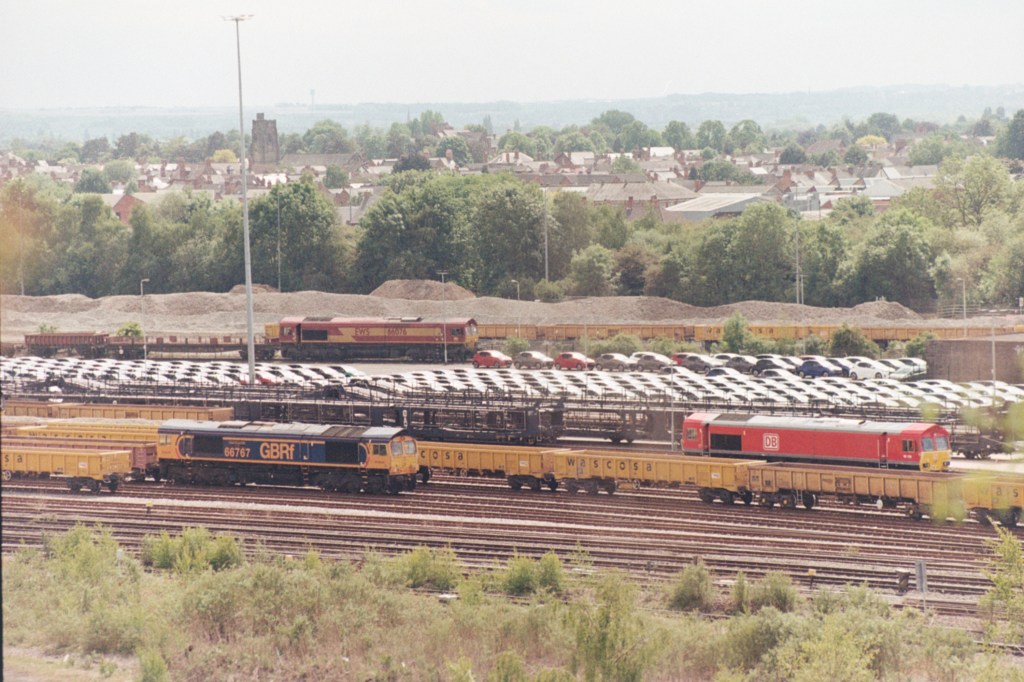
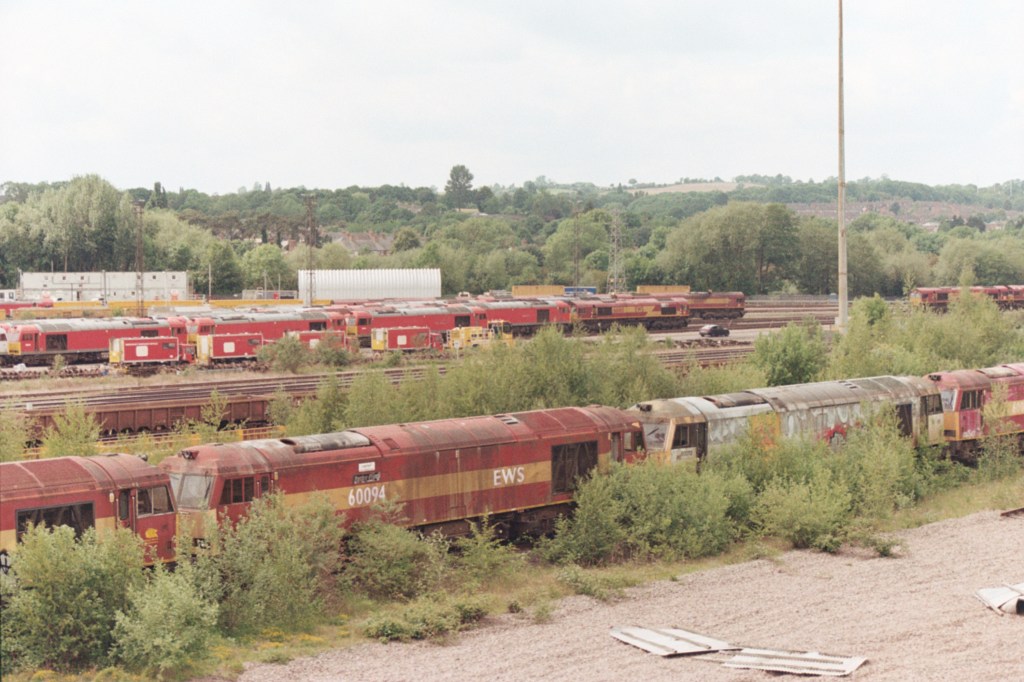
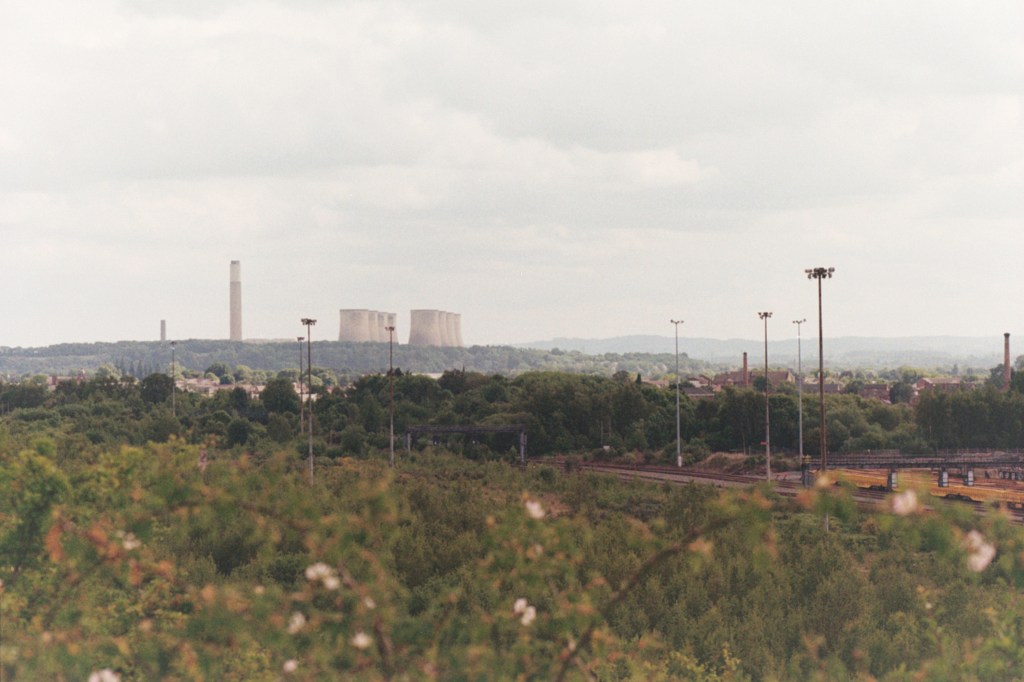


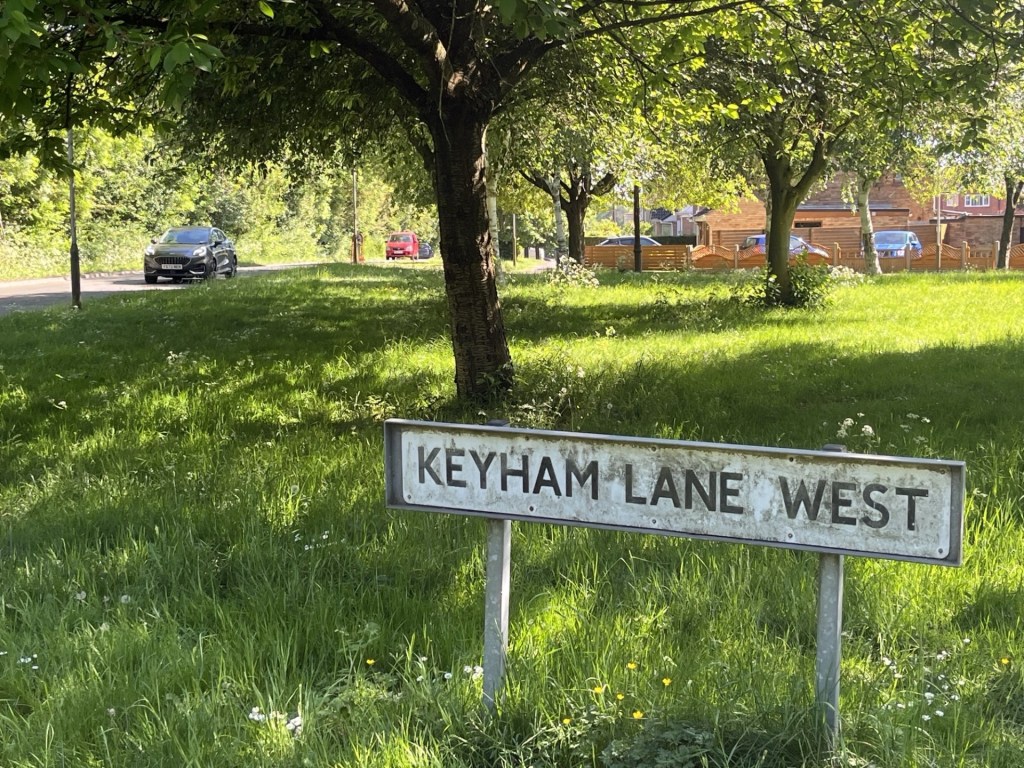
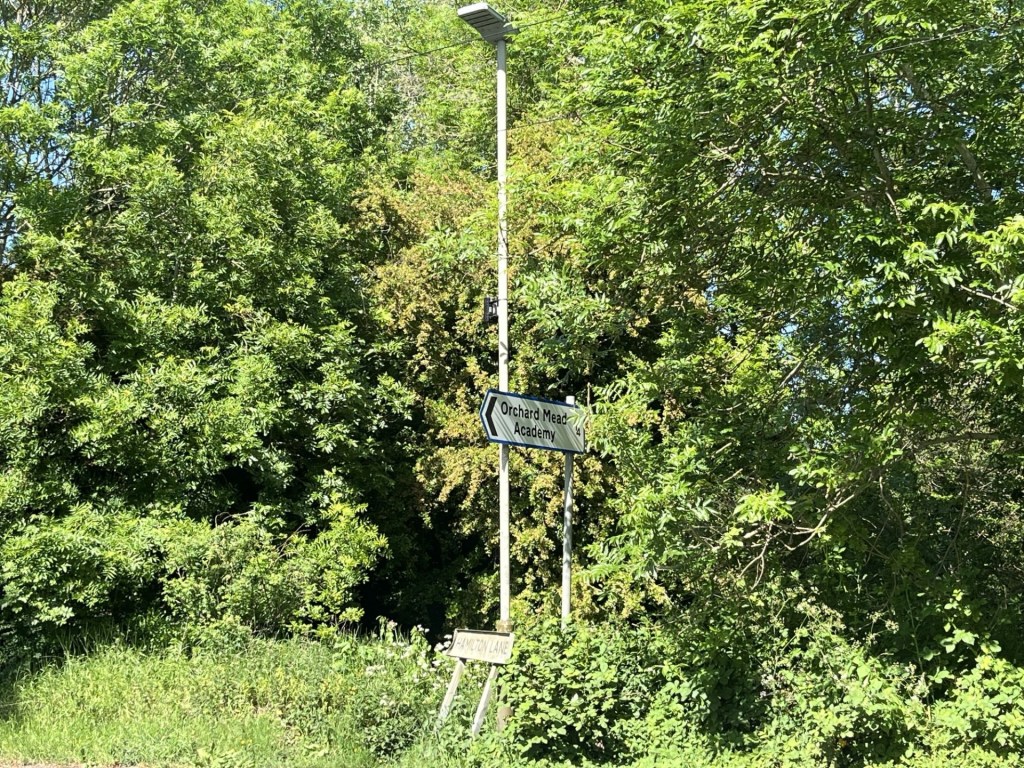


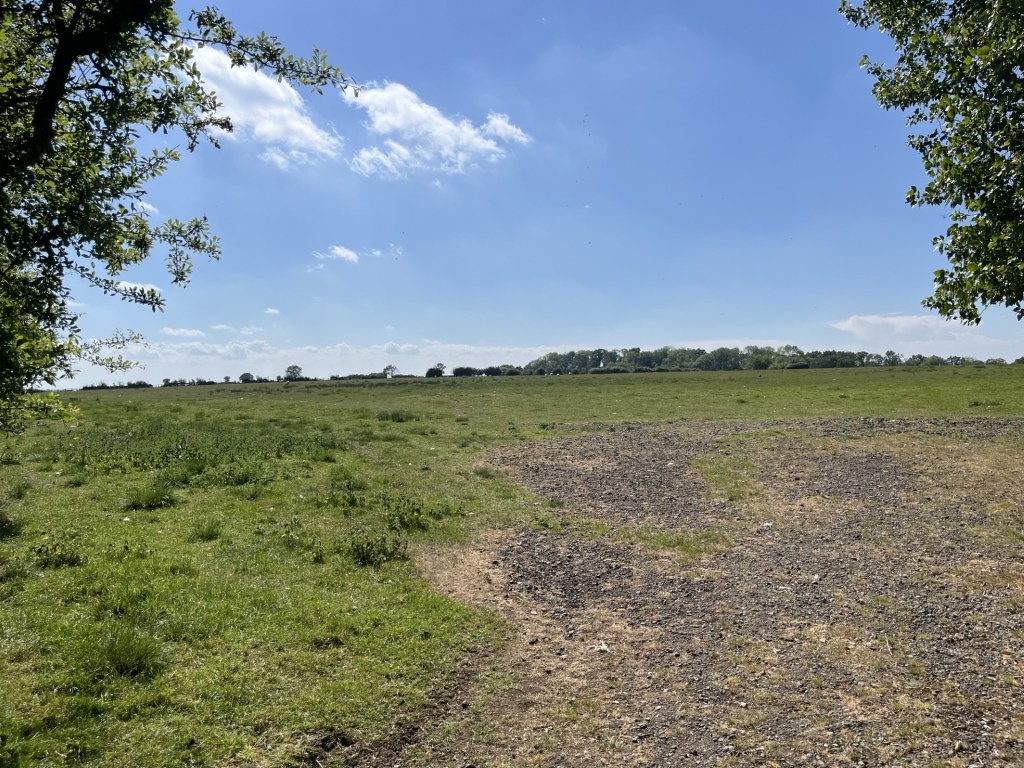

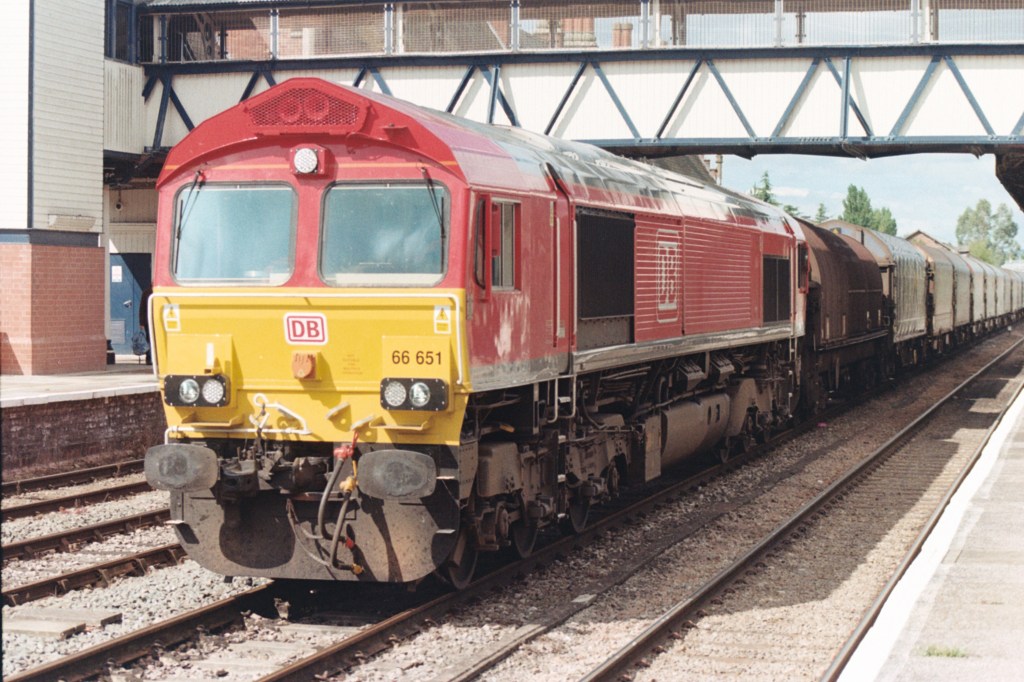

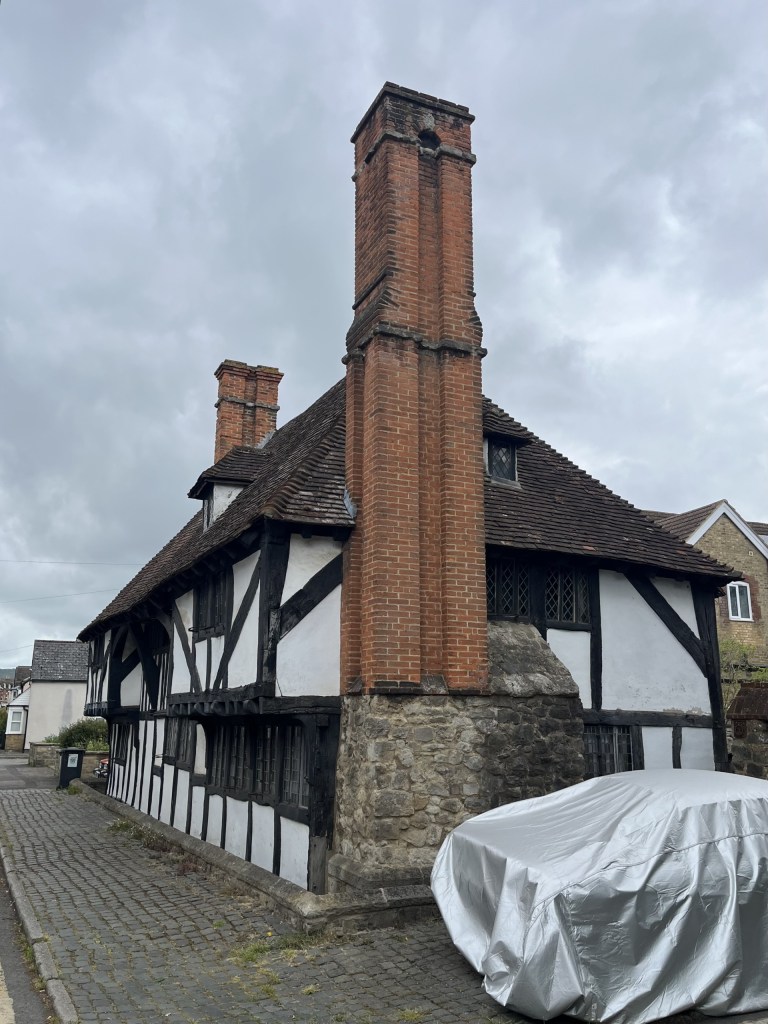
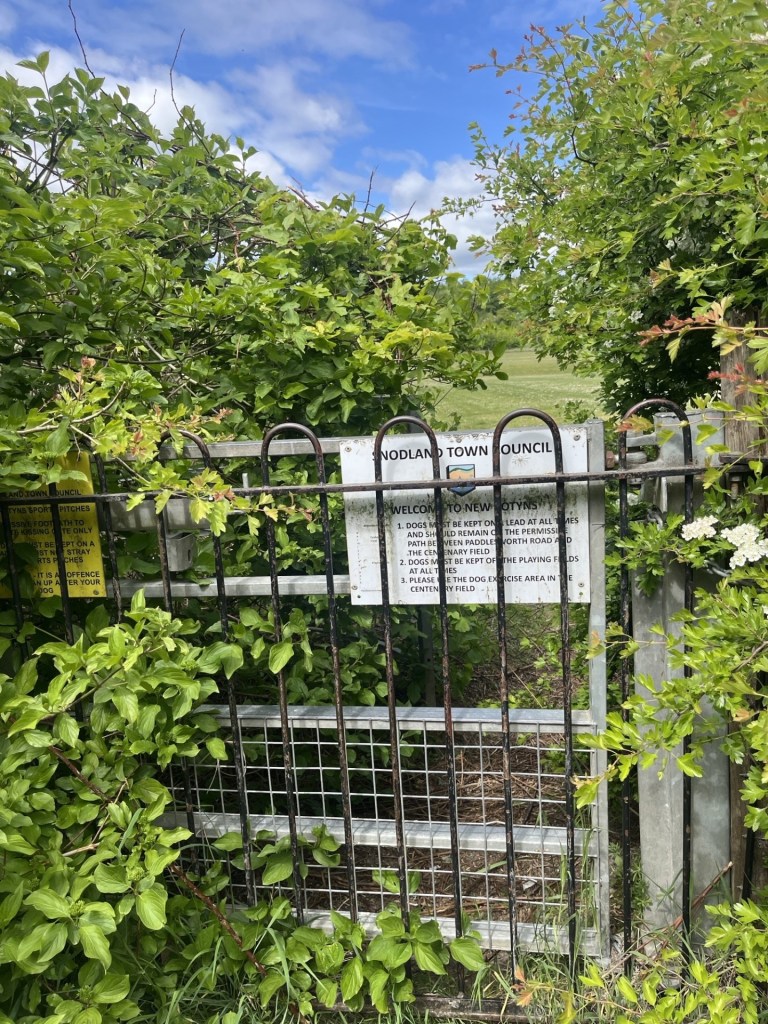
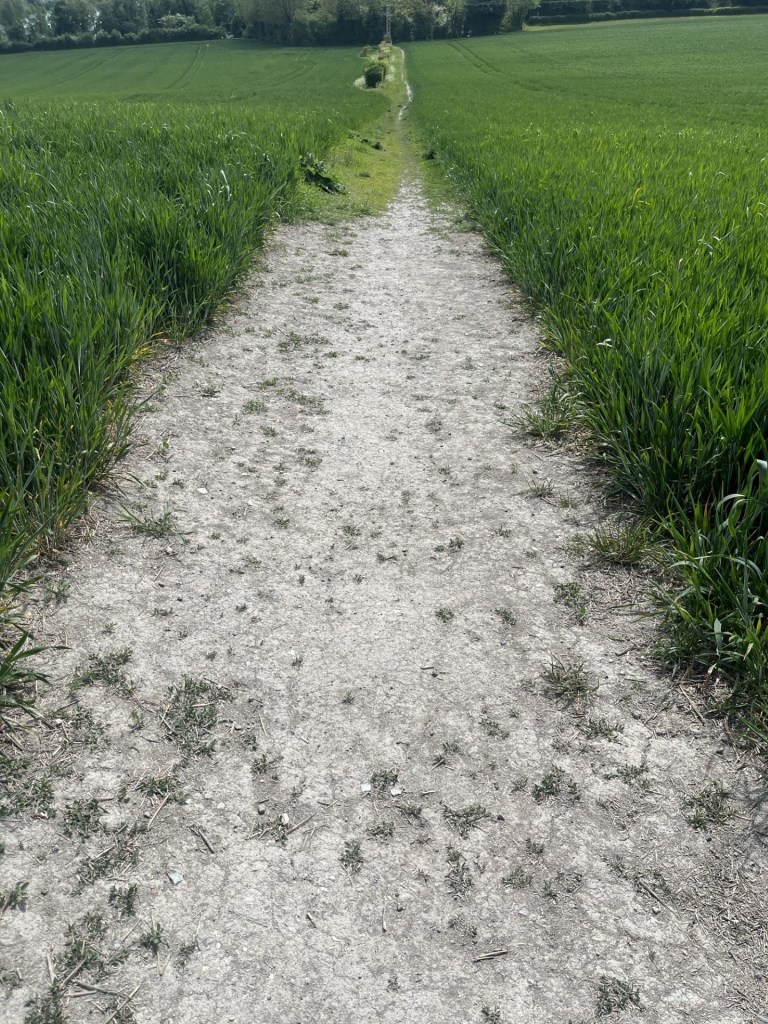
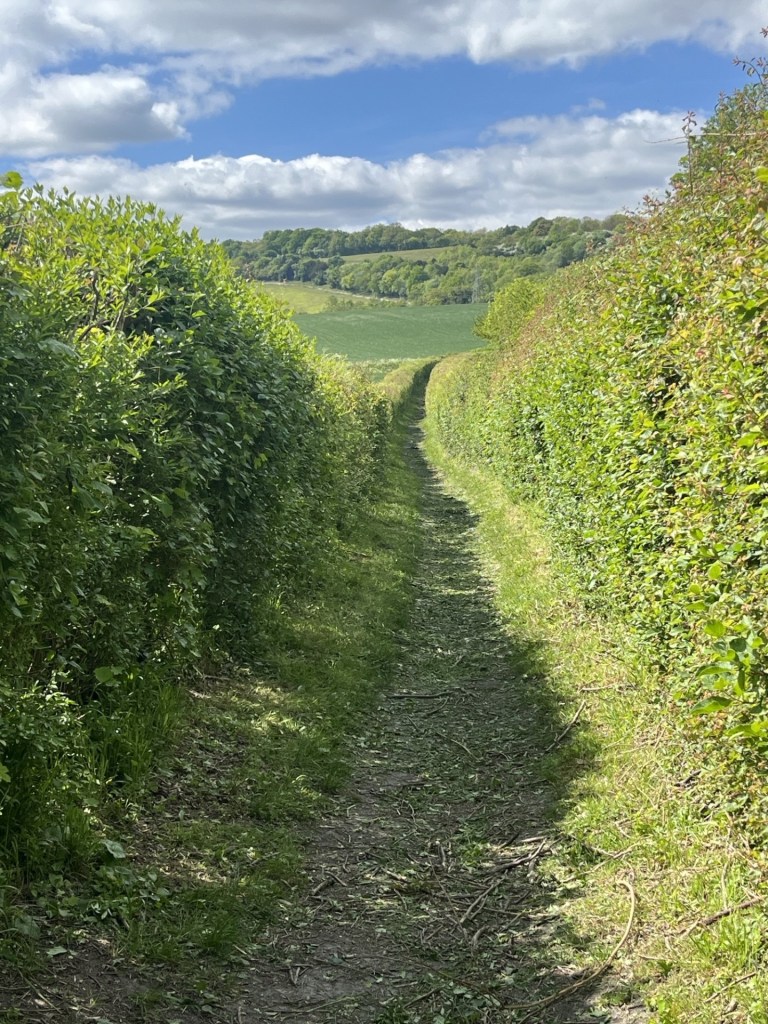

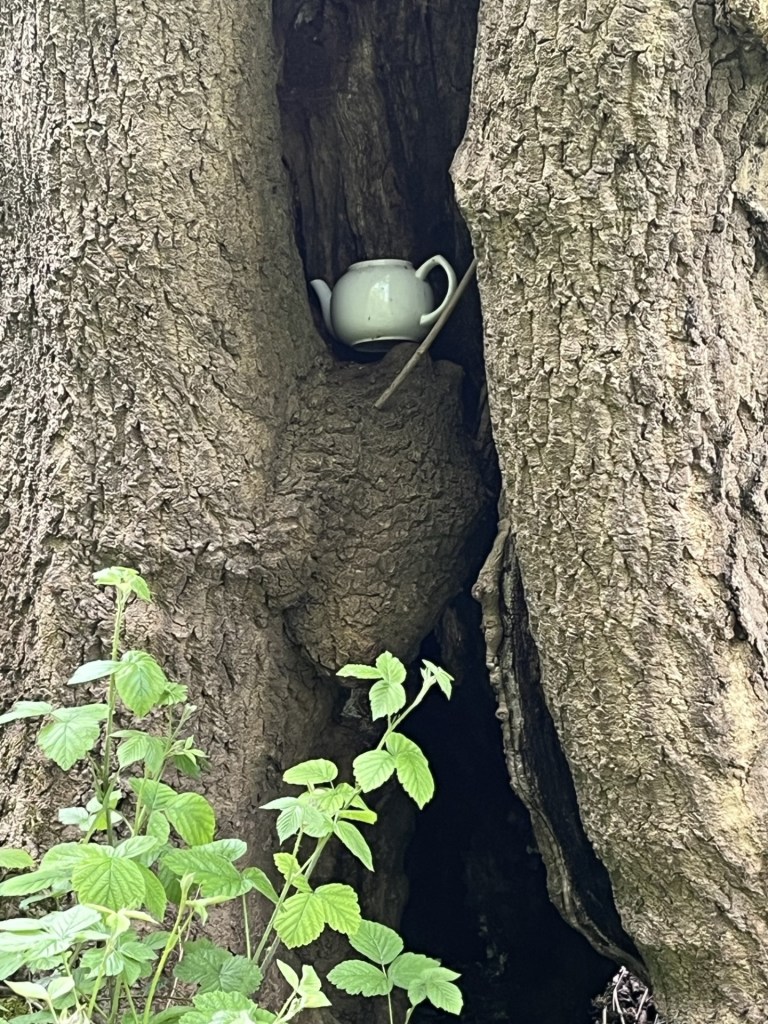


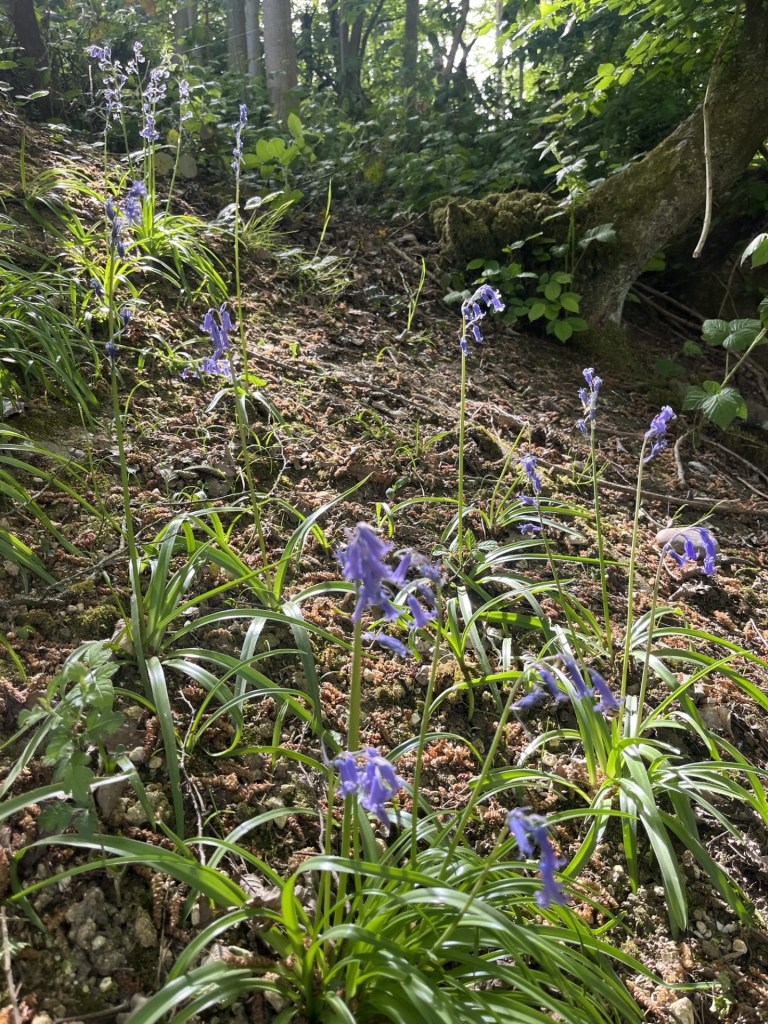


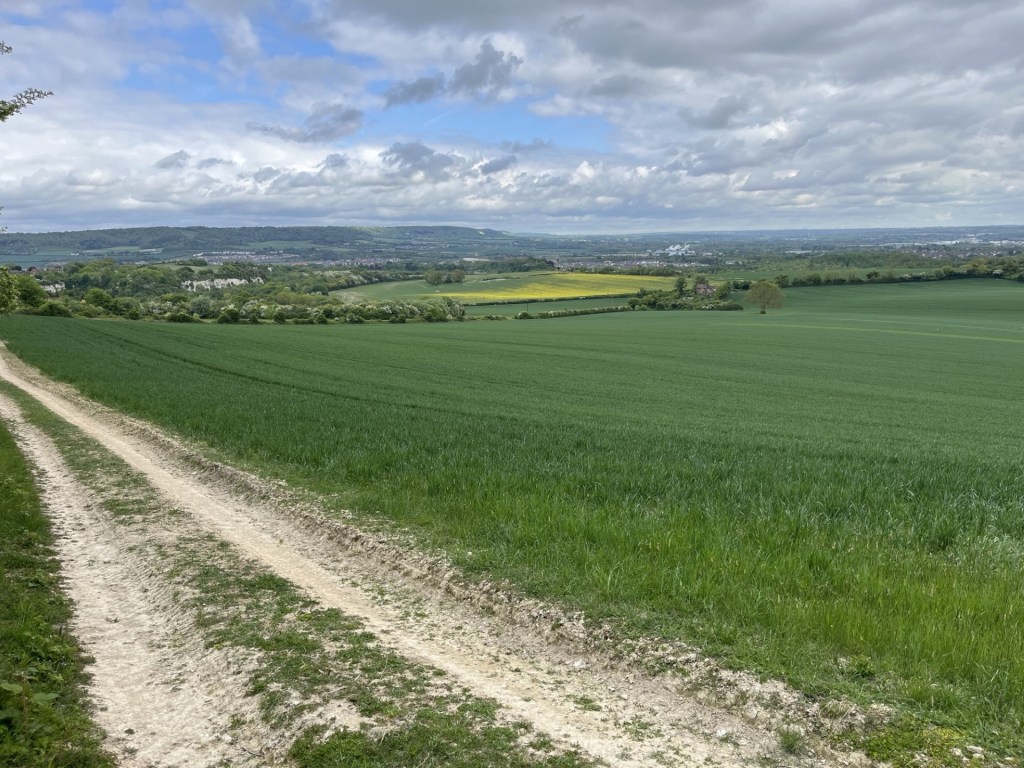

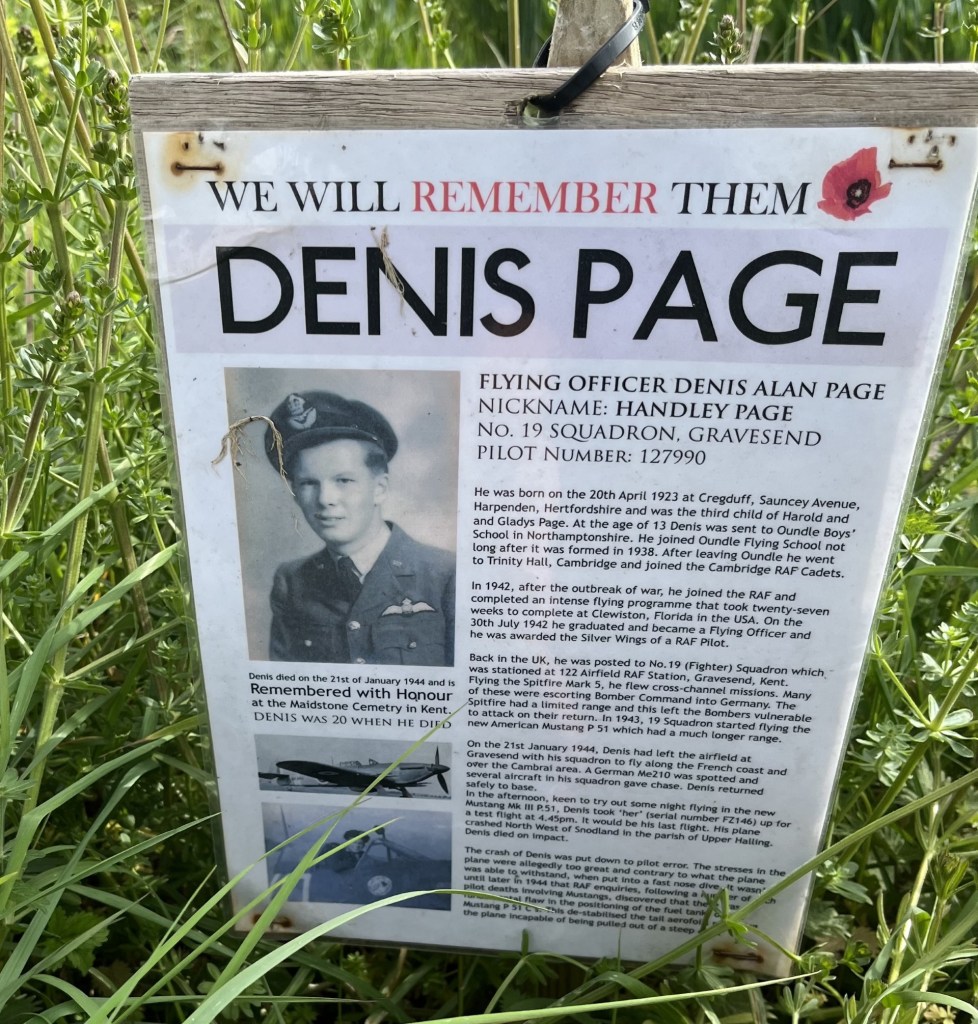


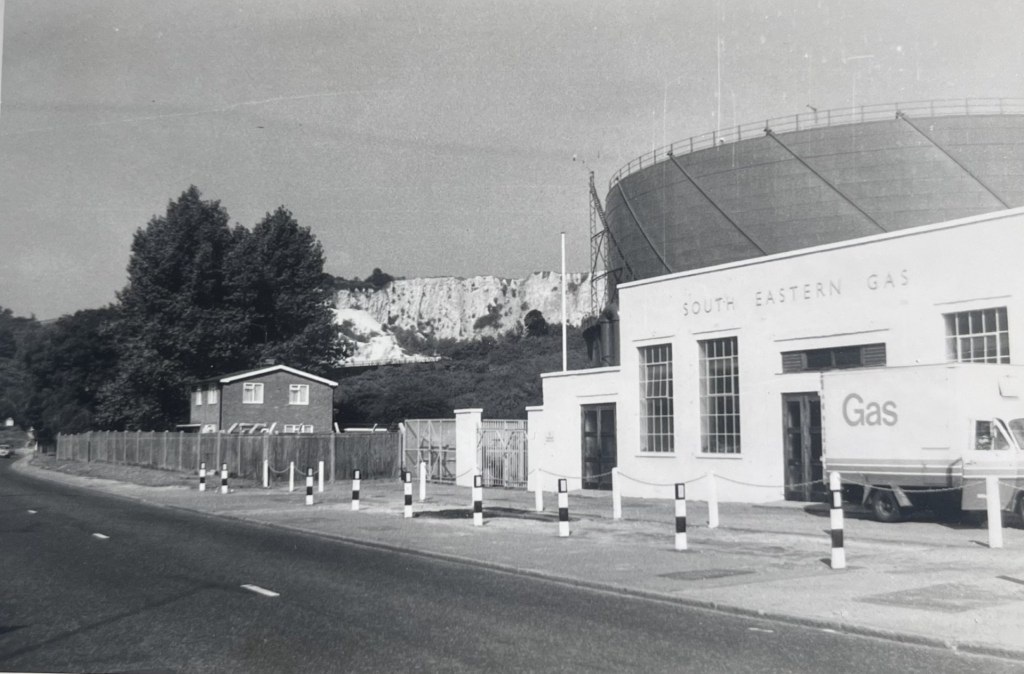


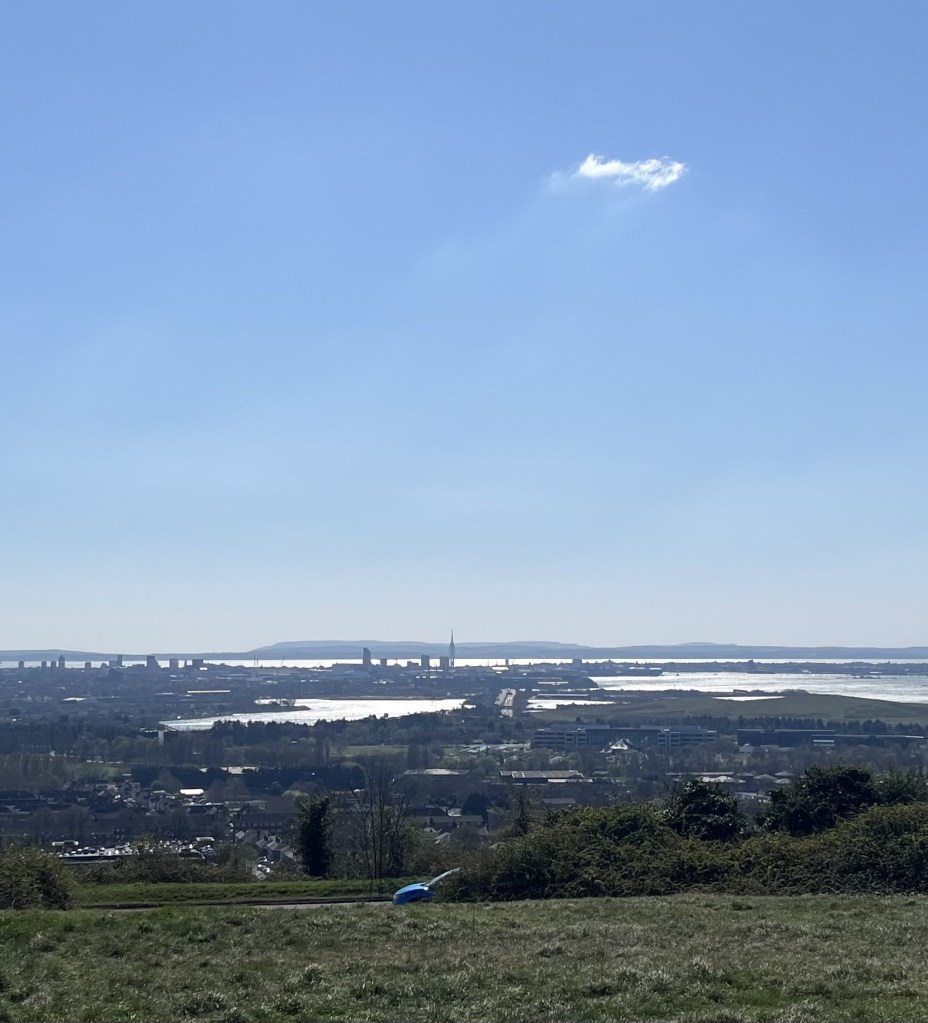
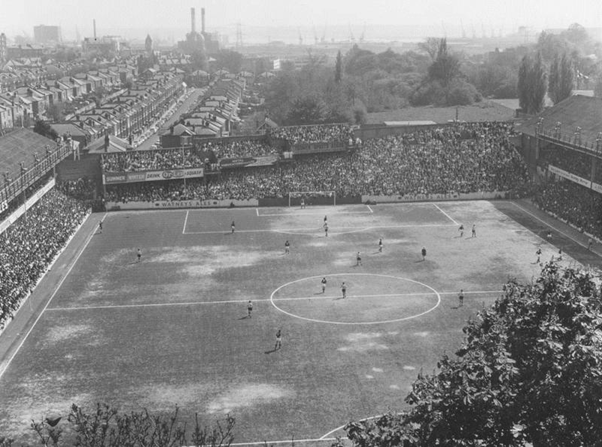


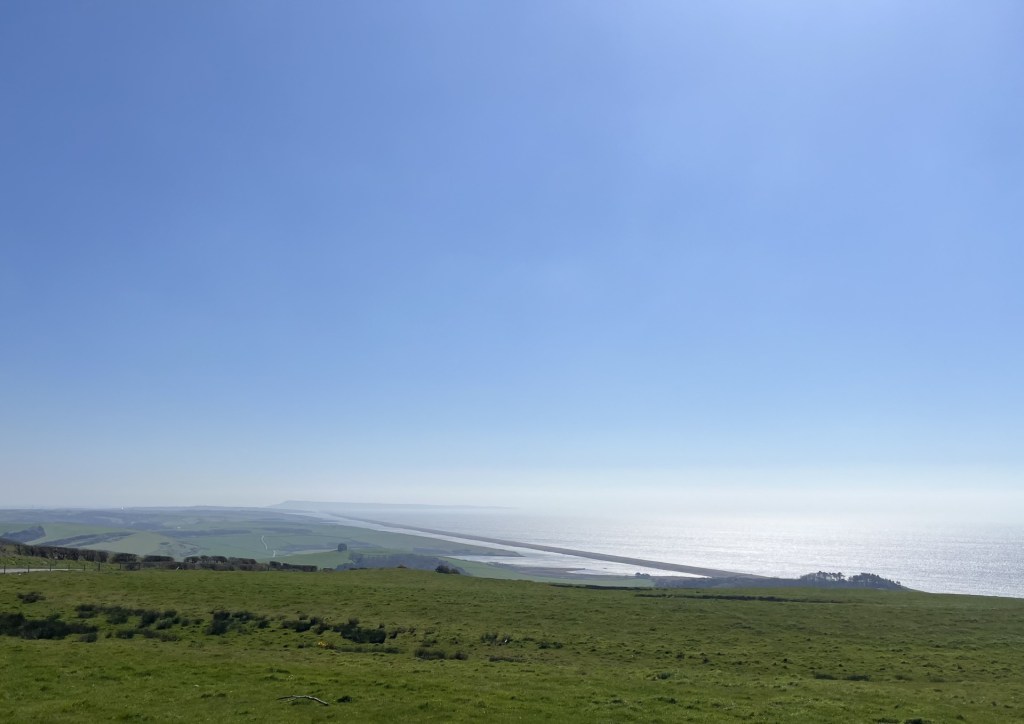


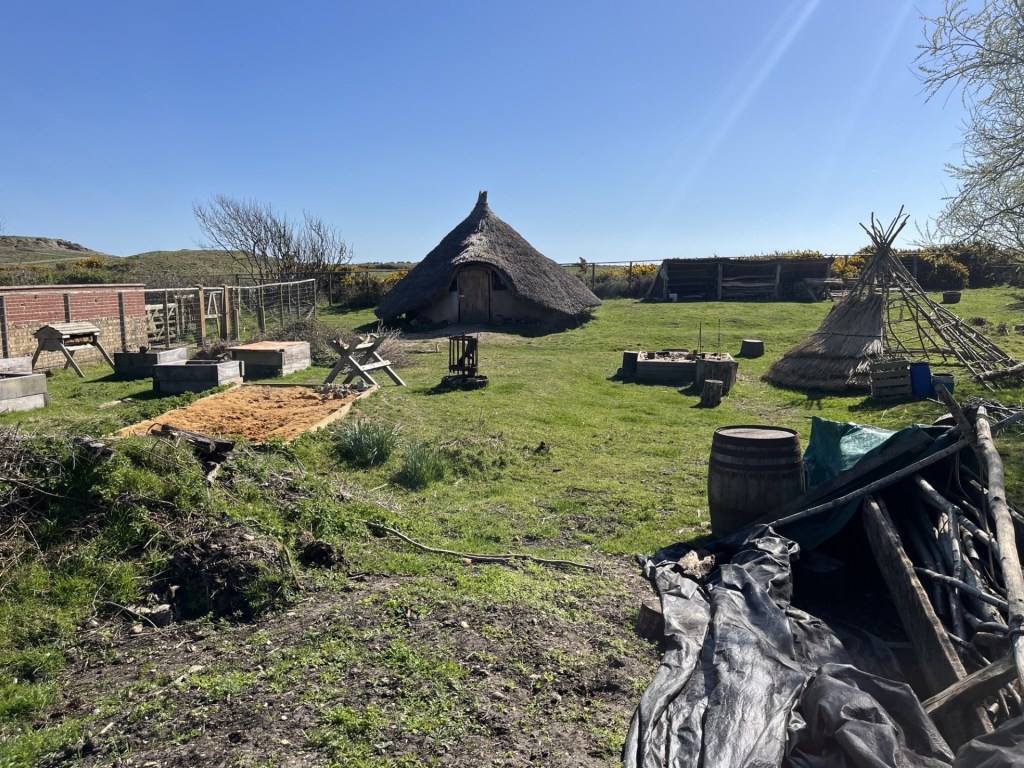
 El Colmado 57