Cresting the County – City of York (Unitary Authority)

Stock Hill

43 Metres

141 Feet

26th May 2025

Drax Britannicus – All Roads Lead to York?

It took me three days longer than I had intended to reach the highest point in the Unitary Authority of York.

I had been heading north, with the intention of reaching the small village of Rosedale East, hidden in the seemingly forgotten but extraordinary Rosedale Valley in the North Yorks Moors National Park.

I had stopped for a couple of nights with my brother in Nottingham where, the day after Tottenham Hotspur had defeated Manchester United in the UEFA Europa League final, I had popped up to the highest point of the city at Mapperley. That night I explained what I was hoping to achieve over the coming days. It included what seems to have become an annual trip with my daughter and her partner J to a heritage railway. In this case it was to be the North Yorks Moor Railway. If there was time, we would also have a trip into York and take in the National Railway Museum (2025 is the 200th anniversary of the railways in Britain).

My brother piped up. “Do you remember when you took me there?” A vague memory began to form. I did, but only just. He reminded me that we had taken a train from Kings Cross, went to the museum, and returned to London the same day. He thought he was about ten years old, which meant that I would have been just fifteen! Well, I’ve checked and given that the museum only opened in September 1975 (50 years ago as it happens), I would have been at least seventeen and he, twelve. Nevertheless, it still surprised me that I had taken on the responsibility at the time.

I left Nottingham, and at Pontefract I dropped in to see my two Yorkshire based cousins where over two hours we caught up on a year’s worth of news, books and aches and pains. Suitably fed and watered I carried on up the A1(M). All I had to do was take a right at junction 44, and then by keeping to the A46 I would be able to tick off the top of York.

In the short time it took me to get to junction 44 I had seemingly forgotten the junction number and sailing merrily past it. Incomprehensible, but it wasn’t until signs for Thirsk and Ripon started appearing that it began to dawn on me something was amiss. I appeared to have been in a state of denial. Instinct eventually told me that I had shot my bolt, York was too many miles behind me now, and executive action was required. Leaving the A1(M) at last, I took towards Thirsk and then stuck to the A170, climbing up an improbably steep slope to the high ridge at Sutton Bank, before stopping at the excellent little town of Helmsley for some provisions. A text informed me that my comrades had reached the farm we were staying in. Good timing. According to the phone thing I was only 27 minutes away, and so texted back to say I would be there in a jiffy.

Past Kirkbymoorside I found the road that would take me as straight as an arrow to East Rosedale. At a place called Hutton-le-Hole I should have turned right (if only I had known!). Maybe I had been expecting to see a sign or something, or maybe I was just overwhelmed by the rough beauty of my surroundings, or maybe just at that moment a 4X4 had been trying to mate with the boot of my car, but for whatever reason before long I was driving along a barren moorland ridge with stunning views in all directions. Down to my right I could make out the Rosedale valley and I knew that at some point a road would appear that would take me down into the top of the valley and then the village.

Just past the Lion Inn on Blakey Ridge and sure enough the turning appeared. To my consternation a red sign stuck in the middle of the road stated that it was closed. A diversion sign pointed back the way I had come. Surely not!

When in doubt, “keep on going” is not my go to motto, but for whatever incomprehensible reason, on this occasion that is exactly what I did. Fifteen minutes later and I was doing a U-turn in the small town of Castleton (not to be confused with the pearl in the Peak District) and defeated, started to retrace my route.

Eventually, back at the closed road, I pulled over. My phone had been ringing. Despite every effort to understand how to execute a hands-off call in my car it remains a mystery to me. I suspect it must be broken. I called my daughter back. “Hmmm… no I wasn’t okay really. This road is closed, and I feel like a total dolt.” (Dolt is a medieval word now rarely used, so in truth that’s not the word I used, the actual being more Anglo-Saxon than polite Tudor). Don’t worry, she said, the road wasn’t really closed. They had used it.

Against my better judgement but now realising that to find another route was going to take at least another thirty minutes, I slipped past the sign as if I was under surveillance and headed along and then down the east side of the valley. And there it was. The road works! Fortunately, the boys from the black stuff had gone for the weekend, and there was just enough room to squeeze around the barriers. Against all the odds I had made it to the accommodation at just the moment the BBQ had started, and the bulk of the preparation had been completed. My lucky day!

The following day we took the slow train from Pickering to Whitby on the North Yorks Moors Railway. A spectacular route, but there were no steam trains were on duty. A month earlier one of them had sparked off a wildfire high on the moors, and the mile or so of destructive fire power was plain to see. Judging by the long-range weather forecast the chances of steam trains hauling passengers on the line will probably have to wait until the seasons end. A big shame for the heritage industry, but hey, for a while at least the kids would just have to get used to some diesel action instead.
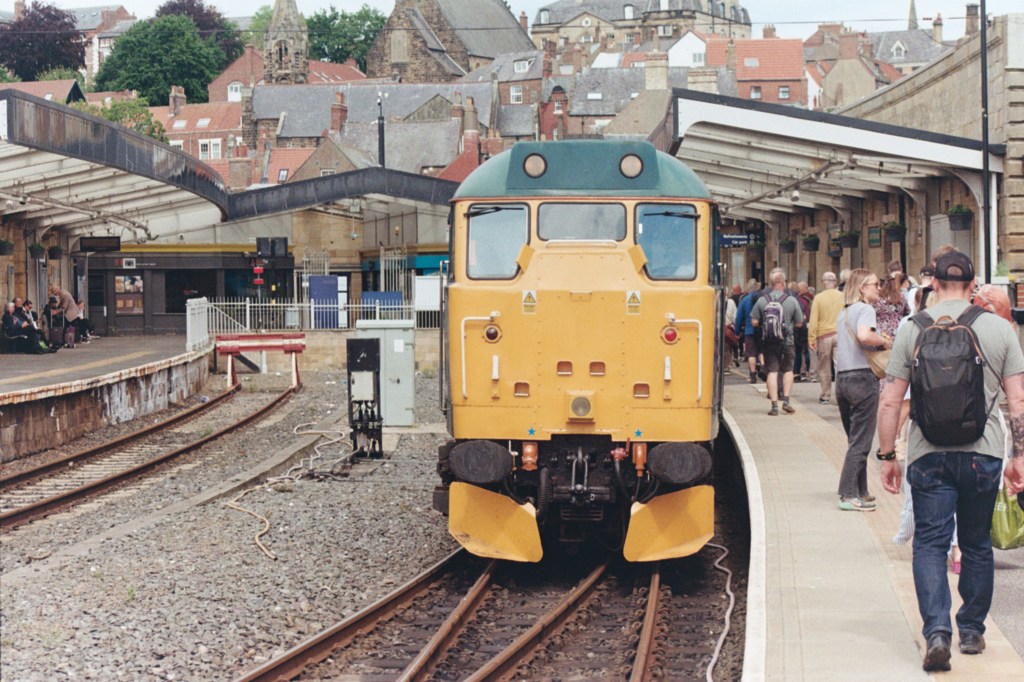
Heritage Brush Type 2 at Whitby (built c1957 – we share the same birth year, which presumably puts me in the heritage category too).

Whitby was heaving, bright and breezy and perfect.
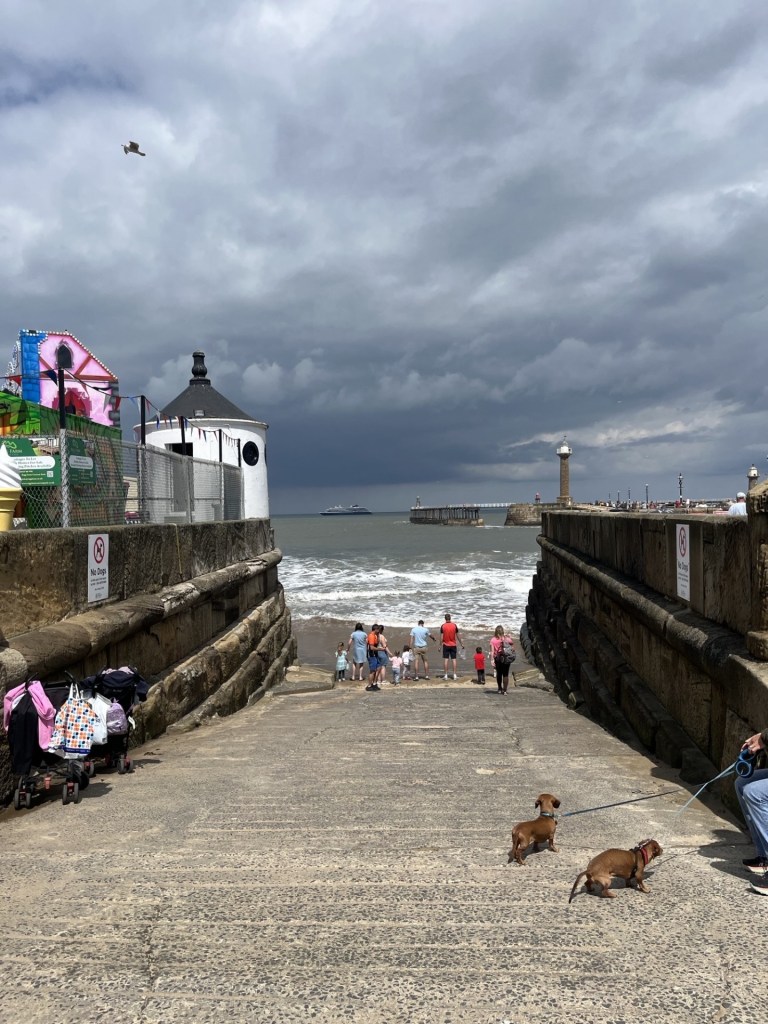
A nod to Martin Parr – Glorious Whitby

On the train back we agreed to head into York the following day.

We drove in and towards the National Railway Museum. Despite the early hour, we’d missed the chance to park nearby, having to settle instead for a more central location that charged Air Prk n Prk prices. In for a penny, in for £20 as they say, it looked like we were gonna spend the day. After an hour or two at the train museum, which naturally met expectations and which didn’t seem to have changed at all since 1975, we wandered into town. Busy, busy, busy, but looking good on an unexpectedly bright and squally day.

After passing the cathedral we slipped into the famous Shambles, and what must be something of a bull run for parents with pre-teen children. Every second shop was either an identikit sweet and fudge emporium or a Harry Potter merch crap shop (as I write the BBC are doing a York day on the radio, and by all accounts there are five!!). In horror we slipped out as quickly as we had slipped in. The last time I had been through the Shambles, sometime around 1981, it was certainly commercial but retained something of its mediaeval essence. I recall a quaint shop under which ran a Roman road, and the story was that from time to time the ghost of a Roman soldier could be seen walking through, at waist height! At waist height because the old road was a couple of feet below the current floor level. I was thinking about some fancy words to explain my position on ghostly spirits, but I’ll get on with it. I don’t believe in ghosts, but if I was to ever place credence on any ghost story at all, I’d have to give it to the torso of the Roman soldier, simply because of that quirky detail. Seriously folks, I’d rather see five Roman ghost shops than the H Potter exploitation outlets that have killed the vibe.

We carried on down to the Norman castle and back along the riverbank. Just before the Ouse Bridge crowds of drinkers and diners lined the embankment at Kings Staith. We stood outside the Kings Arms. The last time I had been here, in 1981, it would have been impossible to stand where we were now. Up from London with a friend who had no interest whatsoever in trains, but a keen interest in historic pubs (let’s be honest, all pubs), the only way to access the Kings Arms was from the adjacent street via the upper side door and clambering over sandbags. We ordered a couple of pints and went and sat at a table by one of the river fronted windows (see picture) where we gazed out as the Ouse gushed past us, just a foot or so under the window ledge. How exciting! Looking round one of us spotted a series of marks on the brick wall. They showed the levels the river had reached within the pub on previous flood occasions. We looked out at the raging torrent. Hmmm… it was still raining! It was down the hatch and away.

The Old Uninsurable – York

Given the Sahara-like conditions in Yorkshire since February, the chances of the Ouse flooding any time before this winter appeared remote but, on this occasion, we passed the Kings Arms and started to head back towards the car. At Museum Gardens we popped in for an ice-cream to find a Romano-British re-enactment taking place. We watched as nails were forged, leather studded, and wood worked. At the “how many different ways did the ancients invent to kill and main each other” three men dressed in full armourer’s garb demonstrated that the number of ways invented to kill an opponent appeared to be limitless. Slingers were in particular hideously murderous. A cohort of legionaries began to assemble. Twenty odd older men, dressed in combat wear and possibly slightly worse the wear from the mead, started to line up. It all seemed a bit amateurish, which of course it was, but the finely honed drill was observably messy and after some pushing and shoving tempers began to flare amongst the ranks. Voices were raised and one of Rome’s finest re-enactors came in for some rough tongue lashing from a couple of his colleagues. The air began to turn a different hue as some clearly audible Anglo-Saxon words were exchanged. Ironic I thought, given the circumstances. “Mummy, what did that man say?”

It took a few minutes to get themselves sorted out (I figured that it might have been a good opportunity for the Iceni re-enactors to have grabbed some of the abandoned weaponry and have seized the moment, but they too just looked on perplexed, cowed no doubt by a latent inferiority complex). Eventually, having calmed down, the troop marched off, a tad unsteadily, towards their starting point. The fun now over we too marched off in the opposite direction and across Lendal Bridge and back to the car.

Back at East Rosedale I had a short walk out from the farm complex we were staying at, up a low hill and to the abandoned site of the railway yards that served the nearby quarries. In the apartment a brilliant little book (Rosedale Mines and Railways by H R Hayes and J G Rutter) gave a fantastic account of the ironstone industry that had once dominated the entire valley. The signs of industry were still evident but unless you knew it was there, or that the railway had snaked north up to the head of the valley, and then back along the contour on the western flank, you would never have known that thousands of people had once lived and worked this remote valley.
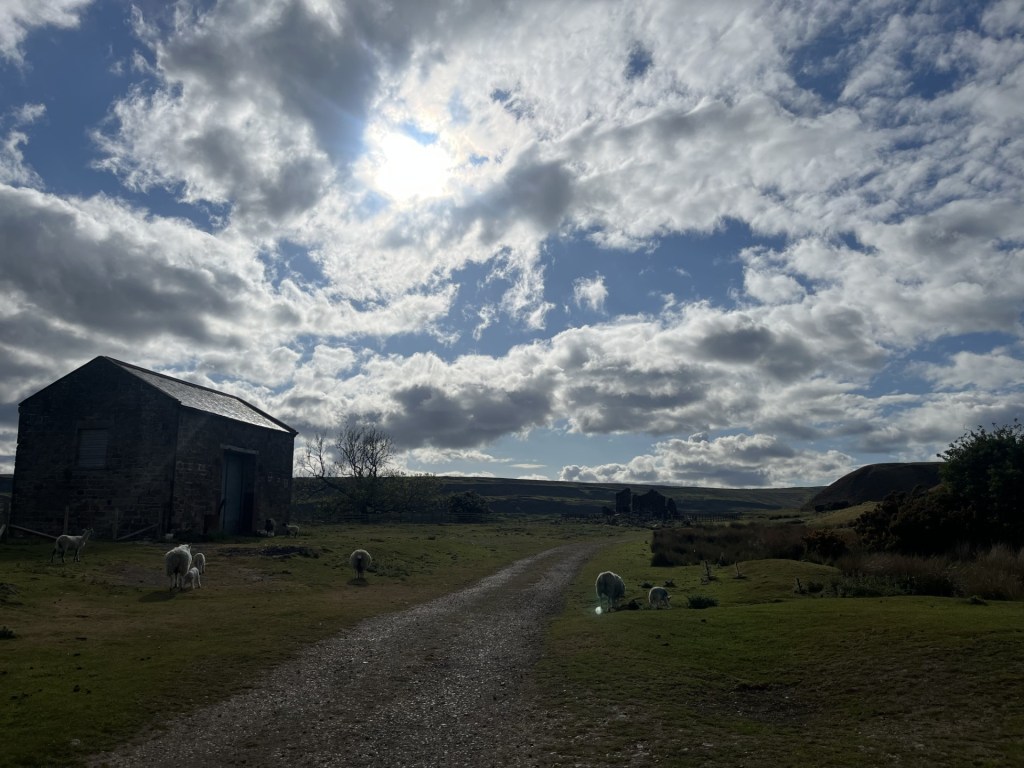
The old quarry and sidings above East Rosedale – the very accessible trail extends around the entire valley

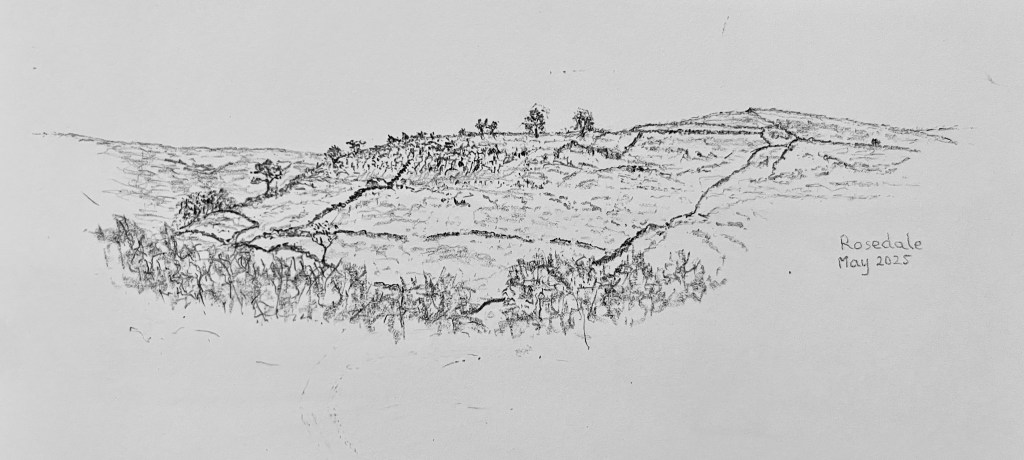
Monday morning had arrived and so had an annoying band of low cloud and slashing rain (we’d hoped for a walk before leaving). No point complaining, even a thimbleful of the wet stuff would have been welcomed by the farmers. I finished off a quick sketch of the view towards the west slopes (a faint line hints at the old railway). 
After breakfast in the pretty village of Rosedale we bade our farewells. My daughter and J were taking on the daunting journey back to Bristol and I was heading back towards York, and then onto Cambridge where I had secured an unfathomably cheap room in an hotel to break my journey back to the south coast. I was in no rush.

To get to York, all I had to do was retrace the route we had taken the previous afternoon on our return from our visit. I passed through Pickering and then Thornton Dale. As I passed out of Thornton Dale it occurred to me that it wasn’t a place I recognised. I pulled over and checked the map and discovered that for the third time at least on this short break, I had missed my turning. Up until quite recently I have had an almost unswerving confidence in my navigating abilities, to the extent that I have no satnav and am untroubled by the fact that my phone refuses to speak to me on the odd occasions I do try and set a route on Google.

Having worked out the revised route I set off along delightful country roads and mulling over whether I had at last reached the tipping point of short-term memory malfunction, before eventually meeting up with the A64 and heading south. Within five minutes the traffic ground to a depressing halt, it being a bank holiday Monday every second vehicle dragging a caravan. Every so often, when an opportunity presented itself, a car would peel off and head into a side road, clearly being assisted by their in-vehicle device. On the way back to East Rosedale the day before, J, who was driving, inexplicably pulled off the A64 and all of a sudden we were on a tiny track running between wheat fields. I suggested quietly that this departure from the main road felt wrong, but apparently the phone always found the quickest way. After a couple of minutes, and with no obvious sign of a major road in sight J pulled over. Seems that at the petrol station a mile or two back J, who had previously programmed the petrol station into the phone, had failed to reprogramme the route on filling up. Now the phone was desperately trying to take us back to the petrol station. The notion of AI leading us all a merry dance in a frantic attempt to assist had tickled me pink, and now, as the jam began thinning out, I was just content to wait it out. There was no obvious cause for the congestion other than the sheer numbers of people returning from the east coast to all other points north. It was only past York that the traffic began to move with a bit more purpose. I was getting close (oh, in case you’ve got this far, but had forgotten why you were here at all, I was still seeking out Stock Hill, the highest point in the City of York Unitary Authority).

I pulled off at the Askham Bryan junction and before long was driving along random lanes in what I considered to be a westerly direction. When I had planned to do this three days earlier, on my way up (you’ll have probably forgotten by now that I had missed junction 44), the approach to the high point would have been straight forward. A left turn off the A64 at The Buckles Inn and Bob would have been my uncle. Unfortunately, as the A64 is a dual carriage way, and there is no right turn from the east at The Buckles Inn, I’d had to come off a mile or so beforehand. Of course, I didn’t possess the necessary in-car tech to get me out of this labyrinthine pickle, but I knew that if I just kept driving with a left, left, left attitude I’d get to where I belonged. *

Sometime after leaving Askham Bryan I found myself driving through (from the west – eek!) Askham Richard. I was lost, and I swear that if anyone at all had been out on the streets, whether they were called Bryan, Richard or Louise, I’d have stopped and ask’d ‘em for directions. * *

In hindsight I believe the problem I had was that my destination was on an unnamed road, which meant that I was in a perpetual state of confusion. Somehow or other (luck I guess) eventually I was driving south on a small road that from what I could recall of earlier on-line research felt familiar. A small row of whitewashed cottages appeared on the left with fields in all directions. Fifty metres on and again on the left a side track and a large metal gate. I pulled over, knowing I had arrived. The gate was locked. I knew it would be. The track headed east and rose slightly to a higher point about a hundred metres beyond. A CCTV sign on the gate made it clear that whatever lay beyond was private property.
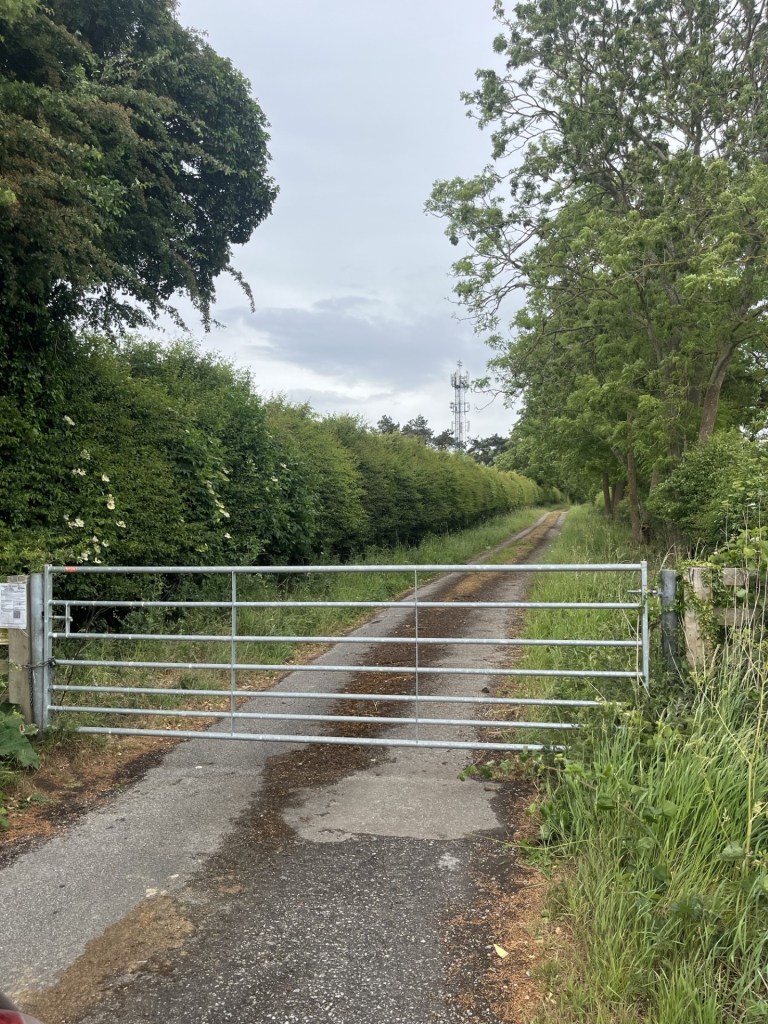
The Stock Hill access prevention scheme

I had been driving for what felt like hours so took a few minutes to stretch and take in the views. Despite the relatively flat vista to the west, the road heading south and back towards the A64, dipped away. Beyond low ridges, on the far horizon and on an almost ley line alignment with the white dotted lines running down the centre of the road, cooling towers and an enormous chimney, maybe ten miles away. I looked at the map on my phone (the one that seems incapable of talking to me when I try to set a route – or is it me?). Oh! There was no doubt about it. I had read loads about this place in Private Eye and seen documentaries about it too. Possibly one of the most controversial industrial sites in the country, Drax Power Station near Selby once burnt coal but now burns something called biomass. This “biomass”, from what I understand, consists largely (or possibly entirely) of imported wood pellets. In a BBC documentary two or three years ago, evidence was found that some of this wood was being sourced from irreplaceable primary (i.e. ancient) forests in Canada. The company receives huge state subsidies (billions of pounds) and generates a significant amount of our “renewable” energy. Mind you, that depends on whether burning wood is a form of renewable energy. Many claim that it is not, and that it would even be cleaner to burn coal instead. I don’t know, I’m not a scientist, but if I had to decide on whether to continue funding it, or letting it go for good (I don’t have to; it’s currently Ed Miliband at the time of writing), I’d probably let it go, and instead use the billions set aside for future funding to invest in genuine “green” industries for the Selby area. There… it’s out now, I’m a hippy.
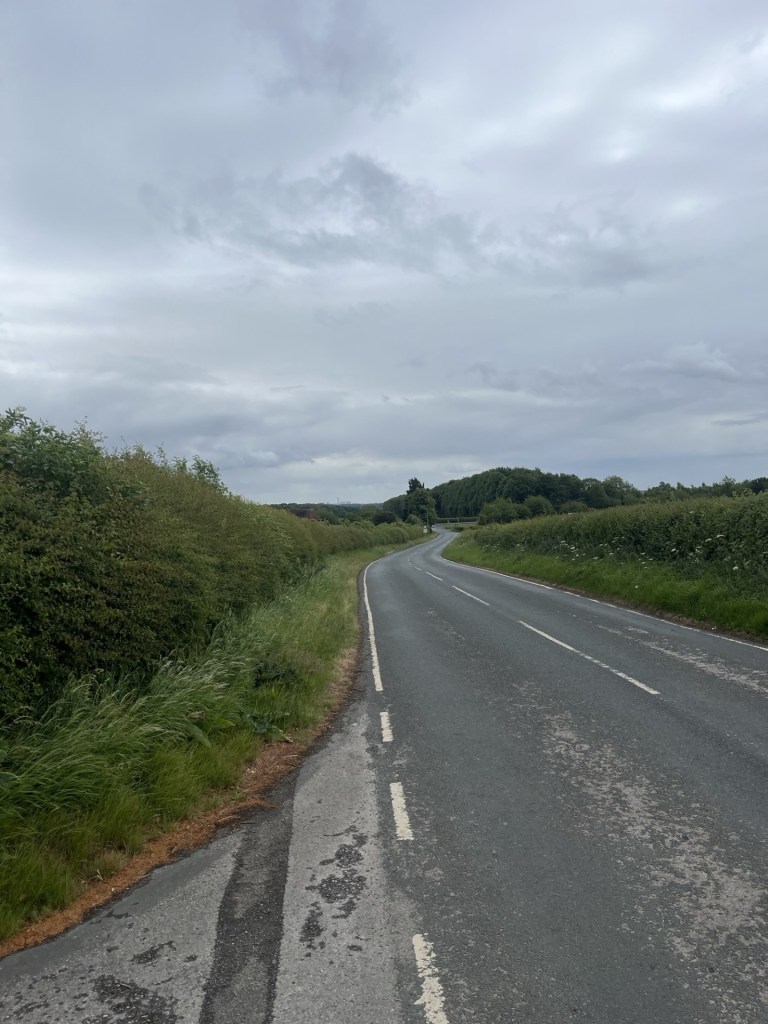
The white lines point to Drax

In unrelated Drax news, in 2022 I stopped at the village of Corfe Castle in Dorset. A sign by the village hall had a picture of a vigorous looking young man, who purported to be the area’s local Member of Parliament.

Richard Drax was 64 when this photo was on show. I too was 64, and like most men of that age certainly didn’t command the same youthful visage

Until 2024, Richard Grosvenor Plunkett-Ernle-Erle-Drax was not only the Conservative MP for South Dorset (when remarkably he lost his seat to Labour), he is also the biggest landowner in Dorset and owns a large pad surrounded by the biggest wall in the county. He is the so and so in line of a very old aristocratic family that cemented their fortune through slavery, and are the last of the old slavers to still own large plantations in Barbados (having almost certainly also received huge sums in compensation after the abolition of slavery, of which we – that is the nation – have only just finished paying off the debt). Anyway, I digress. Richard Drax (as he likes to be known, and some say after David Cameron asked colleagues with posh names that might identify their privileged class, to shorten them), to the best of my knowledge, has nothing whatsoever to do with Drax Power Station, but if you were to imagine a science fiction, post-apocalypse, super polluting industrial conglomerate it would almost certainly be called Drax and owned by a dark lord of the same name. I have mused too far (to the left you might complain).

Back to reality. If you are keen to visit this location and wish to share the view of Drax power station, my advice is simple. Approach from the west on the A64. On reaching The Buckles Inn (a mid-20th century brick building that at the time of writing was temporarily closed) turn left, carry on with fields on either side and then stop at the first track on the right.

In order to keep up my newly found interest in the Civil War I was half tempted to seek out the nearby site of the Battle of Marston Moor but instead I drove off back towards the A64. Free… at last.

* https://www.youtube.com/watch?v=AhkGTZ5qOjw&list=RDAhkGTZ5qOjw&start_radio=1

** apologies for any copyright infringements associated with this appalling joke
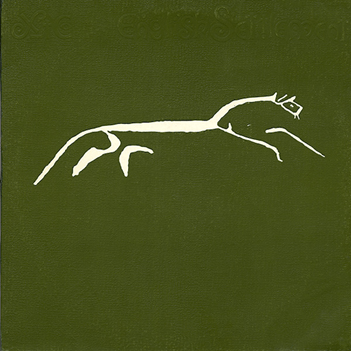
Cresting the County – Oxfordshire

Uffington Castle

262 metres

860 feet

14th September 2024

In the Footsteps of Alfred Watkins – Part 2 – Chalk Art and Car Parks (Part Two)

As I drove carefully along Station Road towards the B4507 at Kingston Winslow, to the east of Swindon, I knew with absolute certainty that I had never been anywhere near this rural delight before. I was returning home after a few days exploring and contemplating Alfred Watkins theories on the possibilities of ley lines in the Hereford and Worcestershire area. Whilst I was left unconvinced, his 100-year-old book “The Old Straight Track” provided a charming account of a bygone ideal. I was now heading towards a point of reference that was oddly missing from his account, the Uffington White Horse (the nearby “castle” being the highest point in Oxfordshire). For once, it was a glorious day.

A narrow road to the south of Woolstone took me up to a busy National Trust car park. At the pay and display machine several confused people stood around trying to figure out the least complicated way to part with their money. My heart sank when it was my turn. The machine refused to give me an option to pay by card (unless I was a member?). Having not quite recovered from a brutally traumatic experience at the National Trust car park at Beacon Hill in West Sussex, it was with a deep sense of foreboding that I called the pay by phone number. The mind-numbingly awful, computerised voice was hideously familiar, and when it asked for my PIN number (you know that number that’s so embedded in your brain that it is instantly memorable every time you use it, once or twice a year), I knew I was going to lose another valuable part of my life to the task. And I did and I’ll say no more.

On the plus side, the cold blast from the north that had dominated the week had subsided, and it was now warm and sunny enough to wear just a T-shirt and light jumper. Bliss. After the frustrating pay by phone debacle, I left the car park through a gate to the east and was immediately on the open chalk down. The hill fort was a few hundred metres up a gentle slope. This was going to be over a tad too quickly.

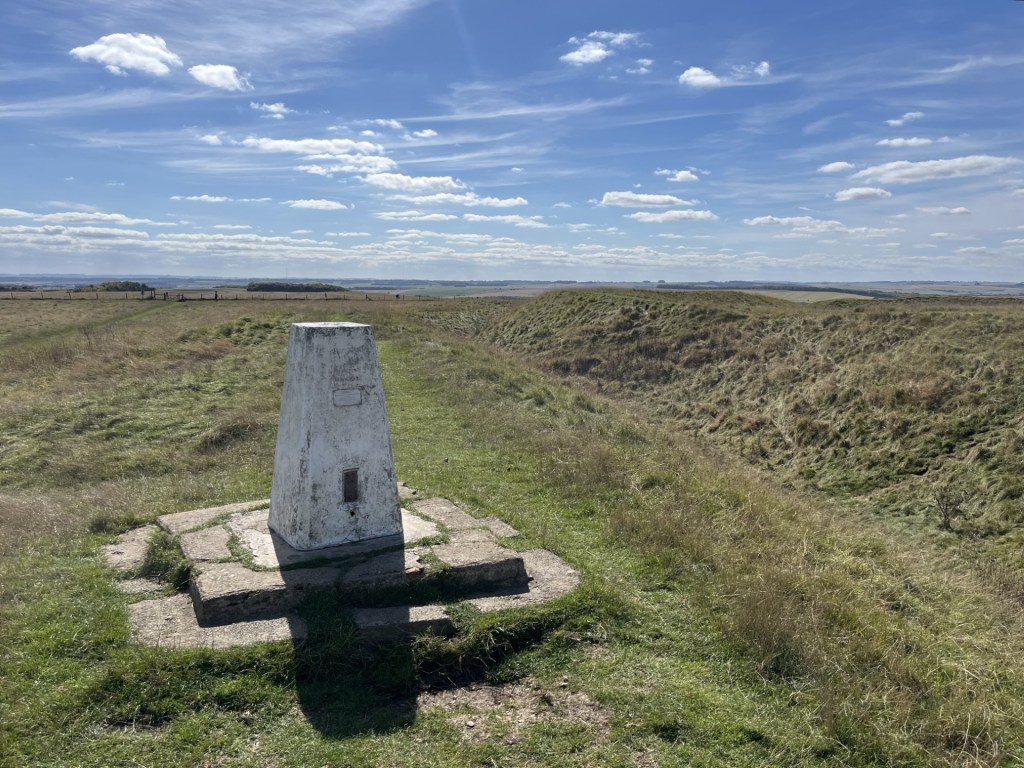
As I reached the lower ditch a track headed away to the south, and keen to stretch the legs I flanked round the structure, watched a kestrel and then two red kites patrolling the farm fields nearby, and then met up with the Ridgeway path to the south-east. There was no point putting off the exploration of the hill fort any longer. A short walk north and I was at the trig point sited at the eastern point of the massive earthworks.

At the top already..

The trig point stood at the top of the eastern rampart of the deep ditch (the terminology used here is likely dubious). The earthworks on the other side of the ditch seemed to be marginally higher, though surely that was just a trick of the eye. I clambered over and at the top was able to get the full view of the ancient structure. I have no expertise in these areas, but even to my untrained eye, the huge expanse of ground that lay within the single, broadly circular ditch and earthworks, was quite obviously not a defensive structure. Whilst the ditch would have been deeper and the earthworks higher, to describe it as a castle or hill fort is fundamentally misleading, but possibly increases tourist numbers. Even imagining a wooden fenced structure around the perimeter left me in no doubt that trying to defend this huge area would have been a completely pointless exercise.

Keen to guarantee I would stand at the top of the county, and extend the stroll, I decided to walk the full circumference. As I ambled along the rampart, I mused on what its purpose might have been. It reminded me, in size and shape, of a cricket ground. A proto-Oval or Lords perhaps. As there is absolutely no evidence (yet), of cricket being played in the Iron Age I ruled that possibility out, but the idea that it was an arena of some sort persisted. I wasn’t alone in beating the bounds, and as I passed couples and families out enjoying the day, the same observation kept cropping up in conversations. “What an amazing view.” Despite the relative lack of elevation, on a stunning day like this, they weren’t wrong.

On the ramparts looking west towards Swindon

Having completed the full circuit I chose to do what no one else was doing. I left the earthworks and walked in something of a direct line to what I figured was the centre. The ground seemed to rise slightly from east to west which meant that until I got to the approximate centre it wasn’t possible to see the western ramparts. The untidy vegetation had been left to grow, which further ruled out the possibility of cricket being played, at least until the first cut next year. An enormous mushroom emerged from the undergrowth, reminding me that what we buy at the local supermarket is a pale reflection on what you can obtain in the wild. I was tempted to pluck it, but decided to leave it in the ground as I would never get through it.

I headed northeast and towards one of the three or four entrances. A small metal plaque explained a bit more.

Keep off the grass.

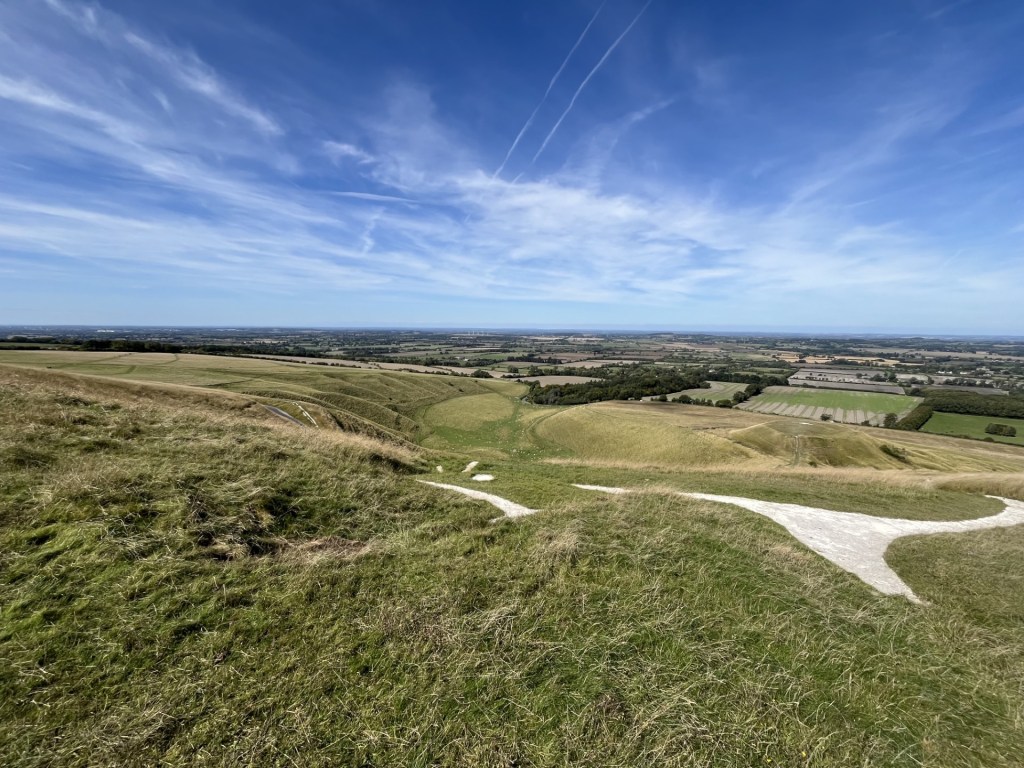
Beyond the embankment a sort of path took me to the area above the White Horse. Understandably, it was roped off, but trying to pick out the chalk detail was easier said than done. I think I was able to make out the head and neck, but it would have to wait until a later inspection of the photograph I took to get a better understanding.

Who knows? Dragon hill below right.

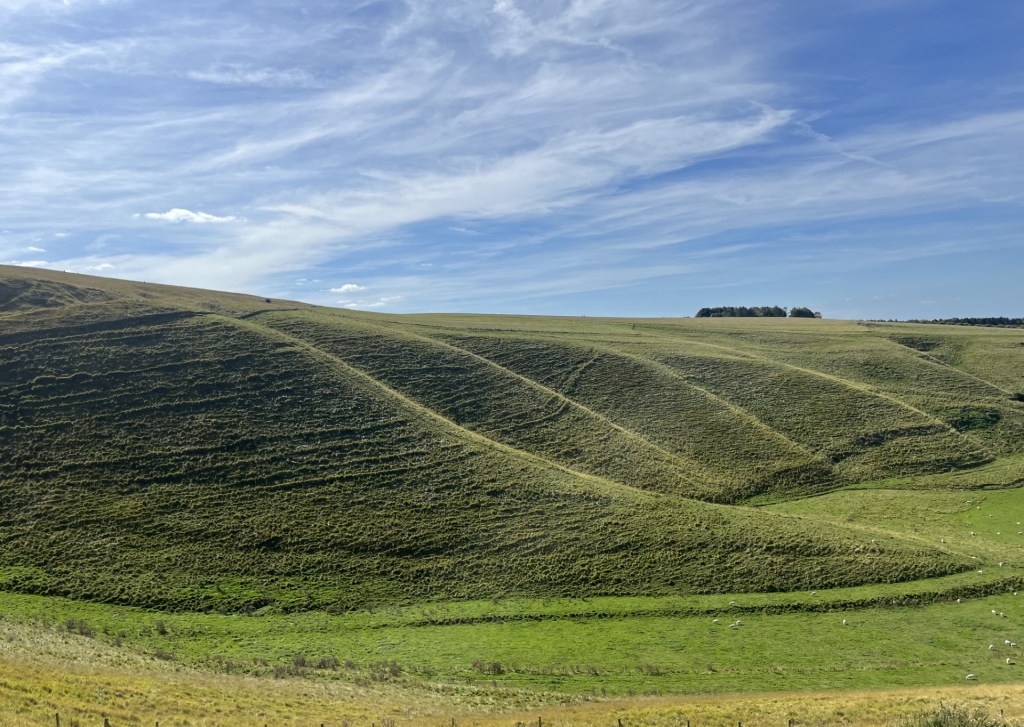
Below, a beautiful sweep of land with a dry valley and a flat-topped hill made for an impressive vista, and invited the observer to descend, maybe for a better view of the horse. A path continued above the carving and then gradually descended with another stunning dry valley to the right.

A classy dry valley

The path eventually crossed a narrow road and continued to Dragon Hill, with steep steps leading to the top. Whilst a natural feature, the top has been flattened. The story goes that George (he of the Saint status) killed a dragon here, and that the blood of the dragon poisoned the ground at the northern point, so now no grass grows. That’s one explanation… I guess. I mean, I just about get the dragon thing, but the idea that George ever came to these isles is clearly prosperous. I was drawn to the patch of bare chalk. Like thousands of people every year, and no doubt down the millennia, it’s about the only spot where you can get any sort of view of the White Horse. And perhaps that’s another explanation for the bare patch? But, even at this point the view was limited.

You still have to use your imagination. The bare chalk in the foreground remains a mystery, apparently!

I left the hill slightly disappointed. It was obvious that this exceptional work of art wasn’t going to reveal itself when up close and personal, and that being able to see it in its entirety was probably only possible from the Vale to the north. On the plus side, a chalk ridge, its scarp slope wave-like notches formed in the ice-age, curved away to the west to dramatic effect.

The Manger. I suppose it could be a dragon’s tail. I might be onto something.

Retreating from Dragon Hill, and avoiding puddles of dragon’s blood, I followed the narrow road back towards the top, taking in the views at every opportunity. Two kestrels, unperturbed by my presence, patrolled the field just below me.

Halfway up the hill and looking back, it was just possible to get a more complete view of the horse.

Ah yes, that’s better!

The image is very familiar to most of us, and unquestionably it is a work of art. The sense of motion is palpable. The people who dug it out of the soil were not only deeply artistic, but also observational scientists. It wasn’t until the 1870’s that a photographer (Eadweard Muybridge) was able to demonstrate convincingly how horses moved their legs whilst galloping (and I’m not going to attempt to explain it here), but you only need to look at an image of the White Horse to see that the ancients had already nailed it.

Unless it’s supposed to be a hare?

Back near the ramparts I headed towards a plinth. A circular steel directional plate lay on top. The third toposcope in four days. One of the many arrows pointed northeast towards Muswell Hill at 46 kilometres. I hadn’t realised I was so close to London, and was no less mystified that they had chosen to highlight the home of the Kinks rather than Highgate or Hampstead. Well, it was a mystical place, so I guessed there must have been a reason. *

I drove back down the steep road from the National Trust car park, and onto the B4507. The amount of roadkill here was extraordinary but, to be fair, it was of the highest quality. Mainly pheasants! I heard recently that the entire biomass (total weight) of all game birds reared for the purpose of being shot in Britain is greater than the entire biomass of all our wild birds. I suspect that’s pretty shocking, but I don’t know for sure. Either way, these dead ducks had skilfully managed to avoid death by traditional lead shot. Whether taking a broadside from a Range Rover Defender is a more, or less, dignified way to die is hard to say, but as I rounded a bend in the road I had to brake sharply in the old Ford to avoid terminating a buzzard that was lazily dining off the King’s asphalt table.

A moment or two later one of the seven thousand plus tracks on my iPod kicked in. Given the Muswell Hill reference at the toposcope, I had been chewing over which (of surprisingly many), Kinks tracks could neatly bookend this quintessentially English piece, but with the windows down, instantaneously the song randomly playing on this high, blue-skied late summer’s day, just outside Swindon, was entirely perfectamundo. It wasn’t Elgar, but it was XTC.

* The Muswell Hill indicated at the toposcope lies beyond Oxford, in the middle of nowhere and certainly nowhere near the Clissold Arms, East Finchley.

Footnote on the White Horse

The White Horse at Uffington is unique. But Alfred Watkins failed to mention it in the Old Straight Track. Having re-read his theories (after something of a fifty-year interregnum), it’s now very easy to pull apart most of his examples, not least because the science of archaeology has since been transformed.

Nevertheless, given Alfred was so convinced he was onto something significant, not to present some evidence of ley lines associated with the White Horse seems inconsistent, not least because whilst not on his doorstep, it wasn’t a million miles away either. One of the examples he relies on, more than once, is the Long Man of Wilmington on the north slope of the South Downs, between Eastbourne and Lewes (and many, many more miles from his home). It’s an impressive feature on the landscape and can be seen for miles. Watkins contended that the figure, standing erect and holding a staff in both outstretched hands, was conclusive proof that the pre-Romans were skilled surveyors and that the Long Man evidenced how they would have created the leys.

At the time you certainly wouldn’t have been able to write this thinking off, until along came the pesky archaeologists with their fancy new dating techniques and discovered that it was only a few hundred years old! That was in 2003. Just a few years earlier, and before all this science stuff got in the way, two of Watkins’ apostles, Nigel Pennick and Paul Devereux, published their own updated money maker, Lines on the Landscape. Rather stupidly, at the time being part of a history book club that specialised in slightly off the planet theorising, I bought it. It must have been a lean month subject wise.

In this book the authors go one step further than Watkins. They do indeed reference Uffington, detailing a supposed ley line that passes through (interestingly not the middle) of the nearby hilltop fort. Whilst they mention the White Horse, it’s only noted as being “nearby.” That, though, is very important. On the same page they also illustrate ley lines that pass through the Long Man of Wilmington, and a ley line that passes “near” the Cerne Abbas Giant in Dorset. It is possible that the rather alarming looking Cerne Abbas is somewhat older than the Long Man, but using the same contemporary dating techniques, applied just a handful of years after their claim, it too, at its oldest, is probably Anglo-Saxon. Given what we now know about the age of these landmarks, and without giving Pennick and Devereux much more undue attention, it’s probably time to lay the leys theory to rest. It’s clearly a busted flush.

Yet the Uffington White Horse, an abstract work of art, etched with passion and care into the landscape, is very actually pre-Roman. Since visiting, I have hardly stopped thinking about it. It has been regularly maintained ever since its creation over two thousand years ago, including during the Roman period and the Dark Ages. If it had been left to its own devices for just a couple of decades throughout this time it would have disappeared for good. It has a story still to tell, and I have an ominous feeling I’m about to disappear down a labyrinthine rabbit hole (and my middle name is Alfred too!). My book, The Uffington White Horse, Thoroughbred or Carthorse in the Neolithic Astral Plane, will be published (honestly, it will!).

Cresting the County – Hertfordshire

Pavis Woods? (Debate)

244.9? Metres

801 Feet

21st July 2024

Chilterns Two Peaks Challenge – Part 2 (in which I disappear down a worm hole of my own creation)

In part one, which is an essential read in the context of what follows, I spent at least, oh, five minutes getting from the car to the highest point in Buckinghamshire. That exhausting and definitive account can be read at

https://wordpress.com/post/elcolmado57.wordpress.com/796

Haddington Hill – Apparently the highest point in Buckinghamshire and the start of the next journey

After leaving the path from the woods, where the highest point in Buckinghamshire is marked by four stones and a reminder of monarchy, I headed east on a road that led out from the car park at Wendover Woods visitor’s centre. After a while I got a bit bored of walking on the road and noticed a path leading onto thick woodland. I had a fair idea of where I was and wasn’t too bothered if it led me slightly astray.

As soon as I stepped into the woods, I spotted a small deer grazing in a clearing just 20 or so metres away. By its size I suspected a muntjac, but at that moment it sensed my presence, looked up and then with a couple of skips disappeared deeper into the woods. In that moment I’d noticed a small tail. I’ve subsequently looked at images of deer on Google to see if I could identify the type (which I was pretty sure wasn’t a muntjac). In the end I couldn’t, but here’s a tip. Don’t search for images of red deer unless you want to see a lot of pictures of mainly men in camouflage gear, and holding high powered rifles, gloating over their trophies. Big guys!

The path soon rejoined the exit road, which in turn met with a B road (St Leonards) at Chivery Farm. I dithered for a while, trying to get my bearings, but after consulting with my 1983 Ordnance Survey Landranger map for the Aylesbury area, I decided to turn left, and after some 400 metres came to a bridleway on the right and heading east.

This was either the Icknield Way, or the Ridgeway, or possibly both? Breaking out of a line of trees a very green, grassed covered dry valley fell away to the left, with the only expansive view along the entirety of the walk. A dozen or so swallows swooped up and down the valley feasting on whatever was on the high protein menu that day. To the northeast the scarp slope of the chalk downs at Ivinghoe Beacon (an area well worth a visit) was just visible.

Towards Ivinghoe Beacon and the Tring salient (see Buckinghamshire)

Looking back and a large manor house, which had clearly been subject to a significant facelift. Two huge timber framed glass extensions protruded south from the main body of the older building. Quite how the developers managed to slip this past the Planning Committee will remain an un-researched mystery to me, but I could see the attraction.

Life from a window

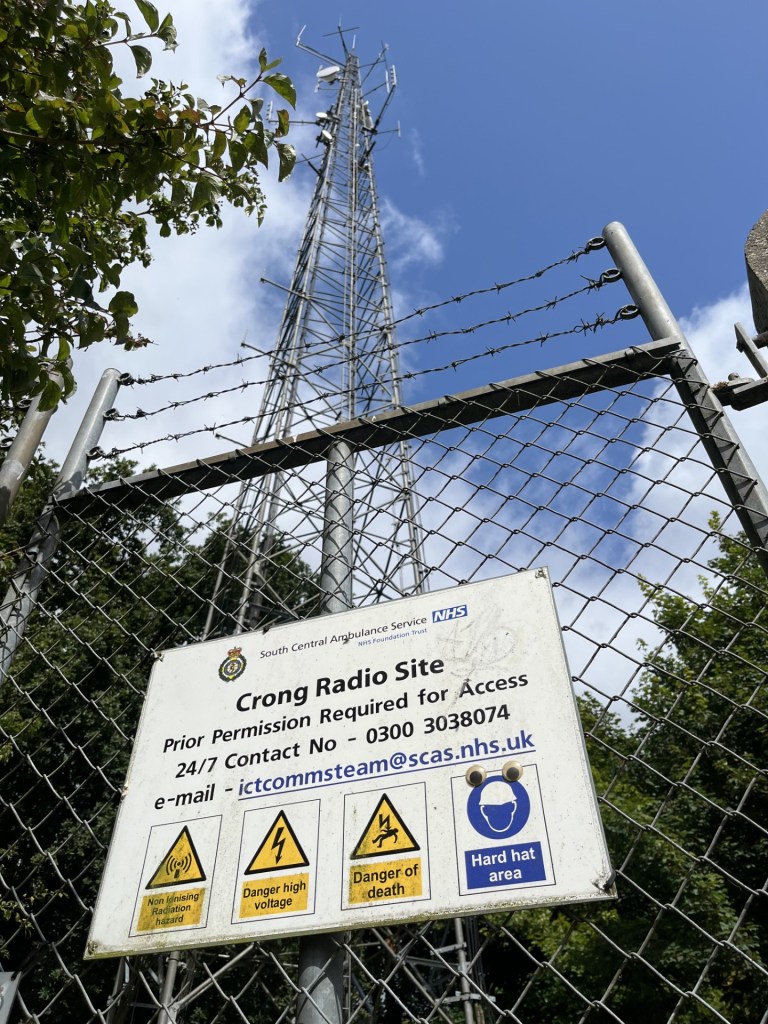
This section with the views ended at a gate that led into more beech woods. The path through the woods was flat, although at times it was possible to make out the land falling away to the left. My objective was Pavis Woods, where the sources indicated the site of the highest point in Hertfordshire, just over the Buckinghamshire border. To get to Pavis Woods, I had to walk through Black Wood and then Northill Wood. In truth, with no obvious border, change in altitude, or tree type there was nothing to tell them apart. Except, where the path spilled out onto Bottom Road, a small lane that plunged down the scarp slope to the north, it was hard to miss the Crong Radio mast, which given its location and height, almost certainly makes it, technically, the highest point in Buckinghamshire. I’d never heard of Crong Radio and presumed it to be a hangover from the days of pirate radio, specialising in a sub-sect of music only known to a sub-sect of the nation’s youth. Instead, it turned out to be the local ambulance radio transmitter.

You have been warned

I left the radio mast to its important business and then passed a derelict breeze block building that could have served a variety of purposes over many decades but was now an ever-changing open air modern art gallery, to which someone had controversially commented CRAP. I wasn’t so sure.

Where Romanticism meets Expressionism

As I have mentioned, Northill Wood was essentially the same as Black Wood, and where Pavis Wood started it was impossible to tell, but the walk was pleasant enough. Just towards the end a walker approached from the opposite direction. The only one of the day so far, and judging by the kit, was taking on a tougher challenge than me.

As I arrived at the gate exiting the woods a horse and rider appeared on the other side. Due to  an ingrained inferiority complex, and the fact that the horses bearing was considerably more authoritative (big), I gave it and its rider priority. Beyond the gate was a road, and I figured that I had now left Pavis Wood. Which, given that the highest point in Hertfordshire was supposed to be in Pavis Wood, represented an issue. I went back into the woods and looked around to see if there was anything to mark the location. It was certainly the highest point at that point, but only by inches. And there was no marker.

Going back to the road, where, out of the trees it was a bit lighter, I got out the old Ordnance Survey map again. Something had been troubling me, and once I had managed to wake up the optic nerves and achieve some focus, I began to understand the issue. The perceived on-line wisdom was that the highest point in Hertfordshire was in Pavis Wood. The problem was that the Ordnance Survey map, unlike the map on the phone, showed the county boundary running along the middle of the road, which left Pavis Woods in Buckinghamshire. That said, further to the north, the boundary did bisect some of the woods. I studied the map as closely as I could. It showed a height marked at 244 metres in the field opposite, in Hertfordshire. 

I was baffled and confused. On one side of the road I was in Buckinghamshire, and stepping over to the other side I was in Hertfordshire, but whether I was at the correct spot or not was entirely debatable. At least I was out of the woods, and as the weather was overcast, cool and very windy, and I was only wearing a T-shirt and shorts, I was happier out of the woods for a bit, where the possibility of an occasional ray promised.

The appropriately named Shire Road went south, and wagering on a footpath that would take me in an arc to the village of Hastoe, I set off, looking left and right to see if there was any slight deviation in the lay of the land that might have indicated a high point.

It was pleasing to be out of the gloomy woods for a while, and after ten minutes of losing altitude, a footpath appeared on the left hand side of the road. A quick consultation of the map and I took it. The path followed the line of a high hedge that, according to the map, marked the line of Grim’s Ditch. I’d noticed on the map that some forty years earlier, presumably when I purchased it, I had marked out the route of a much longer walk I had taken when young and more energised. I remembered it well. A train out of London to Amersham and then west through the country and some villages until I turned back east at Redland End, and for a mile or two along another section of Grim’s Ditch, ending the walk at Great Missenden. At the time I distinctly remember stopping for a while, taking a couple of photos, and considering what purpose these earthworks might have served. Of course there was no way of finding out in those days, unless I was prepared to invest considerable time researching the issue at a public library, and looking back now, I’m pretty certain I didn’t do that. Today, within a few moments of tapping, I find that they are probably from the Iron Age and their purpose remains a mystery. I think it’s quite reassuring to know that even now we don’t know everything, but once you know they exist, and seen them on a map, a little bit of me is inevitably curious. *

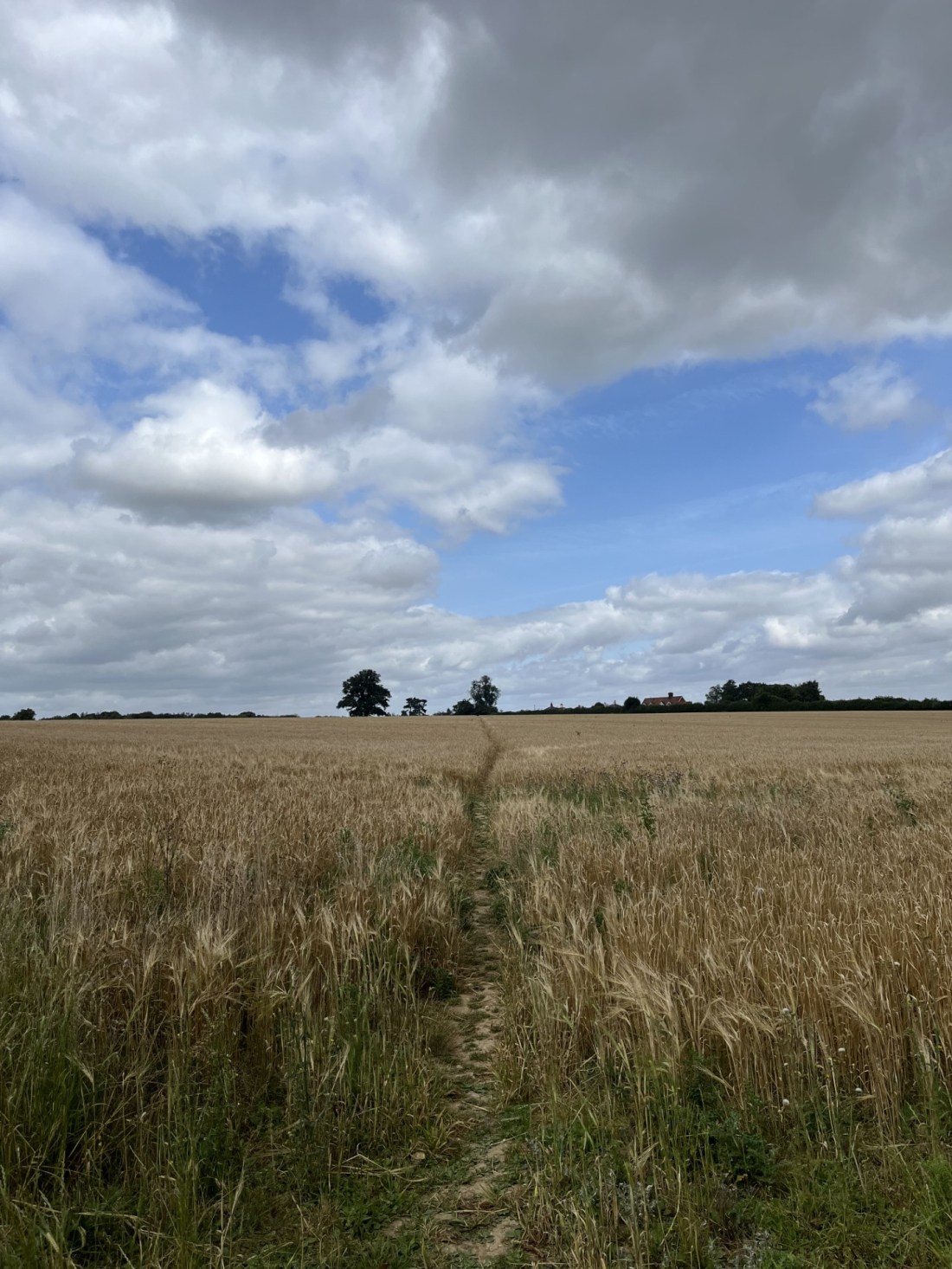
After a couple of hundred metres the path was crossed by another, which angled north-east and back up across a large wheat field directly towards the village of Hastoe. As I walked up through the field it was clear that the land to my left rose to what appeared to be a higher point.

The old straight track to Hastoe

I reached Hastoe, turned left and along a rough road towards the heart of the village. To suggest it had a heart is probably an exaggeration. Hastoe was pleasant enough, but its handful of eclectic houses, set back from the road, and with a large complex of imposing redbrick buildings at the junction with two other roads, implied perhaps that at some point it had been part of a large estate, and that what was now a large and exclusive development had once served a different purpose.

I turned left again along Gadmore Lane and back towards Pavis Woods. The road rose steeply for a bit before flattening out on the approach to the woods. To my left was the far end of the field I had crossed, and through the hedge I could see that the land appeared to rise towards a thicket of trees. If I wasn’t actually standing at the highest point in the county, I was pretty sure that I had done my level best to circumnavigated it. Before plunging back into the woods, and largely due to an irrational worry that I had missed something important, I did some more Google searches. What is the highest point in Hertfordshire? The results only seemed to confuse the situation. Pavis Woods came up repeatedly, and one even put the point two or three hundred metres to the north, which unless I really was misreading the topography, just couldn’t have been true. I concluded that I was just wasting my time, and rather hoped that the signal on the phone would stop working. Pavis Woods, or at least the part of it that I was about to enter, was firmly in Buckinghamshire. The clumps of trees at the top of the field opposite were firmly in Hertfordshire.

The highest point? Who knows, it remains an enigma.

The walk back was along the same route. The weather didn’t improve but at least it didn’t rain. By the time I passed the sign pointing to the highest point in Buckinghamshire I had walked about six miles, which was more than I had expected when I had set out. With the cackle of gunfire wafting up on the wind from the ranges down in Wendover (Storm Lilian was beginning to make its impact), I enjoyed a coffee at the back of the attractive cafe at the woodland centre, where, if I had only known, I could have gone Ape at the nearest treetop facility. Hey, next time, maybe.    

Driving back south on the A41, the police had taped off the outside lane. A car had inexplicably driven straight into, and was wedged under at 90 degrees, the central barrier. It didn’t look to good, and I guessed that Crong Radio had played its part in the emergency response. Beyond the accident, and within moments, I was being overtaken by high powered vehicles hurtling on their way, nose to tail and far too fast.

*

A bit like the mystery of Grim’s Ditches (plural), I have subsequently devoted far too much time trying to pin down the exact location of Hertfordshire’s highest point. The well-known font of all on-line knowledge, Wikipedia, didn’t seem to hold the answer (it being a proponent of the Pavis Wood theory). Google maps definitely didn’t resolve it. The scale of my OS map was too small to drill into the contour detail but did at least have a clear 244 marked in the field with the clump of trees. But it still wasn’t conclusive. A tangential search, because I wanted to know for sure that I had been walking on chalk (it wasn’t obvious on the ground) took me to the British Geological Survey’s Geology Viewer. ** The viewer confirmed that the ridge was chalk (Lewes Nodular and Seaford Formations to be precise), but then I noticed, as I hovered the mouse arrow around the Pavis Wood area, that in the bottom left it showed not just the grid coordinates, but also the precise height at every point. This was a game changer. I moved the arrow slowly and in a circular motion around Pavis Wood and the field adjacent to Shire Lane. 245 metres was the maximum elevation, and indeed the map showed a height point on the road just south of the junction stating 244.9 metres.

I could still be wrong, but based on everything I have looked at, I am almost certain that the highest point is just beyond the hedge in the field on the Hertfordshire side of Shire Lane, and about 50 metres south of the junction with Gadmore Lane. And that’s a fact?

*  Curiosity. I was surprised to find on my bookshelves that I still had a 1970’s copy of the seminal 1925 book “The Old Straight Track” by Alfred Watkins, in which he propounded his theory on the existence of ley lines. Given that, 99 years on and there remains a mystery surrounding the linear Grim’s ditches, I wondered if Watkins had a take on them. He didn’t. They get a brief mention, albeit meaningless and without any context, in another book I have on the subject “Lines on the Landscape – Leys and Other Linear Enigmas,” by Pennick and Devereux -1989 (what was I thinking when I joined that book club?). Enigma indeed!

** If you want to know what’s below your feet, or whether your home is built on granite (good), chalk (hmmm) or mudstone (eerrr..!), the BGS Geology Viewer is, in my mind, the greatest thing on the internet. Geology aside, what it shows in terms of on the ground detail is extraordinary. It’s a worm hole worth a visit.

https://geologyviewer.bgs.ac.uk/?_ga=2.58458858.1363630663.1720815697-999374144.1720815697