A phone call from the dentist on Wednesday the 15th of May. “We can bring the appointment for measuring your crown forward. Are you free tomorrow?” “Great, yes, thanks.”
Thursday 16th May. 8.55am – Phone rings. “Really sorry but your dentist is “detained”, and we need to reschedule your appointment. Can you do it tomorrow morning?” “Hmmm… I guess so. Thanks.”
It was not the end of the world, but Thursday would have been perfect. It poured with rain all day and I had already targeted Friday for the Ditchling Beacon ascent because it came with a very rare these days, 100% rain free forecast. The Friday morning dental intrusion was going to limit the time available.
At 9.55am at the dentist’s I walk into the room. I don’t know what I was expecting, but when he said he was going to give me a jab before working on the tooth I hesitated. “I err…had plans for today.” “It’s just a slight tingling, don’t worry it won’t affect your day.” What could I do? It had already cost an arm and a leg and needed attention.
After some drilling and grinding and with a temporary crown in place, I headed home, packed a small bag, and reached the station just in time for the Brighton train. Except, as it rolled into the platform, I was still at the machine, desperately trying to extricate the appropriate day return tickets. The train had left by the time I had mastered the technology. The next train was in thirty minutes, so just enough time to pop out of the station, gain supplies and assess the effect of the pain relief. At the cafe I picked up a soft roll with a filling (a granary option was available but given the recent dental work…) and ordered a double espresso, which, with my mouth still in full stuffed cotton wool mode, I dribbled carefully from the corner of my mouth. I made sure no-one was watching. As I wiped my chin, I decided that travelling the whole hog to Brighton and expecting to complete a circular walk to the top of the Downs was too much of a challenge and having had a quick look at the Ordnance Survey map decided to alight at Falmer, a couple of miles to the northeast of the town centre.
Arriving at Falmer an hour later, I left the station, with the Amex Stadium (not as impressive as I expected) framing the background, went under the A27 and then headed east along this very busy road to a roundabout. Just up to the left, and on the opposite side of the road, with the University of East Sussex beyond, I walked up Mill Lane, and then left onto Ridge Road. I knew I’d made a good decision as instead of a long hike out of Brighton I was already in the countryside. And it was going to be straight up from there.
The road headed north and up through overhanging trees, their leaves still showing the fresh lime colours of late Spring. After half a mile or so a signed footpath to the right indicated a route to the top, heading north-east and away from the objective. It was already late, so I kept to the road, and then an annoyingly long descent that ended at St Mary’s farm. Here another signed footpath headed north-west and directly up through fields and to the Beacon. As much as I was tempted, I had a feeling this might come with some challenging inclines and instead chose to continue on the road, which here gave way to a stoney track. With woods to the right, and a large dry valley to my left I made reasonable progress. Every few minutes peacock butterflies rose in front of me, startled by my presence and interrupting their rest stops on the warming flint track.
Towards the top of this stretch I noticed four buzzards rising on the currents just to my right. I stopped and watched for a while and looked east and along the line of the Downs towards Newhaven and Seaford. Given my relative height against these hills it felt like I had a way to go. I carried on, but stopped again when for a moment I perceived the first signs of a migraine. A slight anomaly in my vision. I get migraines occasionally. Not the full-blown debilitating headaches that can knock people out for days, but a fifteen-minute slow motion psychedelic visual display that can leave me flat for up to twenty-four hours. If it was going to happen I’d soon know, but despite the expectation (the fact that I hadn’t been able to eat at all, and that I was still quite significantly impacted by the anaesthetic were possible cause, but equally it could have been as a result of reflected light from the thousands of flints embedded in the track), somehow the full immersive experience failed to materialise, and for the moment at least I was able to carry on and not blinking for a few minutes (just occasionally I have been able to avert the crisis by not closing my eyes – don’t ask me how this works, but as on this occasion I think it did).
The track ended past some rape fields and at a highly elevated farm complex, which looked like it may have been repurposed. A footpath continued to the east of the farm and eventually met with the South Downs Way, the primary walking and cycling route from west to east along the top of the chalk escarpment. I started west and immediately a car crossed my path! A small road disappeared steeply down the north scarp face but ended here at a car park which was home to a drink and snacks van. As it was hot, and I’d been on the hoof for some time, a nice cup of tea here would have been perfect, but having assessed that this would present a very public opportunity to dribble more liquid down my chin, I wised up and carried on.
The route slowly rose and with it the views to the north, west and east became more and more impressive. What appeared to be my target lay directly to the west and seemed to be half a mile or so away. Given that it was the highest point in East Sussex, and the second highest point in the south-east (Leith Hill in Surrey is the parent summit), looking around at the vast array of ridges and hills of Sussex and Surrey I felt that I still had some elevation to go before I would be above the rest.
In Graham Greene’s early and underrated novel, The Man Within, the central character, Andrew’s, makes a journey across this ridge on his way from Shoreham (to the west of Brighton) to the Assizes at Lewes. Unlike me, he’s not having a casual midweek stroll to liven up the senses. It’s in the heady days of smuggling and he’s being hunted. I have read this book two or three times. It’s not typical Greene. His later books deal very specifically with introspection and awkward relationships. Here you are in Andrew’s shoes from the first page, and you don’t have to have been to Ditchling Beacon and this area to know and feel it. It’s cold and wet. Not like today. He spends a fraught night in a farm high on the Downs before continuing his journey. Two hundred years ago, around the time the story is told, and not on such a glorious day, this area would have been bleak, and regardless of your condition, possibly enough to terrify. As Andrew’s crest Ditchling Beacon he sees a man crossing in a horse drawn cart, people in the fields below working, and other travellers along what at the time must have been a major route on higher ground. But it’s not the people he can see that troubles him, it’s the people he knows are out there but can’t be seen. His pursuers. Maybe The Man Within was a test run for The Power and the Glory (one of the great novels about a priest on the run in an intolerant Mexican state), but as I head on towards the Beacon all I see are people out enjoying the moment. That’s not to say these hills no longer hold a threat, or a darker side (tragic and sad things still happen up here), but on this day, and in hope, a long hot summer is in the air.
Looking west towards the top
Another road crossed my path, a larger one than the previous, and I suspect the final heave ho on the route for the determined riders who do the London to Brighton cycle ride (I’m pretty certain the A23 is not an option). Crossing the road another car park and a refreshments van, but I needed to press on. A short climb and there was the triangulation point that marked the spot. I walked over to it, took in the view and a couple of photos, and then collapsed down onto a random slab of concrete. There’s an ancient hill fort here somewhere, but it is impossible to make it out. A steady stream of walkers of all ages, including groups of teenagers experiencing the great outdoors, but mainly having a giggle and moaning about the weight of their packs, passed along the main track but only one older couple recognise the significance of the triangulation point and come towards it, and me. At exactly the moment when I had plucked up enough courage to start squeezing the contents of the soft roll between my lips on the right side of my face; mayonnaise slowly dripping down my cheeks. The man apologised for interrupting my solitude. I mumbled something incoherent along the lines that I was having difficulty speaking, and after a quick photo op, perhaps concerned for their personal safety, they unsurprisingly left. After three more attempts at the soft roll I gave up and instead took the opportunity to dribble some water down my left cheek and chin.
Time to take a moment, with a soft roll.
Taking in the panoramic view to the north I could see as far as Leith Hill, though trying to pick it out was not obvious. I could also see Box Hill and the ridges towards Guildford, Newlands Corner and the Hogs Back. Further west and the chalk uplands twisted far into the distance. Looking south and there was Brighton, with the observation tower thing and beyond, through a heat haze, the magnificent rows and rows of wind turbines (that I understand many people detest, which I don’t get). To the east the view was less impressive, but there, thirty odd miles away, and to my surprise and through ageing eyes, I picked out the four residential tower blocks that landmark my neighbourhood.
Looking east towards Eastbourne and Hastings.
Had one stood here over 600,000 years ago, and just before the ice-age, the landscape would have been entirely different. I’m not sure what the view south would have been like, but to the east, west and north the chalk would have continued rising a further two thousand feet before descending back to the Thames basin and what now remains of the North Downs. Ditchling Beacon is not a high peak, but now that the monolithic chalk uplands have gone and the clays and sandstones of the Weald are left to slowly wash away into the North Sea, on a clear and pleasant day the view is hard to beat.
I moved on west. Almost immediately there was an option to descend but I wanted to keep to the top for a bit longer and then head down the Sussex Border path and a more direct route into Brighton. I passed a small dew pond to the left. It looked relatively new, lined with concrete and featureless. A quarter of a mile on and a second dew pond, again on the left. Dew ponds are man-made, and this one had almost certainly been here for at least a century or more. This one was exceptionally beautiful, even though the sun had gone for the moment. Two small hawthorn trees, bent and battered to the east by the prevailing wind, hugged the edge, and several sheep, including lambs, wandered around their watering hole, undisturbed by my presence. I took a photograph that I knew was going to be good, but I later found this wonderful site which contains some stunning shots of this surreal spot: https://suxxesphoto.com/ditchling-beacon-dew-pond/
Pond Life
Another couple of hundred yards and a third dew pond to the right, surrounded by low shrubs, and hanging on the ridge. This one must have been at least as old as the second, with copper coloured water. A fence prevented access, but it was possible to stand a few feet from the edge. Movements in the water indicated a plethora of wildlife. In this blog’s introduction page, I indicate that Cresting the County has nothing to do with the geographical distribution of crested or great crested newts across the United Kingdom. And as I stood gazing into the shallows, it occurred to me that I may have got this wrong. Very quickly I was able to pick out three or four newts moving slowly across the silty floor. I looked back down towards Brighton. There are no rivers or other major water sources anywhere near this point. The nearest stream would be four to five hundred feet immediately downhill at the foot of the scarp slope. There is no point in speculating on the how’s and motivations of these newts to take on the heroic task of moving from a safe area with a regular source of water, to the highest point in the county, where the frequent risk of water scarcity would be inevitable but seeing them on this occasion was the last thing I had expected.
Just beyond the newt pond it was time to head on down the dip slope and once over a stile on the left I was walking directly towards town and with the elevation tower i360 straight ahead. How could I go wrong from here? Well, unintentionally, and perhaps fixated on keeping a lay line focus on the tower, I must have diverged from the Sussex Boundary path. This only became apparent sometime later. The path I was on took me down towards a farm. As I reached another stile just to my left, there was a thrashing in the undergrowth that rose up below the structure, and just feet away a female pheasant leapt clear and flew with difficulty directly away from me. I reached a modern barn structure, and noted the pheasant again, looking a bit sheepish and paddling around in puddles. I had noted on the map earlier that at some point on this walk I would come across a war memorial. There was an option here to go left and down a track towards the farm. Mindful that this was unlikely to take me to the memorial and noting a footpath sign just to the right of the barn, I chose the latter route which took me immediately up a short but very steep climb and then across another field to another stile which I crossed over. At this point I decided to stop and take a break.
The numb jaw was easing, and without hesitation I whipped the rest of the soft roll from my bag and despatched it straight into my mouth, without any spillage. I gazed across the landscape and noticed a footpath crossed my tracks, but my attention was diverted by the sight of a kestrel that swooped smoothly out of a hawthorn tree and hovered over a small field just fifty metres from my position. As the bird was below me the stunning plumage, set against the late Spring greens, was mesmerising. The bird almost immediately flew back to the tree, but then seconds later it was back and attacking something on the ground. I couldn’t tell if its strike had been effective as it rose and headed off down the dry valley and beyond sight. Along with this spectacular moment, and perhaps high on the pseudo narcotic fallout from the soft roll, I hesitated no longer, and set off directly south and onto what I assumed was a path that hugged a field of wheat, having completely overlooked the other, more dominant path that I had noticed a few minutes earlier.
Within a few minutes I was regretting this decision. The field had clearly been ploughed to oblivion over the years, and whatever my previous understanding of chalk had been prior to this moment, the concept that it was entirely made of large chunks of split, splintered and ankle twisting flint had eluded me. Negotiating what turned out to be two or three hundred metres of this body shuddering terrain was miserable, although I noticed and then pocketed an elusive but almost perfect flint nodule, about the size of a small cannonball. It was covered in chalky mud, so I popped it into the soft roll wrapper (never leave a trace).
An almost perfect flint nodule. Note precision measuring tool.
At the end of this hideous field, a gate and a pasture field trailing on down the valley. I could see a gate at the bottom of the field that led to a small road, and without consulting my map I concluded it was my objective. Every year, around this time, you’ll see or hear features on the radio or on television, about the number of people injured or worse by cows. I never gave walking across a field of cows a second thought until about twenty years ago when in the very act in a field somewhere forgotten, a herd of cows decided to start tracking me with what I considered to be deadly intent. Fortunately, I was slightly livelier and nibble on my feet then (and hadn’t just walked across an ankle sapping flintscape) and was able to track along the edge of the field, making sure that there were escape points to leap. After which, annually and without fail, I have heard or watched one of these articles about the dangers of cows, and whilst still not paranoid about outcomes, I treat any field full of them with some caution and respect. And, yes, here I was faced with a field of cows, walking slowly from south to north and directly across the path that would take me to the gate. With the prospect of now having to safely navigate a herd of killer cows, and with the effect of the dental inoculation now easing rapidly (I was beginning to feel a nagging pain at the back of my jaw), and still mindful of the possibility of a migraine at any moment, I was beginning to conclude that perhaps I should have delayed the trip. Too late now buddy.
I chose my moment carefully and set off across the field at precisely the moment three of the cattle (almost certainly bulls) had made their way as far from the bottom gate as they could get. All good then, but just at the point when I was halfway across the large field three or four more cows appeared from nowhere and were on a similar trajectory. All I could do was up my pace and hope. As the lead cow plodded on and gazed at me in a manner that strongly suggested attack, but was more than likely indifference, I ignored the possible outcomes and made it to the gate and escaped. Now on a small road I noticed a sign pointing back into the field and towards the elusive war memorial. I wasn’t going back, but as I continued south along the road I looked back for a moment, and about a quarter of a mile back up the slope a small white structure, like a stunted minaret, stood impressively alone.
The aim now was to get into Brighton as quickly as possible, but another hill, and then a lengthy stretch of road followed before coming to an end where it butted up against the enormous embankments of the A27. Another footpath sign here indicated the track I had hoped to have taken, but had missed, but also named the war memorial. I had missed the Chattri memorial.* Too late now.
At the huge A27 embankment and junction complex it was a simple left or right choice down uninspiring narrow roads. With no way of knowing the correct way to cross the man-made barrier (that said if I could have been bothered to use the phone map at this point it may have helped), I chose left and set on down the lane, which spoke of multiple fly tipping events and opportunities. Half a mile on and a footbridge took me over the flow of vehicles and beyond through some woods and then a recreation and cricket ground. I sat down here for a few minutes to get my bearings, and to catch my breath. After I had made a partial recovery, I headed up the road to the west and entered the St Mary’s neighbourhood. A cluster of early and mid-Victorian cottages, an attractive church (St Mary’s Barnes) and at the foot of the side road and 1930’s pub. This small street heading down to the main A23 was a completely unexpected gem of an area, and like nothing else I’d ever associated with Brighton, and probably completely unaffordable.
By now I was beginning to wonder if a bus into town might represent a compromising option, but as there were none in sight I trudged on. Large interwar houses, set back from the A23 on both sides, some lining small roads leading away and distinguished by large modernist brick gate posts with lights on top (quite a statement at the time I guess).
Onwards and past a sign pointing up to the Withdean stadium and sports facilities, the most unlikely of places that Brighton and Hove Albion AFC used as a temporary home during their sojourn years. A shoelace comes undone. I hardly have the resolve to sit on a low wall to bend down and retie it, and if someone had come up to me at that moment and offered to exchange my walking boots for a pair of trainers, I’d have snapped their legs off. But more work to do.
Re-tied, and by now realising that gaining the seafront and dipping my toes in the ocean was now an impossibility, I carried on with Preston Park to my left, and the first of the old Victorian Brighton streets huddled around the Crown and Anchor to my right. Preston Park looked delightful, but it was on the wrong side of the road, and I couldn’t find the strength to cross over and explore.
Eventually, under the magnificent Victorian railway viaduct that takes the trains east, I was in Brighton proper. Busy, busy, Brighton, on a Friday evening. I worked my way up the streets with new and unfamiliar residential developments on all sides, and eventually the open east side of Brighton Station came into sight. A train, looking very similar to the one I had set out on, stood on the nearest platform. As I neared the adjacent railings a digital departure board confirmed that it was my intended train, and that it was leaving in one minute. Tough, there was no possible way that I was going to manage a sprint to the barrier, and now that my mouth was returning to full working order, a hot, strong coffee called. The train left. I paused the walking app. 12.24 miles and over 1000ft of elevation!!! I was a broken man.
* The Chattri Memorial, the one I missed. A first world war memorial to Sikh and Hindu Indian troops who died after ending up in a local Brighton hospital. So, not a minaret then but a reminder of Brighton’s architectural heritage and the idiocy of war. https://www.chattri.org/
Growing up in the 1960’s and 1970’s in the south of England, it’s likely that my early preconceptions of the “North” were formed through watching films like Friday Night, Saturday Morning, The Loneliness of the Long-Distance Runner, amongst other classics.
The northernmost point of Nottinghamshire is just to the east of Doncaster, further north than Sheffield, and it seems that the highest point in the county is nearer to Chesterfield than the city of Nottingham. Sometimes it is hard to distinguish the East Midlands from the North, but one thing was for sure. I’d started the day very far to the north, after spending nearly two weeks touring around Scotland and finishing with a short stay with a cousin in Falkirk.
Three days earlier, and in something of a hurry, I had made an abortive attempt to get to West Cairn Hill, the highest point in West Lothian. The day had started early; a drive across the Cairngorms on the A9 with the objective of dropping off a very close family member at Edinburgh airport mid-morning, for an early afternoon flight to New York. The background to this is too complex to explain, but safe to say it was at very short notice. After an hour or so, and in half reasonable weather (for a change), it became apparent that the very close family member had woken up to the rather tricky detail that even a short stay in the States required an ESTA. After an understandable display of disbelief and invective (hey, I was just the driver), the next half hour was a study in concentration (aided and abetted by me saying nothing), as the on-line application was submitted on a mobile phone and the long wait followed. The first message back alluded to a 72-hour turnaround. Pretty good I thought, but by 9.30am they only had four hours before the flight. My other thought was that this occurrence must happen every day and that hope was not lost. I chose not to mention it (or maybe I did). As we headed further south, and towards Perth, another message gave a sort of mixed message, that the small payment required had been accepted but that this was no guarantee of a speedy resolution. The tension in the car hung as heavily as the dirty grey clouds that had pursued me over the previous ten days north of the border.
Less than an hour from the airport, and there was nothing to report. We had agreed to get to the airport as soon as possible (thereby losing the leisurely coffee stop moment) to confront reality, and maybe a solution, head on. I noticed a sign to the left – Welcome to Fife. A chance for my mind to wander for a second or two. The county of Fife, where my maternal grandfather’s family had their roots. He had died in the early 1930’s, over twenty years before I was born, but I wondered if at that moment he might have been smiling down on his great-unidentified close family member. What was the chance of that? Well, obviously none at all, but just ten seconds after my unsaid thought, a whoop and a punch in the air and the United States of America’s Electric System for Travel Authorisation had come up with the goods (I was going to use the term “trumps” but it’s already a critically divided world).
Crisis over and by 11am the close family member was on their way to the entrance to the airport, and I was on my way out of the car park. I had no intention of taking my time (I was going to use the term “biding” but it’s probably just as contentious as “trump”). I was going to be staying for three nights with my cousin in Falkirk (the one who I had climbed Goat Fell in 2001 with), but I had previously indicated that I was going to be arriving mid-afternoon, and it was far too early to cold call. I parked up soon after leaving the airport and made use of my mobile phone (something I try to avoid). I appeared to be in West Lothian, and a quick search indicated that the highest point in the county was West Cairn Hill. I went to Google maps and hey, jolly good show, it was just a thirty-five-minute drive away and showed a direct route to the hilltop. Well, I’m not proud and it would be a quick win after a highly strung morning. After all, a low hung berry is a low hung berry fae aw that (to quote the lyrics of a well-known Scottish jam maker’s song).
I don’t own a Satnav. I can normally take a quick look at a road map and get a fairly good understanding of what I need to do. As a backup I occasionally resort to the phone, but for reasons best known to everyone else but me, I have yet to master the audio that tells you which turn to take next, which means whenever I think I’m off piste I have to pull over and reorientate. I had made it to Livingstone, but by the time I had reached Mid Calder and its unknown environs I had pulled over at least eight times and felt as if I was in a never-ending loop of car insanity misery. With the time ebbing away I eventually managed to break out of the urban jungle and was heading towards West Cairn Hill, which I occasionally glimpsed beyond trees and hedgerows, and looking a tad higher than I had expected.
Eventually I reached the A70 and was now heading back east, towards Edinburgh, but that was okay. I felt that now I was in with a chance. At a fork in the road, and to the right, a road that I felt sure was the one that the phone map had highlighted well over an hour earlier, and which would get me to the top of the hill, now clearly visible and bathed in a hazy hint of sunlight. I headed down the lane. A large lake appeared on the left, and then a car park on the right. I stopped. A road headed off to the right, but there was a large red sign making it clear that it was private. The road I was on continued straight ahead, though it wasn’t shouting “take me.” Nevertheless, and with nothing particularly to lose, I proceeded a few yards, and then pulled over to allow a bearded man on a quad bike, with his dog in tow, to pass. As he drew adjacent to my open window he stopped; I assumed to thank me. “Can I help you?” It was delivered in a pleasant enough manner, but I was already pretty sure my goose was cooked. “I err.. is it possible to drive to the top of the hill along this road?” “No.”
And that was that. I parked up in the small car park, stepped out of the car to stretch my legs, and took a photo of West Cairn Hill. I could tell it was West Cairn Hill because it was the low peak to the west end of a ridge, and East Cairn Hill, which looked of equal height, lay, unsurprisingly, about a kilometre to the east on the same ridge of the Pentland Hills. Any thought of walking to the top was dashed by the sheer distance from the car park. A couple of miles at least. So, because I missed out on West Cairn Hill (for the moment at least), here are some brief facts. West Cairn Hill is 562 metres high (1844 ft) and is the highest point in West Lothian, but East Cairn Hill (that’s the one to the east) is marginally higher at 567 metres (1860 ft) and is the highest point in the City of Edinburgh area. * And another fact. Being denied two possible conquests on the one day, and all because Google maps led me to believe that it was possible to drive to the very top, was galling to say the least. Yeah, well, you live and learn.
One or two more for another day, perhaps. East and West Cairn Hills
Research is everything and Google maps can very actually lead you, or your articulated lorry, up the pretty garden path.
I abandoned ship, and car park, and spent the next couple of days in Falkirk, visiting the National Railway Museum at Bo’ness and then Edinburgh for a day when it didn’t rain, the sun came out and the wind wasn’t driving in from Iceland. Both excellent days, but on the 27th of June it was time to call it a day north of the border and head back south. I was due at my sons in Bedfordshire to look after my grandson on Friday afternoon, but I knew my driving limits and decided to camp out somewhere in the Midlands, where the weather over the previous week had been mind bendingly hot (so I gathered, pah!). I did a bit of research the night before leaving Falkirk and plumped on a campsite just outside the village of Higham in Derbyshire, and just a mile or two to the west of the M1
I won’t bother describing the journey south, save to say it was a week before the General election and all parties were desperately trying to avoid any cataclysmic cockups. But that wasn’t stopping the Conservatives self-imploding with a gambling scandal which seemed to sum up the previous fourteen years. I came off the M1 at junction 29 and drove west and south, through small towns and communities, quite picturesque in places and some obviously showing signs of a coal mining heritage.
Without having to resort to the phone mapper, I reached the small campsite at 5pm. Despite the allegations of hot weather in the south, it was heavily overcast and with light drizzle in the air. I quickly erected the tent and then headed off towards my objective (I can sense the excitement now).
I passed through the village of Morton and then Tibshelf (which up until that moment I genuinely believed was nothing more than quite a good motorway service station), over the M1 and then east, turning right on Chesterfield Road. The road curved up a hill and suddenly a small road, again to the right, and I was on Newtonwood Lane. A couple of hundred metres and I was at the brow of a hill, with a small area of off-road gravel to the left and I was there. I parked up, a bit disorientated by the sheer lack of grandeur. I got out of the car. On the north side of the road, a perimeter fence and beyond a network of small buildings and the concrete flattop of what was self-evidently a reservoir (reservoirs may feature at some of the other top of the county locations).
Newtonwood Lane – The Reservoir (note endangered blue sky)
I looked around for something. In my research it had been evident that the top point in the county was highly disputed. Fortunately, I didn’t discover the bogus (hey, you erect a sign and make a claim you gotta back it up) claims of nearby Strawberry Bank until after my visit, otherwise I might have been driving around all night, but the old SiIverhill colliery,** which I had assumed was where I was standing at, did make the claim and had erected a powerful statue of a kneeling miner at the summit.
Where I stood bore no resemblance to what I had imagined the Silverhill nature reserve to look like. This was a scrappy area (similar to many scrappy areas of countryside just outside our cities the length and breadth of the land) with none of the proclaimed woodland walks and commanding views. Just over a hedge, by my parked car, a field fell away gently, and a huge electricity pylon reared up just a few metres in. If the miner’s statue was hiding anywhere around here it was doing a good job and I had little or no intention of making further enquiries. Despite some minor reservations I was pretty sure I was at the right spot and had indeed crested the county of Nottinghamshire. And if there was any doubt at all, I concluded that the top of the adjacent pylon was a slam dunk.
Newtonwood Lane looking south. The highest point?
I drove on back and as I entered the village of Morton there was a sign. Morton – The Heart of England. Could this be true? Not only had I crested the highest point in Nottinghamshire, but moments later I had reached the very beating heart of England. And just a bit further into the village hey presto, the Sitwell Arms, to my right, which spoke to me and said “son, you’ve had a busy day, come on in.” How could I refuse?
After a slow pint and some further Googling I discovered that the Silverhill site was about half a mile further to the east, but no worries, after some locals had brought into question its claim to be the highest point, and in 2010 the various high points had been remeasured and there was now no doubt that Newtonwood Lane was the top dog and Strawberry Bank wasn’t even in the running. Strawberry Banks claims may have been a sham, but Morton’s claim to be the most central point in England by north, south, east and westerly coordinates seemed to be entirely genuine, and it seems much underplayed.
Back at the campsite, just a short distance from middle England, I huddled over the radio to listen to England play India in the T20 cricket World Cup semi-finals. It was cool and overcast, but not as wet as in the West Indies. Seems I had brought the Scottish weather with me. As England stumbled towards an emphatic defeat (they were probably very lucky to have been in the semi-final in the first place), I considered that one of the unintended consequences of this rather bizarre project, to go to the top points in each county, was exactly what I had hoped. Reaching places I would never have considered going to. The small, tightly knit towns and villages of this county borderlands area of England have long histories and untold stories but I, and I suspect most others, have never heard of them, and whether or not I was in the East Midlands, or the North, it didn’t seem to matter. The background to those gritty 1950’s and 1960’s films is still there, but the subject matter has changed for good.
Nb The States allowed the close family member in. Phew!
*If you search on Google for the highest point in West Lothian the answer is conclusively West Cairn Hill. So, when I was reading up on East Cairn Hill, which is slightly higher, it said that three counties, including West Lothian, meet at the top. Doubts!
**The Silverhill Colliery closed in 1993, just nine years after the end of the miners’ strike. The statue of the kneeling miner at the top of the artificial hill is called Testing for Gas. The view is supposed to be impressive and on a good day takes in five counties.
The good news is that this is one I crested many moons ago. At the time I didn’t possess a camera on my phone (although I did have a mobile phone). I do have a photograph of me posing at the top, and whilst I would love to share the full glory of the moment, I am slightly embarrassed by the jeans.
Irrefutable evidence 2001
I have deduced that this photograph was taken in 2001, and I am pretty sure it was taken on a hot (obs!) day sometime in April or May of that year. A short break staying with relatives near Glasgow (it helps to have friends and relatives scattered around the land in order to save on costs if you’re keen on outdoor activities outside your immediate area). I’d flown up from Stansted and had made a promise to be back in time to take on my child caring responsibilities.
My cousin and I made the ferry journey from Ardrossan to Brodick on the Isle of Arran, got to the top, acknowledged the fine view, then returned down and home. A straight 2867-foot ascent from sea level, which is always quite satisfying if achievable. No goats were to be seen on the fells, but not too far from the summit, and about a hundred metres across the heather, in a slight dip in the land, we observed a large, antlered red deer, who watched us back, and when satisfied that we represented a threat, bolted off and was gone in a flash.
A beautiful day and a beautiful location, but that’s not my strongest memory of the mountain. A late February in either 1984 or 1985, and my partner and I spent a few days with family in Paisley, near Glasgow. The weather was atrocious, and most of the British Isles was under several inches of snow after some wild winter storms. Nonetheless, and regardless of my consideration for others (or possibly lack of), I urged my partner to take a day trip to Arran. To her credit, but perhaps out of ignorance, she agreed, and off we went to catch a train to Ardrossan, and then over the sea to Arran. The mainland retreated, shrouded as far as the eyes could see by a blanket of thick white snow. Our stay in Brodick was going to be a brief one.
Except, on arriving and disembarking, a meteorological phenomenon. The sun shone, no evidence of winter to be seen, and we were in an alternative reality. The Gulf Stream had served us well. We wandered around Brodick, slightly overdressed for the Spring like weather, found some tea and cake, and, as the fancy took us, and as we had a few hours to kill, strolled north along the coast road towards Brodick Castle.
We entered the gardens, rhododendrons blooming and with tracks going up through trees and glades. With no intentions in mind after a while we had unwittingly gained some elevation and were now at a stone wall with a gate which opened onto open moorland. A natural point to stop, take a look around, and then head on back to town. Except, and quite unexpectedly, we didn’t stop. Maybe the intention was to get a bit further up and above the tree line to gain a better view, but half an hour on and we were still snaking up what was obviously the path to the summit.
I would like to say that with a spring in our step, companionship and a shared ambition we strode on and found the peak. Well, we didn’t. As we continued to climb the weather began to close in, and with increasing evidence of ice and snow patches on either side of the path I was conscious that a breakdown in the entendre cordial was a distinct possibility. We reached a fork in the path. To the left a track that continued heading up, and to the right, and a path which headed off back towards the coast; somewhere. We had a conflab, and to my surprise it was agreed to carry on. I wasn’t sure this was a good idea, but would there ever be another chance? At times I can be a tad selfish, and I must have rationalised that I was prepared to lose some emotional credits to satisfy my curiosity. Just as we set off, out of the mist ahead a couple of walkers emerged. After proper acknowledgements and fishing for information about how far it was to the summit, based on the feedback and rather miserable presentation, I took an executive decision. I needed to save my skin before it was too late. The couple headed on down the slope, the smell of hot cock-a-leakie soup wafting up from the buts and bens of Brodick and encouraging their descent.
So, as they took off to the low road, I offered up defeat and surrendered the high road. It was also getting on and it had already been a long day. It was only early afternoon, but the nights come quickly to the north in February. We looked back towards Brodick, which suddenly looked a million miles away, now lying solemnly under the same cloud we were hovering on the edge of. By the look on my partner’s face maybe I had surrendered too late. Back at the fork in the path we could see the coast road just to our east. It looked to be far closer than Brodick and the map indicated a hotel, a post office and a public toilet, just a bit further north in the village of Corrie. Sod it.
I have a very clear memory of this moment, but writing this triggered a thought. Did I possess a map of Arran? As it happened, I sure did. 1980 Ordnance Survey Landranger 1:50,000 (or 1 and a quarter inch to 1 mile for the benefit of the Jacob Rees-Imperial-Mob). And sure enough, sometime after the event I must have tracked the route we had taken with a yellow highlighter pen. As fresh now as the day I drew it. In retrospect we really had been close to the summit. No more than a third of an inch (or 8 millimetres).
Setting off down the ridge, Meall Breac, the mode brightened. Just a couple of miles and we would be relieved, refreshed and snug as bugs at the Hotel bar, killing time until the bus took us back to Brodick. Compared to the path up from the castle, the rocky track we now found ourselves on required careful navigation and once it had petered out we were slipping and sliding down steep and boggy moorland. Frozen, and getting wetter by each step, the clear highland air was beginning to turn a sharper and fouler state of blue. Apparently, it was no one’s fault but my own, and I wasn’t going to argue.
Meall Breac and the view towards Corrie on a sunny day in 2001
It was well over an hour before we eventually pitched out onto the coast road just south of Corrie. We had navigated down the hill and along the north edge of the Corrie Burn. For at least half that time we had had sight of the hotel and a red phone box that screamed our destination. With a final half mile push along the road, we now stood outside the hotel. The door was firmly closed, and the lights were out. Closing time was still 2pm in these parts. Even the public convenience was out of season. Whose big idea had that been then? Well, to be honest she didn’t say it quite like that, but I am sure there are rules and guidelines on what you can say and publish on the internet.
Fortunately, the phone box allowed entry. By now the rain was lashing down and the next bus was sometime the following week. We called for a taxi and twenty minutes later we were relieved from our misery and were speeding back to Brodick. I have no recollection of the ferry back to the mainland, but I suspect I spent most of it hiding below deck or under a car.
Seventeen years or so on, in 2001, and a couple of days after cresting Goat Fell, I was dropped off at Prestwick airport to catch a late morning flight back to Stansted. I would have more than enough time to get home, tidy up, and then pick the kids (our kids) up from school. It was my turn, and I would have them for the next three days. I was looking forward to it.
The gates opened and we boarded the plane. I was last on (I don’t understand that rush to the seats) and took my seat. Twenty minutes or so passed before the engines kicked into life. And then, a bang, and the stationary plane juddered. Hmmmm?
Another twenty minutes passed, none the wiser and with the temperature in the plane beginning to reach an unacceptable level. Cabin crew passed up and down, unable to furnish any information. More time passed before some of the customers started to unbelt and unleash their inner frustrations. An hour had passed before an announcement came across the intercom that there was a technical problem with the plane, and we all had to disembark. Frustrating of course, but a welcome relief that we could at least get back into the terminal and get some refreshments.
Another hour passed. No information of any substance was being offered up by the ground staff, and although it was still relatively early, the first doubts were entering my mind about the possibility of having to abandon my parenting responsibilities. By now the Elvis Presley bar (Prestwick airport is where he spent two hours, and his one and only time on British soil, on returning from army service in Germany in March 1960) was seeing the benefits of this forced grounding. Eventually an update. An engineer was on his way to check the aircraft. They weren’t being clear on the specifics of the problem, but the general consensus was that the aeroplane towing vehicle had made a rather too robust connection with the front landing gear.
Another hour on. Had the engineer made his inspection, the people asked? Ah, not exactly. He was in the air himself, on a flight up from Stansted! Huh!
More time passed. Other planes had arrived, presumably some of them from Stansted, and others gone. Has the engineer arrived, more people asked? Ah, not exactly. The plane took him to Glasgow airport and he’s now on his way to Prestwick in a car. Huh! I made a call to London. It’s getting a bit sticky here. I might struggle to make the cut, but I’m sure it will be fine, I explained.
The afternoon passed into early evening. Another call to London. I’ll pick them up from yours if that’s ok. No problem.
The all clear came at around 8.00pm. I’d called again and said I would pick them up in the car as soon as I got back. OK!
An hour later the plane landed at Stansted. They’ll rush us through, I rationalised, and with luck I could be back in London and picking the kids up from their mother’s around 11pm. Not ideal but at least I’d have kept to the informal commitment.
The plane taxied towards the terminal, and then carried straight on past, eventually stopping in the middle of nowhere and half a mile from freedom. An announcement. Due to the late arrival (the use of the word “late” having never been so mishandled), the plane was now so out of sync with terminal roster that we would now be the last in. And so it was, sometime around 11.30pm we were finally off the plane and scrambling to get to the last train into London. I didn’t have time to call again. It was, by now, patently obvious that I had failed as a father.
I have strayed a million miles off the relatively straight and narrow path that takes you to the top of Goat Fell, but to achieve your ambitions, sometimes you have to make sacrifices. As it happens, no damage was done to the post-relationship relationship. Fair play. I picked the kids up the next day without any fuss, but on reflection I can now accept that in 1984/5, choosing to evacuate the mountain by the Maell Breac and Corrie Burn route instead of a straight push on back to Brodick, may well have been in the top twenty grievances against me when the time came, thirteen or fourteen years later, to part. Uh-huh!
First things first. The route I am about to describe is not recommended. Not all of it, but certainly the first two miles. It has no merit and is frankly very dangerous. Betsom’s Hill is located close to where the Ultra Low Emission Zone cameras of southeast London, kiss the invisible boundary with northwest Kent, and by all accounts, including the Guinness book of records (according to the helpful local I spoke to for directions), is the highest point in Kent.
Surely that’s already enough to get you excited. I decided to take this mammoth on after a welfare trip to Croydon to run errands and look after the elderly and infirm. Ironic really given that I am quickly becoming one myself. But, hey, it had been a glorious Spring day, and in the late afternoon, a short walk to victory on the way home was an opportunity too obvious to miss.
I parked up on an estate just at the northern tip of Westerham. I figured this was one of the lowest points locally so it would at least involve a climb of some sort, rather than a park up at the top and a quick peek. Returning to my opening comments, this was a mistake. If I had parked up in South Street, just to the north of Betsom’s Hill, the risks would have been low, but the approach would have been from another county. You can see the dilemma.
Once out of the car I immediately headed directly north and within a couple of minutes was crossing over the M25, a river of glittering metal heading both east and west, and partly on the route of the old railway that served Westerham. It was gratifying to know that for today at least I wasn’t part of the scrum.
The road continued north and I hugged an overgrown footpath between field hedges and the tarmac, clearly a conduit rarely used by other pedestrians or cyclists. A mile in and I pass the Velo Cafe. New one to me but clearly a mega hub for the explosion in cycling in recent years, particularly in these hilly parts just beyond the metropolis. Fifty years ago, me and my school mates would cycle out of Croydon and reach these parts before regretting our actions, and then have to slog it up the scarp face of the North Downs to reach Botley Hill (the highest point on the North Downs) before a downhill breeze took us back home. Martin’s Raleigh Chopper was no match for it then, but he never complained and is now a full-on practitioner.
I started on the main ascent with the busy A233 to my right. The footpath continued for another quarter of a mile before vanishing without cause. Private land appears to be the theme round here so no doubt the will to improve the lives of non-vehicle users was dashed against the interests of the landed. What this meant, in effect, was that I had to walk with purpose on the road itself. I was less than happy but the options were, well, non-existent. I crossed over as there seemed to be more room to step off the road and of course it’s usually best to walk against the traffic. This may seem obvious, but it is not always clear cut. Waves of cars, vans and the occasional lorry hurtled down towards Westerham. Each time I’d retreat carefully into the bushes before seizing a moment and then gaining another twenty metres or so of tarmac, and a bit more elevation. This process continued for much longer than I had anticipated and liked. A blue van passed, and the horn was blasted and some words shouted through an open window. I had no idea what the significance was, but based on historical experience I think an accurate interpretation would have been something along the lines of “What the f…, you crazy b……., take a load of this, t…t.” Naturally I was grateful to the occasional driver who moved out a bit, but the truth was this was no place for a human, and every so often the evidence of Spring roadkill was quite apparent.
Towards the top, the steep gradient gave way to a gentler climb, but I had to cross over to the other side because the escape zones had disappeared on the right. As I approached the top I had to cross over again, and then again back to the left side of the road. Despite having my wits about me this had become tedious. Eventually, on the left, a small road, and a building. I crossed back over, recognising proximity to a safer future.
As I arrived at the other side of the road a man in a car pulled into the track and then parked up next to a large house. I guessed this was part of the wider Betsom’s Hill Farm complex and recognised that being a lonely pedestrian at this location might have been raising some small alarm amongst the Neighbourhood Watch teams. Walking up the track that led west, and I believed towards my goal, now felt a bit awkward, and so instead I leant on a field gate, took a shot south, releasing this might be the closest I was going get to the rearing summit and then trotted off along the A233 and to the next small track to the left.
As close as I got.
Another house, and this time a man in his garden emptying the waste. It was hot and I was completely undecided on my next steps, which seemed likely to involve heading back down the bloody main road, and a reasonable chance of calamity. I took a gamble and said hello, and could he tell me where the top of Betsom’s Hill might be.
He’s friendly and very willing to talk. I explain that I’m not a threat, or a council officer inspecting is bin rotation regime, and that I’m trying to get to the top. It’s in a field just up and past the building I had just passed, he explains, but it’s on private land so I can’t reach it. He agrees it’s a shame and adds that there’s an old fort on the site. I ask if it was Victorian. No, earlier. Georgian perhaps (actually, it is Victorian and built, along with several others, as a go to defensive position to protect London should a hostile force seek to invade). He goes on to explain that if I carry on a bit further and past the Garden Centre (did I know it? No!) and turn left, there was a rough road I should take past Little Bensom’s Hill farm and then a track south to get back to the bottom and The Avenue (did I know it? Yes). This was a very positive interaction and one I am sure he has every err ……. decade?
I half wondered if heading on north an unknown distance, just to be a bit safer, was a wise decision, but given his generously given advice, I thought it would be rude to ignore it and instead take the daft option, which could lead to emergency vehicles and a lengthy road closure. I clung again to hedges until eventually I got to the garden centre. A sign at the road junction pointed to Biggin Hill and Bromley. Greater London. Fortunately, the promised unmade road was on the left and took me along an avenue of old trees, past Little Betsom’s Hill farm, and to the footpath that headed south and back down the scarp face of the North Downs.
Little Betsom’s Farm. So close!!!!
After a quarter mile or so the path met a six-foot-high wooden fence and then skirted it. I peeked over to see if there was any sort of view at all but immediately realised that I was peering into a very rich person’s grounds, and towards a huge, covered swimming pool that you’d be hard pressed to find bettered on the Costa del Plenty. Voices and some laughter told me that people were at home, and I very quickly ducked my head and carried on down the hill. The fence continued to form a barrier to my right for at least two to three hundred metres, which told its own story, and eventually I pitched out onto another unmade road. This was obviously the Avenue. I recalled passing it on my slog up the A233 and now wished I had done a bit more research before setting out so I could have used this track to ascend. Maybe a sign at the road junction indicating a footpath further down would have been helpful, but I guess that’s just too much to expect and in truth if you lived in one of these exclusive hidey-holes you really wouldn’t want the riff raff passing on a regular basis.
The footpath continued down the slope, through pleasant woods and then ended abruptly on the banks of the Pilgrims Way. Ha! If that’s not a deception I don’t know what is. What was once a long-distance track that allowed people to make their pious way to Canterbury from all points west, is now a pathless road, the purpose of which seemed to exist entirely for the benefit of the super-rich dudes and who own the handful of uber mansions along the northern side of the asphalt. As I headed east and back towards the A233 I was slightly taken aback by the size of some of these pre and post war status symbols. Even the Beatles in their Virgina Water heyday may have been a bit jealous. To the south and beyond high hedges, fields had been given over to growing grapes. I walked the entire half mile back to the A233, hedge hopping again as cars and home delivery vans passed east and west. Not as hair-raising as the earlier experience. Not a single footpath across the fields beyond to be found, but plenty of signs warning of dire consequences if you were to stray off the highway.
Down from the top
I reached the A233 and the Velo Cafe. It was closed. I turned right and at last, now back on a path, I hot legged it back to the car. A beautiful evening spoiled only by the tonked up low riders of the local south London boy racers associations heading south to unknown destinations and unreliable outcomes. I hadn’t quite made it to the top of the topper most point in Kent, but the point I had reached was only a hundred or so metres short, and just a few feet lower in terms of height, and I’d have had to break the law and been prepared to receive buckshot to acquire the prize. It seemed I wasn’t that committed.
At the time of writing there are only four reviews on Google maps. Two are simple star ratings (why bother?). One, from three years ago, just says “Snow, Snow, Snow” with a photo of a kid playing in what looks more like slush and could quite literally be anywhere on the planet where it slushes from time to time. And the fourth and most detailed, a one-star rating from rich80wba saying “Maybe you can get to it via the bottom, but not at the top. It’s effectively someone’s garden and private land. Poor for the highest point of Kent.” He makes some very valid points in just a few words, and as it happens Betsom’s Hill appears to be the only county high point that cannot be accessed by the public.
Back home, and a few hours later I stepped out into the back garden. I noticed in the black night that a whitish haze was gravitating from the north and ending in a sharp point above my head. Probably a high cloud of vapour, I rationalised. I stepped further into the garden and there were more of these hazy apparitions. Like a crown with very long and sharp points. I’d never seen anything like this before and then one of these strands of whatever, began to turn a light shade of purple and I suddenly realised what I was looking at. And it was something I never thought I’d see. At that moment, being at the top of Betsom’s Hill might well have been the ideal spot to witness the aurora. So it goes!
If you have stumbled on this site in the hope or expectation that it will provide insights on heraldic iconography, delicate decorative details on household items, the geographical distribution of the crested or great crested newt across the United Kingdom, a new dating app, or just an understandable misunderstanding that this is a euphemism based blog, you are probably in the wrong domain, though of course you’re welcome to stay.
In early May 2024 I had a weekend with my daughter in Bristol. It’s a Friday night. We (daughter, her partner and I) looked at the weather forecast for Saturday and almost fell over backwards to discover that there was no rain fall predicted at all. We agreed to sally forth across the Severn (if you get my drift) the next morning.
A drive across the new bridge and into Wales and an hour or so on we were taking a slow climb up Mynydd Pen-y-fâl, aka Sugar Loaf. On a glorious day we reached the top, scanned the view, and after a light lunch at a nearby vineyard, went home.
A few days later, and looking to find out a bit more about Sugar Loaf on Google (I may lose the will to cut and paste if I must resort to Mynydd Pen-y-fâl every time, so any Welsh readers please take pity), I discovered it is the highest peak in Monmouthshire. I thought a bit about that and was pleased with the idea that we had conquered a minor peak, but also that it was the top of the pile for the county. *
I thought about it a bit more and wondered if there were other places I had been to where I had stood at the top of a county. A couple of obvious ones came to mind. Ben Nevis for one (done some decades before), Yr Wyddfa (Snowdon) at least three times, Leith Hill in Surrey and maybe one or two others too.
I decided to compile a list of all the counties in Wales, Scotland, England and Northern Ireland (I do not have any realistic plans to visit Northern Ireland but if I ever do then who knows), identify the highest points in each county, where they are near, check if I had been there before, and then consider what the prospects were for visiting and taking each on.
There is no real point to this proposed activity, but once I had put the list together it made me realise that I am quite predictable in my travels. I know the places I like, and I tend to go to them again and again whenever I get a chance. For instance, I try to get to the Peak District once a year to climb Mam Tor or Jacob’s Ladder. I love it every time, but it dawned on me that there are numerous counties that I have either never visited or have just passed through on the way to one of my favourite places. Attempting this might at least alter my direction of travel and take me places new.
By the time I had completed the list (there are 105 counties, including Greater London and Metropolitan counties, but whether this is entirely correct is open to debate…. ahem), it frustratingly dawned on me that over the years I had missed out on some easy wins. For instance, despite, on numerous occasions, traipsing over many miles of bog above Edale in the Peak District, I cannot say with 100% certainty that I have stood on Derbyshire’s iconic highest point, Kinder Scout.
I am not naive enough to think that in the time left I will achieve anywhere near all the target peaks. ** But I have decided to make a start. I have also resolved that, if for instance the weather is absolute pants and there is a car park near the top, driving, along with cycling and by any other means necessarily, qualifies.
And so, a week on from mounting Sugar Loaf, I made the first official conquest – Betsom’s Hill in Kent. I wrote up an account of the short climb and it forms the first of these short posts.
*When (if) I write up the Monmouthshire account a subtle nuance in definitions will become apparent. ** Here’s a clue.
Back in October of last year, at the point when I crossed over a small bridge spanning a small expanse of water just north of the historic Chatham dockyards, I hadn’t immediately appreciated that by this minimal act I had also crossed a sort of imaginary Rubicon. I wasn’t about to cause panic in the Republic or on the streets of Carlisle, but arriving in the newly emerging housing schemes of St Mary’s Island I had inadvertently set a precedent. I could cloak it up as much as I liked, (old JC himself did a lot of cloak, daggering and spinning up when he crossed over the actual Rubicon River, ensuring that his ends justified the means), but the reality was that once I reached the other side of the bridge, I was on an island.
On that same day, and some miles on, I passed under the rail and road bridges that carry you o’er the sea to……eerrrr…….Sheppey! Add a “k” and a bonny wee boy, and you have the makings of a cryptic crossword clue. An aside, but on the same theme, a few years ago I did manage to cycle around the northern coastline of Skye. Here’s a photo to prove it.
Lealt Falls – Skye 2015
Maybe I need to go back and do the south bit whilst there’s still time left? But, (I know, so sorry, lost in mental contortions already), back in the nearer present, having passed under, rather than over, the bridges to Sheppey (I had to pass under them again 15 minutes later after being sold a dummy by the Saxon Shore path), I had made a statement of intent. Drawn a line in the marshes so to speak. I wasn’t going to get diverted by an island. That just wasn’t going to happen. It wasn’t in the thinking back in the early summer of 2018 when I had decided to try and cycle around the coast of Kent and Sussex.
So why, on the morning of 23rd April 2019, I am cycling through Holborn towards Victoria Station in the late rush hour I cannot explain. And I can’t explain either the complete coincident when, at the junction of Theobalds Road and Gray’s Inn Road, I looked up at the lights and there was my younger brother ambling purposefully to work. I nearly ignored him. Why would he want to know that I was on a day out on a pleasant spring day while he was about to face a new Monday morning at work? But I overcame that negative thought, mounted the pavement and squealed to a halt just before crushing his toes. We had a quick chat, though I could tell he was still in that deep, dark thought state which comes just an hour or so after waking up, and a few minutes before entering the work place. I left him with a wave and a smile, and got back to purpose.
The train left Victoria and headed through south-east London on a line I am sure I had never been on before, though I may have said that before. I had to change trains at Bromley South for the connecting train to my destination – Sheerness. Or did I? Yeah – for sure!
At Bromley South I alighted. I knew there were a few minutes before the connecting train but after the mad dash between platforms here on the previous trip, I was immediately alert to seeking out the information screens. The first train showing was one that further down the line stopped at Sittingbourne. “Sittingbourne?” “Hmmmm…Sittingbourne?” I mused. More Hmmmmm………and the doors to the train I had just stepped out of closed at the very moment it dawned on me that it was the train to Sittingbourne, and it was Sittingbourne that had the connecting train to Sheerness. Too late the idiot.
I shook my head from side to side and waited for the next train to Sittingbourne, which arrived about 15 minutes later but then stopped at every town, village, hamlet and halt, which inevitably meant I missed the scheduled connecting train at Sittingbourne. Half an hour later and I was on the next one.
Now this is a tad annoying. Sometime on Friday (it’s now a Monday in July), I set aside half an hour and managed to crack on with this account. In fact – I distinctly recall getting quite far down the line. And, yes, it seems it didn’t save! What a right royal pain! I’ll need to give it another go. Hardly The Seven Pillars of Wisdom I know, but we’ve all experienced this at some time or other and I am certain that many a PC has met a violent and untimely end in such circumstances. There are probably a few laptops sinking slowly into the silt in the Swale, dispatched violently from the train in a moment of individual melt-down. So – here we go – what can I remember now? Repeat.
As the two-carriage electrical multiple unit crossed over the Kingsferry Bridge, and at the point when the wooden sleepers were laid back on land, I knew that there was no turning back. I was now, metaphorically, beyond the pale.
The train trundled north-west across a marsh before entering the small town of Queenborough. Even in the sunlight it looked and felt a bit bleak, and it struck me that this was likely to be one of the last places I came through at the end of the day. That was slightly depressing. A number of people boarded, sat down, and instantly pulled out mobiles and made calls stating condition, location and likely time of arrival at Sheerness, which was just a few minutes up the line. My own mobile hadn’t made an appearance. Only my brother had a clue where I was and I guessed he didn’t care that much.
The Isle of Sheep – Just one view today
On through areas of industry and Victorian housing and finally arriving at the only operational platform at the terminal at Sheerness; a pleasing white panelled Victorian station that must have once welcomed more activity.
Outside I looked around to figure out the best direction of travel, and then did some loops trying to find a route to the seafront; eventually finding a path between a creek and a large Tesco’s. The seawall was wide, and to the west, at the end of the path, a tall concrete bastion of a building that clearly had WW2 associations commanded the channel of the River Medway. I headed east along a wide path on the top of the sea wall that kept the North Sea from reclaiming the town. I don’t know if there is anything to say about the Islands main town because I barely glimpsed it.
Garrison Point – Sheerness
Passing out of Sheerness a marsh lay inland, between and before the next town; Minster. The path clung to the beach and so there was no diversion into the town. At Minster the path continued along the front. At this point low, grassed cliffs started to rise gently and the town sat above. Looking down the long seafront it seemed that a local business was doing very good business selling plastic flowers. Numerous memorial benches stretched towards the horizon and, without exception, each had been heavily decorated with the things, most now losing the deep and evocative colours that they would have once displayed when they had left the factory. Not an unusual sight perhaps, but not on this scale. It seemed to have become a local ritual.
Towards the end of the path, and where the benches petered out, a small harrier hawk appeared, hovering just a few meters from me over the grassy slopes. As close as I had ever been. Blundering away I searched out the camera from the bag, went through the routine of removing the cap, turning it on, and was about to point when of course, it gave up on the morsel it might have spotted and wheeled away towards the town. More time wasted.
The path was about to run out as the cliff slowly climbed and a set of wooden, recently installed steps, led to the top. I set off up the bank, pushing and shoving. It was higher than I’d expected but I reached the top without completely running out of steam and collapsing in a heap. A field and a path ran along the top of the cliffs and eventually I was at a small gate that led into a static home caravan site. I climbed to the top of the site, and to a small lane that had a left and right option. The left option headed down, and back to towards the sea, but I wasn’t prepared to take the risk so instead headed up hill and eventually to a junction with a bigger road. A sign indicated that I was at Pigtail Corner, and one of the old buildings opposite looked like it might have once been a public house that may have been the origin of the location. If it had been, it wasn’t a pub anymore!
Ok – I think I’m all caught up now? Wonder how much I’ve forgotten/embroidered/remembered and lied about?*
The road went east and then a left at an angled junction into Plough Road. After a mile or two, and surrounded by fields, another junction. The left would have taken me directly to the coast, but fancying a small diversion, and heading inland instead, I ended up at the hill town of Eastchurch. I stopped outside the church and at a memorial commemorating the history of the very earliest manned flights made in the UK, which happened at an airfield nearby (I image the use of the word “airfield” here may not reflect our current understanding of the term). Seemed to be quite significant and not something I knew about. There were a few shops, and the village was busy. Quite a few vehicles pulling up, people getting out and back in, and clutching fast food and soft drinks. Some in uniform. I knew that there was a prison lurking ominously near here, and that explained a lot.
It wasn’t clear to me what Poseidon’s role was but he seemed to have had a hand in aviation history too
It’s not a thing I knew at the time, but it seems that Sheppey has had something of a dissenting past, and activities at Eastchurch centuries ago, were no exception. The execution order for Charles the 1st was signed by the local vicar and one of the local bigwigs. Once the monarchy had been re-instated (imposed – chose your position?), nearly all those involved were hunted down and executed. Hey – that’s the way those things worked, but this local bigwig was fortunate enough (?) to kept his head and instead was sold into slavery!! How about that? And who would have had him? I wish there was more I could say about this, but I found this nugget on some website a few weeks ago and which now I can’t trace, so some caution needs to be taken before relating this tale further.
After a short while I set off back down the hill and back to the junction where Warden Road would take me further east and to Leysdown-on-Sea. Not too far along this road, and on the left, was the entrance to Shurland Dale Holiday Park. There was no reason to enter, other than a large sign stating there was a cycle short cut avoiding Warden Road. Given that Warden Road was quite narrow, and that some of the motorists around these parts were happy to whiz along without too much thought given to the consequences, I opted to take the by-pass opportunity. Soon I was winding up the concrete roads that serviced this static home megalopolis. Perhaps in honour of the grid pattern streets that, minus skyscrapers, mimicked New York, the roads were handily named, First, Second, Third etc Avenues. On reaching Second and Third, the main site ended and a private road continued for a short while. Clearly going nowhere other than over the cliff.
Turning back downhill I picked up on the cycle path directional sign (Second and Fourth, just in case anyone else out there makes it). This took me east again and I was at a junction with Warden Road, and slightly confused. “What the Dickens?” I may have said whilst trying to get my bearings and deciding whether to turn left or right, but I didn’t say that. I did note though a modern pub called the Dickens which lay at this spot, and in the big garden and by the road, a grubby and abandoned yellow Reliant Robin, suitably made up to look one that one might have been seen on the roads of Peckham back in the day. A nice touch Dave.
Reliant? Perhaps not
I turned left. A sharp right a bit further on and then a sharp left as the road climbed through fields and then through a small farming settlement where on the left another pub. Actually, it’s about now I ought to say that in the last few weeks my eyesight seems to have deteriorated drastically. My own theory on this is that it’s a side effect of taking Statins. These are drugs that the NHS award you when you reach 60 and after you attend the free health check-up. They then send you on your way in the knowledge that a percentage of the people taking these drugs will live a bit longer than they otherwise would have done by not having, or delaying, a stroke or heart attack. Box ticked and targets met. Just to be clear, the NHS is obviously the best thing ever invented in the whole world (except possibly the railways). But for a year I didn’t take up the option of the repeat prescription, rationalising that having slightly high cholesterol was, in itself, not a good enough reason to waste the public purse and take a leap into the unknown. So, a year passed, but inevitably some minor ailment that lasted a few too many weeks, and I was reluctantly back at the GP’s in December.
“I see that you haven’t taken up the repeat prescription for the Statins you were given last year. Is there any reason?” asked the GP as she reviewed my notes at the end of the 10 minutes.
Well, yes there was, but after some pathetic blustering about not being fully informed, and were there other things could I do instead, I gave in to the weight of institutional pressure. The prospect of a few more months on this mortal coil perhaps? So I said I would stop being a silly boy and take up the daily habit instead. Perhaps if I were to address one or two other daily habits I may not have been having the conversation at all, but that’s another strand.
Just a reminder, I’m outside a pub on Sheppey, but back to the drugs. I kept to the daily dose nearly every day for the next few months, but sometime in May I looked at the packet of 30 tablets, and for no particular reason I can think of now, decided to get on with the life job without them.
Some days later, and you’ll remember that I indicated that my eyesight has been taking a bashing too, I took the liberty of looking at the side-effects of Statins for some people. And, bingo, a small percentage of users do suffer blurred and double vision, caused by a weakening of the brow muscles. I had no idea at all if there was a linkage, but given that I had also noted that in recent weeks my eyebrows were increasingly, and annoyingly, getting in my eyes when wearing glasses (in medical terms this is known as Denishealeytosis), I put all the two’s and two’s together and came up with my own self-diagnosis.
In the interest of editorial balance, I should make it clear that I have absolutely no medical knowledge whatsoever, other than my gut feeling. At some stage I should probably contact the doctor and explain why I haven’t picked up the repeat prescription but I am slightly worried that this will kick off a new campaign to try and extend my life.
And so, with some level of double vision hindsight, my medical condition, as relatively minor as it clearly is, may have been the reason why, when I glanced at the pub on the left, there was profound confusion because immediately adjacent, and what appeared to be an identikit building, was, another pub! I stopped to take in this bizarre phenomenon. It was true, and I wasn’t even pissed! On the left stood the Walnut Tree and, on the right, The Wheatsheaf. They both seemed to serve pretty much the same sort of services, and they both looked like they would be pretty good. Given that pubs are closing at an historic rate, these two survivors, seemingly in open competition with each other (who knows?), and in the middle of nowhere, were minor miracles.
The Two-pub trick
But there was no time to sample the pies and pints and it was onward and eastwards on Warden Road until a turn to the right and I was now on Thorn Hill Road. I felt like I hadn’t seen the sea for a while and so at the entrance to another holiday park I entered and cycled down the road to the end where low cliffs overlooked the channel. It was obvious that there was no chance of progress here and that I would need to return to the road, but my desire to spend a few minutes having a brief rest was cut short by a really annoying small dog that was on the balcony of the nearest holiday home; scampering back and forth and barking at the top of its irritating abilities. A middle-aged woman popped out onto the balcony a couple of times but made almost no attempt to stop the dog from pissing off everyone else on the site. She occasionally shouted, whether at the dog, or me, it wasn’t clear. I obviously wasn’t welcome, despite the public path that ran along this part, and so in order to spare others on the site any further nerve damage I wound back up to the top with the sound of madness echoing up the valley.
To make further progress I needed to start heading south-east, but it wasn’t clear from the road that any sort of public access was possible. Indeed, a quick check on the phone map-app stated I needed to return the way I had come for a couple of miles, and frankly that wasn’t going to happen. Despite some reservations I took the unmarked road, which went steeply uphill, and was the most rutted and unfriendly combination of rubble, clay and silted puddles I had ever ridden. I had a concern that something bad would happen at any moment (a nasty encounter with a skip vehicle was one of the scenarios playing out in my head), but eventually I reached the top without incident. The road spilled out into a small estate of bungalows and detached houses where the roads were nearly as bad as the one I had just been on.
I bumped down Cliff Drive, which seemed to be the most obvious thing to do, but it petered out near the edge of the cliffs and became nothing much more than a glorified path. I was able to continue with some care and a bit further down a sign erected by the Council stated that the road was closed and liable to cliff erosion. I stopped again, and looked out to sea. On the horizon, and for the first time that I can recall, I could see the slightly unreal Maunsell fort structures that had been erected in the Thames estuary in the War to protect the channel and spot in-coming air raids. I got the camera with the long lens out and clicked in the hope that something would come out. Well, it did, but rather as expected (the sun had stopped shining by this time and it was somewhat gloomy), the developed result was a tad disappointing and not worthy of inclusion, but here’s a surrealistic representation instead.
Red Sands Army Fort – Maybe one of the most uninviting postings during the War
There are occasions in all lives when events begin to unfold in front of you which don’t necessarily make immediate sense and your initial response is not entirely adequate. As I started to put the camera away some ascending sounds began to drift up from the sea below. I searched out the source and just down to the right, about 40 or 50 meters out to sea was an inflatable canoe with two males, late teens, early twenties. The day had started off brightly, and it was just a day or so after the hottest April bank holiday on record. But it had been clouding over for the last hour, and despite relatively calm conditions, a bit of a swell had developed near to the beach.
From my position I couldn’t tell whether the two lads were either having the best time of their lives, or that something was beginning to go disastrously wrong. There was a lot of shouting and hollering, but whether it was laddish banter or sheer panic I couldn’t tell. Whatever I was thinking, something didn’t feel right, but the think gorse and mixed vegetation hid to much from me. Jumping back on the bike I threw it downhill along the treacherous path. About 300 meters further on the path met up with another road, and a small car-park with a better view of the beach. A single car was parked and the couple who accompanied it were moving towards the edge, alerted I’m sure by the continued shouting and laughter which clearly added to the confusion.
I joined the couple at the edge of the cliff and stared down at the unfolding scene. In the short time I had transferred from the top to the bottom of the path, the vessel had edged closer to the beach, but by now the larger of the two men had somehow exited the craft, was flapping around in the water and making a series of wholly unsuccessful attempts to get back in.
“Do you think they are all right?” the woman said, turning both to me and the man she was with.
“I don’t know,” I replied. “It doesn’t look good.”
And it didn’t. I had my phone out and was looking to see if there was a number for the Coast Guard handy. I think there was but I’d decided that if I needed to I would phone 999 instead. Despite the hot weather of the previous week, the temperature in the water was still going to be perishing at this time of year. Both men wore only t-shirts and shorts, and neither had a life-jacket.
At last, the one in the water somehow managed to lug himself back into the canoe. This was a big relief, but despite what still felt like contradictory laughter, along with copious swearing, it continued to drift along the shore rather than towards it. At what point exactly was I supposed to make the call that would result in the massed response of emergency services? I wasn’t so sure. If you see someone being attacked in the street, or involved in a serious vehicle accident, you aren’t going to hesitate. So, just because you have in the back of your head that a call to an incident at sea will bring out the police and ambulance, but also possibly a boat and a bloody helicopter, probably isn’t a good enough reason not to do it. And from the body language of the nearby couple I didn’t get the sense that they were going to commit themselves. If anyone was going to have to do it…
In what was a change of luck (maybe the current), or that both men were now giving everything they had to get to land, the canoe eventually rocked and rolled with the waves and washed up onto the beach. With a splash and a few yells, the men threw themselves out and then collapsed on the shingle. There was still some laughter; or was it just hysterics?
If the sudden turn of events hadn’t changed for the better (as they did), and another 30 seconds had passed, I would have made the call and sod the consequences. Wet, cold, and probably a couple of unhelpful beers at lunch, they were very lucky bastards indeed.
The days excitement over it was time for a coffee and a bite to eat. The road away headed directly south and inland, but a view along the coast hinted at a beach towards the town of Leysdown-On-Sea. After a mile the road turned directly east, and another mile or so and I was heading down the short strand of amusement arcades, that on a drab early afternoon in the middle of the week, felt charmless and pointless. A handful of people, and one or two youths in hoods and on bikes who no longer saw a point in going to school.
At the front I stopped and looked along the deserted beach. It was hard to tell but surprisingly it looked a bit sandy in places.
A seafront shop, in what seemed to be a warehouse of sorts, advertised food and drinks, and given that nothing else shouted out for attention I entered and ordered a coffee and a hot-dog (any vegetarian aspirations defeated for the moment). As it seemed I was the only customer for a while the whole cooking process had to start from the start. I took the opportunity to speak with the owner, just to pass the time. Despite the glorious bank holiday weather it hadn’t been any busier than usual. He didn’t seem to be bothered but given that small towns like these survive on the margins, it had probably been a disappointment. I took the coffee outside and consumed the drink before the food arrived. Once it arrived the enormous offering was hard going but satisfying.
It felt to me that what the town needed was a railway. And, just because I knew this already (having recently discovered the endeavours of Colonel Holman Stephens and his plethora of light railways), a railway did indeed wind its way across the centre of the island from Queenborough to where I now was. Heroically, it must have been a bit of a failure because it managed to survive the Beeching cuts by closing 15 years before the brutal axe, in 1950. Lifespan – just over 50 years, and in the 70 odd years since, any evidence on the ground of its existence seemed to have been liquidated. I finished off and headed back out of town, passing again the row of amusement arcades, little knowing at the time (but having subsequently checked on Google Earth), are built on the foundations of the old station. The car-park at the rear almost a post-industrial insult.
Eastchurch Station – I should add I didn’t take this picture
Heading south past fields with the sea wall to the east, and soon the tarmac surface gave way to something less constructed. A roadside sign warned “Access Only. Remote Areas Ahead.” Eyes light up! The sun had returned and I set off along the straight and slightly rutted earth track. Almost immediately, about 300 meters away and shrouded in a cloud of swirling dust, a vehicle was heading towards me. As it neared I made preparations to pull over and take cover. Like a scene from a wildlife documentary filmed on the Serengeti the 4 x 4 swept past, probably not even aware of my presence as the driver concentrated intensely on tunnelling his vision through the sand storm. The car passed but moments later I could hear another throaty engine and turning around a powerful motorbike was coming up fast. I let it go and then continued on, watching the two-wheeler disappearing into the distance as it threw up enough dust and rubble to replicate the desert section of the Paris Dakar rally.
After a mile or so, and just past a row of small beach shacks and houses which looked like they needed some care and attention, a rutted path to the left took the bike up to the top of the beach. On the basis of probability, the path through the low coastal vegetation should have been compacted sand or lose shingle, but instead it was made almost entirely of crushed oyster shells. With Whitstable just a few miles across the water to the east, and the strong tidal powers of the Thames and the Swale to assist, in the end it wasn’t such a surprise. Otherwise, there was nothing here at all, although some housing could be seen further down the beach. Perhaps the lack of anything, and the beaches remoteness, was why a white sign welcomed the visitor to Swale Naturist Beach and that “beyond this notice clothing need not be worn for bathing, sun bathing and general recreation.”
As there was entirely no-one in sight, perhaps I should have grabbed the opportunity to disrobe in the open for the first time. But, being me, and putting up the usual mind-barriers, I was troubled by the specifics of the notice and whether or not naked cycling fell under the “general recreation” rule or whether it was prosecutable under Indecency Laws (which may or may not still exist?). In truth it would have hardly been worth the painful effort of stripping and cycling the stretch of shell path that stood above the naturist beach because within no time at all (about 100 yards) another sign, in black writing and on shouty orange backing, made it clear that the fun was over and that “Clothing MUST be worn beyond this point.” It seemed that this specialist retreat was particularly small beer, but looking out towards the sea I could see the appeal.
The fun starts, and stops…………………here!
Very soon afterwards and the path came to an end at a fence and a gate. The dusty road that had continued behind the beach ended at a small car-park and then the gate. Signs made it clear that it was private property. Beyond the gate the road continued on to maybe 20 to 30 modest houses. Just beyond the gate was a grass mound, and at the top of a cluster of metal poles, what amounted to a version of the Shell oil sign, with the words “Hamlet of Shellness” written underneath, and presumably avoiding any trademark infringements. In the distance, and beyond the community, a solitary fort lay low on the edge of the marsh.
Last fuel stop – ever!
There’s nothing here to indicate it now, but it was in 1688 when the fishermen of Shellness (what evidence there is of an old fishing port appears to have been washed away), intercepted and captured King James II as he attempted to flee the realm for France after he was declared unwelcome by his government. What makes this more interesting is that (whether the fishermen were genuinely ignorant or not), they stole his watch, ring and money, not believing him to be the King. Subsequently he was taken to Faversham for a few days, where, by all accounts, he was badly mistreated (think this translates as “roughed up.”) until being returned to London. Probably a long-term mistake by those in the area as Royalists have apparently never fully forgiven the people of these parts.
A gated community at the edge of the earth. Maybe intended to keep out any local Royalists. It seemed a bit out of place. Almost Monty Pythonesque! But it was what it was. English with hints of eccentric. In France it would be considered “chic,” but more conveniently located on the sandy Atlantic coast a few miles west of Bordeaux.
The direction of travel was about to change as the return to Sheerness was westwards. Here the area was marsh and flat. A raised path stretched out across the marshes and made for fairly reasonable cycling. The Swale lay around 500 meters to the south and beyond mud flats studded with dark pools where ducks, Little Egrets and Herons could be seen. To the north of the path a vast area of marsh, meadow and waterways covered in a huge variety of bird life, some easy to identify – many not.
At a point about half way across the marsh I stopped to take a couple of photos, but instead just sat and listened to the silence that dominated between the bird calls. This was a special location and one that probably benefits from a minimum of human intervention. The Isle of Harty. Whilst not obvious on the ground, an island on/in an island, if that makes sense? Seems that there are four sub-islands at Sheppey, with Harty and Elmley being the biggest.
The Isle of Harty – just before the bang
The tranquillity here was profound, and if there had been time had I could have stopped here far longer. As I climbed back onto the bike, a feeling in the air, and then a deep boom somewhere far away. A controlled explosion at some distant quarry – you hear these things occasionally depending on where you might find yourself in some parts of the land. But that brief moment in time, when the air pressure changed just a fraction and a second before the boom, was something I had only felt once before, and perhaps it reflected the remoteness of the place. The only other time was sometime in the early 1990’s when living in a flat in Holborn. A still, warm evening with the widows slightly open and the curtains drawn. A brief moment when that same sensation teased the ears and a moment later the curtains sucked a few inches into the room before relaxing back to their original position. We knew that somewhere to the east many others were affected far more profoundly. No sound but some things you don’t forget. Later that night the IRA also took out the M1 bridge at Staples Corner. Another triumph for negative energy.
Slightly unsettled by the detonation, but relieved that there hadn’t been a subsequent firestorm, and that for the time being at least the world had survived, I carried on across the marsh; coming alive in Spring. Eventually we (the bike and I) reached a field that was fenced off, and a gate and a stile that led to a dusty road heading back inland. My experience with stiles over the last few months had become something of a personal nemesis, and this latest barrier to progress brought on a minor state of depression. As before, I threw the pannier over to the other side, and was about to grab the bike in the usual way before stepping over the wooden obstacle, when it dawned on me that maybe there was another option. Bollocks! So, instead, I grabbed the two central parts of the frame, lifted the bike as high as possible, extended arms forward by a foot or so, and then simply plonked the bike down on the other side of the metal gate. Done and bloody dusted.
The track led gradually uphill with a large field to the right and tall, evenly spaced Poplar trees in a line to the left. As I climbed steadily a view opened up behind me and down to the Swale, across the channel and towards Whitstable on the mainland. At the end of the track a left turn and past a charming group of old farm buildings with a small church that looked ancient. The road continued west through fields and then a further left and downhill on the Harty Ferry Road towards the Swale and the Ferry House Inn (duly signposted).
I decided to stop there for a bit. And I decided that, for once, I would treat myself to a half pint of the facility’s best ale. You didn’t need to be a historical detective to work out why the pub was called the Ferry House. Presumably, for many centuries, a ferry would have been the lifeline between this part of the island and mainland Kent (with Faversham just 2-3 miles directly south). I entered the pub and was immediately struck by the indicators of exclusivity. This was no longer a refuge for farmers, fishermen and shepherds to spend their hard earned here after trading trips to and from the wider world (that would have been Faversham again), or indeed flogging the king’s personal possessions for a shilling.
Dogs were very welcome by all accounts, and on the evidence of the few people already there they were not far short of a majority. A catalogue displayed the Ferry House’s main features, and it all looked very good indeed. I had half a thought about checking out the price of a night’s stay, but then decided I probably ought not to bother, and so purchased my small brew and headed out into the large decked garden area with views across the Swale and beyond. A few minutes later a mini bus sort of thing drew up in the car-park, followed by some activity with one or two people getting out. I paid little attention, but there was a commotion of sorts going on, and sure enough the female driver was talking to an older man and urging him to get on with it in no uncertain terms. What he was getting on with was openly urinating against a fence post, and taking a long-time over it. There was almost certainly a logical explanation for this unlikely display of continental rural practice, but given that there was a fully functioning toilet in the pub, just 10 yards from where the man stood, it did seem slightly undignified. Maybe he was a local elderly bad boy, previously banned?
With the half of the Whitstable Best in the garden and a hazy sun, I studied the OS map in search of possible routes across the south western marshes. There were paths but having had my fingers, shins, arms and ankles scared over similar terrain on the Hoo I settled on the roads.
A place to contemplate your own nothingness – or just enjoy a beer if that’s not your calling
The clock was ticking, so I supped up, and after a quick relief (in the pubs toilet facility – although the car-park was clearly another option), I set off back up the hedge lined hill. At the top the road headed west for a bit, then north for a while, then back east. There were some good views in every direction but by the time I reached a junction where the road headed back north, and towards Eastchurch, I realised that I had fallen just short of completing a large loop that had nearly taken me back to the track with the poplar trees. But no worries, it was all part of the day.
A long stretch of pleasant cycling followed as the road arced north-west, and then across the Harty marshes with a river channel to the right. I stopped at a point in the road where a sign indicated a bridle path which seemed to be heading back towards the coast and across the next set of marshes. I took out the map to see if there were any clues, but perhaps because I was too lazy to take out my glasses, I wasn’t able to make head nor tail of the options on offer. I rationalised that I wasn’t about to get into another hurdle race over the stiles. I had skin tissue to preserve. Besides, there was a sign on the gate, in bold black letters on a yellow background, that pretty much swung the decision. “Warning – Bull In Field.” I was still just a little tempted but I’m beginning to get wise to these country bum steers, and so with the risk assessment duly completed I took off up another hill and the high road beyond. A scattering of farms, one with a large cohort of geese running around in a field, and eventually I came to a junction where the main road provided a Leysdown-On-Sea option to the right, and Eastchurch to the left. Oh….I have some pictures of the geese, but if you want to see them you’ll need to subscribe to my paywall site (more details available by email and a cheque for £5).
Choices, choices…..hey, I’m no big brave motorcyclist!
I won’t trouble any reader too much with the next few miles. Although a main road, it wasn’t particularly wide. In parts it was probably built on the footprint of the old railway, had no concession at all for the possibility that some mad cyclists might want to use it, and had a speed limit of 50 miles an hour, which of course in reality meant the traffic was travelling at 60 miles an hour and was pretty scary at all times. I just wanted off it as soon as possible, but that wasn’t going to be an option. The road flanked to the south of Eastchurch, and then a newer, slightly wider section, still with no consideration given to cyclists but on a ridge that had good views to the south and across more marshes (Elmley Island). The fields on the slopes leading down to the marshes were swathed in oil-seed rape and presented a patchwork pillow of intense yellow broken by the occasional hedges and small coppices.
Elmley Isle from the ridge looking south
In the far distance the curve of the road bridge across the Swale that connected the island to the mainland. From what I could see I had made the right decision to take the road option rather than what would have been a much longer slog over hostile and uncertain terrain. Whilst this was all very pretty and life affirming, due to an exponential increase in traffic hurtling in both directions (mainly east, and presumably commuters returning to homes around Eastchurch and Leysdown), there was little chance to check the scenic action as the very act of staying alive had become the significant imperative. There was another three or four miles of this torture before eventually I arrived at a roundabout south of Minster, where all the traffic on the island converged. To my relief a small side road offered itself up as a quiet route down to Queenborough.
This short section of road, that shadowed the much busier duel-carriageway, ended at a junction where a large public house (built between the wars) called the Aviator stood guard. The sort of pub that back in the 50’s, 60’s and 70’s, and before being by-passed, would have sat on the main road and pulled in the day-trippers who had made it after a two-hour drive from London. Offering alcoholic refreshments, pickled eggs, and bags of crisps with the little blue pouches of salt, the weary travellers could be re-energised before heading on to complete the final few miles, no doubt through endless traffic jams winding into Minster or Leysdown-On-Sea.
I crossed over the duel-carriageway and then entered Queenborough. Unremarkable, until crossing over the railway and entering the older part of town along the High Street, and where older Georgian and Victorian houses and buildings offered more contrast and interest. The High Street continued towards the harbour. There wasn’t anything about this place that lacked interest and was quite pleasing on the eye. A modest Town Hall building on the right with pillars, large leaded windows and beautiful Flemish bond brickwork gave in indication of historical events. Then finally the harbour area with pubs, parks and yacht clubs. Not a huge area, and certainly not biscuit tin Cornish fishing village pretty, but despite my initial concerns when passing through on the train earlier in the day, I was surprised to find that I liked it.
I should say at this point that Daniel Defoe, passing through here some 300 years ago – had a very different opinion. In fact, it was yet another settlement that he fumed over because of its “rotten” electoral status. Very honourable indeed, but by any stretch, when I read his account, it was obvious that whilst staying there someone had caused him so much upset that, with the benefit of distance, he decided to meat out maximum payback. This is how he saw it:
“At the south-west point on the Isle of Shepey, where the East-Swayle parts with the West, and passes on, as above, stands a town memorable for nothing, but that which is rather a dishonour to our country than otherwise; namely, Queenborough, a miserable, dirty, decayed, poor, pitiful, fishing town; yet vested with corporation privileges, has a mayor, alderman, &c, and his worship the mayor has his mace carried before him to church, and attended in as much state and ceremony as the mayor of a town twenty times as good. I remember when I was there, Mr Mayor was a butcher, and brought us a shoulder of mutton to our inn himself in person, which we bespoke for our dinner, and afterwards he sat down and drank a bottle of wine with us. But that which is still worse, and which I meant in what I said before, is, that this town sends two burgesses to Parliament, as many as the borough of Southwark, or the city of Westminster: though it may be presumed all the inhabitants are not possessed of estates answerable to the rent of one good house in either of those places I last mentioned. The chief business of this town as I could understand, consists in ale-houses, and oyster-catchers.”Danny D c1720
Now, on my travels I may occasionally across a community which has left me a bit cold, or deflated or a bit depressed, but it has never crossed my mind to indulge in a crucifixion of the place. Everywhere has some merit, otherwise it couldn’t exist. As interesting a writer as Defoe was, and of course leaving an important historical account for us all, he was certainly no Bill Bryson. As much as every aspect of this town seems to have stuck in his craw, and that the issue of “Rotten” boroughs was a total scandal which he was right to highlight, Queenborough was originally created in honour of Edward the Thirds wife, had seen far better days, and by Defoe’s time was on its total uppers. For whatever his short-comings, the mayor, just a bloody butcher f’sakes, offered up a whole shoulder of mutton (being the Isle of Sheep there was a lot of that available), and sat and drank wine with him. You have to wonder if the poor man ever got around to reading the almost barbaric literary slaughter of his small town? And if he had, what means of recourse did he have? Certainly not the internet, and almost certainly that was a blessing.
I hadn’t intended to use these accounts as a guide to local history but sometimes you discover things that can’t go without comment. Two hundred years before King Henry VIII started erecting the revolutionary circular, squat and thoroughly modern coastal forts along the south coast (Deal and Walmer are perhaps the best examples), a similar structure was built at Queenborough. It was so effective as a defensive structure that it hardly saw any action. Sadly, it didn’t survive long enough to make it through to the Ancient Monuments Protection Act of 1882, or being listed under the Town and Country Planning Act of 1947, and so Queenborough lost out on the possibility of subsequent commercial exploitation through tourism. Judged so successful at its job, and hence perversely a waste of space and money, it was pulled down in 1650. And that’s slightly ironic, because, as I revealed in the account of the Rochester to Herne Bay ride back in May, in 1667, the Dutch made full use of the hopelessly useless state of Kent’s defences and were able to seize the fort at Sheerness, then sail up to Chatham and cause as much havoc in one day as the Japanese did at Pearl Harbour. Nothing remains, and you have to wonder whether its deconstruction, and the subsequent post military importance, might have led to the woeful state that Defoe found the town when he came a calling. Many a town and city around our coast have experienced similar declines and without adequate safety-net.
Queenborough Castle – An artist’s impression with a flock of mutton in the foreground
In recent years Queenborough has held an annual Independence Day. It’s a bit complicated but it seems that after the Dutch invaded back in 1667 (an extended weekend break by all accounts, not dissimilar to the Mods and Rockers turning up at the coast for a bit of a bundle back in the 1960’s), they never actually gave it back (in a diplomatic sense), and continued to consider Sheppey as one of their own. I’m guessing that this will be coming as a bit of a surprise to everyone, but you’ll recall that this area was pretty ungovernable and had a dissenting tradition that didn’t seem to think much of the monarchy. In 1967, and in a magnanimous gesture that everyone else in the UK either didn’t notice or have forgotten about, the Dutch came to Queensborough and handed Sheppey back to the English (I use the word very carefully). The recent Independence Day celebrations seem to be very popular events, so much so that in 2017, the then mayor, Cllr Mike Constable (good to know that some order had been restored by then), was keen to get on with a full twinning arrangement with the Dutch town of Brielle, and that returning to Dutch rule could not be ruled out! Consider that!!!! But the best bit of all was that the mayor of Brielle, who attended the occasion, apologised for the invasion 300 years earlier but added that “there were a lot of invasions going on at the time.” Priceless.
There seems to be a very specific form of Brexit emerging here that probably doesn’t equate with our wider understanding of Kent’s historic voting trends. And it’s seems to be in an alternative direction of travel. Perhaps Nigel should be told? Maybe there is still hope?
I sat at the jetty for a while and looked out across the
wide estuary which had been witness to so much. A swallow, the first I had seen
this year, flashed by just above the still water. A dad stood with his son and
was demonstrating some of the basics of fishing with rod and line. A very peaceful
spot.
A few minutes later and I was cycling north on the concrete path above the sea defences. At the end the path diverted inland and along an alley, with high metal fencing to the left. Beyond the fence, acres of flat land with endless ranks of spanking new cars of all brands, set out in formation like Roman legions ready for battle. In previous times this area would have been a bustling dock, with hundreds of ships of all types coming and going with whatever products were important at the time. Those days have clearly gone and the sole commodity being traded here is high value personal chariots that need protecting from the elements with blue plastic strip-tape, much of which, when removed had blown onto the path outside the fence. And, you can conclude from that that a lot more ends up in the Thames.
After about half a mile the path left the fence line and I was now cycling next to the main road into Sheerness. I could have continued on this road, but beyond the gigantic car pound a road to the left appeared just after I had crossed over some tracks that were evidence of a train line which once served the docks. The smaller road led into the old town, and a slightly edgy environment. A huge dark brick wall to the left screamed military and the old houses, pubs and shops opposite told of bustling times that will never be seen again. This was Blue Town. Who knows the derivation of the name but it was in a state of decay – yet to be discovered perhaps by the likes of…….well me if I’m honest?
The road headed north and then tracked round to the right and back towards town. The wall that defended, and hid the old garrison, extended for hundreds of metres. Tall lamp posts with period fittings lined the road. The bits of Blue Town what had survived either the Blitz, or the planners (there would be a line of buildings and then large open bits of waste ground that had never seen redevelopment – like a set of teeth with half of them missing), were largely Georgian, Victorian and Edwardian in character. From what I could see there must have been numerous pubs along this stretch, and once there would have been an almost endless demand for ale from the soldiers, sailors, dock workers and all the others who made a living out of the neighbourhood. Also, from what I could see, not many of these pubs had survived into the present and the bottom of the market had finally fallen out. Maybe something changes after dark when the evocative lights come on? Maybe the adult bookshop, that stood out like a sore thumb half way down the street, gave a clue to what happens later. Blue Town, Red Town, dead town. It will rise again I’m sure.
Grey Blue Town
The station was a short hop away and I reached it at 17:18. The train for Sittingbourne was waiting and left at 17:21. Two hours later I was home. And that was that.
466008 – The last train home
*TS Lawrence is said to have lost his original manuscript of The Seven Pillars of Wisdom at Reading Station and then had to write it all again. It might be an urban myth. Either way, when I came to read over the twaddle above, I found that the section that I thought I had lost was in fact still there, but in the wrong place. So, it was interesting to see how different the five or six paragraphs were when comparing the original to the re-write (about an hours’ worth of effort). The chronology was pretty much the same, which perhaps was no surprise, but the sentence structure and terms used were significantly different. I don’t know that this says about anything but it took another hour or so to settle on which sections to use or discard and sync. Shucks!
The hot, memorable, record-breaking summer was slowly ebbing into autumn. Was it as good as 1976? Debate. An exceptional one certainly, but in ‘76 I remember two weeks on a campsite in Denmark with a mate where not a cloud stained the blue. As the sun rose and tasered in through the thin canvas it was up and out at 6 am every morning, regardless of the hangover.
On a day back then, when the sun burnt through to the earth’s core, we ventured out from the campsite on two hired bikes and headed west. Two hours later we arrived, exhausted, at the coast. Huge sand dunes, over which the bikes were pushed, pulled, and thrown down in something close to hatred, defended the sandy beach where the concrete evidence of past conflict abounded. Immediately stripping down to pants, and then flinging ourselves into the North Sea, it was only three seconds before the shockingly cold water, supplemented by icy currents from the Arctic, had us back on dry land where, through refreshed eyes, we quickly realised that we were the only people still wearing any clothes. Despite considering ourselves open minded, out of sight, and largely in a groove, the truth was that our coy suburban English upbringings held us back from joining in the fun. Whilst we may have missed the summers of love, undaunted, we’d retained our pants.
The Danish Front – 1976. For reasons of potential litigation my pals identity cannot be revealed
Forty-two years on and the days were definitely getting shorter. Four weeks after the “north Kent debacle” (as it will now always be known), the scab on the left shin still clung on. A symptom of age – I guess? And I’m back at Rochester. One last piece in the coastal puzzle (the missing link) to complete, if you exempt Sheppey on the grounds that it is indeed an island (despite the bridges), and the little bit of West Sussex between Littlehampton and wherever which will need to wait for another year.
It was a cold morning and I wasn’t feeling particularly well, but the reality was that the windows of opportunity were slipping away by the day. Not in any way similar to say an Apollo moon launch, or an attempt at a particularly difficult mountain summit, but as I have said before, in every way I am nothing if not a fair-weather cyclist. I don’t do hardcore, self-inflicted weather pain.
Despite the sense that the whole project was not a million miles from being an exercise in flogging a very dead horse there was still an ounce of motivation in the system, and at some time around 9:30 I was back at Victoria station with the e-ticket I had procured on the internet the previous evening. Boarding the near empty train, I found a seat, this time nowhere near a toilet. The train left and then arced through south London on a section of track I had no recollection of ever taking before. At Bromley South I had to change trains. The transfer time between the two trains was just a few minutes so, when the train had stopped some miles short of Bromley, and then failed to progress further for what felt like an aeon, I knew that if I managed to make it to Bromley in time, it would, to use that new Brexit term that none of us had heard of until three years ago, be a “just in time” dash to the Rochester connection.
And so it proved. Running down the platform and lugging the beast up the stairs and then down again, with just seconds to jump on the connecting train.
At Rochester station I started to head east, crossing the A2 and then along the old High Street which seemed to be in Chatham, or alternatively, could still have been in Rochester. Daniel Defoe had very little to say on Rochester. “There’s little remarkable in Rochester, except the ruins of a very old castle, and an ancient but not extraordinary cathedral…” I don’t know if the remains of the cathedral are still there, but despite the size and reputation of the ruined castle, somehow it too is not extraordinary and barely registered. Unlike other medieval offerings of the same type and era (Conwy and Dunnottar come to mind), it seems diminished by the clutter of centuries of random development which has grown up and surrounded it. I’m certain it pulls in sufficient numbers to justify its continued existence as a ruined timepiece, but a bit of me thinks that a Battersea power station type renovation and upgrade might not go amiss. Just putting it out there?
The Third Raid on the Medway – 23rd October 2018
Meeting the River Medway at a newish housing estate, I was then shunted back onto the High Street and eventually back onto the river bank at a small park area with a jetty. There a man was dispensing about two hundred weight of white bread to sea birds and pigeons that must have thought all their Christmases had arrived in several huge plastic bags. The hideous sight nearly had me retching, which certainly is what the birds would be doing later after they’d had their fill.
Of course it was far too early to enjoy a drink, but just a little further on and I stopped for a few minutes outside an imposing and beautifully constructed Georgian pub called the Command House. The building fronted west across the river and I wondered what historic moments would have occurred within its snugs over the centuries; and more recently on lager fuelled Saturday nights. A superb spot to enjoy the sunset over a late pint, gin, porter or rum, before flicking your used clay pipe into the river at closing time. Disappointingly, having researched this further, although first documented in 1719 (nearly happy 300th birthday), it was a store house for the Admiralty, and only became a public house in 1978 (happy fortieth)! It appears to have had a lively licensing existence since then, which could account for the missing D. Not everything is what it seems!
The importance of the missing D!
A river path continued for a short while, and then diverted back to the main road which wound up-hill towards one of the entrances to the historic dockyards, with its high brick walls. Shortly afterwards I was crossing a bridge over some water between two basins. I was now on St Mary’s Island, and tracking through modern low-rise housing where construction was on-going and which Google Earth doesn’t seem to have caught up with yet. At the time I hadn’t appreciated that this really was an island, bridged at several points to connect it with Chatham’s historic dock yards, but by being there I had breached a fundamental rule of the mission. As small an area of land as it was, it wasn’t the mainland, and the whole evil spectre of Sheppey (my personal Banquo) reared its head again, not least because at some point soon I would be looking at it directly across The Swale.
Cycling between the new-build, where I got a bit disorientated, I was kindly redirected (I gathered on the grounds of health and safety, and for not wearing a hard hat) by a builder with the broadest Geordie accent south of the Angel of the North. I reached a path by the river facing west, and towards Upnor which I had travelled through just a few weeks earlier. A nice spot, with a decent view and new homes that looked liveable in. The wide new path headed north, but first there was an important information board that had to be read and digested. Lots of the information that I read I completely failed to digest, and so took a photo instead.
St Mary’s Island – Currently malaria free
The gist of it was that St Mary’s Island is a very historic place. Once a hellish marsh only fit for mosquito’s, and burying French soldiers captured in the Napoleonic wars and who had died (almost certainly mercifully) on one of the old hulk prison ships laid up nearby. Maybe a memorial to those poor desperate souls wouldn’t go amiss, but what country honours the defeated?
No small irony then that the reclamation of the marshes, and their incorporation into the huge Chatham dockyard network, was, oh err…..done by prisoners! Our own this time. It was such a jolly old era in the days of forced labour that inevitably perhaps there was a convict’s riot. I don’t know what the score was in the end because I’ve forgotten, but I’m guessing the Admiralty won. It usually did.
Now you’d think, wouldn’t you, that this was more than enough history for a few acres of inhospitable marshland. But fear not, there’s a lot more to it than that, and perhaps the most interesting historical detail reminds us of the important truth that if you fail to invest in the infrastructure of State, the best laid plans can still, and often do, go pear shaped. In this case the plan was very actually laid across the river, from St Mary’s Island to Upnor Castle on the Hoo peninsular opposite.
An enormous metal chain was attached to a winch at the Castle, then lain across the river bed and anchored to the St Mary’s side sometime in the 16th century. The idea, brilliant when you think about it, was that if any Johnny foreigner types thought they’d try and sail their men ‘o war up the channel, they’d come a cropper on the chain, which could be raised above the waterline in times of danger. Just in case, there were also a shit loud of forts and castles built on either bank and any acre of land above sea level in the estuary, with hundreds of guns trained on the channel all the way from Upnor and then north to Sheerness and beyond.
And so, in 1667, when a Dutch fleet, sent to cause a bit of mayhem in the estuary following some sort of endless war with the Crown that the Dutch were getting very pissed about, actions stations were sounded….but…..Ahh! Due largely to austerity measures caused by both the war and the great fire of London, no-one was around to respond! Not only was there no-one around (which meant that the handful of remaining guns lay silent and the ships stayed in their docks), the resultant panic led to decisions being taken that in hindsight were probably at the least rash, and at best, hopelessly inadequate. After shooting up a few things in the estuary over the first couple of days, and taking the fort at Sheerness (which was manned by the cook, the rat-catcher and the candlestick maker), the Dutch did the thing that no-one thought possible. They sailed into the Medway, made their way to the main docks, sank a loud of ships of the line, and incredibly made off with the flagship of the fleet, the HMS Royal George. In the build-up to the attack, and in a complete panic, the local naval top guy, perhaps understandably, scuttled a load of the older and less useful ships in the channel with the aim of preventing the Dutch making further progress. Good idea? Except he wasn’t able to sink enough of them in time and the Dutch, with a Johan Cruyff like shimmy round the sunken defences, glided by and on towards the main goal. But of course, there was still hope. Wasn’t there? The old Gillingham Chain, ready to rise from the depths like an old leviathan. Hmmm….so not sure what 100 years of rust and disrepair does to iron, but it’s safe to say it failed to bother the flying Dutchmen one iota as they managed to pull off the raid to maximum effect. Not too long after, the British agreed a peace with the Dutch, which I’m guessing was probably for the best. There was no sign of the chain now.
For the Brits this must have been like an earlier version of Pearl Harbour. Unlike the Americans, who very quickly went into full fast forward mode and within weeks was giving it all back at the Battle of Midway and then beyond, we took this setback on the chin and made peace. There were to be no further skirmishes on the polders or the marshes. As far as I know, until the emergence of football violence in the 1970’s, neither the Dutch, or anyone else, came to fight a third Battle of the Medway. Unlike Rochester, Defoe pours lashings of love on Chatham, which, by the time he arrived, was once again the powerhouse of Britain’s naval power and industry. He too reflected on the Dutch adventure, describing it as a “dull story in itself.” Given that it sounds anything but a “dull” story, I assume he meant in a “sobering” sort of way, rather than a Dutch version, where, no doubt, there still is an annual national day of celebration on or around the 6th June. Although we have one too on that date it’s for something else completely.
As much as the history of St Mary’s was fodder for more thought (did I mention the Romans and the first Battle of the Medway?), Herne Bay seemed a million miles away, and onward progress got me back on the wheels and the path that arched round the bend in the river.
There was nothing not to like about this place, unless your French or criminal ancestors were buried here. Oh…unless some key requirements include a pub and a tandoori, of which neither were in evidence. At the northern point I could make out the place on the Saxon Shore on the Hoo peninsular opposite where, some weeks earlier, I had abandoned the coastline due to a high tide, and had headed inland to achieve Rochester before dark. A bit further on and I stopped again. Just down the bank was a boat, shimmering at its lashings and not of our era. A small paddle steamer of some sort, no doubt in the long, slow process of restoration (or advanced corrosion), and in the watery light a memory of oil paints and Turner.
In his famous painting, The Fighting Temeraire, Turner paints a scene in which a modern steam powered paddle tug boat pulls the old and distinguished ship of the line up the Thames from Sheerness to Rotherhithe to be broken up. It is thought to represent naval decline. A recurring theme it would seem, but probably a bit wide of the mark given its continued world dominance over the following 100 years. Well, he wasn’t to know. As I stood at the sea wall and gazed at the pile of rust moored just along the shore Sheerness was in view to the north. So, nearly 200 years ago, you could have stood at this point (as a prisoner of one sort or other) and maybe seen the Temeraire being pulled out of Sheerness by something not unlike the small vessel now before me. What you wouldn’t have seen was the sun setting in the east as Turner represents the moment, because of course, that’s impossible.
Impressions of dereliction – The Aline at rest
I wove back through the newly formed streets on the Island, through a small landscaped park, crossed back over the basins, got a bit lost for a minute or so, and then onto the busy Pier Road, set back from the water by a few hundred yards and with new housing developments rising out of the old industrial zones. At some point Chatham became Gillingham. It wasn’t clear where this was, but taking a turn to the left and I was then in a riverside park with a lido and The Strand, which ran along the bank and off to the east. A number of concrete barges (don’t worry I won’t be recycling that dreadful joke from before) lay like recumbent seals on the mud.
A fleet of concrete barges doing the Strand and at ease near Gillingham
Some zig-zagging and then eventually I was on a path with fields and parkland to the right, and an expanding view of the Medway estuary to the north. Then a large bay, with the wrecks of a number of small boats and an isthmus that led to a body of land, hovering above the waterline, called Horrid Hill. I cycled along the man-made road that led to the “hill” but stopped before venturing into the trees. For completeness I should have continued. It wasn’t far but something held me back and I carried on through the Riverside Country park that seemed to be a great asset for the area. I have no idea why it was called “horrid” but maybe it was the unknown that held me back.
A mile or so on, and another bay. The concrete remains of what appeared to be some sort of dock, that would have served some sort of industry at some point in time, was a suitable point to stop for a minute and gaze out at more boats and barges that had ended their days in the creek, where now they were slowly being consumed by barnacles, salt and silt.
No, I can’t explain this Google image either…
I followed the coast road at a point called Motney Hill (no, sorry, don’t know the origin of this one either), where large flocks of wading birds filled the air above the water, and where more dazzlingly white Little Egrets than I had ever seen before in one place, stalked the foreshore spying out their lunch. Up the hill and the road ran out at the entrance to a water treatment works (aka sewage farm). At this point I could see that I had arrived on another, much larger isthmus and with a creek to the east. I could have just gone back down the road. But, temptingly, there was a metal gate type stile, trying hard to hide from the masses and set into an overgrown hedge. Without further thought I was mashing the bike through the complicated and clearly unused access point, before carefully peddling along the rutted path with nettles threatening, and where, inevitably, one or two of the critters planted their barbs on my exposed flesh.
Coming out of the short, albeit annoying nettle zone, the path led into a field and then along the side of Otterham Creek, with an excellent expanse of water and fine countryside beyond. This won’t mean anything to anyone other than a very small minority, but for the whole time I cycled along this section, and for a good part of the day thereafter, I hummed the Fall’s Cruisers Creek. At that moment it seemed so appropriate.
The path eventually looped around the back of some warehouses and then to the entrance of a boatyard with a row of council type semi’s that were in the process of being renovated; I think for private sale. The path then met up with a road which continued north east. There might have been a coastal path here but I didn’t seek it out, content to be back on asphalt and making progress again.
Up past fields on either side and soon I was at the village of Upchurch. As I passed the said church (St Mary’s the Virgin), a quick glance to the left and I noticed a small green sign indicating Commonwealth War Graves. With the sun high, and a good few miles under the belt, it seemed to be a good time to stop and have a short wander. An attractive flint building with a four-sided spire which seemed to have been concussed by the implantation above of a wooden spire structure with eight sides. The graveyard led past the entrance and then on down the slope of a hill, where more recent burials had extended the land. The handful of war graves, in various spots, were easy to pick out by their common design and well-maintained white marble plots.
The Flying Hats game that went askew
There was a Private H Thurley of the East Kent Regiment (The Buffs), killed on the 1st February 1917. Stoker (1st Class) William David Baker died on the 20th October 1918 whilst serving on the HMS Valentine, a new destroyer that went on to play a part in the Second war but which took too much incoming from some Germans Stukas off the Dutch coast and lies there still. Stoker Baker seems to have been unlucky. Just 22 days short of the end. Corporal A V Stapleton of the Royal Engineers was just 9 days short of the Armistice; 2nd November 1918. There seemed to be an emerging pattern. The only other grave to be found was Stoker 2nd Class S W A Mercer, who was serving on the HMS Dominion on 28th November 1918; just 17 days after the peace. By that time the HMS Dominion was an accommodation ship berthed at Chatham. Who knows how Stuart William Arthur Mercer died, but he was 28. Possibly of his wounds? He was born at Rainham, but by 1901 was living in Upchurch and married at this church in 1914, just four months after the war started. You can find this on-line, along with a comprehensive family tree going back to the late 18th Century. There were a lot of Fishers and Mercers in the family line, agricultural labourers mainly, but also a couple of policemen (M) and a school teacher (F). Someone had gone to some lengths to put this together, and as a portrait of what a mainly rural life must have been like leading up to the 1st World War, it makes for an interesting read.
I have seen similar census details for a small fishing village on the Scottish coast south of Aberdeen where once there were family links. A small number of extended families housed in small, peat roofed cottages, running down a dusty street that ended at the cliffs above the bay, where below a breakwater provided safety for the boat, or boats, that allowed an existence. The difference was, that whereas everyone to a man and women in Stoker Mercer’s family was born, bred and died in Kent, every so often in the Scottish village, perhaps because the nearby sea opened to a wider world, an interloper is recorded. One or two from other parts of Scotland, someone from the north-east of England, and someone from Ireland. A modicum of diversity that in other similar communities could have included people from across the sea and Scandinavia.
Stoker Mercer survived the war, but wasn’t able to enjoy more than a few days of the peace. It was the most poignant. I once knew someone who shared a similar fate in a place 8000 miles from here many years ago.
I cycled on and out of the village heading north. The map showed that a road looped round what was quite a significant peninsular. The lane was surrounded by fields and for the first time I noticed orchards. A butterfly (a Peacock I think) skipped out of a hedge and fluttered by. I don’t know when butterflies stop fluttering around in the UK, but given the time of year it felt like a very late outing, and I assumed reflective of the extraordinary summer.
This was an area that felt like it hadn’t changed very much over the centuries. A scattering of road side housing which all seemed to have had agricultural heritage. I shot past one on the right. A distinctive light-yellow painted house which looked at least 200 years old. Maybe it was the colour or the style that must have held my attention for a brief moment, but was enough to allowed me to spot a round blue plaque mounted above a ground-floor window. Curious, and in truth staggered that there might have been someone of note living in this house at some point in history, I circled back to get a closer look. In my mind I suspected a novelist, or maybe some old sea Captain or other old cove who plied his business out of Chatham or Sheerness. So, and once I had managed to focus the deteriorating lenses accordingly, I was astonished to see that at some point in time, the characteristic frame of James Robertson Justice would have once graced the doorsteps and environs of this modest pile.
James Roberson Justice – Actor
For those of you too young to know, said JRJ, was a character actor who appeared in numerous films in the 40’s, 50’s and 60’s. I say “character” actor, but the truth was that he only every played one character – himself! That is to say, a large bearded man who played a larger than life post war bore. Okay, I’ve said it, and I know that will upset some, but basically he was in the films what he was in life (except a doctor from memory). To be fair, some of those films do stand the test of time, and his character was apt for the parts. Examples include perhaps, Storm Over the Nile, in which he plays a crushingly gregarious old soldier of Empire who just can’t stop hammering on over Port and roast beef, about the number of foreigner’s he’d put into the ground. Or as the narrator (he did quite a lot of that), and the part of Commodore Jensen, in the literally iconic and uber star studded, Guns of Navarone (I can’t believe that I have managed to slip this reference into an account of a cycle round the Kent coast so big thanks big man).
Of course (keep up children), he is probably best known for his role as a doctor in the “Dr in the House, Dr in Distress…” (the list goes painfully on) series of films in which he starred with many other great luminaries of the British innuendo and carry on scene. Don’t get me wrong. I was brought up on this stuff, and whilst I can’t see any reason at all why I would ever watch any of them again, I’m not knocking them. That said I think I always did have some sort of aversion to the JRJ doctor type character that he played in these and other films where a truculent, arrogant, self-opinionated bullying brute was required.
I was born with a small deformity (turns to camera and whispers “..look, shush, there’s no innuendo happening here!”). The second toe on my left foot to be precise. It’s a monster! Twice as big as it should be and probably either the result of too much strontium 90 in the air (my mum’s theory), a certain pill that was being prescribed to pregnant women at that time (my mum’s other theory) or just a genetic accident. In the womb I had six toes on the left foot, and at some point, two merged together to produce one mega-toe, that in life would go on to be a right royal pain in the left shoe. And not enhanced, I have to say, by the early 70’s fashion for black leather, pointed toe, three-inch stack heeled zip up boots in which I staggered in agony to and from school each day, and to the occasional Sunday night gigs in town. As the fashions changed, presumably for the better, I became less aware of what I can only say was a very minor disability.
But, sometime into my early thirties, and for no reason I can recall, the toe began to re-assert its authority on my pain threshold, and after months of putting it off, I sought some advice from my GP. I probably just needed the attention. The GP (male or female, I can’t recall), scratched his or her head and understandably, just to get me out of the consultation room, wrote out a referral to the University College Hospital (UCH). With the ticket in hand, and a few days later, I entered this great medical institution (which had also, rather noisily, brought my daughter into this world), and waited on a bed for the person who would come and offer me hope. What I thought the options on offer would be is anyone’s guess. So, when a large, bearded man in a white coat, and oozing imperial authority, strode towards my position, rattled my toe for a few seconds and then announced in a booming, superior Edinburgh voice that there was nothing to be done other than lopping the critter off, I knew I had just been JRJ’ed. As his honour turned to seek more important victims to inflict his wit, justice and scalpel on, he turned back to me, tweaked the end of his beard, and added in a tone not to be ignored, “Off courses, there is always “Makepeace” of Bond Street. Handmade mind! Always found ’em very accommodating. Be able to knock you up an odd size pair or two I’m sure. Take my word for it old man.”
My monthly contributions to the NHS were, in the end, not to bring me relief. The prospect of decapitating my lifelong appendage did not appeal. Neither did the thought of a life scrimping away in order to procure odd sized shoes from a well-established firm in Bond street. So, I just put up, shut up and laced up.
How and why JRJ ended up on Poot Lane, in the middle of nowhere, is anyone’s guess. I can’t find any references, but judging by on-line biographies, he may have been the sort of chap who needed to keep on his feet; moving on from town to town as he romanced his way through the women of whichever parish he had landed. But there you go. At some point he ended up here. Maybe to escape? I took a photo which I won’t share. It’s a lovely house, but given that it’s in the middle of nowhere I’m guessing the current owners value their privacy and aren’t particularly keen on having busloads of 60 plusers gawping through their front windows. And, just in case you thought you could cheat and look the place up on Google maps, forget it. I’ve just spent two hours (not in one go) trying and failing. Nearly losing my mind in the thought that I may have made it all up, it was only after a lot of double checking that I at last found it. And, the reason why you won’t find it (I don’t know who I think I’m addressing this to because no one is going to be reading this) is simple. The picture on Google is some years old. Along with some other details, the paint job is now different. So, when that small smart car with the camera on the roof passed by (whenever it was), the blue plaque club had yet to get around to erecting the memorial. So there!
As much as I would love to continue this nostalgia diversion – let’s not! The day was no longer young. I continued doing the rounds on Poot Lane, through the communities of Wetham and Ham Green’s, and only seeing two other people; one a man on a tractor going between fields who looked like he wasn’t from around these parts, and one, an older man at the end of a lane who was pottering in his garden and gave me a look as if to say “turn back sonny, I’m just a speed dial away from calling Neighbourhood Watch.” And then I was off the peninsular and onto Twinney Lane. A brief diversion down Susan’s Lane that led to the next creek and then back again after finding the route blocked by the local dust cart. The next community, Lower Halstow, was small, but comparatively on a vastly bigger scale than either Wetham or Ham’s Green, and the streets through the residential fringe took me down to another small creek where a well restored Thames barge lay at the mouth of the small river that drained the land around.
Old Lower Halstow and a stable steeple
To the north of the village, a country park had emerged out of an old brick works and I noticed that I must have missed some coastal path alternative at some point, because it emerged here from the park. Was I upset? Not really. This had evidently once been a very small community, which from perhaps the 1950’s onwards, had expanded considerably. There seemed to be three distinct growth phases. Next to, and around the much earlier handful of scattered houses and an old pub that would have housed and refreshed farm workers and brick makers, a string of corporation type, and private semi’s, from around the 50’s, 60’s and 70’s. To the south of the pub, another area of newer buildings that could have been from the 80’s or 90’s. Finally, to the north-west, and perhaps in part on the site of the old brick-fields, a far more recent quarter. As a village that might be well placed to tell the story of rural development in the country over the last 100 years, I sensed that Lower Halstow could probably do a good job.
For the record, a correction is necessary. Lacking the skills to correct the error, “Cruisers Creek,” as indicated on the map, should have been on the previous map, just past the point where 1st Wks is indicated. These things are important – Just saying right? It was a long time ago now!
Over the river, and then past the attractive church (which lacked a second spire), the lane passed out and beyond the village to a wider road that headed back in land. Another low peninsular stretched to the north. Almost certainly I was missing out on more coastal walk action, but I really had had my fill. The view between the hedges provided the occasional glimpse of the water that lay between the mainland and the Isle of Sheppey. Then along the shore of a bay before crossing more land and low hills that eventually provided a much better view east and towards the road and train bridges that crossed the Swale (the expanse of water dividing the island from the land. The land here was flat; reclaimed and although still full of late summer green, desolate. At the bridges a path did lead to the riverbank. A police 4×4 sat idle at the end of the path. Presumably a late lunch before another shift on the Kent highways.
Avoiding Sheppey
Under the bridges on the track, and on along the marsh wall. Well, I was on it now (the Saxon Shore Way), and had resolved to get back to basic principles whether it killed me or not. The map indicated that the path continued through to Sittingbourne. But after about half a mile of rutted and awkward cycling, the path didn’t continue to Sittingbourne, and instead came to an abrupt end at an industrial complex. The facility may or may not have been there when the map was drawn, but one way or the other, in the spirit of expansion, it had severed the link. I wearily rode back a bit and saw a path running along the side of the works. Flanking the high fence, on an even less even track, and soon I was on the dusty road that serviced the facility, and heading back to the west. Shucks! This was no fun. And it became even less so when I realised that I’d been snared into a dead-end trap, eventually emerging from it by going back under the bridges, and then heading south-west on a straight road that soon arrived at the large village (or small town, take your pick) of Iwade. A town (or large village) that I had never ever heard of before, but which, like Lower Halstow, seemed to have expanded at an exponential rate in a very small number of years. In fact the reason I may never have heard of it is almost certainly because, with the exception of a small number of Victorian buildings in the centre, which included an old pub, the “town” of Iwade almost certainly didn’t exist until the last ten years or so. At least three times the size of Lower Halstow, this was a new community, risen from the marshes, and putting its footprint very much on the Earth. Not too bad either, though naturally the name had left an indelible imprint on my mind, which, when cycling, can loop ideas over and over again as the peddles and wheels turn monotonously on, banishing any deeper considerations of the meaning of life and all that. And so, as I progressed on, the Fall’s Cruisers Creek was replaced immediately by Under the Moon Above. If you’re struggling with this concept and the connection I do understand, but think Leicester 70’s, throwback rock and roll band, and you too could be just Three Steps from Heaven.
Cycling resolutely south through the new community, and then a left on a minor road that led downhill to a complex junction that crossed over the A249 main road to Sheppey. Beyond the A249 and along Swale Way with industry to the north and more evidence of residential development to the south. A good mile or so on, and through a series of small roundabouts then across a tributary of the Swale, through more industry and finally, this obviously new road, petered out as it led into another new housing scheme on the eastern edge of Sittingbourne. A new community that was still in that limbo state where many of the houses were completed and being lived in, whilst large muddy plots were still being dug out and where many more new homes would rise up over the coming months.
Back in 1970 I was transported, as a 12-year-old, onto a new estate that was in a similar state of development. In truth, and I am not sure I have ever quite got over it, I felt as if I had been wrenched from a place of stability and relative contentment, and dumped, without any thought for my mental well-being, into an alien environment where I then spent years trying to adjust to an awkward and new reality. You’ll be pleased to know that despite an urge to burden you further with the teenage woes that were inflicted by this trauma, I’m over it! Really, I am! Honestly.
I was now definitely a bit lost. None of these buildings were on my OS map and all I could do was guess at whether or not each next turn would, like a maze, lead me onto the next curved street, or loop me back into a cul-de-sac.
After being lured into one of these cul-de-sacs, and running out of hope, I found a young couple outside their house and sought directions. They were happy to oblige and within 2-3 minutes I had been given all the information I needed to complete the puzzle and reach the next level, which meant escape from Sittingbourne, or whatever this area now was. I was very grateful. Setting off I gave a thumbs up, and only a turn or two later, was completely and utterly lost – again!
Fortunately (not), and returning to the theme of my own displaced youth, I fell upon a group of boys, possibly aged between 10 and 14 who, on bikes, and many with hoods up to protect them from the searing sun, and in something of a pack, were circling posse-like at the end of the road I was now heading up. I recalled those wonderful early 1970’s days when, after spending a few weeks with the local skinheads in an effort to fit in, I moved on quickly, and became a fringe member of the local puppy greaser push-bike gang, which, I’ll be honest, was a bit of a damp squib when it came to matching up to the other local, and more energetic, friendship groups. We were simply no match for their untamed violence.
But, here and now, and having just watched a wildlife documentary on a pack of African Wild Dogs, and also having spent too many years professionally observing the cycle of life on inner London estates, I instantly recognised some of the key behavioural traits of this aspiring group of highway robbers. How that manifested itself was that in the space of a slit second, and as if through some sort of kinetically transmitted connection, they all clocked my weary progress, and with all heads turned in my direction, changed the direction of their bikes, and began in unison, to wheel in mesmeric formation towards me. I think I pretty much knew where this was heading. I certainly didn’t think that violence was going to form part of the estate introductory package, but some sort of humiliation was no doubt on the cards. And so, like the old, lame and vulnerable antelope that I had become, I heaved on up the slope and towards a section of road that looked like a territorial border between this groups patch, and what could have been a sort of safety beyond.
There’s always a leader, or if not the leader, one who is prepared to go beyond the norm and into the reckless zone. And so it was no surprise when one of the boys, aged about 13, suddenly reared his bike up on its back wheel and peddling furiously in my direction and challenged me to do likewise. I suppose I could have got off the bike at this point and tried to engage him and his pals in a theoretical discussion about basic health, safety and sensible lifestyle choices. Or I could have complimented him on his sensational abilities, and suggested to him that a life in the circus was going to be his calling after his first two spells in borstal. But the reality was I just had a depressing sense of inevitability about his future. That positivism kept me going on through the group whilst he continued to perform his attention seeking wheelies, all the time trying to comprehend why the bald old bastard wasn’t meeting his not unreasonable territorial challenge.
I reached the next section of road, and sure enough the pack fell away and returned to their postcode (assuming the area had been allocated one yet?). Soon I had searched out a small road that headed back east, and with the mainline train track to my right, pressed on steadfastly and in the rather disquieting knowledge that there was at least half the distance required still to go. Lomas Road led into countryside and then an abrupt left on to Church Road and I was then winding down early autumn lanes. The countryside was pretty much what you’d expect in these parts. Gently rolling with a lot of greenery still in evidence, but with a subtle difference. Many of the fields contained small trees in lines, and the smell of late season fruits, mainly large red apples and on the turn sweet green pears, filled the air. At Blacketts Lane I picked up again on National Cycle Route 1, which I had somehow lost contact with somewhere between Iwade and the end of Sittingbourne. I wasn’t wedded to it, but it now made some sense to keep to it where possible until Herne Bay.
More fields and then a track beyond a large farm and then quite unexpectedly, I was on a path cycling south along the banks of another creek. This was a very attractive spot. On the opposite bank, as the river narrowed, a quay, what looked like a pub and a line of expensive and well-proportioned houses. At the southern end of the creek the path followed round a large marina and then into the village of Conyer. Very much a boating community, but if that was your thing, then certainly why not?
Out of the village and the route headed back inland, and then, just beyond the small village of Teynham Street, a thin cloud covering, and light rain! Not in the forecast that I’d heard about in the morning, but it didn’t last and only enhanced the sweet smells of the orchards that continued to line the road which then passed under the mainline. A left, now tracking the rails from the south side, and another mile where fields with lines of hops now dominated, and ended at a level crossing with the barriers down. After the train passed it was back over the line again and then grinding on narrow, tree-lined lanes that felt more like deep Surrey and which eventually wound into the suburbs of Faversham.
I couldn’t tell you now the route I took into Faversham but eventually I was cycling along what must have been the medieval market street backbone of the town. I was impressed. A wide street, with many architectural styles and periods represented. This was a town with character that had avoided a post-war mauling. Past the centre and down towards the town’s river, and there on the right, almost missed, was the old brewery. Not just any old brewery, but that of Shepherd and Neame. These days, their crisp, tasty and well-crafted bitters and ales are sold the length and breadth of the country. Even the tiny corner shop next to my flat does at least two or three of their products in pleasingly styled clear bottles (for only £1.99 too). But it wasn’t always so.
Back in the Dark Ages (that would be the 1970’s again), and over a frighteningly short period of time, a handful of huge multinational brewing giants had come to dominate the drinking industry, and in the process smashing the smaller independent breweries. In the south-east you would have to travel miles and miles to find a pub that wasn’t owned or managed through either Truman’s, Courage or Watney’s. And what you got for grog in these institutions was nothing short of tap water with some flavouring, that quite often, and if you were really lucky, smelt and tasted like chemicals that had gone unnaturally past their half-life date.
And so in order to avoid death by the most ordinary, intrepid journeys would be made out of south-east London and deep into the heart of Kent and Sussex, passing numerous pubs bearing the signs of the new power in town, but where the names of the old local provider could still be seen over the door. But, with persistence, or maybe it was just a blind optimism that overcame the dystopian state of affairs, occasionally there could be found smalls outpost that had avoided the all-seeing antennae of the conglomerates. If you wanted something really special, something that was so rare that you would be prepared to travel to the edge of the land and to pay very good money for the experience, you might have landed on a Shephard and Neame pub, and you would had found Nirvana.
Forget this nostalgia trip and lessons from history. The changes since then (with the caveat that if pubs continue to close at their current rate then this era will be looked back on as an age of mass extinction), have been so profoundly positive for the brewing industry that there probably hasn’t ever been a more diverse range of options and outlets, which of course includes my little corner shop. 😊
Extinctions Rebellion – Survival of the tastiest
After gazing longingly at the old brewery building for a few minutes I then carried on, and followed some signs that helped me navigate out of Faversham and along a narrow road which the map showed as being part of the cycle route. Fields on either side and with the river further to the west. Defoe definitely did not go this way 300 years ago. Instead he headed south east and to Maidstone. From how I have read his account he had nothing positive at all to say about this area (in fact nothing at all from what I can recall), and after his inland diversion, re-emerged at Margate. That wasn’t in my plan and heading off in the completely opposite direction I eventually reached what on the map was referred to as a “Wks.” “Wks” covers a very wide range of industrial facility, but on this occasion, it was my second water treatment plant (aka sewage works) of the day. At the edge of the facility the track went into a field. I looked at the map, identified where I was and could see that National Route 1 continued through the field and then to a road beyond some trees. Venturing into the field, and trying to hold my breath, I only managed about 200 yards before, with memories of past misadventures on the banks of the Thames in remote places swirling through my brain, my nerve broke and I turned around and made my way back into the eastern fringe of Faversham, then eventually reaching a road leading out of town and back into the country.
Back to Basics – Just getting on with it
So, let’s see if we can kill this saga off without too much more pain. Maybe in the time it will take to listen to Hunky Dory (look out you rock n rollers).
Through more fields and soon the lane came to a junction. I took the left option and down through Goodnestone and then to Graveney (don’t fear you pretty things, I won’t digress into 70’s cricket). Past Graveney the road descended towards the coast again and down into lowland marshes. Looked like a great spot for some solar farms I mused. Ah….it seems to have already been spotted and the locals are on high alert. Posters on various mountings telling the tale and pleas for mercy. I could feel the concern. The prospect of large areas of the marsh being turned into a layer cake of glass panels facing the sun would almost certainly galvanise any of us. But, maybe in the bigger scheme of things, and on the merry-cast orchard brow, it’s probably a god-awful small affair, and none of my business (or perhaps it is?).
The road eventually reached the edge of the land, and I stopped at the sea wall for a few minutes, mainly to take the pressure off my, by now, pained arse. I could see Whitstable to the east and so bite the bullet and got on with it. Time was pressing.
I know that Whitstable holds a special place for many people. I have to say I’m not sure I quite get it. Having been there once or twice, and aware of the Dickensian associations, I didn’t take any time out to inspect it further on this occasion. No obvious blue plaques here, but to be fair he has a shed load of them back in north London. My favourite is a sign on a 1950’s institutional building somewhere near Tavistock Square, that states that Dicken’s once lived in a building “near” the site. Many moons ago, some Kook had written next to it “So What?” It made me smile every time I saw it. It’s long gone, but the sign remains. The writings on the wall, and sometimes can be kind and gentle.
On from Whitstable and towards Herne Bay I don’t remember much. The sun was going down and the estuary was bathed in a subtle light where the groynes and the pebble beaches spoke of oncoming winter and stormy times ahead.
The last coast
Through Swalecliffe, and at a point where Herne Bay effectively starts, one final brief stop to take a snap of a pub on the front which, unusually for these parts, had views both north and west, back along the beaches. Twilight time.
The end was near, and within another 5 minutes I had reached the point near the pier where I had been at on the morning of the 1st August at the start of the section between here and Deal. No time to dwell on any sense of achievement and so with a zigzag into the town, and then up to the station with three minutes to spare before the Javelin train (“David Weir” this time), pulled into the platform and then took me home.
Home was another couple of hours away, including the five further miles of peddling from St Pancras. Maybe it was time to reflect and acknowledge having completed the task. I opened the fridge, and there it was. Not planned as I rarely buy in ale. I lent in, and there in my hand a bottle of Shephard and Neame – Whitstable Bay pale ale. Just one. I sat outside and looked at the darkened sky. Just for a moment I was the King of Oblivion. Away, just for the day. Away.
And then it was time for Andy to take a little snooze.
41 minutes and 39 seconds (made it).
No money has exchanged hands in this blatant piece of product placement
A week to the day after the north Kent debacle, during which I found out as much as I will ever need to know about stiles. The left shin still carried a significant crusty scar which required careful sock fitting to avoid a painful scrape and reopening the wound, but undeterred I had bought an online ticket the previous night and was then on my way from Victoria to Eastbourne. I had opted not to take the proffered option of a toilet seat. I was pretty sure that I was going to end up there anyway and certainly had no intention of paying a bit extra for the privilege. (There’s a very poor pun lurking here, but despite a number of reworkings, editorial control has kicked in and the reader has been spared).
I wasn’t too sure how far the intended route would be but had spent a few minutes on Google checking out the options and shockingly, and to my disbelief, the number of miles thrown up seemed so unlikely I instantly dismissed them. In hindsight, maybe I should have paid more attention. Along with the 8 miles from home to Victoria this was about to be the longest day. Fortunately, for any reader, it maybe some consolation to know in advance that due to a relative absence of excitement this may end up as the shortest account. Assuming, of course, that my brain avoids too many tangential hijacks.
With some unexpected foresight I’d had a root around some book-shelves and dug out an old Landranger OS map that covered the first part of the journey between Eastbourne and Hastings – Crown Copyright 1992 – a time when I was in my mid 30’s. Reason for original purchase completely unknown. The cover has an image of four modes of transport, a car, a camper van, a jogger and, encouragingly, a cyclist. So, (perhaps with the emergence of Chris Boardman and others) some sort of early recognition, that cycling was maybe a funky thing – worthy of some iconography. Regrettably the map must have pre-dated Sustran and the national bike routes, because despite the teaser on the cover, any suggestion that the map-makers were in possession of any information useful to cyclists ranged from scant to zero.
But, hey ho, this wasn’t going to be an exercise in navigational expertise. The route looked pretty straight forward. West to east, mainly along the coast roads and proms, with some minor diversions inland, but nothing to be alarmed about.
After leaving the station, having completed the pleasant trip from Victoria, it was as simple as down to the pier, and left along the Royal Parade with Eastbourne’s own Napoleonic Redoubt guarding the coast. Naturally, and despite the drift into autumn, the sun was blazing, and a gentle breeze came up from the south-west. As I set off, behind me Beachy Head and the Seven Sisters chalk massif, where some weeks earlier I had heaved, dragged and pushed the bike up and down the combes and clines. The Channel a millpond. Having carried out a brief recce of the maps on the train (I also had a much more up to date Landranger map for the second part of the journey), I knew that after a mile or two I would come to an epic expanse of wasteland called the “Crumbles” where I would need to head inland and then circumnavigate. When I say wasteland, what I actually mean is an area of rough terrain predominated by shingle. No doubt in my mind an area of outstanding wildlife importance which would include almost extinct coastal flora, insects and reptiles clinging on at the margins.
Mais Non!!!! Zut alors!!! What was this? Like a scene from a sci-fi film set on another world, where no atmosphere exists, but humankind has raised its flag, rising high and as far as the eye could see, vast, apparently empty, blocks of flats. Marine, or more precisely, dock-land architecture set around a new yachting basin, and then marching on, Great Wall like, along the seafront for maybe half a mile before it abruptly ended. Any rare species that might have been lurking here at the time my map was produced would be long gone now. As much as I could understand the desire to own a sea-facing flat, built around a marina, this felt unsympathetic and brutal. Along the lines of, “we built this because we could.” I don’t know if it has been a success. Probably, but there were few boats at the moorings, and the vast harbour was about as lifeless as the Aral Sea (do check out what happened to the Aral Sea when you get a minute – in my lifetime it has vanished). A sole Martello tower stood out above the beach as a reminder that old military architecture can have more soul than some of the things we manage these days.
Maybe I was just out of season, and all the boaty people had retreated to the hinterlands or the Caribbean. If it was a British attempt at Dubai-dans la-Mare it failed to convey any desert allure, and I assumed that in the depths of November any remaining signs of life would be extinguished. Guess I’ll be checking ‘em out.
On the frontline – The Crumbles, where the pebble dashing comes for free
At the far east of the development everything just petered out and a track leading to the Pevensey Bay Sailing club ended at a large gate. I turned back and headed north on a road that flanked a golf course, where my old map showed nothing but shingle, and then inevitably joining the A259. Thankfully this only lasted a short while and turning to the right I zigzagged through the half decent new estates of Pevensey Bay, the most modern part set around another Martello tower, which only a few years earlier would have stood on its own in the gravel wilderness.
Into Pevensey Bay and down to the front and a pub with a garden and view out to sea. It was far too early to stop. Back on the coast road and through the older residential area of town, with its low eccentric houses and sea front homes that clung to the edge of the beach called Beachland (a perfect description). The road continued into the caravan park at Norman’s Bay. Beyond the park the road continued for a couple of hundred yards and finished, it seemed from the map, at an isolated beach. Only the second point so far in the journey where a gap appeared between generations of development. The gap was about 50 yards. I decided to stop for a bit, and with a snack in hand strolled onto the pebble beach and sat on a groyne. The view back to Eastbourne and the cliffs beyond was exactly why you’d come to this stop. The people in the nearby houses had chosen well.
Norman’s Bay and Pevensey – To infinity and beyond
The sea lapped gently through the shingle and gazing absently out I noted some movement in the water. It was exactly what I had not expected to see anywhere on this coastline. The head of a seal, just out beyond the end of the groynes, popping up and then disappearing. No doubt. I stayed on for another 15 minutes, trying to anticipate where the seal, or perhaps the seals (it was hard to be sure), would re-emerge. I was staggered and in something of a trance. I knew that with more time I could have stayed here for hours – just observing. I wondered how many people knew about the seals. Not many I felt. I realised that further progress here was not going to happen. Even the friendly council man who turned up in a van to empty the litter bins wasn’t sure if the road continued so, as I went back through the caravan park, I resolved to come back soon, with more time and a long lens.
Tales of the unexpected
Out of the park and the road passed under Norman’s Bay station. A bonus train opportunity for the future perhaps and just a short walk from the beach. The road continued inland, over a small river and then turned back towards the sea, under the tracks again and straight on through to Cooden with another station, easy access to a beach and its well-proportioned hotel.
Bexhill is a well-known quantity and so on up the hill and some winding through the leafy residential streets before back down to the seafront and pulling up at the Delaware Pavilion – one of the best architectural structures on the south coast, if art-deco is your cup of tea? In truth, for me, art-deco is largely brutalist, and unless well maintained, quickly tatty. But that can’t be said here. Time was ticking so I didn’t check out which tribute bands, or still just about kicking punk groups, were coming up over the autumn season so continued along the front, resolving to have the first stop in Hastings.
“Oh, what did Del-a-ware boy?” Perry Como will not be performing here soon
The cycle track kept to the coast, with the railway on the left for the next few miles and then the land rising at Glyne Gap with a panoramic view down to St Leonards and Hastings. A brief stop to take it in and then down and peddling between the track and the rows of beach huts. At the outskirts of St Leonards there was a siding and a large, evocative Victorian engine shed. The main doors were half open and peering in from behind the mesh fencing, I could make out the front of an older train that had somehow survived the scrapyards and was now being been restored. An electric multiple unit, painted in British Rail green. The sort that I grew up with in the 60’s and 70’s on the lines serving south London’s suburbs. In a previous life (the late 60’s, early 70’s), standing on graffiti hammered footbridges, at the ends of platforms, or wandering curiously around engine yards in North London where it seemed none of the adults gave a toss, I had probably seen it before. In a little book published by Ian Allan, containing all the numbers that were located on the front (or the side if it was a locomotive) of every train operating in the land, I would have memorised the four (or was it five) black digits – opened the book at the right page for the type, and drawn a pencil line through the matching number. Over the three or four years that this hobby occupied me (keeping me out of trouble, but not always), there was hardly a train running on what was then the Southern Region that hadn’t escaped my attention, and so of course, as time went by, the project to capture every number became more and more elusive. I can’t say why trainspotting appealed to me. In part, I am sure, it was just about being out. Away from home and neighbourhood. Exploring beyond the horizon. An innate curiosity beyond a comfort zone. Another thing to do when the weather was fine (when it wasn’t, there were always all the Footie magazines to get excited about, forensically reordering the league tables after the weekend results and searching for any vital insights about the stars of the day – particularly if they wore navy blue and white, haled from White Hart Lane and very specifically were called Martin Chivers). These things, with variations, is what most boys of my age did. Post-war, missed out on the Summer of Love. Waiting for something different, something glam, fast and loud. Not a fanatic, but for me, trains and the associated travel, filled that gap. The empire, of course, had been built on just such male juvenile follies. Practicing for power, influence and a predictable life of routine and bureaucracy. The empire was mainly gone, and the new reference points were Vietnam, the Middle East, and the bombs and bullets of the last legacy on the streets of Belfast and Derry. No books to tick off the discoveries now, but something still pulls. History though repeats. Maybe I’ll see that old unit again somewhere unexpected.
Tearing myself from the wire (literally), I pushed on, through St Leonards, with its unfortunate (and I am pretty certain misplaced) reputation, and on towards Hastings pier.
I know Hastings. I wasn’t about to be surprised by anything. But then, after recovering from the shocking impact of the massive, (and dare I say fully aware of the offence this may cause), art for art-deco’s sake, ten storey apartment block (Marine Court), like a battered white ship washed up in front of an exquisite street of a classic Georgian terrace (how pissed were the residents of those houses at the time?), just at the point where St Leonards morphs into Hastings, things began to pick up. Pleasant seafront properties, hotels and guest houses, wide, bike friendly promenade and a sun-drenched beach that lacked the massive defensive shingle structures I associated with Brighton. And there was music too. Ahead, and wafting along the Prom from a cafe… well, more a shack, the sound of lilting bouzouki belting out of a large speaker. There was no hesitation in deciding to lunch here. With the fine cream coloured Georgian terraces of Warrior Square behind, and the almost motionless still of the sea to the south, with a sandwich and a coffee to boost the powers I was about as happy as I had been at any spot on the mission so far. There was only one small problem. When I looked at the time it was 2:30. In itself this didn’t seem to be an issue. I had all day of course, but something was nagging at my new found contentment. What had Google maps hinted at last night? It was something to do with distance. A quick check and the on-bike device told me that since leaving Eastbourne Station I had only managed 16 miles. Yer…perhaps it was time to get going. Too much time spent seal and train spotting. I upped and left the Goat Lodge.
The Good, the Bad, and the Art Deco coast
Staying on the front I passed the troubled pier, then the discreet coin drop leisure zone, past the fishing boats pulled up onto the beach, with all their colours, through the old town, all black weather boarded smoke houses and the East Hill Lift, and finally to the end of the road and a view east, where the evidence of humanity stops and the high sandstone cliffs slowly erode. It’s a topography not common on this part of the south coast. It’s unstable, but it says “explore me.” Someday I think I will.
Geology in the raw…towards Fairlight
To get beyond this natural barrier the only option was to go back and start the long, slow, slog up through the delights of the Old Town, initially on the A259, then turning right onto Harrold (original!) Road that tore hard on the calves, and then a further right into Barley Lane with its impressive houses that stood well back from the cliffs beyond. The road continued at a steep gradient up past some detached houses on the left and trees to the right, flanking grassland that dipped away towards the high cliffs. Then through a holiday home park before becoming more of a track, dry as a bone. The track continued with fields opening up on either side, and then a left and shortly after, meeting with the Fairlight Road. A mile or so on, with glimpses of the rolling hinterland between gaps in the ancient trees, and a road and sign directing to Hastings Country Park heading back down towards the sea. A diversion, but maybe there would be a route down to Fairlight requiring exploration.
The road descended quickly (worryingly from the point of view of having to return in the same direction) and ended at an extended car-park. At the end of the car-park the road continued towards a coastguard station, but a wide and helpful looking path diverged to the left and down towards the target at Fairlight Cove. It seemed to be a no-brainer, but on studying the extensive information board that stood on guard at the head of the path, a problem emerged. As I was absorbing the information, from further down the path came the sound of rural authority as a woman, walking some noisy dogs, hollered to her associates something to the effect that an anti-social cyclist was about to break some sort of bye-law and she was gearing up for a confrontation. Having already resolved to act responsibly and to return reluctantly up to the main road, the opportunity for unnecessary confrontation was avoided. It was a disappointment. The headlands here, where the sandstones, mudstones and clays twist and turn in and out of each other, were spectacular. A place to make a note and put in one’s pocket for another day when the bike stays in the shed.
Back on the road, and now some 400 feet above sea-level, more eye comforting views north, and east towards and the levels on Romney Marsh. Now speeding down Battery Hill and then a junction with Fairlight Cove to the right. A quick look at the map. To have kept to the spirit of the exercise I should have taken the turn and reached the front, but the map only showed one way in, and one way out (and that was the “in”). I wasn’t up for that and so carried on the pleasingly undulating and winding road towards Pett, bringing back some youthful memories of being in an old banger (the owner would have disagreed), which had the road holding ability of a car with jelly wheels running on black-ice, as it danced and pirouetted hazardously on a trip between Rye and Hastings. Well, you had to laugh! Hmmmm….it’s possible that the term “boy-racer” had, at that time, yet to enter the language. We lived.
On through Pett village, the most westerly community that transcends the topography between the higher ground and the levels, where the sea had once been. Coming out of the village and hitting the flat, straight road to Winchelsea and Rye, a moment of profound sadness. I had been sent a text some weeks before with a message of mourning and so a should have been prepared when there, directly in front, was the Smugglers, a painted brick pub with black tudoresque beams and a pitched roof. An old friend. A blackboard stood at the front under the battered sign, with its depiction of a sailor steering a ship with barrels of something illegal either side of him. I glanced to see what was the day’s special. Not that I was stopping. There was nothing special today. And in fact, there wasn’t going to be anything special in the future either. In chalk, bold and without emotion. “Pub Closed.” There’s no way back for these places once it happens. In somewhere like Pett, when the pub closes, the developers come in and that, as they say, is the end of that.
The road continued with the huge shingle beach to the south-east. I stopped about half a mile out of Pett and pushed the bike onto the beach. A couple of people with tents erected, were setting up their gear and getting ready for a night chancing their luck for some on-shore harvest. The weather had held and the sun still bathed the beach and the green land beyond. A charming place, but something of a concern when looking to the south-west and the headland back towards Fairlight. The sun, whilst still there, was hanging…..well shall we say, a bit lower than I had anticipated. Too much pratting about. It was nearly 4pm. It was October. I had probably only done half the mileage needed. When did it get dark? The angle of the sun was definitely a clue and I needed to press on.
You get the picture…
Remounting, and with intent, I cycled on along the beach road, and in the process (if maps are your thing) transitioned from Landranger 199 (copyright 1992 – roads revised 1990) onto Landranger 189 (copyright 2016 – revised September 2012). I now felt so contemporary and up to date.
Signs of the times, past and present
Winchelsea next, after the road had turned inland past a holiday park. Turning right at the fine old church and then heading back towards the sea with a wide, lush green that defines the coastal part of the town. No time to take in the views as I headed out of the village and then onto the cinder and smooth tarmacked tracks that cross the barren, but wildly beautiful shingle and scantily vegetated flat lands on the way to the mouth of the River Rother. If I have mentioned it before I apologise, but there is something about cycling on cinder tracks that is overwhelmingly satisfying. Smooth, with a gratifying swishing sound as the tyres break apart the micro specs covering the harder surface below. It is a psychological trick of the brain but the sensation makes you feel that you are covering the ground at twice the average speed, which of course you’re not. You can also cycle without fear. Hands off the bars and sitting up straight to suck in the surroundings, with the marsh pools in the stony dunes and Dungeness power station shimmering on the horizon in the haze. Oh….so far…away!
The shadow should have been a warning
Oh God! Sincere apologies. An oversight of the first degree in not giving you a fuller account of the historic town of Winchelsea. Well, actually if you’re interested you can always look it up. Defoe was disgusted and outraged when he found himself here sometime in the 1720’s. Two hundred years before his grand tour passed through, the town had held immense importance as a relic of Norman trade with France. A large town that was lost to the effects of the sea and silting, sometime at the start of the 16th century. There is little or nothing of it left now, though it still appoints “Freemen” that “elect” a Mayor. A nod to a corrupt past when its status as a “rotten borough” elected TWO Members to Parliament by a handful of worthies in a town which by then had a population barely the equivalent of a hamlet. I may mention Defoe again but his tour of the lands of England, Scotland and Wales (not sure about Ireland) is well worth dipping in and out of. Someone with a progressive mind, he was nevertheless a man of his time and was at ease in the company of the well healed and landed gentry, extolling where he found it, the fruits of enterprise. But whenever he passed through a place that elected disproportionately generous numbers of Members, he became catatonic with rage. So, as I say, I a lot of that passed me by.
The end of the path, and I was on the western bank of the River Rother where it ditches into the sea. A good number of people were out walking and exercising dogs and children. I stopped momentarily before setting off towards Rye harbour. It’s a place I know well and have a painful memory that even now brings me out in a rash of embarrassment.
The Rother and beyond to Camber and Dungeness
Some years ago I stayed for a couple of nights in a motel by the river in Rye. A brief 48-hour escape from the brain bending mania of work, life and everything, but in truth, mainly work. Saturday evening arrived and with a plethora of charming and ancient fire warmed pubs to choose from, what else was there to do? I must have discovered a few, because on the Sunday morning I wasn’t so sure the break had been such a good idea. But hey-ho there’s always the sun (and the sea) and so after a continental breakfast that steadied the ship I wrapped up (it happened to be winter and very cold) and set off on a walk down to the sea. It so happens that due to the effects of nature, the sea has made quite a significant retreat from the old town of Rye, and so it was at least half an hour before I reached the windswept chill of the beach (where I now stood with my bike). It was a sunny day, but with no protection whatsoever, and probably not enough outer layers for the conditions, I instantly froze.
Not sure if the walk had improved my general malaise, reluctantly I gave into nature and made the decision to return to the motel. As I started the long walk back, to my relief, on the bank of the river, a substantial World War Two pillbox. Always explore a pillbox if you get a chance. On this occasion as well as a step back in time, it represented both cover from the elements, and a chance to recharge before the cold slog back.
After about five minutes, rubbing and blowing into my hands, I felt slightly better equipped to set off. Stepping towards the entrance, and then up the three or four steps, the bleeding (and I mean bleeding), inevitable happened.
When I was a teenager, along with everyone else, my hair was full, long and beautiful (really – it was!). But the Status Quo didn’t last forever. In truth, and rather rapidly into my twenties and thirties, the erosion set in with such a vengeance that by my 40’s there was so little left I was never to bother a barber again. I have always been totally at ease with this course of events, although I occasionally ponder on the likely cause, which vacillates between wearing a crash helmet every day for a few years to the chemicals in the shampoo that I used at the time. I’m past carrying now, and so won’t be litigating.
It is only when you lose your hair that you come to realise that of all the functions it performs (and if you can think of any you get a bonus point), one of its most important is as a protective warning device. The slightest contact with an object sends a message to the part of the brain set up to take evasive action. I bet you never knew that, but it is true. Since losing the hair on the top of my head I have banged and grazed it far more often than before. I can’t claim to have kept precise numbers on this but I know from experience that this is true. And it was just as true on that abrasive day a decade or so ago, because rough concrete beats soft scalp every time. As I emerged from the entrance of the pillbox, scraped but not hurting, I thought I had got away with it. Sadly, at that moment the cold wind whipped over my head, I instantly understood the cruel reality. A feeling, perhaps a bit like a raw egg being broken above, took hold, and on patting the part of my scalp which was the source of this sensation, the quantity of blood leaking out was immediately evident.
Did I have any tissue to help staunch the flow? Of course not. Just my hands. Did I necessarily have to worry about it too much? It was still early and I hadn’t seen anyone else so far. I started to lurch back inland at just the moment when, in the distance, a steady flow of hearty walkers could be seen heading directly towards me. I could tell you how I felt at this moment. How embarrassed I was each time a couple approached, took a look at me as I walked unnaturally erect and with my head high and angled in such a way that I hoped any signs of the still oozing blood were hidden, and then passing me by just a few feet further away from their original line of travel and mumbling to each other how on earth it was possible for anyone to incur a top of the head injury in this featureless desert. But I won’t, other than I felt like Basil Fawlty in the episode where he bangs his head, and that all the people passing me were wondering what on earth such a headcase was doing out on his own at such a place, and in such weather. Pity maybe? In truth, I suspect that they noticed nothing at all, and felt even less.
And there was that concrete object of hate. Still there ten or so years on, and with a little bit of scar tissue forever etched into the low ceiling. A short distance beyond and there sat the familiar black tarred and red roofed fishing hut, distinctive in its glorious isolation.
A gunners view north from the pillbox
Heading north and past Rye harbour, which isn’t as impressive as it sounds, and then onto the mile or so of road with scattered industry that frustratingly took me directly away from the objective. Sadly, there is no way to cross the Rother until Rye itself so there was no escaping this. The road then linked up inevitably with the busy A259, just beyond where it had passed over the Royal Military Canal. On the A259, and heading into town, on the right the motel where on that previous occasion I may have been better advised to stay in bed.
Having spent quite a bit of time in Rye over the decades, I had no intention to spend any more than was necessary on this occasion. The road passed over the River Tillingham which ditches a bit further down into the bigger Rother. I followed the road along the east bank, where boats moor up and rise and fall great heights twice a day with the tides. The road flows through the newer south part of the town which sits under the old town defences. Rye is one of those places that still feels like its past holds a presence in the now. After dark, at almost any time of year, the cobbled streets are deserted, and the only life found is in the ancient inns that can be found on the main streets, lanes and alleys. If ever there was a place where the sight of a drunken, peg legged old sea dog, falling out the door of a candle lit tavern wouldn’t seem at all out of place, it would be in Rye. Believe me, I’ve seen it.
At the end of the town the road started heading north-east and crossed the Rother. The tidal river continues about a mile further inland. Just past the bridge, and on the right, a gate and a path that headed across a large field. I had found this route a few months earlier whilst spending a few days camping near Lydd, and after a very satisfying ride that took in the lanes across the marshes to Appledore, which sits on the low sandstone cliffs that were abandoned by the sea some centuries ago. At the Town Hall, in nearby Tenterden, a map on the wall shows a representation of Kent in 1250, and the extent to which the landscape of the marshes has changed since then is clear to see, and genuinely astonishing (see map below). The idea that, not so many generations ago, medieval people taking the higher lands from Appledore to Rye would have seen to their immediate left the sea lapping, or crashing, into the rocks just 150 feet below makes no real sense.
Crossing the field on the path to Camber, I noted again the occasional lumps of metal, and what looked like clinker, sticking out of the grass and earth, which made me wonder what the path was following or built on. Some months later I picked up a great little leaflet on a Colonel Holman Stephens from the small museum at the Kent and East Sussex Railway at Tenterden. Stephens was a man who drove the construction of light railways and narrow-gauge railways in unlikely areas across England and Wales at the end of the 19th century and into the early 20th. And this included, I discovered in the leaflet, a small gauge tramway powered by equally small petrol driven locomotives that took tourist and golfers across this very field, and then on to the Golf Club and Camber Sands. Opened in 1895 and closed to passengers on the day after the start of WW2, it was finally torn up a mere 50 years after its construction in 1946. I can’t help thinking that if it was still around now, it would be the “must do” way to travel for a few hours sunbathing on the famous sands. Golfers need not apply.
The path eventually met up with the coast road to Camber, but crossing the road it (National Cycle route 2) continues, flanking the marshes until arriving at Camber, where it was back onto the road, and then on east to Jury’s Gap, where, due to military dangers areas ahead, the road diverts inland and towards Lydd.
Anarchy in the Marshes – Gawd save it!
The last remaining buildings before the barbed wire and high fencing of State prevent further progress (if I recall from my list of acronyms an ANOB), is a collection of old coastguard cottages, set apart from the rest of the world. Back when the children were still quite young, some friends had rented one of these cottages, then owned by an elderly lady who lived next door. Acting on an invite to join them for a day we drove out of north London early on a dreich Saturday morning, eventually found the A21, and headed south across the Weald, with only occasional rain showers for entertainment. Groans of misery from the charges and protestations about having better things to do with their time.
I couldn’t counter the angst but despite the forecast (this was very much before mobile phones were able to give minute by minute weather updates for every street), as we left the A21 at Flimwell, surging forward through the lush countryside and towards Rye, I mustered up, and with a prediction based on no evidence at all, announced that all would turn out for the good if we held some faith in the transitory power of nature and the sun would shine through. And….as we started the descent through Peasmarsh and towards Rye, it bloody well did! And….it stayed out, the whole wonderful day. The cottages backed onto a large expanse of tufty grass, where the kids played and lay about, and where, towards the end of what had been a glorious afternoon, we started up a kick about that lasted a while. Until, unfortunately, just the moment when I was about to execute a Hoddlesque cross to the notional centre forward, my left foot found its way unaccountably, and extremely awkwardly down into a mole hole. That was the end of the game, and it seemed too, any prospects of a late career as a professional footballer. The two and a half hour drive back to north London should not have been attempted, but that’s hindsight. At the time it was complete agony every time I needed to apply the clutch, and the kids may have picked up a few new words in the process.
The bike route continues north east to the left of the main road and has quality views across the marshes, with large pools reclaimed from old sand and gravel pits and where wildlife abounds. I was in a rush, and so on this occasion, and in need of speed, I kept to the asphalt road. Maybe a mistake, as by this time my arse was beginning to suffer, and also because the underlying surface of nearly all the roads in this part of the world is concrete, designed to take the weight of tanks and other military “stuff,” and every few yards there is a gap of about an inch where the tyres bounce and the backbone takes a juddering hit. A pain (literally and metaphorically) but at the time a necessary sacrifice if I was to stand any chance of reaching Folkestone before dusk.
It was around three miles to the outskirts of Lydd, and at around the point of the first mile, Sussex gave way to Kent. At the first junction I turned right, flanking the town to the south, where it ended at the large fields beyond, and then left, this time flanking the town to the west. If I had turned right, and south, at this point I would have gone another mile or so and reached the campsite that I had stayed a few days and nights at the end of June. Further down the road, which I knew became a dusty, then ragged, pebble track, the end spills out at the vast shingle beach which runs back towards Camber to the west, and on a bit further to the east and the vast hulk of the still partially operational Dungeness Power Station.
If I had kept to my increasingly tattered principles, I should have taken this option, and then dragged the bike across the monumental shingle reach, past the power station and to the road beyond. But (and I rationalised this on the grounds of both recent experience and pragmatism), having weaved the bike through all these lanes earlier in the year, I had by proxy, completed this section. If I had taken the option I would have told you about the vast lake in an old quarry, now given open to water sports and freshwater swimming adjacent to a go-kart track. Also I would have pointed out the spot, where after a couple of beers in the Dolphin Inn, I wandered back to the campsite as the sun finally set, and where, from the field, a family of badgers emerged just yards ahead, ignored me completely, and then crossed the road, one of the adults rolling a pup in the process. A jaw dropping experience, which was right up the “wildlife in action” charts. But this was beaten hands down the next morning when, sitting outside the tent, with the first brew of the day, some sort of stoaty thing came bounding across the grass and darted into the bramble thicket at the edge of the field.
Exhilarating as that wake-up tonic was, just a minute later, and, trumping the sighting one hundred times over, a rustle in the hedgerow, and emerging hesitantly from a small hole in the thicket, the same predator, a baby rabbit in its mouth and then darting off at a pacey lollop back across the field. A creature, that with determination and knowing experience, knew exactly where it was going to find its breakfast. I can’t remember now where I had mine that day but it was probably a greasy spoon somewhere safer on the Denge Marsh.
What I would have seen if I had attempted the impossible
Back in the world of ongoing reality and increasing pain, I reached the small roundabout at the edge of town and then took the right turn towards Dungeness. Before we get to Dungeness, just take a quick look at the 13th Century map of the area and spot the land at this point if you can (see map – I know I’ve said this before but we’re gonna get there). Of course, you can’t. As surprised as you, it wasn’t until I saw this map that I discovered that Lydd, still a sizable community, had once been the principal town on an island; an active and thriving port, until the inevitable happened. Now, at least two miles or more from the sea in all directions, it still retains its medieval layout, with some exceptional buildings, old and new, running along the edges of a huge, triangular green, which was almost certainly common land in the distant past. I enjoyed the few days I had in June in Lydd, though just a word of warning, don’t go for the cheese burger in the George. Until that moment I hadn’t realised it was physically possible to microwave a burger. The most disappointing and inedible thing I have ever experienced. But the Tandoori was excellent and, in the Dolphin, an amusingly self-deprecating picture, that hopefully was well meaning but is clearly open to interpretation. I Trip Advised (a rare activity) both the George and the restaurant. Surprisingly, the same day someone else posted a comment on the George. It was almost as bad as mine.
Could have been worse….Croydon?
The road across the Denge Marsh was flat and straight. A steady flow of commuter traffic reminded me of the time (at that time, not a historical moment), and by now the sun was almost a memory as it sank away to the west, casting mile long shadows on any low structures that peaked above ground level. Always the power station hovering on the horizon to the south, and the network of monumental pylons and cables tracking off to the north-west. Here, the landscape was stark, mainly gravel based and arid, where the land rose a few feet above the extensive pools, ponds and lakes that provide so much habitat to wildlife. Beyond the large expanses of fresh water, the gravel dominated as the road crossed the famous narrow-gauge railway before hitting the east shore of Romney Marsh. A mile to the south the power station and the old lighthouses could have been a short diversion, but I had been there and done it back in June.
Hours of entertainment to be had here….Dungeness Power Station a few months earlier
At the time I had spent a couple of hours wandering around the area and then waiting for 20 minutes for a chance to take a shot of one of the trains coming into Dungeness Station. It was hot, and a few minutes after the objective was accomplished, whilst enjoying a cup of tea outside the newish information centre, come café, at the station, a group of middle-aged people, wearing middle aged summer cloths, and associated girth, emerged. As they stopped to take in the wide array of pleasures that the railway had brought them to, a chirpy chap in blue shorts and white buttoned shirt, turned and addressed another man in the group in eager anticipation.
“So, Trev, what’s to see and where do we start?”
The other man (who may or may not have been called Trevor), who, it seemed certain, had been responsible for talking the group into the day trip, gazed around for some inspiration, stroked his chin for a second or two, and perhaps with some time distorted memory of another time when he had been here, announced that there was of course the beach.
“Righty Ho!” the questioner said. “Let’s get going.”
To my shame, I did chuckle. There is a beach. In fact, it’s enormous, but let’s be honest, if the group had any idea at that moment that they were about to spend an hour or two on something akin to Camber Sands, they were about to be sadly disappointed. I left before they were back, but I didn’t doubt they were not too far behind.
I got the shot….
So, I had cracked the main part of the journey and looking north and east along the huge sweep of coastline towards Hythe and Folkestone, I knew it was only a short hop before a large mug of tea and then the train back to St Pancras. It had just turned 5:30.
Map referenced above, twice…the insert of course.
I stuck firmly to the road flanking the beach. The tide was out. Whether it was coming in or out, I barely cared. As the very British anarchy of the higgledy-piggledy bungalows, shacks and houses that lined the road here passed me by, I knew that despite the ease of the road, and power in my body, something about the state of my legs was beginning to nag away. Another 25 minutes passed before reaching Littlestone-on-Sea and New Romney, where so annoyingly (I had forgotten about this bit), the beach road, and any navigable path, abruptly stopped. There’s been no new marina development here to replicate the Crumbles, and in its turn, grant you a new beach route. Even the new map confirmed this. What it also confirmed, and you won’t find this on Google earth, was a feature on the horizon. The sea was well out. I had seen this feature before but hadn’t given it a second thought. So, whilst writing this up, I took a look on-line to find out what the “Phoenix Caisson” was/is.
Left horizon. The Phoenix Caisson, like a memory, fading in the gloom.
As previously noted, this entire section of coastline is littered with the evidence of our military past. Mainly the bits that never saw any action, hence their survival. And the Phoenix Caisson here is another. A surviving section of a Mulberry harbour, intended for the Normandy beaches back in June 1944, but, unable to float, never made it.
So back inland, over the tracks again and heading determinedly away from the objective, another mile before a junction, a right turn and once more onto the delights of the A259. I needed to pick up the pace here, not least to try and keep ahead of the steady flow of vehicles making for home. By now the sun had gone and the light was running out quickly. It was already another of those days where, on reflection, it had become impossible to relate the events of the morning to the present. The utterly differing landscapes creating a complete and confusing disconnect.
Nothing to see here. Just keep on keeping on.
All I could do was plough on. And I did. Through St Mary’s Bay, back along the front for a bit, and then Dymchurch, with no time to take in the surroundings.
The last snap – somewhere before the night.
At Dymchurch the road veered through the town, and then back onto the coast, where I left the road, and for a mile or so, cycled freely along the concrete slip above the beach. Dusk by the Redoubt at the end of the strand, back onto the A259 and onwards through increasingly urban and light industrial areas before finally entering the larger town of Hythe. The road snaked around the western suburbs and then joining up with, and then following a short stretch of the Military Canal. With the daylight almost vanquished I was at peace. No lights for the bike but I knew it was just a matter of minutes before the final destination.
Hythe morphs unknowingly into Sandgate, and as I approached the invisible frontier, with substantial Edwardian houses on my left, everything suddenly fell apart. Not a full-on assault but the familiar early signs of cramp wrapping around my right calf muscle. The chances of a full on, and hideously painful event was, based on historical knowledge, about 90%. In order to mitigate I stopped and gingerly rubbed the back of my leg for a few minutes. This eased the unnerving sensation enough to start off again, but the danger of applying too much power was in the back of my mind, and so progress was snail like. And then, the left calf went. Over compensating, almost certainly, for the rights incapacity. The same process. Stop and repair. By now the darkness was in full on wrap around mode, and if at that moment someone in a truck had stopped and offered me a lift, I’d have snapped his or her hand off. It didn’t happen. Where’s the love gone people?
At a hopelessly slow pace I glided through the pleasant Georgian and Victorian dominated town of Sandgate. A nice place, with excellent beach walks and pubs, which I might have seen if it hadn’t been dark.
The one thing about Sandgate that is not so good, especially if you are on a bike and have just managed over 60 miles on a hot day, is the hill on the A259 leading up to Folkestone. I hadn’t forgotten about it, but I must have mentally downgraded it, because, half way up, and with a sensation across my thighs that I had never before experienced (something like I guess you’d feel through medieval torture where the skin is stretched so tight that it burns, and just before blood oozes out of every pore), and with a bus thundering up the hill behind me, determined it seemed to take me out, I gave up and pulled over. I think I may have wanted to cry at this moment. I was there, but I wasn’t, and didn’t have any resources left to respond. Almost defeated, I pushed on up the hill on the pavement. The gradient was, for a short while, severe, and my legs were almost about to lay down their arms. Confusingly, I was at no stage out of breath or exhausted. The rest of my body was in tip top form, but the burning sensation in my legs was in open dispute.
The rest is not worth mentioning. When the hill flattened out, I remounted and slowly peddled on through the big residential streets to the west of the town centre, and then north to the outskirts near the motorway. Every turn of the peddle was like another nail, but I was there.
The log-legged, long slog into the darkness.
Niceties out of the way I collapsed, absolutely, on to the nearest sofa and apologised profusely for the late hour. I had taken a lot from the day, and the day had taken even more from me, but I had discovered some things, and with the exception of one or two other occasions, felt as healthy as I’d ever been. Half an hour later, and not a smidgen of life had come back into the tree trucks that extended uselessly forward. The idea of getting back on the bike, and the one mile needed to get to Folkestone East station, was so beyond impossible that it never even entered my head. That was that and it wasn’t until the next morning that I stood at the platform waiting for the Javelin back to the Smoke.
And it wasn’t until drawing out the coastline for the maps above that it became apparent that when I had looked down the bay from Dungeness to Folkestone, happy that I was just a short hop away from base, in fact, there was still over a third of the journey left. What a mug!
Rochester station, at the end of a long and unaccountably bloody day. I mulled over the following. Based on what had just happened should I, indeed could I, do Sheppey? The arguments went like this. Brambles, ash trees, stiles (lots of bloody stiles), tetanus, barbed wire, sepsis, incoming tides and an overwhelming sense of despair. Or, herons, flocks of starlings, little egrets, lapwings, nightingales, foxes, oyster catchers, curlews, kestrels (or were they harriers?), fortifications of all sorts and unparalleled views of the estuary. So, Sheppey? The prospect was that it would be more of all of the above, and really, was that what I wanted to go through again? More importantly, and maybe more relevant, what is Sheppy? Is it mainland, in which case it would need to be done? Or, and probably a winning point, is it an island?
But roll back a bit, and how I had ended up at Rochester station, somewhat the worse for wear. I hadn’t been sure about this trip. I had booked the really cheap day return ticket to Rainham the evening before, with the intention of leaving the train at Gravesend, cycling the Hoo Peninsula, and getting to Rainham by the days end. Earlier on the proceeding day, and after a swim and short cycle, an instant migraine hit me at midday and my response was to sleep for three hours. Always a bit shaky after a migraine I considered the options. The weather for the 2nd October wasn’t looking great but it was going to be mild, and with a breeze from the north west. Ideal conditions maybe? I was also conscious of running out of good weather opportunities and so made the ticket purchase, rationalising that if I didn’t feel up to it the following day, what was £14 anyway? Well it’s £14 actually. Although I slept well, when I woke at 7:45 the next morning I knew I wasn’t on top form but managed to roll out of bed to make the effort. By 10:15 I was on the train to Rainham, alighting over an hour later at Gravesend to take up from where I had left off after the trip from Woolwich earlier in the summer.
Down through the jaded high street in a soft, slightly overcast light. A sign pointed to a statue of Pocahontas. It was a shame that I didn’t know, or had forgotten (or ever knew at all), the story and her association with Gravesend. It seemed an unlikely association but stranger things happened in the days of conquest. Two days before I had been looking at some photos of my granddaughter with none other than Pocahontas (well you’ll need to use some artistic licence here) at Disney World in Florida. Apparently, Pocahontas’s currency has slipped over the years and she’s no longer the big Disney hitter, now a bit of a side show compared to the stellar stars of Frozen and many of the old favourites such as Snow White and other similarly hued characters. To my shame I failed to liberate the time to divert to the statue to find out more. Instead I headed directly for the pier, where more recently a small ferry has been reintroduced that can take you to Tilbury should you chose. Though, if you were to read reviews on Trip Advisor, it sounds like you’d not want to rely on it if it was a matter of life or death, or even just for a quick coffee and cake in Essex should such things float your boat.
The journey started at the Three Daws public house (where, earlier in the summer, the trip from Woolwich had ended with a great cup of coffee in the garden). So far been travelling for over two hours and now needed a coffee before setting out. Unfortunately, the options looked limited, and being too lazy to get the padlock out and lock up the bike, I was about to set off coffee-less when a man appeared from nowhere and opened a door to the building I was standing outside, which when looking up, stated various delights, included coffee! “Err, could you do me a coffee?” I asked. He was most affable and said “of course.” Entering the shop, and leaving the bike outside with just enough of the rear wheel showing for security, I looked around and tried to understand what was going on here. Possibly internet café, certainly some items of childhood nostalgia. Not my childhood of course, but that of my kids and more recent generations. Pokémon cards for sale, Warhammer boxes, videos and DVD’s, models of this and that and all sorts of “stuff.” And a ruddy good coffee it was too but it was time to get on and exit the unique Mug and Meeple.
The Three Daws…View from outside the Mug and Meeple
Past the Three Daws and dropping into a small park, snug to the river, where an old and very red lightship sits as a memory to a previous time and technology. In the park a statue and a memorial to Squadron Leader Mohinder Singh Pujji. Again, not being sure what the link was at the time, I later read that he was a renowned Sikh pilot during the war, eventually moving to east London and then Gravesend, where he died. An impressive history and someone outspoken on right wing propaganda issues such as the BNP’s use of a Spitfire as a symbol. Impressive human. Sikh and you may find.
Squadron Leader Mohinder Singh Pujji and the lightship
The path then moved away from the river front for a short while, passing a small church and then dropped back to the river by the promenade which fronted onto an impressive low fort and associated earthworks, studded with various artillery pieces all pointing towards the channel (or Essex if you are paranoid and from Plaistow).
In Hindsight perhaps I should have thought the symbolism through with more care – Bollocks
Shortly after the promenade, and quite disconcertingly, the coastal path led down a tatty lane and directly into a chaotic industrial estate. I got the feeling, from the age of the decaying buildings, that there will be a significant amount of asbestos to be removed when they are eventually demolished. Whilst the buildings were well beyond their sell buy date there was still a lot of activity. At any moment I expected a silver 1970’s Jag to screech around a corner, closely followed by a similarly aged police Rover with Jack Regan screaming “Get the slags,” to George Carter behind the steering wheel, and as they weave by at 50 miles an hour, George Cole pocks his head, and a hint of Cashmere coat, out from the panel beaters yard, looking shiftily left and right, then smiling to camera before tossing a half smoked cigar across the grease and soot covered cobbles just as the metal gate starts to close. Cue theme tune. Cycling through, and out of the estate, a police patrol car (honestly, I’m not making this up) approached from the east. “There’s nothing to see here officer,” I pondered, “…oh, except that lad over at the scrap yard, in the tank top and bell bottoms, with the Don Powell haircut and sniffing glue for lunch?”
At a cross roads beyond the industrial estate there was a plethora of confusing footpath signs. One pointed to the north and the river bank. Ok, so I explored. The road didn’t go far and ended at another industrial facility, but bank-side there was the unlikely sight of an early Victorian pub called the Ship and Lobster. It was too early for refreshments but I had a suspicion that the coast path started behind the pub. I failed to act on the suspicion and instead headed back to the crossroads, and then east along a long, straight, unmarked road with a stream and reeds to the right. Ending at a small car-park I considered the position, and concerned that I was a few hundred yards from the river, turned tail and then down a rough track that ended at the riverside walk (Saxon Shore Way). Confronted here by a heavy-duty metal gate and barrier, which in the end was a minor obstacle, as I was able to slip the bike through large apertures and skip over. So, this was the start of what was about to become a longer day than I’d expected, the barrier being a foretaste of things to come.
There were a few walkers out as I started cycling east on the rutted, but reasonably easy track that runs adjacent to the Saxon Shore Way. Mainly overcast but mild. There were small groups peppered along the sea wall with impressive looking binoculars and cameras – all looking out across the Thames. It’s the sort of activity you’d expect at a location like this, particularly if a very rare sort of Siberian wading bird had pitched up unexpectedly, but even so it was a midweek morning in early October. I almost didn’t give it any further thought, but then it dawned on me that something unusual had been happening in this part of the world over previous weeks that had made the national headlines, but had then slipped out of the limelight. There had been a Beluga whale swimming in these parts but surely it couldn’t still been there?
In fact, it was. Apparently, it had been happily wallowing around and scooping up fish for the last week or two with no signs of moving on. Maybe it had been doing the same thing I was trying and checking out places to relocate to and finding the riches of the Thames estuary to its satisfaction. Unfortunately, when I researched this a bit later, on the train back to London, I found out that the whale, which they had yet to sex, had been named Benny!!! So, whoever came up with that jazzy name (presumably the editor of the Sun), had determined, in a moment of sloppy anthropomorphic zeal, to give the poor creature a name that hasn’t been heard of or used since Crossroads. If I’m right whales are quite sophisticated creatures and can communicate across huge distances. They probably have their own names, or at least can identify themselves to each other through distinctive noises. I’m going to put this out there and suggest that far from being a “Benny,” (no disrespect to any surviving Benny’s) the Beluga is more likely to be called, within his or her natural community, something like “Click Click” or maybe “Eeeeeeeeeeeeeeeeeeeeeeeeeeeee.” I guess it could have been worse. At least they didn’t call it Queen Elizabeth.
Easily distracted, and having not fully appreciated that if I stopped for a few minutes I might get a glimpse of the whale, I continued on and shortly pulled up at a disused structure that had clearly been a Victorian military installation of some sort.
Shoremead Fort – Remains
In spite of the obvious decay it felt appropriate to have a quick gander. Despite the building’s impressive fortifications, overall it was in poor condition. Little hope, or point, in restoration, though someone with imagination could perhaps invest a pile of dosh and open up an out of the way, and out of this world, leisure, come exclusive hotel facility (just an idea), ideal maybe for whale spotting.
I wandered around for a few minutes. A male jogger showed up, and stopped to have a look around too, and then was off at faster miles an hour in the direction of Gravesend. Time to move on.
The journey continued in the same vein for another mile, with the coast facing north, and then took a turn to the left and then actually headed north, with a large body of fresh water to the right. Half way along this stretch and it became a bit messy. The path I was using below the sea wall seemed to run out but a smaller one ran on top of the earth workings. I pushed the bike up to a point with views back across mudflats and where the skeleton of a large old wooden boat lay grounded, forever, and rotting more on every tide. The “Hans Egede” was a substantial three-masted steam ship, built in 1922 in Denmark, but after a fire in 1955 was pulled from Dover, then, letting in water, came to it’s unfortunate end on this shore in 1957 (ironically just as I was starting out on my own voyage of discovery). A proper shipwreck, there are some hauntingly good photos on this link at “Derelict Places.”
The “Hans Eged” and the impact of 61 years of erosion – I know the feeling!
I continued along the narrow path where a sign, dug into the ground and in red letters, stated something to the effect that due to erosion, the path was closed. If I recall, a quite interesting range of expletives fell out into the emptiness at that moment. I won’t repeat them, but they were appropriate for the Saxon Shore Way (which seemed to have been terminated here with no obvious alternative route available). Undeterred, I peddled on cautiously, and then dismounted at the points where the path had clearly slipped into the Thames, and where some careful manoeuvring was required. Where the path was good, it was very overgrown and it was mainly a push through to the next barrier, with a more substantial Victorian fort showing to the right and behind a barbed wire fence.
Cliffe Fort – Surrounded
The map showed this as Cliffe Fort. Substantially bigger than the last one, and in marginally better nick, though surrounded by an extraction operation of some sort that may have contributed, in part, to the path disrepair. A couple of walkers arrived at the barrier (which could have been a gate or a stile, I don’t recall) where I was resting up, taking stock and at the same time patting myself down, turning out the pannier and making a general fool of myself. Where the bloody hell were my sun-glasses? The walkers looked at a notice, similar to the one at the other end of the path and I mentioned that it was possible to get through with care. They looked at me, slightly alarmed no doubt at my antics and carried on south, a dog of some sort in tow. I should mention that it was the middle of the day, and decidedly overcast, so lacking the glasses was not an immediate concern, but, with age, my eyes have definitely become more sensitive to bright light and occasionally a glint of sun on metal, water or other reflective surface (including, annoyingly, sometimes the tiny digital tachometer display on the handlebar) can set off a migraine. Given that I had had one in the previous day, and was now some way from civilisation (okay – I know that’s a contentious statement), I was in a state of mild panic. I walked back along the path for 50 yards and nothing. Shucks, I was going to have to go on and hope for the best.
I walked back to the barrier and the bike, hoping maybe that one of the walkers would call me back and ask if some sun-glasses they had found belonged to me. It didn’t happen and I could imagine that the glasses had dropped from being hooked over my shirt and to the ground at some point when pushing past some dense vegetation.
Beyond the barrier the path wound round the side and back of the Fort, which, in its time, would have commanded an obviously strategic position on the bend of the river. The path widened but then another hurdle. This time a complex concrete thing went down, and with some sort of gap between one side and the other. Crossing required more manual handling of the bike but once on the other side I took a step back and a look at the structure. I’d seen something very similar before. At a place called Brean Down in Somerset, where another, significantly larger, Georgian/Victorian fort commands the east side of the Severn estuary. A site where, during the second big bash, an experimental land launched bouncing bomb (?) system had been built by The Ministry of Miscellaneous Experimental Weapons (not to be confused with the Ministry of Silly Walks, just in case you had, because in fact the walk along Brean Down to the Fort is neither miscellaneous nor silly and is indeed one of the very best anywhere in the west).
The structure at Cliffe Fort was a “Brennen Torpedo” launcher. Definitely not experimental and several were installed as harbour defences around the south coast at the end of the 19th Century. Never used from what I have read, but very clever I’m sure, although now of course a minor hazard. It felt like there should be a protection order on it. Maybe there is but the overall sense of decay around the site suggested that it was an area which the authorities might prefer to ignore and hope the sea will, in due course, wash away.
The “Brennan Torpedo” launcher. You really do get the sense that Essex was once quite vulnerable
Beyond the torpedo launcher, and immediately I was confronted by the full impact of the aggregate harvesting that was going on here. Low mountains of gravel, metal structures, rubber belts, machinery, jetties and high fencing. The fort may never have seen any major action in its time but there was no doubt it was now under siege from a different enemy. Whoever controlled this site now viewed the ancient structure as nothing more than a major pain in the arse, and had gone to every length possible to deter stray walkers (and certainly cyclist). I walked round the site and then to the entrance of a creek at the north. A path headed inland, following the side of the creek. I remounted the bike and hoped for speedy progress now that the fort had been circumnavigated. About 100 meters on, and in a dense low wooded area (silver birch I think), and the path started to divide and head off deeper into the thickets. It looked a bit like a multiple-choice puzzle. Which path to certain death? Which to salvation? Which to uncertainty? I went for the one closest to the creek. That seemed logical enough. Except, after another 20 or 30 meters the branches started to close in, to the point where it was hard to cycle, and then not cycle at all. Okay, I had taken the wrong path. So what? Back to the junction. I took the one to the right, guessing that it would link up with the dusty road that led to the gravel pit. Nope! Same problem. Back again and the middle route next. So…that got me about 10 meters and the same problem. Bollocks!!!!!
Back at the junction there was only one decision to be made. Go back, or bang on? I decided to bang on and went back to the first route that hugged the creek wall. For a little bit it was possible to turn the peddles and scrape through rough undergrowth but within seconds the encroaching foliage from the young trees made the task less attractive, and dismounting I began to push through. Familiar! The track was certainly visible, not least because it was running close to the low concrete sea wall, and so navigating wasn’t an issue, but with every meter the attritional impact was increasing, made worse by the pannier appendage which snagged on every branch. The pannier contained the usual unnecessary crap, various weighty tools that you are convinced will serve some sort of important purpose, but never actually do, the bloody padlock weighing half a tonne, map, portable battery charger that never gets used but you know one day will save your life, layers of clothing that were discarded through the day (or are just there for later if you need them), and of course a plastic box with two rolls (peanut butter if I recall on this occasion). But, missing, and for good reason as I was in north Kent, and I suspect there are some quite hefty penalties in these parts, a machete. Of all the things I could have done with as painful progress was made, a machete would have solved a lot of problems. Instead, the branches, all angled and aggressive and at every height, snagged on peddles, legs, chain and gears, shoulders, ears and brake pads. All there was to do was push, grin and grown. Oh, I groaned. Particularly as there was no light at the end of the tunnel. After maybe five minutes, and with some final damaging shoves, the bike and I were free of the worst of it and I was able to cycle on round to the end of the creek and back to the wide track along the foot of the sea wall to the left, with marshland to the right. I stopped and considered how the two women with the dog at the fort had made it through from the other end. They didn’t look as if they’d been through the mill and out the other side. There must have been another route, but I wasn’t going back to find it now.
I stopped as a walker approached. We chatted for a minute about the weather and why on earth either of us were here at all. He was from the area but had moved away when he was a child, and was revisiting for the first time to see it again. I don’t think it was said, but I believe there was a tacit acknowledgement that we had both been lured here under false intent, and that as desperate places go, this was just about it.
Pressing on and along the other side of the creek, the track headed north and then slowly swept back to the east. The next stop, and feature, came in due course at Lower Hope Point. Nothing impressive it has to be said, but a stone monument, maybe about 8 feet high and set next to the sea wall. This was Watermans Stone which marks the eastern limit to the licence granted to Thames Watermen and Lightermen (people licenced by the Port of London Authority to work boats in case that’s not too clear). I climbed the steep bank to the sea wall to take a closer look and took the inadequate photo below that somehow makes it look monumental in scale. It’s not. It’s a lonely spot.
Waterman’s Stone – 2018 – An empty space odyssey
Moving on and the path continued to run below the high earth banking with the sea wall on top and marshes to the right. A short hop on and within the marshes some structures emerge. Regularly spaced. Concrete, rectangular and roofless and each set apart from the next by rough pasture. If not houses for pigs (not a Kent thing from what I’ve seen), then almost certainly military. Despite the remoteness of the location this had once been the site of a thriving explosives works, built in the late 19th century and subsequently closed once the need to kill millions of people in Europe declined after 1918.
Being slightly elevated on the path above this area, I counted maybe 12 of these structures, and some other structures further away which were obviously connected to the site. The best way to get a fuller understanding of the scale of the operation can only be fully grasped from Google maps. It’s enormous, and in some strange way, enchanting. If you were to see similar features from the air, in say Mexico or Peru, you would almost certainly conclude that they were ancient, mystical and vital. I don’t know what happened to Erich Von Daniken, or if indeed he’s still going strong. Back in the day (ancient history), and if presented with these images and told that they were from some obscure part of central America, a whole books worth of material would have emerged and sold millions to vulnerable teenagers (and some people who live in Cornwall), on claims that each of the visible oblong earth works could have been alien baby incubation pods. Well, enchanting or not, when things went wrong here (and they did), people died.
One hundred years of abandonment
Surrounded by history, despite being nowhere, it was a fascinating area. And on doing some research after the event, what I found most extraordinary was that for some decades in the early 19th century, some entrepreneurial spirits operated a beer house, either next to the fort or near the Waterman’s stone called the Hope and Anchor (it’s not entirely clear from the on-line documentation exactly where, although near the Waterman’s stone is most likely). The pub had closed by the time the explosives works opened, which was almost certainly a blessing in disguise when you think about it, but the fact that anyone would venture out this far to try and make a living selling beer to people working on the margins does beggar belief. After it closed down it seems to have been replaced by a country house. There’s no obvious sign of that now either.
As I circumnavigated this section, continually looking across the marshes and trying to understand more about these strange structures, a kestrel (or similar) rose out of the grasses and soared above me and then wheeled northwards, settling on a fence post a fifty yards on. Stop bike and scrabble for camera with long lens. Lens cap off, point in general direction, locate objective, press button. Humph! Forgot to turn camera on. Turn camera on – point again. Too late. Bugger! Or, the flip side – I just saved myself 50p in development charges. There was a lot of bird life around these parts. Herons stalking drainage streams, black and white sea birds with red bills that I think were Oyster-catchers, or sandpipers but which I always call curlews or lapwings, and lapwings and curlews certainly (or were they oyster-catchers or sandpipers?). Observed fauna aside I came to a point where some basics had to be overcome and where the field and path was abruptly bisected by a boundary fence, a gate and a stile. Quickly traversed I continued on.
Despite the diversity of bird life that, with the exception on the herons, I’d rarely see in London, what I then saw was up there on the wildlife spotting charts. As I continued along the path, that had diverged slightly away from the coastal defences, and looking directly ahead, from out of the long grass next to the drainage ditch, a fox, breaking cover. Large and magnificently pelted, it stood stock still on the path about 30 yards from me. I slowed down and half thought about going through the camera shenanigans again, but despite what I thought was a stealthy approach, suddenly the fox picked up on my presence. Strangely, instead of slipping back into cover, it took off at pace directly along the path and away from me for about another 50 or so yards before then disappearing. Whilst it was on the path, I followed. I have foxes coming out of my ears where I live in the metropolis. They are in and out my small garden all year round, and sometimes I’ve sat in the sun whilst young cubs have sat or played near my chair. When I’ve told people I know, who have their feet in the country, they can’t believe it and say they almost never see wild foxes. So, despite the fact that my urban north London foxes are great entertainment on an almost daily basis, actually seeing one close up and running at full tilt in a more natural habitat, was jaw dropping. Why anyone in this day and age would want to inflict gruesome death on one simply doesn’t comprehend. I am of course very aware that this is a nimby view of country life, but there it is. We can all do a bit better if we try.
Past the point where the fox had slipped away, the track began to turn to the right and came to a full stop at a second fence and low stile. No big deal other than dismounting, throwing the pannier over, and then clutching and manhandling the bike to the other side. I remounted and carried on, this time on the top of the earth banking, which for the first time allowed a good view of the river and towards the refineries on Canvey Island. My phone rang. It surprised me. I am sure it wouldn’t have been too long ago that finding a signal in these parts would have required climbing a tree (of which there was none) or risking a pylon. It was my son, just a social chat. Welcomed. It was a great reason to stop and have a rest. By the end of the conversation, where I’d explained where I was, I am pretty sure he was convinced I had lost my mind. After the call I lay down in the warmth, drinking some water and tucking into a roll. Everything was good although I couldn’t avoid the occasional glance down at my legs which had clearly taken a lashing during the forced push through the thickets back at the fort.
Back on the bike and with a new spring in my calves. Until, almost straight away, a third fence and stile. Shucks….was not what I thought. But hey ho, all part of the test. Repeat routine.
After this the track, more of a rough road now, headed south inland and then around some marshland/salt flats, which was access restricted. Another couple of minutes and with this area navigated, and back by the river with Egypt Bay coming into view, unexpected signs of white sand beach creeping above the mad flats and below the marsh. But then another stile. This was beginning to get a little tedious, but hope springs eternal of course and maybe that would be the last? Except, within a few seconds of the remount and forward movement, there was another one, and I wasn’t even round the small bay. Okay, so this was a complex piece of landscape, and maybe once past, the path would open up again.
It’s possible that there was another one before the end of Egypt Bay, but back on the track and heading directly east, making out Southend over the water (east by north east), shafts of sunlight picking out recognisable features. And then, oh lorks, yet another stile. I was losing count, and beginning to lose the will. Over again, and further on to a second bay. St Mary’s Bay was slightly bigger that Egypt and sported two sparkling beaches, one to the west, and one to east. Small but nevertheless remarkable given the location. If time had stopped maybe I would have too. Despite the allure of the pocket beaches I figured that, with the day now warming up quickly (as the sun started to find more breaks in the low cloud), along with the marsh and washed up seaweed, my exposed skin would be an instant magnet to every marginalised fly between Cliffe and Allhallows, which I could now see a mile or so ahead and which had become the object of immediate desire. Ah, and I forgot to mention, there was another bloody stile to be mounted. The tedium of it all!
St Mary’s Bay and the beaches
Rounding the eastern tip of the bay and now it was clearly just a short hop and I’d be swigging a coke outside a café or pub at Allhallows on Sea. Sweet!
On the marshes to the right, and more of the small constructions that I’d seen earlier. Less than before but still of interest. Certainly, more interesting than the next barrier and stile, which was surely to be the last?
The third, fourth, fifth example of a stile (or it could have been the eighth….by now I didn’t care). Many other styles were available.
By now I had discovered that there were countless ways to lift the bike over these hideous intrusions, not least because each stile was different to the last. High, low, one step, two steps, wobbly or straight or angled or wreathed in brambles or barbed wire, or just broken and indecipherable. Unfortunately, on each encounter I instantaneously forget about any previously learned techniques and remorselessly (that should read dumbly) sallied forth with sluggish abandon to another unknown outcome. This bonehead approach invariably resulted in some twisted outcome for the bike and either a sharp wrap on the knuckles or ribs from the handles and other sharp bits and pieces attached, or a swipe of the left peddle across one or either shin. But the reward was just a few hundred meters away. In sight and touching distance. Even if there was one more stile to conquer, I had hope on my shoulders and the wings of Icarus to carry me forward.
This Cursed Coast
Before Allhallows could be reached there was another sweep in the coastline. Not quite a bay but another sandy beach. At this point the path headed south and away from the sea. There may have been yet another stile, but frankly by now I had lost count. A decision was needed. The path looked like it was going to continue leading inland. I stopped and got out the OS map. Confirmation that the track led on up the contours and to a road set back a kilometre or so from the coast. That would have been easy I guess but given that the map also showed a footpath option across the marsh to the left, and the guiding principles of the trip requiring a notional adherence to the coastline, I lost sight of the better judgement call, and where a wooden sign indicated the path across the marsh I took the plunge.
Let’s follow the path (please note the pleasant coppice beyond, and field on the left in the distance)
There was absolutely no question of being able to cycle this stretch (although I gave it a go). The path was fairly clear on the ground, but it was flanked on both sides by head high reeds closing in and around, and frequent dips and mounds that wound across the rough land flanking a tidal stream. Rough going but progressing. That was the main thing. Towards the end of this short section the path improved a bit so I was able to cycle a short distance before once again the path turned sharply inland, and now with another stream to the left. If there had been a way to get across this new stream at this point, I would have taken it, but if it existed at all I must have missed the opportunity because now I was pushing the bike across a thin and worryingly fragile old railway sleeper that bridged another stream. And then the path came to an abrupt end. A barrier of trees, brambles and undefined bushes. I think maybe at this point my orienteering skills, honed as a youth, let me down. I could see the remnants of a sign that had all the indications of a directional footpath indicator. The indication was that the path led through the woods. And it did indeed. It was just about visible in the gloom, except that whoever had last used it must have been done so in the previous century, and then failed to pass the knowledge on to the next generation.
And so, for the second time in the day, I worked up the resolve and began to shove.
A bit like an abusive relationship, which you repeatedly return to. You recognise that you’ve been in a similar situation before, in fact many times, and on this day bizarrely just an hour or two earlier. After each occasion you hold it firmly in the mind that you’ve learned an important lesson and won’t make the same mistakes again. But there it is again. There are some little alerts fizzing through the brain. Stop, and perhaps think about your position. Is it really a good idea to plough on at this point? What if, instead, you just back out and head for that road showing on the map? What if? But these alerts. What exactly are they? They’re saboteurs. Tricksters. Agent provocateurs. Derailleurs. And they’re not going to prevail because you’ve convinced yourself that you’re still in control. And so, forward you go again, slowly sucking into the web, or perhaps like an insect intoxicated by the fragrance exuding from a Venus flytrap you push (literally) on to an unknown place where an almost inevitable outcome awaits. Whereas the thickets around the fort were an irritating challenge, this coppice, not showing on the OS map, had been growing for considerably longer, and almost formed a solid wall of trunks and branches. As leaves, twigs and all sorts of pointy bits snapped and thrashed back at my limited forward momentum (every action has a….huh, you know, sort of thing going on), I regretted not having the sun glasses and a helmet for upper body protection. It took some minutes to go perhaps 20 yards, and I had certainly taken some damage.
After clearing the thicket and checking that all-important parts of the bike still functioned (and frankly amazed that they did), I looked up to assess the terrain ahead. And what precisely was ahead? Almost immediately….yet another sodding stile leading to a large field. The field wasn’t showing on the map either, but from how I read it, a short path would go through the field and then it would track back north where the path would cross over the barrier stream. Well, on the basis of the map, and that one stile must inevitably lead to another, I was now in auto-pilot mode. The well worked routine again. Throw the pannier over first and hope it doesn’t land on a cow pat. Gird yourself (check if “gird” is a word) and grip right hand to the rear angled upright. Lift left hand. Try and remember what it’s supposed to grip. Grab random part of the front of bike and lift. Feeling confident I placed my left foot on the lower step and raised the right foot to the top step. So far so good. I hadn’t fainted. Commence forward momentum with right foot looping over the horizontal wooden beam. Touchdown achieved. Left foot comes up to top step and more forward momentum. Against the trend I seemed to have achieved a comfortable position, and letting the bike descend forward, I was quietly confident that the front wheel would touch soil without further incident. Still holding on with my right hand gently lowering the back wheel of the bike, but also in the process of hopping down too, when there’s a sharp tearing sensation to the inside of the left arm (which had done its part of the job and was now liberated, and for a very brief moment, free from all alarm). I’m just too tired to scream or fuss. I could see the alloy clean barb on the wire that had opened up what looked like a small shark’s tooth bite an inch or so from a major artery, and now issued a steady trickle of the red stuff. Suck hard. Walk on. Suck hard. Walk, and so on, and shortly I’m half way across the foot of the field and slowly waking up to the fact that, so far, I’ve not seen another stile, whilst at the same time mulling over the various infections I may have acquired in the last minute, including tetanus, sepsis and hadmycountrifillius (which I experience occasionally ever since getting a dose in my early twenties whilst on a disastrous outing in the Peak District – it can’t be treated although medical advice remains that if you have had this once, avoid leaving urban centres at all costs).
I reached the far end of the pasture field without any sign of an escape route. Looking up the hill and at the top was a large farmhouse with dominant views. That view, at that moment, would have included a sight for sore eyes. A “towny,” out of town and out of his depth. The map didn’t help and neither did the Google map (which, once loaded up, compounded the realisation that I was well and truly in the thick of it). I tried not to think about the farmer up at the house with his 12-bore, currently trained in my general direction.
It was also getting on. The prospect of having to go back over the stile with its deadly wire, and then back through the jungle, had zero appeal but I recognised that it might be the only choice. I cycled back along the bottom of the field, which was lined by a barbed wire fence, and nothing to hope for. I was back at the stile and had almost worked up the courage to go back over when I decided (probably some irrational sense of hope), to have one last look, and so set off again along the bottom of the field, more slowly and trying to pay closer attention.
And there, about half way across the field, something I had missed on the two previous peddle pasts. Not a stile (though there should have been, now probably lost to nature), but one small top strand of barbed wire that was missing between two posts. Beyond a steep drop down a bank that ended at the stream, and beyond another bank leading up to, and back to the salt marsh.
So, by now I know you’ve had enough of this torturous tale, that may or may not be fiction, or at best a questionable reality. I apologise but I can guess you have worked out the next bit already. Off came the pannier, and to avoid catastrophe I placed it with the greatest of care over the lower wire and settled it safely in some long grass. Mounting the bike, I wheeled round and back into the field, slowly climbing up the rough grassy terrain. At about 20 yards, I turned, assessing and finding an angle to the fence. Then, with an adrenaline fuelled push on the peddles, I set off at speed back down the hill. On hitting a humped, slightly ramped patch of grassy knoll, and at the same time pulling back on the handle bars, the bike launched upwards, clearing the barbs below, and then with a crash I was over the stream and laying on the ground under the bike on soft moss and grass and eternally grateful to having watched the Great Escape enough times to understand the dynamics. Unlike our Boxing Day hero, I actually achieved the jump, not ending up entangled and hopeless on the wire.
I retrieved the pannier and picked up the bike, grateful for no further injury. What was before me was the barren, and slowly submerging tidal flats. There was no prospect of cycling this rugged terrain. As I started the last push, I pondered on the last few minutes. I wondered whether it would have really been possible to leap over the fence and the stream on the bike? I thought that perhaps it was possible (just watch some of those nutters doing the downhill biking in Valparaiso, Chile, on uTube), but not by me. Not me this time. Sometimes life is not as strange as fiction. Oh, come on, what were you thinking? I’m not Steve McQueen FFS!
The thin zone of what I guess could be described as salt flats, was a small environmental ecosystem. Low, dark green vegetation, which flared red and orange hues in places, and clung to the hard-sandy soil. A path of sorts existed but twisted in and out of narrow muddy inlets that, to some mild alarm, were beginning to fill up as the tide swept in off the river. I reached the point where the land met the sea. Slightly undefined but tangible. The remaining mud flats were disappearing in front of my eyes, but to the east, some 200 meters or so out, the roof of an old concrete pill box, the structure at an unnatural angle and being consumed quickly in an inevitable oblivion. Its distance from the land and rapid submersion said something about the coastal erosion in the area since the War.
Going, going……………….
A bit further on and another pill-box, closer to the land, but still out of its depth and with a drunken lean to the north. On the flats around the structure, and just before the water consumed, a hundred lapwings, or peewits, or whatever? Out came the camera. Well – you know the rest. It could have been a great photo.
You’ll have to make do with a rubbish sketch instead…
A third pill box, again slowly losing interest in its original purpose, was observed half way up one of the fields behind the marshes, a final line of defence before the hinterland. Along with many of the other military structures along this part of the coast they never saw action, and in a way, that was a positive perhaps.
Continuing on across this broken landscape, almost lunar (apart from the water and shrubs), I could see the first buildings of Allhallows approaching quickly. But worryingly not quick enough, as every few meters there would be a stream with huge quantities of sea water piling inland, and leading to several diversions in and out of the flats. On a couple of occasions there was no option but to skip across the water and hope for the best. An intoxicating environment. Alone at the edge. The last human I had seen was the walking man before Waterman’s Stone. Surely one of the most remote spots on the entire UK coast. But getting late.
By the time I have reached the end of the “beach” I’m a minor study in sacrifice. If there was a place in Allhallows to buy refreshments I was sure to be probed on my lacerations and would be hard pressed to explain them without being considered a suspect in something.
A low bank was the last hurdle. A last heave up the bank and a garden to a large bungalow lay ahead, where a group of people sat enjoying the sun at the end of the day. I didn’t look but have little doubt they would have been a tad surprised at the sight of an old man with a bike suddenly rearing from the marshes in quite such a fashion and at such a time of day. I was in no doubt that only a small handful of people would have ever undertaken this section on a bike. And I’m not saying that this was some sort of heroic achievement. It certainly wasn’t. Foolish and unnecessary to be sure.
At the top of the bank a metal sign on a post warning of the dangers of the tides. Who would have guessed? The sign was peppered with gunshot, as you tend to get at places on the margin. A very popular activity with separatist groups in places like Corsica, for instance. I wasn’t aware that there was a separatist Hoo Peninsula group (HOOPLA to those in the know), but who’s to say there wasn’t, and that they didn’t have a valid cause? If there is such a group, I’m pretty sure they are young, idealistic, and pissed out of their heads on a Friday night on cheap cider and with an air-gun to ward off the boredom. I know……I once was.
So ta and all that but where was the one at the other end?
At last, back on the saddle and cruising along the pleasant frontage at Allhallows on Sea. The tide was, by now, pretty much in, so it wasn’t possible to tell if there was a sandy beach. I think though that there might have been. A series of groynes – maybe the first I’d seen on this section out of London. The area behind the front was a very large static home holiday resort, maintained and manicured to a very high standard. This was a nice place, with expansive views across the estuary. It seemed to have all the trimmings. I wondered if you could think of it as the first “resort” east of London on the Kent coast? Although it was a Tuesday in early October there was a lot of activity with vehicles and people buzzing around. Yes, yes, yes, I had to get on and leave these contented soles to their perfect isolation and their autumn almanacs.
Up through the resort, that went on for about half a mile, and then into the real Allhallows. Nothing much to comment on other than I did run the risk of curious enquiries, bite the bullet and went onto a small shop and bought a coke, consumed too quickly outside.
The shop was on a road through an estate which headed east, and back to the coast past the holiday park. Sometimes you just have to make the most practical decision available. I’d been lacerated, thrashed and spiked too much already, and with around 12 stiles already under my belt, the idea of taking on some more miles of self-flagellation at this time of the day didn’t even enter my head. Anyway, I had spent some time earlier in the day looking at the options in this area, and frankly it wasn’t going to happen. The Isle of Grain, for that was it, sits beyond the Allhallows area and separated by a winding river that the map showed would require at least another hours flaffing about, and with no definite certainty of a crossing. Even if a crossing had been possible, the area at the north eastern tip shows as out of bounds (explosive to be precise), and then there is Grain itself, which other than a small community, is one huge petrochemical site. I know this because I once drove from London on a wet November day many years ago to find out for myself. Don’t ask! The rest of the coast at Grain, on the west bank of the Medway estuary, shows as a confusing mess of tidal flats and complex creeks. Definitely a big miss.
Let’s get out of here…..
And so, I rode south, up and out of Allhallows, then at a
higher elevation between fields towards the village of Stoke. The late afternoon
sun had broken through. The view towards Grain, the Medway estuary and beyond
was epic. All blue sky and vapour trails.
Unconquered..Grain and the Medway estuary
Down into Stoke, a left, through the village and then a right onto Grain Road and then the A228 west bound again. Any thoughts of reaching Rainham were now completely banished, and so the new, less ambitious target station was Rochester. A constant flow of traffic was coming out of Grain and with safety in mind I then took a left down a quieter road to Upper Stoke. Through Upper Stoke and then along a road, surrounded by fields which ran closer again to the river. A turn to the right, up a hill, along a top and then back down and over a single-track railway that seemed to serve the industrial hubs. A roundabout and then more fields and finally into the small town of Hoo St Werburgh. At a junction near the centre I turned left, headed south to an imposing church, passed through the graveyard and continued for a short while until reaching the banks of the Medway for the first time. The OS map showed that the path now followed the bank of the river for the rest of the journey, and that didn’t look too far at all, which was a relief as the early signs of dusk were gathering.
The track reached a gate, which, once past, gave access to a large local Marina. Through the Marina and then another gate and the path continued past some woods. Quite a contrast to the terrain so far, but it wasn’t going to last. A man walking a dog passed by as the track became more uneven near the river bank. And then, about 50 meters on, with the new residential developments of Chatham showing on the opposite shore, a crumbling Victorian redbrick wall (no doubt some old fort or other) appeared by the path, but which, along with the path, became submerged by the rising tide. And I knew my luck was out.
The tide was high – a missed opportunity
And so, with no path to continue, it was back to Hoo St Werburgh, up via a rambling holiday home site, past the church again, onto the main road. Then along the main A228 and down into first Lower, and then Upper Upnor. A track and then a footpath flanked the western approach road to the Medway tunnel to the left. Then a roundabout, and another track over a low ridge with industry in view at all times, and finally down again to the river, with Rochester Castle, its bridges, and an old, rather sad looking cold war type submarine on display. I wasn’t hanging around to enjoy the view though, and a further short section alongside the river, with development work all around, and I was then on the road bridge, across the Medway and soon afterwards at the station.
Rochester – the last of the Soviets
Rochester Station is a modern affair, and after grabbing a coffee, and looking at the digital display, I worked out that the next train on which my ticket would be valid was at least another half hour down the track. There was an alternative though. To be fair, it wasn’t exactly legal, but I was prepared to take the chance. A Javelin was due in any minute! Sod the ticket….St Pancras was screaming at me to come back. And as I waited, I mulled. Sheppey?
I boarded the fast train and took up residency in my usual
place next to the toilet. Looking down and the evidence of destruction was very
obvious. The final scores:
Left leg = bloody scabs times two.
Right leg = bloody scabs times five (and how did I mash up the knee?)
And both lashed to shreds
Runner up – inside left arm = deep gash just to the right of major artery
The carcass. Sorry there should have been a health warning
At St Pancras, and in a scene that again bore an uncomfortable similarity to the Great Escape, I alighted the train and headed towards the control barriers. An unusually high number of uniformed staff were lined up behind the gates. I was resigned to discovery. But I already had my story worked out. It was just going to be the truth, and hope that some sympathy would see me through any closer interrogation. As back-up I had done little to clean up the bloody legs.
As I pulled out the invalid ticket, knowing full well my fate, I noticed that at a barrier to the right a woman, weighted down with bags and too many items of clothing, was having some difficulty trying to push her ticket through the slot. A staff member was assisting, and after a couple more attempts the member of staff gave up the challenge and checked the woman through. And so, spotting what appeared to be a weak link in the system, and in my best Dickie Attenborough, I approached the same barrier announcing confidently, and with a jolly smile on my face, that I suspected my ticket would present similar issues, and without further challenge I was sprung through!
No looking back.
The bigger picture. Because sometimes that’s what we really need.
Some weeks on, in the midst of winter and with more time to research some of the high, and decidedly low, points of the day, I came across a blog by a chap who had walked much of the same route in 2002. I had of course by now fully recovered, mentally and physically, from the Hoo trauma, and had pretty much got a grip on the things I had encountered during the journey, so when I started to read this man’s account of his own miserable experience (including an almost identical sense of lost desolation on the salt flats outside Allhallows) what could I do but laugh.
The link to the blog (sorry but I don’t seem to have worked out yet how to make these links interactive – help anyone?) is below, but just as a taster I quote:
“Every little thing that happened today added to my increasing ill temper – the path not being walkable, the batteries on my mobile running out, even Sam phoning me up. All in all it was the first total joyless day of the trip so far, a real downer.”
I stir. Clock says 9am. Creaking back noises as I retreat under the duvet. I am destroyed. I awoke yesterday with an autumnal step (if such a thing can exist?) and, with some unexpected gusto, went on line and booked an outward-bounder ticket to Brighton, leaving St Pancras International in just over an hour, and a return from Eastbourne to Victoria for 5:24 the same day. Hastily throwing together a few essentials and two corned beef and pickle rolls and I was off. St Pancras with time to spare but on the platform no obvious indication on the digital display of the 10:35 train with the big discount. There was one though, at the same time, to Gatwick – but that wasn’t in the script.
Never mind, as I read the display there was an earlier Brighton train arriving on the below ground Thameslink platform and hey ho here we go. Except as soon as it set off south, I was uncomfortably aware that the ticket man (I think they call them train Stewards now, and why not?) was standing a few feet from me, making sure the train navigated successfully through the busy central London stations. A nagging worry began to envelop me. If I could just hang on in for the next 20 minutes or so I decided to alight at East Croydon and take my chances on whatever came through from the north.
At East Croydon I push the bike up and down platform 3 gazing at all the displays and trying to make some sense of the numerous and conflicting messages about incoming trains; delayed (all) it seemed by train breakdowns and emergency track repairs near Gatwick. The delay times varied by the second so who knew what was going on but the 11:11 Brighton service was showing as the third arrival……and then it wasn’t; relegated out of the top three and on the main departure board now 10 minutes delayed. It was the 11:11 that was going for. A closer check on the email that confirmed my booking explained that the 10:35 Gatwick train was the one I should have taken and then changed at East Croydon (are you keeping up?). The delay times continued to go up and down. It was chilly but the sun was shining and I lurked in my shorts at the north end of the platform where is cast its warmth. There were trains arriving on platform 3 every minute or so, all subject to delay. It’s a wonder how the people in control are able to safely tolerate this level of activity. It was a small sample of the chaos that had blighted the lives of thousands, if not millions, of people living and visiting this area over the last few months and, not for the first time, I felt grateful that 40 odd years ago I escaped suburbia zone, even if the memory of stepping out of a train from Charing Cross on platform 2, but on the wrong, side still haunts (and amuses) me. The aghast expressions on the faces of the elderly couple as I walked across the tracks and climbed onto platform 3, as if I did it every day, still tickles.
The 11:11 eventually arrived some 11 minutes late (nice symmetry there) and soon we were scooting south under the North Downs, through the Weald and shortly after under the South Downs too.
Shafts of Sunlight calling, “come south.”
The train pulled into Brighton Station only 15 minutes late and I alight. The delay seemed minor but could impact further down the day. The platform is bathed in shafts of white light streaming in through the glass lattice above. It’s evocative. I rarely visit Brighton but there’s something about the station that makes you feel that you’ve reached a true destination. It’s the end of the line but also the gateway to an unlikely cosmopolitan. There’s an energy to the people swarming out into the daylight and the whole of the world is here. It is also the gateway to the beach, the pier and possibly the sun. Other than maybe the beach (previously reviewed), Brighton no longer holds anything for me. Long-gone the far-ranging missions to the coast on train, or by banged up motor, to get smashed on the rocks. I can rule it out for the future – it’s just so young.
Doing the Strand
Hopping on the bike, and with the extra weight of the panniers to assist, gravity alone pulled me down the Queens Road and West Street to the front. Glorious. I start east immediately, past the pier and then along Marine Parade with the old Volk’s Electric railway to my right. Reaching the Marina and I was already thinking about heading up onto the road at the top of the low cliff when I saw the long western Marina breakwater and opt to have a look from the end. The view back to Brighton from here is as good as it can get, although the Marina itself seemed, surprisingly, to specialise in common brand retailing (McDonalds, Asda, Pizza Hut) rather than the unaffordable outlets in places such as Portsmouth (it’s true!). Heading back, and the breakwater was lined with anglers chancing their arms and poles. One pulls a thrashing silver object from the docile sea. I stop and see the man reaching out and clutching a beautiful, two foot long fish type thing. What struck me most was the shape and colouring’s. Something of a cross between a sword fish, eel, pike and small marlin. “What have you got?” I asked.
He tells me that it’s a Garfish, that its bones and flesh are green, but the flesh turns white when cooked. Apparently it’s not a hit with the general public but nonetheless is a good eat. I’m transfixed. I want to stay and watch but instead wished the man good luck and headed off for the main road. I climb the ramp to the road and look back down on the Marina. There’s a wide path heading east and there are many walkers, and a cyclist? This was not what I was expecting and on checking the OS map it wasn’t clear that a cycle path existed along the coast at all, but if it did how could I not take it? Back down the ramp and I take it.
To the south the Marina sprawled eastwards far further than expected. Brownie-red brick, two and three-story flats, some with small gardens, all hugging a man-made series of coves where a wide range of new, second hand and washed up boats bobbed and lurked at their moorings. A not so little community that has detached itself from the mainland hulk. There’s a certain appeal but I can’t see any sign of an Indian Restaurant. If there was I’d definitely go for the Garfish Dhansak.
Ok – look, here’s a happy dude with a small garfish somewhere that’s not Brighton.
To my left, and immediately imposing, the Newhaven formation chalk cliffs force themselves into your consciousness. This is the first point east of Dorset, on this section of coast, where the white sedimentary rock that defines the South really makes its presence felt. Brighton hides its Cretaceous underbelly behind bricks, stone and concrete, but it lets its grip go from the Marina and onward east. The strong afternoon sun bleached the rock an almost pure white. Through the stratified bands, sharp metallic flints probed outwards, announcing each nugget to the elements and the slow pull of gravity before their inevitable liberation from the bedrock and the fall into the catchment nets below. Or worse – beyond to the concrete path where, like a minefield, each knife edged sliver could rip the crap out of the tyres of unwary cyclists.
Seams of tyre killers
Somewhere above was Rottingdean. It’s an attraction but I’ve seen it before. Despite the gap in the cliffs, allowing easy access to the town, I decide to tilt and stopped for a tea and comfort break at Ovingdean Cafe. The tide was high so any evidence of an alluring beach was somewhat illusive but yes, just maybe where the shingle meets the water – that could be sand? I finish up and asked the woman at the counter how far I could get if I carried on along Undercliff Path. “Saltdean.” There were some instructions, although they seemed a bit unnecessary given what I could see ahead. Cliffs, concrete path and sea. “Thanks, nice tea.” For indeed it was.
To the Ouse and beyond – in pretty colours
Cutting on between the sea and the cliffs it wasn’t long before I reached the end of this section of path. An abrupt stop at a cliff under Saltdean that commanded respect, and a short break to take in the views east, and west back to Brighton. Up to the top and then along the bike lane by the A259 (hello again). The first feature to greet you as you approach Telscombe is the Smugglers Rest. A sprawling pub, probably Victorian in origin but with new, well disguised extensions and a large terrace facing seaward which was well stocked with midday drinkers and feasters, and given the weather and the time of year, why not? Onto the cliff edge grass path and just a short distance on and there’s another. The Tavern. Hmmm…and if memory served correctly from a drive through a year or two back, there might also be an Indian takeaway within the mix. So, let’s not get too excited. There’s a whole lot more to see, but keep reviewing “purpose” as “right first time” principles dictate. The homes, built back from the cliffs along the esplanade, lacked a lot in architectural merit but commanded impressive views over the Channel. If tracking the progress of weather fronts, storms, or just the shipping on the horizon as you tuck into a Friday evening coconut naan, is the purpose and desire, then this is the spot.
Peacehaven is next, though it’s really just an extension of Telscombe, or vice versa depending on which direction your coming from (Telscombe sounds as if it has more heritage so let’s keep to the first option). A short stretch of heavily rutted tarmac that would be made more hazardous after heavy rain and then a road that wound down to a further section of coastal path. It was far from clear from the OS map that there was going to be a ramp up to the top again further along the coast and so I hailed a man and his dog to seek further guidance. Yes, he confirmed, there was a route up but don’t go past the old lido (a warning for sure!). He added that you could go further, but after a quick assessment of my age, overall bearing and bike, carried out a rapid mental health check and clarified that there were a lot of steps at the very end and that I would probably want to avoid that (another warning I noted). I had no immediate plans to re-enact a scene from a Greek tragedy so heeded his warnings and further along, where the cliff structure was less stratified, and the chalk a murkier sandy colour, reached a point where a road snaked back up to the top. That said I wasn’t convinced. There was no obvious sign of an old lido but I sensed this was the spot and so avoiding the invisible steps of Hades, lurking to claim me somewhere further east, I climbed back up and to a grassed headland along what remained of Peacehaven.
Another shade of chalk
Lined more closely by houses and bungalows, where the last 1930’s house was being renovated and added to, and where a well dressed woman in her 40’s, who may have been Russian, was smoking a long white cigarette and instructing builders, who may have been Polish. The house was only a few meters from the edge of the cliff and I wondered what the long, and short-term life expectancy might be. The last close took me back to the A259. But only for a minute. To the right there was another battered track of tarmac and then up and along the Hwy which flanked the Rushey Hill caravan park to the south. Past the park it might have been possible to get back to the cliff tops but I couldn’t afford to take the risk and there was no obvious official path.
The track wound away from the cliffs and headed inland, then downhill, and then with a turn to the right and across a patch of grass and I was at the top of a residential road with a fine view down to Newhaven and then across the bay towards Seaford. Letting the brakes off the bike I freewheeled down Gibbon Road, through a large, well maintained council estate, and then reached the west side of the River Ouse estuary at the Gun Club. It was possible that I had missed a couple of side streets that could have taken me closer to the coast but there was a need to be practical and take the most direct option.
The Gun Club is next to a Scuba centre, implying perhaps an area of outstanding outdoor activity. Tracing the river south along Fort Road and eventually I passed the Hope Inn located under the old fort, and then the long west harbour wall and beach. The cliffs behind are messy, with layers where human activity, entirely military it would seem, can be picked out and traced back to times when the country was at war or where conflict loomed. Vast fences, barbed wire and defensive structures clarified that the breakwater wall was closed to all. That was a shame. A man in his 70’s with his shirt off was a singular angler at the end of the harbour, just under the breakwater. Casting and reeling with what appeared to be a large metal object at the end of the line it wasn’t clear what he was after, but there were no bites here. A man walked off the beach with his mobile phone in hand. His language was florid and there was no let up on his social commentary, despite the three-year-old son he had in hand.
Back along Fort Road and then along the paths by the marina where new flats are creating the sort of quarter that you’ll now find in most south coast resorts (although it’s perhaps erroneous to imply that Newhaven is a resort). It was pleasant enough and shortly I was back on the A259 as it crossed the Ouse on the swing bridge. I stopped at the centre and looked down river towards the sea. New flats and town to the right, and the industrial quarter, with buildings associated with the cross channel ferry to the left, and in the middle of the river, some 30 meters or so from the bridge, and erected on an old wooden structure, a cormorant, wings splayed out but motionless. Made of metal and convincing enough but no threat to the fishing industry.
On the east bank everything was a bit of a mess. A car-park on the right and a club house of some sort, possibly associated with a railway club. I cycled around without a clue for a bit, occasionally finding a section that clung to the river bank – but not for long. I gave up and decided to press on and arrived at the railway crossing next to Newhaven Town station with the gates down and a queue of cars increasing on both sides whilst pedestrians also waited for the train to pass. Minutes ticked away and I ran out of things to look at. Even the old wooden signal box, seemingly abandoned but full of character and wedged under a flyover, had only so many interesting features to take in. Eventually the train at the station moved out across the road and north, but the gates stayed down. It was getting very hot and I was now regretting faffing around by the bridge when by now I could have been beyond the line and a couple of miles further along.
But I wasn’t, and when eventually the gates did open, after the down train had passed through, instead of going directly to the Seaford road, I found myself on Railway Road, and tracking down the east side of the railway and towards, and then past the harbour and ferry port (no ferry in view). The road continued through some industrial areas but then ran out of steam. A pedestrian bridge led over the railway, and although tempted, I was doubtful that lugging the bike over to the other side was going to be productive in the long-term, and so turned round and legged it back to the main road, passing many attractive Victorian terraced houses that, if the outlook hadn’t been the port wastelands, and what appeared to be an endless stream of dusty lorries, would have made me take a closer look.
I joined the road out of Newhaven (unsurprisingly the familiar A259) that sweeps to the south east, and with a bike lane to separate the traffic from the cyclists, weaved through a large marshland area where small birds leapt from branch to branch, and where there was a good view of the hills inland and the sea wall about half a mile to the right. A huge flock of gulls, many crows, and a couple of birds of prey, rose and circled above the fields. Maybe, if I’d been bothered to heave the bike over that footbridge back near the ferry, I may have been able to make it down the coast but I wasn’t going back now to find out. Always compromising.
Eventually arriving at Seaford, and turning right onto a road that led under the railway, I was at the front. Seaford is a sleepy Sussex town that gently slips away from the coast and up into the surrounding chalk hills. The beach here is about a mile long and facing south-west across the wide bay with Newhaven just a few miles away. Unsurprisingly it is a shingle beach. Where Seaford differs to other south coast towns is that there is no sense of being in a resort. No seafront hotels, B and B’s, fish and chip shops, amusement arcades, pubs, ethically minded coffee outlets. Behind the long seawall there is a road, and retiring (like perhaps the occupants) behind the road, there are flats and houses and greens. The town centre is set back and away from the sea. Maybe, when storms hit from the west, it would be impossible to sustain an active and economically viable sea frontage, but the sun sets here must be spectacular? Seaford is more like the sort of provincial town you can find anywhere in a 30-mile radius of London. And that’s just fine, and if it’s peace and quiet you are after then I don’t think you need to look further than Seaford. And, in a way, I’m tempted. I can’t put my finger on it but I wouldn’t rule it out. But back to the now and reality. It was getting very hot and I sat on the seafront, near the well-preserved Martello tower, with an old cannon resting somewhat precariously on the top, licking an ice-cream and taking in the unblemished view out to sea and down to the south-east and the chalk cliffs of the Seaford Head Nature reserve. Definitely not a bike friendly zone but from previous experience a magnificent walk over the point that takes you to Cuckmere Haven (and the small, picturesque cottages which you will have seen hundreds of times on TV and in magazines, completely unaware of where they are). An inward bound ferry slipped across the horizon and towards Newhaven.
“Oh, go on Captain…just one shot?”
Having ruled out the coastal path, and having completely demolished the ice-cream, I remounted the bike and set off inland and along roads that flanked the golf-course, the “greens” flowing like grass and sand glaciers off the chalk headlands beyond. Onto Chyngton Way, past neat detached houses which ended at some fields, then a left and flanking farm buildings (with well-proportioned old houses on the right) to a footpath that headed east across parched fields, where flocks of sheep grazed and the view towards the Cuckmere and the Haven enticed. The path, rock hard and rutted by farm vehicles, quickly dipped down into the valley. The bike took the hint and with little or no control over the outcome together we pitched forth and down at breakneck speed to a possible Armageddon. Mercifully (for it has to be said, even a minor spill at this age can have the most disappointingly painful and long-term outcomes), the bike came to an abrupt stop at the foot of the hill and another path that offered left and right options. Despite, on this occasion, having an Ordnance Survey map to assist navigation, it was copyrighted to 1992 and lacked any meaningful information about national cycle routes (more on this map at another time perhaps), but the plastic sliver of what remained of a bike route indicator held fast to a nearby fence post. The one thing this indicated to me was that at least I was on an official bike path, and not abusing any footpath country codes (see on), but lacking the important directional element of the sign made determining my next move completely impossible. Going right would take me to the Coastguard cottages on the west side of the Cuckmere and where Luther sought some refuge in, I think, series 3. It didn’t work out for him there as I recall and I rather doubted it would for me either, so I went left and followed the river up to the main road and stopped outside the Cuckmere Inn which rises above the curve in the road before the bridge. With its numerous terraces, the pub has commanding views over the valley and towards the sea. I could have killed for a 30 minute break and a coke on one of the terraces but time was ticking and I’d only just had the ice-cream. Too much decadence to be justified.
The Exceat Bridge spans the tidal river and is a pinch point on the busy A259 – previously encountered if you’ve noticed. Traffic was queuing up on both sides. I walked across, then mounted up on the east side and started across the flood plane and towards the hills ahead. Some years before I had cycled this section – circumstances lost now – and knew what was coming next. The A259 runs from east Kent through to West Sussex, close to the coast and through the towns. There is a blog or website thing that eulogises its wonders. That’s fair enough, it is an interesting route, but the eulogising is from a motorist’s perspective. If you want to avoid serious harm as a cyclist, avoid it at all costs. The traffic flow is remorseless on any of the sections I’ve been forced to take. Being little more than a modernised coaching route, the verge gives nothing comforting in terms of protection, and the width is not much more than when the first tarmac spread. To a degree that’s okay on the straights, although with vehicles (including big bloody vans and lorries) overtaking at speed, it’s a hold onto your bowels and sanity experience on the slopes, and in particular the steep one that was now fast approaching. It’s a complete bastard. I’d been thinking about it on and off since Brighton and now I had arrived. At the foot of the hill a car-park signals the entrance to the Seven Sisters Country Park, with a wide footpath that leads down the river to the coast. Out of bounds to cyclists as I recalled. Everything about this area is outstanding, with the exception of the A259. I slipped down the gears and started the slow slog up, aware that a stream of cars was quickly catching me from the valley below following a change of lights back at the bridge. I am not a great climber. I can usually get there in the end, but I’m always in the smallest gear and at times going less than walking pace. The climb was predictably slow, and the sun wasn’t assisting. Cars started to whizz past – too close. Yeah, I hated this road, but I was now half way up and so far hadn’t been wiped out – yet. With a small gap in the traffic behind (at least I couldn’t hear anything coming) I took a quick peek to the right and down to the floodplain and the silver glistening of the river snaking its way to the sea. “What the…..?”
It wasn’t entirely clear but I thought I’d just seen a couple of bikes on the trail from the car-park. Jolted by the sight I stopped turning the peddles and pulled over to the side, put my left foot on the nettled sloped verge and turned to have a closer look, at exactly the moment when a woman on a racing bike powered on past me and confidently headed on up. I think helloes might have been exchanged but in truth as little interaction/distraction as possible was the order of the day at this spot. At least, because I had stopped, she hadn’t had to suffer the dangers of trying to overtake me. I starred back to the path, now some two hundred or so feet below, and sure enough started to pick out more and more cyclists tootling along in both directions. “Bugger!” I thought. Now there had to be a decision. Crack on up (crack being the operative word), or lose the height gained in seconds and take pot luck on the park route. I located the OS map to see if it would shed a clue. It didn’t and I cursed at the waste of time and loss of energy required in the process.
A steam of traffic continued to wind up from the valley below….too many with high powered engines that were no respecters of sympathetic space sharing. I looked up the hill. Despite her greater energy and determination, the woman was still in sight and with a way to go before safety. Seconds later I was back at the bottom and pushing the bike through the gate to the park. Hmm……
The path towards the coast was rammed. People heading to and from the sea, and not just on foot. Numerous bikers, although it seemed that quite a few, nearly all perhaps, were on what appeared to be hire bikes. And as the wide surfaced path wound south, hugging close to the steep chalk Downland that rose to the east, the dawning reality that the vast majority of the visitors here were tourists from overseas. Not just near neighbours either. Everywhere. And all with wide, satisfied smiles. Given that it was a late September weekday, albeit sweltering still, this was something of a heartening revelation. I have visited this spot a few times in the past, and popular as it has been the previously, this felt very different. Many were in pairs or small groups who had no doubt made their own way here, but there were also much larger groups who can only have been bussed in from urban hubs. I wondered if they would still be here if it had been 14C and light drizzle? No moral high ground issue here I should add – if it had been, I certainly wouldn’t have.
Just after halfway the road branched off to the left, and a rougher track led on over dried up marshland and towards the beach. Through a gate and a bit more progress before eventually reaching the wide expanse of shingle. It was time to stop and pause for breath and some thoughtfulness.
I propped the bike up on its stand, strolled further across the pebbles and sat down with the bottle of water and my box containing two rolls. The river flowed at speed, cutting a swathe through the shingle with a wide sweep to the left and then straightening up slightly, ditching into the almost motionless and sparkling sea. Hard to imagine that within a few hours the sea would be rushing inland at a similar speed and seeking out every nook and cranny in the reed beds and creeks of the river flood plain, and then beyond the bridges at Alfriston.
“See yon path o’er there? Nae problem pal!”
Well, you can lose some hours thinking on “stuff,” and at that moment I didn’t have those hours. Maybe another day? The most immediate challenge was to decide what needed to happen next. Looking east, and the Seven Sisters massif loomed over the beach and bay. The OS map showed a footpath, and the evidence of a well-used track on the landscape was clear. Chalk has that sort of effect. And, despite failing eyesight, up on the first ridge I was sure I was able to pick out two small figures peddling slowly away. What was the alternative? Cycle back to the main road, and then have a second go at the hill on the A259? The sight of the two people on their bikes (thought or imagined, it mattered not) on the summit beyond was the decider. I finished off one of the rolls and saddled up (oh dear….!).
Contours from hell
Despite the shingle I managed to ride the bike on compacted, and sometimes moving land, for most of the quarter of a mile or so from the river to the end of the beach. The east end of the beach stopped abruptly at the foot of the hills, and a track led inland. A notice board said a bit about the location and the walks ahead. As I was about to find out, “walks” was about to become the operative word, but there was nothing on the sign to indicate that bikes weren’t welcome.
Ok – I acknowledge that it has been thin gruel so far. Apart from the Garfish moment (so long ago now you scream) nothing to get excited about (although I did think the description of the housing scheme in Peacehaven had some literary merit). So, sorry, but be patient.
Did I mention that the sun was banging down? It was approaching 4pm and I had something like an hour and thirty minutes to get my skinny arse from here to Eastbourne station for the budget fare back to London. It felt like a fair challenge, but as I looked at the two paths that eked their way up the side of the first hill there was a long moment of self-doubt. An elderly couple (about my age) strolled past as I continued to assess the options, giving me looks that said it all.
Eventually I settled on the route slightly further inland, on the basis that it was surely going to be less demanding. I approached, took a deep intake of air, and started the big push. Off we went, bike first and me pushing with right arm on the handlebar and left holding the back of the saddle with body at a 45-degree angle. New leg muscles now working hard on the dry chalk and grassy tufts underfoot. For about 30 seconds I felt good. For about another 30 seconds I felt okay. For the next 30 seconds, with sweat now running off my forehead, I felt like the old fool I most certainly was. Stopping, I took in deep gasps and disguised my predicament by taking a long, and supposedly interested, look back at the beach and the bay. Magnificent ….uurgggghhh!
Even if I’d wanted to, the idea of somehow turning the bike around and going back down to take the road route just wasn’t an option now. The mere act of trying to turn the bike round at this point would have been impossible. The track ran at an angle up the side of the hill, which dropped away drastically. If I’d tried to turn the bike, which, with the panniers and all their superfluous content, now weighed half a ton, the chances were that I’d lose a footing, or my grasp on the frame, and the old workhorse would have clattered off back down under its own momentum – with me rolling somewhere behind. The only thing to do was to carry on. The pattern of ascent continued in the same vein. A minute or so of intense pushing and heaving, footings being lost, hands adjusting and sweat oozing out of every pore and then when the heart was beating at such a rate that an attack seemed imminent a stop, and then huge intakes of breath.
On about the fifth leg I heard an engine noise somewhere in the ether (or was it just in my oxygen starved head?). I recognised the combustion and piston frequency straight away but for once I was too screwed to be interested. As the distinctive sound of the Merlin engine slowly receded I glanced to my right and saw the outline of the Spitfire as it disappeared out to sea and beyond the cliffs. Whenever I see a Spitfire, or a Hurricane or (the) Wellington in flight, I think that it will be the last time. So..if this was going to be the last time, it was a disappointing affair. By now progress was so dire that I was just about managing a few seconds before heaving to a stop and finding foot holds where I could stop and rest up long enough to recover something, or anything, of life. It felt like the north face of the Eiger and the Ho Chi Min trail all wrapped and packaged together. Impossibly steep and bleeding scorching it was too guv!
Some further exhausting progress and then that noise again, coming from the south. I stopped, now completely destroyed, on a slightly less steep section. I might just have been breaking the back of the foothill. Suddenly the volume increased and out of the blue, literally, and almost directly above, the Spitfire again. Awesome. Quite how, but I managed to whip out the phone and with shacking hands and sweat everywhere, found the camera mode and started clicking. The wing tilted slightly to the left and I could just make out the head of the pilot. I felt a connection and a second later, and the man at the controls pulled back and to the right and completed a victory roll. This magnificent moment of airborne ballet happened in a few seconds, and I don’t care what anyone says, that roll was mine. I had been that close to cracking, but now, instead, I knew I’d cracked it. Two Japanese tourists, just a bit ahead, and who had witnessed the performance, looked in my direction and smiled. I knew all was now good.
Tallyho! My perspective a second before the roll..Pilots pop art perspective
I can’t say that the next section was that much easier. It was certainly less steep but I’d already used up too much and just getting to the top of the first rise felt hideous. I edged towards the top of the cliff, threw the bike down and sat for a few minutes, again disguising my exhaustion by looking out to sea and down the coast as if in admiration of the view, whilst gasping erratically for life and trying to moderate the heart rate.
After a couple of minutes, during which many happy people trotted by, smugly enjoying the experience, I rose and continued the long push to the top. As the slope flattened out a fence came into view that ran at 90 degrees from the cliff edge. Closing in and an increase in exposed chalk and rutting indicated path funnelling towards a gate. The gate was designed for walkers only. The two Japanese women had reached it first and were taking photos of each other and giggling – I assumed at me as I pulled off the panniers, threw them over the gate and then went through the tedious, and potentially harmful, process of lifting the bike over to the other side. Well, at least I’d broken the back of it.
It was then downhill for a bit and that involved some cautious cycling. Which of course only lasted a few seconds before coming to a shaky end at the foot of the slope, despite a somewhat pathetic effort to peddle on up the other side as far as possible. Which in reality was probably no more than 20 meters before the legs objected and the land beneath the tyres became impossible. So back to the push and gasp technic and up the second Sister, now keeping close to the cliff edge. Another fence and gate at the top of this one, and a repeat of the previous procedure. Doubt was creeping in. Another brief rest, ever mindful of the pressure of time and the appointment with the train at Eastbourne station, and a quick photo opportunity. Spectacular views east and west of the Newhaven chalk formation cliffs and with shaky hands a couple of quick snaps that lack any merit but one included below just to prove I got there.
The evidence but don’t look back in anger..
Another sweep on the bike down the next slope and then back on the push for the third “Sister.” Despite getting into a rhythm, pushing the bike up another 200 odd meters of rutted Downland was taking a mighty toll, and this one was steeper than the last. At least on reaching the top there was no gate to clear but the next dry valley was steeper than the previous two and the push up to the fourth summit sapped almost everything left. Finally, at the top, hidden until late on by the steep angle of the slope, another fence and gate. Here, a symbol. No Bikes. No shit Sherlock! As I approached from the west, heaving and wheezing, a middle-aged walking couple were doing likewise but from the other direction. I had already thrown over the first pannier when I noticed they were looking at me, not in horror, but in what was humane sympathy. “Can we help?” If I’d had time to think about it enough, I am sure the answer would have been yes, but in truth I was in robot mode and just grinned, slightly manically as the second pannier, and then the bike, went over the top and I said it was okay but acknowledged too the madness. No point in injuring anyone else today.
The next downhill section was a gentler camber and I was able to cycle at a reasonable speed without thinking I was about to be pitched off at any stage. Looking ahead, the reality was that so far I’d probably only managed to get half way along the cliff path that I knew would eventually reach Birling Gap. I was exhausted, the sun still banged down and time was ticking on the train departure. The overdue bike ban here also tinkered with my brain. I had to weigh up some important options. Try to keep going on the path, not knowing for sure what other obstacles were ahead, and also whether there would be more ascents like the one I had just done. At the foot of the slope I made my decision. A gate and a reasonably good looking path, come track, led away inland. I knew that this would mean a climb out of the valley that could get tough, but if so, at least I would be back on a road and would stand a fighting chance of reaching the terminal. The three remaining “Sisters” would remain bike free.
Beyond the gate (I was able to open the gate and lead the bike through without the need for dangerous physicality), and approaching, were two women with healthy looking dogs. As I wasn’t entirely sure where I was or where the path led, I asked them. Yes I could get to the main road but it was up a very steep, long hill. “Oh, whoopie doos!” I thought, but just being grateful to know I was on track I smiled, thanked them kindly and with a spring in the legs, pushed on and up.
Eastbourne or bust..
The track wound up the dry valley and eventually to a field where dismounting was the only option. Through the field and then onto a private road surrounded by buildings and houses that seemed to form part of an old estate. Red brick in a limestone landscape. The road continued on up with a fine dry-stone wall to the left and impressive views over the valley below…and then, WHAAM…. duck and quiver as the first of what I think was an RAF Tornado, slammed overhead, and then a second a moment later that drilled me into the solid earth. Sod that for a game of soldiers. As the two fighter bombers disappeared over the low horizon, I shock myself down in an attempt to equalise the sole, bones and general malaise. There had been no victory roll or wing tipping on this occasion and I assumed that I probably hadn’t even registered on the HUDs up screen. Maybe just as well. Earlier in the summer, and towards the end of a 50 miler on the old and utterly outstanding railway paths across the Peak District north of Ashbourne, I found a spot on the shore of Carsington Water where I could finish off a packet of crisps. It seemed to be the appropriate spot, with a sign that stated promisingly “Quiet Area.” A few crisps in, and completely without warning, the Red Arrows had twatted full tilt and throttle over my little spot of late afternoon tranquillity. Birds fell from trees and fish lay stunned and motionless on the waters surface. Magnificent my arse!
After eventually finding some inner balance I reached the top of the lane that emptied into a car-park that gave access to the country park and shortly an attractive church to the right and the A259 again. No messing, downhill to East Dean, no traffic trying to squeeze past now. Through East Dean, a pleasant looking community set within a dry valley, and then right and down the road to Birling Gap, a mile or so to the south. Legs working again (maybe 80% efficiency) with good progress made down the distinctive valley, and I soon pulled up at the café above the cliffs. The eastern end of the Seven Sisters chain and a low point between them and the slightly higher Beachy Head section to come.
Into the “Gap”
Against the odds I seemed to have made up some time; well, at least enough time to think and hope I’d get to Eastbourne in time for the train. With that in mind I didn’t linger at this iconic location long (perhaps I should have), though many other understandably were.
The road to the east slowly wound up another valley with the headlands rising to the south. I remembered being here on a different bike (nicked of course), some years ago, and hearing familiar noises in the air, witnessed a formation above. A Spitfire, a Hurricane and in the middle the Lancaster bomber circling around the Gap and then heading away towards Eastbourne. Not today, and to be honest I’d had my fill for one year of the rip-roaring antics of those jolly chaps in the skies and plodded on, head down, land-based objective in focus.
I’d forgotten one thing. The road was much longer than I’d remembered it as being. This was probably due to the then welcome distraction above on the previous occasion. I’d also forgotten that as the road found its way towards the top of the valley behind Beachy Head, it got steeper and steeper. Not by any means Mont Ventoux, but a mini East Sussex equivalent, not welcomed at this late hour. Plod on, plod on, plod on, and eventually the incline was less and started to undulate and flatten out. Good for speed. Good for the London train? The Beachy Head pub appeared on the left, and a memorial on the right to Bomber Command but no time to stop and digest. The road had straightened and though slightly uphill I had picked up the pace, found my phone and with hands free pushed on with views of Eastbourne and the bays heading east towards Hastings, the camera clicking.
A life sur-real
At the end of the headland road, a junction, a right and then a rapid and exhilarating descent down the steep and winding Upper Dukes Drive that cups the outer limits of Eastbourne’s residential spread, and at the foot of the hill, with a turn to the left, and it was the seafront and a long stretch toward the pier. A quick look at the time and with less than ten minutes left before departure I knew I’d cooked my goose. It had been a brave attempt but in truth it was never going to be. Still, if I bashed on, maybe, maybe?
Maybe not.
Sitting on the deck outside the café just to the west of the pier, and putting off the short cycle to the station, I sipped coffee and mulled over the events of the day. The near-death climbs up the cliffs and the leg numbing pushes that accompanied, the victory roll and then the blast of high-octane energy smashed out above me on the little road were still very fresh, but the first part of the day, leading to the Cuckmere, were almost erased. As if the morning and early afternoon hadn’t happened at all.
Half a mile to the station, through a street with vintage and modern high-powered motorbikes parked, and being ridden by men at least my age, and beyond and then through the main streets and to the station. A London train was due to leave in 15 minutes. I was beyond caring about any fare penalty. Just get me home.
Slumping on a seat facing towards the front, the train pulled away from the sea, and then inland and hugging the South Downs and the part conquered cliff formations from earlier to the south. A sporty looking cyclist had boarded the train and we chatted for a bit about our respective journey’s. He, I should say, was younger, and had come from Littlehampton. There was no indication that he’d done any pushing so he’d obviously had more faith than me in the old A259. The sun was dipping away, and the scene all glorious and essential. Although, in the scheme of things, perhaps more glorious and more immediately essential, was the corned beef and pickle roll that I fished out of one of the panniers, and gobbled down. My occasional attempts at vegetarianism over the years have usually fallen on the sword with the smell of frying sausage or bacon. A pathetic and almost cliched weakness that many suffer. Never again will that weakness catch me out. But, just to be clear……when it comes to tinned corned beef and Branston (other less addictive brands are available) pickle rolls, I’m just a repeat victim waiting to happen.
The sun continued to fall away to the west. It would be dark by the time I got home. No-one seemed to be bothered about my illegal ticket, and there was a cold beer in the fridge far up the line. London was Calling.
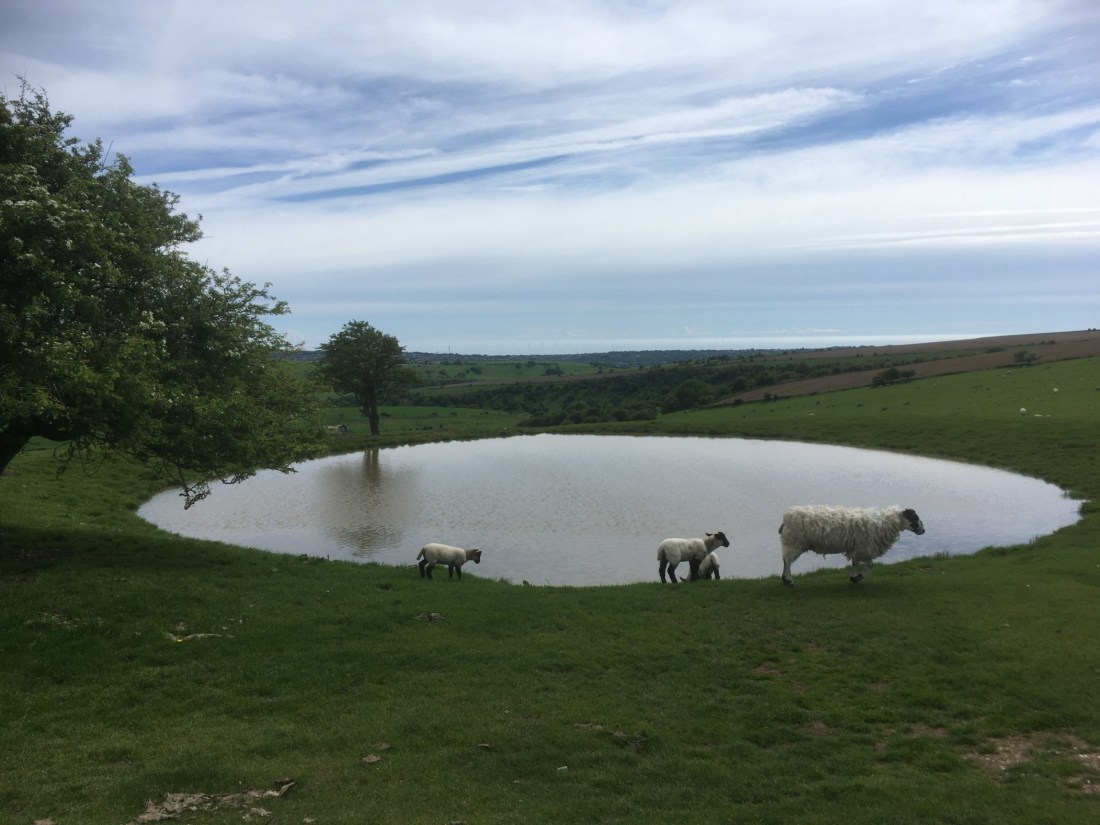

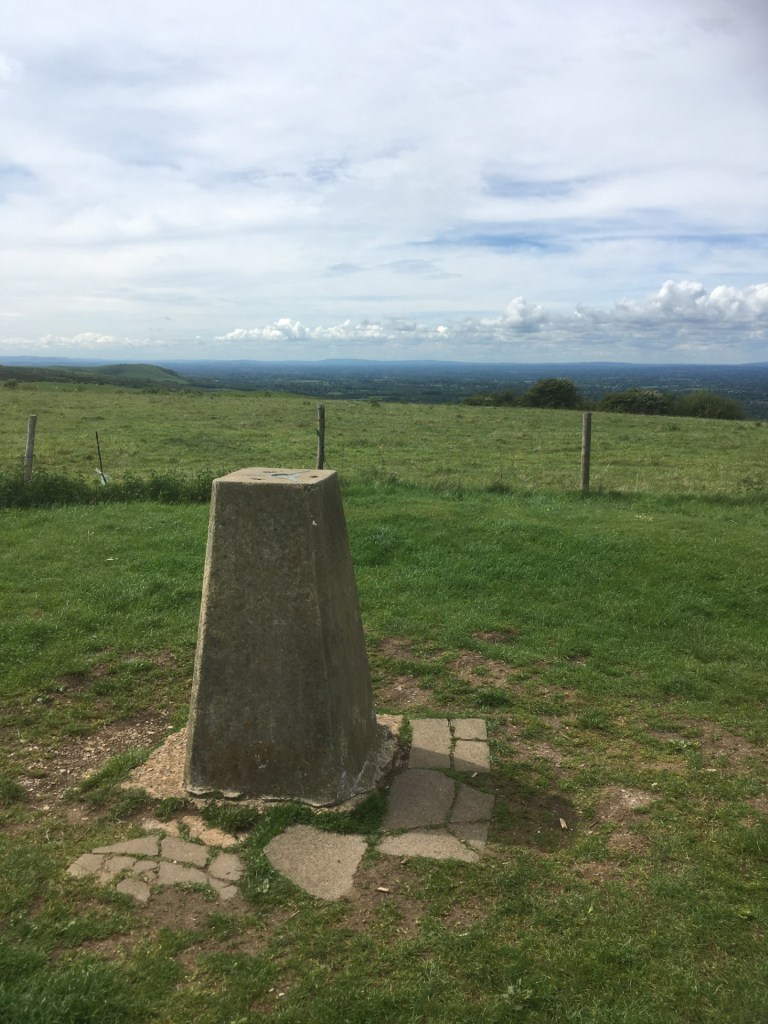
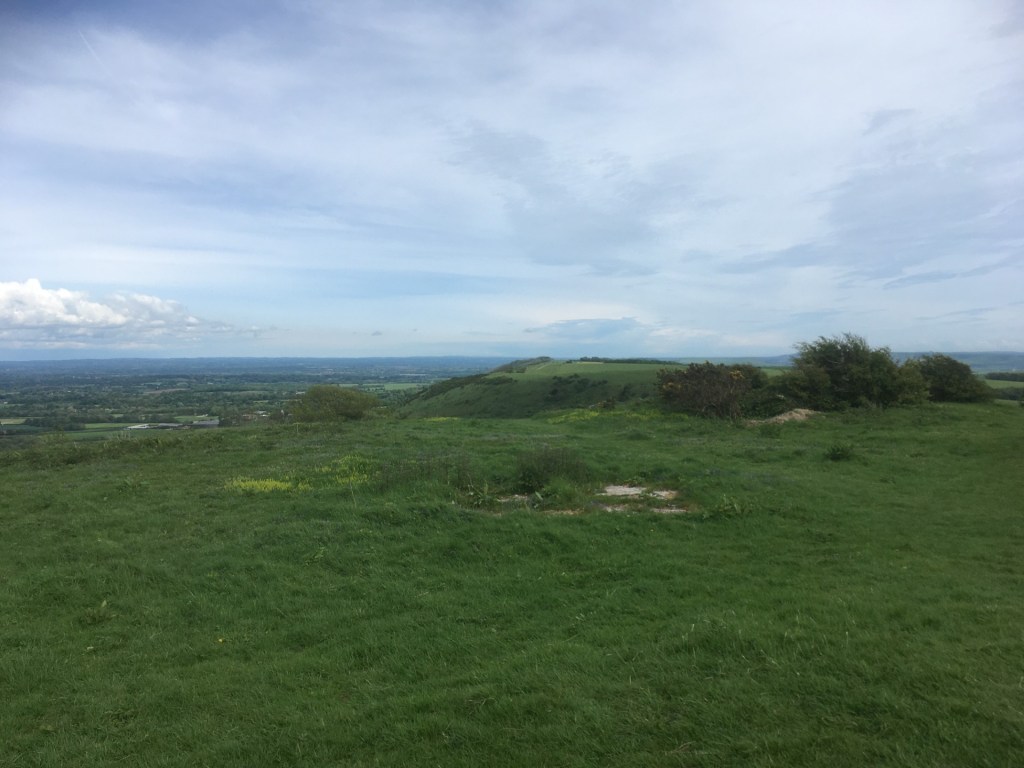


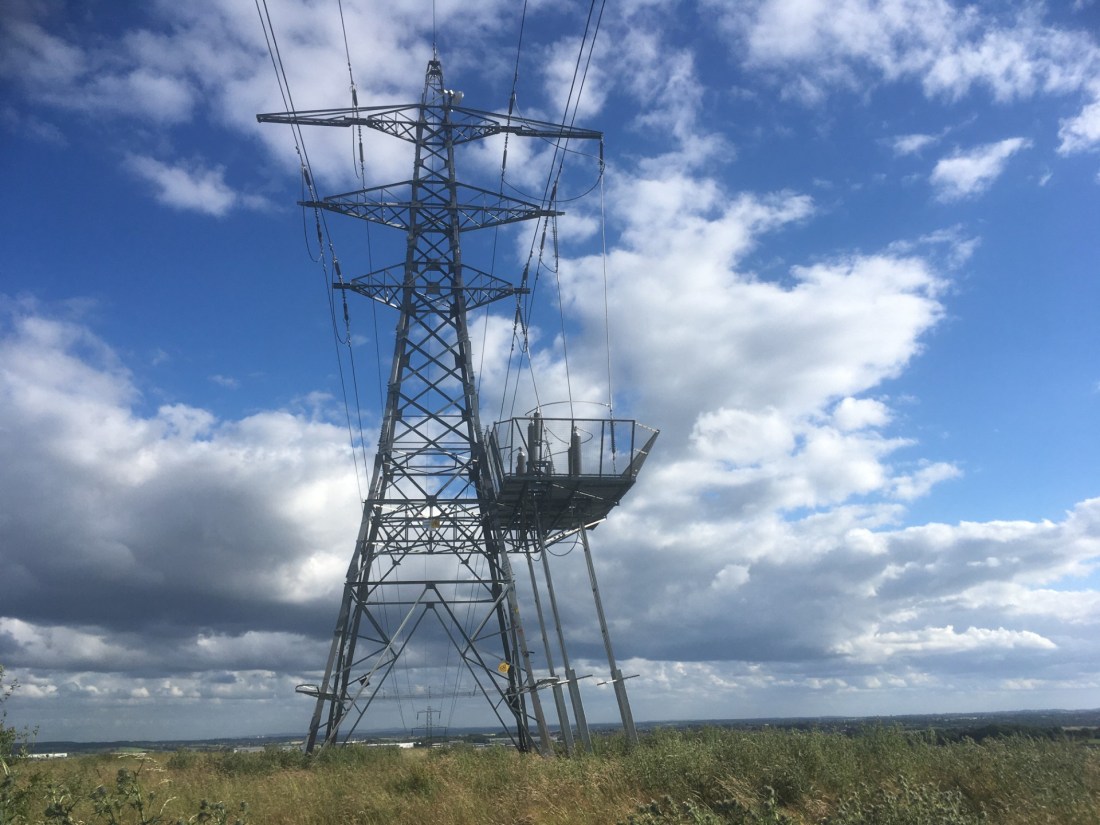
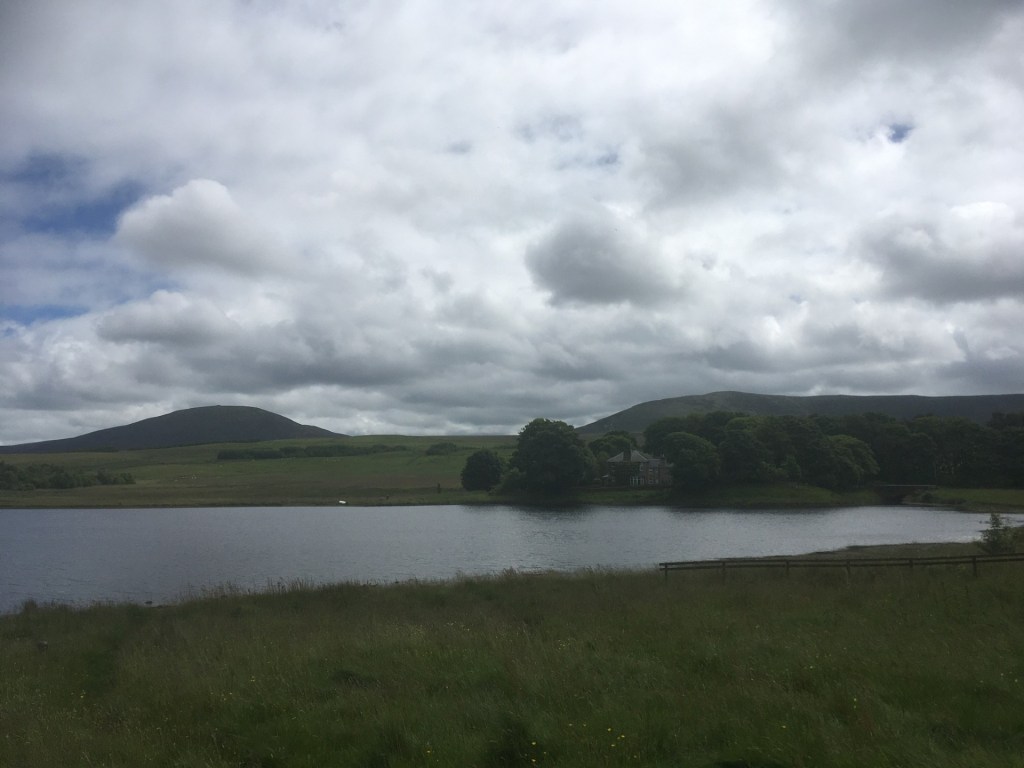
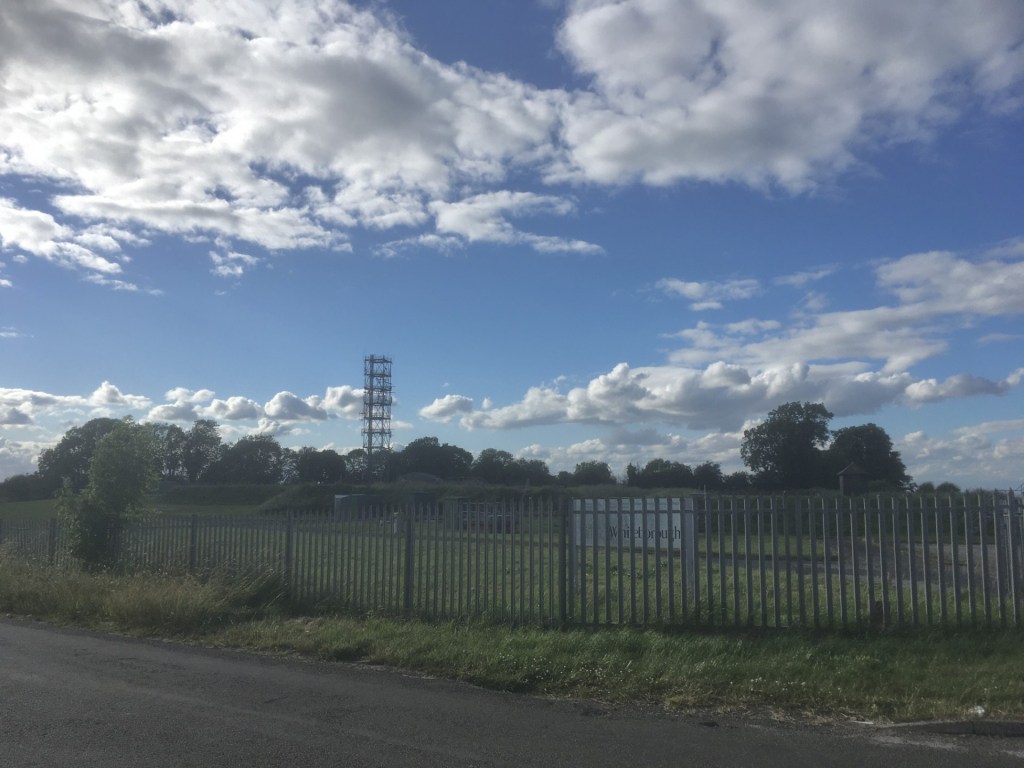

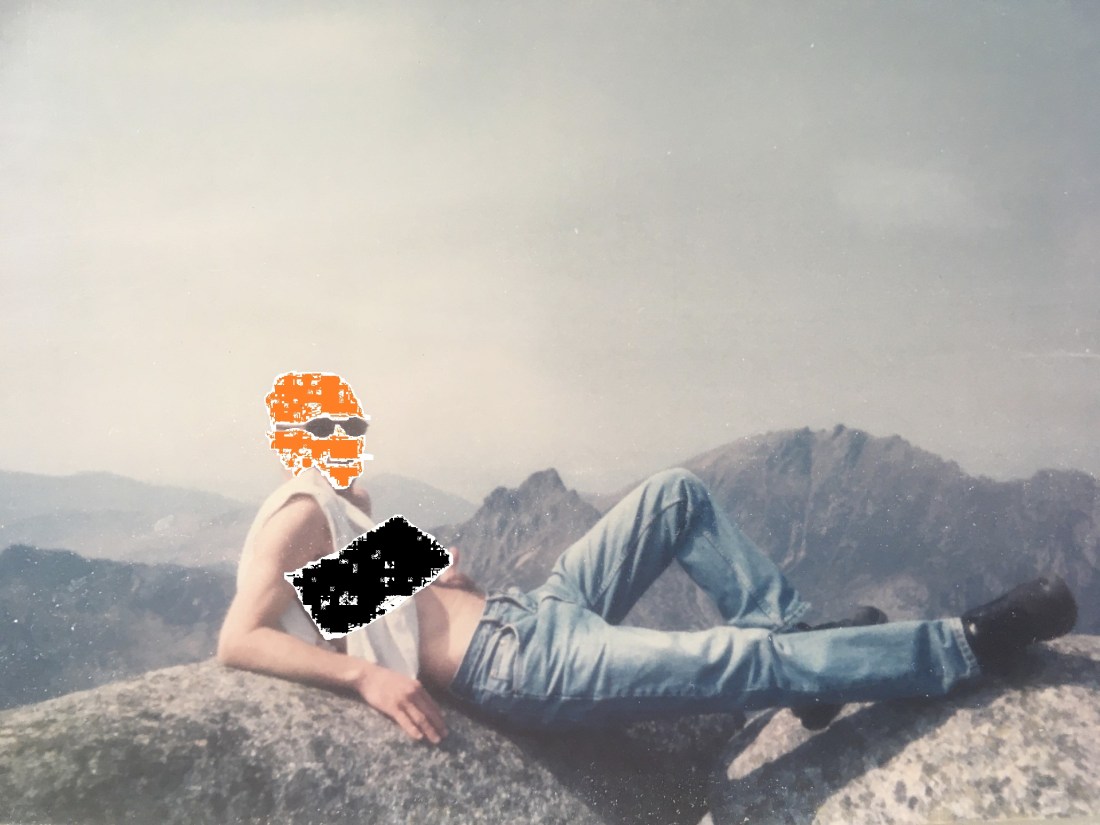
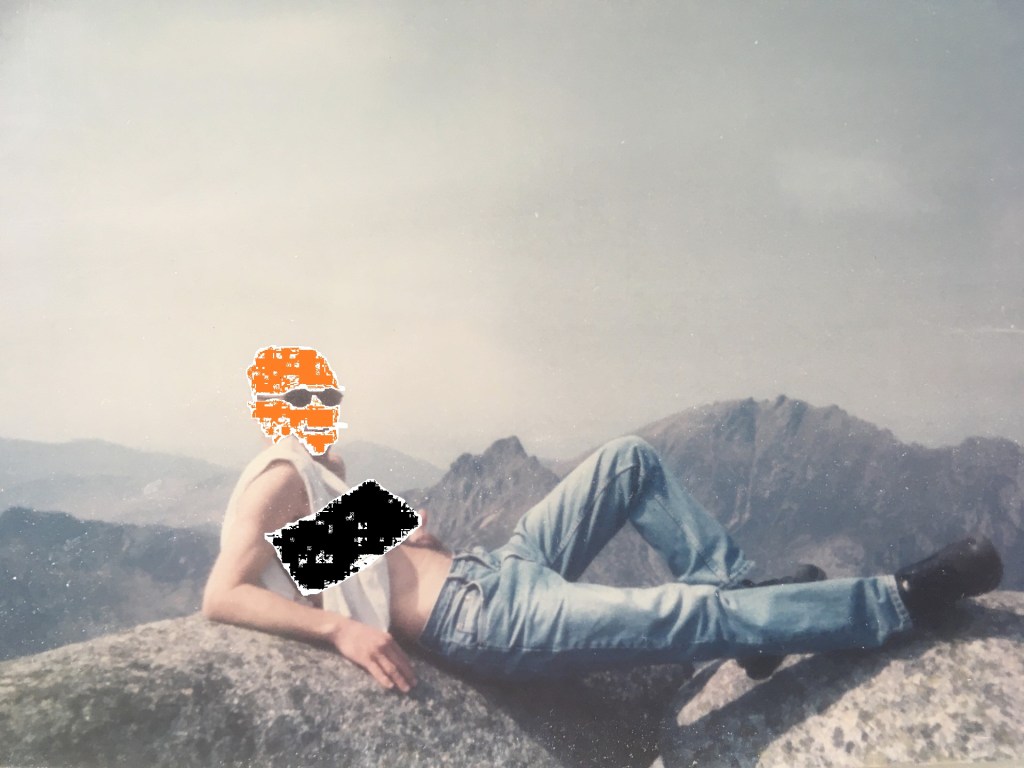
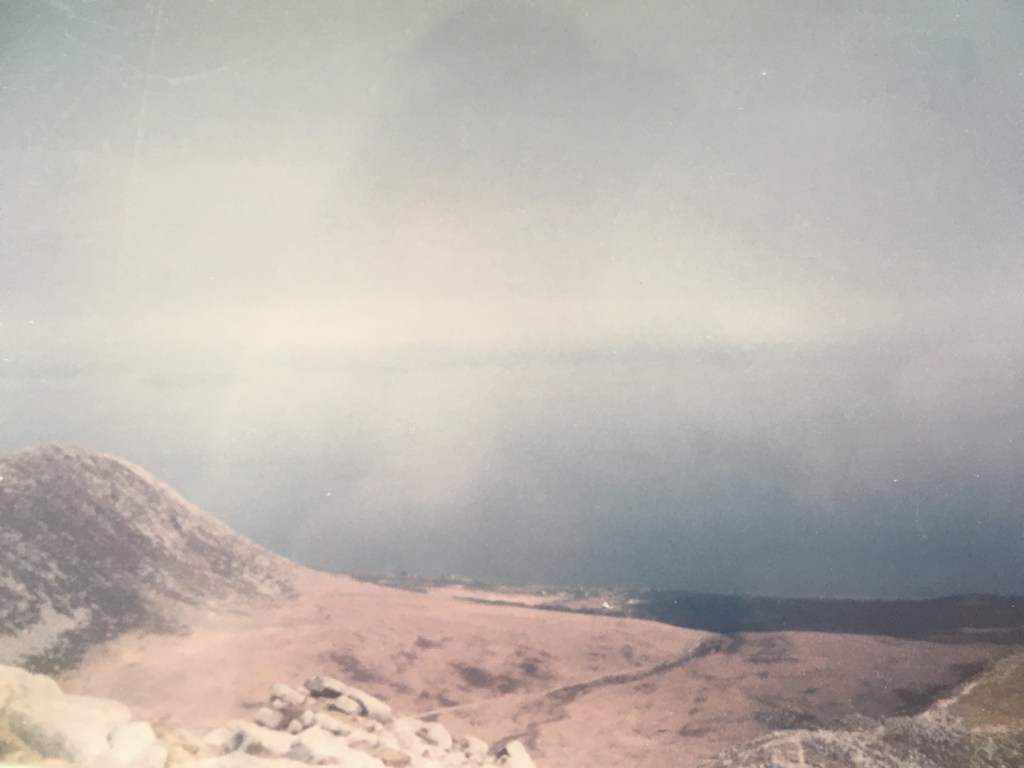
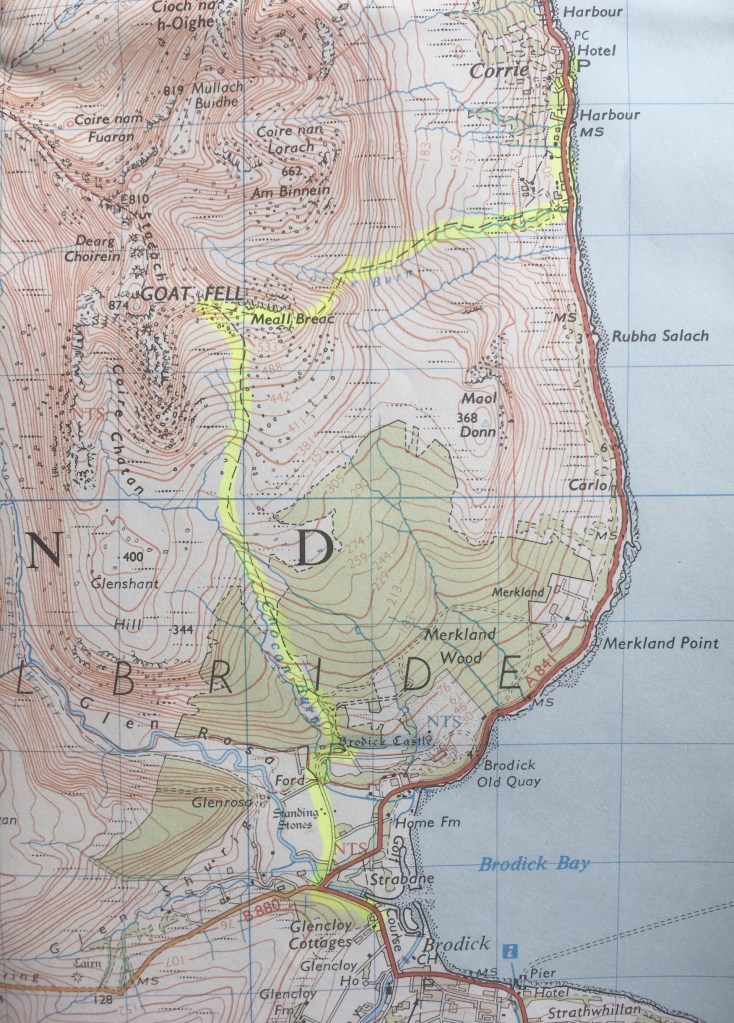
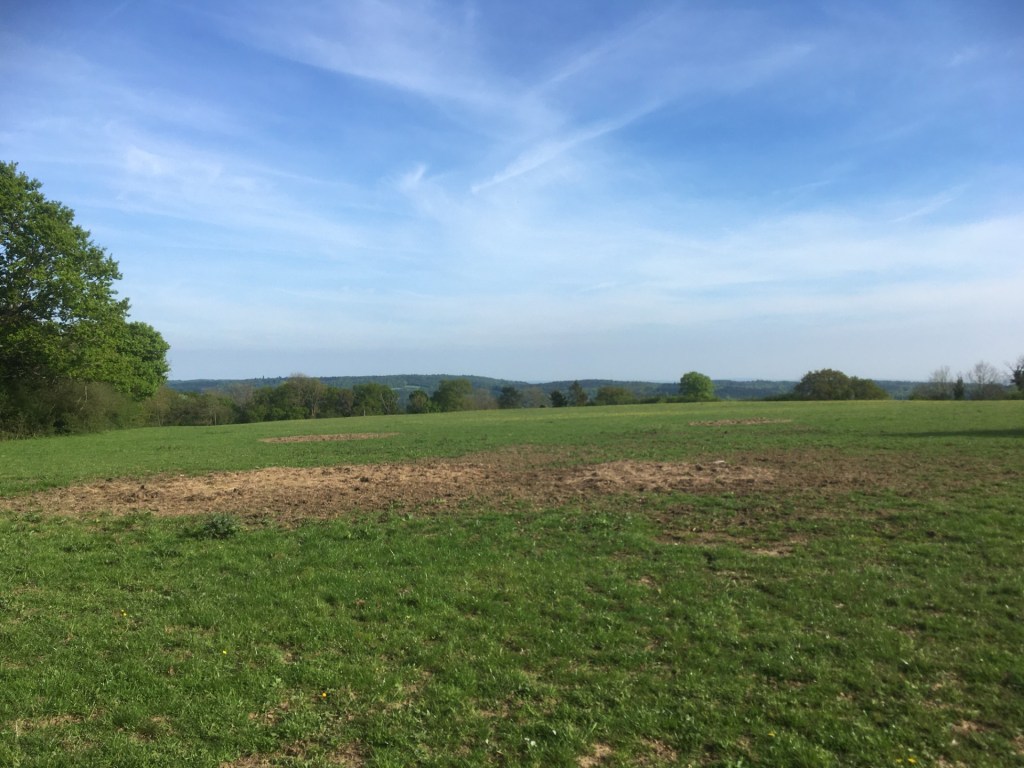

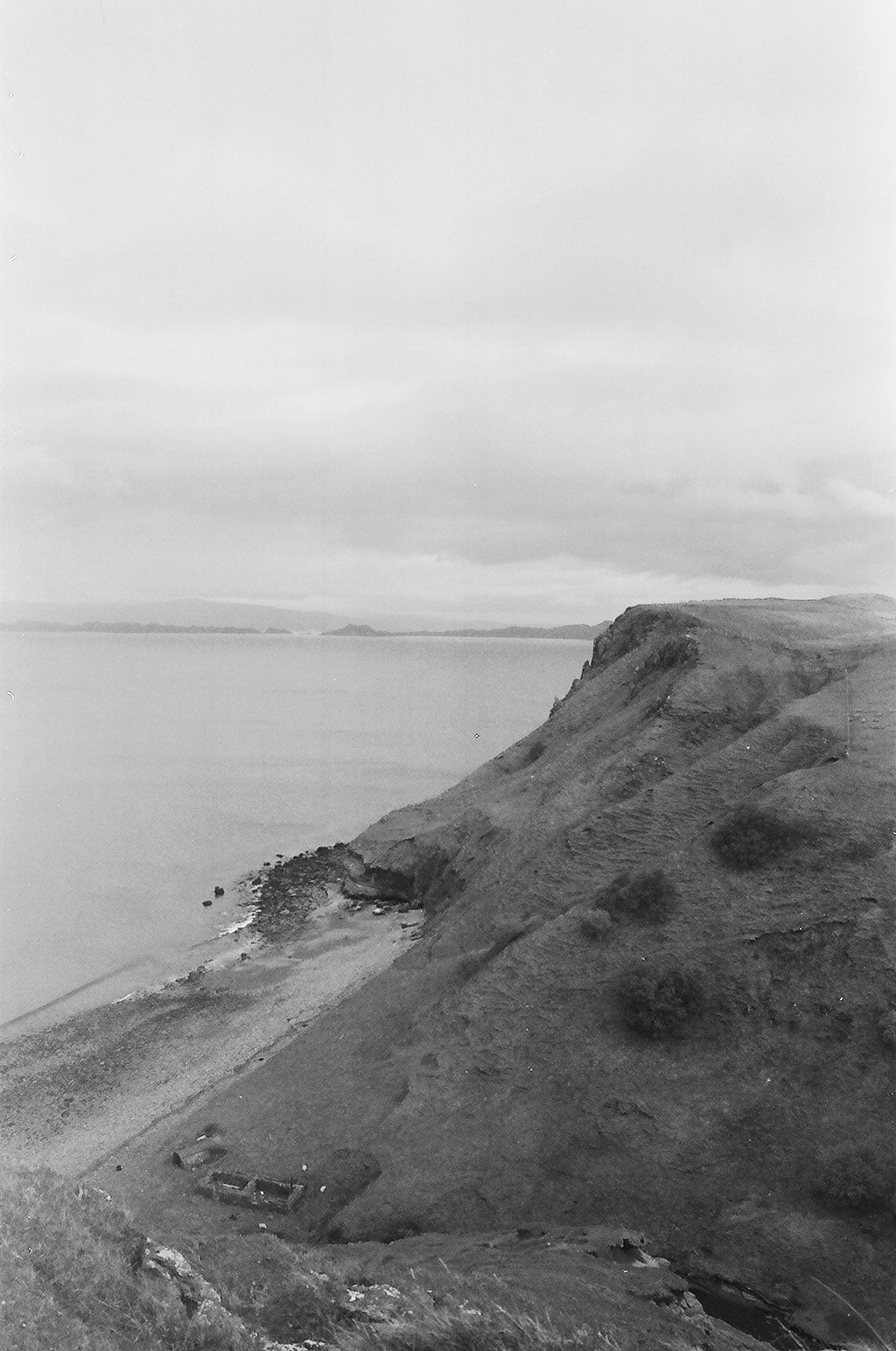

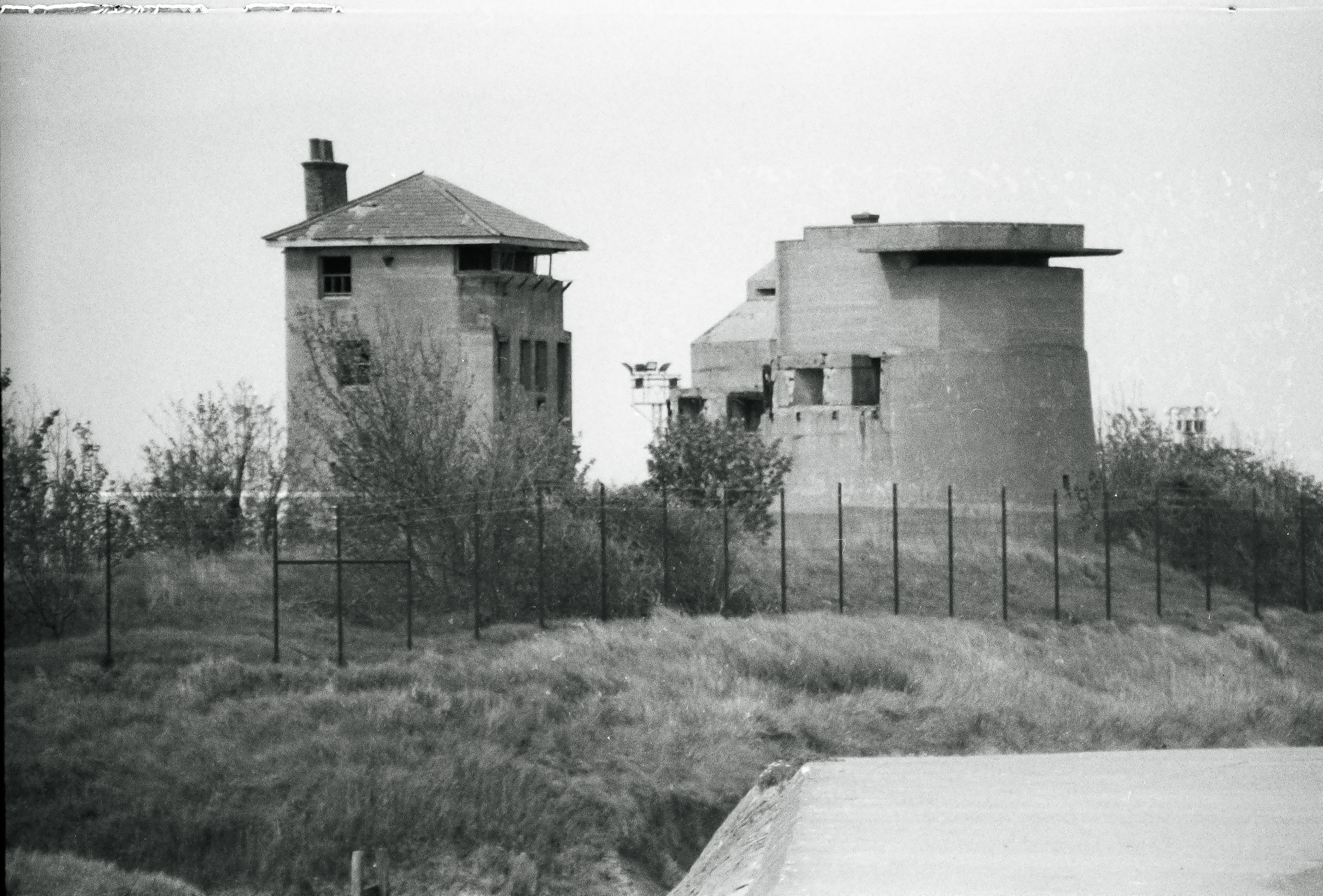

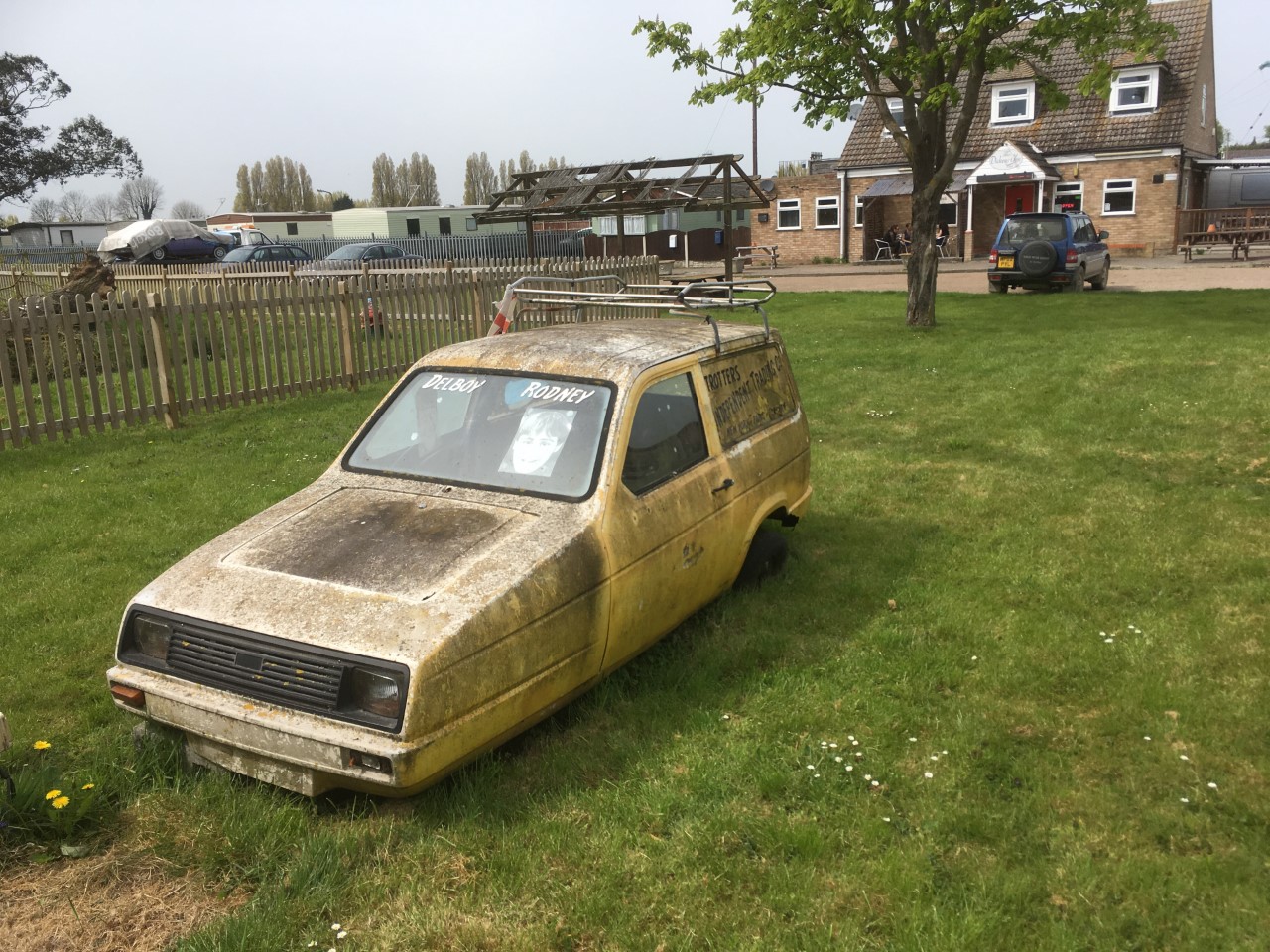

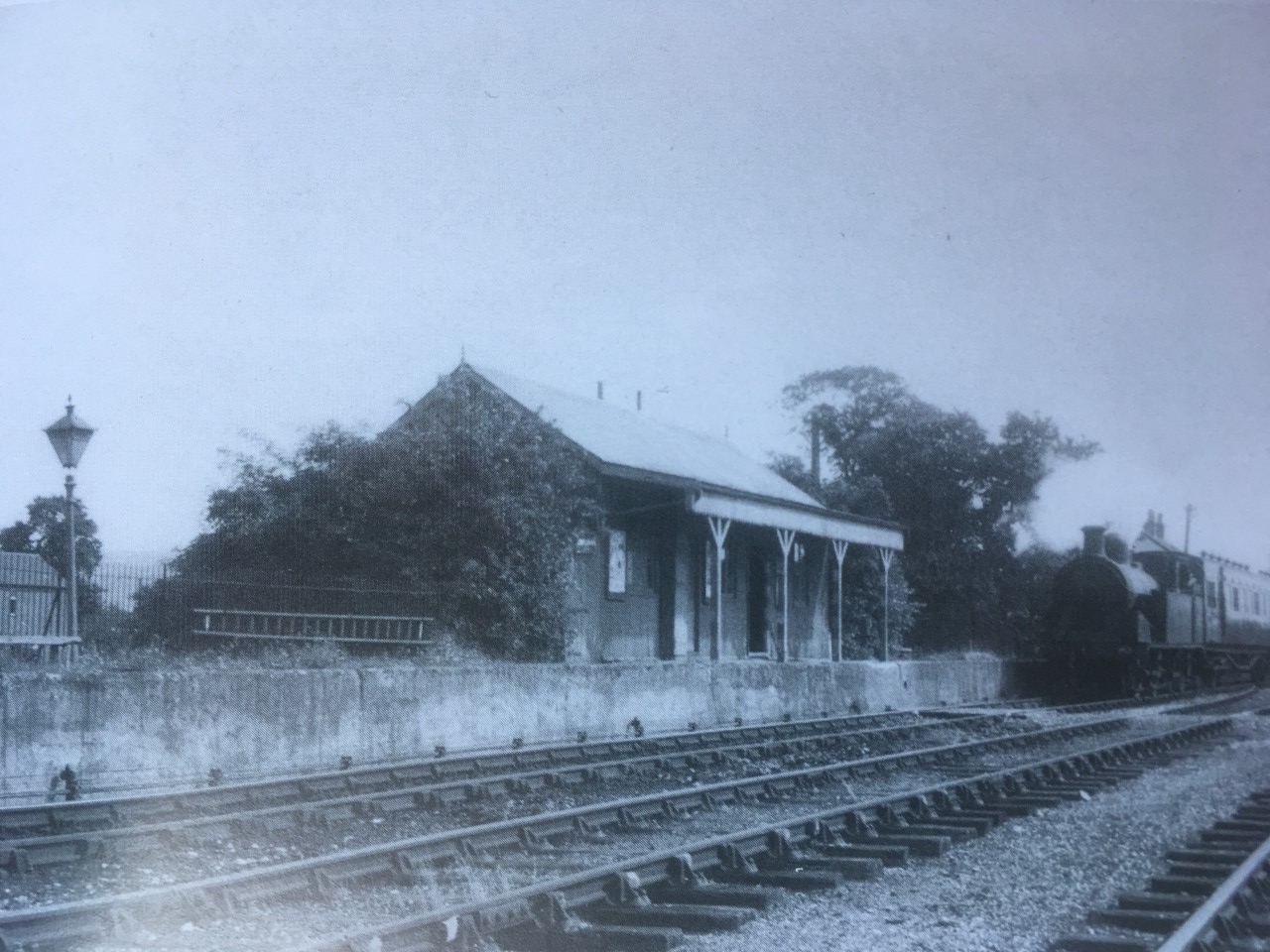


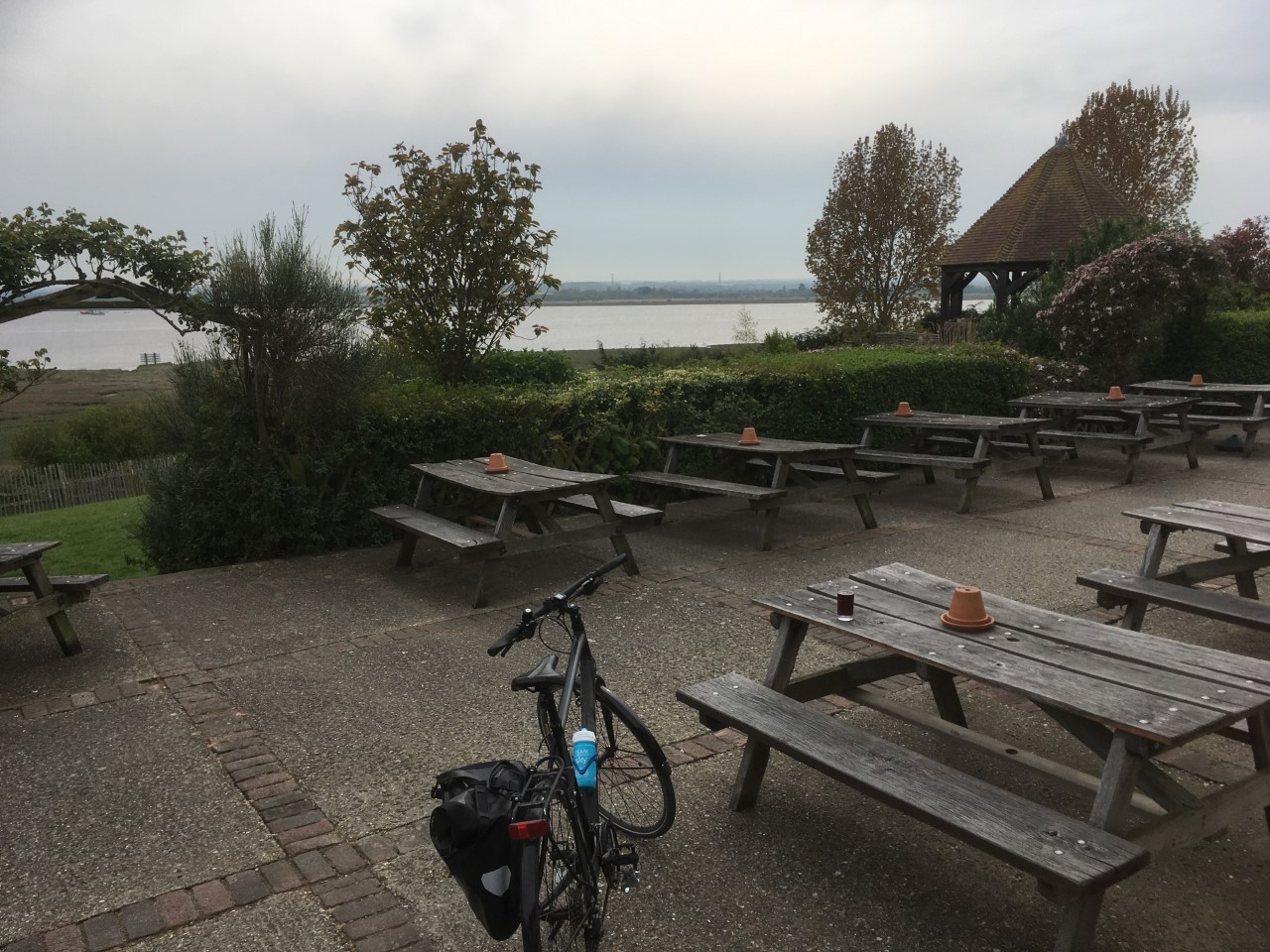
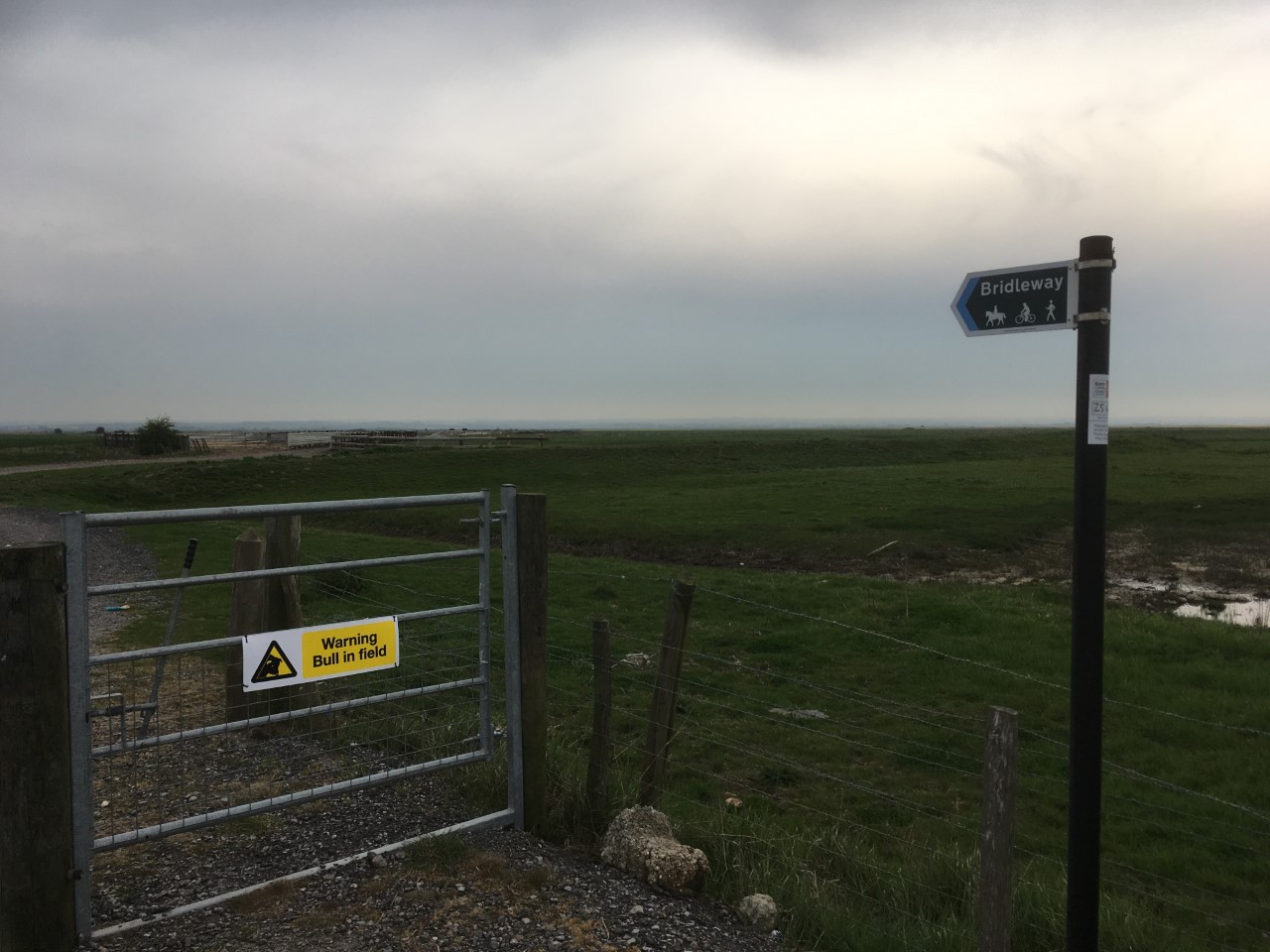


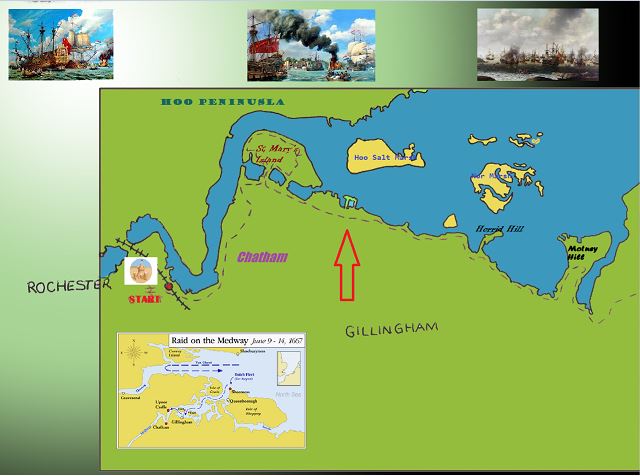
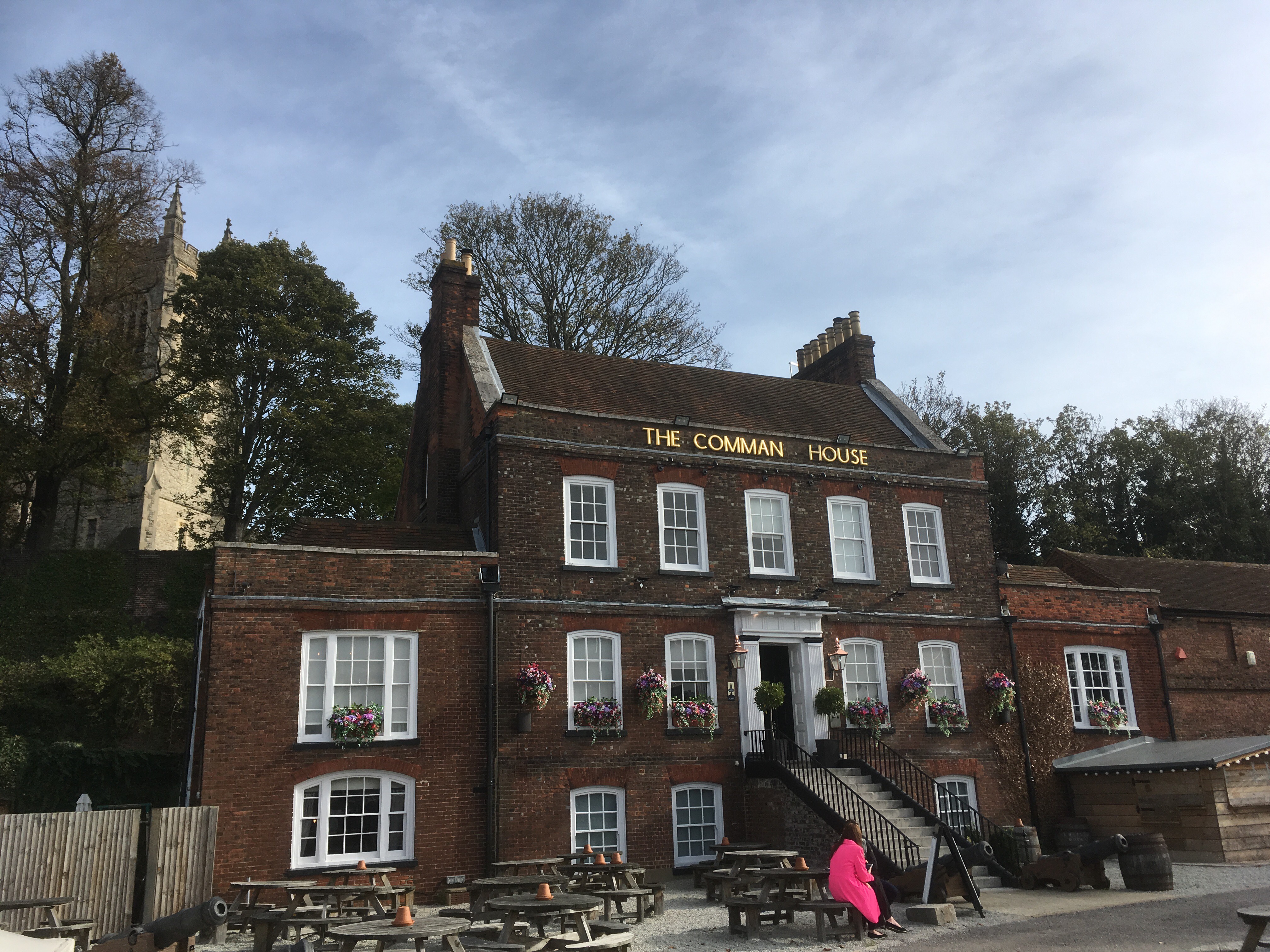


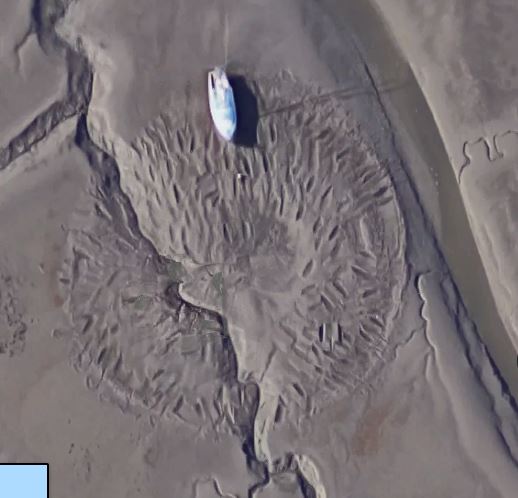
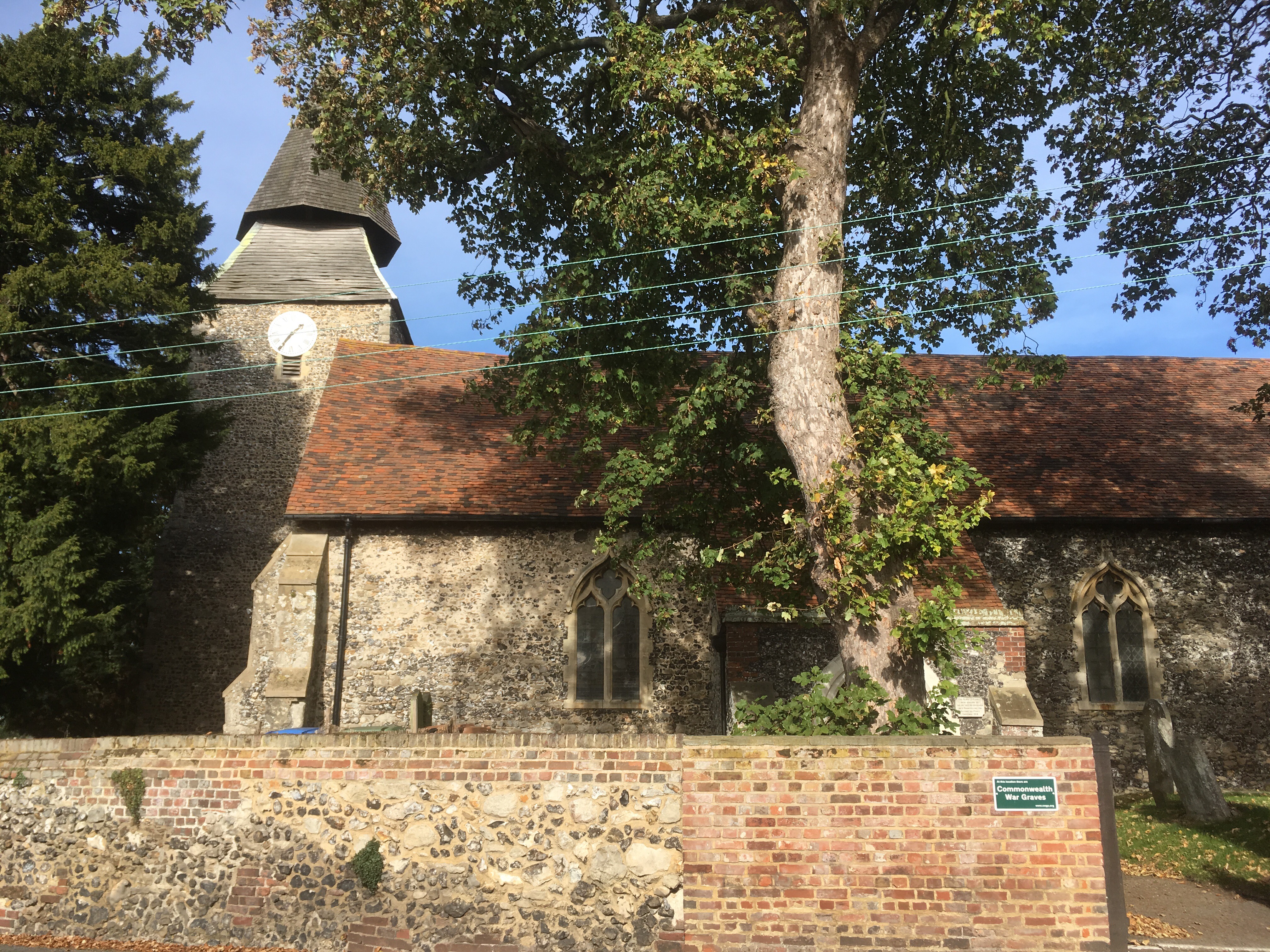
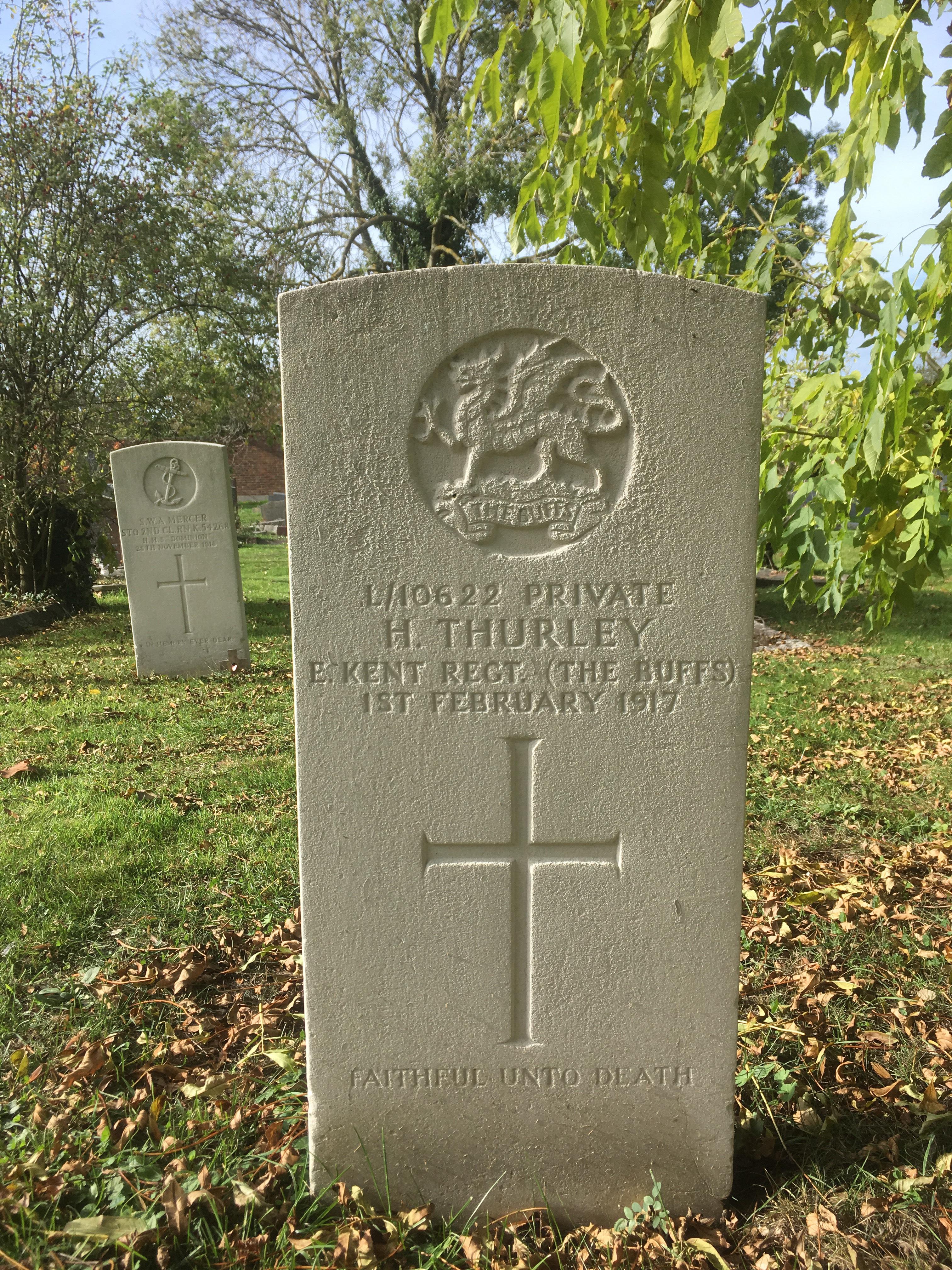


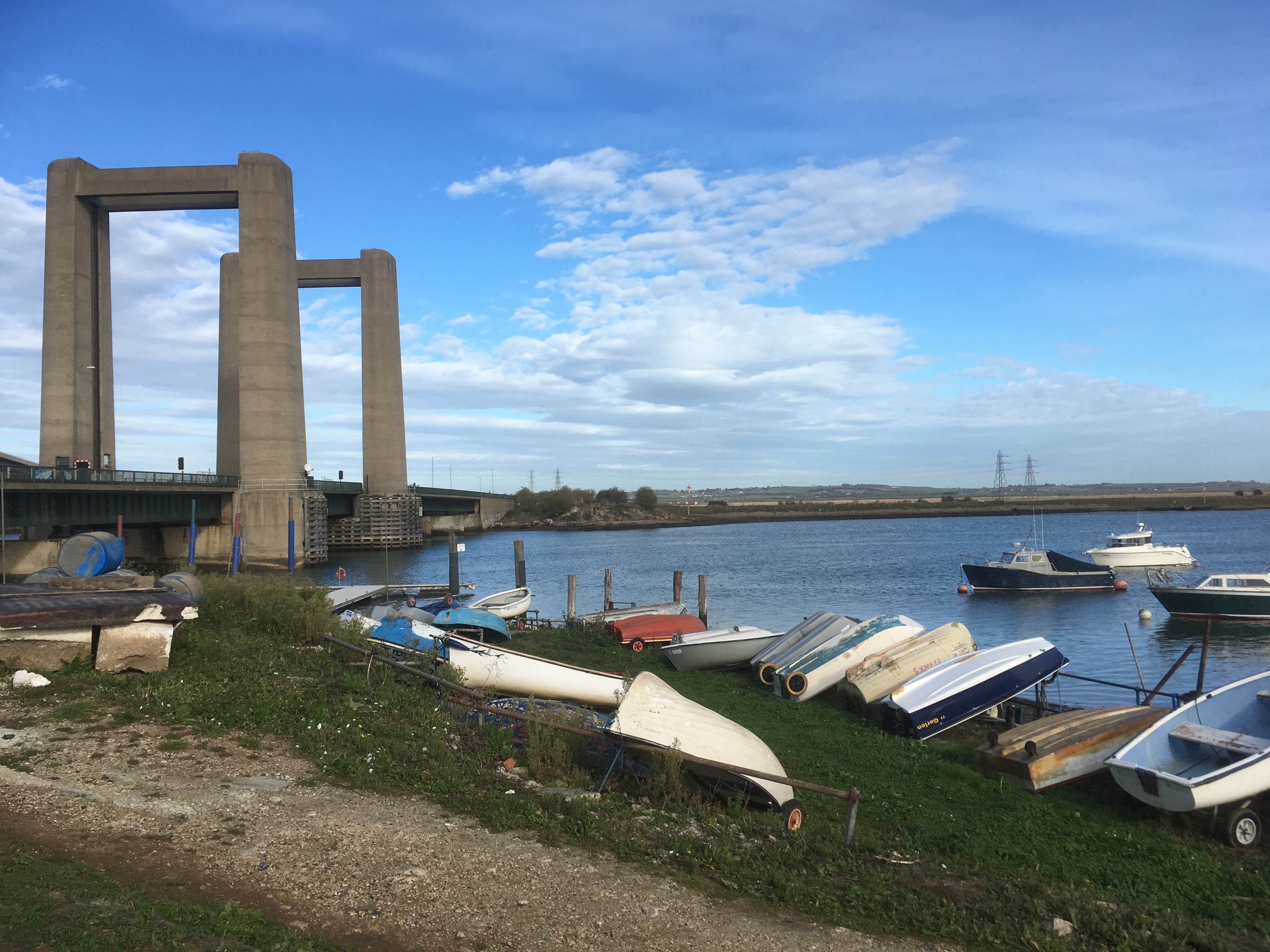
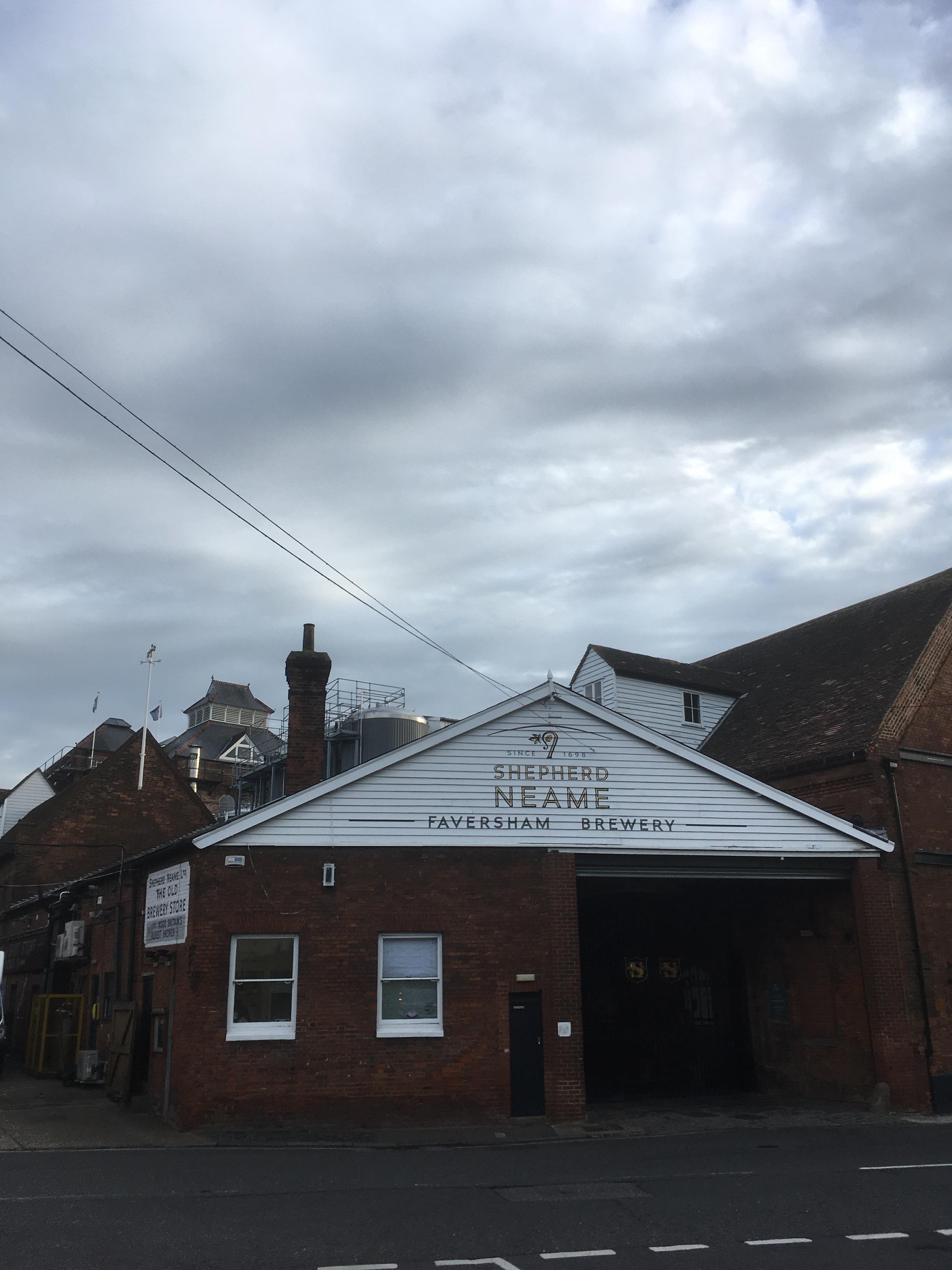

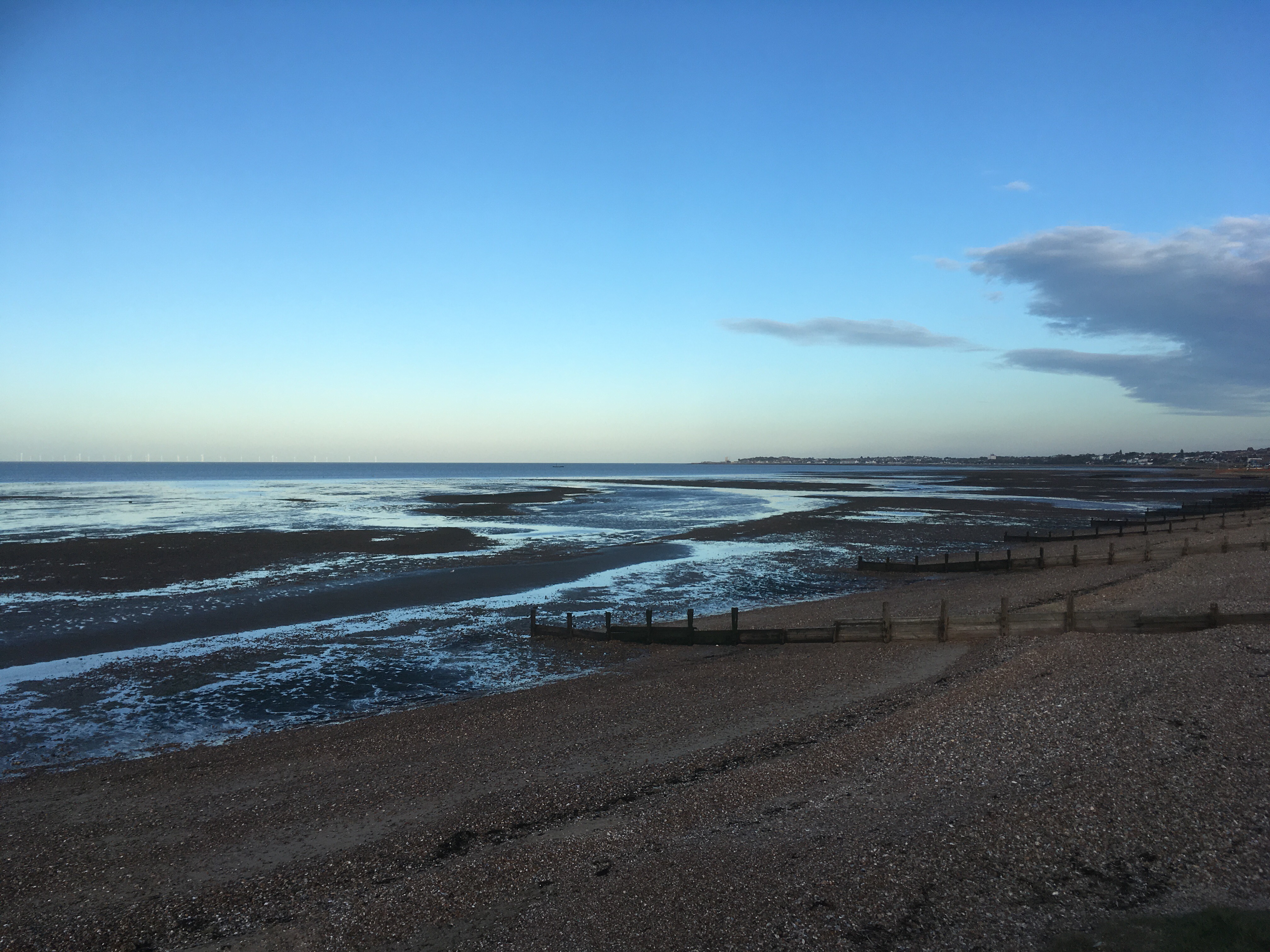

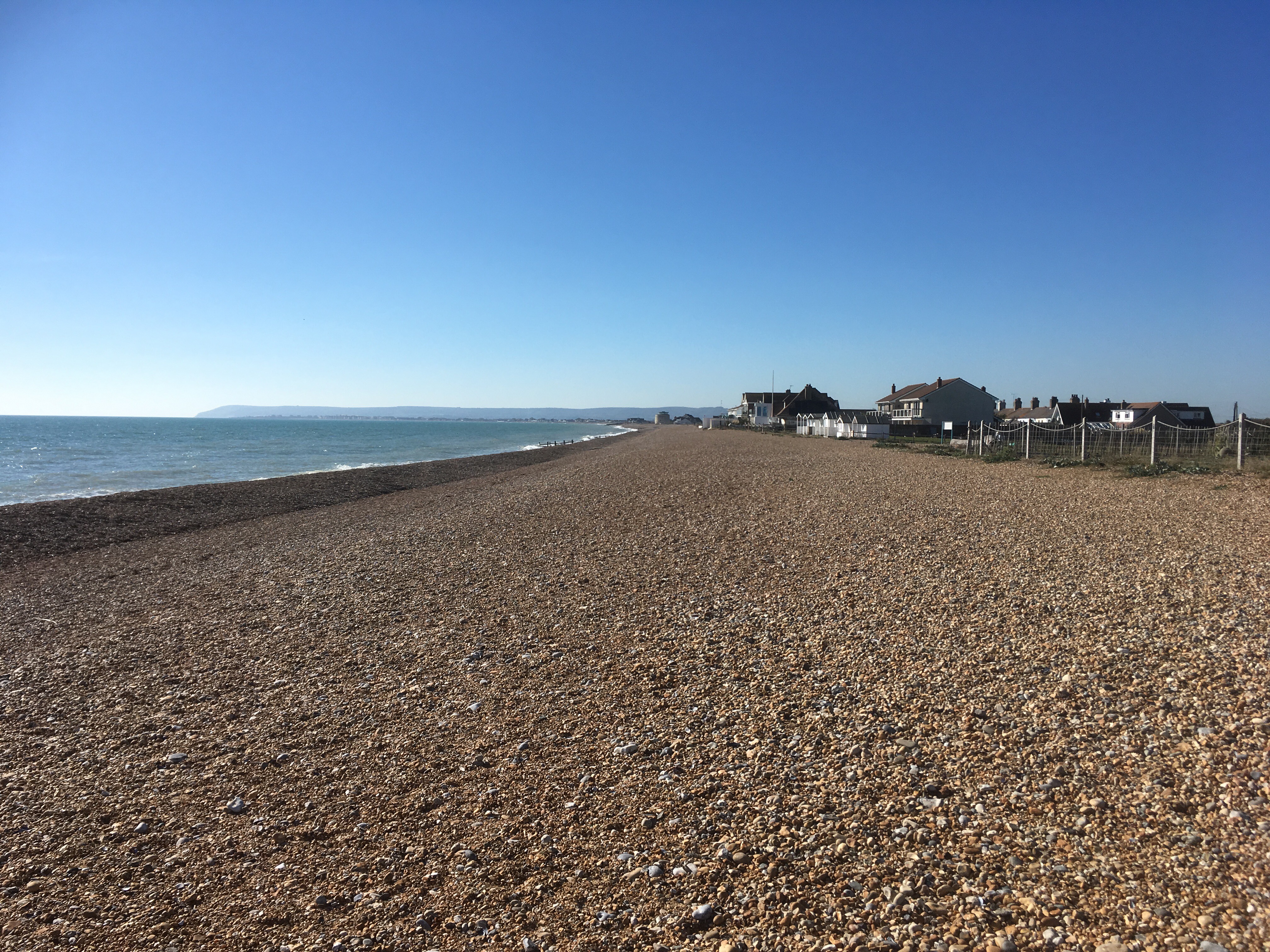
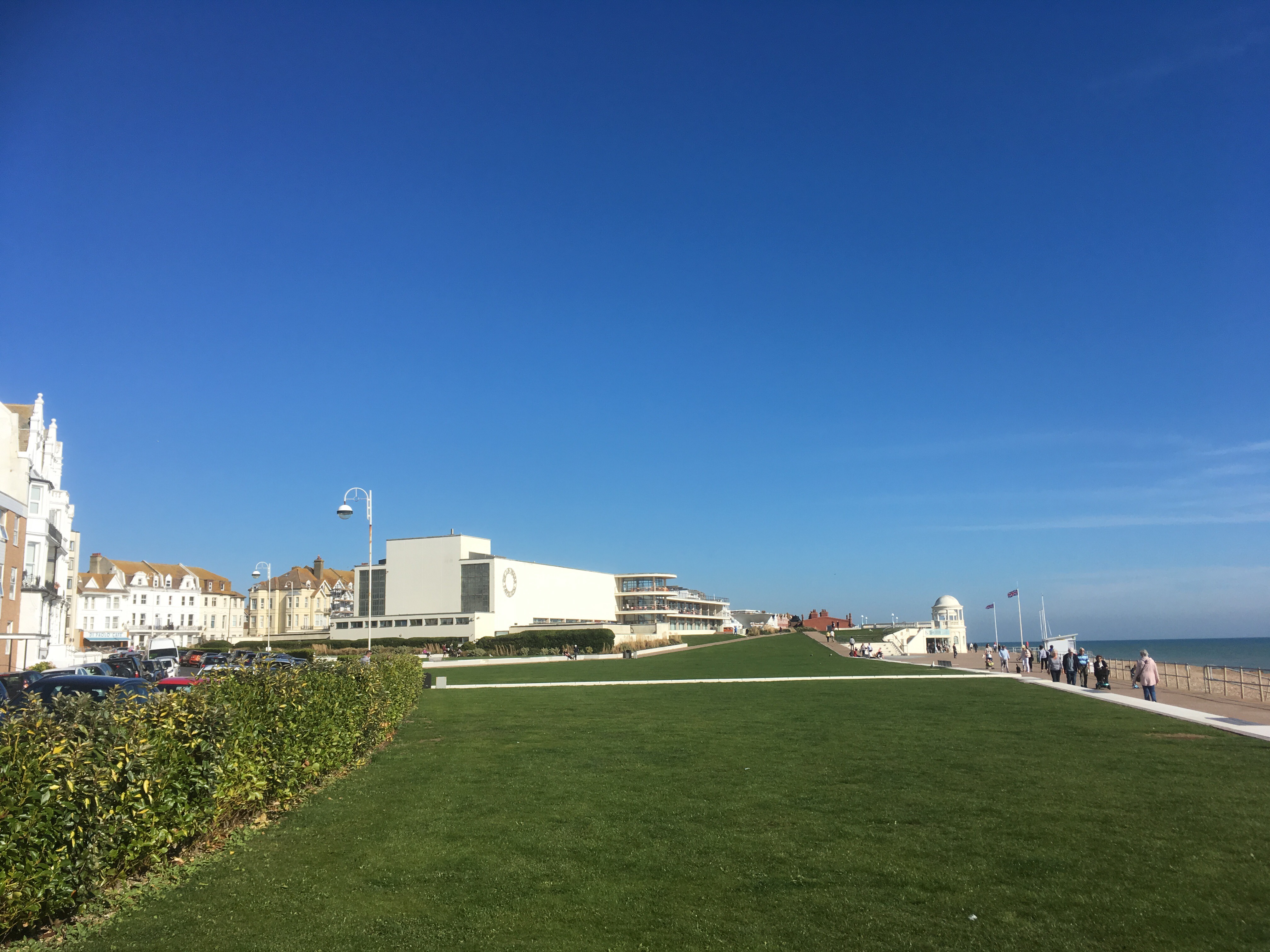


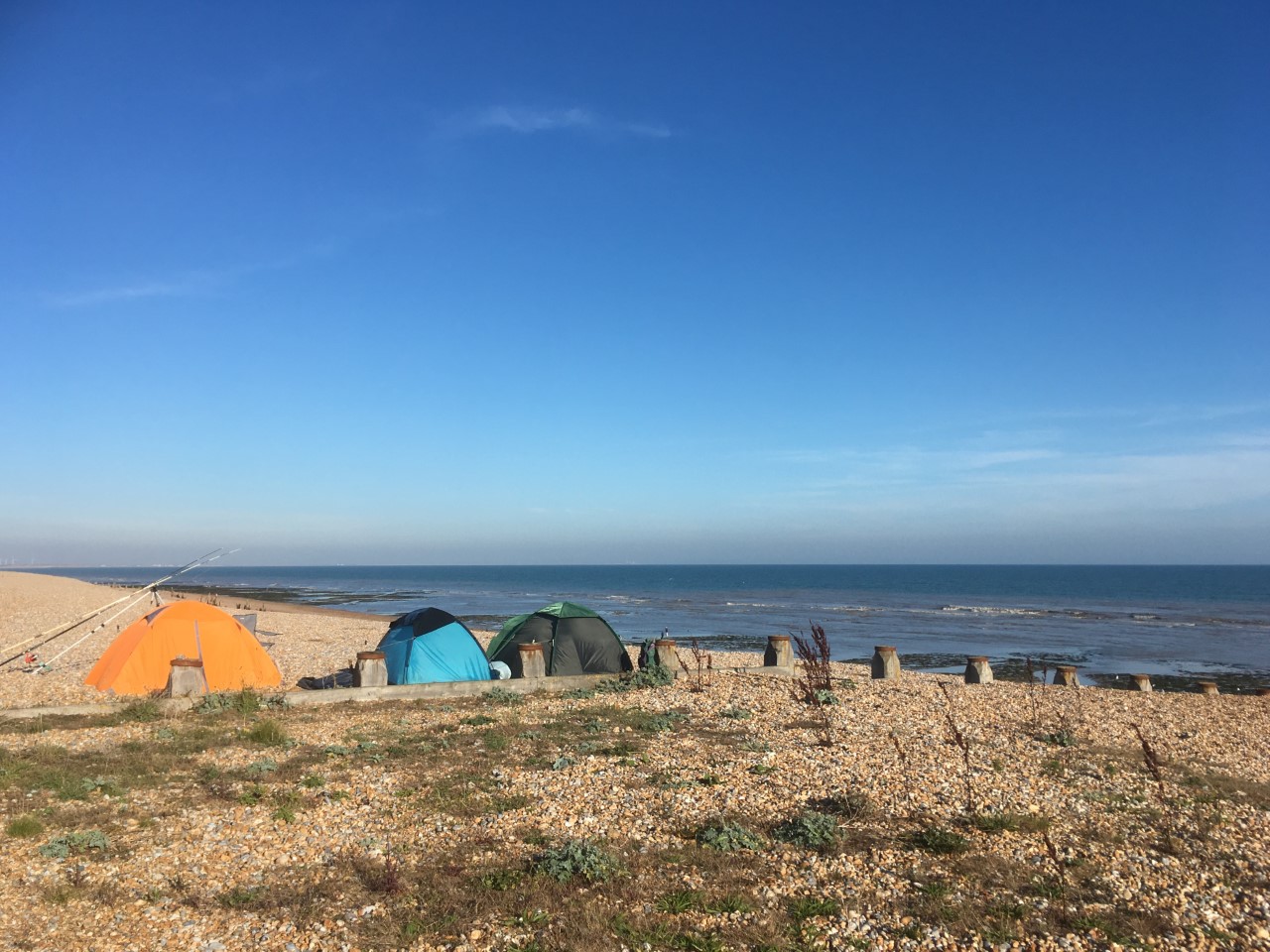
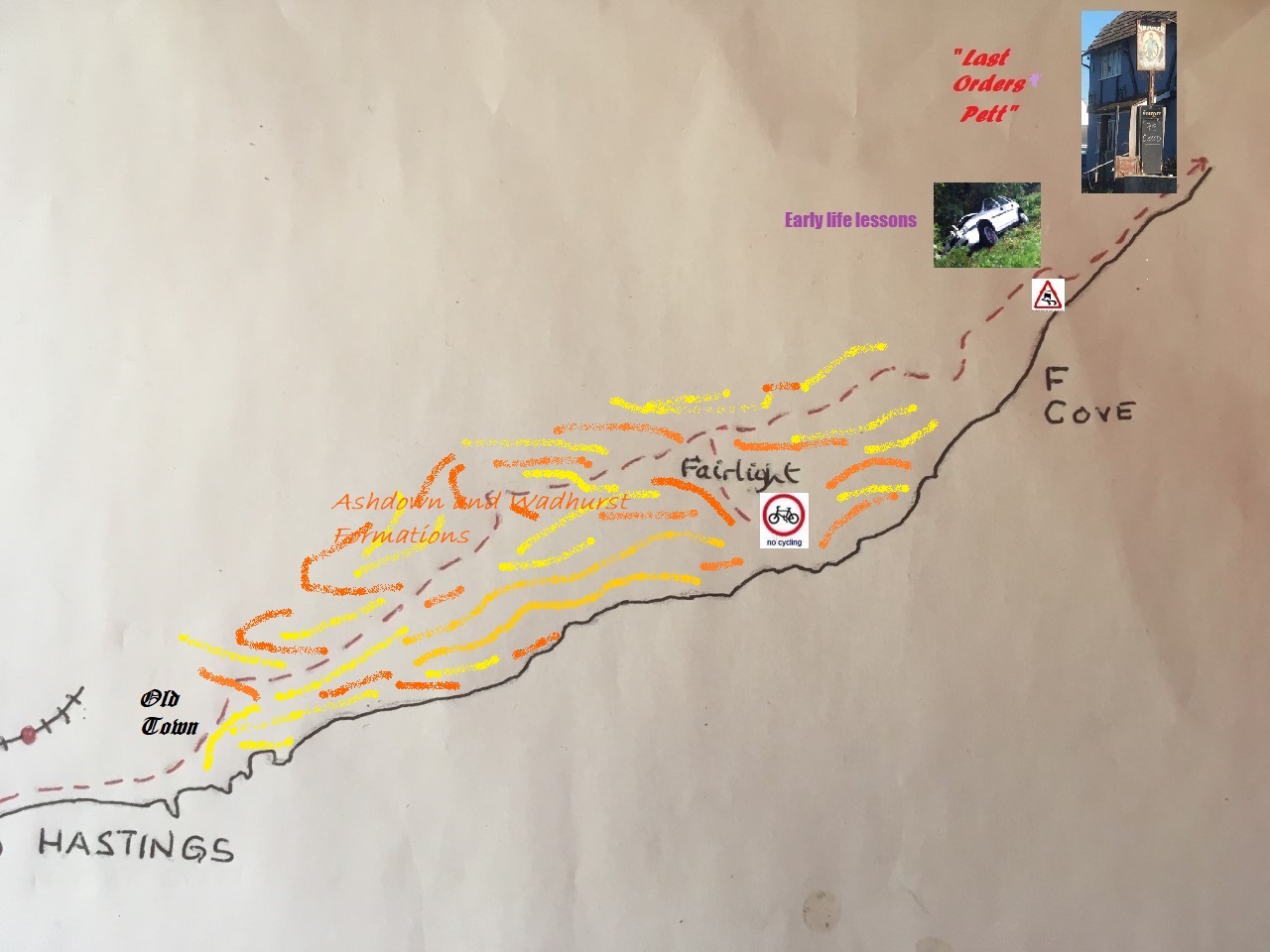
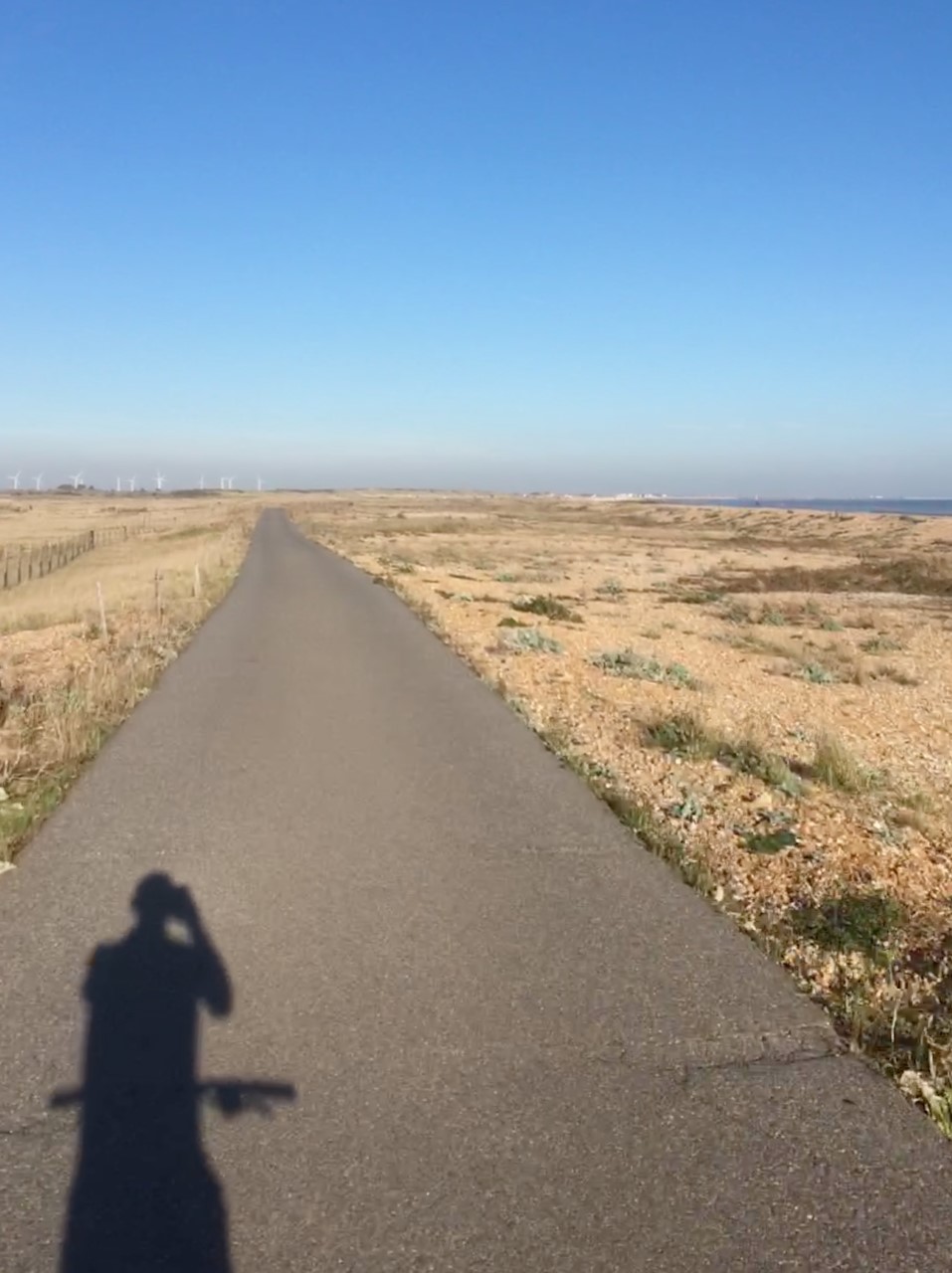

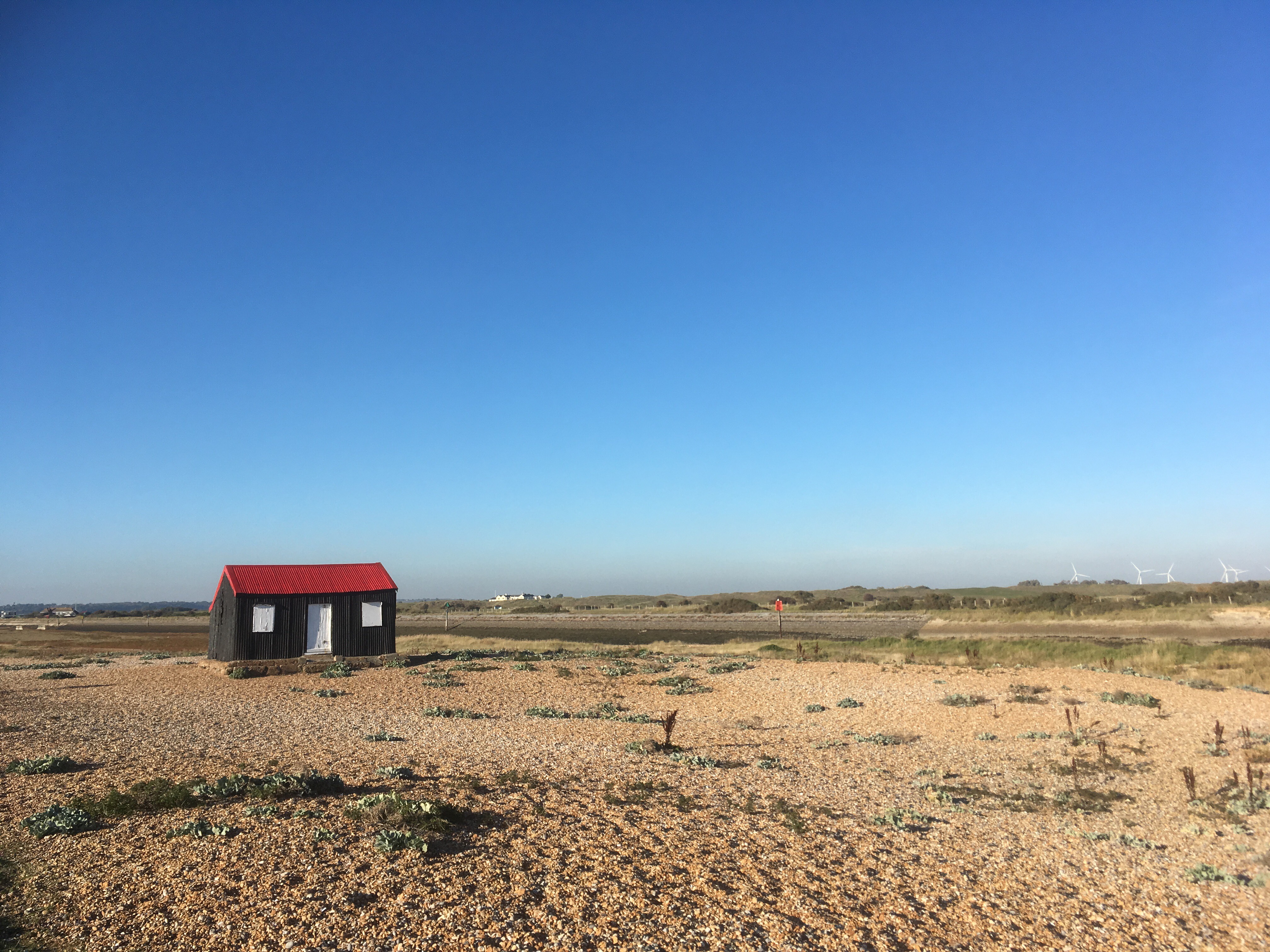


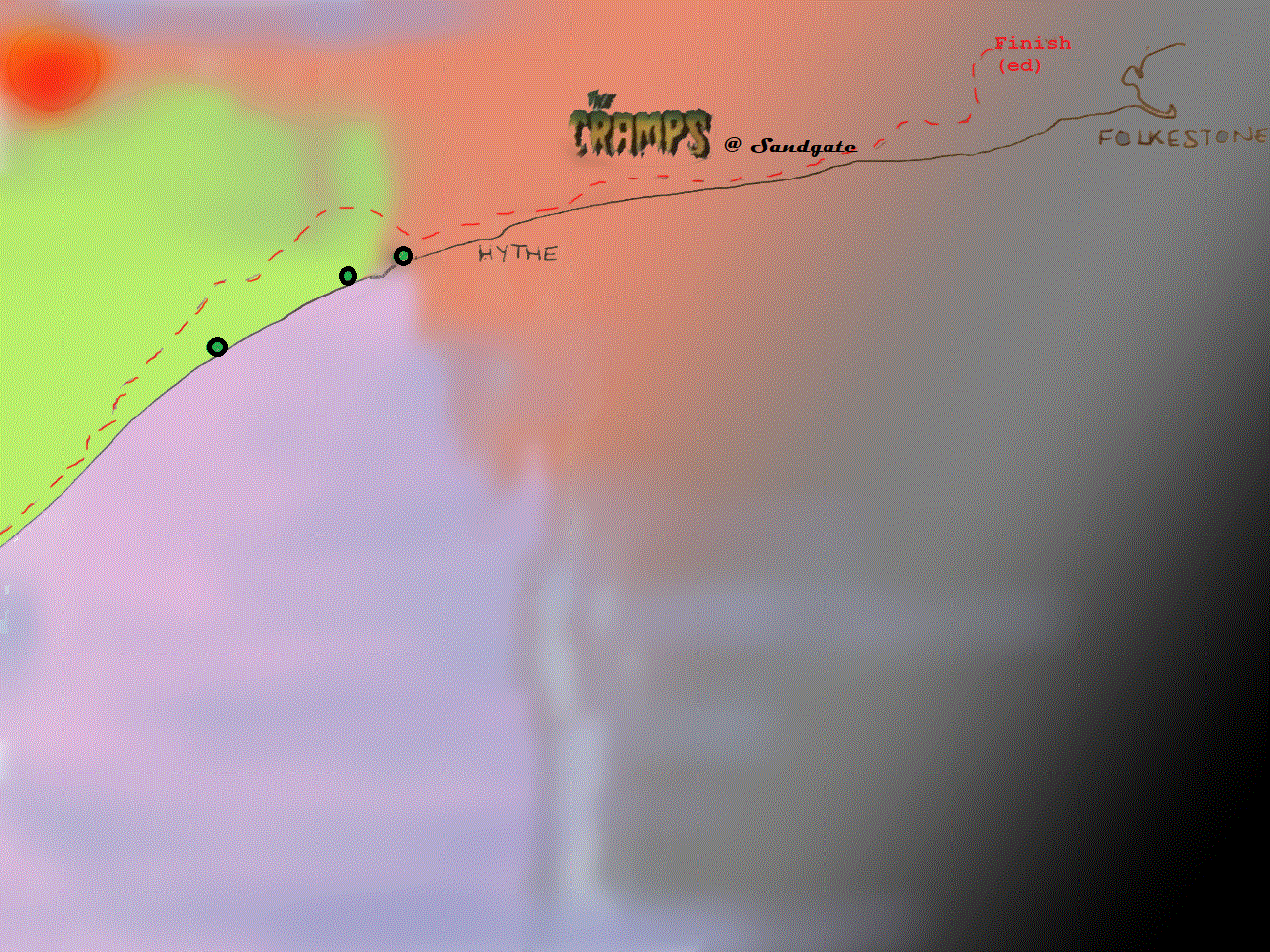
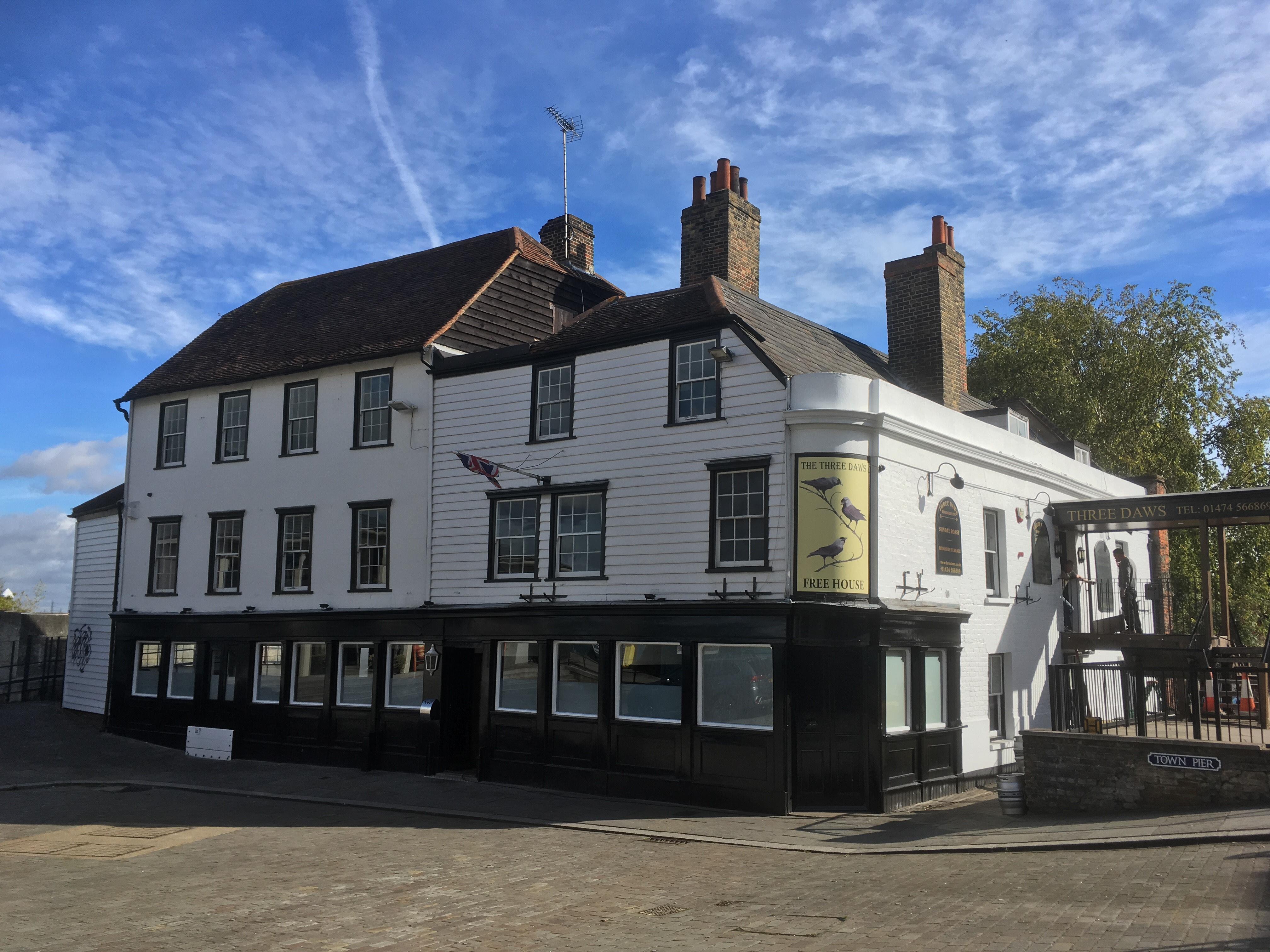


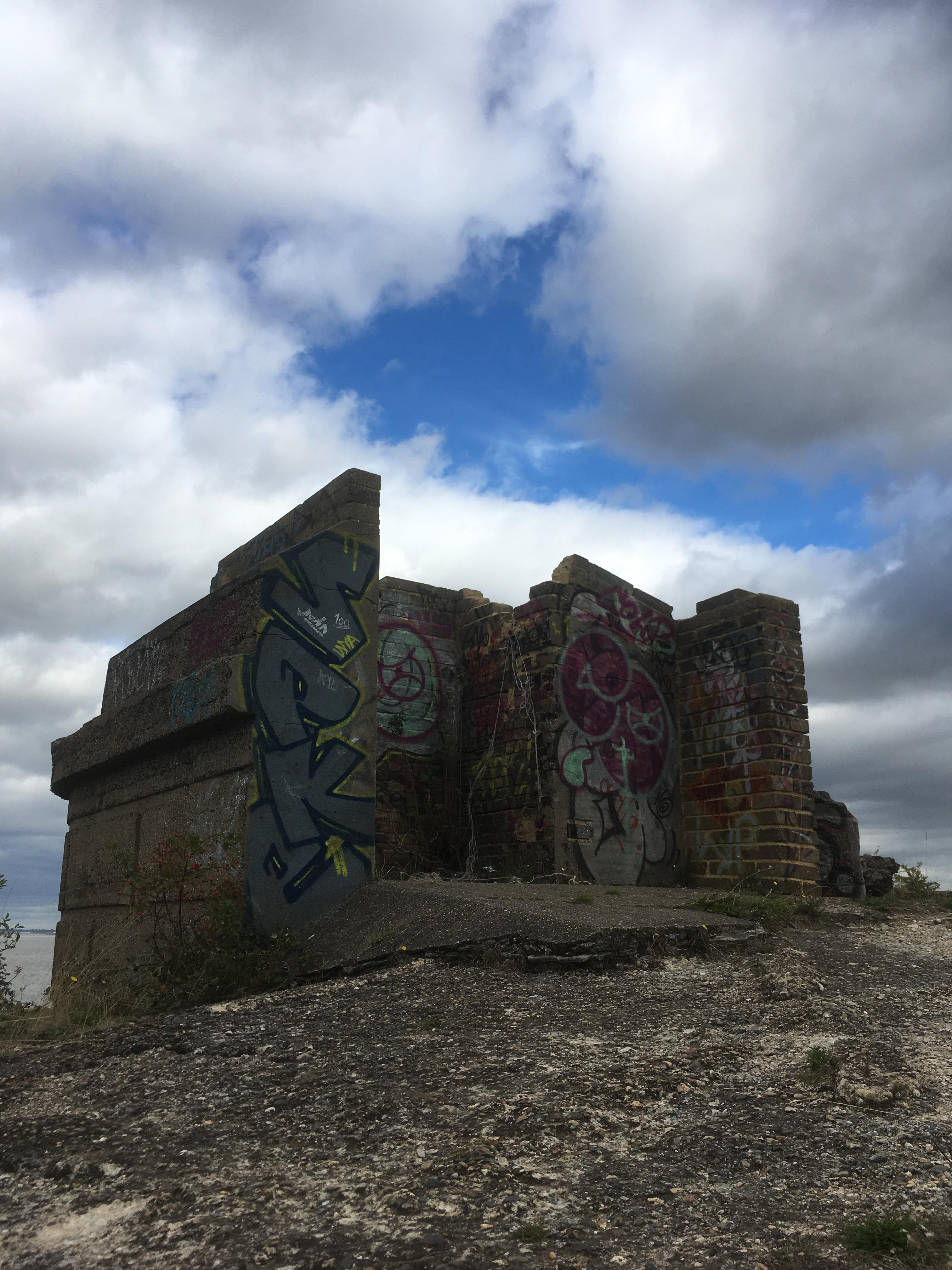

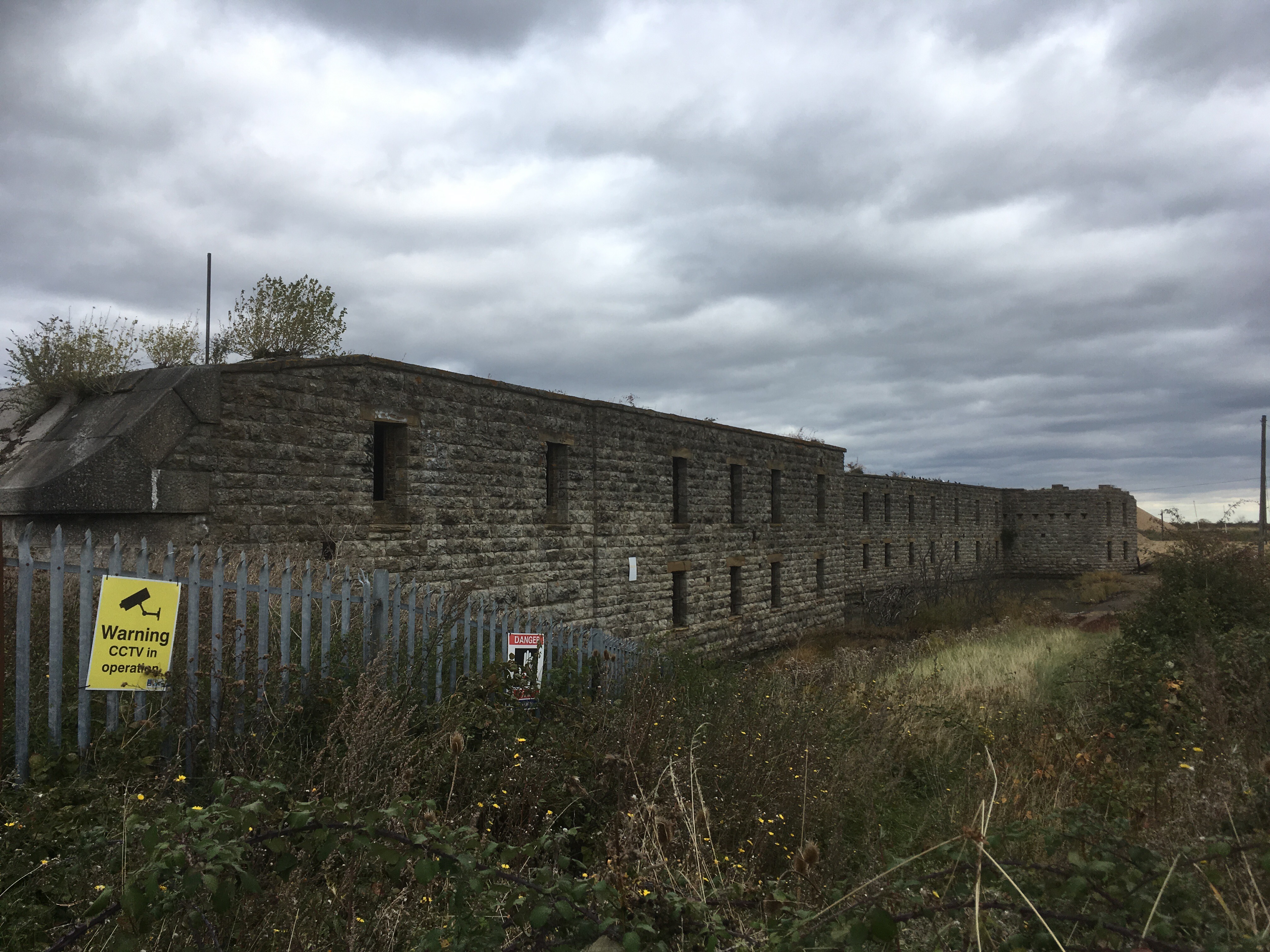

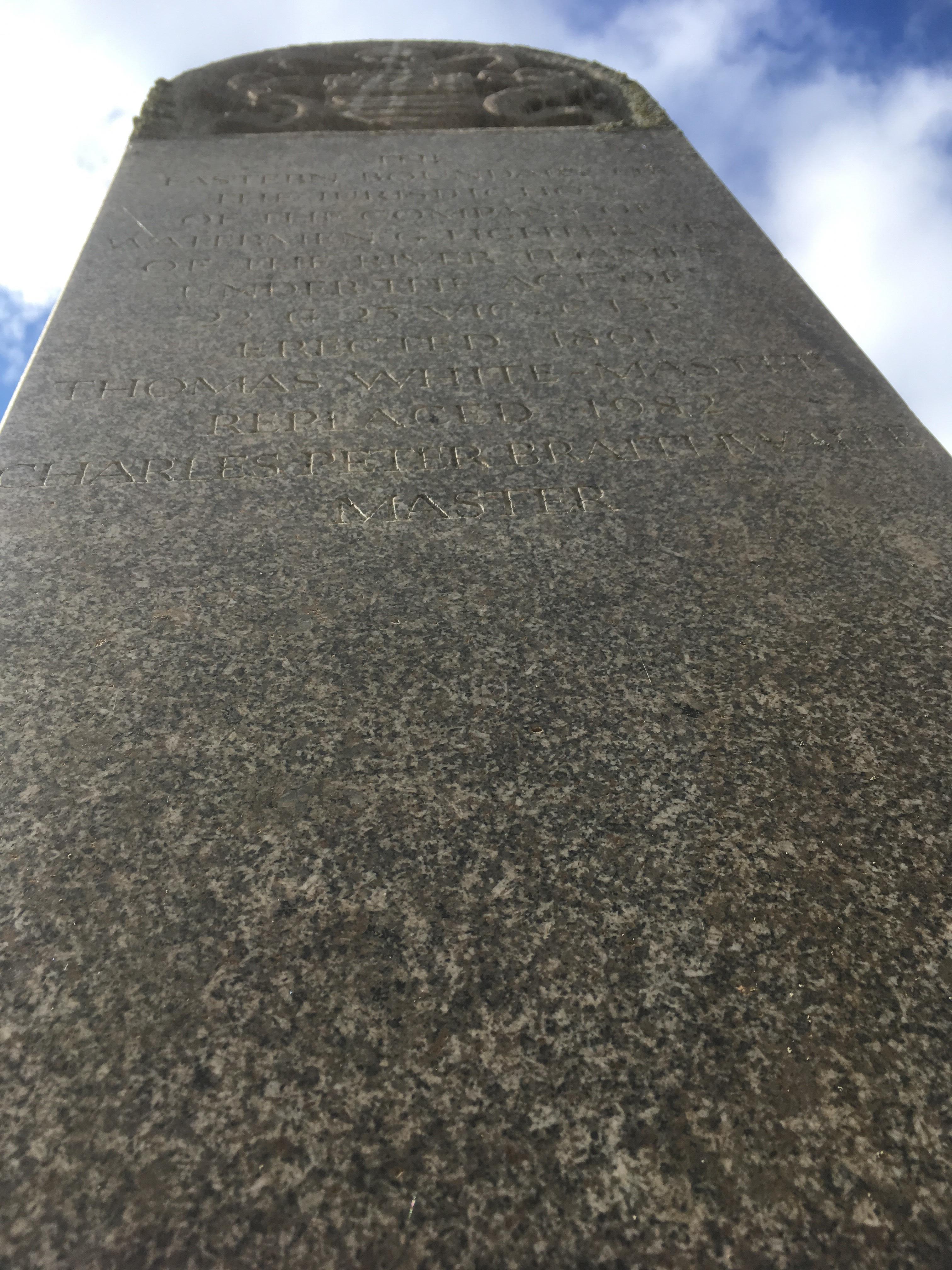


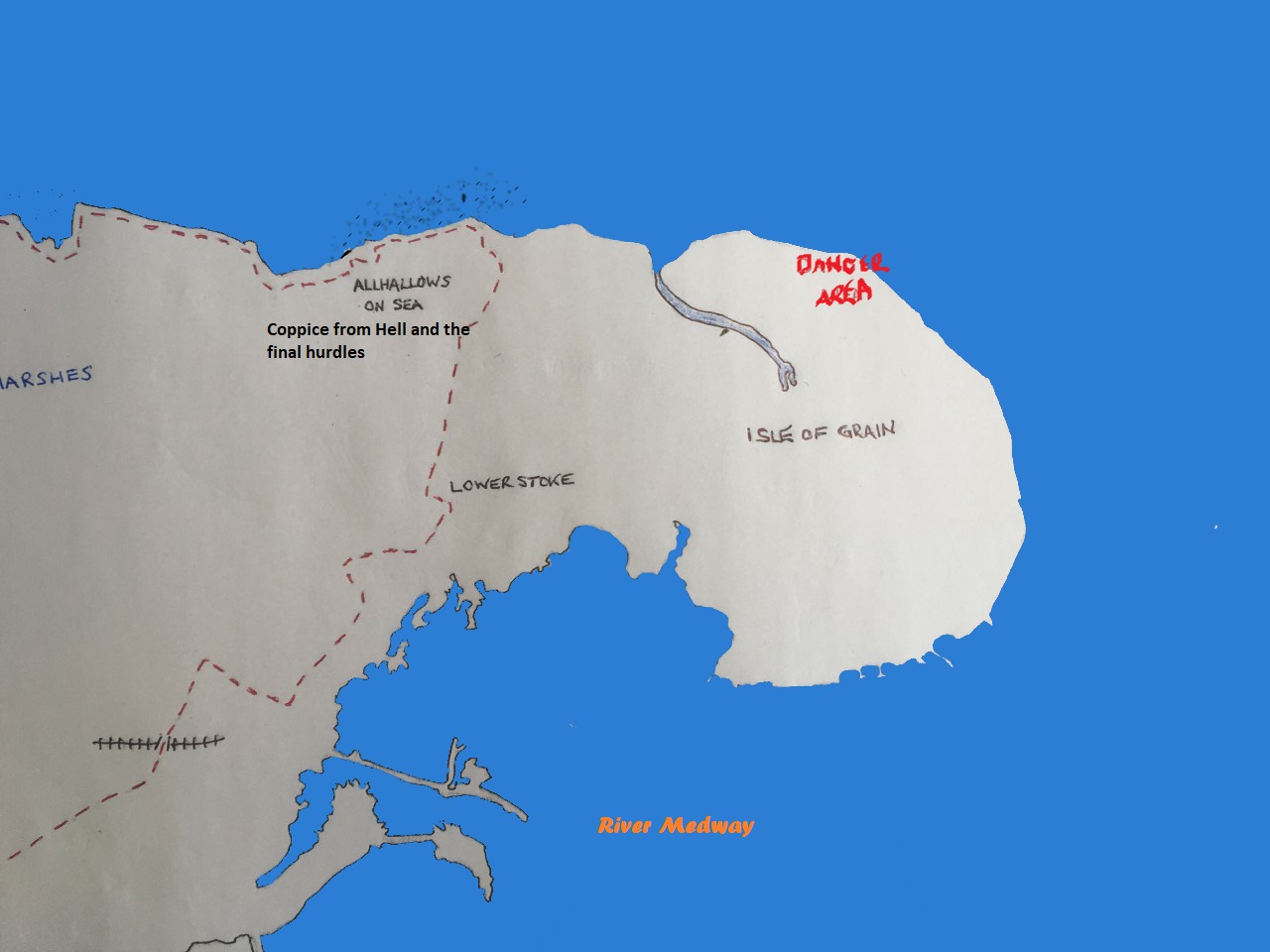

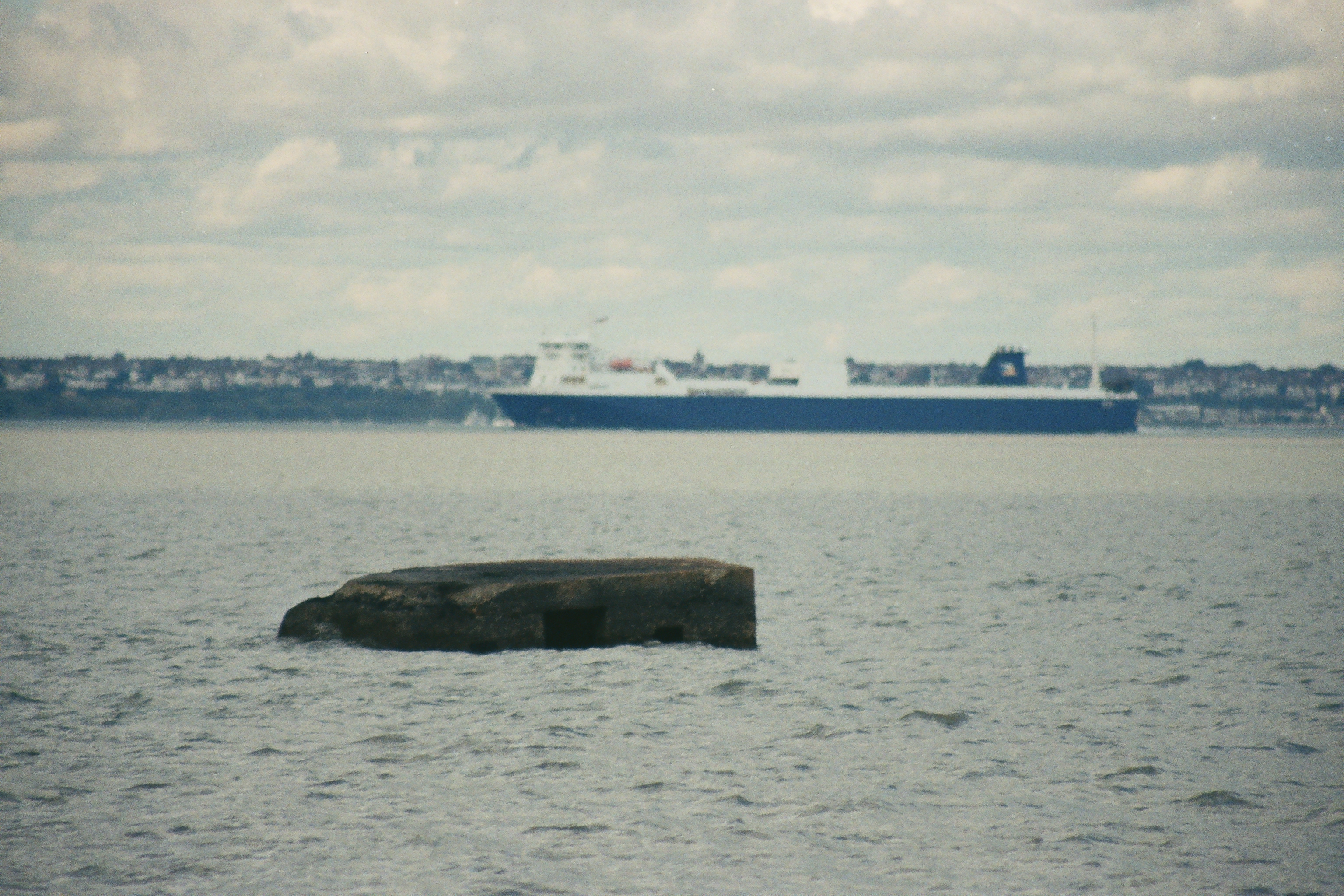

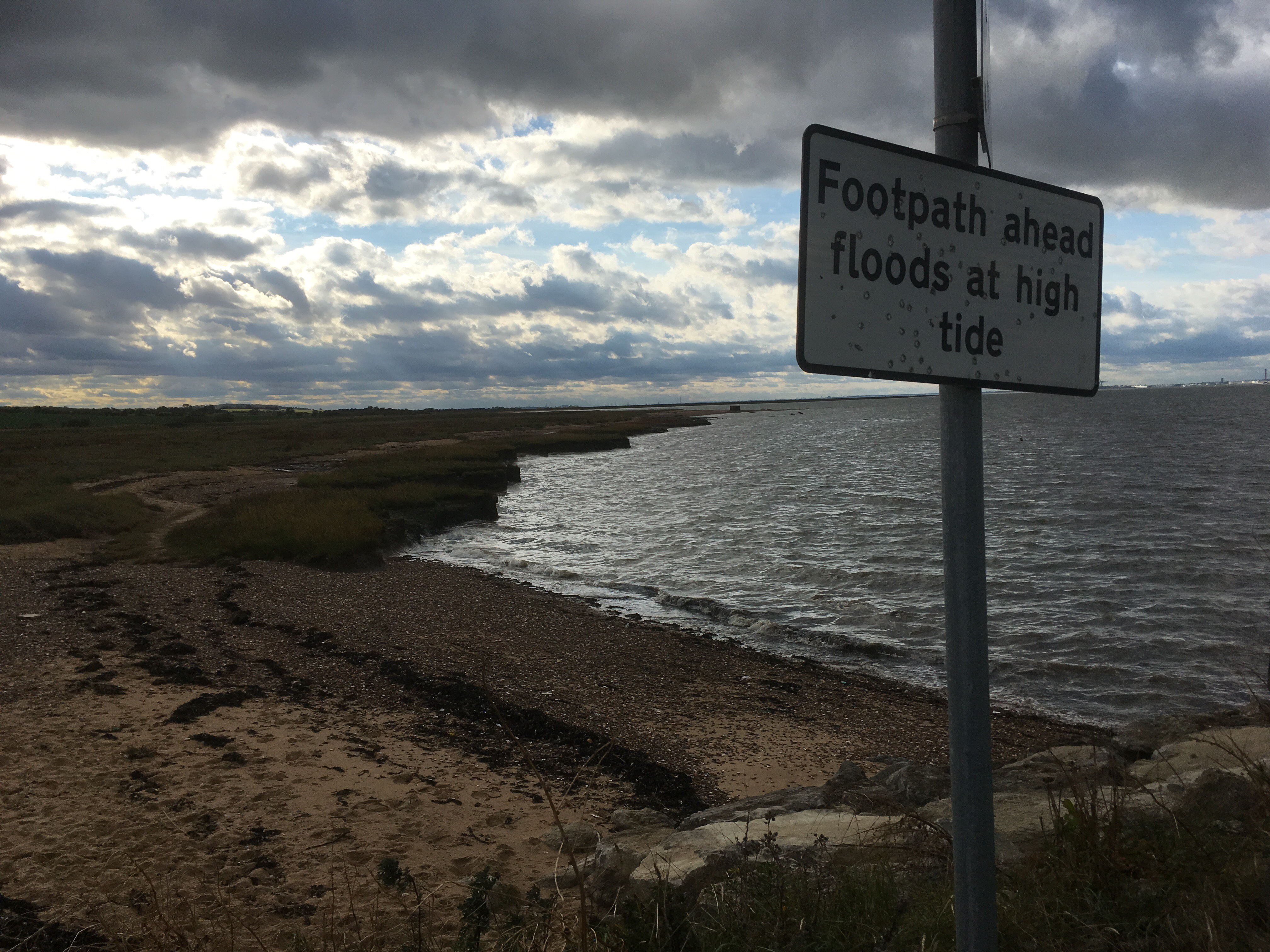
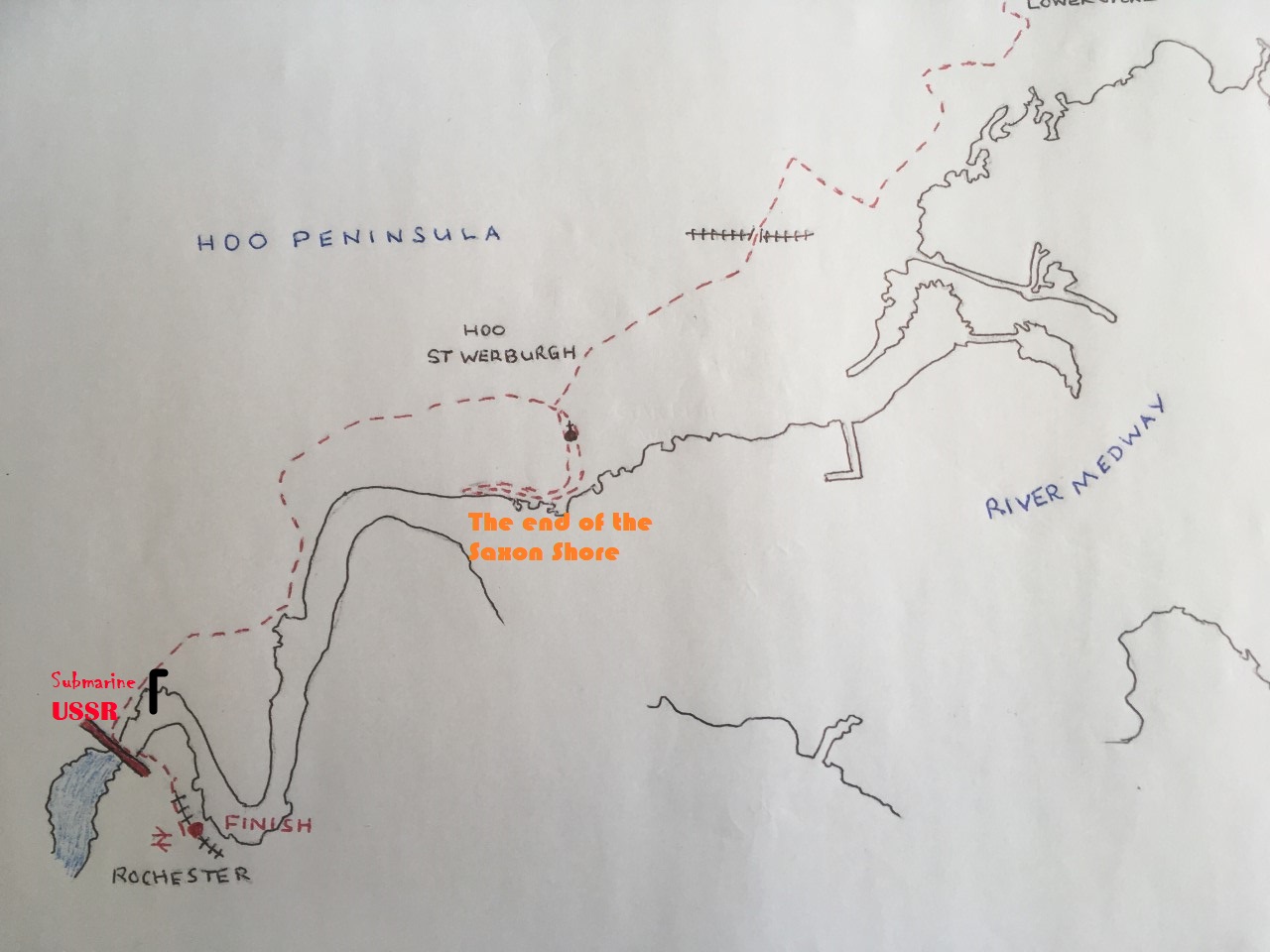

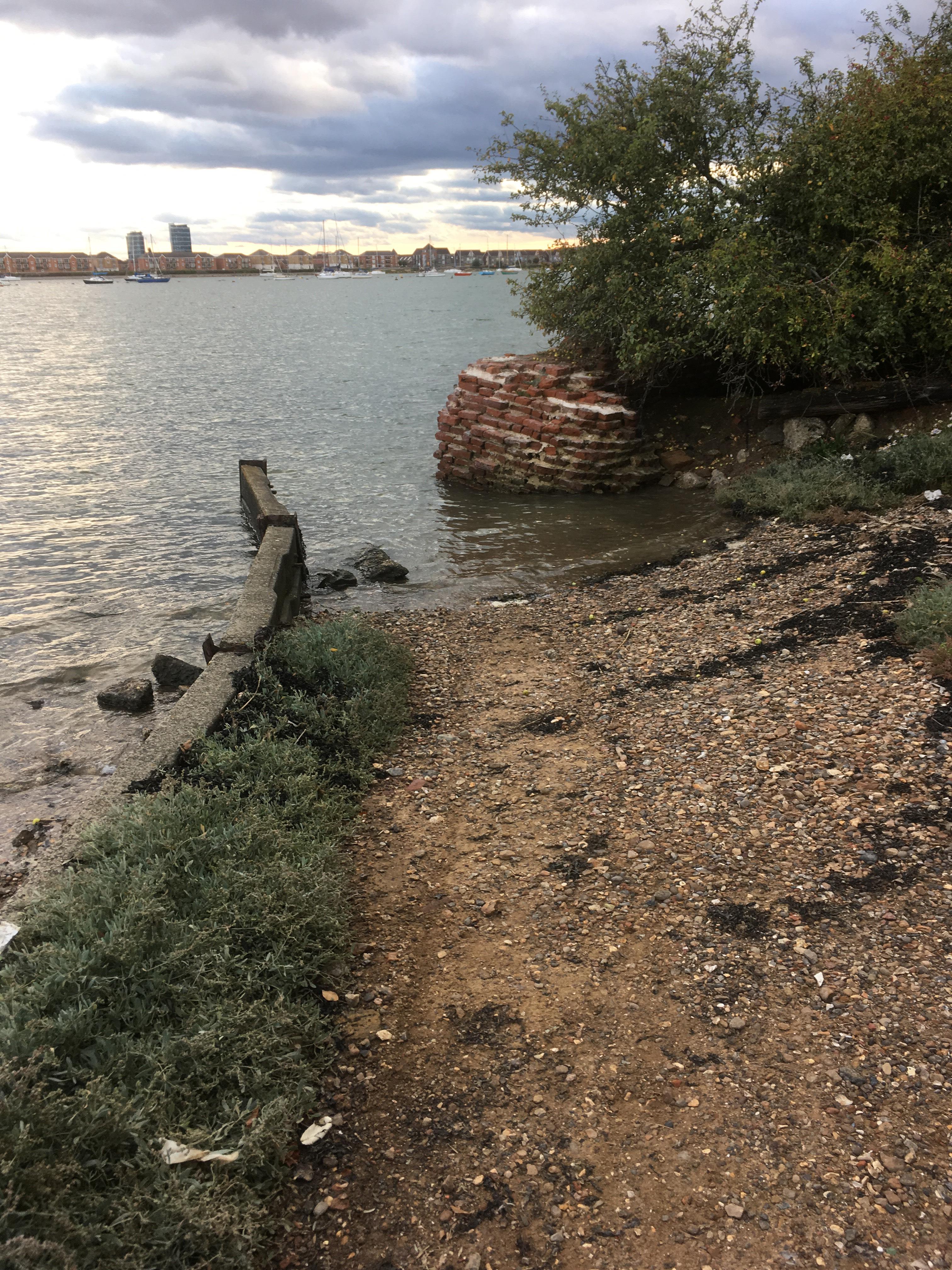

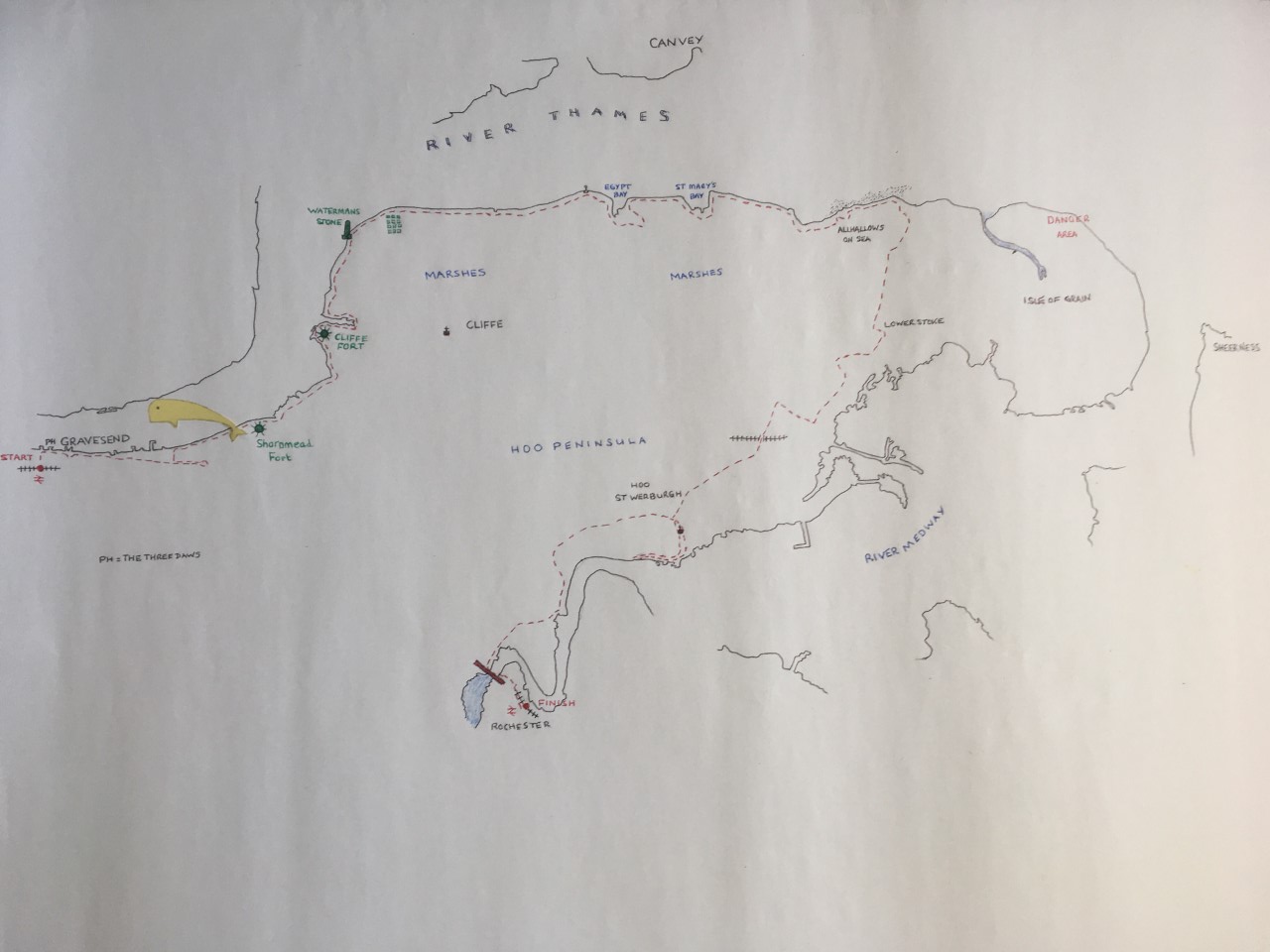
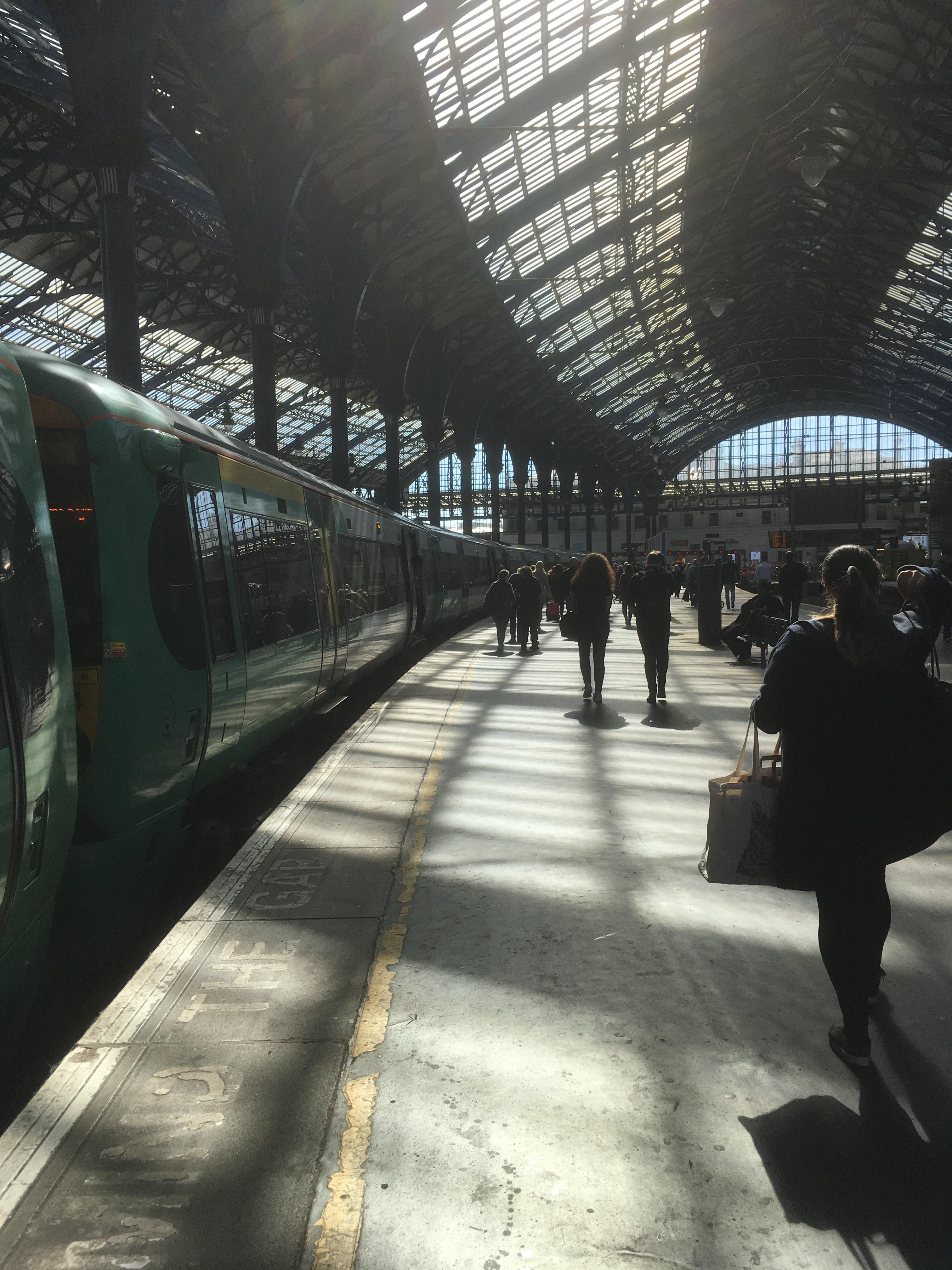
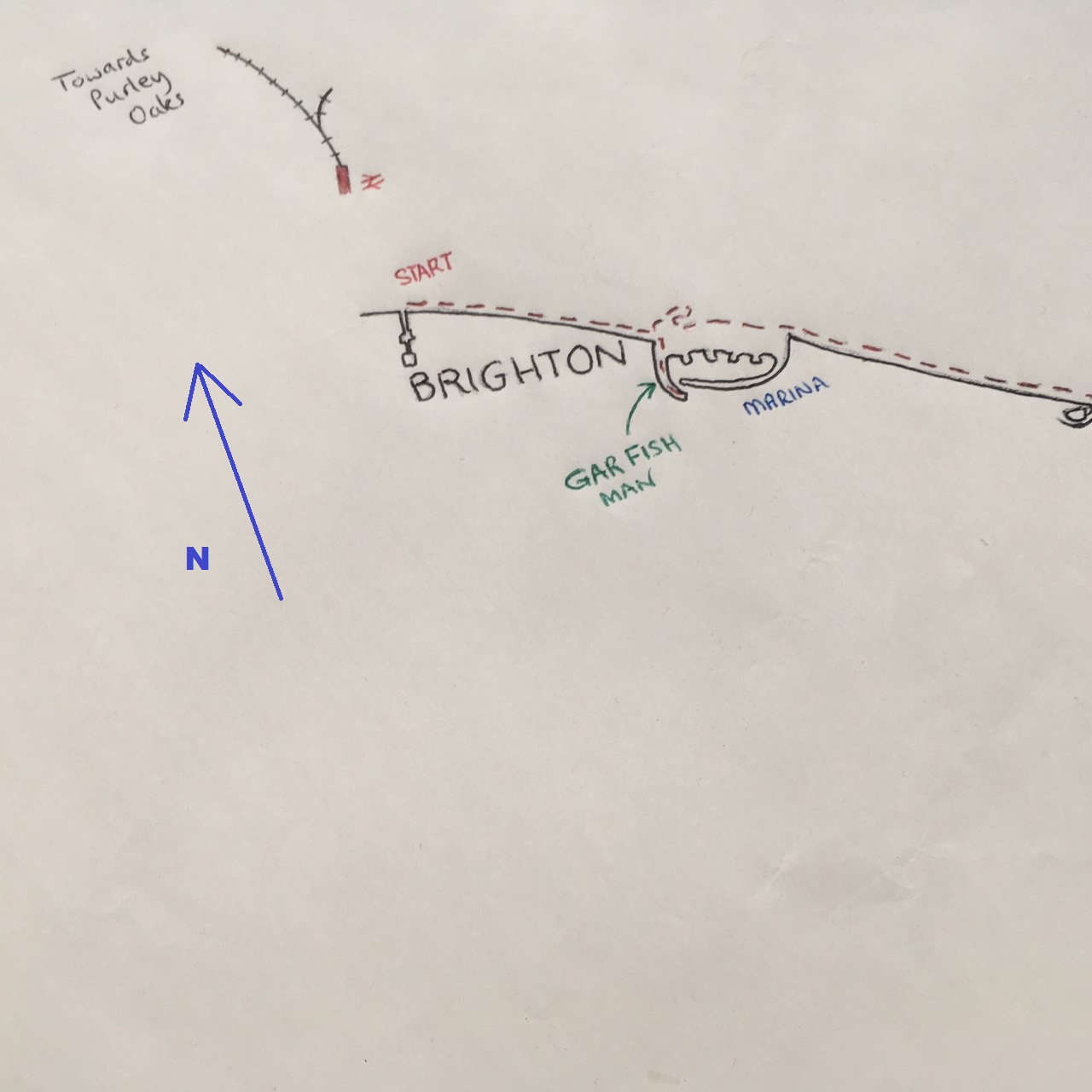


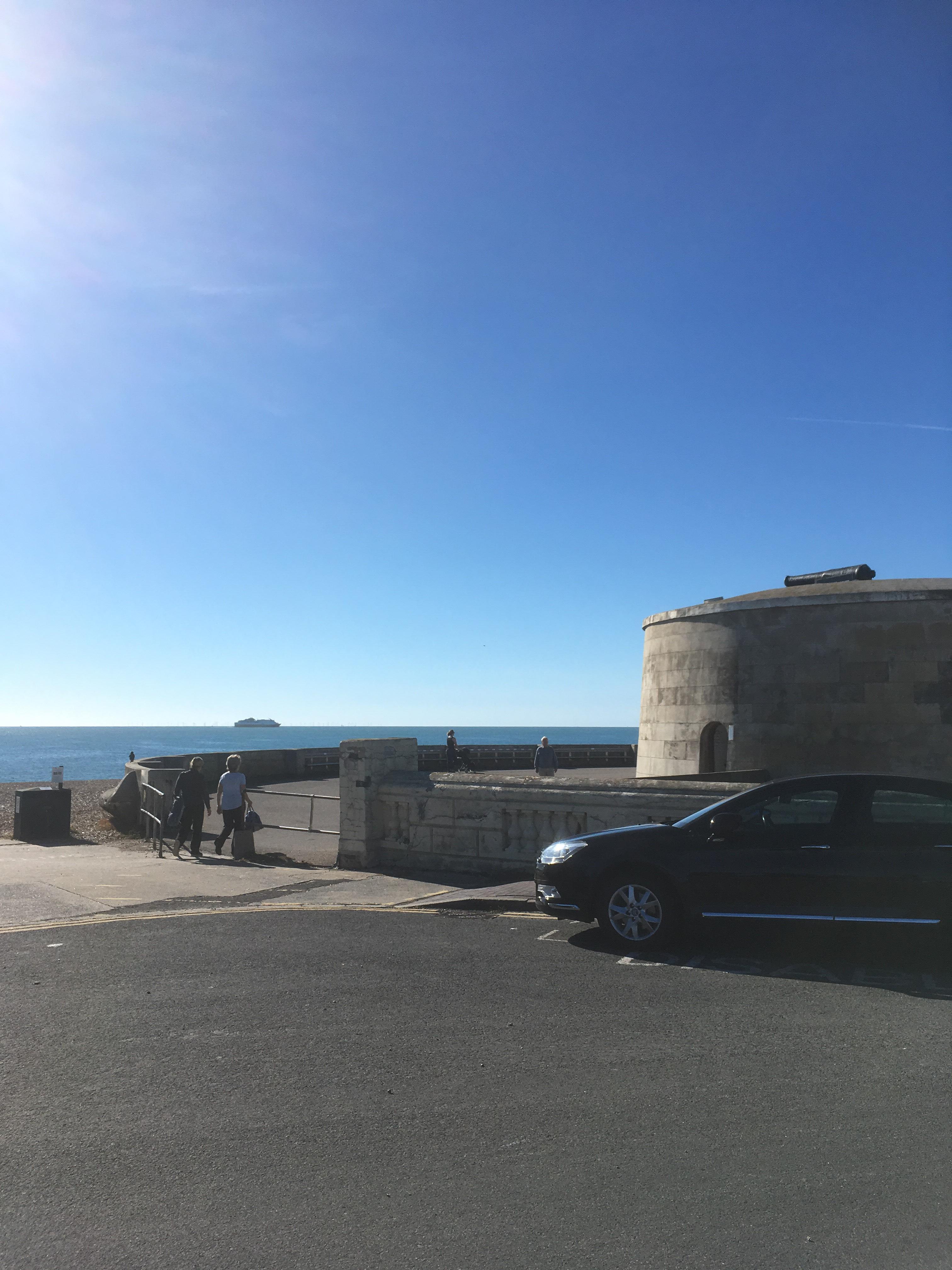
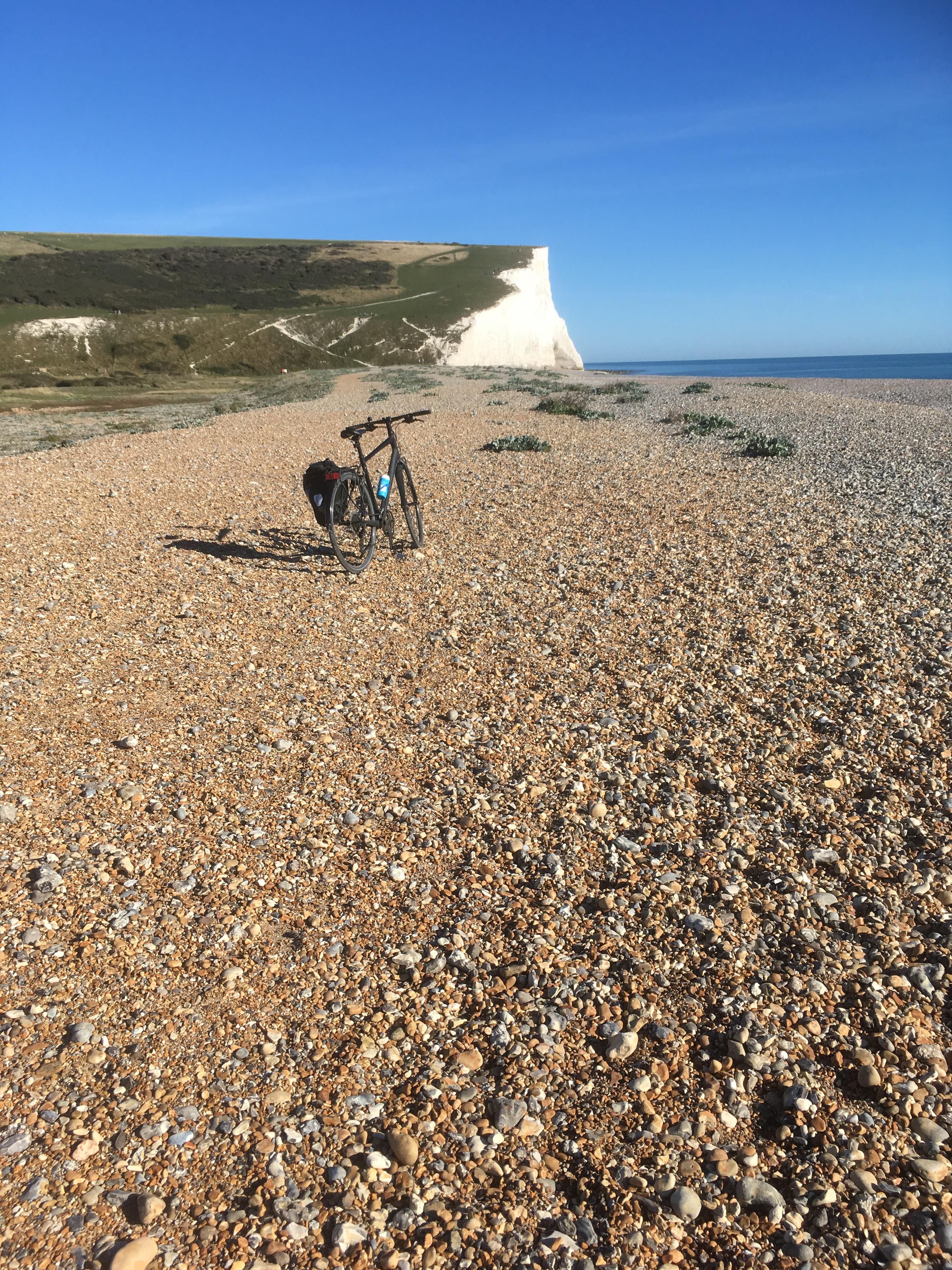

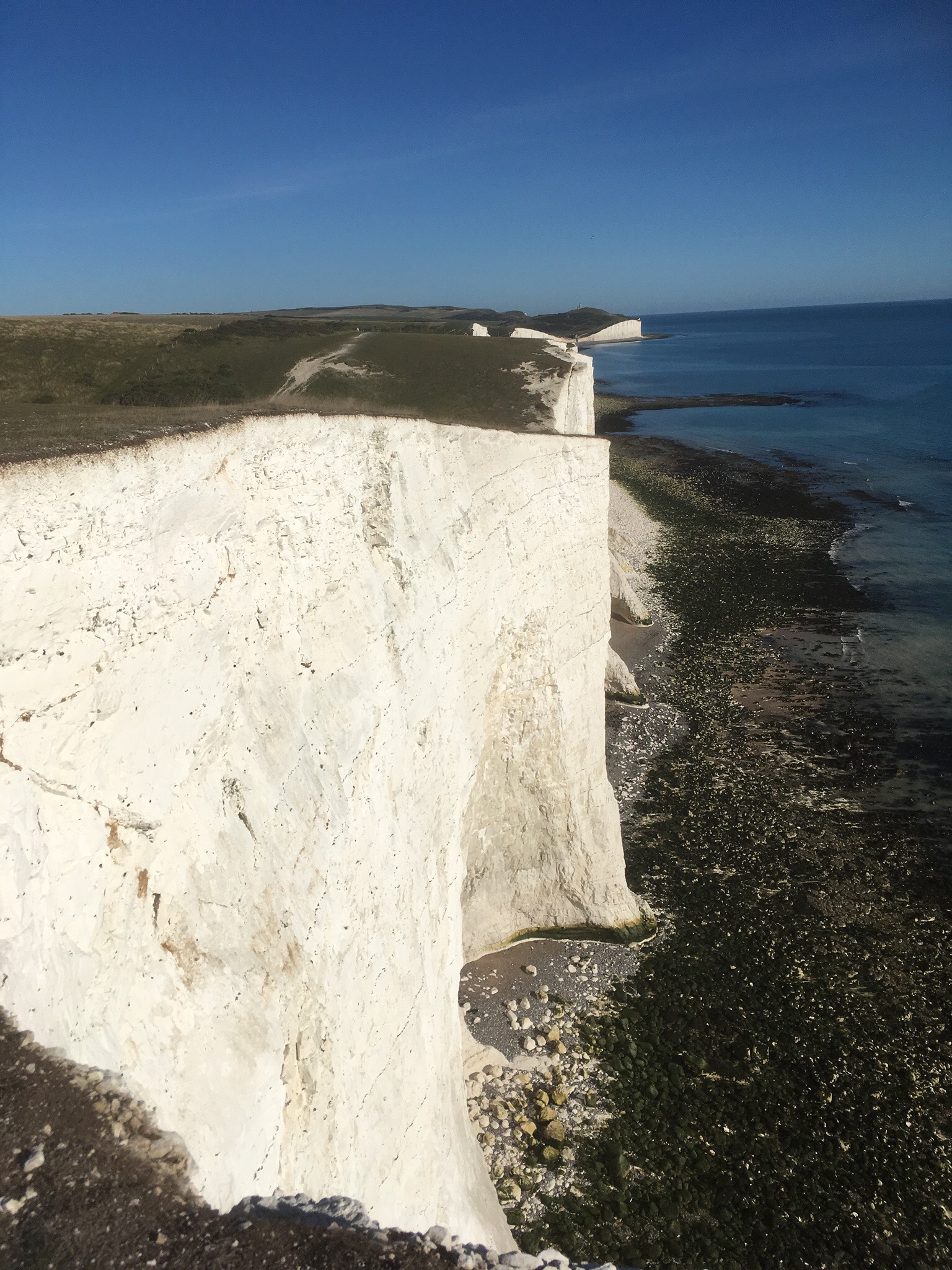
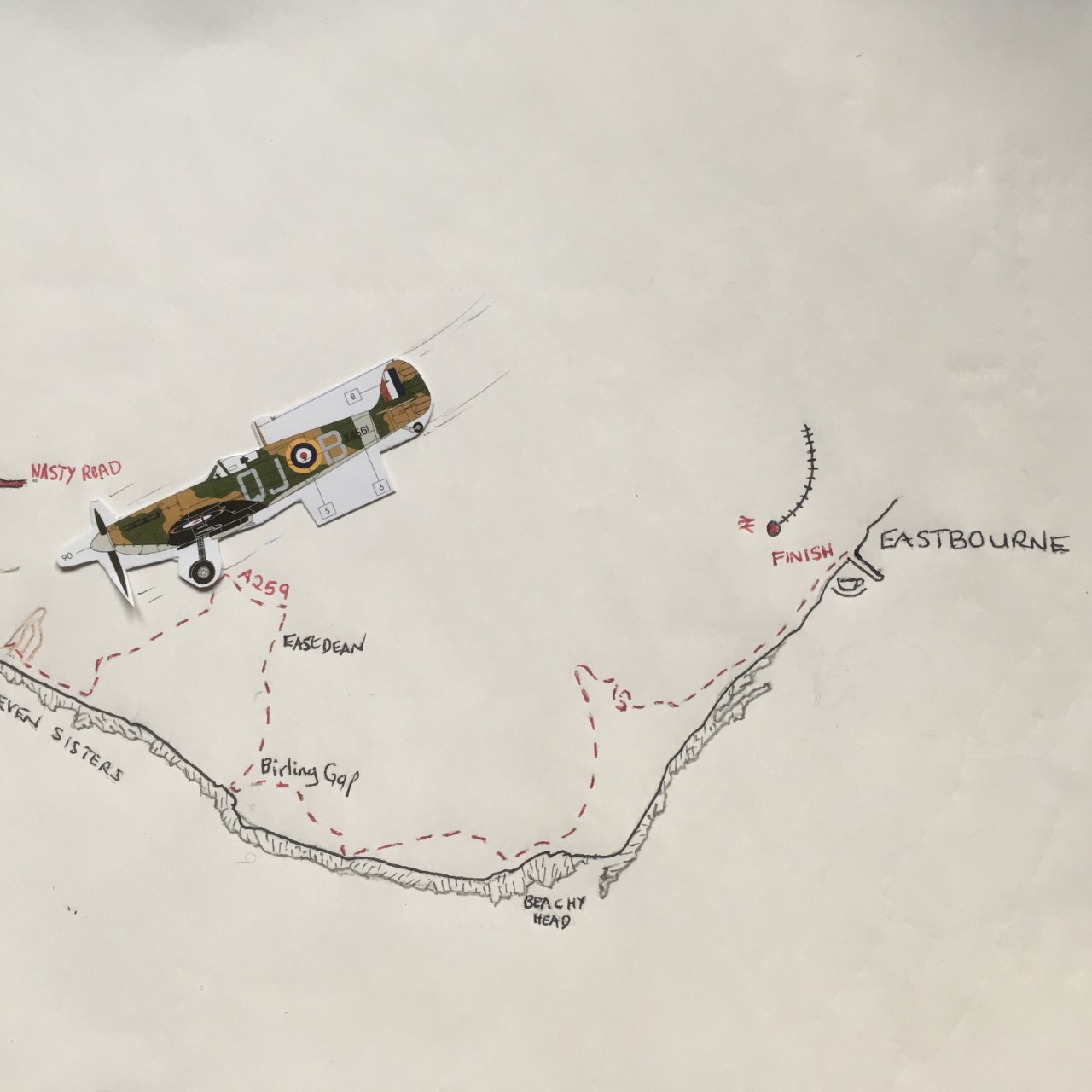
 El Colmado 57