2. Crowhurst to Battle
17th April 2026
OS Explorer 124
Distance: 4.5 miles
Up Around the Bend
This was the second leg of my attempt to walk the line from Hastings to London (or at least the suburbs). Having walked the six miles from West St Leonard’s Station to Crowhurst the week before, this leg would be shorter, arcing from the station at Crowhurst, west, and then north and east back into Battle, and to some extent mirroring the path of the mainline running half a mile or so to the east. A view from above shows its Charles carton ear-like characteristics.
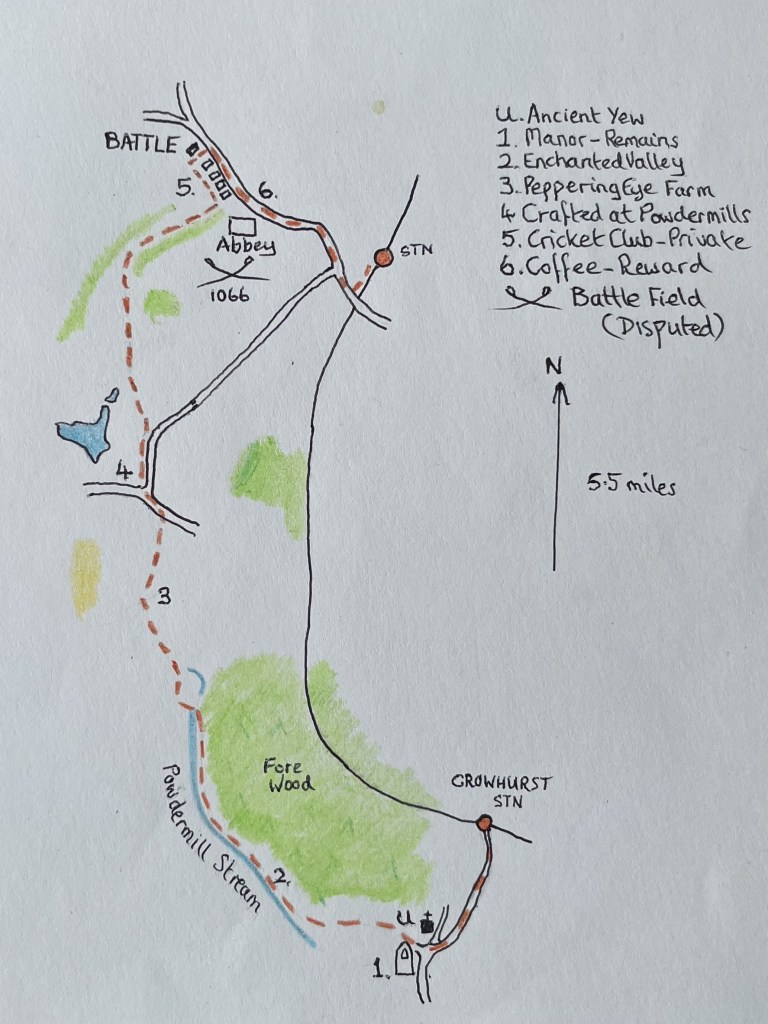
The Battle map
I parked up near Crowhurst station. Thinking ahead, as these locations get further from Hastings, I don’t fancy driving long distances for the sake of what is essentially a narcissistic leisure activity. Too many petrol miles to justify, but for the moment I can live with a few miles for a quick start.
An option at the station could have been to go directly north and approach Battle from the southeast, but it looked a bit short on the map and as it was a glorious day I was up for a prolonged wander. Starting downhill along Station Road and passing an eclectic range of mid-20th century houses, the verge splattered with bluebells and primroses, I was full of positivity, which I can report from the outset, lasted for the next two hours.
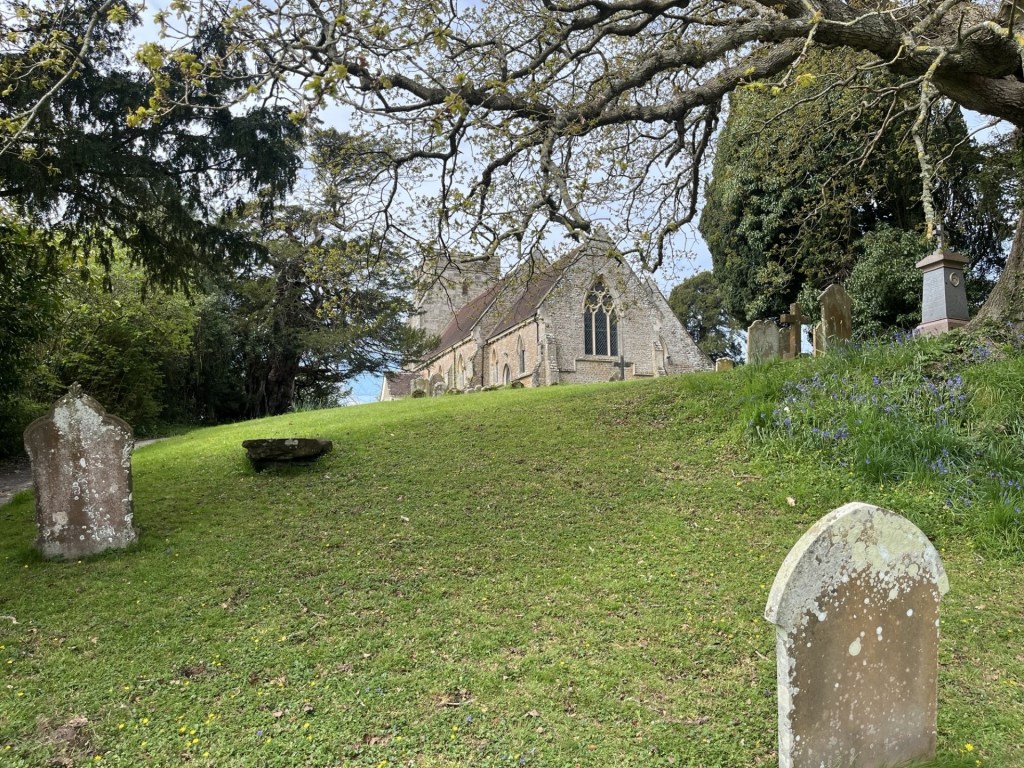
St George’s Church – from Forewood Lane.
And one of the reasons was because of this.
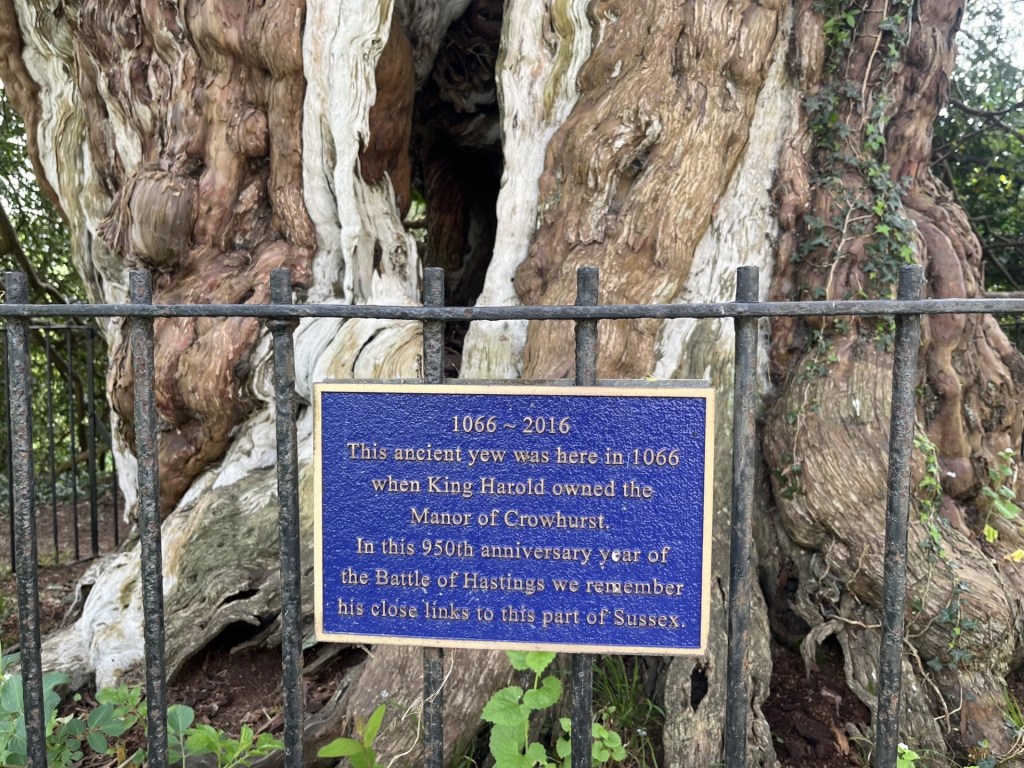
Ancient U
In the previous report (that would be number 1), I briefly mentioned that a hard core group of activists have, some might say heretically, argued that the Battle of Hastings in September 1066 did not happen at the official English Heritage site located in Battle (clues in the name I guess), but somewhere near Crowhurst (other “conspiracy” theories are available). I have an open mind on the subject, but in any case, the main point of interest in the graveyard of St George’s Church is its ancient yew tree (pictured above). Estimated to be 1300 years old it would have been a mere sapling at the time William marched his troops from Pevensey Bay (or Bulverhythe, or Hastings – take your theory pick), and up this, or maybe the next or previous valley. Whatever, it was there then and perhaps people then already marvelled that it was 300 years old.
Now this would be impressive (well it is but there’s a spoiler coming). Thirty odd miles to the north, in Surrey, there is a village called err… Crowhurst, just down the road from South Godstone. It has a church too. It too is called St George’s. I’ve never been there, but it has a yew tree that is thought to be 4000 years old. That’s 2000 years before the Romans arrived! I just don’t believe it but if true then our East Sussex St George’s church in Crowhurst yew tree is frankly embarrassing and unworthy of the blue plaque it sports. It is also important to be aware that if anyone happens to read this and feels the burning need to follow this walk, not to make the cardinal mistake of starting in the wrong Crowhurst. The following account will instantaneously become redundant and could lead to unintended consequences. (I just have to say this to cover myself and avoid potential litigation).
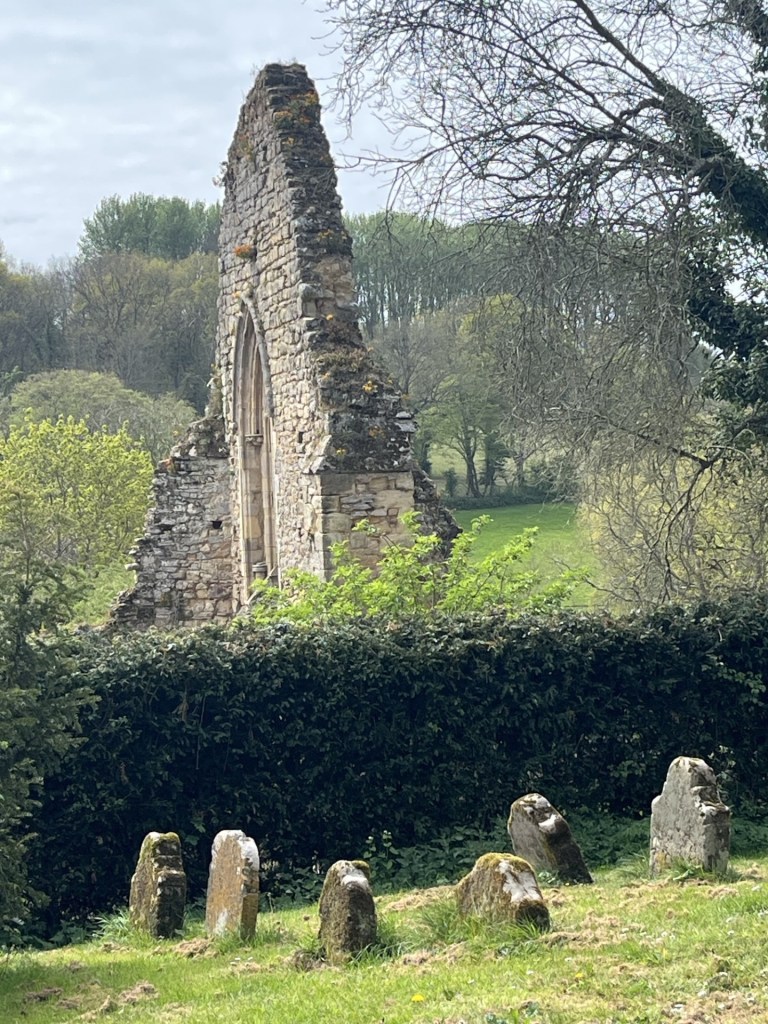
A yew trees view of Harold’s Manor house
Having viewed the old log I returned to the road and turned right at the church gate, pursued by a black cat which shooed me off the premises. A few metres along I turned right up a signed footpath and onto a track between a handful of old buildings. About 100 metres and on the left the gutted remains of the old manor house, now incorporated by the surrounding buildings and making a pleasant walled garden.
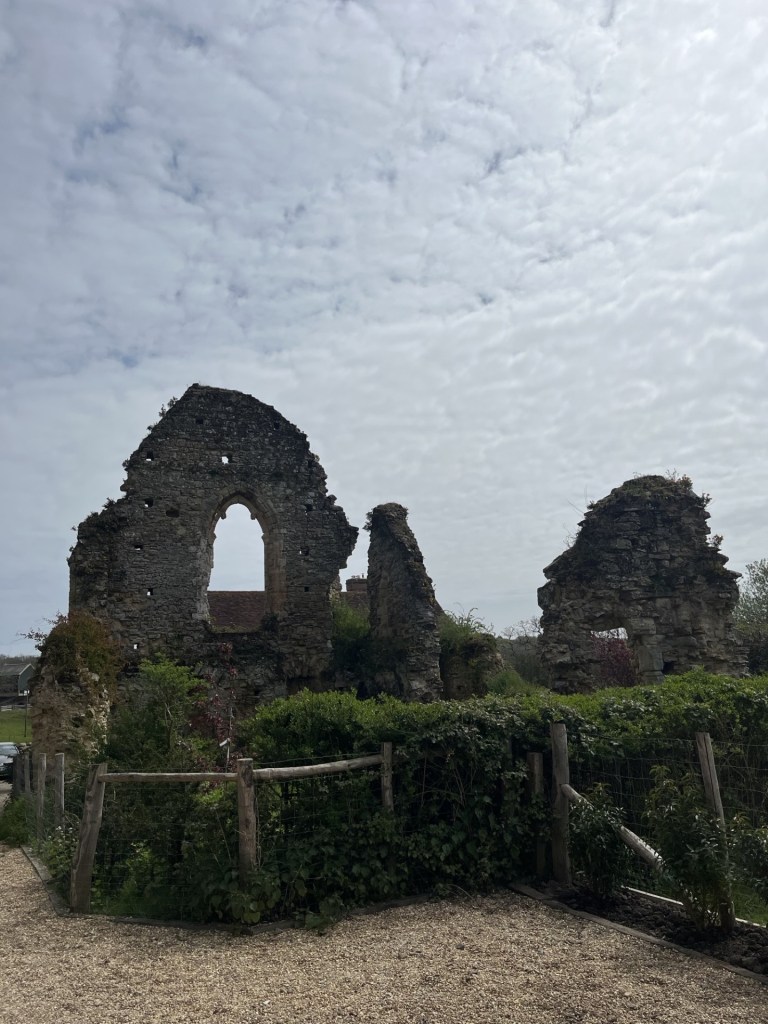
The remains of Harold’s manor house, probably a later rebuild fashioned by a Norman baron.
The origins of this structure are a bit hazy. The “official” narrative is that it was built by a Norman in around 1250. And there is no reason to believe otherwise. Except, in the YouTube video about the disputed site of the Battle of Hastings, it gets a mention. How so? The suggestion is (and it does seem to be the case) that the then Earl, Harold Godwinson, later to be King Harold the second, had his own manor in the area, and that it might have stood on this very spot. Well, who’s to say, and I don’t know, but there is very little online information to be found. Surprisingly, about the only small entry on the Historic England Missing Pieces Project is a photograph taken by the one and only Nick Austin, who, if you have read the previous account, will know, is one of the main heretical Battle of Hastings site sceptics!! And again, who am I to say? Just saying.
The track continued on through fields and directly north. The valley to my left looked impressive, with a very orderly group of trees at the top of the hills to the south.
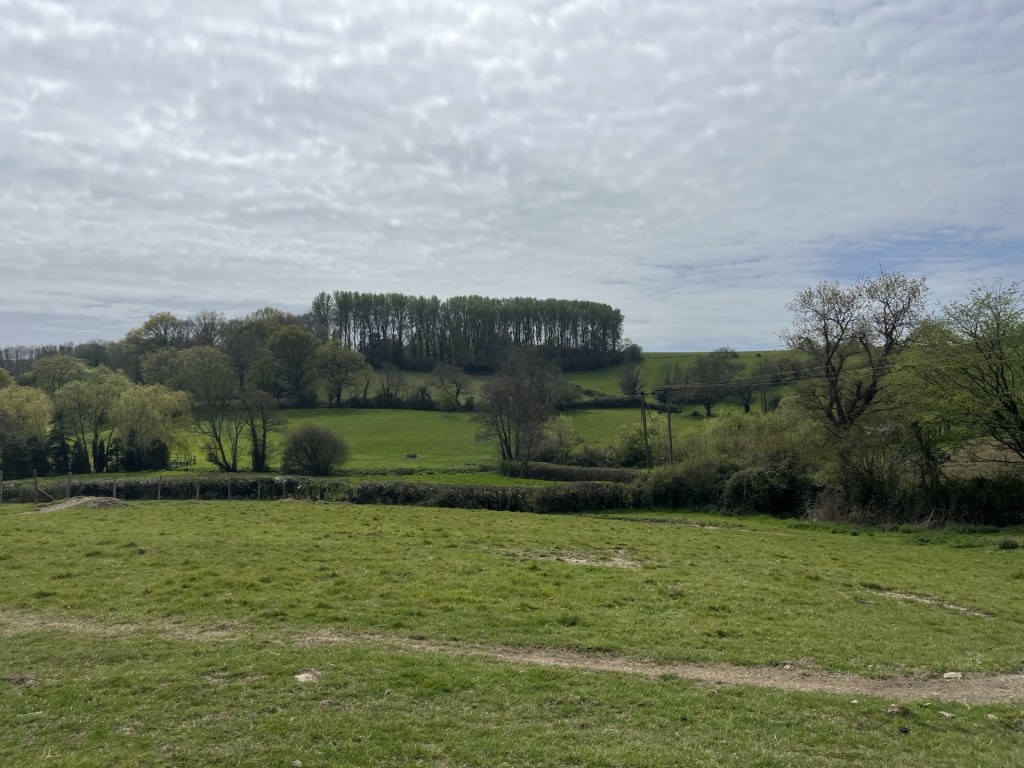
A regiment of trees crest the hilltop
Passing through a gap in a hedge the track headed straight across a large undulating field and then down to a small bridge that passed over the western arm of the Powdermill Stream (western arm).
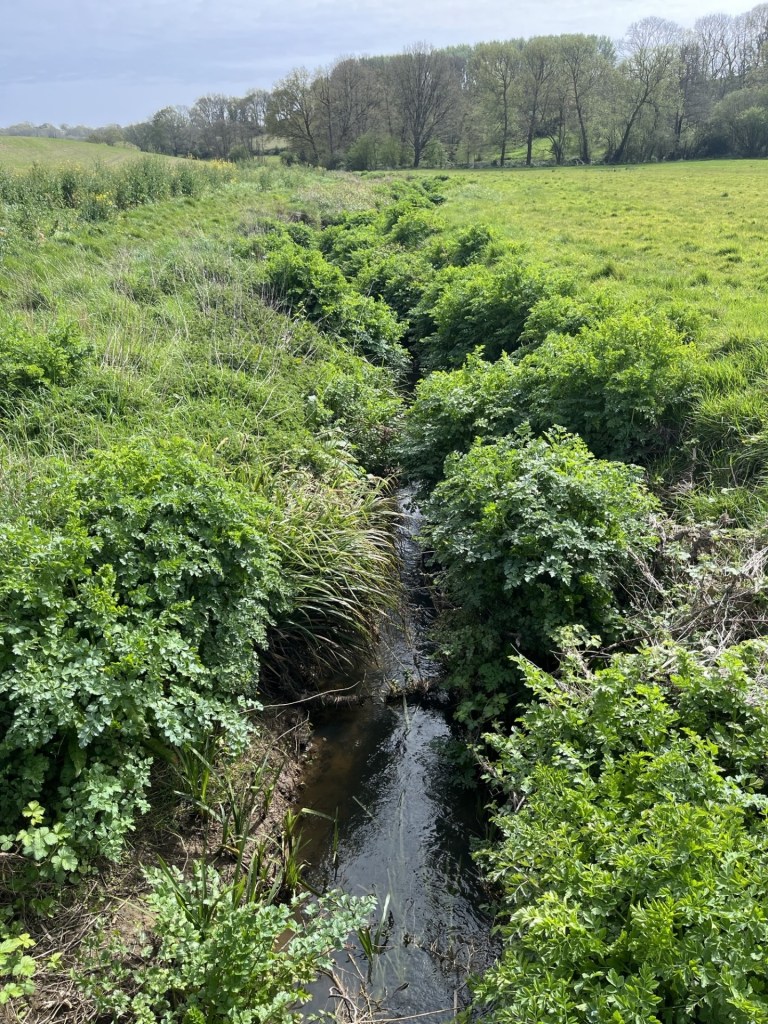
Powdermill Stream
Footpaths carried on north on both banks. I chose the eastern bank and then over a style and into a wide, long meadow with the Fore Wood nature reserve to the north, looking spectacular with new growth peeking through and with the stream to my left.
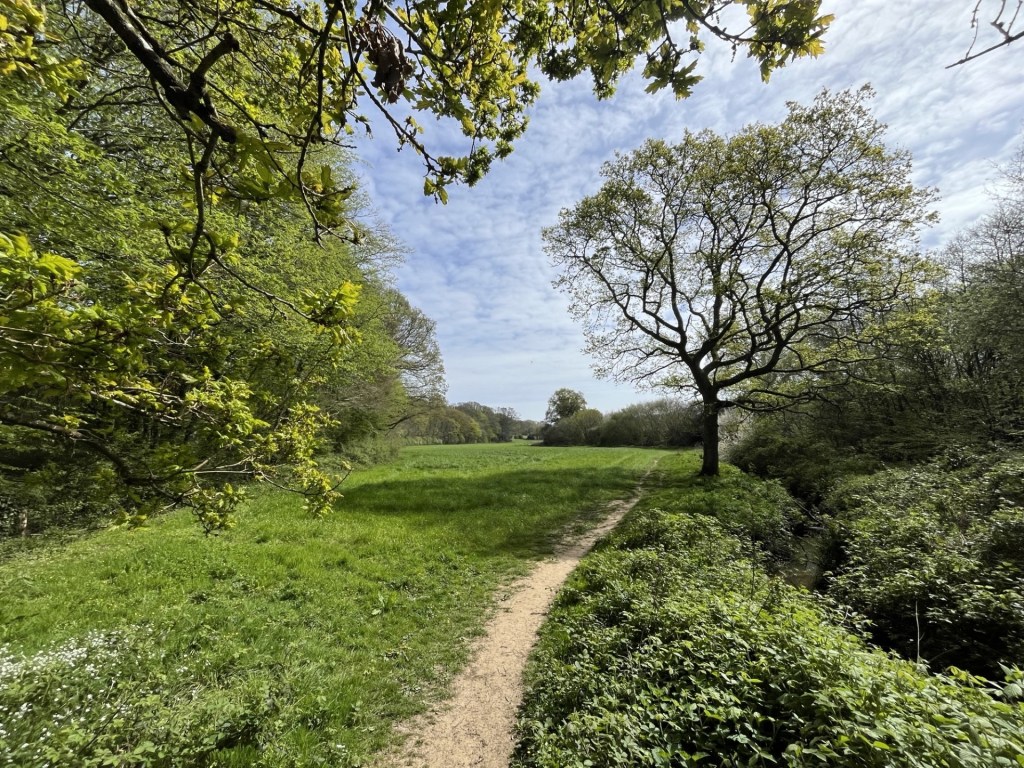
The end of the meadow – an enchanted vale
It felt like a small piece of paradise, and I was in no rush to reach the far side. Naturally, too soon I reached the end and now headed into the woods. A man with two large but passive dogs approached and we agreed that it was a beautiful spot. Bluebells and wild garlic disappeared up through the undergrowth in all directions.
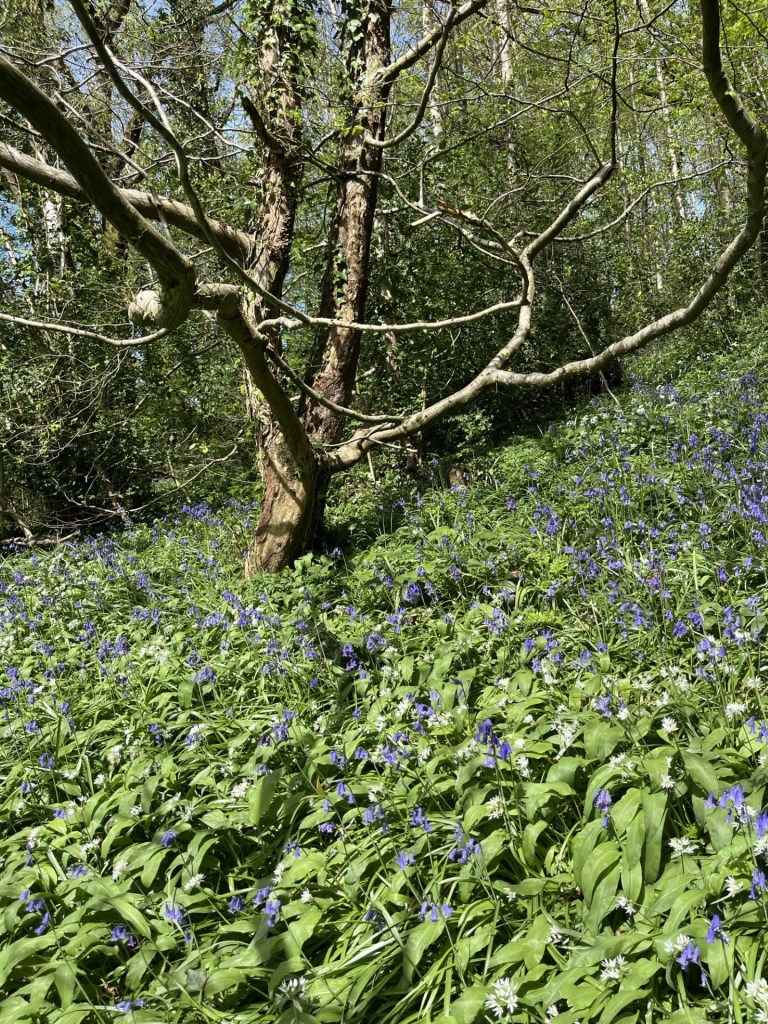
You’ll need to imagine the pungent smell from the wild garlic
Continuing on a winding and undulating path through the woods and just to the right of the stream, surprisingly wide at this point, the idea that I was within a mile of Battle’s suburbs seemed absurd.
The path eventually spilled out at a bridge back over the stream, which I crossed and started up a bank that led to a small road. I should say that by joining the path in Fore Woods I had stumbled onto the 1066 Country Walk – Bexhill Link, and by turning right onto the road I was going to continue on this route for the rest of the journey (I think). A short walk up through more woods and I arrived at a large old manor house affair. I took the road to the right, moving north and headed back down into a glade which crossed back over the Powerdermill Stream, much wider at this point and where it felt like a mill might have once stood.
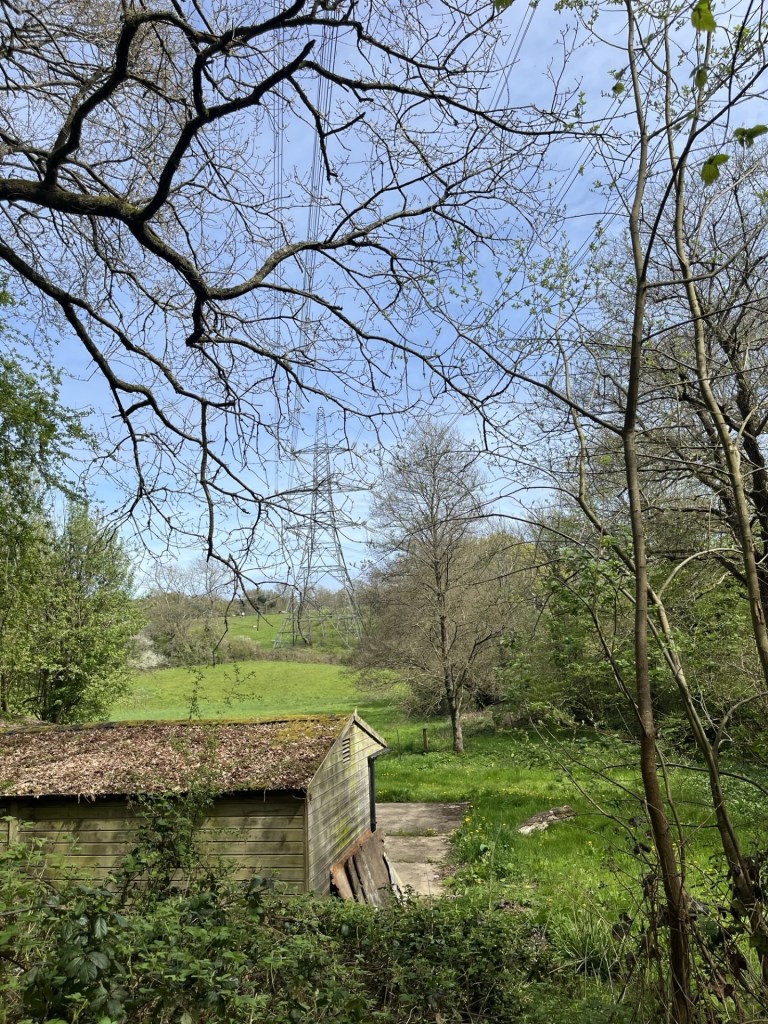
If you are ever lost, but presented with pylons and possess a map, you are found
The road headed uphill again, with occasional large houses to the right. By now I was expecting to encounter urban sprawl at any moment, but instead the road wound down again and then through a cluster of old and new buildings that seemed to go under the collective identity of Peppering Eye. The background was to this nomenclature was unclear, but of course somewhere in the neighbourhood, nearly 1000 years ago, being peppered in the eye was definitely something to be avoided. This was a very chic location, with all the hallmarks of past and present affluence. Several buildings stood out but I was quite taken by the old oast house (or was it a windmill?).
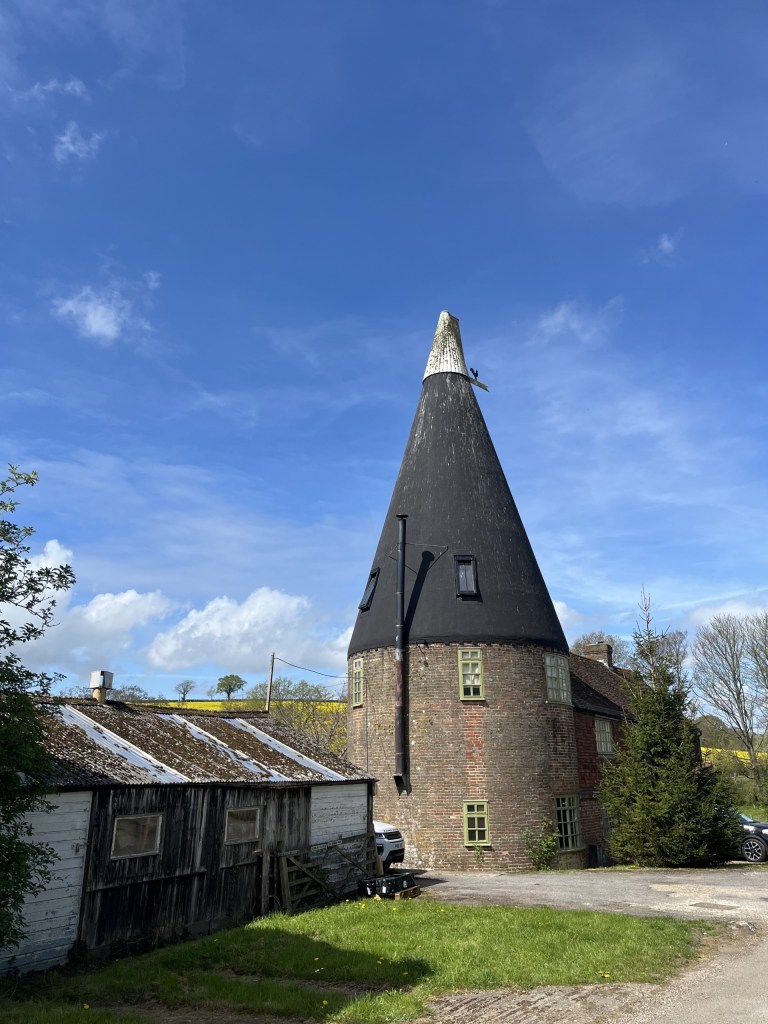
Interesting! Word, is trying to autocorrect oast to “oust!” So much for regional AI nuance.
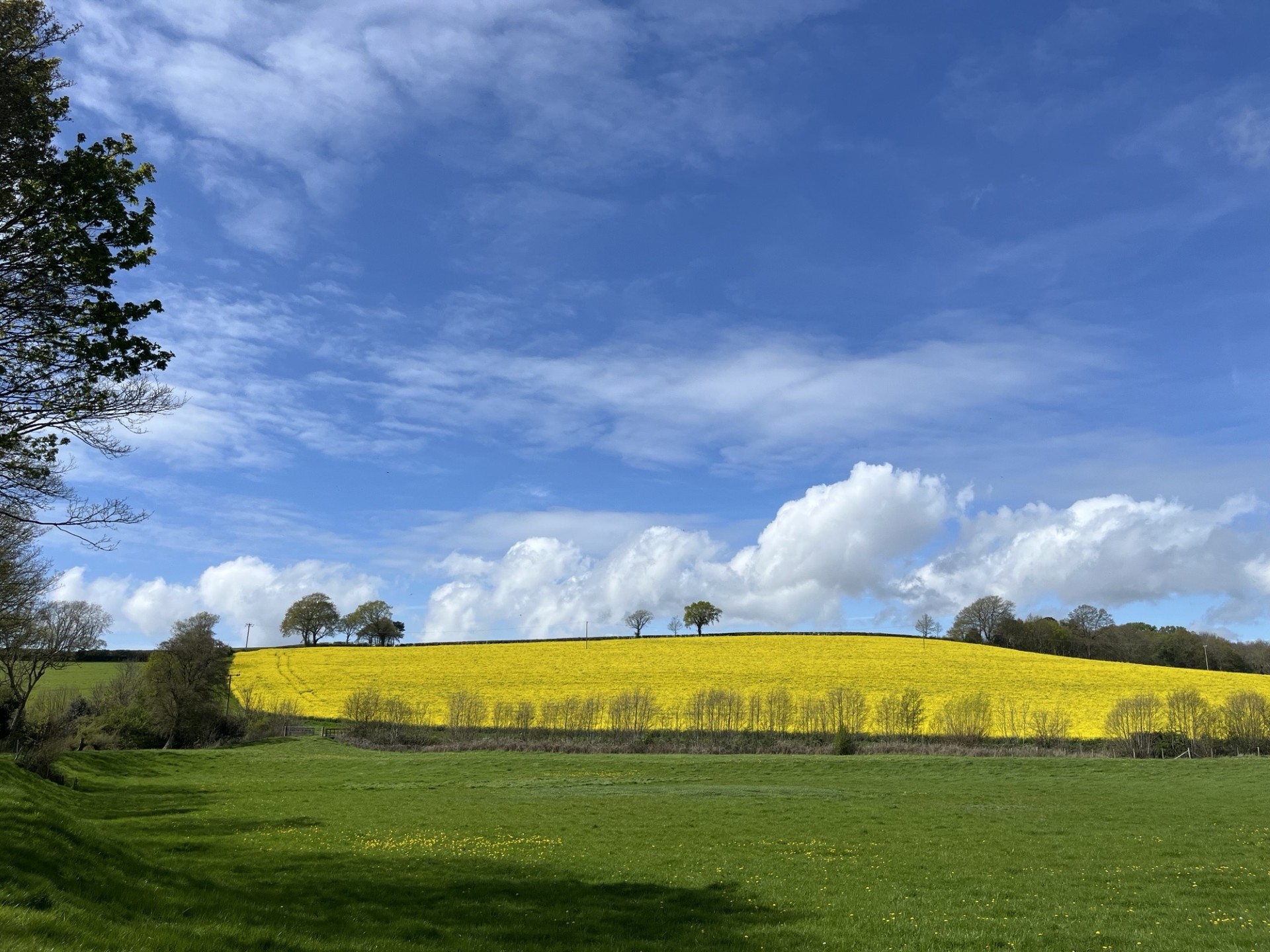
Beyond the buildings the road continued with heath type land rising to the right but across the valley to the left, fields of rape gloriously shining effervescent up the western slopes.
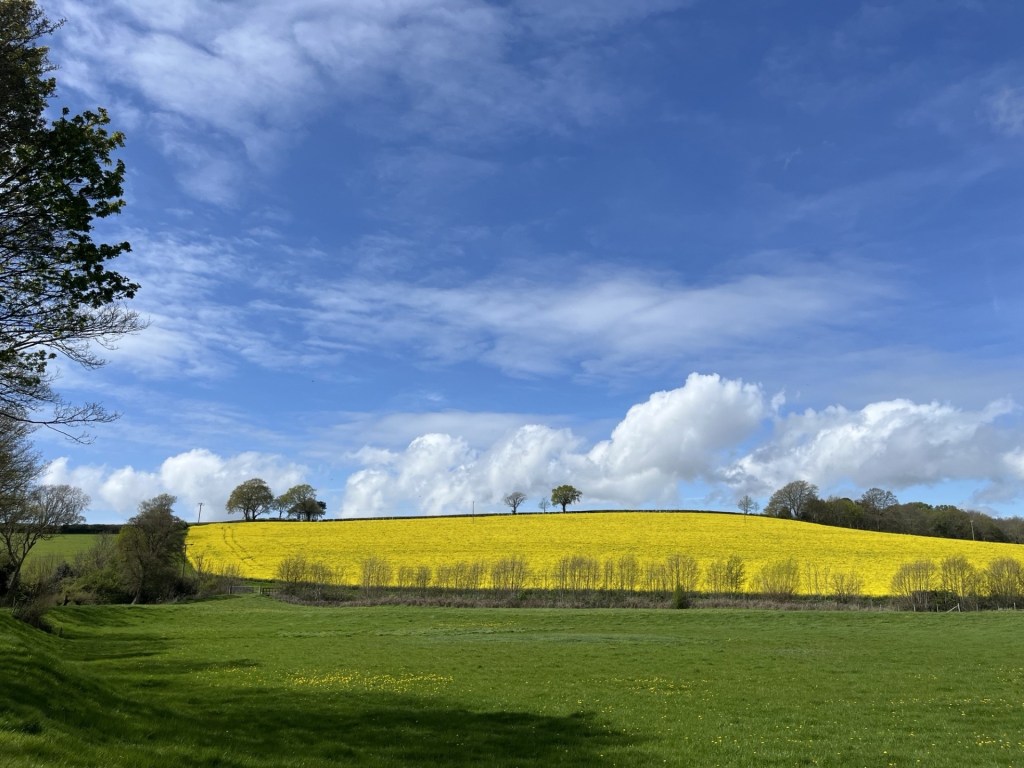
The definition of perfection
Guess what? It was now hot and I was down to my t-shirt, the first time this year and it felt joyous. I was in a place where, for just a while, I wasn’t thinking of or being troubled by my own difficulties (just life things) but more significantly, Donald Trump and his warmonger minions. I suppose for balance I should add the Iranians, Israelis, Hezbollah and the rest, but one way or another the recently self-released image of the Donald as Christ (no, sorry, as a “doctor”) had inflicted a new low point on humanity.
Anyway, I wasn’t thinking about any of that when I reached the junction with Telham Lane and turned left. Just past the Telham Lane Borehole (I made a mental note to remember this place for when the tap water runs out later in the summer) I crossed over Powdermill Lane (B2095) and up onto a footpath above the road to the right and the expanse of the Powdermills Hotel on my left. Only I had been under the impression that it had closed some time last year. Seems it had but has reopened as Crafted at Powdermills. A massive new carpark and high-end sporting facilities, but also allotments and a slightly alternative feel amongst the 4 by 4’s and SUVs. Good luck to it.
At the top of the path, I crossed the back road into the facility and back onto the path that led through some modern barns and then into fields. To my right a fence indicated private property, and as the path led back up another hill the landowner’s details emerged.
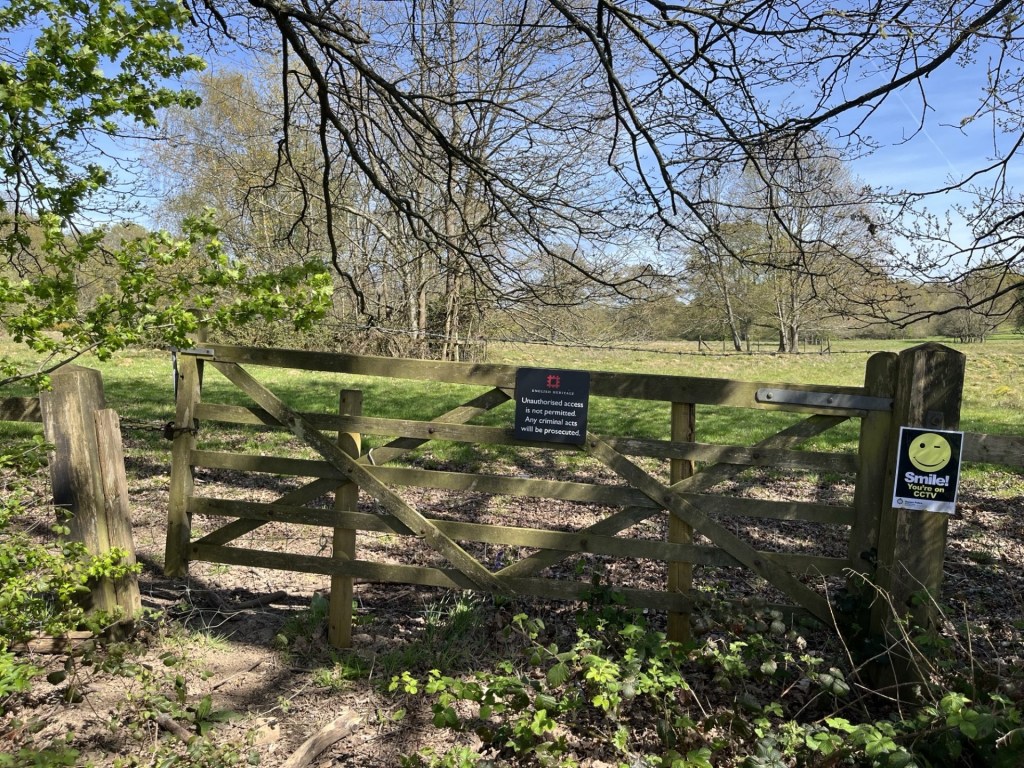
Smile…you’re on English Heritage CCTV
English Heritage! Holders of the flame. 1066 and all that. I stopped a moment and looked around for the CCTV camera. I wasn’t going to enter (I’d been before) but it did strike me as all being a bit absurd. If we take it as read that the land beyond the gate and fence was where the Battle of Hastings took place, why have we put a fee-paying barrier around it? Whilst the battle itself was a relatively small-scale affair compared with other medieval wars, and those beyond in the East, it can be argued that the result itself was one of the most pivotal in world history. The immediate impact of the Norman conquest completely changed the British Isles (England up to that point was considered a model of administrative modernity in Europe at the time), by imposing an entirely new and ruthless political and landowning class. As the centuries passed the spirit of Norman expansionism and its internal disputes between the landowning class and the monarchy slowly shaped the legislature and colonial ambition that was ultimately exported around the world, for good or bad. Had Harold’s army won the day it would have all been very different.
And so, this most important of sites, essentially a field with some impressive, but not valuable old ruins, can only be seen by shelling out £15 if you’re an adult and £7 for a child. I’d make it free. Magna Carta and all that (except that’s somewhere else).
At the top of the hill a solitary Chestnut tree crowned the crown and framed by a blue sky with scudding clouds.
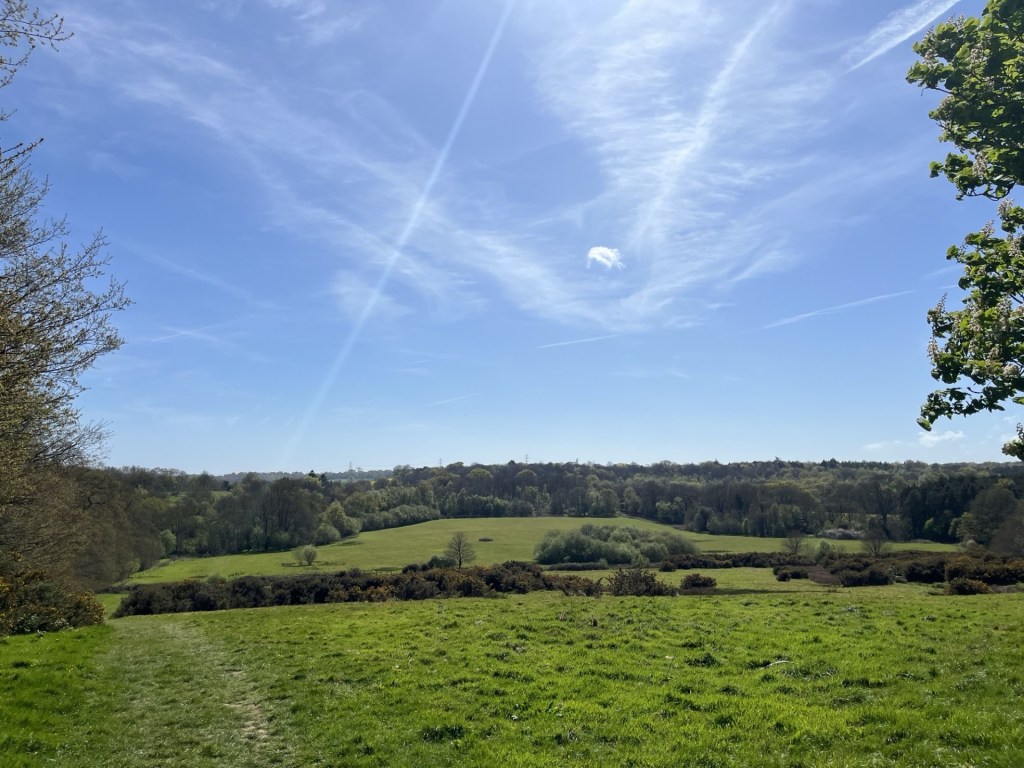
A look back on where I’d been
The track continued around the side of the Battle Abbey site and towards the end a small path edged around the backs of the High Street buildings with a cricket pitch on the left and warning signs that anyone not a member, but found using the nets, was trespassing. The message was clear.
I followed a lane through to the High Street and with enough time to spare I stopped for a coffee at Bonnie’s Bistro. Sitting outside in the heeling sun, and with an endless stream of traffic for entertainment, I played a game of “spot the normal car”. It was only as I took the last sip that eventually an old-style Fiat 500 slipped by without having to slow down or navigate awkwardly to avoid lateral damage.
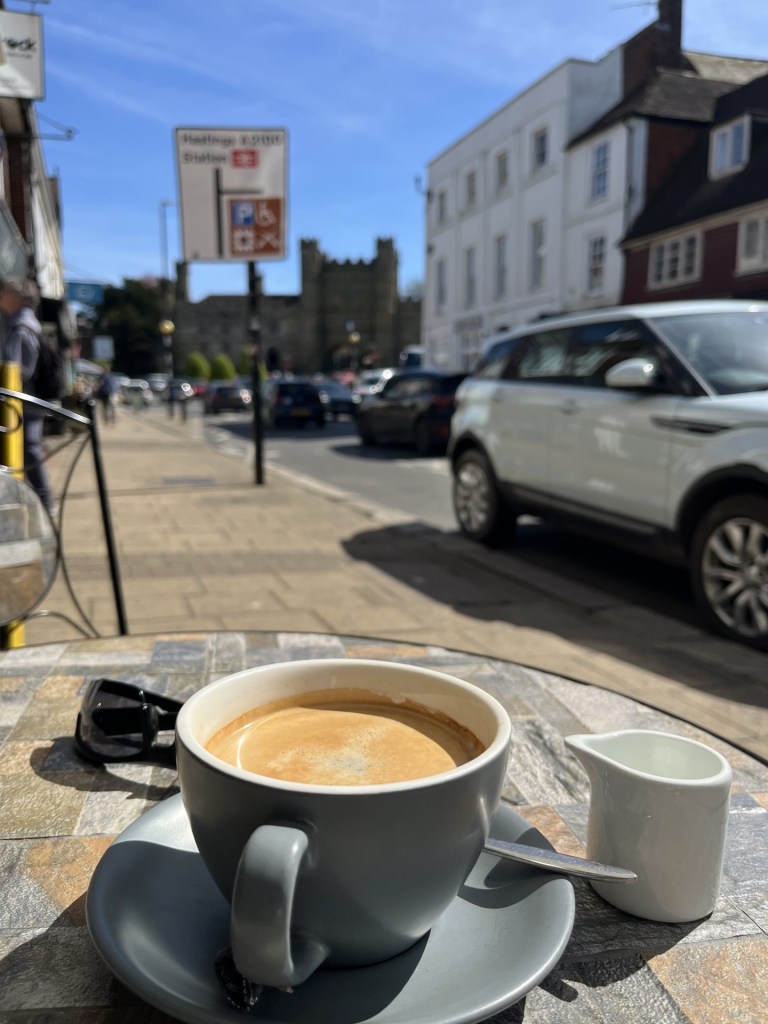
Within striking distance
Having dispatched the caffeine, I rounded the high walls of the Abbey, then down Upper Lake and right onto Lower Lake and to the slip road for the station.
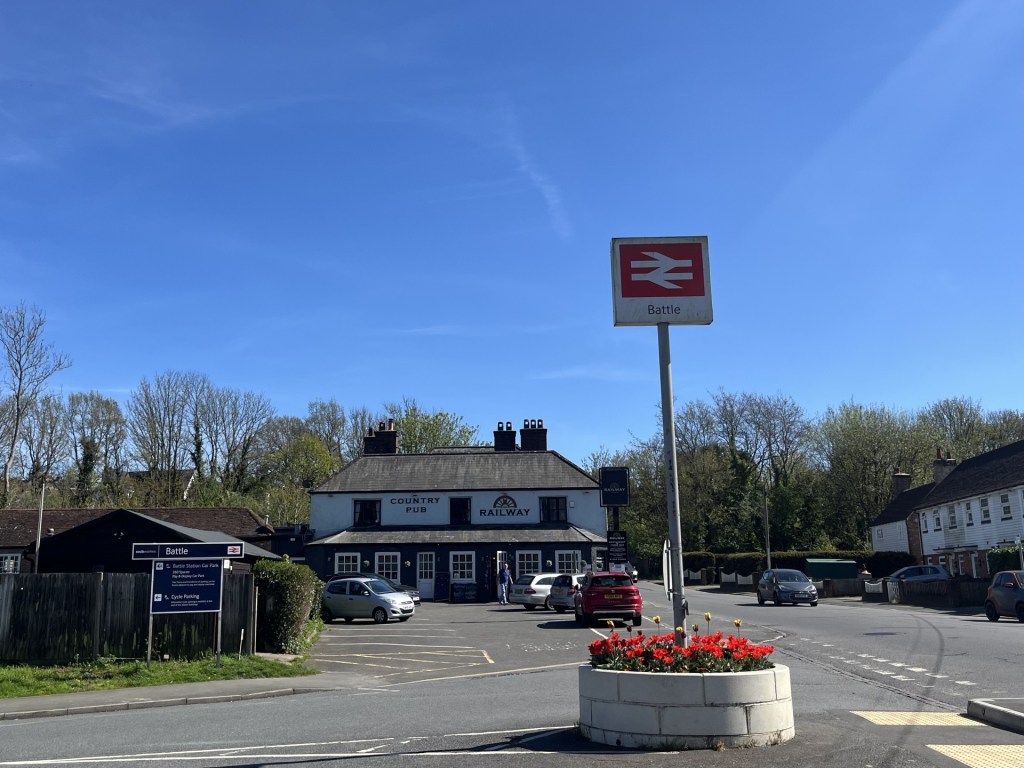
Turn left before the Railway Inn
A short walk along the approach and the station presented overlooking a large carpark.
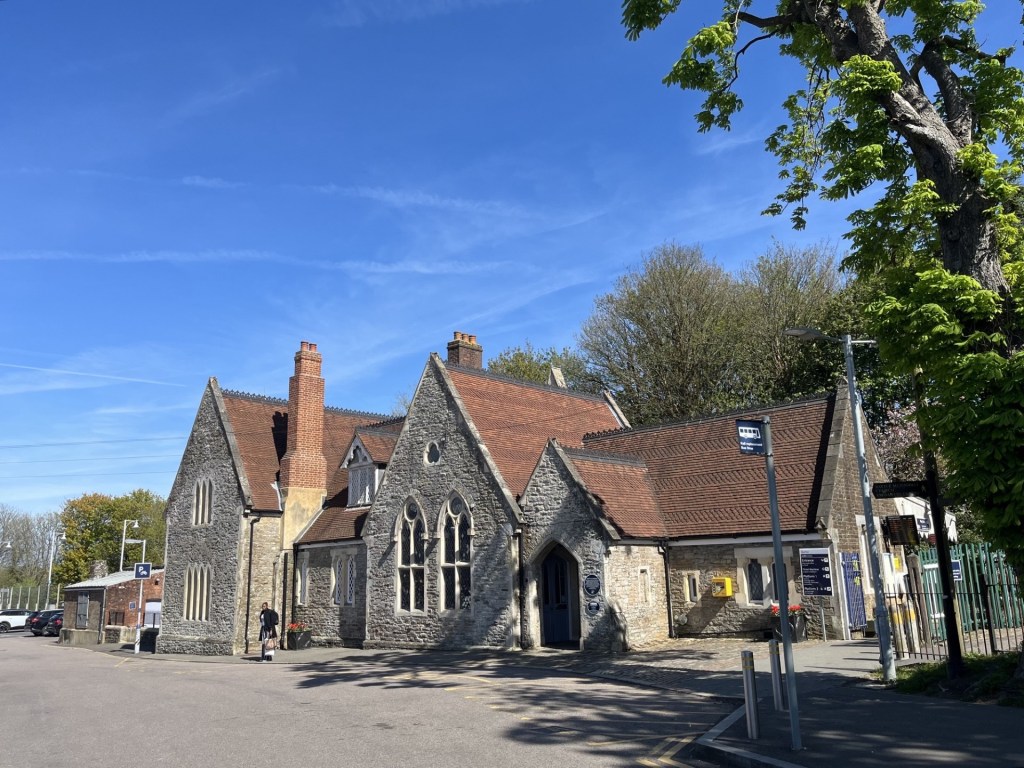
The station building
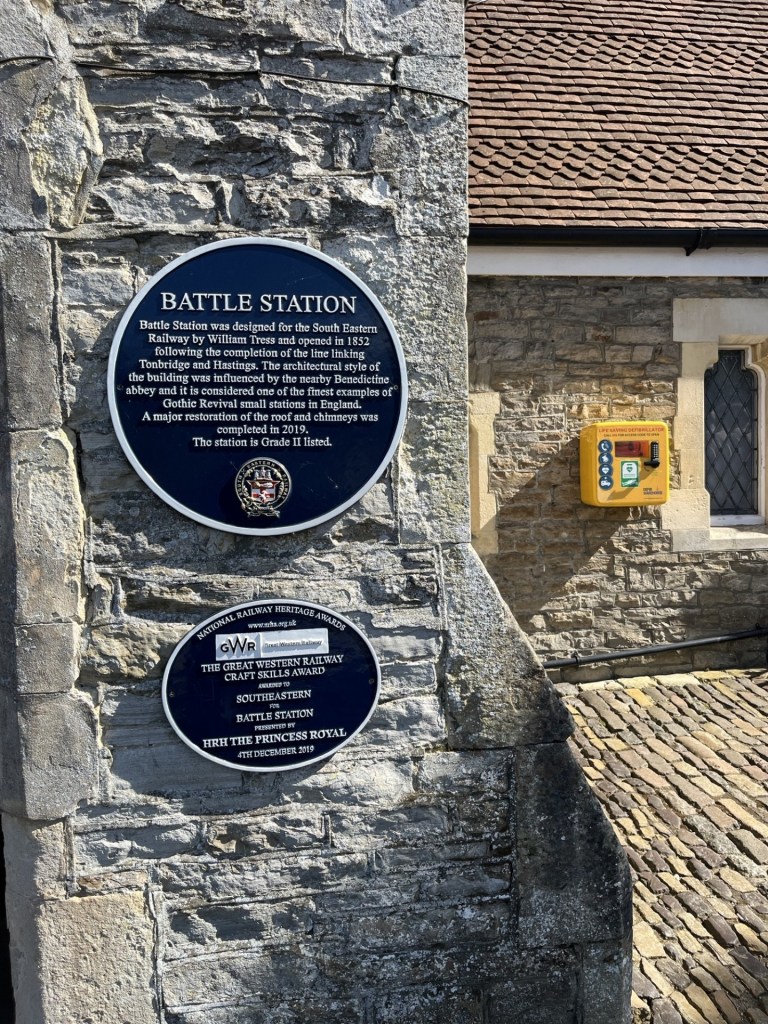
The plaque
A fine building with a plaque that confirmed it, but its fine rustic detail diminished by the sprawling car park laid waste in front.
With a bit of time, I bought a single to Crowhurst, popped over the footbridge to the down platform, sat without peeking at my phone for ten minutes and looking down the line and at the trees instead, reflecting on what an excellent walk it had been.
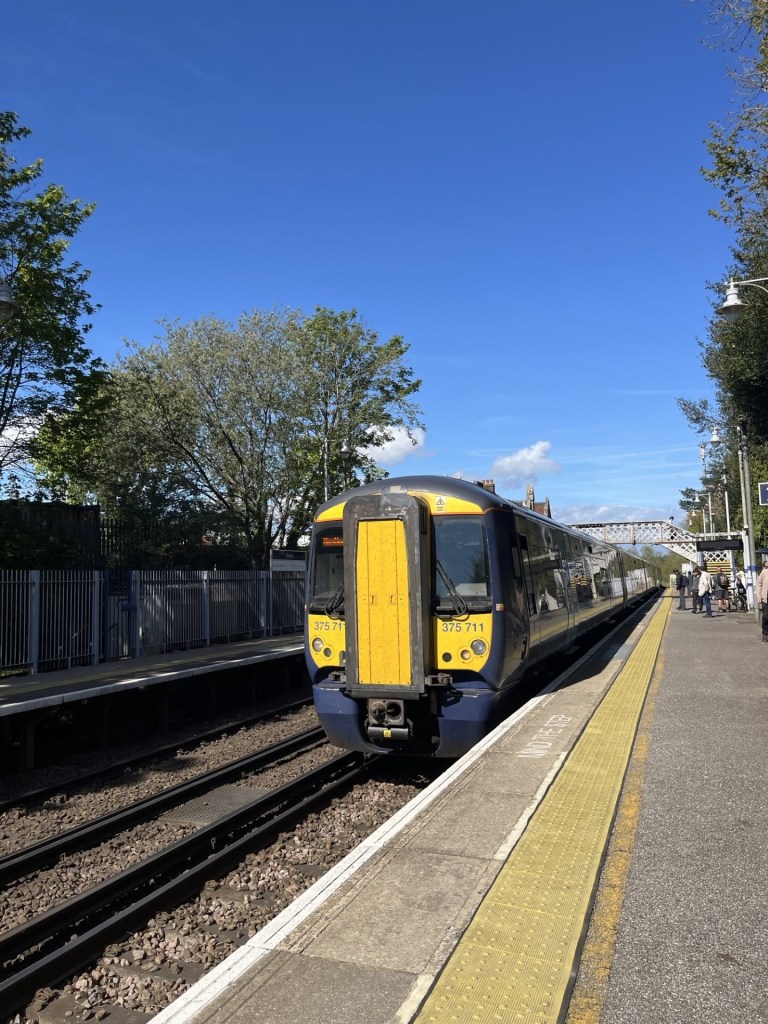
Crowhurst bound
Back in the car, the tune that accompanied me home seemed very appropriate. A top day.
https://www.youtube.com/watch?v=AB-2XnsRDhs&list=RDAB-2XnsRDhs&start_radio=1


